Showing posts with label Dutch. Show all posts

Thursday, June 30, 2016

Translation: Poem: Mustafa Stitou

© Pieter van der Meer /
Tineke de Lange
I'd originally planned to post this poem 5--yes, five--years ago, but like the 75+ other draft posts in my queue, some from almost 10 years ago, time to do so eluded me. As a result, it's been waiting to be completed, so here goes. It's by Mustafa Stitou (1974-), a Dutch poet of Moroccan birth. I first came across his work when I picked up a copy of his second book Mijn gedichten (My Poems, 1998) at a little Amsterdam poetry store during a trip to the Netherlands in the late 1990s.

I'd taught myself basic Dutch--enough, in fact, to fool a postal worker there, but with such a heavy German accent that she thought I might be from that country--and was convinced that I might be able to read, if not translate Stitou, Astrid Roemer (1947-), and other Dutch-language writers of color, especially immigrants from the global South, but of course, learning the basics of a language to be able to read street signs and order food and be fluent enough to read, let alone translate, are two different things. And this is true even for languages like Dutch and English, which are linguistically quite close. When I think of the current immigration and refugee crises in Europe, the failures of integration and the ongoing social and political marginalization of black and brown Europeans, it strikes me that hearing their voices is even more important now than ever.

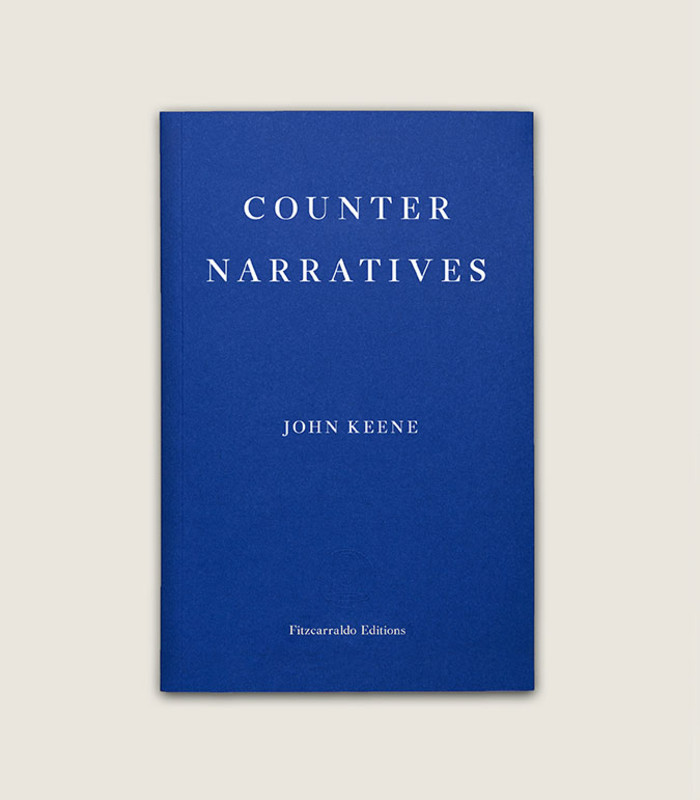
All of which is to say that I nevertheless decided to try to translate at least a few of Stitou's poems, whose linguistic inventiveness and play intrigued me. He has won a number of major Dutch poetry prizes, and continued to publish, with his most recent book, Tempel (Temple), appearing in 2013. Below is a poem about teenage love from Mijn gedichten; such is my Dutch that any infelicities are mine, but I think you get a sense, however imperfect, of his artistry. (When I return to JC I will look for the original Dutch, which isn't online, to recheck it.) You can find more of his work in the original and translation if you click on his name above.

PALPITATIONS


You

 bright


  transparent and immaculate
     little sight

glim
 glimpsed
  in puberty

through the present moment

laughed at me
one time
 or five

by all the swarming voices
 that besieged me
  --my pooljourneydaydreaminess

even with
 the lightning feeling
  while my humor grew
   immature!

Going bald from the world to drift
without party kilos
 my life's evening complete?

In the Almere Music District you stepped off

But I definitely didn't see you
that spring
 among the talk show
    audience

Train nymph
 are you writing my life?
I can really cook


Copyright © 1998, 2016, from Mustafa Stitou, Mijn gedichten. 
Translation © copyright John Keene, 2011, 2016.

Monday, October 08, 2012

Juan Rodríguez, NY's First Immigrant

Charles Lilly Painting, courtesy of the Schomburg Center
for Research in Black Culture, New York Public Library 
Thanks to Monaga's blog, where I first saw it late last week, I was able to start my undergraduate literature class this afternoon with a recent news snippet that was directly relevant to our readings and discussions. It turns out that the first non-indigenous immigrant to what is now New York City--and thus New York State--was, fittingly enough, a black or mix-raced polyglot named Juan Rodriguez (or João Rodrigues, or Jan ____) from Santo Domingo, then San Domingo and the capital of Hispaniola. Early last week New York Times reporter Sam Roberts drafted a short note about it in the paper's "City Room" blog section, and the piece exemplifies the difficulties of applying contemporary categories on historical facts, and the slipperiness even of documented historical discourse, though as my class averred, the deeper truth of the story is clear.  Roberts writes:

In 1613, Juan (or Jan or Joao) Rodriguez (or Rodrigues) appears to have accompanied Thijs Mossel, a Dutch sea captain, on the vessel Jonge Tobias from San Domingo, now known as Santo Domingo. Mossel returned to the Netherlands, while Rodriguez was marooned in what became New York (on either Governors Island or Manhattan) or more likely decided on his own to remain. 
Something of a linguist, he is believed to have mastered the local Indian language and manned a tiny trading post (the Dutch apparently gave him 80 hatchets and other tools and weapons as payment for his services). 
Much of what is known about him comes from affidavits by another captain, Adriaen Block, who complained that Mossel, presumably through Rodriguez, was overpaying for beaver pelts and was ruining Block’s business. Mossel insisted that Rodriguez was not his agent, but rather that Rodriguez had abandoned ship and remained on the island voluntarily (at least into 1614, when Mossel returned) and might have eventually married an Indian woman. 
Crew members said in affidavits that the “mulatto” or “Spaniard” had “run away from the ship and gone ashore against their intent” and that Block’s crew “ought to have killed him” when he refused to go with them to Holland.

Juan or João may have become marooned or was a maroon (he fled the ship), to New York, beginning a centuries-long trend. He was an agent for the Dutch, except that he wasn't. He was a "mulatto," and a "Spaniard," which need not be contradictory, except when, in Spanish royal administrative texts, they were. He married an Indian woman, or he didn't. What we know of him comes second, or even third-hand. His crewmates, cheery fellows, thought he should have been "killed" for not packing off to the Netherlands with them. Then there were the squabbles over money. Some things never change.

According to the Latin American Herald Tribune, Dr. Ramona Hernández and her team at the Dominican Studies Institute at the City College of the City University of New York followed up on leads drawn from historian Simon Hart's 1959 study of a "free black man from Santo Domingo," and established the fuller contours of Juan Rodríguez's study. As they aptly say, piecing all the swatches together, since there's no documentation that he ever left, he was "the first immigrant, the first black person, the first merchant, the first Latino and, to us, the first Dominican to have ever lived in New York City," and, as with Jean Baptiste Point du Sable, also allegedly from Santo Domingo (or Saint-Domingue) and Chicago, his presence antedates the official founding of the city of New York--in Rodríguez's case, by some 12 years.

Roberts reports that last Tuesday Mayor Michael Bloomberg signed legislation, sponsored by city councilperson Ydanis Rodríguez, to re-co-name Broadway, that ancient city thoroughfare, in after this Afrolatin-Dominican pioneer from 159th St. in Washington Heights to 218th St. in Inwood, which is to say, along the aorta of two of the city's most heavily Dominican and Dominican-American neighborhoods.  At some point down the road, perhaps there'll be a bigger celebration on his behalf. Let's see if he makes it into the general US history books any more swiftly than the TV shows and films set in and around New York have grasped that the city is still over 50% black and latino.