Showing posts with label European literature. Show all posts

Saturday, June 10, 2017

RIP Bernard Hoepffner & Juan Goytisolo

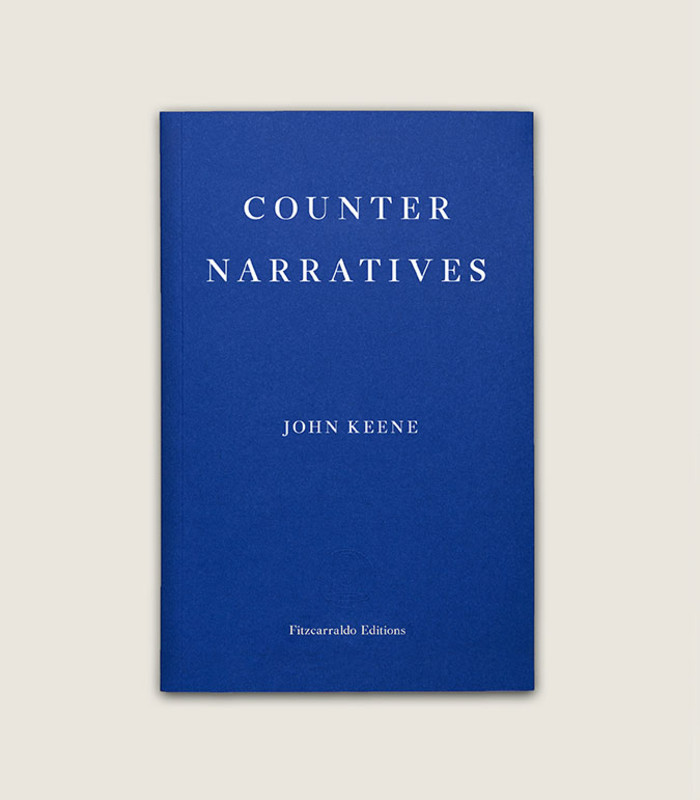
It is with sorrow that I report the passing of Bernard Hoepffner (1946-2017), the belauded French translator of many Anglophone authors and works, including Mark Twain, James Joyce, Robert Burton, Martin Amis, Edmund White, and Robert Coover, as well as my Counternarratives--his masterpiece of a translation appeared last year.  First, the sad, astonishing news: on May 26, French news outlets reported that Hoepffner had disappeared after being swept away by a wave on the Welsh coast, near St. Davids Head, Pembrokeshire, on May 6. (His body was recovered yesterday on Tywyn Beach in North Wales.) With this almost inconceivable event, the world of letters and translation, in France and worldwide, has lost a major, deeply appreciated figure, as a number of his colleagues have readily attested. His varied career before becoming a translator included having restored Asian art in the UK, and a run a farm in the Canary Islands. Once he undertook translation as a career, he ranged widely, never shying away from difficult books, and as the list above suggests, he translated classics as well as newer authors with aplomb. To his family and friends, I send my deepest condolences and prayers.

I never had the pleasure of meeting Bernard Hoepffner in person, but over the span of a year, and as recently as April of this year, we had exchanged emails, first about the collection of stories, and, more recently, about a volume of his long correspondence with the late American writer Guy Davenport, another original in the world of literature, that he hoped to place with a US publisher. As a translator, he was as much as an editor as any I have ever worked with, and his subtle readings of my English were often so perceptive that they enlightened me to what I had intuitively achieved--or only thought I had. Sometimes he would ask questions that forced me to justify choices, such as whether there were "falls" on a river--I was able to find links saying that there were--and whether an anachronism like "scenario" (which entered English only in 1878, as he reminded me), was appropriate for a story whose bulk was set in the 17th century. It was, I was able to say, because the story itself opens in the present, shifts back in time, and the narrative voice is constitutively unstable. In other cases, he caught errors produced by my pen listening more to my ear than eye, which then allowed me to rectify them in English and, upon his translation, French (and now, any other language).

When I communicated with him, Bernard was generous and rigorous, often witty, and capacious in his knowledge and sense of how English prose might become and work as French. As a writer and a translator, I learned a considerable deal from our exchanges, and I am applying our lessons as I write and translate new work this summer. I only wish I had been able to go to France late last summer when the book launched, which also would have provided an opportunity to meet not just my French publishers, Éditions Cambourakis, but Bernard as well. His influence among his peers in terms of opening up the body of English-language for French publishers and readers was and is significant. On his personal site, you can see how rich his trove of translations, as well as other literary and artistic projects, actually is. Here is one encomium for him from the notice in Libération: Joëlle Losfeld writes
«Il m’apportait des textes (Coleman Dowell par exemple, Guy Davenport, Joe Ashby Porter) et je lui en ai donné à traduire. Ma grande satisfaction (ce fut un sujet d’amusement entre nous) a été de lui faire connaître William Goyen qu’il ne connaissait pas, à ma grande surprise car c’est typiquement le genre d’auteur qu’il aimait lire et traduire. Bien sûr, il était pointilleux sur le choix des textes et n’acceptait pas tout, au regard de ses choix mais aussi d’un emploi du temps très chargé par l’ampleur de certaines traductions comme Ulysse par exemple. Et quand il ne pouvait pas traduire, il m’indiquait d’autres traducteurs. C’est ainsi qu’il m’a fait connaître Catherine Richard. Merveilleuse traductrice dont la démarche me semble proche de la sienne. Textes difficiles à traduire mais convertis en jeux dans leur pratique.»

(He brought me texts (Coleman Dowell for example, Guy Davenport, Joe Ashby Porter) and I gave them to him to translate. My great satisfaction (this was a subject of amusement between us) was his getting to know of William Goyen, who he wasn't familiar with, to my great surprise because it is the typical genre of author that he liked to read and translate. Of course, he was picky about the choice of texts and didn't accept everything with regard to his choices, but also because of a work schedule very filled by the size of certain translations like Ulysses, for example. And when he could not translate something, he pointed out other translators. That's how he got me to become familiar with Catherine Richard. Marvelous translator whose approach seems to me to be close to his. Difficult texts to translate but converted into games in their practice.)

Aux anges littéraires, and you can find more tributes to his life and work on the page his brother has established for him. I also hope someone will publish those Davenport letters; reading Davenport alone provides a rich education, so I can only imagine how enlightening Davenport and Hoepffner in conversation will be.

***

When I was in my 20s and first encountered the work of Juan Goytisolo (1931-2017), in particular his 1966 novel Marks of Identity (Señas de identidad), it hit me like a meteor. Not only did the story reset my thinking about how you might draw upon autobiography while writing a story that cast far wider imaginative, philosophical, political, and critical nets, but his relentless experimental method of telling it mesmerized me. What I soon learned was that this novel wasn't the then-35 year old Goytisolo's first, but his tenth, and that while he had written his late 1950s and early 1960s novels, which grappled with conditions in Francisco Franco's fascist Spain in a more conventional, social realist style, by the time he published Marks of Identity, he had begun to criticize his native country openly and harshly, and had been living in exile for a decade, in France. He never ceased his critique nor separation from his homeland, despite periodic visits much later; both extended to the end of his life.

Marks of Identity, I was also soon to grasp, was but the first in a trilogy centering on his literary stand-in, Álvaro Mendiola, and the predecessor to what is his most extraordinary and daring novel, Count Julian (La reivindicación del Conde don Julián). Published in 1970, Count Julian remains a landmark in Spanish language, European and global literature, and is one of the most brutal attacks on national tradition written from within that tradition to perhaps ever achieve major fame. In it, Goytisolo lacerates Spain's history by reinvoking and vindicating a figure thought to be one of Spain's greatest traitors, the eponymous Count Julian of Ceuta, who is said to have opened the door to the Moorish conquest. Taking the linguistic experimentation of Marks of Identity even further, but with his irony sharpened like a straight razor, his Count Julian's recitation of Spain's historical crimes woven like the dazzling threads of an exquisite tapestry as he peers through his window at the monstrous home country across the Straits of Gibraltar, Goytisolo holds nothing back. It is a breathtaking work, and won him readers across the literary landscape, though no few fans among Franco's hierarchy or the country's traditional literary world. It is telling that this magisterial, endlessly inventive writer did not win Spain's major literary prize, the Premio Miguel de Cervantes, until three years before his death, in 2014--and never won the Nobel Prize, though his vision, formal, political, spiritual, far outstrips most of the last decade of recipients of that award.

Anti-racist, anti-capitalist, anti-establishment--and ever-willing to speak out: you could characterize the bulk of Goytisolo's work this way. A Barcelona native, from a prominent family, he lost his mother to a fascist bomb as a child. His two brothers, the older Jose Augustín Goytisolo (1928-1999) and the younger Luis Goytisolo (1935-), also wrote, but Juan was the towering figure among them. After arriving in Paris Goytisolo initially worked for Gallimard, and met his future wife, novelist, publisher and screenwriter Monique Lange, soon thereafter, but, as he revealed to her and to his readers in his work, he was gay, and together they built a life that acknowledged this crucial aspect of his existence, which shifted more fully into a new form of living after her death and his move to Morocco, where he lived with two former male partners and their extended families.

As a fiction writer, Goytisolo never looked backwards in terms of his aims to push the limits of the genre or the Spanish language, as books like Juan the Landless (Juan sin tierra, 1975), the third novel in the Mendiola trilogy; Makbara (1980), set in a Muslim graveyard; Landscapes After the Battle (Paisajes después la batalla, 1985), which prefigures Houellebecq's Submission, but in more inventive and anti-Islamophobic way; Quarantine (Cuarantena, 1991), which explores the AIDS pandemic; Marx Family Saga (1999, La saga de los Marx, 1993), a witty novel about the Communist founder and his family; and his final novel, Exiled from Almost Everywhere (2008), set in an afterlife accessible via social media, all make clear. His journalistic nonfiction often served as critique and expose, from his early work, Campos de Níjar, about impoverished Andalusia, to 2001's Paisajes de guerra: Sarajevo, Argelia, Palestina, Chechenia.

He was also a literary critic and editor, and undertook a decades-long effort to reconnect Spain to its Muslim roots--and to remind readers of the richness of the North African, Arab and Islamic traditions in their overlapping and longstanding yet changing forms, work that strikes me as particularly salient these days.Goytisolo's frank and disarming memoirs, Coto vedado (1985), and In the Realms of Strife (En los reinos de taifa, 1986), which one of my dearest friends gave me, reminded their readers of his profound humanity and humility, and, yet again, of his fearlessness at sharing truths, his and those of the worlds in which he lived and moved. Perhaps unsurprisingly, his books, however, were banned in Spain until after Franco's death. As I noted in 2006, I was fortunate to catch him during one of periods in the late 1990s when he was lecturing at NYU, though I was too shy to introduce myself, and barely understood his Castilian Spanish. In that blog post, I mentioned Fernanda Eberstadt's New York Times Magazine profile of Goytisolo, "The Anti-Orientalist," which remains an excellent glimpse into his life.

I'll end by restating something that I'd written about back in 2011, which is that one of my favorite works of Goytisolo's is his late, slender novel The Garden of Secrets (Las semanas del jardín, 1997), which is a brilliant novel about storytelling that enacts what it explores. It contains a series of stories in multiple styles, linked through a concentrically circular form, told by various narrators who beguile as they reveal. What I found especially compelling about this novel, though, is how Goytisolo strives to remain true to the pre-literary heritage from which Goytisolo and all written literature draw, even going so far as to remove his name--Juan Goytisolo--from the novel's cover, ceding the credit to the tradition of storytelling. If there is anything antithetical to the culture of contemporary publishing, this certainly fits the bill. It may not be his greatest work, but it is representative of the artist, critic and activist that Goytisolo became, and offers pointers for anyone thinking about how to create and live in this complex, difficult, and riven world we find ourselves in today. For this book and all his others, I express my gratitude.


Thursday, June 30, 2016

Translation: Poem: Mustafa Stitou

© Pieter van der Meer /
Tineke de Lange
I'd originally planned to post this poem 5--yes, five--years ago, but like the 75+ other draft posts in my queue, some from almost 10 years ago, time to do so eluded me. As a result, it's been waiting to be completed, so here goes. It's by Mustafa Stitou (1974-), a Dutch poet of Moroccan birth. I first came across his work when I picked up a copy of his second book Mijn gedichten (My Poems, 1998) at a little Amsterdam poetry store during a trip to the Netherlands in the late 1990s.

I'd taught myself basic Dutch--enough, in fact, to fool a postal worker there, but with such a heavy German accent that she thought I might be from that country--and was convinced that I might be able to read, if not translate Stitou, Astrid Roemer (1947-), and other Dutch-language writers of color, especially immigrants from the global South, but of course, learning the basics of a language to be able to read street signs and order food and be fluent enough to read, let alone translate, are two different things. And this is true even for languages like Dutch and English, which are linguistically quite close. When I think of the current immigration and refugee crises in Europe, the failures of integration and the ongoing social and political marginalization of black and brown Europeans, it strikes me that hearing their voices is even more important now than ever.

All of which is to say that I nevertheless decided to try to translate at least a few of Stitou's poems, whose linguistic inventiveness and play intrigued me. He has won a number of major Dutch poetry prizes, and continued to publish, with his most recent book, Tempel (Temple), appearing in 2013. Below is a poem about teenage love from Mijn gedichten; such is my Dutch that any infelicities are mine, but I think you get a sense, however imperfect, of his artistry. (When I return to JC I will look for the original Dutch, which isn't online, to recheck it.) You can find more of his work in the original and translation if you click on his name above.

PALPITATIONS


You

 bright


  transparent and immaculate
     little sight

glim
 glimpsed
  in puberty

through the present moment

laughed at me
one time
 or five

by all the swarming voices
 that besieged me
  --my pooljourneydaydreaminess

even with
 the lightning feeling
  while my humor grew
   immature!

Going bald from the world to drift
without party kilos
 my life's evening complete?

In the Almere Music District you stepped off

But I definitely didn't see you
that spring
 among the talk show
    audience

Train nymph
 are you writing my life?
I can really cook


Copyright © 1998, 2016, from Mustafa Stitou, Mijn gedichten. 
Translation © copyright John Keene, 2011, 2016.

Monday, July 08, 2013

Quote: Enrique Vila-Matas

"39) 'Adieu' is a brief text by Rimbaud included in A Season in Hell, in which the poet does indeed appear to be saying farewell to literature: 'Autumn already! But why yearn for an eternal sun if we are committed to the discovery of divine light, far away from those who die at different seasons?'

"A mature Rimbaud - 'Autumn already!' - a mature Rimbaud at the age of nineteen bids farewell to what for him is the illusion of Christianity, to the various stages his poetry has been through, to his illuminist principles, in short to his huge ambition. And before him he glimpses a new path: 'I tried to invent new flowers, new stars, new flesh, new languages. I thought I had acquired supernatural powers. Now you see! I must bury my imagination and my memories! The beautiful glory of an artist and storyteller snatched away!'"

"He ends with a statement that has become famous, clearly a farewell of the first order: 'One must be absolutely modern. No songs; hold on to a step that has been taken.'"

"All the same, even though [André] Derain did not send it to me, I prefer a simpler farewell to literature, much more straightforward than Rimbaud's 'Adieu.' It is to be found in the draft of A Season in Hell and reads as follows: 'I can now say that art is an idiocy.'"

-- Copyright © from Bartleby & Co., Enrique Vila-Matas, translated by Jonathan Dunne, New York: New Directions Publishing Corporation, 2007. All rights reserved.

Saturday, July 02, 2011

Krzhizhanovsky's Memories of the Future + Krasznahorkai's Ontological Depths

Four years ago on the Open Democracy website I came across a strange but prescient short story, "Yellow Coal," by a writer I'd never heard of, Sigizmund Krzhizhanovsky (1887-1950). The site had excerpted the story from the first collection of English translations, by Joan Turnbull, of his work, Seven Stories (Moscow: Glas, 2007). In the story, Krzhizhanovsky imagines that an alternative and inextinguishable fuel source arises to replace the almost complete depleted stores of oil, coal, and so on: human bile.  I'll say no more, because it's better to savor Krzhizhanovsky's (translated) words themselves.

Despite enjoying the story I completely about Krzhizhanovsky's work until I recently came across Adam Thirwell's sprightly June 2011 New York Review of Books essay "The Master of the Crossed Out," which made me want to find the review's new publication of Turnbull's translation, with Formozov, of Krzhizhanovsky's stories, Memories of the Future (New York: New York Review Books, 2009), and also provided an insightful overview of the ill-fated writer's life. Krzhizhanovsky, a Russian of Ukrainian-Polish ancestry, was active in the post-Revolutionary Moscow literary world, but because of thematic vision and aesthetic daring quickly ran afoul of Stalin and his censors. In addition to short stories he wrote novellas, short stories, plays, screenplays, and libretti, but as Thirlwell recounts, his publishing history is the nightmare of any author.

In 1924 a collection of Krzhizhanovsky’s stories, Fairy Tales for Wunderkinder, was accepted for publication, but the publishing house went bankrupt before the book came out. And so begins the sad history of Krzhizhanovsky’s impossible publications. In 1928 and 1929 he wrote more stories, a screenplay, and a play. None of these appeared in public. On April 23, 1932, the Central Committee of the Communist Party created the Union of Soviet Writers, with Maxim Gorky appointed the first chairman. In the same year, Gorky stated that stories like Krzhizhanovsky’s “would hardly find a publisher,” and if they did, and managed to “dislocate a few young minds,” he added, would this really be desirable?

In effect, his opinion made Krzhizhanovsky definitively unpublishable. The next year, Krzhizhanovsky’s Academia edition of Shakespeare was canceled. In 1934, another play, The Priest and the Lieutenant, went unstaged. A collection of stories that was provisionally accepted by the State Publishing House was stopped by the censors. 
It was only downhill from there; the war prevented publication of another collection of stories, while censors gutted or held back his plays. He sank into alcoholism, suffered a stroke in the spring of 1950 and died before the year was out.

As "Yellow Coal" shows, Krzhizhanovsky was able to see almost 75 years ago what people today still fail to grasp in terms in terms of our limited resources and the truth of who we truly are. In 1976 scholar Vadim Perlmuter discovered a cache of Krzhizhanovsky's papers at the State Archives in Moscow, and 13 years later, during the Perestroika period, was able to publish one of his stories, which led to the slow but steady publication of his collected works and a concomitant rise in his reputation.  I'm slowly making my way through Memories of the Future, but it's clear that Krzhizhanovsky's is a highly original voice, a parallel to Kafka with the SF chops of generations of writers who appeared decades later, and a clarity of vision that would make many a realist envious. I'm enjoying dipping into the new volume, which does not include "Yellow Coal," but you can read that online as a way of entering this deservedly-acclaimed writer's world(s).

===

Another writer with a long and poetic last name, the Hungarian László Krasznahorkai (1954-), is the subject of critic James Wood's thoroughgoing critical essay in the current (July 4, 2011) New Yorker; the article unfortunately remains behind a firewall.  The screenwriter of five films, all directed by the internationally praised director Béla Tarr, Krasznahorkai has also authored six novels, only two of which, The Melancholy of Resistance (1989, published in English in 1998) and War and War (1999, translated into English in 2006), are available in English, from New Directions Publishing Corporation; his first, Sátántángo (1985), in its cinematic form secured Tarr's reputation outside Hungary as much as earned Krasznahorkai within his local literary culture.

To summarize, Wood, whose chief critical interest is Euro-American realist prose fiction, explores the idea, taken from Krasznahorkai's novel War and War that the author's work represents "reality examined to the point of madness." Citing a host of well known and challenging avant-gardists ranging from Nobel Prize winners Claude Simon and José Saramago to the late W. G. Sebald, Roberto Bolaño and David Foster Wallace, Wood argues that Krasznahorkai is perhaps the most unusual (and that's saying something) of all of them, squaring the tendences both of the maximalists (like Thomas Bernhard) and the minimalists (like the later Samuel Beckett), as his prose pushes the boundaries of the real inwards and thus outwards, not towards the fantastical but as if scanning the depths of the real as our perceptions, however skewed, record, reflect and create it, doing so through exhaustively serpentine sentences, hallmarks of nearly all the writers listed above, that pierce like rays not only plot, character, theme, tone, and the other fundamental elements of fiction, but of perhaps the most fundamental ones, language and time.

Wood describes Krasznahorkai's narrative ontology--for dramatic arc is not exactly what he's describing, nor is thematic arc, or character trajectory, let alone plot, but the status of the narrative as the text progresses--as "unstable," almost to the point of dizzying, though rendered superbly by translator George Szirtes. It produces for Wood a feeling akin to that of two of Krasznahorkai's epigones, Bernhard and Beckett, but goes even further, charting "abysses [that] are bottomless and far from logical," in a maximalist prose different from the later work of the latter, more vertiginous, disorienting and yet self-correcting, leaving Wood feeling that he "had got as close as literature could possibly take me to the inhabiting of another person, and, in particular, the inhabiting of a mind in the grip of 'war and war'--a mind not without visions of beauty but also one that is utterly lost in its own boiling incommunicable fictions, its own grotesquely fertile pain ('Heaven is sad')." That sounds almost like he's encountering a version of the sublime, which is to say, it's quite an appraisal.

I'll only note in conclusion that Wood also analyzes the other New Directions-published novel, The Melancholy of Resistance, which became Tarr's Werckmeister Harmonies, a film that's on my Netflix queue, to suggest that it's less involuted than War and War and not at all magical-realist as the film adaptation portrayed, but still quite exceedingly strange, demonstrating the author's interest in "apocalypse," as the late Susan Sontag wrote of him, "broken revelation," and "indecipherable messages" that nevertheless appear to convey substantial truths.  In discussing Melancholy, he also touches upon the author's most recent English-language book, 2010's Animalinside, texts in conversation with images by German artist Max Neumann, with an introduction by Colm Tóibín. Animalinside was jointly published by New Directions, Sylph Editions of London and the Center for Writers and Translators at the American University of Paris, and translated by Ottilie Mulzet.  In this text disturbing images of a dog-like creature parallel Krasznahorkai's texts, which evoke the work of Beckett, but the Hungarian writer is more overtly political. Or, as Wood says, "By the end of this text, the dog has passed through the political and become metaphysical and theological." I was given a copy of The Melancholy of Resistance last summer, but did not get to it. Before the end of this summer I shall....


From New Direction's Website, a snippet of Animalinside:

(Excerpt) Krasznahorkai Animalinside