Showing posts with label Islam. Show all posts

Saturday, June 10, 2017

RIP Bernard Hoepffner & Juan Goytisolo

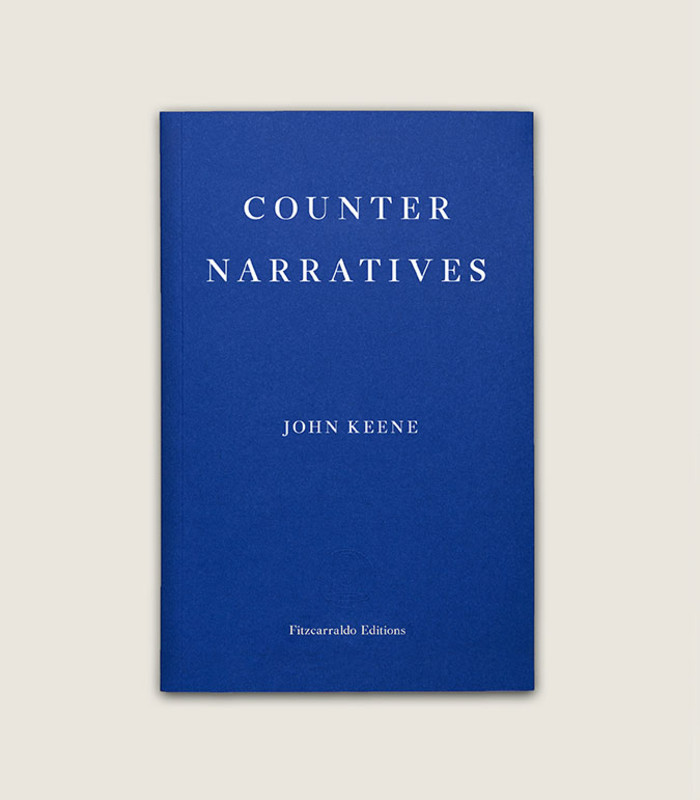
It is with sorrow that I report the passing of Bernard Hoepffner (1946-2017), the belauded French translator of many Anglophone authors and works, including Mark Twain, James Joyce, Robert Burton, Martin Amis, Edmund White, and Robert Coover, as well as my Counternarratives--his masterpiece of a translation appeared last year.  First, the sad, astonishing news: on May 26, French news outlets reported that Hoepffner had disappeared after being swept away by a wave on the Welsh coast, near St. Davids Head, Pembrokeshire, on May 6. (His body was recovered yesterday on Tywyn Beach in North Wales.) With this almost inconceivable event, the world of letters and translation, in France and worldwide, has lost a major, deeply appreciated figure, as a number of his colleagues have readily attested. His varied career before becoming a translator included having restored Asian art in the UK, and a run a farm in the Canary Islands. Once he undertook translation as a career, he ranged widely, never shying away from difficult books, and as the list above suggests, he translated classics as well as newer authors with aplomb. To his family and friends, I send my deepest condolences and prayers.

I never had the pleasure of meeting Bernard Hoepffner in person, but over the span of a year, and as recently as April of this year, we had exchanged emails, first about the collection of stories, and, more recently, about a volume of his long correspondence with the late American writer Guy Davenport, another original in the world of literature, that he hoped to place with a US publisher. As a translator, he was as much as an editor as any I have ever worked with, and his subtle readings of my English were often so perceptive that they enlightened me to what I had intuitively achieved--or only thought I had. Sometimes he would ask questions that forced me to justify choices, such as whether there were "falls" on a river--I was able to find links saying that there were--and whether an anachronism like "scenario" (which entered English only in 1878, as he reminded me), was appropriate for a story whose bulk was set in the 17th century. It was, I was able to say, because the story itself opens in the present, shifts back in time, and the narrative voice is constitutively unstable. In other cases, he caught errors produced by my pen listening more to my ear than eye, which then allowed me to rectify them in English and, upon his translation, French (and now, any other language).

When I communicated with him, Bernard was generous and rigorous, often witty, and capacious in his knowledge and sense of how English prose might become and work as French. As a writer and a translator, I learned a considerable deal from our exchanges, and I am applying our lessons as I write and translate new work this summer. I only wish I had been able to go to France late last summer when the book launched, which also would have provided an opportunity to meet not just my French publishers, Éditions Cambourakis, but Bernard as well. His influence among his peers in terms of opening up the body of English-language for French publishers and readers was and is significant. On his personal site, you can see how rich his trove of translations, as well as other literary and artistic projects, actually is. Here is one encomium for him from the notice in Libération: Joëlle Losfeld writes
«Il m’apportait des textes (Coleman Dowell par exemple, Guy Davenport, Joe Ashby Porter) et je lui en ai donné à traduire. Ma grande satisfaction (ce fut un sujet d’amusement entre nous) a été de lui faire connaître William Goyen qu’il ne connaissait pas, à ma grande surprise car c’est typiquement le genre d’auteur qu’il aimait lire et traduire. Bien sûr, il était pointilleux sur le choix des textes et n’acceptait pas tout, au regard de ses choix mais aussi d’un emploi du temps très chargé par l’ampleur de certaines traductions comme Ulysse par exemple. Et quand il ne pouvait pas traduire, il m’indiquait d’autres traducteurs. C’est ainsi qu’il m’a fait connaître Catherine Richard. Merveilleuse traductrice dont la démarche me semble proche de la sienne. Textes difficiles à traduire mais convertis en jeux dans leur pratique.»

(He brought me texts (Coleman Dowell for example, Guy Davenport, Joe Ashby Porter) and I gave them to him to translate. My great satisfaction (this was a subject of amusement between us) was his getting to know of William Goyen, who he wasn't familiar with, to my great surprise because it is the typical genre of author that he liked to read and translate. Of course, he was picky about the choice of texts and didn't accept everything with regard to his choices, but also because of a work schedule very filled by the size of certain translations like Ulysses, for example. And when he could not translate something, he pointed out other translators. That's how he got me to become familiar with Catherine Richard. Marvelous translator whose approach seems to me to be close to his. Difficult texts to translate but converted into games in their practice.)

Aux anges littéraires, and you can find more tributes to his life and work on the page his brother has established for him. I also hope someone will publish those Davenport letters; reading Davenport alone provides a rich education, so I can only imagine how enlightening Davenport and Hoepffner in conversation will be.

***

When I was in my 20s and first encountered the work of Juan Goytisolo (1931-2017), in particular his 1966 novel Marks of Identity (Señas de identidad), it hit me like a meteor. Not only did the story reset my thinking about how you might draw upon autobiography while writing a story that cast far wider imaginative, philosophical, political, and critical nets, but his relentless experimental method of telling it mesmerized me. What I soon learned was that this novel wasn't the then-35 year old Goytisolo's first, but his tenth, and that while he had written his late 1950s and early 1960s novels, which grappled with conditions in Francisco Franco's fascist Spain in a more conventional, social realist style, by the time he published Marks of Identity, he had begun to criticize his native country openly and harshly, and had been living in exile for a decade, in France. He never ceased his critique nor separation from his homeland, despite periodic visits much later; both extended to the end of his life.

Marks of Identity, I was also soon to grasp, was but the first in a trilogy centering on his literary stand-in, Álvaro Mendiola, and the predecessor to what is his most extraordinary and daring novel, Count Julian (La reivindicación del Conde don Julián). Published in 1970, Count Julian remains a landmark in Spanish language, European and global literature, and is one of the most brutal attacks on national tradition written from within that tradition to perhaps ever achieve major fame. In it, Goytisolo lacerates Spain's history by reinvoking and vindicating a figure thought to be one of Spain's greatest traitors, the eponymous Count Julian of Ceuta, who is said to have opened the door to the Moorish conquest. Taking the linguistic experimentation of Marks of Identity even further, but with his irony sharpened like a straight razor, his Count Julian's recitation of Spain's historical crimes woven like the dazzling threads of an exquisite tapestry as he peers through his window at the monstrous home country across the Straits of Gibraltar, Goytisolo holds nothing back. It is a breathtaking work, and won him readers across the literary landscape, though no few fans among Franco's hierarchy or the country's traditional literary world. It is telling that this magisterial, endlessly inventive writer did not win Spain's major literary prize, the Premio Miguel de Cervantes, until three years before his death, in 2014--and never won the Nobel Prize, though his vision, formal, political, spiritual, far outstrips most of the last decade of recipients of that award.

Anti-racist, anti-capitalist, anti-establishment--and ever-willing to speak out: you could characterize the bulk of Goytisolo's work this way. A Barcelona native, from a prominent family, he lost his mother to a fascist bomb as a child. His two brothers, the older Jose Augustín Goytisolo (1928-1999) and the younger Luis Goytisolo (1935-), also wrote, but Juan was the towering figure among them. After arriving in Paris Goytisolo initially worked for Gallimard, and met his future wife, novelist, publisher and screenwriter Monique Lange, soon thereafter, but, as he revealed to her and to his readers in his work, he was gay, and together they built a life that acknowledged this crucial aspect of his existence, which shifted more fully into a new form of living after her death and his move to Morocco, where he lived with two former male partners and their extended families.

As a fiction writer, Goytisolo never looked backwards in terms of his aims to push the limits of the genre or the Spanish language, as books like Juan the Landless (Juan sin tierra, 1975), the third novel in the Mendiola trilogy; Makbara (1980), set in a Muslim graveyard; Landscapes After the Battle (Paisajes después la batalla, 1985), which prefigures Houellebecq's Submission, but in more inventive and anti-Islamophobic way; Quarantine (Cuarantena, 1991), which explores the AIDS pandemic; Marx Family Saga (1999, La saga de los Marx, 1993), a witty novel about the Communist founder and his family; and his final novel, Exiled from Almost Everywhere (2008), set in an afterlife accessible via social media, all make clear. His journalistic nonfiction often served as critique and expose, from his early work, Campos de Níjar, about impoverished Andalusia, to 2001's Paisajes de guerra: Sarajevo, Argelia, Palestina, Chechenia.

He was also a literary critic and editor, and undertook a decades-long effort to reconnect Spain to its Muslim roots--and to remind readers of the richness of the North African, Arab and Islamic traditions in their overlapping and longstanding yet changing forms, work that strikes me as particularly salient these days.Goytisolo's frank and disarming memoirs, Coto vedado (1985), and In the Realms of Strife (En los reinos de taifa, 1986), which one of my dearest friends gave me, reminded their readers of his profound humanity and humility, and, yet again, of his fearlessness at sharing truths, his and those of the worlds in which he lived and moved. Perhaps unsurprisingly, his books, however, were banned in Spain until after Franco's death. As I noted in 2006, I was fortunate to catch him during one of periods in the late 1990s when he was lecturing at NYU, though I was too shy to introduce myself, and barely understood his Castilian Spanish. In that blog post, I mentioned Fernanda Eberstadt's New York Times Magazine profile of Goytisolo, "The Anti-Orientalist," which remains an excellent glimpse into his life.

I'll end by restating something that I'd written about back in 2011, which is that one of my favorite works of Goytisolo's is his late, slender novel The Garden of Secrets (Las semanas del jardín, 1997), which is a brilliant novel about storytelling that enacts what it explores. It contains a series of stories in multiple styles, linked through a concentrically circular form, told by various narrators who beguile as they reveal. What I found especially compelling about this novel, though, is how Goytisolo strives to remain true to the pre-literary heritage from which Goytisolo and all written literature draw, even going so far as to remove his name--Juan Goytisolo--from the novel's cover, ceding the credit to the tradition of storytelling. If there is anything antithetical to the culture of contemporary publishing, this certainly fits the bill. It may not be his greatest work, but it is representative of the artist, critic and activist that Goytisolo became, and offers pointers for anyone thinking about how to create and live in this complex, difficult, and riven world we find ourselves in today. For this book and all his others, I express my gratitude.


Thursday, June 30, 2016

Translation: Poem: Mustafa Stitou

© Pieter van der Meer /
Tineke de Lange
I'd originally planned to post this poem 5--yes, five--years ago, but like the 75+ other draft posts in my queue, some from almost 10 years ago, time to do so eluded me. As a result, it's been waiting to be completed, so here goes. It's by Mustafa Stitou (1974-), a Dutch poet of Moroccan birth. I first came across his work when I picked up a copy of his second book Mijn gedichten (My Poems, 1998) at a little Amsterdam poetry store during a trip to the Netherlands in the late 1990s.

I'd taught myself basic Dutch--enough, in fact, to fool a postal worker there, but with such a heavy German accent that she thought I might be from that country--and was convinced that I might be able to read, if not translate Stitou, Astrid Roemer (1947-), and other Dutch-language writers of color, especially immigrants from the global South, but of course, learning the basics of a language to be able to read street signs and order food and be fluent enough to read, let alone translate, are two different things. And this is true even for languages like Dutch and English, which are linguistically quite close. When I think of the current immigration and refugee crises in Europe, the failures of integration and the ongoing social and political marginalization of black and brown Europeans, it strikes me that hearing their voices is even more important now than ever.

All of which is to say that I nevertheless decided to try to translate at least a few of Stitou's poems, whose linguistic inventiveness and play intrigued me. He has won a number of major Dutch poetry prizes, and continued to publish, with his most recent book, Tempel (Temple), appearing in 2013. Below is a poem about teenage love from Mijn gedichten; such is my Dutch that any infelicities are mine, but I think you get a sense, however imperfect, of his artistry. (When I return to JC I will look for the original Dutch, which isn't online, to recheck it.) You can find more of his work in the original and translation if you click on his name above.

PALPITATIONS


You

 bright


  transparent and immaculate
     little sight

glim
 glimpsed
  in puberty

through the present moment

laughed at me
one time
 or five

by all the swarming voices
 that besieged me
  --my pooljourneydaydreaminess

even with
 the lightning feeling
  while my humor grew
   immature!

Going bald from the world to drift
without party kilos
 my life's evening complete?

In the Almere Music District you stepped off

But I definitely didn't see you
that spring
 among the talk show
    audience

Train nymph
 are you writing my life?
I can really cook


Copyright © 1998, 2016, from Mustafa Stitou, Mijn gedichten. 
Translation © copyright John Keene, 2011, 2016.

Saturday, June 04, 2016

Losing Muhammad Ali

One of the final photos taken of
Muhammad Ali (Copyright © Zenon Texeira)
One of the greatest champions has left us. After a long struggle with Parkinson's disease, Muhammad Ali (January 17, 1942 – June 3, 2016), has passed in a Phoenix hospital yesterday. I won't attempt a full eulogy, but I want to praise and honor his courage, vision, outspokenness, artistry, and humanitarianism.

The three-time (1964, 1974, 1978) heavyweight boxing champion and Louisville, Kentucky native was a man of great self-conviction, with a razor wit and gift for self-promotion that struck some as arrogance. Yet he knew what he could do, and when still young he predicted that he would be the greatest boxer ever, eventually living up to that prediction, with one of his early triumphs coming in the form of a gold medal in the light heavyweight category at the 1960 Olympics in Melbourne.

With his victories on a steady roll, in 1963, at age 22, he defeated Sonny Liston, and became the undisputed heavyweight champion of the world. Shortly thereafter Ali joined the Nation of Islam, changed his name from Cassius Marcellus Clay, Jr., and became not just a devout Muslim, but a powerful advocacy for Black equality and liberation at a time when many of his peers would not speak out.

One of his bravest acts came when he chose not to go to Vietnam to fight in one America's many misguided imperial wars, stating, "I ain't got nothing against no Viet Cong; no Viet Cong never called me nigger." He was barred from boxing in nearly every state, lost his passport, and was eventually convicted of refusing to report for the draft, receiving a fire-year prison sentence and fine. Despite harsh criticism from his enemies and attempts by fellow black athletes to get him to play along, he refused. As a result att the height of his powers he lost vital years from his career, but he never looked back. 

When he returned to boxing, he showed not just the skill he had been known for, but grit and determination, as well as a gift for drama that made watching his matches thrilling. In the process he and his peers helped to elevate boxing once again to the world stage. I vividly recall the excitement surrounding the 1974 "Rumble in the Jungle," in Kinshasa, Zaire ("Ali, Ali boma ye"!), in which Ali knocked out the undefeated heavyweight George Foreman, and "The Thrilla in Manila" in 1975, the latter of which marked the beginning of the end of his remarkable career in the ring. 

Ali's post-boxing years included global outreach with the aim of connecting people across the globe; devotion to his faith, friends, family, and fans; and service as an international spokesperson for the very best that athletic competition might represent. Though despised by some in his youth, he was in the last portion of his life widely admired and loved.  I, like so many, will miss his presence, and I am glad he is no longer suffering. His model and spirit will long live on.
Muhammad Ali, then Cassius Clay (left), and his brother Rahman
Ali, then Rudy Clay (right), walk with their great-grandmother
Betsy Jane Greathouse (center), who was 99
when this picture was taken in 1963
in Louisville. (Credit: Charles Fentress Jr., 
The Courier-Journal, USA TODAY Sports)
Muhammad Ali, world heavyweight boxing champion,
stands with Malcolm X (left) outside
the Trans-Lux Newsreel Theater in New York in 1964.                          
Muhammad Ali, after his 1965 knockout
of Sonny Liston (Wikipedia)
Ali's skyline punch, New York City
Rumble in the Jungle poster,
1974 (Wikipedia)
Muhammad Ali lighting the flame at the opening
ceremony of the 1996 Atlanta Olympics
(Photo by Fairfax photographer Vince Caligiuri)
Muhammad Ali with Michael Manley,
the Prime Minister of Jamaica, and
an unidentified child in 1974
(Michael Manley Foundation)

Muhammad Ali and his beloved fourth
wife, Lonnie

Monday, June 09, 2014

More Marseille (Photos I)

After my initial arrival in Marseille and encounter with a grifter posing as a cabbie, I wasn't sure what to expect on my return for several days of stay after that inspiring and inspiriting James Baldwin conference in Montpellier, a city that exudes charm from every stone and plaster wall, but Marseille, I learned quickly, has its charms too, and is a city of great beauty, historical and cultural richness, and, yes, grit, a huge Mediterranean port city that looks north and south, east and west. In just a few days I have traced the usual tourist steps, though I have not (yet?) seen l'Estaque, where Renoir, Cézanne and others painted, or Joliette, where Claude McKay's Banjo strolled and lolled, making music), but the Mediterranean sun and light that drew those great painters, and the cultural diversity and richness that McKay's novel portrays are very present. There are times walking the streets here that I forget I am not in North Africa, and at other times I think, this could easily be Harlem, or Brooklyn. There are also signs everywhere of the pan-or-trans-Mediterranean, as well as of France's multiple European facets, among them those of the Provence region, something I think I forgot before I arrived, until I began to see "PROVENCE" everywhere. (I have not yet heard anyone speaking Provençal, though, not that I would be able to distinguish it from Catalan if I heard it.) So far it has proved a a stirring mix of a place to see, not as run-down or seedy as I had been warned by some, and full of the joie de vivre and vivacity that I had long imagined and which two friends (N and TJ) had implied in their excellent recommendations of things to do and see.
Marseille, from the heights of
Notre Dame de la Garde
Yesterday I went to Mucem, the Museum of European and Mediterranean Civilizations, located partially in the Fort Saint-Jean as well as in an adjacent, striking building I'd spotted the night I arrived from a nearby promontory in the Jardin du Pharo. The fort (and there are several here) commands the eye, but far more intriguing was the modern building, clad in a metal netting that looked like a green spider web from afar and up close. The Museum itself was most interesting to me for its architecture; I found myself less engaged by its accounts of European and Mediterranean history, a good deal of which I knew, and which stinted a bit on some of the peoples involved in creating the Mediterranean we know today. Yet I expected nothing less. The puppet exhibit, which I snapped a few photos of, did hold my interest, but I have to admit, some to the puppets were a bit scary. It was, nevertheless, an enjoyable visit, and I walked all around the fort and the new building, also viewing and photographing but not entering the cantilevered Villa Mediterranée. I love the tagline on the door, though, which reminded me oddly enough of the famous May '68 slogan "Sous les pavés la plage" (Under the paving stones a beach): "Sous la mer, un monde." (Under the sea, a world).

On my way to Mucem, I detoured along a historic trail that took me to various key sites and points in Marseille history, including the Hotel Dieu, which is now an Intercontinental Hotel; the Hotel de Ville; the Église des Accoules, which was completely razed during the French Revolution; the site of Roman Docks; another site (which I did not see but had a plaque marking it--?) of a Greek amphitheater; and the 12th century Church of Saint Laurent, which the revolutionaries (thankfully) saw fit not to burn down. Further walking took me past the Cathédral du Majore, the Roman Catholic Church's main church in Marseille. It is in a neo-Byzantine style, which seems appropriate given the multiple strands on which the city is built. I had missed the ferry across the Old Port and ended up walking all the way around it, which was invigorating, but after several hours in the relentless heat, I was crisping. I took the ferry back, and walked back up the long road to my hotel, on the Corniche near the Anse des Catalans, and by the time I got to my room, I was ready to pass out.

According to my Move app I managed to walk 9.1 miles one day in Montpellier, and 7.2 miles on Saturday, when I traveled back to Marseille, but the lack of wifi meant I could not record how far I walked yesterday, which could easily have been 12 miles or more. I had drunk water all day and taken pauses in the shade and cool spots, but was so sore--my body, my back, my shoulders, my legs, my feet--hat I had to lie down, and wasn't sure I'd be able to get up to meet friends for dinner. By the time we did meet up after 8 pm, I had revived, and was ready to spend this morning getting gifts and gearing up for the next big tourist goal, which was to climb up to Notre Dame de la Garde, the highest point (I believe) in Marseille. My friend Trasi had said that church was not architecturally distinguished, and it isn't, looking almost like a sibling of the cathedral far below. But the vistas it offers are astonishing, and the packed interior basilica, chock full of paintings and relics and votives and believers, moved me to give the sign of the cross, and to light a candle for friends and acquaintances who are facing various challenges. To get there, though, you must climb a very steep hill, steeper I think that the one at Montmartre to reach Sacré Coeur, which made me think about how suffering is woven into Catholic experience, and to ponder, as I always do with such things who and how those whos pulled this off. Just getting up here was exhausting enough, so to imagine bring all the materials, to be working in this southern heat, or even in the cold, etc., made me think about all the labor, casualties and so on the creation of such a site of devotion requires.
The medieval church of St. Laurent
I have tried not to load up on books as I tend to do when I travel, and my first order of business tomorrow is to mail the ones I've purchased back, but I could not help myself in the Mucem's bookstore, which was decent, and bought a few books that caught my eye, including Scholastique Mukasonga's Notre-Dame du Nil [Notre Dame of the Nile], which was published by Gallimard in 2012 and won the Prix Renaudot that year; Djilal Bencheikh's novel Tes yeux bleus occupent mon esprit [roughly: Your Blue Eyes Occupy My Spirit], published by Elyzad in its Poche series and winner of the Prix Maghreb 2007 de l'Association des Écrivains de langue française (ADELF) [2007 Maghreb Prize of the French Language Writers' Association]; Nouvelles du Maroc, featuring the work of writers Mohamed Leftah, Abdellah Taïa, Karim Boukhari, Fadwa Islah, Abdelaziz Errachdi, and Zineb El Rhazoui, published in 2011 by MAGELLAN & Cie/Courrier International in their Miniatures Series; Slam Poésie by Sunjata Sabir, published by Vents d'ailleurs in 2014; and the fascinatingly named Christophe Ono-Dit-Biot's Plonger, another Gallimard publication, from 2013, which received the Grand Prix du Roman de l'Académie Française and the Prix Renaudot des Lycéens in 2013. (I especially liked that he had written a novel entitled Génération Spontanée in 2004. I look forward to reading at least some of them this summer.

On a political tip I have been curious to see if I pick up any of the tensions that have led to the high vote totals for the far right in France (and for alternative conservative parties in the UK, Denmark, and elsewhere in Europe) in the EU elections, but I would be lying if I said, in my few days as a tourist, that I saw anything at all. Marseille is, as I noted above, very diverse, with a sizable population of people of North African and sub-Saharan ancestry, as well as many people with ancestry from the Comoros, other parts of the Mediterranean, and so on. It has been a gateway city for centuries and questions of diversity, migration, globalism and global flows, borders, and so forth are hardly new here, nor are political contestations over immigration, demographics, power, everything underpinning the recent victories by right-leaning parties in the EU parliament. (Even Montpellier was visibly more diverse than I remembered from a brief prior visit more than 20 years ago.) From what I can tell, people appear to get along, though this could be because of my routes here and hardly reflective of the realities. A colleague from Montpellier told me that the wealthier cities on the French Riviera, like Nice, Cannes, Cap d'Antibes, as well as rural areas and the formerly industrial North of the country provided votes for Marine Le Pen's National Front, though I thought I had seen some mention of support in Marseille and surrounding areas as well. I am keeping my antennae up, and taking notes.

I'll stop there but here are a few photos from my perambulations. I'll post more in a subsequent entry. Enjoy.
The steps of the Fort d'Entrecasteaux 
A sculpture in the Jardin du Pharo,
with the Palais du Pharo in the background 
On the lower level of the Jardin du Pharo,
with the Digue du Large in the background
In the Jardin du Pharo, with
Notre Dame de la Garde in the distance
A sculpture sitting between the Old Port
and the Lower Fort Saint Nicolas 
Acrobats along the Old Port's Quai
The Hôtel DeVille's façade
along the Old Port's Quai
The Hôtel Dieu, now the Intercontinental 
One part of the Hôtel de Ville 
The reconstructed Church of the Accoules 
Heading up to the Préau des Accoules
Street art
An exhibit 
The St. Laurent Church 
Puppets, from an exhibit in the
Fort Saint-Jean
At the Fort Saint-Jean
At the Fort 

One of its towers, from a northeast view
The striking Mucem building, with
the Villa Méditerranée beside it
Inside Mucem
Along the rocks outside the Fort 
The Villa Méditerranée 
The Cathédrale de la Major
(Marseille Cathedral)
Art students drawing the cathedral 
Sculptures near the
Hôtel de Ville
On the ferry boat back across
the Old Part 
A political statement, on my way back
to my hotel 
The Abbaye of St.-Victor
of Marseille
Along the Corniche

Wednesday, August 04, 2010

Court Strikes Down Prop 8 + Bloomberg Defends Cordoba House

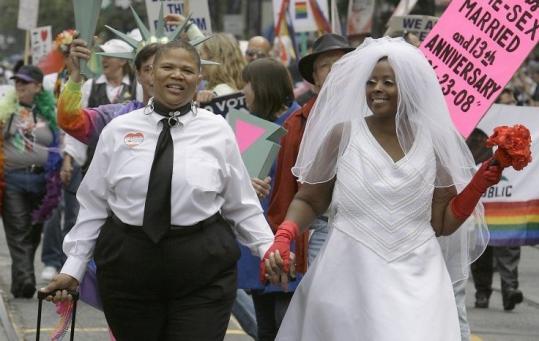
What a great piece of news: this afternoon, Judge Vaughn Walker, of the United States District Court of Northern California, issued a careful, thoughful, and earthshaking ruling in Perry v. Schwarzenegger, striking down the heinous Proposition 8, the ballot initiative that two years ago withdrew equal marriage laws in the State of California.  Walker stated in his judgment that Proposition 8 was unconstitutional "under both the due process and equal protection clauses," and ordered "entry of judgment permanently enjoining its enforcement."

The judgment was a tremendous victory for same-sex couples, who had briefly enjoyed equal marriage laws in California after the state Supreme Court ruled, in In re Marriage Cases 43 Cal.4th 757 [76 Cal.Rptr.3d 683, 183 P.3d 384], in May 2008, that California's constitution permitted them.  It was also a victory for the plaintiff's lawyers, Ted Olson, the former Solicitor General under George W. Bush, and David Boies, who had argued on opposing sides in the case representing one of the worst recent rulings by the US Supreme Court, 2000's Bush v. Gore.

California's Governor, Arnold Schwarzenegger, who had previously twice vetoed the state legislature's passage of marriage equality bills, hailed today's ruling as an affirmation of "the full legal protections and safeguards I believe everyone deserves."

You can read the ruling (in .pdf form) here, at GoodAsYou

Opponents of Judge Walker's ruling have already filed appeals, and the case will likely go to the US Supreme Court. According to the New York Times's John Schwartz, Walker's ruling will make it more difficult for the US Supreme Court to overturn on appeal, mainly because of "the careful logic and structure of Judge Vaughn R. Walker’s opinion." With the current conservative quintet, which shows little concern for precedent or legal logic, however, the outcome is unclear, but what is clear is that today's decision was a momentous one, and a huge step forward after several recent steps backward (Maine, New Jersey, New York, etc.) on the marriage equality front.

***

So Cordoba House, an Islamic cultural center (and not a "mosque," though that would have been fine in my eyes as well) is slated to be built two blocks north of the World Trade Center Ground Zero site, as the New York City Landmarks Commission voted to allow the demolition of the prior building at 45-47 Park Place in lower Manhattan.  The 13-story cultural center, which will include a prayer room and a 9/11 memorial, will rise, once its developer raises $100 million, despite the spate of hateful, misinformed rhetoric by a number of major conservatives, like current post-children and disgraced Republican politicians Sarah Palin and Newt Gingrich.

Let us never forget, as we to often do, what comes out of these right-wingers' mouths, how toxic and corrosive it is, and also how this bigotry that they're currently spewing against Muslims and Islam has readily and frequently been applied throughout American history to Black Americans, women, Latinos, Asians and Asian Americans, Jewish people, Roman Catholics, immigrants in general, gays, lesbians, bisexual and transgender people (cf. above), disabled people, the poor, and on and on. They always find and target scapegoats, with destructive effects, and unless we speak out, we ratify their hate.

As others across the web have pointed out, New York Mayor Michael Bloomberg, of whom I'm hardly a fan, gave a marvelous, moving speech yesterday defending the Muslim cultural center and the history of immigration and the ideas of religious freedom and pluralism in the US. It was for me one of the high points of his public career, and something that far more of our political figures need to do. To the rest of the pols on the Left, center, and yes, those on the right--who believe in the Constitution and aren't gripped by xenophobia and cynicism--who've been silent, step up to the mic!