A novel that
I wrote an essay about for
Spirale (at the invitation of the brilliant
Nathanaël) a few years ago,
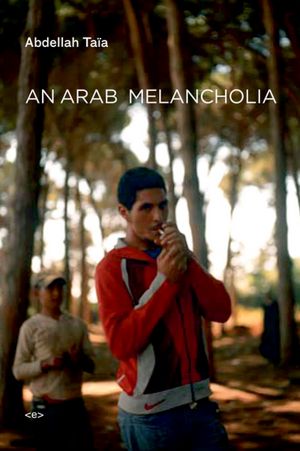
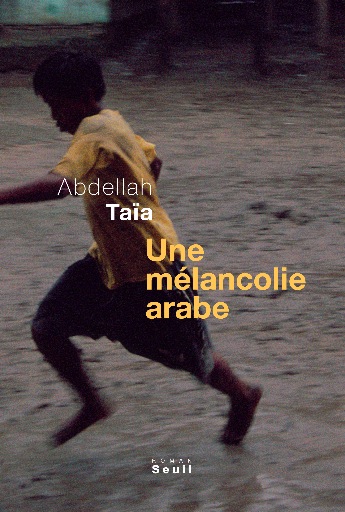
Une mélancolie arabe (An Arab Melancholia), by the Moroccan queer writer
Abdellah Taïa (1973-) is now available in English from
Semiotexte/Smart Art, under its
Semiotext(e)/Native Agents series, having been translated by
Frank Stock. I browsed a copy at
St. Mark's Bookshop the other day, and hope to pick it up (there, at
McNally Jackson,
Unabridged Books or another independent bookstore) very soon.
Since I've already written about the book I won't attempt to review it here, but I do urge readers to plunge into it, because I think it's Taïa's most ambitious and accomplished work of fiction, and extends the themes of his previous works in ways the prior novels and nonfictional works do not. One of the themes I wrote about was the omnipresence of "deaths," actual and metaphorical, creating a series of what I read as sites and performances of sublimity, tying this novel to that of a Francophone predecessor,
Antonin Artaud, and his theorization of the
Theater of Cruelty.
An Arab Melancholia also expands upon the idea of "melancholia"--racial, colonial, queer--that Taïa engaged in his previously translated and acclaimed novel,
L'armée du salut (Salvation Army), but in its strong embrace of Arab and Muslim cultures, its challenge to simplistic integration into French homonormative narratives, its queer, recursive structure and defiance of genre, and its insistent struggle with selfhood itself,
An Arab Melancholia productively complicates any attempt by the French or any literary culture or establishment to exoticize or recolonize him.
 |
| Abdellah Taïa (Chema Moya/European Pressphoto Agency) |
A week ago, Taïa published a short essay in the
New York Times, "
A Boy to Be Sacrificed," which explores some of the very incidents he treats in
An Arab Melancholy, but in this piece he amplifies certain of them and downplays others. The entire essay reads like a radical, journalistic distillation of the novel. The gist is that as a young, effeminate queer boy, he was so completely rejected because of his sexuality, rendered so abject, so subject, so socially dead and alien even to his family, that he and other boys like him could (and can) be used as sexual playthings by any man who wanted, an irony in a religion and society that at the same time harshly condemn "homosexuality," particularly in its Western guise(s), but which also have created social and economic spaces for colonialized sexual differences and relationships. In the
Times piece, he recounts one night in 1985 when men in the neighborhood--not white European foreigners seeking boy lovers--began calling out for him to come downstairs, so that they could violate him, and the response of his family members was to turn their backs on him, which not just metaphorically but literally--affectively--"killed" him. That night he died, as he had begun doing before, and would, he makes clear, repeatedly thereafter.
What particularly interests me, beyond the convergences and slippages between this autobiographical account, situated within the truth-bound, journalistic frame of a newspaper, and the novel's different, more dramatically structured and stylized versions of this story, is that the latter work provides through its narrative and serves as the embodiment of the answer to the rhetorical statement he poses to
Times readers: "I don't know how I survived." This, he says, is a truth, that he doesn't know how; and yet the
truth exists in fictional form, in that work of fiction, it seems to me as I read this mini-essay, a performance itself, of a particular type of subject speaking to a particular liberal, Western audience that probably has not read his book or much literature from Northern Africa, has little understanding of the complexity of sexualities there, and yet is not unwilling to sympathize with a sentimentalized account of his plight. I'm not criticizing him. But I do think too that he knows the answer lies in the novel's version of this story, with its multiple deaths and the journey they constituted towards a survival, the survival of that fictional
Abdellah, and the real one, now 38, who also now can write this Op-Ed piece.

Taïa begins closing his piece by saying: "I don’t know where I found the courage to become a writer and use my books to impose my homosexuality on the world of my youth. To do justice to little Abdellah. To never forget the trauma he and every Arab homosexual like him suffered." The novels cumulatively, however, show us where he found this courage; they do not in fact "impose" his homosexuality on the world of his youth so much as they respond to and make sense of that trauma; peel back the many hidden layers of that world; invest it with a living shape, a density and a texture that perhaps he might not even have been able to see in his youth, though he felt and knew it, and can now, through his books, fictional and nonfictional, his movie appearances, his journalism and essays, convey it. His books open windows, multiple ones, on the world of his youth and of Morocco today, the queer Arab world, windows onto the lives of queer boys and girls like little Abdellah, and allow him, and we the readers, to respond to and make sense of that world.
He concludes with this appeal: "Now, over a year after the Arab Spring began, we must again remember homosexuals. Arabs have finally become aware that they have to invent a new, free Arab individual, without the support of their megalomaniacal leaders. Arab homosexuals are also taking part in this revolution, whether they live in Egypt, Iraq or Morocco. They, too, are part of this desperately needed process of political and individual liberation. And the world must support and protect them." Rather than quibbling with his specific rhetoric, I will agree with him, and add that the world--and especially we in the United States, with our vexed national and imperial relationships to the Arab and Muslim world--must begin by
listening carefully and attentively to queer Arab people, listening to their appeal, listening to their accounts of their lives,
listening so that we can hear what it is they want and need, and thus respond accordingly. Taïa's work represents one call; there are many others, and if we are willing and able, we should listen.



 I'm procrastinating about writing/finishing a talk I have to deliver later this week, so in my tours through the web, I came across this poem, by the Moroccan poet Abdel-ilah Salhi (1968-), amid