Showing posts with label music. Show all posts

Thursday, August 16, 2018

Annotations Playlist (by Keith Ridgway)

One of the joys of the internet, and of Twitter--horrible social media platform though it sometimes can be--is the serendipity of coming across positive public notes and links, among them responses others might have to your work and you that you might otherwise not see. I appreciate these especially at a time when letters and even emails are less common than they once were. (I have never received many letters from readers, positive or negative, let alone emails, concerning my work, at least without something else being involved, like an invitation to read or a request for a blurb.)

The other day, after signing on to Twitter, I saw that I had about 8 notifications, and once I clicked on the button, I saw the following post, by the great Irish author Keith Ridgway, whose Hawthorn & Child (New Directions, 2013) I thought was one of the best and most original novels of that year. It is an anti-detective novel in the best way, and exquisitely written, with sections of such striking strangeness I had to read them again. For whatever reason--its freshness? its queerness?--it did not receive the attention it deserved when it appeared. (Perhaps some forward-thinking British director will make it into a feature film, with David Oyelowo, David Gyasi, Daniel Kaluuya, Ashley Walters, Aml Ameen, Gary Carr, David Ajala, or Jimmy Akingbola, to name just a few the talented British actors out there, starring as the eponymous Child, and Max Rhyser, Simon Woods, Jeremy Sheffield, Kieron Richardson, or Andrew Hayden-Smith, to name some of their counterparts, as Hawthorn.)

Scrolling through the thread, I saw he'd posed a prior question:


As he realized, no one had recently--I seem to recall someone doing many moons ago, perhaps in the mid-00s?--so he compiled one himself, on Spotify, the streaming music service I have to admit to having never signed up for. (I only signed up for Last.fm among the more recent streaming services, and, some years back, Naxos, which basically streams album clips of classical European and American art music with some jazz.) He culled most of the musical references, and this is the marvelous playlist he came up with:


You can access it here even if you aren't signed up for Spotify.

Keith Ridgway expertly includes references from the direct mentions of standards, like Ahmad Jamal's "Poinciana" and Thelonious Monk's "Pannonica" to more subtle ones like "Afro Sheen," which is both the hair product and a song, as he shows, by Stephen Sechi. Another reference he susses out is "Dance of the Infidels," by Bud Powell, and he selects Josephine Baker's stirring "De Temps En Temps" in response to a reference to Baker in the text. (She was a native St. Louisan.)

There are some not on the list, like John Coltrane's "Naima," though "Ruby, My Dear" is here, and the R&B references, to Marvin Gaye and The Stylistics, are also in the mix alongside all the jazz. Reading his list and listening to the snippets was almost surreal, as it carried me back to my father's immense record collection when I was growing up in the late 1960s and throughout the 1970s and early 1980s, the exact time span of Annotations. It also gives deeper insight into the sound- and cultural world of the novel-memoir, and for that, I offer my deepest thanks to Keith Ridgway, and urge Spotifiers to check it out!

Tuesday, April 17, 2018

The 2018 Pulitzer Prizes

Kendrick Lamar (pitchfork.com)
Yesterday, the Pulitzer Prize Foundation announced its 2018 honorees, and this year list brought a particularly unexpected surprise: in the traditionally most aesthetically narrow arts category, Music, the prize committee threw prize watches for a complete loop and selected Kendrick Lamar, the platinum record-selling, Grammy-nominated hip hop artist, for his 2017 album DAMN. The Pulitzer jury noted that Lamar's work was a:
Recording released on April 14, 2017, a virtuosic song collection unified by its vernacular authenticity and rhythmic dynamism that offers affecting vignettes capturing the complexity of modern African-American life.
With his win, Lamar became the first musician not working in a classical/Euro-American or jazz idiom to receive the award, and only the fifth African American since the Music prize was initially awarded in 1943. In fact, there was no Black winner at all until classical composer George Walker won in 1996 for Lilacs, for voice and orchestra. Since then, the other recipients have been Wynton Marsalis in 1997 for Blood on the Fields, the first strictly jazz composition to win; Ornette Coleman's jazz LP Sound Grammar, which won in 2007; and Henry Threadgill's In for a Penny, In for a Pound, in 2016.

Indeed, the Music category award roll was, until Walker's award, notorious for excluding not just Black musicians, but all music not falling under the general rubric of "classical music," and in particular, academic classical compositions. Some of the greatest American musicians, including Duke Ellington (posthumously, in 1999), George Gershwin (posthumously, in 1998), John Coltrane (posthumously, in 2007), Thelonious Monk (posthumously in 2006), and Scott Joplin (posthumously, in 1976!), received "Special Citations," but were otherwise ignored, as were all forms of popular music, however symphonic or orchestral, in the Music category.

Interestingly enough, musical theater, beginning with Of Thee I Sing, by George S. Kaufman, Morrie Ryskind, and Ira Gershwin, was honored in the Drama category as far back as 1932, and over the years, other musicals, like Richard Rodgers' and Oscar Hammerstein II's South Pacific in 1950, were recognized, as "Drama," but not as "Music." This was about as close as the Pulitzer Music juries got to the popular music of the moment.


The honoring of hip hop marked an immense shift and might be a harbinger of things to come, as judges in this category, joining their peers in others, may now decide to take a broader view of the contemporary artistic landscape. Lamar is the real thing; about as far as you can get from hip hop-lite and user-friendly lyrics, he's insistently innovative and political, and very much grounded in the language and culture of his native South Central Los Angeles. (None of this year's music judges were hip hop musicians, but adding some now may also help to shake things up in the future.) But we will, I guess, see what happens going forward. The two finalists in the Music category fell into the more traditional classical/art music vein: Michael Gilbertson, for his string composition Quartet, and Ted Hearne, for his cantata for chamber orchestra, electric guitar, and percussion Sound from the Bench. In past years, either might have won.

I can imagine, however, that some classical musicians, who may already feel beleaguered by the shifts in the music industry as a whole and the reported declines in attendance at classical concerts, may now feel concern that what was their protected sphere, as far as widely known US national awards go, no longer exists. That may be true, but then perhaps the award should not have been called "Music," but more strictly named to reflect how much music and how many musicians had been excluded from consideration. Some prior classical music winners--Aaron Copland (1945), Charles Ives (1947), Virgil Thomson (1949), Gian-Carlo Menotti (1950), Samuel Barber (1958), Steve Reich (2009), and of course Marsalis and Coleman, have been in the ears of the wider public, or some of their music has (I recently heard one of Reich's most famous pieces, "Come Out," sampled in a hip hop song, and Barber's Adagio for Strings has been performed more than once on TV, etc.), but in general, far too many of the Music winners remained mostly unheard and unknown to a degree unlike anyother category, including Poetry or Drama.

Other winners in the "Letters, Drama & Music" section included poet Frank Bidart, for Half-Light: Collected Poems 1965-2016 (Farrar Straus & Giroux), a nod towards his status as one of the senior, major figures in American poetry, and someone who had never received a Pulitzer before. I was very happy to see that the two finalists were two poets I know and admire, and collections I thought were stellar: Patricia Smith, for her collection Incendiary Art (TriQuarterly/Northwestern University Press), and Evie Shockley, for her collection semiautomatic (Wesleyan University Press). Given the threats university presses are facing these days, this was also a good vote of confidence in publishing in a genre that has remained the least commercial.

The poetry citation

The Fiction winner was novelist Andrew Sean Greer, for his comic novel Fiction Less (Lee Boudreaux Books/Little, Brown and Company), and the finalists were In the Distance, by Hernan Diaz (Coffee House Press), and The Idiot, by Elif Batuman (Penguin Press).  In the Drama category, Maryna Majok's Cost of Living received the award; the two finalists were Everybody, by the very brilliant and talented young playwright Branden Jacobs-Jenkins, and The Minutes, by actor and playwright Tracy Letts. Bidart's and Greer's awards may have marked one of the rare times that the poetry and fiction winners were both out, gay male writers; had Jacobs-Jenkins also been honored, it would have marked a very rare trifecta.

In the History category, Jack E. Davis's The Gulf: The Making of an American Sea, by Jack E. Davis (Liveright/W.W. Norton), an exploration of the history of the Gulf of Mexico, received the committee's nod. The two finalists were Fear City: New York’s Fiscal Crisis and the Rise of Austerity Politics, by Kim Phillips-Fein (Metropolitan Books), and Hitler in Los Angeles: How Jews Foiled Nazi Plots Against Hollywood and America, by Steven J. Ross (Bloomsbury). The Biography recipient was Prairie Fires: The American Dreams of Laura Ingalls Wilder, by Caroline Fraser (Metropolitan Books); the two finalists in that category were Richard Nixon: The Life, by John A. Farrell (Doubleday), and Kay Redfield Jamison's Robert Lowell, Setting the River on Fire: A Study of Genius, Mania, and Character (Alfred A. Knopf).

Lastly, under the arts and letters aegis, in the category of General Nonfiction, the winner was the highly praised study Locking Up Our Own: Crime and Punishment in Black America, by James Forman Jr. (Farrar, Straus and Giroux). The two finalists were Notes on a Foreign Country: An American Abroad in a Post-America World, by Suzy Hansen (Farrar, Straus and Giroux), and The Evolution of Beauty: How Darwin’s Forgotten Theory of Mate Choice Shapes the Animal World—and Us, by Richard O. Prum (Doubleday)

I must admit that I have tended to pay less attention to the News winners, but some did catch my eye this year. First, art critic and provocateur--and former reality show judge!--Jerry Saltz received the Pulitzer in Criticism for his commentary in New York Magazine. I sometimes strongly disagree with Saltz's readings of exhibits and the general culture, but I do think he knows how to get readers to think about art and society.

In the Public Service category, the recipients were The New York Times, for coverage led by Jodi Kantor, and The New Yorker's Ronan Farrow, for their exploration of the sexual predation, harassment and abuse in Hollywood and other realms of US life, in response to the #MeToo moment and movement. The Washington Post won in the category of Investigative Reporting for its coverage of the Alabama Senate race, and its revelations of the Republican candidate Roy Moore's sexual abuse of an underage teenager; in part because of this necessary reporting, he may have been defeated by Democrat Doug Jones.

I must admit to some skepticism about the dual award in the National Reporting category, however; while the Washington Post rightly deserved a Pulitzer for its thoroughgoing attempts to enlighten the American public about Russian interference in the 2016 campaign, the Pulitzer board moved the New York Times into contention for this award as well, and then jointly named that paper as a winner. Yet the Times has never explained its bizarre October 31, 2016 report that the FBI had determined there was no Russian interference in the election, which we now know was completely wrong based on multiple accounts, and not long after former public editor Liz Spayd attempted to answer the strange report--who gave the Times this information?--she was let go. Will we ever know what or who was behind that Times report, which provided official establishment and news ballast and support for the Trump campaign? Should the Times have been awarded a Pulitzer Prize for this work given this massive blunder?

Saturday, February 10, 2018

The Music of Florence Price

Florence Price
The treasures of the past may seem lost, but often enough, they are merely forgotten, or hidden. Such is the case with the music of Florence Price (1887-1953), an African-American composer whose work has never entered the mainstream canon, but which was very much in the current of the classical music of her time. In 1933, the Chicago Symphony Orchestra performer her "Symphony in E," making her black woman to have her work performed by a US symphony orchestra. Yet, as Micaela Baranello reminds readers in today's New York Times, Price probably never receive a reply to her repeated requests for consideration from Serge Koussevitzky, the famous conductor of the Boston Symphony Orchestra and champion of new music, who commissioned or premiered works by the likes of Alexander Scriabin, Maurice Ravel, Paul Hindemith, Igor Stravinsky, Albert Roussel, Bela Bártok, and Leonard Bernstein, just to name a few.

All were white men; Price did not register on Koussevitzky's radar, nor on that of many other major conductors. Baranello states, however, that she was well known among the major African American intellectuals of her era, corresponding with W. E. B. DuBois, among others. She also set poems by Langston Hughes and Paul Lawrence Dunbar to music. Price's background, in fact, primed her for success as a member of DuBois's "Talented 10th." Born the daughter of a prominent dentist in Little Rock, Arkansas, she showed musical talent early on, and enrolled in the New England Conservatory at the age of 14. Because of the widespread racism of that era, she passed as non-black person, claiming that she was from Pueblo, Mexico, and studied with the head of the NEC, the famed composer George W. Chadwick.

Yet numerous struggles marked her life from this point forward. Eventually she settled in Chicago, where she continued her studies in music and other disciplines at a number of institutions, including the University of Chicago and the Chicago College of Music (now a division of Roosevelt University), and, after a divorce, raised her two daughters as a single mother and worked as an organist for silent movies and under a pseudonym, wrote advertising jingles for radio. In addition to pieces she composed on her own, she also collaborated frequently with her former student, fellow composer and pianist, and frequent collaborator Margaret Bonds. It was a first prize win and public recognition for her Symphony in E in the 1932 Wanamaker Foundation Awards that led to conductor Frederick Stock's premiere the subsequent year of her orchestral piece.

Though Price's music did receive performances during her lifetime, including Marion Anderson's delivery, at her landmark 1939 concert at the Lincoln Memorial, of Price's arrangement of spiritual "My Soul's Been Anchored in De Lord," in the years after her death from a stroke, a good deal of her work was thought to have been lost. In 2009, as critic Alex Ross relates in his recent New Yorker discussion of Price's life and work, homeowners Vicki and Darrell Gatwood found a cache of her manuscripts in what was her former summer house, in St. Anne, Illinois, outside Chicago. This has led to a mini-resurgence in interest in Price's work, including new recordings and performances, among them Janacek Philharmonic's  premiere recording of her First Violin Concerto, with University of Arkansas professor and violinist Er-Gene Kahng as soloist.

Price's oeuvre draws from a number of aesthetic springs, chief among black spiritual and vernacular music traditions, as well as American and European early 20th century Modernism. Her Second Violin Concerto "reflects the richly chromatic language of [American] composers like William Schuman and Roy Harris," and, as musicologist Douglas Shadle recently learned, she even studied with Harris briefly in 1940. To quote Baranello:
Marquese Carter, a doctoral student at Indiana University who specializes in Price’s work, said in an interview that she “uses the organizing material of spirituals. You may not hear direct quotation, but you will hear playing around with pentatonicism, playing around with call and response, some of these organizing principles that African-American scholars like Amiri Baraka have pointed out as indicative of black musical discourse.”

“Florence Price is a representation in music of what it means to be a black artist living within a white canon and trying to work within the classical realm,” Mr. Carter added. “How do we, through that, create a sound that sounds our culture, sounds our experience, sounds our embodied lives?” 
***
“Everything she was doing was musically mainstream but at the same time idiosyncratic,” he said. “Her music has kind of a luminous quality that strikes me as her own. Our understanding of American modernism of the 1930s and 1940s is not complete without Price’s contribution.”

Price's compositions are numerous, and despite recent interest, the question remains: who will perform, let alone premiere, many of these works? Baranello argues, and I agree, that if US symphony orchestras are serious about diversifying not just their audiences but their repertoires, composers like Price and Bonds--and María Teresa Carreño García, William Grant Still, R. N. Dett, Adolphus Hailstork, Anthony Davis, Tania León, and many others--offer a direct and corrective option. According to Baranello, the Fort Smith Symphony plans to record all four of her symphonies for Naxos, but far more orchestras need to step up, now and in the future. Yesterday, NPR featured Price's Violin Concerto No. 2 on its "Songs We Love" page.

Here are YouTube links to Florence Price's music:


Excerpts from Florence Price, Violin Concerto No. 2 (1952), dedicated to Minnie Cedargreen Jernberg, excerpts with the Janacek Philharmonic Orchestra, Er-Gene Kahng, violin, Ryan Cockerham, conductor


Karen Walwyn, piano, New Black Music Repertory Ensemble, Leslie B. Dunner, conductor, from Albany TROY1295


New Black Repertory Ensemble, Leslie B. Dunner, conductor


Night by Florence Price, Amy Petrongelli, soprano, Blair Salter, piano, Kerrytown Concert House, Ann Arbor, MI

Friday, January 26, 2018

Hugh Masekela, Trumpeter & Activist, Passes

South African trumpeter and musician
Hugh Masekela at St. Lucia Jazz
festival, May 2012.
(Reuters/Andrea De Silva)
This past week brought a number of homegoings, taking from us the South African musician and activist Hugh Masekela (April 4, 1939 - January 23, 2017), a trumpeter of impressive talent, and a freedom fighter against apartheid and for full equality for Black and brown South Africans. A native of KwaGuqa Township, Witibank, Masekela began his musical career at age 14, after seeing Kirk Douglas in the Hollywood film Young Man with a Horn, and his first trumpet was a gift from Louis Armstrong, via an anti-apartheid Anglican archbishop, Trevor Huddleston.

Masekela would go on to an internationally renowned career, traveling the continent and globe and playing with many of the most important jazz, pop and world-music musicians of his generations, but he never ceased agitating for his people's freedom. Throughout his oeuvre are numerous pieces that address the toxins of apartheid, racism, slavery, social, political and economic inequality, poverty, and other ills. After the 1960 Sharpeville Massacre, in which South African authorities killed 69 protesters in cold blood, Masekela went into exile, and settling in New York, where he befriended US musicians and activists, and was able to study at the Manhattan School of Music, graduating in 1964, and briefly marrying the marvelous singer Miriam Makeba shortly thereafter.

Among Masekela's musical achievements were the chart-topping 1968 instrumental song "Grazing in the Grass," and his star turn with the pop R&B/jazz group The 5th Dimension, on their unforgettable hit "Up, Up and Away," in 1967. He also recorded with musicians ranging from Paul Simon to Abdullah Ibrahim to Kalahari, making a special point to engage other African and Black Diasporic, musicians, including Fela Kuti and Jorge Ben, and musical forms in his work. Throughout, he  enriched the century-long traditions of jazz music. Masekela founded the Botswana International Music School (BIMS) in 1985, an institution that continues, in different form but which still brings together young and established musicians from across Africa.

My introduction to Masekela's music came from hearing my father play both albums featuring his work and ones he issued, and then, in early adulthood, when he was one of the highlighted artists who participated in Paul Simon's famous album Graceland tour, which also included Miriam Makeba and brought to wider attention groups like Ladysmith Black Mambazo. (I may even have the Graceland LP in my collection!)

May he keep blowing his horn and creating beauty wherever he is now, and may we keep listening. In tribute to him, here are a few clips from YouTube. Enjoy!


Hugh Masekela, "Grazing In The Grass"


Hugh Masekela, "Afro Beat Blues"


Hugh Masekela, "Don't Go Lose It Baby [Rare Version]


Hugh Masekela, "Stimela" (with Graceland)
Hugh Masekela, "Blues for Huey"


Hugh Masekela, "Bring Him Back Home (Nelson Mandela)"

Friday, January 13, 2017

Kenward Elmslie's *The Orchid Stories* Book Launch

In 1973, Doubleday published Kenward Elmslie's (1929-) experimental, poetic prose collection The Orchid Stories. It is almost impossible to imagine Doubleday, or any of the large international or New York publishers, issuing such a work today. Exuberant as the hothouse orchid from which its title derives, complex, unspooling according to a logic all its own, and decidedly anti-commercial, it's no wonder that the collection, which might also be read as novel or novel-in-stories, went out of print, depriving readers of the opportunity to experience this series of provocations by Elmslie, one of most talented but also lesser known of the  New York School-affiliated writers.    

In The Orchid Stories Elmslie weaves together many strands of his long career, as a poet, fiction writer, librettist and song-writer, editor, and performance artist, creating a tapestry of compelling strangeness. It is a coming-of-age story narrated by a figure whose exact name eludes the reader the entire way through. Certain characters possess more than one name, and The exuberance, unflagging playfulness, and musical currents swirling within the prose make the text one to read and re-read--or rather, it may require rereading--aloud. And that is what several writers, I included, did on Wednesday night at the Poetry Project at St. Mark's Church, to launch the reprint, by New York publisher The Song Cave, of The Orchid Stories. (BOMB features a selection here.)

This new edition features an introduction by radio interviewer and critic Michael Silverblatt, who served as the evening's master of ceremonies, and introducing him was another member of the New York School's second generation, poet, fiction writer, essayist and critic Ron Padgett. The lineup included a number of luminaries who'd long known and even performed with Elmslie, including Ann Lauterbach, who read with breathless brio a section of prose set in Arkansas; Anne Waldman, performing another section as chant and song with Devin Waldman on saxophone and Ambrose Bye on piano, before she shared a song she'd performed more than once with Elmslie himself; and songwriter and longtime Fugs member Steven Taylor, who sang one of Elmslie's songs.

Not only had I never met Elmslie or heard him present his work live, but before I received a copy of The Orchid Stories, I'd only read several dozen of his poems. The collection has intrigued me and led me to read more of Elmslie's work. Although I did know that he had been described as the fifth--or sixth, if Barbara Guest were placed before him--I also had not realized that he was in the same cohort with John Ashbery and Frank O'Hara at Harvard, graduating in 1950, or that he'd been the partner of John LaTouche for a period of time, a fact that Silverblatt recounted in his introductory remarks. (You can read a shorter version of his introduction to The Orchid Stories at the Paris Review's site.) Lastly, as Silverblatt also shared, the great Nat King Cole recorded one of Elmslie's songs, "Love-wise," which appeared on Cole's 1959 album To Whom It May Concern. (I did learn on Wikipedia that Elmslie is the grandson of Joseph Pulitzer.) In additional to copies of the book the publishers also brought a number of Elmslie's LPs. I read a brief selection from the short section or chapter entitled "Waking Up"; it required attention to various kinds of formal and stylistic shifts but thankfully, given my inability to hold a note, no singing. Unfortunately Elmslie was unable to attend the event, but I imagine someone told him how well-attended it was and how enthusiastically the audience responded.

Here a few photos from the event, all borrowed courtesy of the Poetry Project's Facebook page. Please check out Elmslie's work, consider supporting the Poetry Project and enjoy the photos.

Steven Taylor
Devin Waldman, Anne Waldman, and Ambrose Bye
Ann Lauterbach
Michael Silverblatt
Ron Padgett
Yours truly

Tuesday, January 26, 2016

Art & Context Interview with Mendi + Keith Obadike


In addition to being friends Mendi + Keith Obadike are among my favorite contemporary artists. At one of their online sites, BlackArtNet, has been part of my blogroll for a decade now, and I have had the pleasure of writing about them critically in a paper set to appear later this spring. Collaborators and partners in life and art, and true multidisciplinary visionaries, Mendi+Keith have created a series of iconic artworks and performances across a range of platforms for over a decade and a half.

Recently, at Art & Context, Erin Sickler interviewed them about their work and lives, and the interview is full of insights on their practice, their aesthetics, and their goals.

Here are some quotes:
We moved through many zones to arrive at this sound centered practice that we have today. When we began we wanted to find our own way for music, language, and media to work together. We thought we might make a new kind of opera. We started talking about this around 1993, but we were already heavily involved in separate practices. Informed by a lot of experimental music and video work from the 60s & 70s and our experience with computers, we started seriously working online in the mid 90s. Working online was a simple way for us to combine our work in music, art and literature in one accessible frame. We were not living in New York at the time, so it was also a way for us present our projects to a large audience little or no institutional support. As we learned the language and nuances of the early world wide web, we began to explore all of the ways one might perform in this new space. We did live streams, animated gifs, text-based email projects, and sound pieces. All of those lessons (about communicating scale, giving a sense of register/tone, and projecting your energy in media) informed and enabled the work we would later do in brick and mortar spaces.
And:
In the 1990s we began calling the technologies of race (among other things) “social filters,” to think through the ways that technological and social dynamics on Internet and in digital culture were grounded in older cultural patterns. While racial discourse is of course implicated in our projects about social filters, we have always been interested to think about who gets to belong and who does not and what the barriers are to belonging. Race is one of the many technologies that delimit this belonging, but because our work is sometimes allegorical, there are also other issues explored in the work. That said, we’re often using the resources offered by African diasporic thinkers -- Igbo, African-American and other African writers.
And finally:
We think in times like these it becomes even more important to choose your media and limit your intake carefully. The flow of bad news can be overwhelming if you forget to step out of the stream. We stay focused because we know we are here to do this work. We know what art can do, and we are empowered by the lasting energy of the folks who came before us.
Do read the entire interview too, and don't miss them if they are speaking, performing or part of an exhibition near you.

Here are three videos featuring their work, including 2015's "Blues Speaker [for James Baldwin]," at the New School for Social Research.

Mendi + Keith Obadike's "4 Electric Ghosts" (2009)

Mendi + Keith Obadike's "The Earth (for Audre Lorde and Marlon Riggs)," Obadike Studio (Side A: "If the Heavens Don't Hear (A Roller Skating Jam for Marian Anderson)" + remix by Gordon Voidwell, and Side B: "The Earth Will Hear (for Audre Lorde and Marlon Riggs)"

Tuesday, January 19, 2016

Amidst the Notes: RIP Pierre Boulez & David Bowie

Pierre Boulez,
by Carlo Bavagnoli
I've been of two minds about the recent deaths of two leading figures in the world of music, Pierre Boulez (1925-2016), and David Bowie (1947-2016), mourning their deaths while also feeling the need to acknowledge key faults--which are not commensurate, let me be clear--that marked the characters of both. Both were musicians of original vision and talent, and born performers. Both left a deep mark not only in the musical cultures of their native countries but in the US and globally. Both wrote music that I turn and return to periodically, for differing but aesthetically and emotionally necessary reasons. So I feel sorrow and grief at their deaths, but at the same time, perhaps akin to the form of negative capability I maintain when reading certain writers like Wallace Stevens or T. S. Eliot, I keep in mind certain criticisms of them, even if the elation and admiration their music brings sometimes temporarily evacuates that criticism. (Keguro at "With(out) Predicates" offers one of his characteristically profound, moving and concise meditations on the necessary distinction between acknowledging the flaws of a deceased person and haranguing someone who is mourning that person as a way of forcing them to engage in such acknowledgement.)

Pierre Boulez was perhaps the towering figure in avant-garde Western classical music in the second half of the 20th century. He became one of the leading composers and judgmental exponents of new music, championing certain composers, especially those of his generation, as well as key figures in the French tradition, and the leader early 20th century modernists. He pursued a parallel career as a conductor, beginning in the 1950s, and perhaps most famously, led the New York Philharmonic from 1970-1975, a tenure that still provokes mixed reviews, though his focus on contemporary composers and the 20th century repertoire was undeniable, and remains unmatched by the Philharmonic even today, in 2016. His conducting style, without a baton and noted for its precision and clarity, brought the modernist composers Claude Debussy, Arnold Schoenberg, Alban Berg, Anton Webern, Gustav Mahler, Bela Bartók, Maurice Ravel, and Edgard Varèse in particular to life. His own work showed their influences while moving in its own direction; just a few years ago I saw Messagésquisse performed at Columbia University, and it was more beautiful and stirring than any recording of it I'd ever listened to. Boulez, however, could be extremely harsh to the point of cruelty in his criticisms. He famously proclaimed Arnold Schoenberg "dead" at the end of an eponymous essay in which he trashed Schoenberg's failure to fully exploit the possibilities of the dodecaphonic system he had developed, and published the essay shortly after that pioneering composer died. Boulez cruelly described the great Russian composer Dmitri Shostakovich as "the third pressing...of Mahler," and cast Karl Amadeus Mozart off as "trite." His fallings out with fellow musicians, including his former teacher Leibowitz, and former experimental compatriots John Cage and Karlheinz Stockhausen, are well recorded. He also apparently never publicly came out of the closet as a gay man, though some critics and many fellow musicians knew about his sexual orientation and relationships. I take all of this into account, but also point to his music itself, which at its best--and there are certainly high points--is the lasting testament of the man.


Pierre Boulez, Répons - Ensemble intercontemporain - Matthias Pintscher, conductor, 2015.


 Pierre Boulez, Messagesquisse - Eric-Maria Couturier - Ensemble intercontemporain, Matthias Pintscher, conductor, 2014.

David Bowie, 2016
David Bowie championed another kind of 20th century music, or several, rock & roll and soul-influenced pop. Born Robert Jones in Brixton, London, he initially launched his career in the late 1960s, and first made the charts with his song "Space Oddity," which introduced the figure Major Tom, whom Bowie would revisit later in his career. In the early 1970s, he created the queer, glam rock alter ego character Ziggy Stardust, the titular figure of his LP The Rise and Fall of Ziggy Stardust and the Spiders from Mars, and transformed the public figure of the male rock icon through his overtly androgynous persona, which he concluded with Diamond Dogs. Throughout his career, Bowie remade himself, shifting into "plastic soul" in 1975, with the album Young Americans, which featured the overtly queer "John, I'm Only Dancing," one of my favorites, includes one of my favorite songs, and 1976's Station to Station, with the track "Golden Years," which he performed as one of the first white musicians on Soul Train. Subsequent shifts included the adoption of electronic elements and collaboration with Brian Eno, a stagy pop style with "Ashes to Ashes," and his biggest hit, which was one of the top tunes during my senior year of high school and freshman year in college, "Let's Dance." Bowie continued to record up through the final months before his death, issuing his final album, Blackstar, just days before he died. He acted in films, including the still striking and bizarre The Man Who Fell to Earth, an unforgettable vampire in The Hunger's sex trial, and an equally memorable Andy Warhol in the biopic Basquiat. David Bowie flirted with Nazism in his youth, adopting some of its trappings as a kind of fashion statement and aesthetic performance, and also had sex with an underage girl, the first of which I knew, the latter of which I didn't, and both disturb me tremendously. On the racist front, he did speak out more than once about the racism in the music industry, famously calling out MTV's overt discrimination while on air; as to whether the song China Girl is heard as something other than the Orientalism it ostensibly is a matter for others to uncover, and whether he ever atoned for what essentially involves the abuse of a teenager I cannot say. I can speak to the electric feeling I felt as an early adolescent watching him perform in a plastic suit, and later drag, with gender performers Joey Arias and Klaus Nomi, which I link to below.

David Bowie - Let's Dance, EMI Music.


David Bowie & Klaus Nomi - TVC15 & Boys Keep... by ZapMan69

Monday, August 24, 2015

Reviews: Lee's Go Set a Watchman & Miranda's Hamilton: An American Musical

Harper Lee and her novel cover for Go Set
a Watchman
(Photo by Chip Somodevilla/
Getty Images. Courtesy of VICE & HarperCollins)
As I wrote yesterday, during my quiet stretch here I have been writing for other publications, and just before my last July blog entry, the double obit for E. L. Doctorow and Ornette Coleman, I posted a review of Harper Lee's new (old) novel at VICE, "Harper Lee's Go Set a Watchman Reveals the Limits of the Liberal Imagination." Two paragraphs:
As a counterpoint and complement to the compelling fantasy of MockingbirdGo Set a Watchman possesses real value. What was often latent in the later novel is on full display here, ranging from the middle-class whites' classism, self-absorption, and entitlement to a racial-epithet-packed screed that would not appear out of place on a forum like Stormfront. Reading Go Set a Watchman also made me wonder how it might have been received by critics and the public if it had appeared in the late 50s, and whether there exists another work of fiction from these years by a young white Southern writer that so baldly lays bare the complicity of the mass of white Southerners, particularly the social elites and middle class, in maintaining white supremacy.

In its focus on liberalism's limitations, and its conclusion in Jean Louise's sentimental emotional accommodation with her father's and family's views—"I can't beat him, and I can't join him"—the book also feels very contemporary, since we still encounter unironic invocations of America as a "post-racial" society in the public discourse, despite constant  indications to the contrary.
There's more at the link above. Oh--and I definitely recommend reading Lee's new (old) book.

***

Ensemble and Lin-Manuel Miranda (at right)
in Hamilton (photo by Joan Marcus)
Recently I had the excellent fortune to see Lin-Manuel Miranda's masterpiece, Hamilton: An American Musical, which has made a smooth transition from the Public Theater, where it debuted to acclaim, to Broadway, at the Richard Rogers Theater. I could rhapsodize about Miranda's artistry at length, but VICE fortunately has word limits and editors, so you can read my distilled thoughts about this work at "The Best Musical of the Year Is a Hip-Hop Show About Alexander Hamilton."

Not only do I talk about all the kinds of hip hop (from freestyle to chopper) Miranda manages to incorporate, but I also devote a few paragraphs to the multiple political implications of this work. It's not a long review so please do check it out.

One quote:
Hamilton also offers one of the best and most compelling counternarratives to the increasingly extreme conservative rhetoric around immigration. Alexander Hamilton, Miranda never lets the audience forget, was an immigrant from a small island, with a sketchy education, no money, and few prospects, and became the target of constant social and political antagonism. Even factoring in the neoliberal undercurrent of the hardworking, self-made man the musical espouses, Hamilton artfully hammers away at the idea that power should be concentrated in the hands of an elite, or that opportunity should not be extended as widely as possible, repeatedly connecting this thread to larger ideas about race and class. Many of the musical's catchphrases, including "We are a movement," "Rise up," and "The world turned upside down," would sound as fitting at a protest as they do on Broadway.
Above all, GO SEE HAMILTON! It just may rock your bells, and your world.

Monday, July 20, 2015

Summer Notes

July is racing by. I was wondering when the brutal summer heat would finally appear and today, it settled on our doorsteps. I no longer gallivant about in it like I used to; age and health have a way of finally impressing better sense on some of us at least, so I made sure my trips outdoors today were brief. This blog post will be like those trips, brief and full of little snippets.

>>>

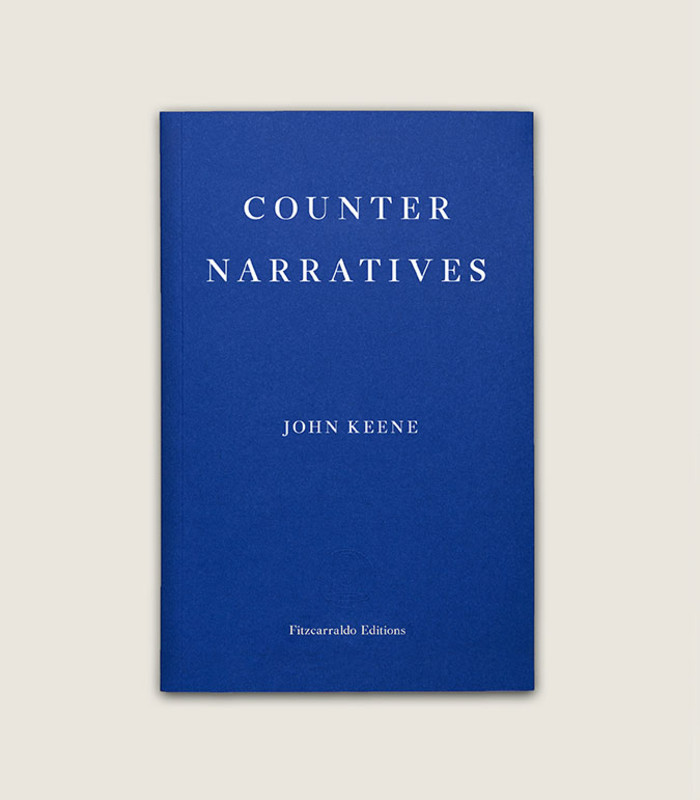
Counternarratives continues to receive reviews, and very good ones, for which I am extremely thankful. In addition to the slowly gathering ratings on Goodreads (thank you!), an excellent review recently appeared in Bookforum. Written by Max Nelson, it offered a distinctive, affirmative, nuanced critical take on the book. One thing I really appreciate about the piece was his discussion of the collection's prose. Here's the opening snippet:
The American author John Keene writes sentences that begin in states of tight restraint, steadily loosen, unravel, sprawl or expand, and then—in their last few beats—contract suddenly into piercingly acute points. One such sentence comes two-thirds of the way into an epically named story, “Gloss on A History of Roman Catholics in the Early American Republic, 1790-1825; Or the Strange History of Our Lady of the Sorrows,” included in Keene’s remarkable new short fiction collection Counternarratives. The sentence conveys—among other things—one of the story’s grimmest plot twists. A dead, unidentified newborn has been found at a secluded convent in early-nineteenth-century Kentucky. None of the nuns or students could have been responsible, two schoolgirls decide among themselves, because “none of them could possibly have been with child.”
I thank Max Nelson, and invite you to savor his critical acumen and prose, which are quite artful themselves!

<<<

As an entrant to their annual award, Larry Dark at The Story Prize invited me to contribute a short post about Counternerratives for its blog site, so I tried to think of something I had not yet discussed extensively in interviews or public conversations, but which has come up in reviews. What I thought about was the music of the prose in many of the stories, and here is the link to what I wrote, keeping under the 750-word limit: "John Keene's Hidden Soundtrack."
If you were to place any book against your ear, what would you hear? Unless it were an audiobook, very likely nothing behind the sound of paper on skin, along with background ambient sound. One aspect of my collection Counternarratives that surprises me when I reread it, however, is that each story's prose contains an internal music and rhythmicality specific to that text, and both function in complementary, productive ways in relation to the stories' narration. I find myself surprised because when I was writing the stories, I was not consciously considering this element of my prose, yet somewhere in my subconscious, I apparently was scoring and setting pitches. Additionally, among the thirteen stories in the collection, only two specifically explore the lives of musicians, and in only one of these, "Cold," which recounts the final day in the life of the minstrel composer and performer Bob Cole, was I intentionally attempting to convey what the composer's music might have sounded like.
There's more, along with sharp pieces by many others at the Story Prize's blog and website.

>>>

I had never before set up Google Alerts, but did so recently, and given my ineptitude with online technology, it has not alerted me to a single new thing that regular Googling or searching Twitter also reveals. The other day, via Google's standard search tool, I happened upon a beautiful mention of Counternarratives and Annotations (!) by the acclaimed writer Maud Casey in the Washington City Paper, in a column focusing on what local DC-area writers are reading this summer. Casey mentions that she is currently reading Maggie Nelson's highly acclaimed The Argonauts, and then says:

The book I’m in the middle of is Helen MacDonald’s H is for Hawk, a raw, beautiful, elegiac love story involving a ginormous goshawk. The book I’ll be reading next is John Keene’s collection of stories and a novella, Counternarratives. His first novel, Annotations, blew me away, and Counternarratives looks to be as nimble and strange and awesome. James Baldwin wrote, “The purpose of art is to lay bare the questions hidden beneath the answers” and Keene—and Nelson and MacDonald—do that. I’m very pro-questions these days.
Talk about fine company! Many thanks to Maud Casey for the shot out!

<<<

Some of last week's harvest from the garden. The blackberries are thriving, though smaller than in prior years. All of the other plants are also thriving. Caterpillars are eating the collard greens, so we'll have to find a non-toxic solution to get rid of them. Any suggestions are welcome.


Friday, June 12, 2015

Remembering Ornette Coleman

(Randolph Denard) Ornette Coleman (March 9, 1930 - June 11, 2015) succeeded, through his extraordinary musical gifts and linguistic inventiveness, in introducing a new term and form into American music: free jazz. It was the genre for which Ornette--whose first name alone sufficed as his calling card--was best and will always be known, and it exploded upon the landscape with such force that some major figures have still not fully reckoned with it. He did not, however, introduce free jazz alone; his collaborators, beginning in the late 1950s, were the heralds of, as Coleman's albums announced, "Something Else!!!!," "The Shape of Jazz to Come," "Tomorrow is the Question!," and of course, "Free Jazz."

Ornette Coleman was born and grew up in segregated Fort Worth, Texas, and never formally studied music, though he began playing the saxophone while still in high school. He allegedly was dismissed for improvising during a performance of John Philip Sousa's famous march, "The Washington Post"--the shape of things to come!--and later performed R&B and bebop, then the dazzling, dominant trend in jazz, first with his own band and then with a traveling R&B show. After a brutal physical attack in Baton Rouge, Louisiana, Coleman switched to the alto saxophone, which would become his primary instrument for the rest of his life.

Beginning with Something Else!!!: The Music of Ornette Coleman and continuing through the landmark albums of the early 60s, which paralleled Ornette's gigs at major venues across the US, he developed what would become quickly viewed as a revolutionary approach to jazz. I am obviously not a musicologist, but I can say that when I listen to these records I hear the variations of the blues and bebop expressed as a series of wails, plaints, chants, extended runs; dissonance liberated, melodies stretched like rubber bands, and harmony pressed beyond its limits in improvisatory and daring ways in solos and instrumental combinations; and a sense of ever-new discovery of what a (plastic, initially) saxophone individually and in combination with small ensemble, can do. Coleman labeled his approach harmolodics, which he defined as "the use of the physical and the mental of one's own logic made into an expression of sound to bring about the musical sensation of unison executed by a single person or with a group."

Coleman drew supporters, among this collaborators such as Don Cherry, Paul Bley, Billy Higgins, Charlie Haden, and even Lionel Hampton and Leonard Bernstein, but also harsh critics; Miles Davis, another of the greatest musicians of his era and a bebop veteran who was pioneering his own new style in the late 50s, "cool jazz," in some ways perhaps the musical antithesis of Coleman's development, mocked the saxophonist, saying he "was all screwed up inside," though he allegedly subsequently retracted this statement.  The effects of Coleman's and his collaborators' performances and pressings, however, would ripple out with free jazz becoming a genre in its own right. From the mid-1950s through the mid-1960s, he was married to the great poet Jayne Cortez, and their son, Denardo Coleman, eventually became an important musician in his own right.

Later Coleman shifted to working with bigger ensembles, particularly string orchestras, as well as electronic instrumentation, and tended to record his own compositions. One of my favorite albums by him is his 2005 LP Sound Grammar, which features tunes that quote standards by Richard Rodgers, among others. The album received a 2006 Grammy nomination for Best Jazz instrumental Performance, and went on to receive the 2007 Pulitzer Prize in Music, making Coleman the first and only person to receive a Pulitzer Prize in music for a jazz recording, and only the second African American winner in this category. Among his other honors were the 2001 Praemium Imperiale from the Japanese Imperial family, the 2004 Gish Prize, the 2009 Miles Davis Award, and a 2007 Grammy for Lifetime Achievement.

Though he is gone, his music--and free jazz, in its many permutations today--will live on. Here are a few recordings. Enjoy!

The Shape of Jazz to Come (full album), 1959

Free Jazz, 1960

Tomorrow Is the Question (Full Album), 1959

 Dancing In Your Head (Full Album), 1976
Sleep Talking, from Sound Grammar, 2005

Sunday, May 17, 2015

Remembering B. B. King

It felt momentarily like a light went out in the world when Riley B.--"B. B."--King (b. September 16, 1925, near Itta Bena, Mississippi) passed away last Thursday. One of the consummate and best known musicians of his generation, he excelled as a songwriter, singer, and guitarist in a range of musical genres, though he was without a doubt most renowned for his skills as a bluesman and as a pioneering instrumentalist who influenced several generations of blues, R&B and rock & roll guitarists, including Eric Clapton and Jimmy Page. His skillful use of vibrato in his solos, and his style of singing, which matched restraint and deep emotion, are unforgettable once you have heard them. It is no surprise that he gained the nickname "The King of the Blues" and that he was considered one of the "Three Kings of the Blues," along with the late Albert King and the late Freddie King.

King grew up in Indianola and Kilmichael, Mississippi, the home of many of the greatest artists working in the blues, and sang in the church choir as a child, his immersion in church music evident to the very end. Self-taught on the guitar, he began performing as a traveling guitarist with the King John's Quartet while still a teenager, and eventually began to make a name for himself on the radio while playing in Memphis, Tennessee, another major home for the blues and black music. While DJing at WDIA radio station in Memphis, King gained the nickname "Beale Street Blues Boy," which became "Blues Boy" and then the lasting "B. B." by which he would be revered by music lovers across the globe. Although he began playing on an acoustic guitar, he would eventually shift to an electric guitar and develop the style that grew into his trademark.

By the 1950s King had formed his own bands, started composing, recording and touring the US, and garnering fame with the then burgeoning genre of rhythm and blues. Among his major hits from this era were "Woke Up This Morning," "Whole Lotta Love," "Every Day I Have the Blues," "Sweet Little Angel," and "Please Love Me," a number of which were later covered to great acclaim by other musicians. King founded his own record label in Memphis, Blues Boys Kingdom in 1956, allowing him to record and promote other important R&B and blues musicians. As his fame grew, he reached new audiences, appearing as the opening act for the Rolling Stones 1969 tour, recording with U2, Clapton and others, and charting on the R&B and pop charts, but he never lost his deep connection to blues or his distinctive performing style, as recordings and video clips up to the end of his life attest.

B. B. King received a Grammy Award in 1970, the National Medal of the Arts from President George H. W. Bush in 1990, and the Presidential Medal of Freedom from President George W. Bush in 2006. He was inducted into the Rock and Roll Hall of Fame in 1987. In its 2011 list of the 100 greatest guitarists of all time, Rolling Stone ranked him #6. On May 1 of this year, he announced that he was in hospice care, having battled complications caused by diabetes for several decades.

We have his music, though, so that light still burns. Below are a few clips of King performing, from the late 1960s through 2011. They take me back to my childhood and adolescence, when my father would put his records on, sharing his love of the King's music and pointing out one of the sources of the r&b and rock & roll I was listening to. RIP, B. B. King, and do watch and enjoy the YouTube lips.


B. B. King giving what he felt was one of his best recorded performances

Sounding Out (1972)

B. B. King, live in Africa

B. B. King on Ralph Gleason's Jazz Casual, in 1968

B. B. King performing "The Thrill Is Gone," in 1971

B. B. King and Buddy Guy, performing "I Can't Quit You Baby"

B. B. King, with Stevie Wonder and John Legend, performing "The Thrill Is Gone," in 2009

B. B. King, Eric Clapton, Buddy Guy, and Jimmy Vaughan, performing "Rock Me Baby"

Friday, June 20, 2014

Word for Word Lunch Poems at Bryant Park + Jeffery Renard Allen at Powerhouse

Among the many treasures New York City offers year-round is the weekly Word for Word series at the outdoor Bryant Park Reading Room, right behind the New York Public Library's Schwarzman Research Branch. Organized by Paul Romero, the poetry readings occur on Tuesdays (and some Wednesdays) in the evening and Thursdays at lunch time from January through the late fall, , except on major holidays, and feature a diverse range of readers. This year's lunchtime readings have been organized around specific presses and poetry organizations and groups, so poets published by Coffee House Press, Song Cave Press, WordTech Communications, and affiliated with CUNY and Blue Flower Arts have read so far.

Yesterday, as part of a summer-long tribute to the 50th Anniversary of the publication of Frank O'Hara's (1926-1966) legendary Lunch Poems (City Lights Books), Patricia Spears Jones invited four fellow poets to read poems inspired by O'Hara book and work, and one of his central figures and themes, New York City. Poets Lydia Cortes, Sharan Strange, Jocelyn Lieu, and Jessica Greenbaum, as well as Patricia, each read a poem by O'Hara--including some of my favorites, like "A Step Away from Them" and "Steps"--followed by their own. O'Hara's casual tone, his engagement with the everyday, his often breezy treatment of desire and love, his incisive humor, and his urbanity, all surfaced in the poems of each poet. 

Cortes read several poems that dealt with her Puerto Rican heritage; Strange also explored city life, including a poem that mentioned another poet who was present, Thomas Sayers Ellis, snapping photos throughout, and ended with an unforgettable tribute to her mother; Lieu read a series of "Hard Times Haikus" that weren't exactly haikus but distilled experience, with concision and wit, as effectively as that form can; Jessica Greenbaum invoked Florence Nightingale; and Patricia, accompanied by rain, and then by an umbrella-bearing Paul Romero, brought Paris, philosophers, Ellis (again), curses, and Freedom Summer into the mix. Though I headed off to lunch with another poet friend who attended the reading, the poems, O'Hara's and everyone elses, were satisfyingly filling all by themselves.

Lydia Cortes
Jessica Greenbaum
Jocelyn Lieu
Sharan Strange
Paul Romero, and Patricia Spears Jones
***

Later that evening, at the Powerhouse Arena in Dumbo, Brooklyn, poet, fiction writer and professor Jeffery Renard Allen read from his acclaimed new novel The Song of the Shank, which fictionalizes the life of Thomas Green "Blind Tom" Wiggins (1849-1908), a 19th century enslaved African American whose piano performances were legendary in their day. Jeff began the reading by talking how an Oliver Sacks article he read years first hipped him to Blind Tom's story; he noted his particular fascination with Sacks's discussion of the "autistic sublime," which he attempted to depict in his text. Other aspects of Blind Tom's life, such as his performances on behalf of the Confederacy, and his refusal, after a certain point, to perform, required a complex rendering that Jeff, as the author, had to negotiate.

He then described how he transformed Wiggins's troubling story into a novel, which took him a decade to write and which involved several false starts. His ultimate discovery entailed eliding certain historical specificities, staying aslant of Blind Tom's interiority, pushing the boundaries of realism, and taking a few other authorial liberties to bring the story to life. He also learned a few things he did not know before, such as that "the blind can cry." (I didn't know this either, but I won't forget it.) Although there are no recordings of Blind Tom's music, a Brooklyn-based performer, John Davis, has reconstructed some of them, but Allen relied primarily on his imagination. The stellar reviews he has received so far strongly affirm his approach.

After Jeff finished reading and answering questions, performer Genovis Albright accompanied him, performing one of Blind Tom's infamous tunes, "The Battle of Manassas," which sounded a lot like "Dixie." One of Blind Tom's performance techniques was to play multiple tunes--sometimes three at once--simultaneously, and Albright appeared to do this briefly, which immediately brought to mind the music of Charles Ives. I asked Albright about this, specifically mentioning his symphonies, but he wasn't sure what I meant, and afterwards I sent Jeff a note thanking him for the reading but also rhetorically wondering whether any Ives scholars had investigated whether he heard Blind Tom's performances. Given that both may have lived in and around New York at the same time, it would not be inconceivable, would it? Jeff's reading deeply sparked my interest, and The Song of the Shank is at the top of my list of summer reads.

Jeffery Renard Allen
Genovis Albright

Sunday, November 10, 2013

Poem: Kei Miller

Kei Miller 

SOME DEFINITIONS FOR SONG

the speech of birds, as in birdsong, but with exceptions. Pigeons do not sing. Vultures do not sing. A bargain, or a very small sum, as in “he bought it for a song.” Think what we could purchase with songs, thrown across the counter and landing more softly than coins. Perhaps then, the origin of the expression, to sing for your supper. The troubled sound that escapes from a woman’s mouth while she dreams of fire, also any sound that escapes, also anything that escapes; a passage out, the fling up of hands. A prison break is a song. The parting of the red sea was a song. In Israel there are many songs, but there should have been six million more. Across the Atlantic, there are many songs, but we needed 10 million more. Sòng (宋國) was a state during the Eastern Zhou Spring and Autumn Period (770–476 BC). Its capital was Shangqiu. Anything that climbs is a song; vines are a song; my father, 70 years old, at the top of the ackee tree is a song; all planes are songs. Song was a low-cost airline operated by Delta. Tourists were flown by Song to Florida. Song’s last flight was on April 30, 2006. All that pleases the heart. All that pleases the ear. The final measure of joy. When we have lost song, we have lost everything. A common surname in Korea, often transliterated as Soong. What would it mean if your name was Song? Song is the third and final album of Lullaby for the Working Class. It was released October 19, 1999. Songs often refer to songs, as in “He shall encompass me with a song”; “Sing unto the Lord a new song”; “Sing a song of sixpence”. Sing a song. Sing a song.

Copyright © Kei Miller (b. 1978), "Some Definitions for Song," in the The Caribbean Review of Books, May 2010.

Monday, November 04, 2013

Baden-Baden 1927 at Gotham Chamber Opera


The set, designed by Georg Baselitz
and Court Wilson

In 1927, two years before the US Stock Market crash, on the eve of the Great Depression and the eventual fall of Germany's democratic republican government, the organizers of the German Chamber Music Festival invited four young composers each to present a Zeitoper (opera of the current moment/time). Two were German: Kurt Weill and Paul Hindemith; one was Austrian, Ernst Toch; and the fourth, Darius Milhaud, was French. Additionally, Weill, Toch and Milhaud were Jewish composers coming of age in the moment just before National Socialist fascism began infecting the body politic of Germany, and later that of Austria. Three of them also constituted a distinct strand of the contemporary European musical avant-garde: Weill incorporated cabaret tunes, other forms of popular music, and English texts, often inflected by his left-leaning convictions; Hindemith played with structure and daring content, especially in his initial trio of operas; and Milhaud drew from and wove jazz idioms into his scores.


From Mahagonny-Songspiel
(Photo by Richard Termine)

So the future was then, in Baden-Baden. Each of the selected composers brought to the festival's spectators a brief, pared-down operatic work he felt reflected the times. Kurt Weill staged his Mahagonny-Songspiel, a loosely linked six-song prequel to his masterpiece with Bertolt BrechtDer Aufstieg und der Fall des Stadts Mahagonny (The Rise and the Fall of the City of Mahagonny). Paul Hindemith, who had become a young master of the Zeitoper format, presented his palindromic Hin und zurück (There and Back), which was in many ways a preparatory step for his larger three-act Neues vom Tage several years alter. Darius Milhaud, one of the key figures in Les Six, the French Modernist musical collective, offered a violent monodrama, L'enlèvement d'Europe (The Abduction of Europa); and Ernst Toch, who had begun to develop his own polyphonic style, presented the seemingly light confection Die Prinzessin auf der Erbse (The Princess and the Pea).
Thanks to the Gotham Chamber Opera, now in its 12th season, today's opera lovers got a chance to hear all four operas in one evening, as spectators might have in that German spa town in July of 1927. The New York versions, directed by Scotsman Paul Curran, however, which ran from October 23-29, were staged in a distinctly up-to-date fashion, with production design by German artist Georg Baselitz and Court Watson, hinging the theme of "What Is Art?", a question as relevant in the Modernist ferment of the 1920s as it is in our post-post-modern moment. Yet this underlying theme, as it played out in the staging, did not lend itself well to all of the works. On the other hand, the opera company cast--led by star soprano Helen Donath, with soprano Maeve Höglund, mezzo-soprano Jennifer Rivera, tenors Daniel Montenegro and Matthew Tuell, baritone Michael Mayes and bass John Cheek--and the orchestra, led by conductor Neal Goren, did a superb job of bringing each of the works to life musically. My opera companion noted the textural richness the small orchestra captured in each work, and the pianists accompanying the orchestra for the Hindemith piece played with untrammeled contrapuntal fury, giving listeners the sense of a scene exploding forth into being. (I could easily sit through those opening bars again and again.)


From Hin und zurück
(Photo by Richard Termine)

Milhaud's opera, one of his trio of Opéras-minutes and only 8 minutes long, was perhaps the best suited to the theme and set, as the work's singers, appearing as gallery attendees admiring the set's immense canvas featuring a Baselitz-style image, slid from their silent appreciation to a recounting of the musical work's events. Milhaud's lush but tiny score was over before it began, with a dead body as its exclamation point. Toch's literal retelling of the story "The Princess and the Pea," and its dramatic and musical whimsy, transposed onto a reality-show frame, was aesthetically out of joint with everything else. The set, which now included a giant bed atop whose back the prince initially perched, before it turned around to reveal a Himalayan pile of mattresses on which the putative prince capered, wracked my nerves; instead of focusing on Toch's cheery melodies, I found myself praying no one fell from that precarious aerie. The opera company might moreover have done more to explore the deeper idea in the fairytale and in Toch's work, of the beloved needing to possess a particular kind of purity, especially given Toch's background and the looming consequences of racialization in subsequent decades.
After a short break, Hindemith's 12-minute "Sketch mit Musik," as he described it, unfolded in thrilling fashion. Very much redolent of silent movies--then current--and Expressionist works in all genres--visual art, literature, music--Hin und zurück tells the story of a woman who decides to have breakfast with her grandmother when her husband arrives home with with a gift for her birthday. She also receives a letter from her lover, which the husband sees, and he ends up shooting her before jumping out of the window. In 6 minutes! This being an avant-garde work, an angel-like figure appears, sings that nothing matters, and rewinds the entire story, not just dramatically--which means that the wife, her husband, and granny all move backwards--but musically, as a palindrome. It was over almost as soon as it began, but it made me wonder whether it influenced some of the internal musical mirroring in works by Hindemith's peers, including Bela Bartók and Alban Berg, who has palindromes in both his "Chamber Concerto" and his final, unfinished opera Lulu.


From Die Prinzessin auf der Erbse
(Photo by Richard Termine)

My main reason for attending the concert, though, was to hear Kurt Weill's music performed live. I had never heard anything by him in a live setting, so the six Mahagonny-Songspiel songs, several of which I knew pretty well, were a revelation, chief among them Elisabeth Hauptmann's English-language parodies the "Alabama Song" and the "Benares Song." The singers, especially the famous soprano Helen Donath, served up the perfect mixture of beauty and yearning as she crooned, "Oh moon, of Alabama…." The staging, however, did neither the songs nor the concept behind them, no credit. The cast performed one of them on treadmills (?), and as with Toch's opera, I found myself focusing more on their personal safety than on what they were singing. The Mahagonny songs' commentary on the underside of jazz age prosperity--dissolution, poverty, homelessness, the desire for escape with no place, not even Mahagonny, offering anything but illusion--lacked its reflection in the set, not least when a performer wandered around in his underwear (huh?), though the performers did their best to bring the songs to life. The staging was, unfortunately, a lost opportunity. For a very affordable price on a fall evening, though, the opportunity to see four live early 20th century operas, whatever their failings, was an excellent deal.


The cast, with the conductor