Showing posts with label prose. Show all posts

Thursday, June 13, 2019

American Academy of Arts & Letters Ceremonial 2019 & Award

Six years ago, back in 2013, I blogged about attending the American Academy of Arts & Letters' annual Ceremonial award celebration. I was the guest of a friend and colleague, Dorothy Wang, who was a guest of an award-winner, the poet Joanna Klink, and though I had seen some of its award winners and awards I'd seen listed over the years, I had no idea about the organization or where it headquarters were located, let alone about its awards. In fact, I often mistook it for the American Academy of Arts & Sciences, which is located in Cambridge, not New York; they are two similar but distinct organizations. The latter encompasses the sciences and is more of a scholarly honors organization, while the latter primarily focuses, as its name suggests, on arts and letters.

Aububon Terrace (photo by C)
In my previous post, I gave a potted history of the AAAL:
It's an august institution too: a closed honor society of 250 members selected and elected by standing members without outside nomination, it grew out of the National Institute of Arts and Letters, founded in 1898, consisting eventually of 200 members, from which the American Academy of Arts and Letters, a smaller and more elite sub-organization of 50 of the most eminent figures in their fields, emerged in 1904. US President William Howard Taft signed a Congressional act that incorporated the Institute of Arts and Letters in 1907, and the Academy in 1916. In 1976 the two organizations merged, and in 1993, all 250 members merged into one entity now known as the American Academy of Arts and Letters.
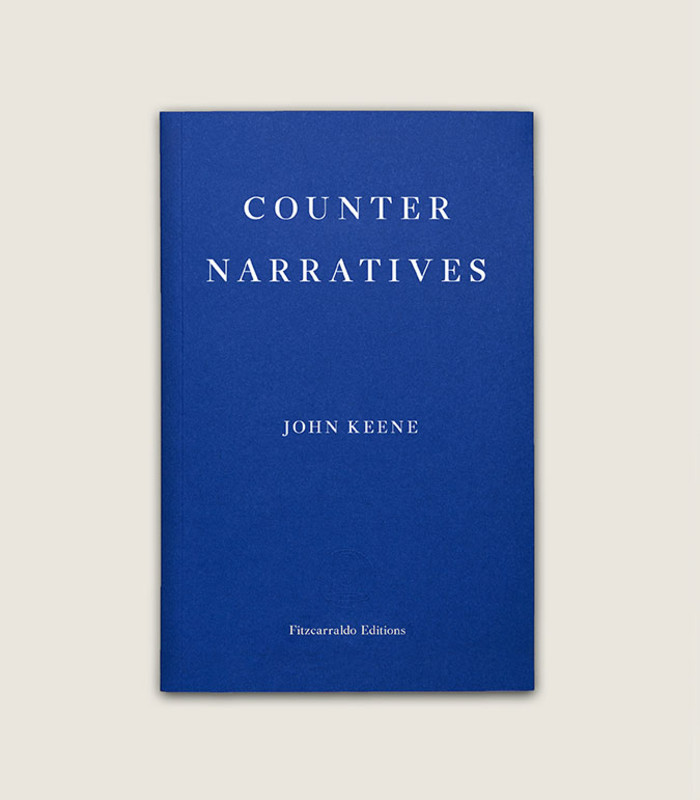
I also mentioned some of its members and the day's award-winners, a few like my former graduate school professor and thesis advisor E. L. Doctorow no longer with us, so won't recapitulate that earlier blog post, but I will say that uncanny pleasure of once again attending a Ceremonial up at Audubon Terrace in Washington Heights, this year, as a recipient, having received the Harold T. Vursell Award in Fiction. This award is given to a writer specifically based on the quality of their prose. (!) J's Theater readers will note my often baroque stylings (and typos, forgive me) here, and perhaps ponder why I was designated a recipient of this prize, but it was primarily for Counternarratives, in which my rhetorical and syntactic play was, I think it fair to say, at its most daring, and so I took the honor as an affirmation of what I attempted in that book, though I also think it's probably not wrong to suggest that all of my published books have in them some sort of experimentation when it comes to prose or verse, and that when it works, it is at least distinctive if nothing else.

As an award recipient, I was invited to a pre-Ceremonial reception and luncheon, which C attended with me, as did my New Directions editor and publisher, Barbara Epler, and I had the opportunity there to tell Jamaica Kincaid once again how much of a fan I was and am. Her prose, as well as her inventiveness as a storyteller and novelist, have been among many powerful influences on my own work. I also had the opportunity to chat with a few fellow award winners or new members, including poets Aracelis Girmay, fellow former Dark Room member Natasha TretheweyMarilyn Chin, Claudia Rankine, and Grace Schulman, and fiction writers Alice Hoffman, Lorrie Moore and my collegue Jayne Anne Phillips, who was elected to the AAAL a few years ago. After the luncheon, as before it, C and I viewed some of the art and literary materials, by members and recipients on display.

One of the more fascinating rooms featured the photos of all the prior and present members, lined up in rows in stall-like spaces. The original members were, unsurprisingly, all white men, a great many of them legendary names in American culture, which got me wondering who had not been a member yet produced work that today we hold in high esteem (F. Scott Fitzgerald, to name one, Ernest Hemingway to name another); on the other hand, many of the names would not register at all to contemporary sensibilities. At a certain point, a few white women's faces pop up, and then, slowly, the further we progressed into the 20th century, there were more white women, a few black writers, like W. E. B. DuBois (was he the first?) and Langston Hughes, and then black classical composers and jazz musicians, Asian American, Latinx, and Native American writers' portraits appear (see the photos below). The Academy's members still strongly reflect the upper reaches of the preponderantly New York-and-northeastern based world of architecture, visual arts, literature, and European-American art music, but the awardees have begun to diversify somewhat more, or so I was told. Certainly this year's winners were more racially and generationally diverse than I recall from 2013.

In one of the rooms featuring paintings
bequeathed by American Impressionist
F. Childe Hassam (photo by C)
One of the rooms in the American Academy
 headquarters  (photo by C)
Members and honorees assembling on stage
 (photo by C)
Once the Ceremonial began, I took my numbered seat on the stage, between Jamaica Kincaid and poet D. A. Powell, also a prize recipient; to his left sat our presenter and a member of the committee that selected us, poet Henri Cole. A row behind me sat Eileen Myles, among others. A number of illustrious members, like sculptors Martin Puryear and Richard Hunt, whom I mentioned in my prior post, and honorees like Meredith Monk and Thelma Golden, were seated in the front row.  This year's recipient of the Gold Medal for Literature, the Academy's highest honor, Toni Morrison, and the Gold Medal for Art, Lee Bontecou, were unable to attend, and so were fulsomely lauded by their presenters. One highlight of this year was the Blashfield Lecture by Pulitzer Prize-winning composer David Del Tredici, once a controversial figure in the American classical music world and now a venerable and venerated elder. Del Tredici's lecture, "The Task of Gayness," explored his coming into his own in his field, and out as a gay man, with humor and concision. Were he to write a memoir, I'd most certainly buy it.

A photo of me walking to receive
my award from Henri Cole (photo by C)
Receiving my award from Henri Cole
(Photo by C)
At the conclusion of the awards ceremony, which ran roughly an hour, another reception unfolded, on a bright and sunny but thankfully not hot afternoon, which afforded us an opportunity to speak with more writers, editors, artists, and others in attendance. It was, all in all, a lovely afternoon, and many thanks to the Academy jury for the award!

Monday, July 20, 2015

Summer Notes

July is racing by. I was wondering when the brutal summer heat would finally appear and today, it settled on our doorsteps. I no longer gallivant about in it like I used to; age and health have a way of finally impressing better sense on some of us at least, so I made sure my trips outdoors today were brief. This blog post will be like those trips, brief and full of little snippets.

>>>

Counternarratives continues to receive reviews, and very good ones, for which I am extremely thankful. In addition to the slowly gathering ratings on Goodreads (thank you!), an excellent review recently appeared in Bookforum. Written by Max Nelson, it offered a distinctive, affirmative, nuanced critical take on the book. One thing I really appreciate about the piece was his discussion of the collection's prose. Here's the opening snippet:
The American author John Keene writes sentences that begin in states of tight restraint, steadily loosen, unravel, sprawl or expand, and then—in their last few beats—contract suddenly into piercingly acute points. One such sentence comes two-thirds of the way into an epically named story, “Gloss on A History of Roman Catholics in the Early American Republic, 1790-1825; Or the Strange History of Our Lady of the Sorrows,” included in Keene’s remarkable new short fiction collection Counternarratives. The sentence conveys—among other things—one of the story’s grimmest plot twists. A dead, unidentified newborn has been found at a secluded convent in early-nineteenth-century Kentucky. None of the nuns or students could have been responsible, two schoolgirls decide among themselves, because “none of them could possibly have been with child.”
I thank Max Nelson, and invite you to savor his critical acumen and prose, which are quite artful themselves!

<<<

As an entrant to their annual award, Larry Dark at The Story Prize invited me to contribute a short post about Counternerratives for its blog site, so I tried to think of something I had not yet discussed extensively in interviews or public conversations, but which has come up in reviews. What I thought about was the music of the prose in many of the stories, and here is the link to what I wrote, keeping under the 750-word limit: "John Keene's Hidden Soundtrack."
If you were to place any book against your ear, what would you hear? Unless it were an audiobook, very likely nothing behind the sound of paper on skin, along with background ambient sound. One aspect of my collection Counternarratives that surprises me when I reread it, however, is that each story's prose contains an internal music and rhythmicality specific to that text, and both function in complementary, productive ways in relation to the stories' narration. I find myself surprised because when I was writing the stories, I was not consciously considering this element of my prose, yet somewhere in my subconscious, I apparently was scoring and setting pitches. Additionally, among the thirteen stories in the collection, only two specifically explore the lives of musicians, and in only one of these, "Cold," which recounts the final day in the life of the minstrel composer and performer Bob Cole, was I intentionally attempting to convey what the composer's music might have sounded like.
There's more, along with sharp pieces by many others at the Story Prize's blog and website.

>>>

I had never before set up Google Alerts, but did so recently, and given my ineptitude with online technology, it has not alerted me to a single new thing that regular Googling or searching Twitter also reveals. The other day, via Google's standard search tool, I happened upon a beautiful mention of Counternarratives and Annotations (!) by the acclaimed writer Maud Casey in the Washington City Paper, in a column focusing on what local DC-area writers are reading this summer. Casey mentions that she is currently reading Maggie Nelson's highly acclaimed The Argonauts, and then says:

The book I’m in the middle of is Helen MacDonald’s H is for Hawk, a raw, beautiful, elegiac love story involving a ginormous goshawk. The book I’ll be reading next is John Keene’s collection of stories and a novella, Counternarratives. His first novel, Annotations, blew me away, and Counternarratives looks to be as nimble and strange and awesome. James Baldwin wrote, “The purpose of art is to lay bare the questions hidden beneath the answers” and Keene—and Nelson and MacDonald—do that. I’m very pro-questions these days.
Talk about fine company! Many thanks to Maud Casey for the shot out!

<<<

Some of last week's harvest from the garden. The blackberries are thriving, though smaller than in prior years. All of the other plants are also thriving. Caterpillars are eating the collard greens, so we'll have to find a non-toxic solution to get rid of them. Any suggestions are welcome.


Sunday, March 17, 2013

Book Launches @ Poets House

Though still recovering from AWP I headed over to Poets House last Sunday to catch Nightboat Books's book launch party to celebrate the publication of Coming Events (Collected Writings) by Susan GevirtzMusic for Porn by Rob Halpern; and Sisyphus, Outdone. Theatres of the Catastrophal by Nathanaël. Poet and Nightboat Books publisher Stephen Motika introduced all three writers, who read snippets of their work, and then all three participated in a conversation that poet Douglas A. Martin moderated.

As the names of the writers suggest, these were three challenging texts that defy conventional genres. Nathanaël's text, which incorporate its footnotes as side notes and takes on a number of themes and topics, circled around the question of translation, in particular a prior text of hers, even as it unfolded as an autonomous text-critique in its own right. Halpern's work aimed, in his words, to explore "the allegorical figure of a soldier's wound," redressing Whitman's similar project via Charles Olson and the strategies of Genet. Gevirtz first delivered a talk aimed in part at addressing the relationship between poetry and thought, challenging Socrates's statement in the Ion that "For not by art [techne] do the poets sing, but by divine inspiration." Fluidity of genre--gender, as Nathanaël pointed out, in tracing back the root of the English word to its French antecedent--appeared central to her thinking. She followed the short essay with a selection of one of her poems from her collection.

The question and answer session ranged over these issues and others, proceeding from Martin's initial questions, which cited Gertrude Stein and Martin Heidegger, who had already arisen in Gevirtz's essay. The concept of mystery (Geheimnis) was one Martin mentioned and that several of the writers returned to, though Nathanaël deftly avoided invoking that philosopher and instead talked about other figures in her work, a chief one being that the seisme, or earthquake/aftershock, suggesting--while also avoiding explaining or defending her work--that, if I understood this correctly (and I might not have), that its implicit anteriority informed Sisyphus. For Halpern, the potential problem his text sparked in its abstraction of the soldier's body (and specificity), as well as that of the migrant worker (among others), was one he mentioned he had attempted to address on his text's first page, but he admitted he was not sure if he had resolved it. I had already purchased a copy of Nathanaël's book, so I bought Halpern's and Gevirtz's, and imagine spending a while reading and thinking about all three of them.

Poet and publisher Stephen Motika
Poet and publisher Stephen Motika, introducing the reading
Nathanaël
Nathanaël reading
Rob Halpern
Rob Halpern, reading
Susan Gevirtz
Susan Gevirtz, reading
Douglas Martin, Rob Halpern, Nathanaël, and Susan Gevirtz at the Nightboat Books reading and book launch @ Poets House
Douglas Martin, Rob Halpern, Nathanaël, Susan Gevirtz

Yesterday, I headed back to Poets House for a reading by three poets published by Los Angeles's Red Hen Press: Dan Vera, Eloise Klein Healy, and Jane Hirshfield. In terms of poetic form, this reading was at the other end of the spectrum from the Nightboat books reading, but all three poets, like those at the reading last Sunday, took up political issues and questions in their work. Poet and Letras Latinas editor Francisco Aragón opened the event by introducing Dan, who read from his second book, Speaking Wiri Wiri, which won Red Hen Press's inaugural Letras Latinas/Red Hen Press Prize (2013). I'd picked up Dan's book at AWP, so I especially enjoyed hearing him bring the words to life in his own voice ("that property produces progeny").

Red Hen Press's Kate Gale followed by introducing Healy, named last year to be the first ever Poet Laureate of Los Angeles. She read from her just-published book, A Wild Surmise: New & Selected Poems (2013), drawing from her earliest to her most recent poems. I especially happy that she read several poems from Artemis in Echo Park (1991), the first book of hers I read and the one I most associate with her. Last up was Hirshfield, whose poetry I am not that familiar with, though I enjoyed what I heard. What I took most from her work was a feeling of concision, and striking metaphors ("shoaling bees"). Unlike last week's reading there was no question and answer session, but Red Hen did host a nice reception upstairs.

Francisco Aragon, introducing Dan Vera
Francisco Aragón, introducing Dan Vera
Dan Vera reading
Dan Vera reading
Eloise Klein Healy, at the Red Hen Press reading
Eloise Klein Healy introducing her poetry
Jane Hirshfield, about to sign a book
Jane Hirshfield, about to sign a copy of one of her books

Thursday, May 24, 2012

Congress's Speech, or They Don't Write Like They Used To


Yesterday, via Digby, I came across Lee Drutman's Sunlight Foundation's article on the "changing complexity of Congressional speech." According to the article, which Drutman and Dan Drinkard based on statistical analysis, using the Flesch-Kincaid test (which uses a "reads at a n-th grade level" standard), of the Capitol Words site's word cull of speeches given by members of Congress, the linguistic grade level among Congressional speakers on the floor of both houses has has fallen by nearly a grade level compared to 7 years ago, falling from a "10.6 grade level" to a "11.5 in 2005."

Drutman writes: "Congress now speaks at almost a full grade level lower than it did just seven years ago, with the most conservative members of Congress speaking on average at the lowest grade level, according to a new Sunlight Foundation analysis of the Congressional Record." Moreover, it turns out that the speech complexity of Republicans' official statements used to exceed that of Democrats, but that has flipped, and that members of Congress on the more moderate ends of both parties give more complex speeches than those on the less moderate ends, with conservative Republicans allegedly utilizing the lowest grade level.

Before you leap with delight at having your appraisal of Congress and of the GOP confirmed or start cursing and dismissing the study out of hand, I'd suggest one way of looking at this is that Congresspeople have begun to deliver speeches closer to that of average US voters who, according to Drutman, average out at an 8th grade reading level. Rather than talking down to constituents, they are talking, well, at them (though we all know the only people they're really talking to are the ones who bri...do various things for them involving sums of money).  In other words, I'm cutting them some slack.

I haven't watched C-SPAN in years, but I must admit that when I used to do so, in the late 1990s, I was often appalled at the simplistic level of the speeches Congresspeople on both sides gave, and it was a rare moment when the level of oratory (or wit, or knowledge, or anything) rose even to the standard that was expected of me and my coworkers, or that I had to achieve when speaking in high school. Former President Bill Clinton, however, like Secretary of State Hillary Rodham Clinton, then First Lady, was often very good at speaking off the cuff at a level and with a complexity that nevertheless did not exceed the grasp of listeners; in my opinion, both rarely failed to impress.

One of the things I've sometimes worried about with this blog and my writing in general is that my tendency is towards language that's too syntactically complex, ungainly, serpentine. I think in compound-complex terms, often opening a thought with a qualifying conjunction--it's just how my mind works.  I went through a period in which I strove to write simply and directly, and still try to do this when I have to deliver an introduction or talk, but since this blog is more of a sketchpad than anything else, I restrain myself less here. (Note that the preceding sentence stretches for five lines, and is compound in its syntax.) I can, however, write simply. Like now.

At any rate, I decided to try a different test to see at what level my writing averaged out, and used writingtester.com to assess the readability and grade level of my prose. I then scoured the web for snippets of work I could easily drop into writing tester's box. Most copyrighted work is difficult to copy and drop, but I also wanted to see how different prose texts over the last hundred or so years ranked. Our first two presidents, an Enlightenment philosopher, and Henry James land on the more difficult to grasp side; our most recent presidents, Toni Morrison, and Abe Lincoln write such that most people can understand them. I turn out to be rather close to Henry James. I'll take that as I shall.

One note: the hyper-enthusiastic, exclamation point-tipped guide for understanding the scores comes straight from the writing test site. I can be exuberant, but the lack of restraint below is not mine.

J'S THEATER'S PROSE

My Brooke-Rose commentary on this blog:

Readable Score: 32 (The higher the score the easier the article is to read!)
Grade Level: 10

My recent Drunken Boat book review:

Readable Score: 19 (The higher the score the easier the article is to read!)
Grade Level: 12

Opening section of my published short story, "An Outtake from the Ideological Origins of the American Revolution"

Readable Score: 34 (The higher the score the easier the article is to read!)
Grade Level: 10

Second section of my published short story, "On Brazil, or Dénouement: The Londônias-Figueiras"

Readable Score: 33 (The higher the score the easier the article is to read!)
Grade Level: 10

SOME OTHER RANDOM WORKS:

Opening paragraph of Immanuel Kant's Critique of Pure Reason (translated by J. H. Bernard, 1892, corrected for the tester):

Readable Score: -21 (The higher the score the easier the article is to read!)
Grade Level: 20

Declaration of Independence:

Readable Score: 20 (The higher the score the easier the article is to read!)
Grade Level: 13

Abraham Lincoln's Gettysburg Address:

Readable Score: 48 (The higher the score the easier the article is to read!)
Grade Level: 8

Opening paragraphs of Frederick Douglass's Narrative of the Life of Frederick Douglass: An American Slave, Written By Himself:

Readable Score: 51 (The higher the score the easier the article is to read!)
Grade Level: 7

Opening paragraphs of Herman Melville's Moby Dick:

Readable Score: 45 (The higher the score the easier the article is to read!)
Grade Level: 8 

Opening excerpt (beginning "The fact of his having married a rich woman") from Henry James's Washington Square (from Google Books)

Readable Score: 31 (The higher the score the easier the article is to read!)
Grade Level: 11

Opening excerpt (beginning "Jewel and I come up from the field") from William Faulkner's As I Lay Dying:

Readable Score: 47 (The higher the score the easier the article is to read!)
Grade Level: 8

Opening excerpt (beginning "124 was spiteful") from Toni Morrison's Beloved:


Readable Score: 61 (The higher the score the easier the article is to read!)
Grade Level: 6

Opening paragraphs of Zadie Smith's essay, "Generation Why?", New York Review of Books, November 25, 2010:

Readable Score: 45 (The higher the score the easier the article is to read!)
Grade Level: 8

Entire article "$tuck in a f’book bind: Wall St. leaves savvy invest kid in dark," by Mark DeCambre, New York Post, May 22, 2012

Readable Score: 44 (The higher the score the easier the article is to read!)
Grade Level: 8

Entire article, "Rutgers Webcam-Spying Defendant Is Sentenced to 30-Day Jail Term", by Kate Zernike, New York Times, May 22, 2012

Readable Score: 45 (The higher the score the easier the article is to read!)
Grade Level: 8

Entire article, "US-Pakistan tensions deepen as Obama snubs Zardari at Nato summit", by Ewen MacAskill, The Guardian Online, 21 May 2012:

Readable Score: 29 (The higher the score the easier the article is to read!)
Grade Level: 11

Entire article, "Man in his 40s becomes third person to fall down Niagara Falls and SURVIVE after failed 'suicide' plunge," by Daily Mail Reporter, Daily Mail UK Online, 21 May 2012:

Readable Score: 37 (The higher the score the easier the article is to read!)
Grade Level: 9

Entire article, "Dancing with the Stars Sizzles in Spectacular Finals," by Dahvi Shira and Mike Fleeman, People Magazine, May 21, 2012:

Readable Score: 37 (The higher the score the easier the article is to read!)
Grade Level: 9

Opening paragraphs of George Washington's "First State of the Union Speech," January 8, 1790:

Readable Score: 13 (The higher the score the easier the article is to read!)
Grade Level: 13

Opening paragraphs of John Adams's "First State of the Union Speech," November 27, 1797:

Readable Score: 3 (The higher the score the easier the article is to read!)
Grade Level: 15

Opening paragraphs of George W. Bush's "First State of the Speech," January 22, 2002:

Readable Score: 47 (The higher the score the easier the article is to read!)
Grade Level: 7

Opening paragraphs of Barack H. Obama's "First State of the Union Speech," January 27, 2010:

Readable Score: 49 (The higher the score the easier the article is to read!)
Grade Level: 7