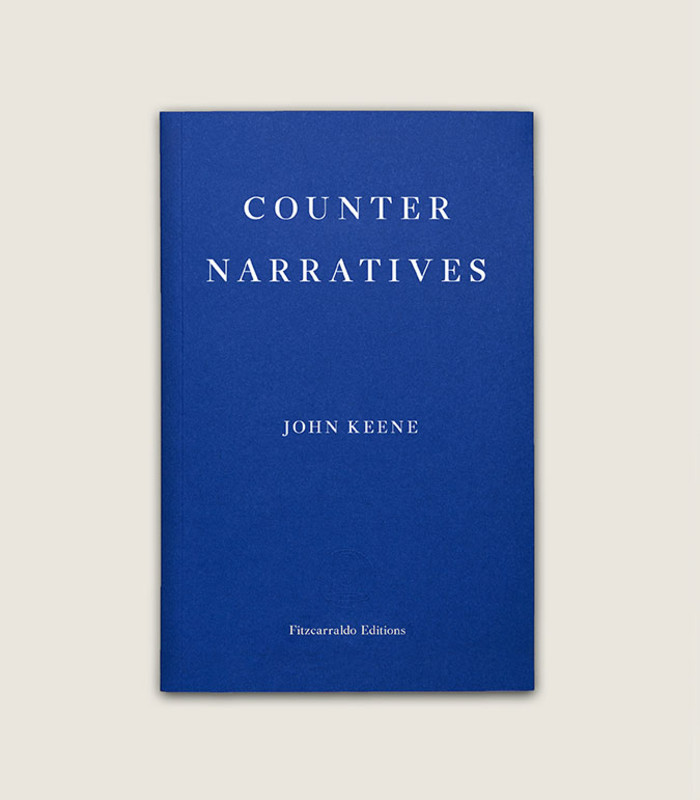
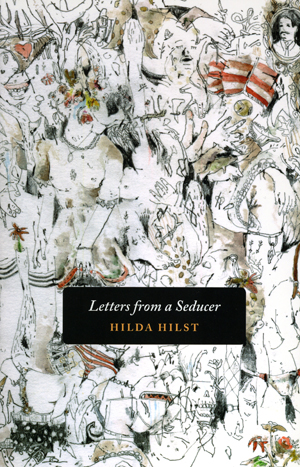
Showing posts with label memorial. Show all posts

Friday, June 17, 2016

Mourning the Orlando Massacre Victims

Several days have passed and I find myself still heartbroken, reeling really, in the wake of the horrific mass murder this past Sunday, June 12, at the Pulse Nightclub in Orlando, Florida. Not long after 2 AM EST, gunman Omar Seddique Mateen slaughtered 49 people, and wounded 53, on the club's Latin Night, before police finally killed him several hours later. Nearly 90% of those slain were Latino, with the rest being Black American or both, and nearly 50 percent had familial links to Puerto Rico. The youngest victim was 18, and the oldest was 50. One of the murdered, 49-year-old Brooklyn native Brenda Marquez McCool, is said to have shielded her son from death by urging her son to flee rather than come back to get her, and thus also be killed in cold blood. (I should note that I cannot type this sentence, let alone think about or read it, without tearing up.) The Pulse Nightclub shooting was one of the deadliest mass shootings in the US since the 19th century Civil War and massacres of Native peoples, and the early 20th century anti-black riots.

Here, courtesy of the Orlando Sentinelis the full list of the murder victims, with brief stories about their lives. Every single one is poignant and worth reading. Please let's not ever forget them. If you are interested in helping out the families of the deceased and wounded, you can do so here.


Out for a night of fun and joy, in a space they thought was safe--multiply so, in that they could be themselves as Latinx and Black queer people where their sexual orientations, gender identities, and intersectional presentations of self would be affirmed; where they could be themselves as working-class queer people in a society and larger culture that regularly demeans, marginalizes and dehumanizes them; and where they could be themselves in a space where their race and ethnicity would not subject them to the erasures of the mainstream white LGBTIQ community--the 300+ people at Pulse instead found themselves in a killing field. How many of us brown and black queer people have been in these very spaces, carefree, shedding the burdens of the day, of everything, for music, dancing, companionship, laughter, the possibilities and enjoyment of friendship and love?

Instead, by early Monday morning, the news was of so many lives cut down, so many at the beginning of adulthood and in their prime, once again by homophobia, and common to so many instances of recent mass murder in the US, gun violence.

There currently are conflicting reports about the terrorist Omar Mateen's background and actions on the night of the massacre, but what is clear is that he is a native of New York City, and moved to Florida as a child. His parents are immigrants from Afghanistan, and the day after the murder, Mateen's father claimed that his son's response to witnessing two men kissing publicly might have been a factor in his decision to launch his rampage. Mateen was twice married, and has one child; his first wife, who now lives in Colorado, alleges that he beat her and was often angry, and that she had to be rescued from him by her parents. The FBI twice investigated Mateen, but supposedly dropped its investigation for lack of evidence. Despite this background he was still able to buy semi-automtic weaponry and deadly ammunition with relative ease. His second wife appears to have known about Mateen's plans, and allegedly even cased the bar with him and tried to dissuade him, though whether this is true has yet to be established. Whether she will be charged an accessory and conspirator is unknown. During a lull in the rampage, Mateen is alleged to have pledged allegiance to ISIS, and reports suggest that he had previously avowed support for the Taliban and Hezbollah.

Within a day of the massacre, witnesses came forward to say that Omar Mateen had frequented the bar and had repeatedly gotten so drunk he had to be carried out. A former classmate at the police academy told a reporter that Mateen had asked him out, and because the classmate was closeted he did not accept Mateen's overtures. Alongside this, there have been accounts that Mateen cruised people on gay male dating and sex apps, like Jack'd, and his first wife's Brazilian fiancé told a Brazilian news program that she told him Mateen was gay and that his father had called him an anti-gay slur. At least one account I've read, however, states that the FBI quashed all of these facts, but I find it hard to believe that so many people could have misidentified the wrong person. Whatever the case, and no matter to which religious or political group Mateen had affiliated himself, homophobia, cis-heterosexism, and a toxic form of macho masculinity, coupled with easy access to guns, appear to have fueled this terrible tragedy.

Once upon a time I would have said that a horrific event of this kind would occasion real change in our politics, towards a saner approach to the proliferation of guns, to hysteria about Muslims and immigrants, towards a shift against racism and homophobia. As we have seen time and again, however, over the last decade and a half, the opposite seems to be the result. Both parties appear to be in the thrall of the National Rifle Association. The GOP, which controls Congress, and its tribune, presidential candidate Donald Trump, are using Daesh and Islamophobia to gain votes and stir up fear. And although we have experience a sea change since the end of the 20th century on LGBTIQ rights, and have an African American president, we are neither post-racial nor post-gay, with racism, homophobia and misogyny still serving as potent toxins in the US body politic.

Where do we go from here? How do we heal? One step must be to be remember the names of those who were murdered in Orlando, to read up on their lives, and to vow to transform this society for the better, with one step being to vote, and urge others to, in November.

***

A few years ago, I wrote a series of poems recalling various gay/LGBTIQ bars in Boston. Here's one of them I've never published, but am doing so here, in tribute to the victims in Orlando.

NAPOLEON CLUB

Navy sky, white moon, red brick,
door and bell:  discretion was the precondition
for elegance.  Inside, gray hair peers

from every other head and open-collared chest.
There’s currency here in being the youngest.
I pass my dollars across the bar—no beer

for me though it’s butcher. A gin-and-tonic.
I sip and see how far my smile and wit and calves
sculpted in high school sprints can get me.

Nearby, men hover around a sleek black
grand piano, singing "My Funny Valentine"
in unison because it’s February, "Somewhere

Over the Rainbow" because it’s Judy.
On the dance floor beats tap gently
between the spinning bodies.  I ignore

the first two guys who ignore me, approach
a third brother, debonaire in his military-cut suit
and patent leather loafers, stout as a general,

ageless as a vampire.  To Duran Duran,
Gloria Gaynor we twirl out a sweat, mouthing
the lyrics to songs we recall without effort

into each other’s grins, glide closer, kiss,
return to bopping.  We agree that rhythm’s
a bridge to the soul and we'll cross it, grab

our overcoats, trot out into the Boston dark, fingers
popping to steps as hot as the groove in our hips, melting
night snow on the tips of our tongues: "Ain't no stopping us…."

Copyright © John Keene, 2000, 2016.

Tuesday, January 19, 2016

Amidst the Notes: RIP Pierre Boulez & David Bowie

Pierre Boulez,
by Carlo Bavagnoli
I've been of two minds about the recent deaths of two leading figures in the world of music, Pierre Boulez (1925-2016), and David Bowie (1947-2016), mourning their deaths while also feeling the need to acknowledge key faults--which are not commensurate, let me be clear--that marked the characters of both. Both were musicians of original vision and talent, and born performers. Both left a deep mark not only in the musical cultures of their native countries but in the US and globally. Both wrote music that I turn and return to periodically, for differing but aesthetically and emotionally necessary reasons. So I feel sorrow and grief at their deaths, but at the same time, perhaps akin to the form of negative capability I maintain when reading certain writers like Wallace Stevens or T. S. Eliot, I keep in mind certain criticisms of them, even if the elation and admiration their music brings sometimes temporarily evacuates that criticism. (Keguro at "With(out) Predicates" offers one of his characteristically profound, moving and concise meditations on the necessary distinction between acknowledging the flaws of a deceased person and haranguing someone who is mourning that person as a way of forcing them to engage in such acknowledgement.)

Pierre Boulez was perhaps the towering figure in avant-garde Western classical music in the second half of the 20th century. He became one of the leading composers and judgmental exponents of new music, championing certain composers, especially those of his generation, as well as key figures in the French tradition, and the leader early 20th century modernists. He pursued a parallel career as a conductor, beginning in the 1950s, and perhaps most famously, led the New York Philharmonic from 1970-1975, a tenure that still provokes mixed reviews, though his focus on contemporary composers and the 20th century repertoire was undeniable, and remains unmatched by the Philharmonic even today, in 2016. His conducting style, without a baton and noted for its precision and clarity, brought the modernist composers Claude Debussy, Arnold Schoenberg, Alban Berg, Anton Webern, Gustav Mahler, Bela Bartók, Maurice Ravel, and Edgard Varèse in particular to life. His own work showed their influences while moving in its own direction; just a few years ago I saw Messagésquisse performed at Columbia University, and it was more beautiful and stirring than any recording of it I'd ever listened to. Boulez, however, could be extremely harsh to the point of cruelty in his criticisms. He famously proclaimed Arnold Schoenberg "dead" at the end of an eponymous essay in which he trashed Schoenberg's failure to fully exploit the possibilities of the dodecaphonic system he had developed, and published the essay shortly after that pioneering composer died. Boulez cruelly described the great Russian composer Dmitri Shostakovich as "the third pressing...of Mahler," and cast Karl Amadeus Mozart off as "trite." His fallings out with fellow musicians, including his former teacher Leibowitz, and former experimental compatriots John Cage and Karlheinz Stockhausen, are well recorded. He also apparently never publicly came out of the closet as a gay man, though some critics and many fellow musicians knew about his sexual orientation and relationships. I take all of this into account, but also point to his music itself, which at its best--and there are certainly high points--is the lasting testament of the man.


Pierre Boulez, Répons - Ensemble intercontemporain - Matthias Pintscher, conductor, 2015.


 Pierre Boulez, Messagesquisse - Eric-Maria Couturier - Ensemble intercontemporain, Matthias Pintscher, conductor, 2014.

David Bowie, 2016
David Bowie championed another kind of 20th century music, or several, rock & roll and soul-influenced pop. Born Robert Jones in Brixton, London, he initially launched his career in the late 1960s, and first made the charts with his song "Space Oddity," which introduced the figure Major Tom, whom Bowie would revisit later in his career. In the early 1970s, he created the queer, glam rock alter ego character Ziggy Stardust, the titular figure of his LP The Rise and Fall of Ziggy Stardust and the Spiders from Mars, and transformed the public figure of the male rock icon through his overtly androgynous persona, which he concluded with Diamond Dogs. Throughout his career, Bowie remade himself, shifting into "plastic soul" in 1975, with the album Young Americans, which featured the overtly queer "John, I'm Only Dancing," one of my favorites, includes one of my favorite songs, and 1976's Station to Station, with the track "Golden Years," which he performed as one of the first white musicians on Soul Train. Subsequent shifts included the adoption of electronic elements and collaboration with Brian Eno, a stagy pop style with "Ashes to Ashes," and his biggest hit, which was one of the top tunes during my senior year of high school and freshman year in college, "Let's Dance." Bowie continued to record up through the final months before his death, issuing his final album, Blackstar, just days before he died. He acted in films, including the still striking and bizarre The Man Who Fell to Earth, an unforgettable vampire in The Hunger's sex trial, and an equally memorable Andy Warhol in the biopic Basquiat. David Bowie flirted with Nazism in his youth, adopting some of its trappings as a kind of fashion statement and aesthetic performance, and also had sex with an underage girl, the first of which I knew, the latter of which I didn't, and both disturb me tremendously. On the racist front, he did speak out more than once about the racism in the music industry, famously calling out MTV's overt discrimination while on air; as to whether the song China Girl is heard as something other than the Orientalism it ostensibly is a matter for others to uncover, and whether he ever atoned for what essentially involves the abuse of a teenager I cannot say. I can speak to the electric feeling I felt as an early adolescent watching him perform in a plastic suit, and later drag, with gender performers Joey Arias and Klaus Nomi, which I link to below.

David Bowie - Let's Dance, EMI Music.


David Bowie & Klaus Nomi - TVC15 & Boys Keep... by ZapMan69

Saturday, January 11, 2014

RIP Amiri Baraka (1934-2014)

Amiri Baraka (at right), at NYU,
May 3, 2014


"What will be / the sacred words?" - Amiri Baraka

A great light, a fire, a forge has gone out of our literatures, our cultures, our society: Amiri Baraka has passed away. There are many important and a few major living poets, writers, social critics today; fewer still have assumed the mantle of change-agents, have put and continue to place themselves at center of social, political and economic, as well as aesthetic transformation, and done so continuously for most of their lives. The risks are tremendous, the payoff perhaps invisible and too small in personal, let alone broader terms. But Amiri Baraka did. He lived what he thought and believed, even when it was problematic or outright wrong, and in the process he played crucial roles in reframing how we think and see. If we think of him primarily as a poet, we should also consider that his poetry, and a poetics of the self, of the mind, of action, flowed through everything he did, whether it was producing literature across a range of genres (poetry, drama, fiction, essays, speeches, collaborative works, etc.), creating institutions and fighting to keep them alive, serving as a teacher, a professor, an editor, a mentor, a paterfamilias and parent, a polemicist, a friend, a cultural connector, a mage, working with activists of his generation and younger ones, being and living as a revolutionary and liberationist. He took very seriously, embodied, the charge of the ancestors and the principles espoused by W. E. B. DuBois in his famous essay, "Criteria of Negro Art." For Baraka, art and culture were not value-free or worthless, but, as the great Cape Verdean-Guiné-Bissauan poet and freedom fighter Amílcar Cabral pointed out, often weapons, and Amiri Baraka wielded them, when necessary, towards goals and aims far beyond himself or his career.

I first read Amiri Baraka's work in childhood, in an anthology (was it Black Fire!) that my godparents had in their library. In junior high, I am amazed to say, we read his poem "In Memory of Radio (for Lamont Cranston)," which I did not really understand--the radio's centrality to American culture having given way by then to TV--though I did grasp that at some elemental level I was picking up a frequency I had to pay attention to. By the time I graduated from high school I had decided to include a quote by Baraka on my high school senior yearbook page (along with quotes by Gwendolyn Brooks, T. S. Eliot (!) and Archibald MacLeish). Yet again I did not fully grasp what I was quoting--and did not realize until this past spring, when I was teaching my course on the "Black Arts Movement" at Rutgers-Newark that the words came from his introduction, as "Imamu Ameer Baraka," the first name he chose after ceasing to be Everett LeRoi Jones, as he was born in Newark in 1934, to Black Fire!, the landmark anthology of Black Arts Poetry--but something in his words spoke directly to me, almost like a life-force, and if I cannot remember much poetry by heart these days, those words, or a version of them, took root deep inside me.

An excerpt from Amiri Baraka's
"Foreword," from Black Fire!
Later, in college and after, I read quite a bit of Baraka's work, and found some of it deeply upsetting, confounding, enraging, especially his sexism, misogyny and patriarchy, his homophobia, his anti-Semitism; sometimes all of these can be found in just a single of his works, like "Black Art" or the play Mad Heart. Yet I also learned to read Baraka as a person of his time--my own father shared many of the same feelings and ideas, even if he never, expressed them as furiously or eloquently as Baraka, or became a Black Nationalist, Marxist, a Maoist--and to appreciate his deep love of black people, of working and poor people, of people engaged in the struggle whatever their race or ethnicity or gender or sexuality; I came to appreciate his ongoing self-criticism and self-correction, however stuttered it sometimes was, his capacity for reading himself and rethinking his views, and for his courage--and this is one of the greatest gifts Baraka has given us, in addition to the work--his remarkable courage, at speaking out, and then even greater courage in revising and recalibrating his views.
The Black Renaissance Noire panel
at NYU (Barrett, Ismaili, Baraka, Johnson,
Dill, Jess), May 3, 2014
As a writer and artist, I admire his tremendous prodigiousness and fluency, the richness and variability of his works, their capacity to engage the mind and the heart in multiple ways. I admire his critical acuity and facility, his ability to merge creativity and critique in ways that still hold value long after the moment of a given work's conception has passed. I admire the range of his learning and his ability to infuse his art with it. I admire his use of his own life, in multiple ways, as the ground for his art, and his fusion of times of life and art, his performance of his life as a work of political art. Had he merely continued writing only poetry, he still would have been a significant literary figure in the poetic firmament, his first five books alone worth dozens by other poets of his generation. Had he shifted to plays and stopped there, he would have ranked with Adrienne Kennedy as one of the most innovative American and African American playwrights of the 1960s, and with his revolutionary plays that appeared in the late 1960s, he would have cemented his fame alongside Ed Bullins and others. Had he written more fiction, he could have gained significant currency as an innovator in that genre. As a music critic he wrote one of the still salient--foundational--texts on Black music, Blues People: Negro Music in White America, and could have rested on those laurels for the rest of his life. As an essayist he was original from the start, and could have packaged all his essays together and used their afterlife as a calling card, if not to a cushy position somewhere--his battles in and with academe are legendary, though it is in part through his struggles and those of other black literary pioneers that I and many others have our jobs today--then to the lecture circuit. 

Outside of the literary realm, as one of the co-founders of the Black Arts Movement, as one of the political artists engaged in real-world politics in pushing for a national black political convention, as a force in New York and in Newark (New Ark, he labeled) it who helped to elect the latter city's first African American mayor, Kenneth Gibson, he could have operated primarily in the political and social arenas, with identifiable success in his track record. Yet Baraka did all these things and more. It is both the particularities and the holistic quality of his life and work that commend him to us and to the ages. He was that rare thing, the real thing, and even in the works that were less successful--some of the poetry of the 1970s, for example--the force of his drive to work through his vision and understanding, even if a misunderstanding, of the world still burns through.


"Ka 'Ba," from The Amiri Baraka Reader

I feel very fortunate to have met and spoken with Amiri Baraka several times. One story involving him that I have told many times (forgive me for repeating it again) involves a job I had at NYU in the late 1990s, which entailed sometimes going to pick up important visitors for a weeklong summer faculty development program. I was thus sent, via car service, to Newark, to go pick up Amiri Baraka at his home. Off we drove, we arrived at his house, I went in, and met his assistant, and then, we waited. He was getting ready, I believe--I don't think he was feeling his best then--and various people, all friendly, came and went from the living room. I cannot remember if Mrs. Baraka was there, or if I spoke with any of his children--I had met Ras Baraka some years earlier, when I was in my early 20s and with the Dark Room Writers Collective--but I vividly recall him finally appearing from upstairs, and then, we were off. Only we weren't. We had to stop to get his books and pamphlets, from another residence. I began to worry because given the awfulness of New Jersey and New York traffic at the best of times, but especially near rush hour, I could see us being late, possibly very late, and I knew my boss, and my boss's boss, the then-Senior Vice President at NYU, were not going to be happy. But I also had to accommodate our speaker. So as things proceeded at a glacial pace, our car eventually on the road and crawling from Newark through Jersey City to the Holland Tunnel, I sat there beside Baraka, and tried, despite my mounting anxiety, to make small talk with him and his assistant. (I wish I could remember his name.)

What did we talk about? His work, my admiration for him, Ras, black writing, NYU, all sorts of things. It was light and nothing went beyond the surface of my nerves or his politeness. He was not warm, but he also was not rude. I even summoned the brazenness to give him a copy of my first book. At some point, one of my bosses called my cellphone and said, "Where are you? You're late, and the big boss is thinking of firing you on the spot." I pleaded with him and tried to explain what was going on, but knew it was out of his hands. On we crept, inching forward, and Baraka could feel my anxiety, so he asked me what was wrong. I told him, and he urged me not to worry. Finally we arrived at NYU's Cantor Film Center, where he was to give his talk. All my colleagues were lined up at the curb, including the Senior Vice President. (Even she knew how important Baraka was.) The first thing he uttered after getting out of the car and greeting everyone was to defend me and explain why we were so late. He assumed all the blame, and even said something to the effect of "Do not fire him," quite forcefully, as if to preempt what at least one of the higher ups was considering. I apologized profusely and quickly, and then my direct boss said, "Just find out what he needs and bring him into the lecture hall." I accompanied him inside, he said he had to go to the bathroom, I made sure he was okay and he asked me if I was okay, and with that, he went into the packed hall where faculty members from all over the country were waiting, and brought the house down. It was one of the best lectures the program had witnessed, I was told, in its history. I kept my job.
Amiri Baraka, at NYU, May 3, 2014
Last spring I saw Baraka for the last time this past spring when I attended a May 3, 2014 launch reading for the Spring/Summer 2013, Vol 13.1 issue of the journal Black Renaissance Noire, edited by Quincy Troupe. Among the readers were Tyehimba Jess, A. Igoni Barrett, Rashida Ismaili, Lesley Dill, and Jacqueline Johnson. And Amiri Baraka. I thought I had blogged about this, but when I searched my posts it turned out that I hadn't, nor had I at the very least included the photos in my "Random Photos" post. He was fiery, feisty, full of life, referring to the provocative essay he had written on the anthology Angles of Ascent, but more than anything, he was vintage Baraka, a figure who in a few words could bring a room to life. All of the readers were superb, and I was glad that I caught the reading, but I especially wanted to speak with Baraka afterwards, because, since I was teaching his work, so wanted to say hello to him in person after the reading, express on behalf of my students their enthusiasm for him and the ideas of his and the other Black Arts figures that they were encountering, and ask if he would be willing to come speak to my class in the future. Without hesitation, he told me, "Yes." I asked a gentleman who was standing nearby to take our picture, and he only captured our hands, in a shake, though I didn't realize this until afterwards.  I think of that handshake now, and of all that I have gotten from Amiri Baraka, all that we all have received from him over the years, and without hesitation, I can say, Thank you. Thank you. Thank you.

Rest in piece, Amiri Baraka (1934-2014).

Amiri Baraka's hand, and mine 

Thursday, October 13, 2011

Reggie H.'s "Visionaries" + Kameny & Ettlebrick, LGBTQ Pioneers

Over at the Noctuary, Reggie H. posts a very thoughtful entry on "Visionaries" that includes tributes to civil rights pioneers Derrick Bell and Fred Shuttlesworth, whom I did not get an opportunity to memorialize, as well as to Steve Jobs. The post also includes an encomium to our dear now deceased fellow poet James Richardson, with one of his sharp, powerful poems, a sonnet to our ancestor Phillis Wheatley. I recommend it.

It feels like a season of memorials. I noted this week the passing of Frank Kameny (1925-2011), who spent nearly the last 50 years fighting for full legal and social equality for lesbians, gays, bisexuals and transgender people, and Paula Ettelbrick (1955-2011), whose held leadership roles with the Lambda Legal Defense and Education Fund, as legal director, (1986 –1993); the National Center for Lesbian Rights (NCLR) as policy director, (1993 –1994); Empire State Pride Agenda as legislative counsel, (1994 – 1999); the National Gay and Lesbian Task Force as director of family policy, (1999 –2001); and the International Gay and Lesbian Human Rights Commission as executive director (2003 – 2009). I was fortunate to serve with Paula on the board of the Center for Lesbian and Gay Studies at the City University of New York, Graduate Center, back in the late 1990s. 

Kameny lived long enough to see some of his hardest work come to fruition; a veteran who was later drummed out of a federal job because he was gay and one of the activists behind the American Psychological Association's decision in 1974 to cease labeling homosexuality as a disorder, Kameny was present as President Barack Obama signed the law repealing the Don't Ask, Don't Tell bill, and had also witnessed the legalization fo same-sex marriage in Washington, DC; legal protections for LGBTQ people enacted in the Federal District and in many states across the country; and the public mood on LGBTQ people and equality shifted, gradually but steadily, to where it is today.

Paula was on the front lines for the battle for LGBTQ equality in New York and across the country, and played a key role in Rudy Giuliani's decision to grant domestic partnership rights and benefits in 1999. That tectonic shift, in the city that 30 years before had witnessed the Stonewall Riots and decades of LGBTQ activism of varoius kinds, laid the groundwork for the momentous legislation this year enacting same-sex marriage across New York State.  Her most recent position has been Executive Director of the Stonewall Community Foundation in New York. I remember her as one of many towering figures--but also down-to-earth, funny, progressive in her vision, and a joy to work with--on that CLAGS board, people I learned from then and continue to learn from. She leaves her partner, two children, an ex-partner, and other family members.

To learn more about the Paula Ettelbrick Internship Fund, please go here.

Monday, April 04, 2011

Tribute to Akilah Oliver, April 8, 2011

Last month, the poet, teacher, performer, activist, mother, sister, and friend to so many, Akilah Oliver (1961-2011), admired, respected and beloved by many in the poetry community, passed away suddenly. (I wrote up a little tribute, but have not yet posted it, so that's coming.) For many this has been great loss of an important and energizing creative spirit who died far too young. This Friday, April 8, 2011, in Chicago, the Midwest Naropa Writers and Red Rover Series are co-presenting A Toast in Your House: a memorial reading to celebrate the life & work of Akilah Oliver.

Here's the info. If you can come and celebrate her life and work, want to hear her poetry, and support the engagement with art and life that she represented, please do.

***

A Tribute to Akilah Oliver

FRIDAY, APRIL 8th
8-10pm

A Toast in Your House:
a memorial reading to celebrate
the life & work of Akilah Oliver

Featuring:
Adrienne Dodt
Krista Franklin
Jenny Henry
Jennifer Karmin + dancer J’Sun Howard
John Keene
Kevin Kilroy
Marie Larson
Todd McCarty
Marissa Perel


Hosted by Rebecca George
& Luis Humberto Valadez

at Outer Space Studio
1474 N. Milwaukee Ave
Chicago, IL

logistics --
near CTA Damen blue line
third floor walk up
not wheelchair accessible

$4 suggested donation
All funds will be donated to assist the Oliver family with the costs
associated with Akliah’s departure and to keep her work alive!

Co-presented by the Midwest Naropa Writers & Red Rover Series
http://groups.yahoo.com/group/redroverseries

AKILAH OLIVER was a poet, a dedicated teacher, and an inspiration to the lives she touched. Her books include An Arriving Guard of Angels, Thusly Coming to Greet (Farfalla, McMillan & Parrish, 2004), The Putterer’s Notebook (Belladonna, 2006), a(A)ugust (Yo-Yo Labs, 2007), and A Toast In The House of Friends (Coffee House, 2009).  She taught poetry in New York at The New School, Pratt Institute and The Poetry Project. She also taught at Naropa University’s Jack Kerouac School of Disembodied Poetics, http://www.akilaholiver.com.

Saturday, April 10, 2010

RIP + Poem: Carolyn Rodgers

This weekend, a friend at AWP passed on to me the sad news that Carolyn M. Rodgers  had passed away. She was either 65 or 69*. A few years ago, in the fall of 2007, I wrote about a mini-symposium that my colleague Ed Roberson had hosted at the university focusing on the Chicago branch of the Black Arts Movement. One of the revelations for me and others at that event was Rodgers, whom Ed described as one the BAM's "metaphysical" poets. Rogers had studied with Pulitzer Prize-winner Gwendolyn Brooks, and had helped to found the Third World Press, before starting her own press, Eden Press, some years later.  A graduate of Roosevelt University and the University of Chicago, she had taught at a number of schools in the area, including Malcolm X and Harold Washington Colleges, and Columbia College Chicago. Though less well known than many of her peers, she was an accomplished poet, and published 9 books, including Paper Soul, Songs of a Black Bird and how I got ovah.  At John Murillo's book party, poet Randall Horton told me he was working with Rodgers on putting out a new chapbook of her work, and spoke of how excited she was that and other, future projects.

According to the Huffington Post, there will be a memorial celebration for her on May 4 (6 p.m. , at the eta Creative Arts Foundation, 7558 S. South Chicago Ave., Chicago), during which poets will read her work, and I hope to attend it.

Sunday, March 21, 2010

Goodbye to Ai (1947-2010)

I learned today that the poet Ai (born Florence Anthony, in 1947), passed away on Friday. Perhaps she isn't as well known these days as many of her peers, but when I was in my 20s, she was a poet many writers I knew talked about, with excitement and awe. Her mastery of the dramatic monologue form; her vivid, searing poetic images and narrators, who included murderers, lusty spouses, people on the very brink of life, as well as famous historical figures; the visionary quality of her voice; her lyric consistency; and her control of the line all thrilled the writers and readers I knew. We would wonder to ourselves and to each other: how does she inhabit these disparate voices so? How does she balance the beauty and pain in them so well? Who is she and where did she come from? What would it be like to hear her read her work live, to talk with her, to study with her? What is she like as a person?

Wednesday, February 06, 2008

Remembering Vincent Woodard

At the Noctuary, Reggie H. has posted a loving tribute, "Safe Journeys," to poet Vincent Woodard, who recently passed away in Boulder, Colorado. I didn't know Vincent, who was at Cave Canem during my phantom (1997) year, but I often heard very good things about him and his work, and am sorry I never had the opportunity to meet him (I thought I had, when Evie described him, but now I realize I never did).

Here's what Reggie writes:

Vincent's critical/academic work explored issues of sexuality and gender in African American studies. But to me his real work was Spiritual. His readings and performances were more like revivals, visitations of the spirits, than what we usually think of as 'readings.' Relatively straightforward recitations would suddenly turn into incantations, sermons, divinations. His body and voice would shake as if possessed by the words, or the spirit of the words, he was the vessel for. "Moving" doesn't even come close to the experience of hearing him perform. The man could shake you to your foundations without seeming to break a sweat. Many of us remember him as someone who seemed made more of Light than of Flesh, radiating peace, wisdom, and a great deal of strength and courage.

And, yes, I think I fell a little in love with him when we first met. How could anyone resist such an Angel? I will miss his dear, beautiful soul.

If you knew Vincent, please post your thoughts on Reggie's comment section. If you didn't please visit his site to learn a little about one of the many not well known angels in our literature.

Monday, May 28, 2007

Memorial Day (Poem: Yusef Komunyakaa)

This poem, by a veteran and one of our country's finest contemporary poets, encapsulates for me to a great degree what Memorial Day is really about. From Yusef Komunyakaa's collection Dien Cai Dau:

We Never Know

He danced with tall grass
for a moment, like he was swaying
with a woman. Our gun barrels
glowed white-hot.
When I got to him,
a blue halo
of flies had already claimed him.
I pulled the crumbled photograph
from his fingers.
There's no other way
to say this: I fell in love.
The morning cleared again,
except for a distant mortar
& somewhere choppers taking off.
I slid the wallet into his pocket
& turned him over, so he wouldn't be
kissing the ground.

Copyright © 1988, Yusef Komunyakaa, from Dien Cai Dau (Middletown: Wesleyan University Press), p. 26.


A reflection of a visitor on Vietnam Veterans' Memorial Wall of 50,000 names (from DCPages.com).