Showing posts with label New York Times. Show all posts

Tuesday, April 17, 2018

The 2018 Pulitzer Prizes

Kendrick Lamar (pitchfork.com)
Yesterday, the Pulitzer Prize Foundation announced its 2018 honorees, and this year list brought a particularly unexpected surprise: in the traditionally most aesthetically narrow arts category, Music, the prize committee threw prize watches for a complete loop and selected Kendrick Lamar, the platinum record-selling, Grammy-nominated hip hop artist, for his 2017 album DAMN. The Pulitzer jury noted that Lamar's work was a:
Recording released on April 14, 2017, a virtuosic song collection unified by its vernacular authenticity and rhythmic dynamism that offers affecting vignettes capturing the complexity of modern African-American life.
With his win, Lamar became the first musician not working in a classical/Euro-American or jazz idiom to receive the award, and only the fifth African American since the Music prize was initially awarded in 1943. In fact, there was no Black winner at all until classical composer George Walker won in 1996 for Lilacs, for voice and orchestra. Since then, the other recipients have been Wynton Marsalis in 1997 for Blood on the Fields, the first strictly jazz composition to win; Ornette Coleman's jazz LP Sound Grammar, which won in 2007; and Henry Threadgill's In for a Penny, In for a Pound, in 2016.

Indeed, the Music category award roll was, until Walker's award, notorious for excluding not just Black musicians, but all music not falling under the general rubric of "classical music," and in particular, academic classical compositions. Some of the greatest American musicians, including Duke Ellington (posthumously, in 1999), George Gershwin (posthumously, in 1998), John Coltrane (posthumously, in 2007), Thelonious Monk (posthumously in 2006), and Scott Joplin (posthumously, in 1976!), received "Special Citations," but were otherwise ignored, as were all forms of popular music, however symphonic or orchestral, in the Music category.

Interestingly enough, musical theater, beginning with Of Thee I Sing, by George S. Kaufman, Morrie Ryskind, and Ira Gershwin, was honored in the Drama category as far back as 1932, and over the years, other musicals, like Richard Rodgers' and Oscar Hammerstein II's South Pacific in 1950, were recognized, as "Drama," but not as "Music." This was about as close as the Pulitzer Music juries got to the popular music of the moment.


The honoring of hip hop marked an immense shift and might be a harbinger of things to come, as judges in this category, joining their peers in others, may now decide to take a broader view of the contemporary artistic landscape. Lamar is the real thing; about as far as you can get from hip hop-lite and user-friendly lyrics, he's insistently innovative and political, and very much grounded in the language and culture of his native South Central Los Angeles. (None of this year's music judges were hip hop musicians, but adding some now may also help to shake things up in the future.) But we will, I guess, see what happens going forward. The two finalists in the Music category fell into the more traditional classical/art music vein: Michael Gilbertson, for his string composition Quartet, and Ted Hearne, for his cantata for chamber orchestra, electric guitar, and percussion Sound from the Bench. In past years, either might have won.

I can imagine, however, that some classical musicians, who may already feel beleaguered by the shifts in the music industry as a whole and the reported declines in attendance at classical concerts, may now feel concern that what was their protected sphere, as far as widely known US national awards go, no longer exists. That may be true, but then perhaps the award should not have been called "Music," but more strictly named to reflect how much music and how many musicians had been excluded from consideration. Some prior classical music winners--Aaron Copland (1945), Charles Ives (1947), Virgil Thomson (1949), Gian-Carlo Menotti (1950), Samuel Barber (1958), Steve Reich (2009), and of course Marsalis and Coleman, have been in the ears of the wider public, or some of their music has (I recently heard one of Reich's most famous pieces, "Come Out," sampled in a hip hop song, and Barber's Adagio for Strings has been performed more than once on TV, etc.), but in general, far too many of the Music winners remained mostly unheard and unknown to a degree unlike anyother category, including Poetry or Drama.

Other winners in the "Letters, Drama & Music" section included poet Frank Bidart, for Half-Light: Collected Poems 1965-2016 (Farrar Straus & Giroux), a nod towards his status as one of the senior, major figures in American poetry, and someone who had never received a Pulitzer before. I was very happy to see that the two finalists were two poets I know and admire, and collections I thought were stellar: Patricia Smith, for her collection Incendiary Art (TriQuarterly/Northwestern University Press), and Evie Shockley, for her collection semiautomatic (Wesleyan University Press). Given the threats university presses are facing these days, this was also a good vote of confidence in publishing in a genre that has remained the least commercial.

The poetry citation

The Fiction winner was novelist Andrew Sean Greer, for his comic novel Fiction Less (Lee Boudreaux Books/Little, Brown and Company), and the finalists were In the Distance, by Hernan Diaz (Coffee House Press), and The Idiot, by Elif Batuman (Penguin Press).  In the Drama category, Maryna Majok's Cost of Living received the award; the two finalists were Everybody, by the very brilliant and talented young playwright Branden Jacobs-Jenkins, and The Minutes, by actor and playwright Tracy Letts. Bidart's and Greer's awards may have marked one of the rare times that the poetry and fiction winners were both out, gay male writers; had Jacobs-Jenkins also been honored, it would have marked a very rare trifecta.

In the History category, Jack E. Davis's The Gulf: The Making of an American Sea, by Jack E. Davis (Liveright/W.W. Norton), an exploration of the history of the Gulf of Mexico, received the committee's nod. The two finalists were Fear City: New York’s Fiscal Crisis and the Rise of Austerity Politics, by Kim Phillips-Fein (Metropolitan Books), and Hitler in Los Angeles: How Jews Foiled Nazi Plots Against Hollywood and America, by Steven J. Ross (Bloomsbury). The Biography recipient was Prairie Fires: The American Dreams of Laura Ingalls Wilder, by Caroline Fraser (Metropolitan Books); the two finalists in that category were Richard Nixon: The Life, by John A. Farrell (Doubleday), and Kay Redfield Jamison's Robert Lowell, Setting the River on Fire: A Study of Genius, Mania, and Character (Alfred A. Knopf).

Lastly, under the arts and letters aegis, in the category of General Nonfiction, the winner was the highly praised study Locking Up Our Own: Crime and Punishment in Black America, by James Forman Jr. (Farrar, Straus and Giroux). The two finalists were Notes on a Foreign Country: An American Abroad in a Post-America World, by Suzy Hansen (Farrar, Straus and Giroux), and The Evolution of Beauty: How Darwin’s Forgotten Theory of Mate Choice Shapes the Animal World—and Us, by Richard O. Prum (Doubleday)

I must admit that I have tended to pay less attention to the News winners, but some did catch my eye this year. First, art critic and provocateur--and former reality show judge!--Jerry Saltz received the Pulitzer in Criticism for his commentary in New York Magazine. I sometimes strongly disagree with Saltz's readings of exhibits and the general culture, but I do think he knows how to get readers to think about art and society.

In the Public Service category, the recipients were The New York Times, for coverage led by Jodi Kantor, and The New Yorker's Ronan Farrow, for their exploration of the sexual predation, harassment and abuse in Hollywood and other realms of US life, in response to the #MeToo moment and movement. The Washington Post won in the category of Investigative Reporting for its coverage of the Alabama Senate race, and its revelations of the Republican candidate Roy Moore's sexual abuse of an underage teenager; in part because of this necessary reporting, he may have been defeated by Democrat Doug Jones.

I must admit to some skepticism about the dual award in the National Reporting category, however; while the Washington Post rightly deserved a Pulitzer for its thoroughgoing attempts to enlighten the American public about Russian interference in the 2016 campaign, the Pulitzer board moved the New York Times into contention for this award as well, and then jointly named that paper as a winner. Yet the Times has never explained its bizarre October 31, 2016 report that the FBI had determined there was no Russian interference in the election, which we now know was completely wrong based on multiple accounts, and not long after former public editor Liz Spayd attempted to answer the strange report--who gave the Times this information?--she was let go. Will we ever know what or who was behind that Times report, which provided official establishment and news ballast and support for the Trump campaign? Should the Times have been awarded a Pulitzer Prize for this work given this massive blunder?

Sunday, June 26, 2016

New York Fashion's Bill Cunningham: RIP

Yesterday the news broke that longtime New York Times fashion photographer Bill Cunningham had passed away, at age 87. Cunningham's fashion posts and videos were a staple of the Times' fashion pages for several decades, and one of my weekly online destinations for years. Rather than a long tribute I'll direct readers to the sparkling 2010 documentary about Cunningham's life and work, Bill Cunningham New York, which Richard Press directed and cajoled Cunningham, thankfully for viewers, to participate in. It was streaming on Netflix a while ago, but should be available on DVD via that service and others, and at libraries. Its portrait of this simultaneous complex and bare-bones man, who elevated street fashion photography to an art, is poignant, perhaps even more so as the diverse, sometimes chaotic New York he chronicled through the lens of its fashions is being hypergentrified out of existence.

Below is a great clip of the animated Boston-native Cunningham speaking about what he considered the greatest fashion show of all time, 1973's "The Battle of Versailles," the "competition" pitting five  French haute couture designers (Yves Saint Laurent, Hubert de Givenchy, Emanuel Ungaro, Pierre Cardin, and Christian Dior) against the US's ready to wear stars; one of them, the then-young African American designer Stephen Burrows, and his spectacular  models, stole the show and electrified the French elites and the fashion world, as Cunningham relates, so moved at one point by the revolution he and everyone was witnessing on the catwalk that he cannot speak. So far we've come, so far we've gone backwards, so far we still have to go.  But we will have Bill Cunningham's New York (and Paris and Milan) fashion photographs as guideposts from the past, and templates for the future.

Tuesday, February 16, 2016

New York Times' "Unpublished Black History"

A young Ferdinand Lewis Alcindor, Jr., high school
basketball star at Power Memorial Catholic during
the Catholic High School Athletic Association Championship, in 1965, 6 years before he became
Kareem Abdul-Jabbar (Don Hogan Charles)
I have been checking the New York Times every day to see what photographs and stories will be featured as part of its "Unpublished Black History" series, which it debuted this year for Black History Month. In essence, it is a catalogue of material, often newsworthy in some way, that nevertheless failed to make it into the paper. In some cases, the Times editors approach candor about why they did not publish the images or stories, but in other cases, some quite fascinating, they do not.

It's hard to know, lacking documentation of some sort (notes, audiotaped material, etc.) or the direct comments of the editors, writers and photographers themselves, why some of these key moments were passed over, but it also underlines the fact that even today, and not just with Black History, editorial choices of various kinds shape what makes it into the mainstream news and what gets complete passed over. As I view the photographs and read the brief entries, I keep wondering, what led to this story being skipped and others receiving coverage? This would be a great subject for the Times to devote one of its roundtables to.

A few images from the series, which you can find here (in reserve chronological order, going back to February 1):

Run-DMC performing at Madison Square Garden
in 1986 for an anti-crack benefit (Chester Higgins, Jr.)

Several photos (one by Allyn Baum at left) from the
unpublished Rev. Dr. Martin Luther King Jr. trove

Scholar Kenneth B. Clark at home in 1969, with his wife
and family, in Hastings-on-Hudson (Eddie Hauser)

Martina Arroyo, in 1965, during her run
in Verdi's Don Carlo (Sam Falk)

Some of the many photos, taken in 1972 by
Jack Manning, of James Baldwin;
only one of which ended up in the New York Times 
Protesters confronting police during
a 1964 march in Jackson, Mississippi, in
response to the assassination of civil rights
leader Medgar Evers (Claude Sitton)

Monday, August 25, 2014

"No Angel" (Poem for Michael Brown)

Though the motivation often arises in me, especially when certain types of major events occur, I seldom am able to write immediate occasional or topical poems. Today after reading New York Times African American (!?) reporter John Eligon's piece "Michael Brown Spent Last Weeks Grappling With Problems and Promise," however, in which he includes the following paragraph--

Michael Brown, 18, due to be buried on Monday, was no angel, with public records and interviews with friends and family revealing both problems and promise in his young life. Shortly before his encounter with Officer Wilson, the police say he was caught on a security camera stealing a box of cigars, pushing the clerk of a convenience store into a display case. He lived in a community that had rough patches, and he dabbled in drugs and alcohol. He had taken to rapping in recent months, producing lyrics that were by turns contemplative and vulgar. He got into at least one scuffle with a neighbor.

--and in particular, the unnecessary and noxious "Michael Brown...was no angel," subjectively singling out this teenager, whose life was tragically cut short when he was shot dead by policeman Darren Wilson in cold blood, in a way I have almost never see or read for any other major public figures with any life issues, including long histories of drug use, criminal activity, and worse, I became enraged. Yet rather than just stifling or sublimating it (and Eligon's piece provoked a brouhaha, including considerable backlash, all across social and traditional media), I stopped what I was doing at the New York Public Library and wrote out a poem directly on Twitter, titled "No Angel."


Since not all of J's Theater's readers are on Twitter, I am sharing the poem here, edited and with an additional stanza). It is a tribute in and of the moment, to Brown, but I think it works on its own, and the relationships between and among the chain of metaphors and metonyms, as well as the ironies contained within, should be clear enough. To his memory and many others in his situation: RIP.


"NO ANGEL"

No angel?
no god?
no cherub?
no seraph?

no saint?
no deity?
no divinity?
no lord?

no king?
no prince?
no noble?
no peer?

no master?
no idol?
no leader?
no icon?

no star?
no notable?
no hero?
no worthy?

no baby?
no toddler?
no youngster?
no boy?

no brother?
no nephew?
no uncle?
no son?

no ally?
no buddy?
no sidekick?
no friend?

no somebody?
no character?
no nobody?
no fellow?

no being?
no soul?
no mortal?
no individual?

no man?
no person?
no sovereign?
no human?

RIP Michael Brown
© 2014

Copyright © John Keene, 2014. All rights reserved.

Monday, October 22, 2012

Angier on Blue + Poem: Robert Frost

Bluebird (Credit: Anthony Mercieca/Getty Images)
Today when I read Natalie Angier's New York Times article, "True Blue Stands Out in an Earthy Crowd," and viewed the related slideshow on the color blue and its increasing appeal to scientists, and read her comment that "Blue is sea and sky, a pocket-size vacation," I thought immediately of Robert Frost's "Fragmentary Blue," one of my favorites of his poems, which celebrates the concentrated power of this globally beloved color. The poem, which Frost published in the volume Miscellaneous Poems to 1920, first appeared in the July 1920 issue of Harper's Magazine. It is a rhetorical gem, an almost perfect demonstration of the poet's grasp of prosody and rhyme, but also of figures ranging from polysyndeton and metonymy to antithesis and repetition, among others. As Frost points out, brief bursts of blue often beguile us more than those vast "sheets" in "solid hue" that unfold above us.

Blue, the hue, is, as Angier's article suggests, a bit more complex and powerful an entity than we might imagine. Its popularity has, as Michel Pastoreau notes in his study Blue: The History of a Color (Princeton UP, 2001), risen and fallen over the centuries, returning in recent decades to widespread favor. Yet it was not always so and who knows, perhaps blue will fall for some reason or other in years to come (though I hope it triumphs next Tuesday!) Among artists, as Victoria Finlay points out in Color: A Natural History of Palette (Random House, 2003), it has often been treasured when available,  and during the Italian Renaissance cost 5 times as much in pigment form as other colors, including various rare whites. Blue has distinctive, possibly beneficial cognitive, psychological and physiological effects.

Yet it's also associated with coldness, sadness, and death, especially when the lips or skin blues; it's linked to suffering, but also to the ability to live to tell about it--i.e., with the blues, which are often quite beautiful.  According to Angier, blueness in food can suppress the appetite; I once worked with a man who found blue-colored food (blueberries, blackberries, etc.) nauseating. A blue light in your refrigerator might be just as effective as an apple instead of a bag of chips, or a radical diet.  Blue also, Angier says, apparently attracts mosquitos, so no blue tee or polo shirts when summer comes. There's a lot more too she has to say about blue, so I recommend the article. Before you click on it, though, how about a little blue Frost?

FRAGMENTARY BLUE

Why make so much of fragmentary blue
In here and there a bird, or butterfly,
Or flower, or wearing-stone, or open eye,
When heaven presents in sheets the solid hue?

Since earth is earth, perhaps, not heaven (as yet)--
Though some savants make earth include the sky;
And blue so far above us comes so high,
It only gives our wish for blue a whet.

Copyright © Robert Frost, in Harpers Magazine, July 1920. All rights reserved.

Wednesday, April 04, 2012

NY Times Roundtable on Affirmative Action in Brazil

The favela of Vidigal, in Rio de Janeiro
(Photo: www.midiaindependente.org)
These days I'm trying to limit hyperlinks to the New York Times, which has now limited non-subscribers to only 10 monthly views (come on, NY Times!). If anyone had questions whether it was a newspaper geared towards people of means and their supporters, this pretty much answers it. (And I hope to post a short review of Chris Lehmann's nonfiction survey Rich People Things, which indicts the Times, very soon.) There are some simple ways around this, but I'm not going to post them, and not everyone will easily figure them out, so....

Anyways, the Times recently dedicated one of its roundtable discussions ostensibly to the topics of race (a constant tripwire for its writers, who seem incapable of mentioning the word "racism") and identity (and identification) in Brazil, titling it "Brazil's Racial Identity Challenge," though it focused on affirmative action in Brazilian universities, which is only one of the many race-related issues Brazil and most societies in the Americas, including the United States, face, an insight I would have thought would be clear as crystal given the recent Trayvon Martin murder and the Supreme Court's 5-4 decision, just the other day, to authorize strip searches of all admittees to prisons' general populations, a ruling that derived from a case originally arising out of an African-American man, Albert Florence, who police arrested and strip-searched in New Jersey because of racial profiling.

The roundtable featured 8 social scientists, authors and artists, 4 of them Brazilian, and two of them (at least) Afro-Brazilians. Unsurprisingly they didn't agree on all points, and the commentary was far too brief to address the complexity of topic of affirmative action, but all of them offered insightful comments. The comparisons to the US, particularly by the Brazilians, I thought, were especially worth thinking about.

Here are snippets from four of the commentators:

Melissa Nobles, MIT professor of political science and author of Shades of Citizenship: Race and the Census in Modern Politics
However, the [affirmative action university] quotas are working, although not without complications. Some whites have claimed to be black in order to gain entry, but these cases are relatively few. Of much greater importance is the fact that Brazil’s public universities now have sizable black, brown and poor student populations. And as some affirmative action supporters point out, the police seem to have little trouble determining who is black.
Antonio Sérgio Alfredo Guimarães, Professor of Sociology at the University of São Paulo
Symbolically those policies are important in showing that being black (preto or pardo) in Brazil today is no longer a source of shame but rather one of pride. Descent from Africa is openly assumed and socially recognized. The policies also demonstrate that publicly financed universities must care for the quality of the education they offer without degrading the fairness of their admission when it becomes biased by class, race or color.
Marcelo Paixão, Professor of Economics and Sociology at the Federal University of Rio de Janeiro
Brazil could use U.S.-style affirmative action as a good practice to increase social conditions of the Afrodescendant population and other minority groups. But the U.S. and Brazil have different histories. We can't simply adopt the U.S. approach. Instead we need to understand how Americans fight against racism and disseminate racial diversity in different areas of social life.

Yvonne Maggie, a professor in the department of cultural anthropology at the Federal University of Rio de Janeiro; author of Guerra de Orixá and Medo do Feitiço; co-editor of Raça Como Retórica; and blogger at A Vida Como Ela Parece Ser (Life As It Seems to Be).
A Brazilian system based on group identities similar to American affirmative action would have to render separate that which is conjoined. For this to come about we would first have to establish potentially harmful policies delimiting distinct "racial" identities. This is precisely what has been happening in the last 10 years in Brazil since the first law was passed to create racial quotas for access to university. Since then, public school programs have sought to strengthen identities through courses that attempt to establish who is "black" and who is not, and, in many cases, courts have adjudicated on whether people who self-proclaim to be "black," as defined by law, are speaking the truth or lying.
I'm curious to know what Brazilians think about this discussion, so if any Brazilian readers come across this blogpost, please do post some thoughts, but thoughts from any readers are welcome.

Friday, March 30, 2012

Abdellah Taïa's Appeal

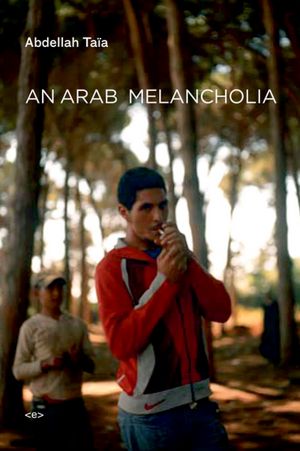
A novel that I wrote an essay about for Spirale (at the invitation of the brilliant Nathanaël) a few years ago, Une mélancolie arabe (An Arab Melancholia), by the Moroccan queer writer Abdellah Taïa (1973-) is now available in English from Semiotexte/Smart Art, under its Semiotext(e)/Native Agents series, having been translated by Frank Stock. I browsed a copy at St. Mark's Bookshop the other day, and hope to pick it up (there, at McNally Jackson, Unabridged Books or another independent bookstore) very soon.

Since I've already written about the book I won't attempt to review it here, but I do urge readers to plunge into it, because I think it's Taïa's most ambitious and accomplished work of fiction, and extends the themes of his previous works in ways the prior novels and nonfictional works do not. One of the themes I wrote about was the omnipresence of "deaths," actual and metaphorical, creating a series of what I read as sites and performances of sublimity, tying this novel to that of a Francophone predecessor, Antonin Artaud, and his theorization of the Theater of Cruelty. An Arab Melancholia also expands upon the idea of "melancholia"--racial, colonial, queer--that Taïa engaged in his previously translated and acclaimed novel, L'armée du salut (Salvation Army), but in its strong embrace of Arab and Muslim cultures, its challenge to simplistic integration into French homonormative narratives, its queer, recursive structure and defiance of genre, and its insistent struggle with selfhood itself, An Arab Melancholia productively complicates any attempt by the French or any literary culture or establishment to exoticize or recolonize him.

Abdellah Taïa (Chema Moya/European Pressphoto Agency)
A week ago, Taïa published a short essay in the New York Times, "A Boy to Be Sacrificed," which explores some of the very incidents he treats in An Arab Melancholy, but in this piece he amplifies certain of them and downplays others. The entire essay reads like a radical, journalistic distillation of the novel. The gist is that as a young, effeminate queer boy, he was so completely rejected because of his sexuality, rendered so abject, so subject, so socially dead and alien even to his family, that he and other boys like him could (and can) be used as sexual playthings by any man who wanted, an irony in a religion and society that at the same time harshly condemn "homosexuality," particularly in its Western guise(s), but which also have created social and economic spaces for colonialized sexual differences and relationships. In the Times piece, he recounts one night in 1985 when men in the neighborhood--not white European foreigners seeking boy lovers--began calling out for him to come downstairs, so that they could violate him, and the response of his family members was to turn their backs on him, which not just metaphorically but literally--affectively--"killed" him. That night he died, as he had begun doing before, and would, he makes clear, repeatedly thereafter.

What particularly interests me, beyond the convergences and slippages between this autobiographical account, situated within the truth-bound, journalistic frame of a newspaper, and the novel's different, more dramatically structured and stylized versions of this story, is that the latter work provides through its narrative and serves as the embodiment of the answer to the rhetorical statement he poses to Times readers: "I don't know how I survived." This, he says, is a truth, that he doesn't know how; and yet the truth exists in fictional form, in that work of fiction, it seems to me as I read this mini-essay, a performance itself, of a particular type of subject speaking to a particular liberal, Western audience that probably has not read his book or much literature from Northern Africa, has little understanding of the complexity of sexualities there, and yet is not unwilling to sympathize with a sentimentalized account of his plight. I'm not criticizing him. But I do think too that he knows the answer lies in the novel's version of this story, with its multiple deaths and the journey they constituted towards a survival, the survival of that fictional Abdellah, and the real one, now 38, who also now can write this Op-Ed piece.

Taïa begins closing his piece by saying: "I don’t know where I found the courage to become a writer and use my books to impose my homosexuality on the world of my youth. To do justice to little Abdellah. To never forget the trauma he and every Arab homosexual like him suffered." The novels cumulatively, however, show us where he found this courage; they do not in fact "impose" his homosexuality on the world of his youth so much as they respond to and make sense of that trauma; peel back the many hidden layers of that world; invest it with a living shape, a density and a texture that perhaps he might not even have been able to see in his youth, though he felt and knew it, and can now, through his books, fictional and nonfictional, his movie appearances, his journalism and essays, convey it. His books open windows, multiple ones, on the world of his youth and of Morocco today, the queer Arab world, windows onto the lives of queer boys and girls like little Abdellah, and allow him, and we the readers, to respond to and make sense of that world.

He concludes with this appeal: "Now, over a year after the Arab Spring began, we must again remember homosexuals. Arabs have finally become aware that they have to invent a new, free Arab individual, without the support of their megalomaniacal leaders. Arab homosexuals are also taking part in this revolution, whether they live in Egypt, Iraq or Morocco. They, too, are part of this desperately needed process of political and individual liberation. And the world must support and protect them."  Rather than quibbling with his specific rhetoric, I will agree with him, and add that the world--and especially we in the United States, with our vexed national and imperial relationships to the Arab and Muslim world--must begin by listening carefully and attentively to queer Arab people, listening to their appeal, listening to their accounts of their lives, listening so that we can hear what it is they want and need, and thus respond accordingly. Taïa's work represents one call; there are many others, and if we are willing and able, we should listen.

Sunday, December 19, 2010

"Disunion" (Civil War History Series) in the New York Times


I'm going to sing the praises of The New York Times today, and note that since October 30, 2010, it has been publishing one of the best and most informative series of articles, mini-essays, and nonfiction stories (tales, in the older sense), under the title "Disunion," that I have read in any newspaper, journal or other periodical anywhere, ever. The pieces, along with a timeline, interactive maps and documents, and photos and engravings, commemorate the 150th anniversary of the breakup of the United States, in 1860, from period leading up to the election of Abraham Lincoln, to the chain of state secessions that provoked the four-year US Civil War (1861-1865). Each day one of several eminent and less well known historians, archivists and writers (Adam Goodheart, Ted Widmer, Susan Schulten, Jill Lepore, Jamie Malanowski, etc.) produces a short imaginative, usually narrative entry, based on their own or others' historical research, journalistic and archival documentation, and so forth, that fills in key gaps about how the North and South split, or rather, the cultural roots of the national divorce, in which North pressed its political, economic and sociocultural case to represent the nearly 100-year-old country's best interests, prevent its dissolution and end slavery, while the South hewed to the interests of its slave-owning leaders and began the process of secession to defend this odious institution. Some are more engaging than others, many incorporate the various trends underway in contemporary historiography (material, cultural and political history, the role of various discourses, the role of race and racism, feminist historiography to some degree, historical theorization and cultural theory, and quantitative methods), yet present vivid stories of our national unbecoming and becoming.

Others have focused on the particulars of candidate and then elected-but-not-yet-inaugurated new president Abraham Lincoln, the first Republican to hold office, shrewdly announced one approach publicly but manipulated his fellow party members behind the scenes; how Southern leaders, like Senators Jefferson Davis of Mississippi, James Henry Hammond of South Carolina, and Robert Toombs of Georgia, and plantocrats like Robert Barnwell Rhett, uttered rhetoric as harsh as any heard today espousing a desire to defend slavery at all costs, white supremacy as the social, cultural and political ideals of the Confederacy to come, and, in Toombs' case, the possible extermination of all black people if the Southerners did not get their way; how leading authors, like Walt Whitman and Herman Melville, discursively and creatively imagined this moment of national fracture; and how famous former US residents, like Giuseppe Garibaldi, a revolutionary in Brazil (Rio Grande do Sul) the founding hero of a united Italy, were linked directly what was occurring on these shores.

In today's paper, Harvard historian Lepore historicizes Henry Wadsworth Longfellow's "Paul Revere's Ride" to show how it was as much about preparation for the coming war as about the Revolutionary era hero, and writer and memoirist Edward Ball shows that South Carolina, the first southern state to secede (and which will celebrate the 150th anniversary of its secession tomorrow), made clear in its articles of secession that the right to enslave fellow human beings as property was central to its traitorous fissure.

One of Goodheart's entry, one of the most moving and riveting I have read yet, described Harriet Tubman's final pre-war journey south, to rescue her sister and niece and nephew in Maryland. Yet when Tubman learned that her sister had died and then her family members did not turn up at the appointed meeting place, Tubman helped a couple escape, which entailed a drama fitting of the best narrative poem or short story one might imagine (an allegedly "crazed" white man was repeated walking about and mumbling to himself in a clearing near where Tubman and the fugitives had hidden, and after a while Tubman realized he was giving them secret instructions about how to get away!). Tubman, the couple and their infant, who had to be drugged to remain quiet, did make it across the Mason-Dixon line, they heading on to Canada and she back to her home in Auburn, New York, and this story, which I have read about in more than one book, came to life for me again in a way that felt as fresh and thrilling as any version I'd heard of it before.

Tuesday, March 04, 2008

Nonfiction Writer Busted for Fictional Tale

More nonfiction fakery, though as I told C tonight, when I first read about this book, I immediately thought, this story doesn't sound right.

Now, there very well may be a young, white-Native (African?) American person who's running drugs for the Bloods in Los Angeles. And s/he very well may have a loving foster mother figure named "Big Mom," a dead brother named Terrell, an estranged, living brother with three kids named Taye who's moved out Washington State, a sister named NeeCee who was a suicide, and another sister named Nishia who braids hair and with whom she's also estranged. And s/he very well make it past the age of 20, to, say, 33, graduating from college and living her/his adult years as a single parent with an adorable little child of her/his own. And s/he may decide to write a book. I can imagine seeing that book, whether self-published or picked up by a mainstream publisher, on a table not only at Barnes and Noble, but at Book Expo. S/he might even manage, if s/he really has managed to graduate not just from the University of Oregon's undergraduate college, but from its graduate writing program, or some other one, to have the book displayed on a table at AWP, outside the room where s/he is speaking on a panel.

But I seriously doubt s/he is going to receive co/ghost-writing help from the child of one of the New York Times's former Book Review editors--oh, yes, they may actually have been in an MFA program together, and may have bonded, and even discussed the difficult experiences of said young person-wannabe writer after a workshop during which the ex-drug runner's story met with sheer bafflement or excessive praise from classmates, accompanied by an estimable degree of palpable discomfort at discussing the issues of race, class and gender, etc.--and a $100,000 (!) advance and then not only glowing reviews from the likes of Michiko Kakutani but also a profile in the Times's Home and Home section, NPR letting her dilate for a good while about her "past," etc.

But I could be wrong, I admit it. It happened that way for Margaret B. Jones Seltzer. Who is really from Sherman Oaks, is not part-Native American, and hasn't yet graduated from anyone's university, not that that ultimately matters. But just saying. At any rate, I smelled the rot from this rat all the way across the room.

Some questions: How long did this fantasist think she was going to get away with her constellation of lies? Did she think no one was going to investigate or look into the tale? (Obviously the New York Times has learned nothing about being duped by story peddlers. Cf. Judy Miller, Michael Gordon, etc.) Do the folks at publishing houses like Penguin/Riverhead simply not check out such sensational stories anymore? Would it have taken that much effort to verify even a small portion of this tale? Did Seltzer ever consider that, despite the desire for authenticity, which equates, I realize, with heftier advances and more public adulation and fame, she just ought to have called the damned thing a novel--which is what people been calling such texts which for more than half a millennium have been based either on autobiography or biography or some true tale, or the products of the imagination, or something in between and beyond, and run to around 100 pages or so pages and unfold in prose--and it a day? As a novel, it sounds like it could have been quite provocative. As nonfiction, it looks like it's going to become many writers' nightmare: pulp.

I should add that Ms. Seltzer is not alone: there's this recently exposed sham of a book, by a woman who not only claimed to be a Holocaust survivor, but said she was raised "by wolves." She published the book in the 1990s. (Alarm bells should have gone off right away, people...WOLVES?...)

Then again, aren't these stories apt emblems of the era we're living in? For my part, I'm preparing my memoir of having survived the Battle of Chapin's Farm, in 1864. I fought without having eaten anything for five months after running away from my Maryland plantation, with no shoes, shirt, trousers, or even a musket! And despite all that I nearly smote Robert E. Lee right between his eyes! Et cetera.

UPDATE: Critic and author Daniel Mendelsohn's astute take is here. Some quotes from the piece.

Each of the new books commits a fraud far more reprehensible than Mr. Frey’s self-dramatizing enhancements. The first is a plagiarism of other people’s trauma. Both were written not, as they claim to be, by members of oppressed classes (the Jews during World War II, the impoverished African-Americans of Los Angeles today), but by members of relatively safe or privileged classes. Ms. De Wael was a Christian Belgian who was raised by close relatives after her parents, Resistance members, were taken away; Margaret Seltzer, the author of “Love and Consequences,” grew up in a tony Los Angeles neighborhood and attended an Episcopal day school.

In each case, then, a comparatively privileged person has appropriated the real traumas suffered by real people for her own benefit — a boon to the career and the bank account, but more interestingly, judging from the authors’ comments, a kind of psychological gratification, too. Ms. Seltzer has talked about being “torn,” about wanting somehow to ventriloquize her subjects, to “put a voice to people who people don’t listen to.” Ms. De Wael has similarly referred to a longing to be part of the group to which she did not, emphatically, belong: “I felt different. It’s true that, since forever, I felt Jewish and later in life could come to terms with myself by being welcomed by part of this community.” (“Felt Jewish” is repellent: real Jewish children were being murdered however they may have felt.)


And:

In an era obsessed with “identity,” it’s useful to remember that identity is precisely that quality in a person, or group, that cannot be appropriated by others; in a world in which theme-park-like simulacra of other places and experiences are increasingly available to anyone with the price of a ticket, the line dividing the authentic from the ersatz needs to be stressed, rather than blurred. As, indeed, Ms. De Wael has so clearly blurred it, for reasons that she has suggested were pitiably psychological. “The story is mine,” she announced. “It is not actually reality, but my reality, my way of surviving.”

“My reality,” as opposed to “actual reality,” is, of course, one sign of psychosis, and given her real suffering during the war, you’re tempted to sympathize — until you read that her decision to write her memoir came at a time when her husband was out of work, or (we real Jews call this chutzpah) that she successfully sued the publisher for more than $20 million for professional malfeasance. Or until you learn about her galling manipulations of the people who believed her. (Slate reported that she got one rabbi to light a memorial candle “for animals.”)