Recently I finished and sent off a draft of an essay I'd been working on for a good portion of the summer. I don't actually write that many essays, especially because I find the process very time-consuming and difficult, no matter how rewarding the final product, but what was significant and different this time was that the Canadian journal I wrote it for publishes in French only, and so after I was asked to submit something, based perhaps on my praise of and fascination with Taïa, I decided and then agreed to write it
in French rather than in English, to be translated by me or someone else later on. It was, to put it simply, a challenge, or rather a series of them, and that, I think, more than anything else, made me determined to complete it.

The first involved reading and taking notes on the book,
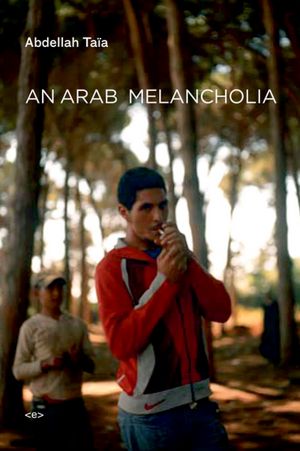
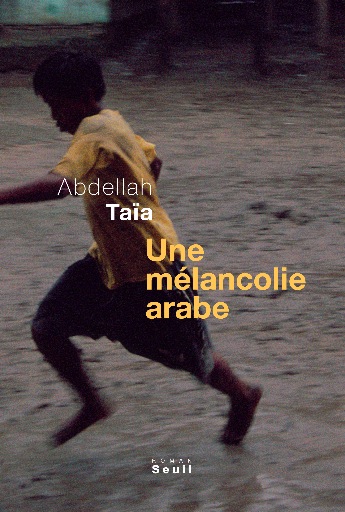
Abdellah Taïa's Une mélancolie arabe (Seuil 2009, Taïa at left, from
thehumpdaycrew.blogspot.com), which hasn't been translated into English yet. (One of his earlier books,
L'armée du salut is now available in English as
Salvation Army. If I had the time, I'd be willing to attempt it.) Taïa's French fortunately is fairly straightforward and contains little slang, so getting through the book wasn't hard. Moreover, the novel, though sometimes exasperating in its protagonist's sentimentality and self-dramaticization, was nevertheless engagingly provocative and broached a lot of issues that would serve further discussion. The second involved constructing an argument in relation to the journal issue's theme, which was the
Théâtre de la Cruauté, which I read as referring directly back to the original version proposed by French visionary playwright and activist
Antonin Artaud (1896-1948). I'd read a little of Artaud's work before, and enough about him, primarily I believe via
Susan Sontag, and I knew something about his successors, such as
Peter Brooke, to have a general idea of what his two manifestos on the Theater of Cruelty were saying, but I figured I ought to read the actual texts themselves, in basic scholarly fashion, before I began trying to tease out a relationship between Taïa's novel and Artaud's ideas. I did so, first in French and then in English, to make sure I wasn't misunderstanding them, and what struck me as always was the slippage in meaning between the original and the translation, though the gist remains. In Artaud's case, I think the gist is what's most important, since he was trying to get away from texts in and of themselves, towards a more experimental, gestural and visual theatrical experience, one in which a deeper metaphysics, and thus, he believed, an authenticity, might be accessed.

I saw several routes into this connection between Taïa's novel and Artaud's (at right, Guardian UK,
Getty/Martinie/Roger Viollet) theories, and worked through them, particularly around the frequent deaths and almost-deaths that occur in Taïa's book, every major crisis portending or transforming into a confrontation with
la mort, and their links to
la cruauté as Artaud defines it. But it wasn't until I came across some commentary by the critic
Peter Sloterdijk that I was able to formulate a way of reading Taïa's work, via's
Immanuel Kant's 3rd critique readings of the sublime (though Sloterdijk reroutes the Kantian reading, as
Jacques Rancière does, via
Jean-François Lyotard), to suggest a melancholic ethics of becoming that the protagonist was engaging in. Then there was the third challenge, which was the most difficult of all:
writing an essay in French. I have to make clear that I haven't written anything beyond letters or email in French since I was in high school. In fact, the last time may have been one of those French essay contests that the local Alliance Française sponsored, and I believe I wrote one describing Marseille, a city I have still never set foot in. The gulf between a high school essay and one written for an adult journal, however, is vast, so I did take the added step of reading some contemporary French journal and magazine essays, in order to get a grasp of essayistic idioms, and I realized that it was going to be an uphill climb. For just as it is often a struggle for most native English speakers who find themselves at someone's college to write a coherent and convincing essay on a given topic in English itself, so it is in French, especially for someone who is not a native French speaker and who in fact when encountering French mainly is translating it into English. What I especially strove to do was
think in French, as much as possible, so as to be able to put those thoughts, in idiomatic French syntax, on the page.
A challenge that arose out of this one was vocabulary, and in particular, the difficulty of selecting certain words that had differing shades of meaning in the two languages, or that did not exist at all in French. To give one example, French has two words for knowledge,
la connaissance (from
connaître, to know someone, to be familiar with, from the Latin
cognoscere, to know, akin by root to English to know, but also the noun, ken, a vista) and
le savoir (from
savoir, to know something, know how, from the Latin
sapere, to taste of, have the scent of, be wise, discern, akin to the English words "savor" and "savory," both of French (Norman) provenance) At several points, I had to decide that it was
la connaissance, based in part of
la reconnaissance (recognition) that the protagonist Abdellah had gained, rather than
le savoir, even though my initial tendency was often to choose the latter term, in part because of past readings of
Michel Foucault (such as his 1988 interview, titled "Le Gai Savoir," for example, with its ironic, double-entendre riff on Nietzsche). Abdellah's knowledge is a knowledge of himself, rather than a learning or a knowing how, though when the latter is salient, I use the latter term.
Then there are English words for which there are no direct French equivalents (and vice-versa, of course, such as double-entendre, which English imported wholesale). French, from what I could tell, does not have an exact term for
awe, one of the emotions produced by the sublime (or the Kantian sublimes to be exact). French has words that combine fear and reverence (
la crainte, fear, apprehension from the verb
craindre, to fear, be apprehensive about, being one), and astonishment (
l'étonnement, astonishment, surprise, quite close to English), but not one that captures the melding of the two. So I used a compound term,
la crainte mêlé d'admiration, which doesn't exactly capture the condensed power of "awe," but approaches it. But then it wasn't so much the response generated by the sublime as the recognition in life of sublimity creating a deeper sense of our mortality and the consequent sense of the aesthetic and the ethical that I was after, so the exact translation was less important, perhaps, especially since the sublime is
le sublime and the ethical and ethics are both
l'éthique in French.
All of which is to say that I have finished the French essay (or at least a draft), sent it off to the editor, and now have a deepened appreciation for anyone who does this sort of thing regularly, as well as for Taïa's book and the French language. When the essay is published, if there's a link, I'll provide it, so that you can read it yourself. And perhaps I'll send it to Abdellah Taïa as well.
***

While I didn't manage to get to the pricey
Museum of Modern Art before the
In & Out of Amsterdam conceptual art show was there--the Monday I and a friend had planned to go, MoMa was closed, so we ended up at the Met--I did finally get up there, on
Columbus/Peoples of the Americas Day, no less, and saw the tinier, residual
Art & Project Bulletin show. The exhibit presents the Art & Project Gallery Bulletin's entire 156-issue run, stretching from 1968 to 1989, as well as artworks by the European, American and Japanese artists who'd appeared in its pages and within, without or on the gallery's walls, literally or figuratively. Some, like the controversial performance artist-photographers
Gilbert and George (above right,
Sydney Morning Herald) are now quite well known, though I hadn't realized how they'd begun their careers, staging live durational performances as human statues and causing a sensation as a result. Others, like
Robert Barry, are less well known but should be central to any discussion of contemporary art practice, which draws heavily from the conceptual well. What the show makes clear is that Art & Project's founders, Dutch artists
Gert van Beijeren and
Adriaan van Ravesteijn, created a vital nexus in the translantic conceptual art movement, putting Amsterdam on the map alongside New York, Los Angeles, London, Tokyo, and other important sites in the development of an important vein of artmaking that remains central to contemporary practice.
I should add that reading the
In & Out of Amsterdam show catalogue, which picked up after the show, I learned that the
Stedelijk Museum in Amsterdam, that city's major venue for 20th century art and one of my favorites, was a key institutional site in the trans-Atlantic late 1960s conceptual revolution, much as MoMa, in its earlier years, had been for a much earlier generation of artists. I also hadn't known that it was MoMa's legendary black curator,
Kynaston McShine (what a name!), whose 1970 "Information" show introduced conceptual art as a major contemporary trend, and later curated shows on
Marcel Duchamp, Robert Rauschenberg, Joseph Cornell, and
Andy Warhol, among others. He is still there, now as Chief Curator at Large, and co-curated the 2007 40-year-retrospective show of sculptor
Richard Serra's work. Some photos and a video.

The explanatory plaque

The bulletins on display

A Daniel Buren striped strip--seeing this made me smile with glee. Buren once covered large sections of the interior of the uptown Guggenheim Museum with these, and also placed them all about Paris, London, and other sites. This is the first time I'd ever seen one up close.

Lawrence Weiner piece

David Robilliard drawings (the ones on the right show Gilbert and George)
And a video of David Askevold's "Catapult" (1970), Super8 film transferred to video
And, as I said, I passed the parade, so here's a photo: