On February 28, I had the pleasure of participating in Again With Feeling, a public conversation with poet and friend Tonya Foster that BOMB Magazineorganized in conjunction with MoMA PS1's Sunday Series. We were one of 10 pairs who reprised our artist-to-artist conversation from BOMB, though instead of the long free-wheeling conversation we originally had up in Ithaca duringImage Text Ithaca last summer, we received 10 minutes to chat. I think it went well; it was a joy to return to some of the themes of our discussion, and to be able to do so in a public venue.
Other conversing pairs, some of which unfolded more as interviews, included BOMB editor Betsy Sussler (subbing for Eric Bogosian) and the hilariously cantankerous former director and now filmmaker Richard Foreman; authors Christopher Sorrentino and Sam Lipsyte, who talked about newish work; visual artist duos Yuri Masnyj and Hope Gangloff,Alan Ruiz and Tom Burr, and David Humphrey and Nicole Eisenman; author Linda Yablonsky and Wooster Group director and performer Elizabeth LeCompte, who was reluctant to talk about herself and mainly talked about Foreman, who went first and then left; dancer Ralph Lemon and writer/performer James Hannaham; and musicians Justin Vivian Bond and Joy Episalla.
Capping things off, Ishmael Houston–Jones, whom I'd always hoped to see dance, engaged in an enthrallingly strange, ghostly duet with Miguel Gutierrez, who made the performance interactive, though with permission. There was also a lively acoustic music performance by Alan Licht. Many thanks to Ryan Chapman, Mónica de la Torre, and everyone else at BOMB and MoMA for inviting us to participate and making the event possible.
David Humphrey and Nicole Eisenman
Linda Yablonsky and Elizabeth LeCompte
Ishmael Houston-Jones, entering the dome
Christopher Sorrentino and Sam Lipsyte
Yuri Masnyj (also in the Klimtian portrait above) and Hope Gangloff (painter of Yuri, above)
A few years ago, The New Yorker published an article, "The Dark Room Collective: Where Black Poetry Took Wing," about the Dark Room Collective that left a lot to be desired. Not only did it erase a good number of the members and participants, but it offered a sketchy overview of what the Dark Room was and achieved, in part because its ideological agenda was quite off-target. To put it another way, the ideological agenda it attempt to affix to the Dark Room was incorrect. Even the title was incorrect; "black poetry" had taken wing many times before the Dark Room's appearance, as the Dark Room's readings, awards and tributes more than made clear.
Other pieces about the organization--which I belonged to for many years-- are much better; in 1996, two years after the Dark Room's final reading series occurred in Boston, one of the Dark Room's most honored poets, Cornelius Eady, penned a brief piece with Kwaku Alston, "Reading Ahead," for The New Yorker that was much more on the mark, and in 2013, co-founder and poet Sharan Strange wrote an entry, "Total Life Is What We Want’: A Brief History of The Dark Room Collective," for Mosaic magazine that not only shared aspects of the organization's history but her vision of what its aims were and her sense of its place in the firmament of African American and American letters.
There have been other pieces, but one of the most recent entries, Sophia Nguyen's thoughtful, capacious, beautifully written article in the March-April 2016 issue of Harvard Magazine, "Elbow Room: How the Dark Room Collective made space for a generation of African-American writers," ranks among the best. Not only does Nguyen get the history and names correct and quickly dispel the fact that all the members went to or met at Harvard, but she also offers an overview of what the Dark Room's activities meant in their contemporary moment and might signify today, while not trying to use the writers and their works as a way of bashing particular traditions in the Black literary tradition (the Black Arts Movement, Umbra, etc.), or misreading the literature or cultural effects that have emerged from it.
The impact on the Boston literary scene were visible to anyone who was paying attention. As she notes:
“The Dark Room Collective was one of the more influential movements in the city of Boston,” says fiction writer Don Lee, an associate of the group. Lee, who first moved to the area to pursue his M.F.A. at Emerson College, and then became editor of the journal Ploughshares, observed how they shook up the “lily white” literary scene. “There was terrific energy, and it was contagious.” He helped write a grant application that secured the Dark Room $12,500 from the Lannan Foundation—“not a huge amount, but at the time fairly significant”—which helped cover the travel expenses of writers they were beginning to invite from farther afield.
Nguyen, however, goes further and talks about the "Drive By" readings, and much more, showing that the Collective, more than anything else, helped to create and expand a conversation which involved paying attention not just to what was happening in Boston, to the literary past and to peers around the country.
She also broaches critiques of Dark Room writers' work as "depoliticized" and "conservative," but as she goes on to suggest, as I would underline, works as diverse as Kevin Young's To Repel Ghosts or Natasha Trethewey's Thrall or Thomas Sayers Ellis's Skin, Inc. or Tisa Bryant's Unexplained Presence? These are all deeply political, and formally playful to challenging works, and they're only a small portion of what Dark Room writers have produced. Playwrights, visual artists, musicians, filmmakers, and scholars who were affiliated with the group have gone on to produce work that is both politically engaged and aesthetically challenging as well, and without question, all the various strands of black cultural production, from the past up through the Dark Room's moment, on through today, are visible in the art that has emerged from it.
Here's one more quoted paragraph that gives a glimpse of what the Dark Room was really like:
What the Dark Room gave to its members makes their output difficult to corral. It’s something Ellis has called “elbow room”—a jostling freedom of movement that made Bryant, all those years ago, feel unexpected exhilaration during her 40-minute phone interview with the Collective. Though she at first tried to fake a love of jazz and the blues—at the time, these genres were to her parents’ taste, not hers—she then admitted to being a fan of the Cure, the Smiths, and Siouxsie and the Banshees. “And it was the most miraculous thing, because suddenly we were doing these bizarre medleys of Smith songs and P-Funk and Run DMC and Billy Bragg and Psychadelic Furs and Joan Armatrading. It was outrageous,” she told her interviewer. In “Dark Room: An Invocation,” Elizabeth Alexander declares “the house/came down because/we knew how to read/each other, could code-switch/with the same fast dazzle.” Now it’s a critical commonplace to hear that some Dark Room writer can reference Homer and Tupac in the same space, making virtuoso maneuvers between different expressive registers. At the time, Bryant said to herself with relief, “Okay, I’m not the freak I thought I was.”
Do check the article, and the poems Nguyen quotes. They're a great place in the Dark Room literary corpus to start.
A month or so ago on Facebook, I casually mentioned that I'd taught an undergraduate course in Black Literary Avant-gardism at Northwestern, most recently in 2010, and figured that that would be the end of it. The response, however, was enthusiastic, with a number of people asking me to share the syllabus. Northwestern never required us to post syllabi publicly, as Rutgers-Newark does, and I was amenable to sharing it, though I wasn't sure where I might do so. Here was the most likely spot.
Then Mieke Chew of New Directions asked me if I would be interested in presenting it there, and I was. After she distilled it a bit, removing dates and so forth, it went live. I intended it to be neither comprehensive nor exhaustive, and if I were to teach the course today, in addition to a longer calendar, I'd add more and new scholarly texts and draw from the rich store of contemporary innovative black writing, including digital work.
I should note that I do not have an electronic course pack, but a number of the articles and shorter materials can be found in the special issue of Tripwire featuring giovanni singleton's and Renee Gladman's famous conference black innovative writing, as well as The Harlem Renaissance Reader.
A young Ferdinand Lewis Alcindor, Jr., high school basketball star at Power Memorial Catholic during the Catholic High School Athletic Association Championship, in 1965, 6 years before he became Kareem Abdul-Jabbar (Don Hogan Charles)
I have been checking the New York Times every day to see what photographs and stories will be featured as part of its "Unpublished Black History" series, which it debuted this year for Black History Month. In essence, it is a catalogue of material, often newsworthy in some way, that nevertheless failed to make it into the paper. In some cases, the Times editors approach candor about why they did not publish the images or stories, but in other cases, some quite fascinating, they do not.
It's hard to know, lacking documentation of some sort (notes, audiotaped material, etc.) or the direct comments of the editors, writers and photographers themselves, why some of these key moments were passed over, but it also underlines the fact that even today, and not just with Black History, editorial choices of various kinds shape what makes it into the mainstream news and what gets complete passed over. As I view the photographs and read the brief entries, I keep wondering, what led to this story being skipped and others receiving coverage? This would be a great subject for the Times to devote one of its roundtables to.
Run-DMC performing at Madison Square Garden in 1986 for an anti-crack benefit (Chester Higgins, Jr.)
Several photos (one by Allyn Baum at left) from the unpublished Rev. Dr. Martin Luther King Jr. trove
Scholar Kenneth B. Clark at home in 1969, with his wife and family, in Hastings-on-Hudson (Eddie Hauser)
Martina Arroyo, in 1965, during her run in Verdi's Don Carlo (Sam Falk)
Some of the many photos, taken in 1972 by Jack Manning, of James Baldwin; only one of which ended up in the New York Times
Protesters confronting police during a 1964 march in Jackson, Mississippi, in response to the assassination of civil rights leader Medgar Evers (Claude Sitton)
The African Poetry Book Fund, in conjunction with the journal Prairie Schooner, has named poet Safia Elhillo the winner of the 2016 Sillerman First Book Prize for African Poets, for her manuscript Asmarani! As a winner, Elhillo will receive $1,000 and the University of Nebraska Press will publish her manuscript in 2017. As a member of the judging panel, which also includes the stellar writers Bernardine Evaristo, Matthew Shenoda, Gabeba Baderoon, and Kwame Dawes, who edits Prairie Schooner and directs the APBF, I can say that it was stunning read, and wholeheartedly congratulate Safia Elhillo!
Safia Elhillo, a Sudanese writer "by way of Washington, DC," received her MFA from New School University, and was a joint winner of the 2015 Brunel Poetry Prize. She also is a Fellow of Cave Canem and poetry editor at the journal Kinfolks, and will have a chapbook, also titled Asmarani, appearing as part of the New Generation African Poets: A Chapbook Box Set (Tatu), from the African Poetry Book Fund with Akashic Books.
Congratulations also go to this year's five 2016 Sillerman First Book Prize finalists: Nick Makoha (Uganda), a London resident, for his manuscript Kingdom of Gravity; D. M. Aderibigbe (Nigeria), for his manuscript Becoming My Mother’s Son; Viola Allo, (Cameroon), living in California, for her manuscript Schoolgirl from Cameroon; Shittu Fowora (Nigeria), for his manuscript Touch Machines; and Nebeolisa Okwudili (Nigeria), for his manuscript country!
Here is one of Safia Elhillo's poems, from Big Lucks, Issue 11, December 2015. It gives a sense of her work as a whole, but do check out both the forthcoming chapbook and the entire collection, which will be out next year!
SELF-PORTRAIT WITH YELLOW DRESS

i believe that sometimes              we do not die

i will not believe that to be housed in a body
that is black       is to be dressed always
in black for the funeral                 we live forever

our mouths open & a song falls out           thick
with a saxophone’s syrup               & all our dead
in the ground make this land ours             & all
our missing fathers make us everything’s child

today i did not dress for a funeral       today i wear
the yellow dress        & laugh with all my teeth
today my lost ones are not lost to me     they live
in the wind that gathers my skirt

today this is my country        today i say their names
& the all holes left behind            shaped like blackgirls
& blackboys        are lit up by hundreds of faraway stars

today i woke up & was not dead         & tomorrow
might be different but tomorrow       does not yet exist
so i hold my mother’s hand & kiss          the brown valley
between each knuckle        my brother opens his mouth
to laugh & the light pours in          through the gap in his teeth
& no one will ever again say my eyes are too serious

i press my body to a man that i find beautiful      & sway
to a song that knows us                i live forever
with my feet in my grandmother’s lap
&                                      i live forever by the water
with the sun spilled over me       remember me this way
& when they come for me            play the song i love
into the space i leave behind
Earlier this week I learned that the little art book project, GRIND, that I collaborated on with photographer Nicholas Muellner this past summer at the unforgettable Image Text Ithaca at Ithaca College, is now a book, edited by Nicholas and Catherine Taylor, designed by Elana Schlenker, and published by ITI Press! It makes its debut at this weekend's Los Angeles Art Book Fairat the Geffen Contemporary at MOCA, and will be available at ITI Press's booth.
If you're interested you should be able to order it directly from the press very soon, and please also check out their other books, Tessex!, by Earl Gravy (Emma Kemp and Daniel Wroe), Bobby Schiedemann, Analicia Sotelo and Thomas Whittle, with contributions from the Best Friends Learning Gang and Jodie Herbage, and Andre A. Bradley'sDark Archives.
Happy Black History Month!
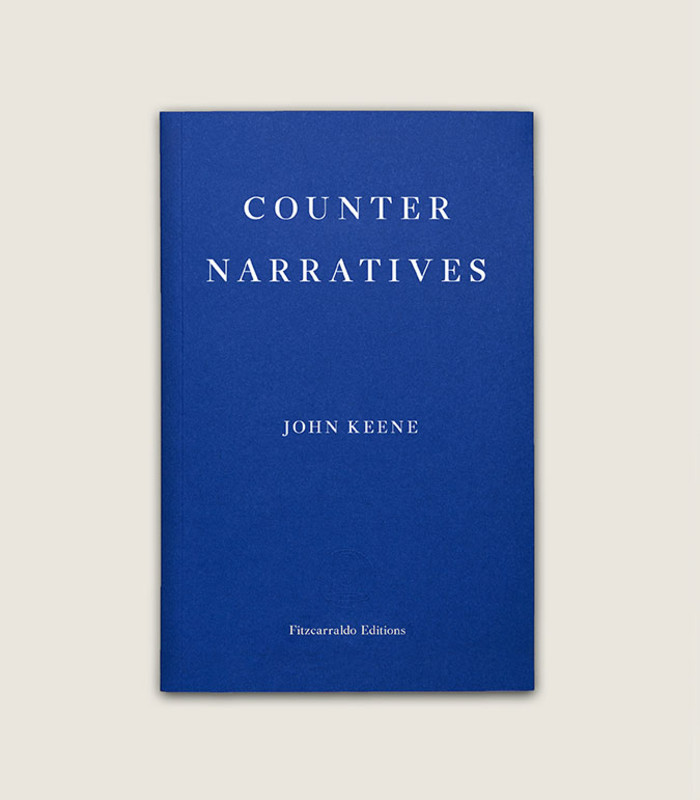
February 1 is also the birthday of Langston Hughes (1902-1967), who needs no introduction. As in past years, in honor of his birthday and of Black History Month, I'm posting a Langston Hughes poem. (One of the joys of my life these days is that I always was able to memorialize and celebrate him for posterity in my story "Blues," in Counternarratives.)
Below is Langston Hughes's tribute to the late Jacques Roumain (1907-1944), one of Haiti's greatest poets, whose work, including Gouverneurs de la Rosée (Masters of the Dew) Hughes translated. The friendship, dialogue and political affinities between the two poets was significant, in part because of the links Roumain had made with African American writers during his period of exile from Haiti. Hughes, like many of his peers, mourned the death of the brilliant, anti-imperialist, Communist-affiliated ethnographer, poet and fiction writer Roumain, at age 37, in 1944.
In fact Hughes published the memorial elegy to Roumain, a Communist, in the October 2, 1945 issue of New Masses. I don't think it's Hughes' best work, but am fascinated by its tenderness and the ways in which Hughes invokes the Diaspora and links black--and Haitian vodoun specifically--culture to politics ("Erzulie to the Pope, / Damballa to Lenin / Haiti to the universe) throughout. The dialogue, Hughes suggests, continues even after death.
Recently BOMB Magazineoffered me and other writers and creative types the opportunity to share my thoughts some of the many books we're looking forward to this upcoming year, so I selected poet, novelist and visual artist Clarence Major's forthcoming collection Chicago Heat and Other Stories (Green Writers' Press, 2016).
Major (b.1936 -) is the author of 8 novels, 14 collections of poetry (including the 1999 National Book Award finalist collection Configurations), 2 collections of short fiction (including this one), 8 works of nonfiction, and 4 anthologies, among them 1969's landmark The New Black Poetry. His essay "Necessary Distance," the title of an eponymous collection of nonfiction that Tisa B. turned me onto, is one of many compasses I periodically return to.
Despite his prodigiousness and originality--this is a man who wrote a novel based on the premise that a Connecticut law required husbands to carry their wives across thresholds at home!)--his work remains far too little known, and should be much more heralded, read and discussed, so I am particularly looking forward to this new book. For Bomb I wrote:
One book I’m eager to get my hands on is acclaimed novelist, poet, and visual artist Clarence Major’s forthcoming collection of short fiction Chicago Heat and Other Stories. Though far less known than he should be, Major, as original as anyone writing today, has been successfully experimenting with the formal possibilities of fiction for over four decades, and has developed a distinctive, accessible, and unforgettable style. I’m enthusiastic to read and learn from what he accomplishes in this new gathering of stories.
About the new book Major's publisher writes:
Chicago Heat and Other Stories by Clarence Major, employs a gorgeous purity and simplicity of language in a series of masterful analyses examining human interaction. Each narrative voice comes forward all at once, individual and complete, without obstacle or complication, enabling the reader to see the characters and feel their emotions. Major does not shy away from the bitter or the harsh; we get to hear it all. Like paint on an easel he blends lyricality with moxie and the blunt with the beautiful. The characters come together as easily as they part; people leaving, coming back, going, staying—it all sticks and fades like heat on your skin. The imagery is completely accessible and generously given. Toni Morrison comes to mind. His work is like jewels.
Based on what I know of Clarence Major's work, this description barely touches the surface. Check it out this year.
More book 2016 recommendations by Dawn Lundy Martin, Albert Mobilio, Alan Gilbert, Chelsea Hodson, Justin Taylor, Ander Monson, Ken Chen, and Lawrence Giffin at the BOMB Magazine site!
The semester has begun, Blizzard Jonas and all, and I can already see my blogging pace dwindling, so I am going to try to follow a plan I set out a few years ago but have never followed, which is to maintain my blogging activity by posting micro introductions to interesting things I find on the web, and just let the articles speak for themselves. (I also hope to do this with the stubs of pieces I've begun but not finished in the recent past.)
Marlon James at the Man Booker Prize ceremony
So here goes. Last year Marlon James, author of several novels, including the 2015 Man Booker Prize-winning novel A Brief History of Seven Killings (Riverhead, 2014), stated at a Guardian-sponsored event in London that the publishing industry "panders to that archetype of the white woman, that long-suffering, astringent prose set in suburbia. You know, 'older mother or wife sits down and thinks about her horrible life'."
[B]ecause white women readers dominate the market, “the male editors will only accept one type of story. Everyone knows what a New Yorker story will look like. I could have been published 10 times over – I knew that there was a certain kind of prose I could have written; intense scenes that hinted, rather than explored.”
In its report on James's remarks, linked above, the Guardian noted that "Women, particularly white women, make up the vast majority of regular fiction readers, purchasing two thirds of all books sold in the UK. Almost 50% of women classify themselves as avid readers, compared to 26% of men." He expanded a bit on these assertions in a highly entertaining and informative Guardian Books podcast.
James was responding, in fact, to a Tin House essay, "On Pandering," by Claire Vaye Watkins, who received multiple prizes for her 2010 collection Battleborn. Watkins' is a rich, exploratory attempt to make sense of her experiences as a white woman writing in a tradition that usually valorizes white men, abets sexism and racism, and consciously and unconsciously urges women, including white women, to write against their perspectives and themselves.
Claire Vaye Watkins
To quote her:
The stunning truth is that I am asking, deep down, as I write, What would Philip Roth think of this? What would Jonathan Franzen think of this? When the answer is probably: nothing. More staggering is the question of why I am trying to prove myself to writers whose work, in many cases, I don’t particularly admire? I recently finished Roth’s Indignation with nothing more lasting than a sincere curiosity as to whether Roth is aware that these days even nice girls give blow jobs.
I am trying to understand a phenomenon that happens in my head, and maybe in yours too, whereby the white supremacist patriarchy determines what I write.
I wrote Battleborn for white men, toward them. If you hold the book to a certain light, you’ll see it as an exercise in self-hazing, a product of working-class madness, the female strain. So, natural then that Battleborn was well-received by the white male lit establishment: it was written for them. The whole book’s a pander. Look, I said with my stories: I can write old men, I can write sex, I can write abortion. I can write hard, unflinching, unsentimental. I can write an old man getting a boner!
In The New Republic, Phoebe Maltz Bovy took issue with James's assessment, penning a response, "Don't Let Men Attack Pumpkins Spice Literature,"filled with links to others responding to Watkins' essay. In it she asserted that James was half-right, and was focusing on literary sexism. She contrasted his take with freelance writer Nicole Perkins' reading of "On Pandering" in the Los Angeles Times, and stressed the need for a more intersectional understanding of the literary marketplace, and for the voices of women of color to be heard (yes!). (NYRB critic, author, translator and blogger Tim Parksoffered thoughts about conformity in literature that sidestepped any discussion of race or gender, but which I thought connected at certain points with what all these critics were saying.)
Yesterday, Electronic Literatureposted an article based on a new publishing diversity baseline survey by children's book publisher Lee and Low showing that the US and Canadian publishing industries are overwhelmingly white and dominated by cis-gender, abled heterosexual women. Moreover, executive level publishing jobs US and Canadian publishing executives are even more concentrated in the hands of straight, cis-gender, abled white women. Shades of Hollywood, though with a gender reversal. These are the decision-makers in the book biz.
These facts suggest that real diversity, beyond lip service, is necessary if the publishing even wants to begin to reflect the reality of the society around them; James' critique has a basis in the sheer facts of who runs the industry; and that Watkins' understanding of the internalization of male-centered values extends beyond writers, to the people and institutions that put books into readers' hands.
I'll conclude by saying that my own experience as an author has tended more towards what Marlon James says, though I have never let that stop me. In fact, I even encountered pushback from industry people--though not, thankfully, my publisher, New Directions, whose chairperson is the legendary editor Barbara Epler--concerning Counternarratives. In other ways, however, I have been fortunate to encounter people from all backgrounds--all races and ethnicities, genders and sexualities, national origins, class, religious affiliation, physical abledness--who have been supportive of my work, and whose work I could enthusiastically support.
In addition to being friends Mendi + Keith Obadike are among my favorite contemporary artists. At one of their online sites, BlackArtNet, has been part of my blogroll for a decade now, and I have had the pleasure of writing about them critically in a paper set to appear later this spring. Collaborators and partners in life and art, and true multidisciplinary visionaries, Mendi+Keith have created a series of iconic artworks and performances across a range of platforms for over a decade and a half.
Recently, at Art & Context, Erin Sickler interviewed them about their work and lives, and the interview is full of insights on their practice, their aesthetics, and their goals.
Here are some quotes:
We moved through many zones to arrive at this sound centered practice that we have today. When we began we wanted to find our own way for music, language, and media to work together. We thought we might make a new kind of opera. We started talking about this around 1993, but we were already heavily involved in separate practices. Informed by a lot of experimental music and video work from the 60s & 70s and our experience with computers, we started seriously working online in the mid 90s. Working online was a simple way for us to combine our work in music, art and literature in one accessible frame. We were not living in New York at the time, so it was also a way for us present our projects to a large audience little or no institutional support. As we learned the language and nuances of the early world wide web, we began to explore all of the ways one might perform in this new space. We did live streams, animated gifs, text-based email projects, and sound pieces. All of those lessons (about communicating scale, giving a sense of register/tone, and projecting your energy in media) informed and enabled the work we would later do in brick and mortar spaces.
And:
In the 1990s we began calling the technologies of race (among other things) “social filters,” to think through the ways that technological and social dynamics on Internet and in digital culture were grounded in older cultural patterns. While racial discourse is of course implicated in our projects about social filters, we have always been interested to think about who gets to belong and who does not and what the barriers are to belonging. Race is one of the many technologies that delimit this belonging, but because our work is sometimes allegorical, there are also other issues explored in the work. That said, we’re often using the resources offered by African diasporic thinkers -- Igbo, African-American and other African writers.
And finally:
We think in times like these it becomes even more important to choose your media and limit your intake carefully. The flow of bad news can be overwhelming if you forget to step out of the stream. We stay focused because we know we are here to do this work. We know what art can do, and we are empowered by the lasting energy of the folks who came before us.
Do read the entire interview too, and don't miss them if they are speaking, performing or part of an exhibition near you.
Here are three videos featuring their work, including 2015's "Blues Speaker [for James Baldwin]," at the New School for Social Research.
Mendi + Keith Obadike's "4 Electric Ghosts" (2009)
Mendi + Keith Obadike's "The Earth (for Audre Lorde and Marlon Riggs)," Obadike Studio (Side A: "If the Heavens Don't Hear (A Roller Skating Jam for Marian Anderson)" + remix by Gordon Voidwell, and Side B: "The Earth Will Hear (for Audre Lorde and Marlon Riggs)"
Kobus Moolman (b. 1964), a South African poet, playwright, and author of five individual collections of poems and two collections of plays, has received the 2015 Glenna Luschei Prize for his collection A Book of Rooms (Deep South, 2014). The judge was the award-winning poet and scholar Gabeba Baderoon, and the honor was bestowed by African Poetry Book Fund (APBF) based at the University of Nebraska. The recipient of numerous awards in South Africa, Moolman teaches at the University of KwaZulu-Natal in Durban.
Judge Baderoon says about the book: "“In this close reading of spaces, we trace walls, windows, curtains, corners, our attention caught by the cut beneath the door, illumination flaring from glints of memory…. Yet if his flesh is betrayed, and his heart breaks into silence and shame, the hole in his heart also opens into speech."
African Poetry Book Fund Director Kwame Dawes writes about Moolman, "Every time we bring attention to the wonderful poetry being written by African poets today, we are enacting something quite important for African literary arts, and Moolman, whose poetry I have followed for a number of years, is a poet that more people should know. Our hope is that in some small way, this prize will aid in that larger effort." Lastly, Moolman describes this volume as "a brave/foolhardy attempt to shake up the distinction between truth (fact) and fiction, between autobiography and invention."
Though I am affiliated with the APBF, I wasn't familiar with Moolman's work before this award, but having read it I can without question that it certain merits this distinction and high praise. And now, here are two of Moolman's poems, from Poetry International. Enjoy!
[The sheep move off]
The sheep move off.
The sky gets heavier.
The birds grow lighter.
The wind stands up and stretches.
The trees bend over to pick up the old leaves.
The horizon folds in half, then half again.
The sound of a train drags rough words across the hills.
The hills slowly empty of colour.
He sits down on a stone.
He moves his left hand in circles,
circles that narrow in upon themselves.
His skin crawls with flies.
He makes no attempt to drive the end
of the day away from his bare chest.
He throws his left hand against the wind.
He throws the earth far away from beneath his feet.
There is a tightness in his side again.
A tightness where his faith should be.
From: Left Over
Publisher: Dye Hard Press, Johannesburg, 2013, 978-0-9869982-2-5
***
IN BED WITHOUT
So most nights.

So every other night.

So every other night when not with.

So when usual and without surprise.

So together and far apart and beyond all at the same.

So at night time when leaving and standing, watching go
away.

So more or less, this way and that.

So opening, closing, in, out, attached and loose as
a nozzle.

So switched on.

So off.

So when the sky rolls over and on top and big is too
full and the wind is grey as cotton, hand-washed,
hanging up, dripping over the bath, and the plug is
breathless and blocked up with his hair that does
not stop, that does not stop falling, out.

That does not.
Who really cares about the Oscars? Clearly some of us care about the Oscars. Should we care about the Oscars? Should we care about the fact that the #Oscars(Are)SoWhite--again?
For the second year in a row, the Academy of Motion Picture Arts and Sciences, the organization that awards out the annual gold-plated Oscar statuettes, considered the pinnacle of the multibillion-dollar American film industry's honors, have nominated an all-white slate of actors in the Best and Supporting categories. Ten slots, ten white women and men, and even in two films, Creed and Straight Outta Compton, with black leading actors, only a white supporting actor and the white scriptwriters respectively received nominations. No leading actors of other races or ethnicities were nominated, nor were any films in which they played the leading roles.
While this might not have drawn much notice fifty years ago in 1966 (which in fact did have an all white roster of nominees) or, in 1936 (unsurprisingly), closer to the Oscars' establishment in 1929, it does stick out in 2016, at a time when the United States is growing increasingly more diverse in racial, ethnic, religious, and other ways, and when industry figures themselves note that 46% of Hollywood movie ticket buyers in 2013 alone were people of color (designated as black, Latinx and "other" in the marketing study linked above), and Latinxs in particular are the most enthusiastic moviegoers. And the Academy has a black woman, Cheryl Boone Isaacs, as its president.
2013 in fact was supposed to be "turning-point year" for black filmmakers. In his The Dissolve article "New study puts numbers to the lack of minority representation in film," Vadim Rizov quotes producer Harvey Weinstein uttering a quintessentially post-racial (and deeply deluded) paean to America's changing political and thus social terrain, noting that the micro-burst of black directed and starred films "signals, with President Obama, a renaissance. He’s erasing racial lines. It is the Obama effect." How wrong he was and is. Hollywood cinematic representations lag behind those on TV, which has certainly improved since the heyday of the 1970s, and those "racial lines" Weinstein spoke of are as present today as they were in 2013 or before.
As it turns out, 2013 was more of a mirage than anything else. The USC Annenberg School for Communications and Journalism study that Rizov cites makes clear, diverse racial and ethnic representation in Hollywood cinema is still a problem:
Examining 500 top-grossing films released in the U.S. from 2007 to 2012,
the study considers some 20,000 characters and finds diversity is
sorely lacking. “Across 100 top-grossing films of 2012, only 10.8
percent of speaking characters are Black, 4.2 percent are Hispanic, 5
percent are Asian, and 3.6 percent are from other (or mixed race)
ethnicities,” the paper notes at the outset. “Just over three-quarters
of all speaking characters are White (76.3 percent). These trends are
relatively stable, as little deviation is observed across the five-year
sample.”
I observe this not only when I catch previews during my increasingly rare visits to see movies in theatrical release but on TV, where film after film appears to reflect a very narrow, usually white, upper-middle-class, coastal perspective. Innumerable stories not just from the present but the past remain offscreen, at least those screens commandeered by Hollywood studios. Non-traditional casting has improved somewhat, but people of color are still relegated to secondary or subsidiary, and often stereotypical roles, and even though blackface performance thankfully is rare to nonexistent in Hollywood these days, whitewashing source characters happens regularly, and yellowface characterizations crop up. Far more frequent, though, are stereotypes. Quoting Rizov again:
Among the other conclusions reached: “Hispanic females are more likely
to be depicted in sexy attire and partially naked than Black or White
females. Asian females are far less likely to be sexualized.” While
women got assigned the same kind of domestic status regardless of their
race or ethnicity, “Hispanic males are more likely to be depicted as
fathers and relational partners than males in all other racial/ethnic
groups. Black males, on the other hand, are the least likely to be
depicted in these roles.”
Some actors of color, like Kevin Hart--who has become the current go-to black sidekick-enabler in comedies--continue to make careers out of this situation. What exacerbates the problem is the lack of diversity behind the camera, with the ratio of white directors dwarfing directors from any other racial background. Thinking intersectionally, given the sexist and ageist challenges women in Hollywood still face (articulated without intersectionality last year by Patricia Arquette and again this year by media darling Jennifer Lawrence), things are even worse for women of color.
Meanwhile certain plotlines, including "white men battling adversity"; an older white man paired with a younger white woman; younger upper-middle-class white people facing relationships hurdles; and all or mostly white historical scenarios characterize a great many of the plots of Hollywood films. Yes, pace Vladimir Propp, there are a limited number of plots out there, but still a far greater array of narrative configurations, inflected by cultural difference, which is to say stories and experiences, in the US and across the globe, that rarely if ever make it through Hollywood's system.
Sylvester Stallone and Michael B. Jordan
in Creed (moviepilot.com)
This imaginative narrowness, which I would only partially chalk up to racism, only magnifies the inequities the Academy members' racial and gender makeup (94% white and 77% male) and voting patterns produce. Fewer and less culturally and narratively diverse film opportunities mean fewer roles in which actors of color appear on screen, whatever their acting skill level. I should also note that most of the black actors who have won Oscars in recent years have usually been honored for performances involving strong elements of abjection and spectacle, which also points to Academy voting biases.
Ultimately it comes back to gatekeepers at all levels of the movie industry who fail to approve and advance scripts and films that might offer a richer portrait of the society, or who tend to view issue of race and ethnicity, religious difference, and so on, through a narrow lens, are one major source of the problem. The revelations emerging from the Sony hack made this very clear. Moviegoers who support the status quo are another, but while it is conceivable that Americans could boycott Hollywood standard offerings (and excuses), films are a global business, circulating from Canada to Argentina, the UK to South Africa, Russia to New Zealand--and China is the largest single market of all. Hollywood's representations are not just a domestic problem.
Actress Jada Pinkett Smith, supported by her husband actor and musician Will Smith, who starred in the film Concussion (which I did not see) and did not garner a nomination this year, has called for a boycott of the Oscars ceremony, as has director Spike Lee. Actor and comedian Chris Rock, the event MC, may be considering boycotting the proceedings as well, though it appears he will show up and, I hope, skewer the debacle. Other actors, including 2013 Academy Award winner Lupita Nyong'o and actor Idris Elba have called out the movie and TV industry's failings, and in the Briton Elba's case, the UK's parallel problems with cinematic and TV racial representations.
April Reign, creator of the #OscarsSoWhite hashtag, has challenged one of the default excuses behind the film industry's ongoing whiteout, male domination and this and the previous year's nominations: "Don't tell me that people of color, women can't fill seats." But Hollywood, which pays attention to the bottom line, apparently isn't as concerned about who fills those seats as it is with endlessly replicating its tiny store of self-regarding visual narratives. It's not about the money, but rather systemic and structural problems that need to be dismantled completely. Perhaps beginning with a boycott of the Oscars this year, and from now on all movies with retrograde casting approaches and stories.
As important, filmmakers, actors and movie audiences must proactively devise ways to build systems to enable domestic filmmakers of color to create, distribute and screen not just more, but better films, and perhaps if people desire an awards system, as in the case in the literary world and other artistic areas, create that as well. The technology is increasingly there, as are the rival film bases Bollywood and Nollywood (whose films I increasingly watch). Given that Hollywood's earnings have taken a dip in recent years, the studios will change--or they'll realize too late that they could have but did not.
A week ago I posted about two standout examples of literary criticism, a young Barack Obama's super-concise reading of T. S. Eliot's "The Waste Land," and Frank Kermode's extraordinary disquisition on the word and concept of "shudder" in that and other works by Eliot and a range of authors. Neither is exactly a model of traditional literary criticism, which brings me to another stellar example, at Gukira: With(out) Predicates, the brilliant Keguro Macharia's thought-site (to call it a blog barely does it justice).
In his January 19, 2016 post "microaggressions," Keguro shows what another approach to critical writing about literature might look like, exploring Claudia Rankine's highly lauded 2014 collection Citizen: An American Lyric (Graywolf) with a level of discernment, analytical brio and lyric verve that marks all of his writing. I won't try to summarize the piece's argumentation except to say that it takes one on a journey both into Rankine's book and into the aesthetic, social and political discourse surrounding it. He begins by pointing out that the book "circulates as an aesthetic object that documents microaggressions," and then continues:
The “micro” in microaggressions suggests the low hum of noncatharsis Sianne Ngai taught us to call “ugly feelings.” Nothing explodes.
Nothing releases.
An archive builds.
We are far from anger, far from rage, far from the demands created by the word racism. Instead, we are in the world of
microaggressions, the world of archive building, the world of
opportunities created by the aesthetic object to engage in a dialogue on
race or a conversation on race, in which we are encouraged to share our
stories of racialization, of being marked by race, singled out, unseen
in our particularities and embedded within histories we did not create
and do not want to own. Learning from Fanon, we scream that we are not our histories.
Frantz Fanon is only one of many figures he thinks with--alongside, to, and through--beginning with Elizabeth Alexander and Barack Obama (whom he also critiques). As importantly, Keguro historicizes and defines the term "microaggression," so ubiquitous these days, in order to show what it means--what meanings emerge--from, around and because of the circulation of an "aesthetic object that documents microaggressions." The (current) aesthetic object that documents microagressions--in American society. Is much of the extant criticism about the book about the book or about the discourse that surrounds it--"the wreck and not the story of the wreck / the thing and not the myth that surrounds it," quoting, as he does Adrienne Rich?
As I note above, this essay--in the truest sense of the world, a trying out of thought, an attempt to think into and through ideas--concludes on a powerful note. I'll quote it:
I conclude this writing a week after
Obama’s State of the Union speech, on the Monday designated this year as
Martin Luther King, Jr. Day. I am arrested by the question of lag,
caught by the duration of the pause. The “micro” in “microaggressions”
might describe the lag that one must overcome—that return to the untime
of unmaking, that disembedding from the human that one overcomes but
does not overcome. How long is that pause? How is it measured? What
happens in that pause?
Chester Pierce names that pause as where
the cumulative takes hold. What accretes in the pause, and how? A model
of resilience reaches for the grit in the oyster, the pearl-making
potential of adversity. Recall, the much-lauded Citizen is the
aesthetic object that documents microaggressions. White space can be a
pause. Pauses are cumulative. Something accumulates in the pause. How
long is that pause? How is it to be measured? How does one measure
pauses as they accumulate? How does one evaluate the pause that is
considered an aesthetic object?
how does one live—how can one breathe—in the pause
This is one dazzling example of how one thinks--in the pause.
I've been of two minds about the recent deaths of two leading figures in the world of music, Pierre Boulez (1925-2016), and David Bowie (1947-2016), mourning their deaths while also feeling the need to acknowledge key faults--which are not commensurate, let me be clear--that marked the characters of both. Both were musicians of original vision and talent, and born performers. Both left a deep mark not only in the musical cultures of their native countries but in the US and globally. Both wrote music that I turn and return to periodically, for differing but aesthetically and emotionally necessary reasons. So I feel sorrow and grief at their deaths, but at the same time, perhaps akin to the form of negative capability I maintain when reading certain writers like Wallace Stevens or T. S. Eliot, I keep in mind certain criticisms of them, even if the elation and admiration their music brings sometimes temporarily evacuates that criticism. (Keguro at "With(out) Predicates" offers one of his characteristically profound, moving and concise meditations on the necessary distinction between acknowledging the flaws of a deceased person and haranguing someone who is mourning that person as a way of forcing them to engage in such acknowledgement.)
Pierre Boulez was perhaps the towering figure in avant-garde Western classical music in the second half of the 20th century. He became one of the leading composers and judgmental exponents of new music, championing certain composers, especially those of his generation, as well as key figures in the French tradition, and the leader early 20th century modernists. He pursued a parallel career as a conductor, beginning in the 1950s, and perhaps most famously, led the New York Philharmonic from 1970-1975, a tenure that still provokes mixed reviews, though his focus on contemporary composers and the 20th century repertoire was undeniable, and remains unmatched by the Philharmonic even today, in 2016. His conducting style, without a baton and noted for its precision and clarity, brought the modernist composers Claude Debussy, Arnold Schoenberg, Alban Berg, Anton Webern, Gustav Mahler, Bela Bartók, Maurice Ravel, and Edgard Varèse in particular to life. His own work showed their influences while moving in its own direction; just a few years ago I saw Messagésquisse performed at Columbia University, and it was more beautiful and stirring than any recording of it I'd ever listened to. Boulez, however, could be extremely harsh to the point of cruelty in his criticisms. He famously proclaimed Arnold Schoenberg "dead" at the end of an eponymous essay in which he trashed Schoenberg's failure to fully exploit the possibilities of the dodecaphonic system he had developed, and published the essay shortly after that pioneering composer died. Boulez cruelly described the great Russian composer Dmitri Shostakovich as "the third pressing...of Mahler," and cast Karl Amadeus Mozart off as "trite." His fallings out with fellow musicians, including his former teacher Leibowitz, and former experimental compatriots John Cage and Karlheinz Stockhausen, are well recorded. He also apparently never publicly came out of the closet as a gay man, though some critics and many fellow musicians knew about his sexual orientation and relationships. I take all of this into account, but also point to his music itself, which at its best--and there are certainly high points--is the lasting testament of the man.
David Bowie championed another kind of 20th century music, or several, rock & roll and soul-influenced pop. Born Robert Jones in Brixton, London, he initially launched his career in the late 1960s, and first made the charts with his song "Space Oddity," which introduced the figure Major Tom, whom Bowie would revisit later in his career. In the early 1970s, he created the queer, glam rock alter ego character Ziggy Stardust, the titular figure of his LP The Rise and Fall of Ziggy Stardust and the Spiders from Mars, and transformed the public figure of the male rock icon through his overtly androgynous persona, which he concluded with Diamond Dogs. Throughout his career, Bowie remade himself, shifting into "plastic soul" in 1975, with the album Young Americans, which featured the overtly queer "John, I'm Only Dancing," one of my favorites, includes one of my favorite songs, and 1976's Station to Station, with the track "Golden Years," which he performed as one of the first white musicians on Soul Train. Subsequent shifts included the adoption of electronic elements and collaboration with Brian Eno, a stagy pop style with "Ashes to Ashes," and his biggest hit, which was one of the top tunes during my senior year of high school and freshman year in college, "Let's Dance." Bowie continued to record up through the final months before his death, issuing his final album, Blackstar, just days before he died. He acted in films, including the still striking and bizarre The Man Who Fell to Earth, an unforgettable vampire in The Hunger's sex trial, and an equally memorable Andy Warhol in the biopic Basquiat. David Bowie flirted with Nazism in his youth, adopting some of its trappings as a kind of fashion statement and aesthetic performance, and also had sex with an underage girl, the first of which I knew, the latter of which I didn't, and both disturb me tremendously. On the racist front, he did speak out more than once about the racism in the music industry, famously calling out MTV's overt discrimination while on air; as to whether the song China Girl is heard as something other than the Orientalism it ostensibly is a matter for others to uncover, and whether he ever atoned for what essentially involves the abuse of a teenager I cannot say. I can speak to the electric feeling I felt as an early adolescent watching him perform in a plastic suit, and later drag, with gender performers Joey Arias and Klaus Nomi, which I link to below.
“And one day we must ask the question, ‘Why are there forty million poor people in America? And when you begin to ask that question, you are raising questions about the economic system, about a broader distribution of wealth.’ When you ask that question, you begin to question the capitalistic economy. And I’m simply saying that more and more, we’ve got to begin to ask questions about the whole society…” –Rev. Dr. Martin Luther King, Jr.'s Speech to Southern Christian Leadership Conference, Atlanta, Georgia, August 16, 1967.
The reviews of Counternarratives continue to trickle in now that we're a few weeks into 2016. One by Daniel Green is forthcoming on Kenyon Review's online, and I think it will be positive, given that he selected it as the best book of 2015. Currently online but inaccessible--to me, since neither the Rutgers or New York Public Library systems subscribe to the journal--is Alex McElroy's review, at Georgia Review. (We currently are conversing by email about the book and hope to see a copy of the review one of these says soon.) Just before the new year arrived, another online site, Wuthering Heights blog, which had previously wrestled with the book, named it to its "Best of 2015" list (you can read the prior review at the link). Lastly James Crossley of Mercer Island Books selected Counternarratives as one of his 2015 "Books to Give At the Holidays."
In the meantime, it has been encouraging to have an African American scholar, Howard Rambsy II, who teaches at Southern Illinois University and writes about black poetry and poetics, book history and textual studies, to write a bit about the book on his blog Cultural Front. Rambsy is the author of The Black Arts Enterprise and the Production of African American Poetry(Ann Arbor: University of Michigan Press, 2011), and is involved with several important scholarly and critical projects involving black literature, among them the Project on History of Black Writing, based at University of Kansas. He also served as faculty member for the Black Poetry after the Black Arts Movement Institute, about which I heard extensive praise, this past summer at KU. As Rambsy's archive list will show, he has been blogging about poetry and black writing more generally since 2008, so make sure to scroll through the trove of posts.
Howard has now posted three entries about Counternarratives. The first provides a list of some of the online coverage of the collection, helpfully aggregating many of the book's reviews. The second does something that I think is a first for this collection and which has not popped up in most of the reviews, which is to explore how the Counternarratives fits, extends and exceeds--I guess that's the right word--the African American short story tradition. As Rambsy notes, there are aesthetic links to prior black writers, some of them like Charles Chestnut and Zora Neale Hurston (though I love their work) whom I was not thinking of, and some of whom, like Richard Wright and Charles Johnson, that I was. (I would add that other black short story writers who have strongly influenced my work include James Baldwin, Toni Cade Bambara, Ernest J. Gaines, Gayl Jones, Paule Marshall, Reginald McKnight, James Alan McPherson, Alice Walker, and John Edgar Wideman, to name just a few from preceding generations.)
His third post concerns the character "Zion" from my story "An Outtake from the Ideological Origins of the American Revolution," and focuses as this protagonist as an example of the "bad man," akin to similar figures in African American folklore and popular culture, and in books by writers I deeply admire, including Tyehimba Jess, Adrian Matejka, Tony Medina, Cornelius Eady, and Rita Dove. Rambsy points out that Zion is in some ways linked to the mythical figure (High) John the Conqueror, and like him he continually eludes attempts to keep him in bondage. Yet Zion also operates on the plane of realism in that he moves through his world attempting always to experience and embody freedom, but as an enslaved black person, is denied the option, in part because he is not recognized with in the larger discursive space, as Bernard Bailyn so artfully describes in his landmark 1967 book The Ideological Origins of the American Revolution, that would permit him to realize freedom as the unfolding social and political systems and practices of the society around him. His revolution is internal and considered lawless, even as it mirrors that of the larger society and of black people across the northern states.
I imagined Zion as a fictional counterpoint to figures like Phillis Wheatley, Prince Hall, Wentworth Cheswell, and Lucy Terry, to give just a few examples of real 18th century African American pioneers. Zion, as the story makes clear, refuses to play by any rules, unlike his fellow enslaved person Jubal, because he senses that the entire system disregards and oppresses him. Moreover, there is the fact that much of his behavior parallels that of his white master and others whose actions are rationalized and permitted by the society's racialized legal, political, cultural, and social structures. One need only look at the contemporary prison-industrial complex, the ties between capital and criminalization, and the unequal application of justice and incarceration to see that we are still living with these same systems and institutional mechanisms. I'll stop there, but I offer my deep thanks to Howard for highlighting the book, and welcome any comments from readers of his blog or this one about the book (or anything else).