Showing posts with label Tim Parks. Show all posts

Thursday, January 28, 2016

Who Runs the Publishing Industry?

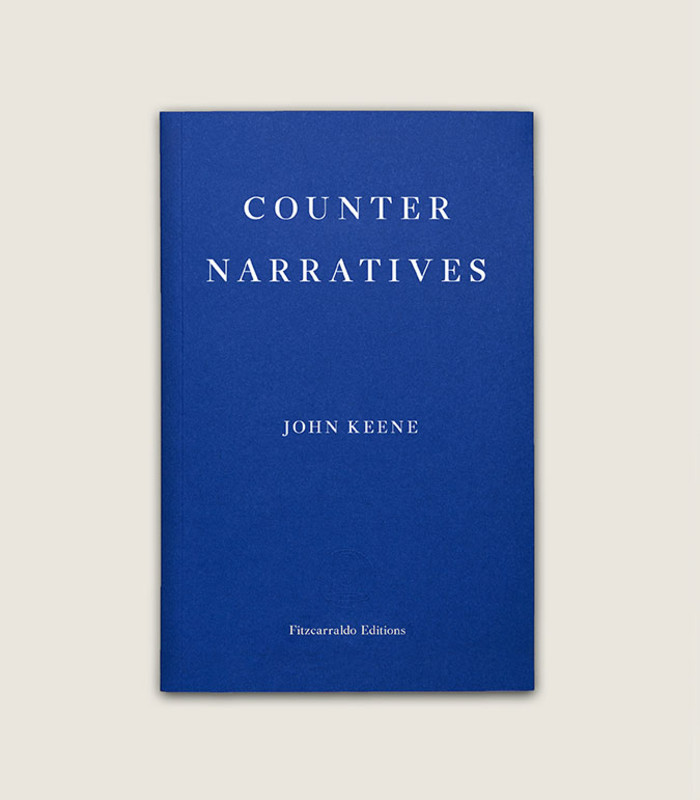
UPDATE: Jonathon Sturgeon has just posted a piece on Flavorwire comparing the publishing industry to the Motion Picture Academy of Arts and Sciences, and gives Counternarratives a shout-out in the process.

The semester has begun, Blizzard Jonas and all, and I can already see my blogging pace dwindling, so I am going to try to follow a plan I set out a few years ago but have never followed, which is to maintain my blogging activity by posting micro introductions to interesting things I find on the web, and just let the articles speak for themselves. (I also hope to do this with the stubs of pieces I've begun but not finished in the recent past.)
Marlon James at the Man Booker Prize ceremony
So here goes. Last year Marlon James, author of several novels, including the 2015 Man Booker Prize-winning novel A Brief History of Seven Killings (Riverhead, 2014), stated at a Guardian-sponsored event in London that the publishing industry "panders to that archetype of the white woman, that long-suffering, astringent prose set in suburbia. You know, 'older mother or wife sits down and thinks about her horrible life'."

He went on to say:
[B]ecause white women readers dominate the market, “the male editors will only accept one type of story. Everyone knows what a New Yorker story will look like. I could have been published 10 times over – I knew that there was a certain kind of prose I could have written; intense scenes that hinted, rather than explored.”
In its report on James's remarks, linked above, the Guardian noted that "Women, particularly white women, make up the vast majority of regular fiction readers, purchasing two thirds of all books sold in the UK. Almost 50% of women classify themselves as avid readers, compared to 26% of men." He expanded a bit on these assertions in a highly entertaining and informative Guardian Books podcast.

James was responding, in fact, to a Tin House essay, "On Pandering," by Claire Vaye Watkins, who received multiple prizes for her 2010 collection Battleborn. Watkins' is a rich, exploratory attempt to make sense of her experiences as a white woman writing in a tradition that usually valorizes white men, abets sexism and racism, and consciously and unconsciously urges women, including white women, to write against their perspectives and themselves.

Claire Vaye Watkins
To quote her:
The stunning truth is that I am asking, deep down, as I write, What would Philip Roth think of this? What would Jonathan Franzen think of this? When the answer is probably: nothing. More staggering is the question of why I am trying to prove myself to writers whose work, in many cases, I don’t particularly admire? I recently finished Roth’s Indignation with nothing more lasting than a sincere curiosity as to whether Roth is aware that these days even nice girls give blow jobs.

I am trying to understand a phenomenon that happens in my head, and maybe in yours too, whereby the white supremacist patriarchy determines what I write.

I wrote Battleborn for white men, toward them. If you hold the book to a certain light, you’ll see it as an exercise in self-hazing, a product of working-class madness, the female strain. So, natural then that Battleborn was well-received by the white male lit establishment: it was written for them. The whole book’s a pander. Look, I said with my stories: I can write old men, I can write sex, I can write abortion. I can write hard, unflinching, unsentimental. I can write an old man getting a boner!
In The New Republic, Phoebe Maltz Bovy took issue with James's assessment, penning a response, "Don't Let Men Attack Pumpkins Spice Literature,"filled with links to others responding to Watkins' essay. In it she asserted that James was half-right, and was focusing on literary sexism. She contrasted his take with freelance writer Nicole Perkins' reading of "On Pandering" in the Los Angeles Times, and stressed the need for a more intersectional understanding of the literary marketplace, and for the voices of women of color to be heard (yes!). (NYRB critic, author, translator and blogger Tim Parks offered thoughts about conformity in literature that sidestepped any discussion of race or gender, but which I thought connected at certain points with what all these critics were saying.)

There have been many other essays and articles on the lack of diversity and need for equity in publishing, including in children's literature. There are even organizations, like We Need Diverse Books, dedicated to highlighting and transforming this situation. A few years ago, a former student and I attended a great workshop in Brooklyn on diversifying children's literature, especially in the speculative fiction and fantasy genres. Shortly before he passed away the late, highly acclaimed writer Walter Dean Myers and his son Christopher--who used the term "apartheid"--published essays in the New York Times calling for diversity in children's literature. But the need across all genres remains, and not just in the US, but in other plural Western societies, like the UK.

Yesterday, Electronic Literature posted an article based on a new publishing diversity baseline survey by children's book publisher Lee and Low showing that the US and Canadian publishing industries are overwhelmingly white and dominated by cis-gender, abled heterosexual women. Moreover, executive level publishing jobs US and Canadian publishing executives are even more concentrated in the hands of straight, cis-gender, abled white women. Shades of Hollywood, though with a gender reversal. These are the decision-makers in the book biz.


These facts suggest that real diversity, beyond lip service, is necessary if the publishing even wants to begin to reflect the reality of the society around them; James' critique has a basis in the sheer facts of who runs the industry; and that Watkins' understanding of the internalization of male-centered values extends beyond writers, to the people and institutions that put books into readers' hands.

I'll conclude by saying that my own experience as an author has tended more towards what Marlon James says, though I have never let that stop me. In fact, I even encountered pushback from industry people--though not, thankfully, my publisher, New Directions, whose chairperson is the legendary editor Barbara Epler--concerning Counternarratives. In other ways, however, I have been fortunate to encounter people from all backgrounds--all races and ethnicities, genders and sexualities, national origins, class, religious affiliation, physical abledness--who have been supportive of my work, and whose work I could enthusiastically support.


Tuesday, June 21, 2011

Signs of the Strange Times (1 & 2) + Tim Parks on Translation

I always worry about being a Cassandra, I really do. I have to stop myself from photographing empty storefronts, going on about the unsustainability of the current low-tax safety-net-slashing agenda of both major parties, tweeting about every new revelation concerning how utterly the previous and current administrations have shredded the US Constitution (cf. Jane Mayer's extremely upsetting but revelatory New Yorker article on NSA whistleblower Thomas Drake, etc.). I learned during the 2002-2003 period that few people wanted to hear about what were to me clearly evident lies about the anthrax attacks, WMDs, Saddam Hussein's links to Al Qaeda, etc. emanating from the Bush administration; and a year or so later not to ask everyone I knew, WHO is buying all these houses and condos and HOW are they doing this? even though the entire "Flip It"/real estate mania simply did not make any sense to me at all. But I realized I was starting to sound like a deranged person by bringing these things up, so I stopped doing so and channeled them towards other outlets (like this blog).

But I cannot keep my eyes and mouth closed. I have been back in New Jersey and New York for approximately two weeks now. I daily visit the New York Public Library, where I am trying to complete a large project. On my way to and from the library in just these two weeks I have noticed and noted many things, some good, some bad, some uncategorizable, but one of the most disturbing has been seeing young women with children begging on the streets and subways. At least 5 times now in just two weeks, I have seen women, with a small child in their lap or beside them, seated on the sidewalk or in the subway (twice in the 42nd St. station), with little cardboard placards, asking for change and help. FIVE TIMES. IN TWO WEEKS. They are all different women and children. Perhaps full-time New Yorkers have been seeing this deeply saddening and upsetting human manifestation of poverty and it no longer raises eyebrows. Perhaps others have sounded the alarm and continue to. Perhaps this is so widespread and no one any longer takes notice. Perhaps people are blogging about (because I haven't seen it mentioned in any newspaper), but to me, this betokens how truly economically grave things are right now.

I am old enough to recall the legions of homeless people who populated New York's streets in the 1980s and early 1990s. I can also recall Chicago's (and Evanston's) homeless crisis, which only moderately abated during the past decade's fake "boom" years.  Remembering New York during its down years (which were, I should add, not its worst, as during that era I grew up in another city which was plummeting towards its nadir), I knew there were numerous homeless women and children, and that there still are, but I cannot recall seeing, in such a short period of time, so many on the street begging and pleading (one woman was singing) for money. Perhaps I did not notice back then; perhaps this was much more common during the last economic disaster I can recall, which was in any case nowhere as severe as the current one, though it paralleled it in some key ways.  One difference between then and now was that the wealth gap, though growing, was not as large then as it is today, and New York was much less excessive in its glitz. Though it had its superrich, it was still the New York of squeegee men, of the potholed West Side Highway, of the too-dangerous-to-wander-through-at-night Central Park. The Meatpacking District was a meatpacking district. You could rent an apartment in the East Village or Washington Heights for $500. Tom Wolfe's Bonfire of the Vanities captured it quite well. New York today is something else; parallel, increasingly incommensurate worlds. Each world is growing unavailable, beyond glimpses, to the other. The world of women singing for change, begging for change, pleading in Spanish for change, as their children hover beside them, as passersby don't blink and eye and those with means slide by via car service, oblivious, is a tragic one indeed.  I know it's not only New York, I know there are millions of homes under foreclosure and people are sleeping in cars and tents and on the streets all over the country, but this is what I'm seeing now, repeatedly.

I could not stop myself from taking pictures today. We have to do something; the broken record of austerity and fiscal contraction to preserve the rich's bounty isn't working, and I don't know that many people will keep taking this. We can be tranquilized only so long before we wake up, or we don't.
Mother & child begging
Near Madison Square
Woman child begging
Near Herald Square

+++

On a related note, though this has perhaps less to do with economics and more to do with cultural expression, I have been noticing more and more people running around in pajamas. Not children, but adults. Not pajama-like clothing, which is to say, loose-fitting, wide-legged pants or slacks, perhaps in cotton or silk, and so on. No. I mean plaid pajama pants and tops, housecoats, slippers and houseshoes. I thought I was hallucinating this in Chicago, and said I would start making a mental note, but then the end of the academic year rolled around and I stopped paying attention--to this phenomenon at least. Then I returned to Jersey City and lo, here we go with the pajamas. What is up with that?

I have some suppositions, but I'm curious to know if any J's Theater readers have noticed this. I must say that I have not noticed it so much in New York City (Manhattan), but in Jersey City, particularly right up to last week, I've seen pajamaists intermittently. As I disembarked from the light rail this evening I spotted one young man with pajama pants on! He was the only one, though, at least that I noted.  I have not, thankfully, seen anyone in a nightgown (well, that's not true--I saw a man wearing one last week), a nightshirt, a union suit, or, gods forbid, teddies or similar lingerie. But those plaid pajama pants...were they giving them away at Old Navy or H & M or something?

What also pushed me think of this is the story of Deshon Marman, the 20-year-old University of New Mexico football player who was pulled from US Airways flight 488 and arrested, jailed and released on $11,000 bond--I am not making this up--after allegedly failing to pull up his sagging sweatpants, which, in a video giving his side of the story, I believe I hear him calling them "pajamas." The issue of "saggers" and "sagging" is not one I'm going to debate here, though I will say that arresting anyone for sagging is insane, and jailing him or her is unconscionable.  But what is up with the--a grown man, no less, not an infant or toddler--wearing pajamas pants on a flight, a short flight no less, not one in which, say, he'd be in the air for 7-12 hours and might want to stretch out and sleep? I fly a bit more than I'd want to, but I fortunately haven't seen this that much; 1-2 times in the last few years, usually teens or 20-something, but is it now more common than I imagine?

I understand the desire to be comfortable and the increasing casualness of clothing in our society. I grasp that underwear has become outerwear, and a big business as such. I am all for self-expression, creative expression, free expression.  Truly. But I wonder whether we moving to the point where there is no line between what one wears in the streets or on a plane (or anywhere outside one's house) and then comes home and plops between one's sheets?  Or vice versa?  And yes, I know that W. H. Auden was known to scoot through the streets of New York in a housecoat and slippers, etc., but one brilliant Anglo-American eccentric decades ago doesn't justify or explain this...well, I hope it's not a trend.


Deshon Marman gives his side of the story
(from EURweb.com)
+++

On a very different note, I wanted to point to Tim Parks's very recent New York Review of Books article "Your English Is Showing," on translation and the linguistic effects of English as a lingua franca. A response to a May 11, 2011 post entitled "Franzen's Ugly Americans Abroad," on European reception of Franzen's most recent work and the global literary marketplace, Parks's newer essay takes a different tack, one explored by not a few contemporary scholars of comparative literature and translation--I can think almost immediately of a talk poet and critic Mónica de la Torre gave several years ago on the literary strategies of Brazilian Concretists, part, I believe, of her dissertation--but refracted through his own experience. To summarize, he suggests that rather than non-Anglophone writers (and I would say that it's the case for Anglophone native writers too) choosing to write in the current global literary language of English, though some do (Bahian poet and fiction writer Valdeck Almeida de Jesus, for whom I've written two introductions, is one example), they have begun to internalize a particular more easily-translatable English grammar and prose style that is reshaping their prose in their native tongues. This is different, I gather Parks suggesting, from those South American writers who were heavily influenced by the American rhythms, in translation even, of William Faulkner, say; or from bilingual or multilingual writers, like Jorge Luis Borges or Oe Kenzaburo, who internalized the rhythms of English and French respectively, thus shaping their prose in particular ways; or even of Thomas Wyatt taking the Italian sonnet form and rethinking it, reshaping it, towards his own ends. What Parks is interested in links up with the ideas of critics like Pascale Casanova and Franco Moretti in interesting ways--though he doesn't mention either in this piece.  What he does say is:

Of course as soon as one has excited oneself with an idea, one finds confirmation of it everywhere. As I said in my recent blog post, Peter Stamm very much fits this description, likewise the German Siegfried Lenz, and many other French and Italian authors. So strong is the flavor of English in the Italian of the bestselling thriller writer Giorgio Faletti that a number of readers suggested it was actually translated into Italian from an English original written by someone else. At my own university, IULM, in Milan, we have a project GLINT (Global Literature and Translation) of which one area involves studying the extent to which Italian syntax has shifted toward English models over the last fifty years. There is no shortage of evidence. Contemporary Italian more frequently puts the adjective before the noun, more frequently uses possessives for parts of the body, more frequently introduces a pronoun subject, all changes that suggest an influence from English.

So that is the intuition. The idea is not so much the old polemic that English is simply dominant and dangerous; but rather that there is a spirit abroad, especially in the world of fiction, that is seeking maximum communicability and that has fastened onto the world’s present lingua franca as something that can be absorbed and built into other vernaculars so that they can continue to exist while becoming more easily translated into each other.

As I noted above, he's asserting something that goes beyond particular writers or national language, and suggesting, rightly I think, what's happening in a broader sense. As I noted above, I think it affects Anglophone writers as well; simpler and more straightforward prose fiction has a better chance not only of being published, of traveling and of being publicly acclaimed and rewarded than more complex, linguistically oriented work, but it's more like to be read by a wider array of people, including those whose native language is English and those whose isn't.

This is even more true for writers working in almost any other language. I think of the fine but relatively straightforward prose of Roberto Bolaño and compare it to the experimental style of Juan Goytisolo or the extroardinarily complex texts of Julián Ríos, for example. I set them in opposition not to establish a hierarchy of value (I think all have their merits and are great writers), but to suggest that by its very nature the prose of Bolaño has received and will continue to receive greater attention than those of the other two Spanish-language writers, in part because he is translatable in ways they are not (and Ríos's Poundemonium, say, is less translatable than Goytisolo's Makbara, though both have been well translated).

As to the effects on the prose styles in the languages themselves, and of English's direct influence, how incredibly fascinating. I will have to read much more carefully. The last few non-English works I've read, however, show little of English's, particularly American literary and spoken English's effects....