Showing posts with label Langston Hughes. Show all posts

Thursday, June 13, 2019

American Academy of Arts & Letters Ceremonial 2019 & Award

Six years ago, back in 2013, I blogged about attending the American Academy of Arts & Letters' annual Ceremonial award celebration. I was the guest of a friend and colleague, Dorothy Wang, who was a guest of an award-winner, the poet Joanna Klink, and though I had seen some of its award winners and awards I'd seen listed over the years, I had no idea about the organization or where it headquarters were located, let alone about its awards. In fact, I often mistook it for the American Academy of Arts & Sciences, which is located in Cambridge, not New York; they are two similar but distinct organizations. The latter encompasses the sciences and is more of a scholarly honors organization, while the latter primarily focuses, as its name suggests, on arts and letters.

Aububon Terrace (photo by C)
In my previous post, I gave a potted history of the AAAL:
It's an august institution too: a closed honor society of 250 members selected and elected by standing members without outside nomination, it grew out of the National Institute of Arts and Letters, founded in 1898, consisting eventually of 200 members, from which the American Academy of Arts and Letters, a smaller and more elite sub-organization of 50 of the most eminent figures in their fields, emerged in 1904. US President William Howard Taft signed a Congressional act that incorporated the Institute of Arts and Letters in 1907, and the Academy in 1916. In 1976 the two organizations merged, and in 1993, all 250 members merged into one entity now known as the American Academy of Arts and Letters.
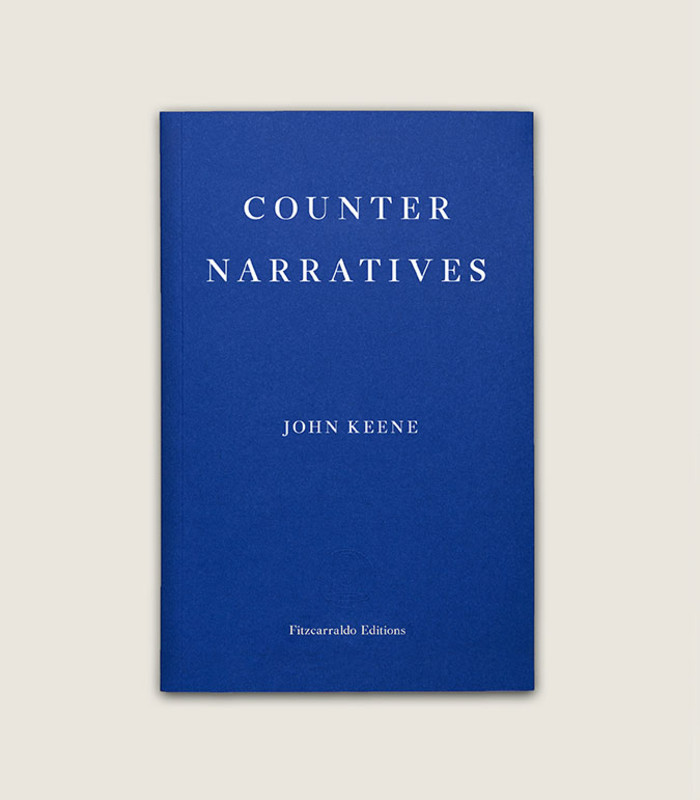
I also mentioned some of its members and the day's award-winners, a few like my former graduate school professor and thesis advisor E. L. Doctorow no longer with us, so won't recapitulate that earlier blog post, but I will say that uncanny pleasure of once again attending a Ceremonial up at Audubon Terrace in Washington Heights, this year, as a recipient, having received the Harold T. Vursell Award in Fiction. This award is given to a writer specifically based on the quality of their prose. (!) J's Theater readers will note my often baroque stylings (and typos, forgive me) here, and perhaps ponder why I was designated a recipient of this prize, but it was primarily for Counternarratives, in which my rhetorical and syntactic play was, I think it fair to say, at its most daring, and so I took the honor as an affirmation of what I attempted in that book, though I also think it's probably not wrong to suggest that all of my published books have in them some sort of experimentation when it comes to prose or verse, and that when it works, it is at least distinctive if nothing else.

As an award recipient, I was invited to a pre-Ceremonial reception and luncheon, which C attended with me, as did my New Directions editor and publisher, Barbara Epler, and I had the opportunity there to tell Jamaica Kincaid once again how much of a fan I was and am. Her prose, as well as her inventiveness as a storyteller and novelist, have been among many powerful influences on my own work. I also had the opportunity to chat with a few fellow award winners or new members, including poets Aracelis Girmay, fellow former Dark Room member Natasha TretheweyMarilyn Chin, Claudia Rankine, and Grace Schulman, and fiction writers Alice Hoffman, Lorrie Moore and my collegue Jayne Anne Phillips, who was elected to the AAAL a few years ago. After the luncheon, as before it, C and I viewed some of the art and literary materials, by members and recipients on display.

One of the more fascinating rooms featured the photos of all the prior and present members, lined up in rows in stall-like spaces. The original members were, unsurprisingly, all white men, a great many of them legendary names in American culture, which got me wondering who had not been a member yet produced work that today we hold in high esteem (F. Scott Fitzgerald, to name one, Ernest Hemingway to name another); on the other hand, many of the names would not register at all to contemporary sensibilities. At a certain point, a few white women's faces pop up, and then, slowly, the further we progressed into the 20th century, there were more white women, a few black writers, like W. E. B. DuBois (was he the first?) and Langston Hughes, and then black classical composers and jazz musicians, Asian American, Latinx, and Native American writers' portraits appear (see the photos below). The Academy's members still strongly reflect the upper reaches of the preponderantly New York-and-northeastern based world of architecture, visual arts, literature, and European-American art music, but the awardees have begun to diversify somewhat more, or so I was told. Certainly this year's winners were more racially and generationally diverse than I recall from 2013.

In one of the rooms featuring paintings
bequeathed by American Impressionist
F. Childe Hassam (photo by C)
One of the rooms in the American Academy
 headquarters  (photo by C)
Members and honorees assembling on stage
 (photo by C)
Once the Ceremonial began, I took my numbered seat on the stage, between Jamaica Kincaid and poet D. A. Powell, also a prize recipient; to his left sat our presenter and a member of the committee that selected us, poet Henri Cole. A row behind me sat Eileen Myles, among others. A number of illustrious members, like sculptors Martin Puryear and Richard Hunt, whom I mentioned in my prior post, and honorees like Meredith Monk and Thelma Golden, were seated in the front row.  This year's recipient of the Gold Medal for Literature, the Academy's highest honor, Toni Morrison, and the Gold Medal for Art, Lee Bontecou, were unable to attend, and so were fulsomely lauded by their presenters. One highlight of this year was the Blashfield Lecture by Pulitzer Prize-winning composer David Del Tredici, once a controversial figure in the American classical music world and now a venerable and venerated elder. Del Tredici's lecture, "The Task of Gayness," explored his coming into his own in his field, and out as a gay man, with humor and concision. Were he to write a memoir, I'd most certainly buy it.

A photo of me walking to receive
my award from Henri Cole (photo by C)
Receiving my award from Henri Cole
(Photo by C)
At the conclusion of the awards ceremony, which ran roughly an hour, another reception unfolded, on a bright and sunny but thankfully not hot afternoon, which afforded us an opportunity to speak with more writers, editors, artists, and others in attendance. It was, all in all, a lovely afternoon, and many thanks to the Academy jury for the award!

Thursday, February 01, 2018

Black History Month/Langston Hughes Day + Poems: Nicolás Guillén & Langston Hughes

Langston Hughes in Harlem,
1959. (The LIFE Picture
Collection/Getty Images)
Happy Black History Month! February ushers in the month on the US calendar when the history, culture, and experiences of people of African descent, African Americans and all other Black peoples, in America and across the globe, occupy the foreground. As readers of J's Theater know well, every day, every month, every year here offers an opportunity to highlight the artistry, past and present experiences, and rich cultures of Black people, and to the extent that I can do so this month as every month, I intend to.

February 1 is also the birthday of arguably the greatest and most prolific African American poet, (James) Langston (Mercer) Hughes (1902-1967), a Joplin, Missouri native whose poetry transformed Black American and American literature, and who was one of the central figures in the Harlem Renaissance and a link to many of the Black American and non-US literary traditions that followed. One of the many aspects of Hughes' career that has deeply influenced me is his work as a translator; he brought into the English the drama of Spain's Federico García Lorca, the poetry of the Afrocuban luminary Nicolas Guillén, and the prose of Haitian writer Jacques Roumain.

I've previously posted one of his translations of Guillén's poems from Motivos de Son (1938), the collection that made the Cuban poet's reputation. I shared it in conjunction with my trip to Cuba,  which though 9 years ago feels like it was just yesterday. Hughes visited Cuba three times, in 1927, 1930 and 1931, before the Revolution, and as Ervin Dyer discussed in a CBS News piece, the American poet played a role in helping the country connect to its African roots, engaging in conversations with and championing the work of Afrocuban artists and writers at a time when racial discrimination there, as in the US, was rife. One of the poets he met and whom he encouraged was Guillén, who interviewed him for Diário de Marina, according to Dyer. Many stars aligned: Hughes was already famous and being translated in Cuba, Guillén's career was ascendant, and the newspaper had a page dedicated to fighting racism. Hughes would go on to translate Guillén's poetry and cultivated their friendship to the end of his life. At the same time, his presence in Cuba and his art continued to galvanize an array of Afrocuban artists working across genres.

Here is Hughes' translation of Guillén's "Little Song for the Children of the Antilles," which I screenshot from The Translations: Federico García Lorca, Nicolás Guillén, and Jacques Roumain, by Langston Hughes, edited and with an introduction by Dellita Martin-Ogunsola, Columbia: University of Missouri Press, 2003.


And here is a poem Dyer mentions in his article, one of Hughes' tributes to Cuba, "To the Little Fort of San Lázaro on the Ocean Front, Havana." It is also a humorous and sarcastic critique of capitalism, especially of the predatory US kind, which had reached its tentacles deep into Cuba before Fidel Castro and the Revolution hacked it away.  We also might think of it as a fitting epigraph for a good deal of what gentrification and global capital are laying waste to today.

TO THE LITTLE FORT OF SAN LÁZARO
ON THE OCEAN FRONT, HAVANA

by Langston Hughes


Watch tower once for pirates
That sailed the sun-bright seas —
Red pirates, great romantics.

  DRAKE
  DE PLAN,
  EL GRILLO

Against such as these
Years and years ago
You served quite well —
When time and ships were slow.
  But now,
Against a pirate called
THE NATIONAL CITY BANK
What can you do alone?
Would it not be
Just as well you tumbled down,
Stone by helpless stone?

From The Collected Works of Langston Hughes: The Poems, 1921-1940, edited and with an introduction by Arnold Rampersad, Columbia: University of Missouri Press, 2001. All rights reserved.

Monday, February 01, 2016

Happy Black History Month & Langston Hughes Day

Langston Hughes by
Carl Van Vechten, 1936
Happy Black History Month!

February 1 is also the birthday of Langston Hughes (1902-1967), who needs no introduction. As in past years, in honor of his birthday and of Black History Month, I'm posting a Langston Hughes poem. (One of the joys of my life these days is that I always was able to memorialize and celebrate him for posterity in my story "Blues," in Counternarratives.)

Below is Langston Hughes's tribute to the late Jacques Roumain (1907-1944), one of Haiti's greatest poets, whose work, including Gouverneurs de la Rosée (Masters of the Dew) Hughes translated. The friendship, dialogue and political affinities between the two poets was significant, in part because of the links Roumain had made with African American writers during his period of exile from Haiti. Hughes, like many of his peers, mourned the death of the brilliant, anti-imperialist, Communist-affiliated ethnographer, poet and fiction writer Roumain, at age 37, in 1944.

In fact Hughes published the memorial elegy to Roumain, a Communist, in the October 2, 1945 issue of New Masses. I don't think it's Hughes' best work, but am fascinated by its tenderness and the ways in which Hughes invokes the Diaspora and links black--and Haitian vodoun specifically--culture to politics ("Erzulie to the Pope, / Damballa to Lenin / Haiti to the universe) throughout. The dialogue, Hughes suggests, continues even after death.


Sunday, February 01, 2015

Black History Month/Langston Hughes Day + Poems by Langston Hughes


February 1 always marks the start of US Black History Month, as well as the birthday of one of the greatest poets this country gave the wider world, James Langston Mercer Hughes (1902-1967). I think I've alternated in the past by celebrating one or the other, but today, in tribute to the month and to Hughes, here are a few of his poems, all taken from The Collected Poems of Langston Hughes, Arnold Rampersad and David E. Roessel, Editors (New York: Vintage, 1995).

The first is a poem drawn from Hughes's time on the sea; Sekondi, part of Sekondi-Takoradi, is a port city in Ghana. Note the ironic play on fog and the swift punchline-like turn at the poem's end.

FOG

Singing black boatmen
An August morning
In the thick white fog at Sekondi
Coming out to take cargo
From anchored alien ships,
You do not know the fog
We strange so-civilized ones
Sail in always.

***

Here are three queer poems drawn from Hughes's collections up to 1936. I reread all the poems in these volumes in preparation for my story "Blues," which involves a (fictional?) meeting between Hughes and the Mexican poet Xavier Villaurrutia, who had already translated some of Hughes' work into Spanish.

In his first three or so collections, Hughes has, among a wide array of poems in which a male voice addresses a female beloved; a female voice addresses or speaks of a male beloved; and gender-ambiguous poems, many invoke nocturnal imagery (because we all know what goes on in the dark).

SONG

Lovely, dark, and lonely one,
Bare your bosom to the sun.
Do not be afraid of light,
You who are a child of night.

Open wide your arms to life,
Whirl in the wind of pain and strife,
Face the wall with the dark, closed gate,
Beat with bare, brown fists--
And wait.

HARLEM NIGHT SONG

Come,
Let us sing the night together,
Singing.

I love you.

Across
The Harlem roof-tops
Moon is shining.
Night sky is blue.
Stars are great drops
Of golden dew.

Down the street
a band is playing
I love you.

Come, let us roam the night together
Singing.

DESIRE

Desire to us
Was like a double death,
Swift dying
Of our mingled breath,
Evaporation
Of an unknown strange perfume
Between us quickly
In a naked
Room.

***

Lastly, Hughes was a poet who did not shy away from political and social commentary, but he had a gift for figuring out how to express it without it (for the most part) sounding like propaganda. Part of his success hinges on his use of humor, part on his careful use of rhyme, rhetoric and rhythm, part on his inclusion of vernacular and the viewpoint of the subaltern, and part on his skillful deployment of irony. The parodic tone and collage quality here point in the direction of post-modernism.

"Advertisement for the Waldorf-Astoria" appeared in 1931 in New Masses magazine, and later in Hughes's aubiography, The Big Sea, and is considered a masterpiece of Popular Front aesthetics. I checked the Inflation Calculator, and $10,000/year in 1931 would equal $155,747.37/year in 2014 dollars. That would come to about $12,978/month, which, it turns out, was about the price of the lowest end rentals in the Waldorf Towers in 2011 (I can only imagine that it has risen by several thousand dollars as the price of high-end real estate keeps rising.) To put it another way, Hughes was prescient, and not for the first time!

Excerpt from ADVERTISEMENT FOR THE WALDORF ASTORIA


EVICTED FAMILIES

All you families put out in the street
   Apartments in the Towers are only $10,000 a year. (Three
   rooms and two baths.) Move in there until times get good,
   and you can do better. $10,000 are about the same
   to you, aren't they?
Who cares about money with a wife and kids homeless, and no-
   body in the family working? Wouldn't a duplex high above
   the street be grand, with a view of the richest city in the
   world at your nose?
"A lease, if you prefer, or an arrangement terminable at will."

All poems Copyright © Estate of Langston Hughes, 1995, 2015. All rights reserved.

Monday, April 01, 2013

National Poetry Month + Poem: Langston Hughes

It's National Poetry Month, and also one of the busiest in the year for me (giving exams, reading theses, etc.), but I am aiming to post poems regularly this month, if not every day, then at least several times per week, or at least more frequently than I do in any given month (though I do periodically post poems, including several of the last few weeks, I think.) As I did in each of the past few annual National Poetry Month posts, I also am going to pick a theme and try to stick with it. Last year I focused on poetry about poems, thinking about them, writing them, reflecting on them in and as poems, a fruitful theme that led to a wide array of poems. For some reason I thought this year about poems about the night, which sounds rather inappropriate as Spring is nearly upon us, but let's see if I can find 30 poems about the night--broadly construed--to post.

Let's begin with a poet I hold perhaps more highly than all others, whose work I've been reading since childhood (and once had to memorize), and teaching this spring. It and he never ceases to surprise me. By it I mean a deceptively simple poem, entitled "Dream Variation," and by he, I mean Langston Hughes, whose evocation of the night, whose darkness and beauty he analogizes to himself, is immediately evident. This is a poem he wrote for children, though it works too for adults (and I can imagine it being set to beautiful music, notated or improvised). Read it aloud and hear how he creates a whirling music, informed by the blues, that lifts the poem, like the poem's speaker who has been twirling till the night arrives, off the page, not unlike the dancing he also invokes in both of the poem's stanzas.  For some children, the affirmation in the poem's penultimate line would come as a lovely surprise--a needed one. To get closer to the spirit, through dance, and poetry, and thus to the natural world, the world behind the surfaces of the visible, to become a tree and simultaneously one's deeper, truer self--the poem suggests all of this and more. Enjoy, and if you get the opportunity, have a twirl!


DREAM VARIATION

To fling my arms wide
In some place of the sun,
To whirl and to dance
Till the white day is done.
Then rest at cool evening
Beneath a tall tree
While night comes on gently,
Dark like me-
That is my dream!

To fling my arms wide
In the face of the sun,
Dance! Whirl! Whirl!
Till the quick day is done.
Rest at pale evening...
A tall, slim tree...
Night coming tenderly
Black like me. 

Copyright © Langston Hughes, from The Collected Works of Langston Hughes: Works for Children and Young Adults: Poetry, Fiction, and Other Writing. Volume 11. Edited and with an introduction by Dianne Johnson. Columbia: University of Missouri Press, 2003.

Wednesday, February 01, 2012

Langston Hughes Day (Black History Month Begins)

Pastel drawing of Hughes
by Winhold Reiss
Today is the first day of Black History Month, one of many gifts that Carter G. Woodson gave to the United States. I've said before that every month should be black history month, and latino history month, and women's history month, and lgbtq history month, and so on; we should always be acknowledging the diverse and plural contributions of everyone who has created the world we live in, but unfortunately, as I need not detail, the reality is quite different, so this month still has an important role to play.

Today is also Langston Hughes's birthday. Born James Mercer Langston Hughes in 1902 in Joplin, Missouri, he went on to become one of the greatest poets in the American and African American traditions, dying in 1967.  Perhaps half a decade ago, I read and reread a large selection of Hughes' poetry with a student who was preparing for graduate oral exams, and what struck me in a way I had forgotten was not just the thematic wealth and formal breadth of Hughes's poetry, but its political ferocity, its consistent statement of resistance, its capacity for wresting beauty out of some of the ugliest moments in history, while still making sure that readers did not forget that ugliness.  Years ago when I taught junior and high school students, Hughes was one of the poets they most readily responded to. He would, I can imagine, have been proud that he was reaching young people and also helping to pave a graduate student's road to a doctorate.

Hughes's poetry well suited for today, even though the historical moment in which most of it was written is now past. The next time I participate in a Human Micropoem event I intend to read one or two of his poems, which are well suited for the public repetition style the Human Mic requires. But it's also the case that his poetry remains so salient and so relevant because so much of what it portrays, describes, invokes, and evokes, sometimes with lacerating grace, is still with us, has not yet fully passed. The struggles for bread and equality here, for freedom and democracy overseas, for communities bridging the numerous barriers that divide us, have hardly ceased. We have a ways to go. Hughes was aware of that. His poetry is aware of this and can make us aware of this. His aegis is one that poets and politicians and everyone else today would do well to acknowledge.

Hughes with students in Atlanta
during Negro History Week 1947
(Photo: Griffith J. Davis)


Here are several very short Hughes poems, which still pack a punch:

History

The past has been a mint
Of blood and sorrow.
That must not be
True of tomorrow.

Enemy

It would be nice
In any case,
To someday meet you
Face to face
Walking down
The road to hell...
As I come up
feeling swell.

Go Slow

Go slow, they say-
while the bite
Of the dog is fast.
Go slow, I hear-
While they tell me
You can't eat here!
You can't live here!
You can't work here!
Don't Demonstrate! Wait!-
While they lock the gate.
Am I supposed to be God,
Or an angel with wings
And a halo on my head
While jobless I starve to dead?
Am I supposed to forgive
And meekly live
Going slow, slow, slow,
Slow, slow, slow,
Slow, slow,
Slow,
Slow,
Slow?
????
???
??
?

All poems Copyright © The Estate of Langston Hughes, 2011. All rights reserved.

Monday, May 02, 2011

Poetry for Labor Event

Many, many thanks to everyone who came out to the Poetry for Labor reading and commemoration on Sunday, which was International Labor Day / May Day. As I noted in my original flyer, this year marked the 125th anniversary of the Haymarket Square Affair, one of the signal events in US and global labor history, which occurred in Chicago right near the site where we met to read and remember. As I noted in my brief and informal remarks that opened the event, the lives of the striking workers who were killed, the policemen who also died, and the accused bombers who were later hanged or murdered were not in vain. The incident and its aftermath led to many things we take for granted today, including the eight-hour workday, and helped to spark the union movement in this country and all over the globe.  As we find ourselves in another precarious moment in terms of labor and labor relations, with unions specifically under fire, an unemployment rate officially at 8.8% but higher and very high underemployment, and a skewed economic system that is rewarding a very few at the expense of billions of people, it's crucial that we not forget events like the Haymarket Square Affair, that we take time out to commemorate those who fought for what we have, and that we continue to fight for our own rights and for those who'll follow us.

I want to offer especial thanks to Jen Karmin and Laura Goldstein, who read, spoke, brought their incredible presences and commitments to the event, and to their affiliated organizations, the Red Rover Series and the Chicago Durutti Skool, who consponsored the event and put the word out about it.  Many thanks also to my partner C, whose support was invaluable, and whom I even convinced to read a poem (by Frank O'Hara: "A Step Away from Them," no less!), and to my cousin Raquel Stallworth and her husband Walter, who came out to show support. Raquel spoke eloquently about her experiences with the contemporary labor market, making personal, as Jen and Laura did, what can sometimes be discussed in abstractions (and thus, as too often happens in our corporate media, dismissed altogether or sensationalized).  Among the writers we read were Muriel Rukeyser, Charles Reznikoff, Rita Dove, Elizabeth Alexander, Carl Sandburg, Joy Harjo, John Ashbery, Martín Espada, Mark Nowak, and William Blake, and we read poetry and prose.  We talked about poetry as labor, the role of metaphor in the way those in power structure our society and capitalism's systems and how what operates in poetry might offer ways of understanding things better, working-class roots and ancestors, and so much more.

It was particularly encouraging to see that among the first people who arrived at the event were tourists from Norway, and a executive trainee (!) from the Basque country (as he put it) in Spain. Both had learned about the event online, and were determined to pay tribute to the site and to hear poetry. And they did stay and listen, which was wonderful.  We also had a sizable contingent of cyclists who, it turns out, were not only gathering at the Haymarket Memorial Sculpture to begin their tour of major local labor sites, but who also wanted to hear poetry. Rick B., one of the cyclists, also offered a brief and thorough recounting of the Haymarket Square Affair events, pointing out that the alley from which the bomb was thrown was still there, just behind us.

Below are some photos from the event. Many thanks again to C, who snapped some great ones!

The new plaque
The new plaque, dedicated April 30, 2011
Reading at *Poetry for Labor*
During the reading
The visitors from Norway & C
The visitors from Norway (they were there at 8:30 am!) and C
Haymarket Memorial Sculpture
The Haymarket Memoria Sculpture, with our set up
Jen Karmin reading
Jen preparing to read
Laura Goldstein reading
Laura reading Muriel Rukeyser's work
C reading Frank O'Hara's "A Step Away from Them"
C reading
A poet & union member speaking
A poet and union member speaking
Rick B. of the cyclers' group speaking
Rick B. of the cyclists' group
Me reading @ *Poetry for Labor*
Me reading

Monday, April 18, 2011

Santorum Stupidity Over: Poem: Langston Hughes

This weekend brought news of a brouhaha involving the extreme right-wing, homophobic Republican former US Senator from Pennsylvania, Rick Santorum, he whose last name has, through the deft work of columnist and author Dan Savage, become a particularly vivid eponym. But our concern here isn't with the eponym and its figurative associations, apt as they are for Santorum, but with a bit of foolishness on his part. (C can probably already hear me pronouncing this word in the Deep South-fashion as "foolnish.") For Santorum selected a phrase that to him sounded just right for his potential Presidential campaign, Quixotic though we all know it will be--or Quayline, since he lacks even an iota of Don Quixote's sense and all of Dan Quayle's limitations; a phrase that, to his, or his campaign staff's ears, sounded just right: "Let America Be America Again."

As it turns out, the progressive website Think Progress saw this slogan and grasped that it came from Langston Hughes's (1902-1967) "Let America Be America Again," a pro-union, pro-immigrant, pro-equality--progressive!--poem he published in 1935, during the era of the Great Depression.  Hughes, as I need not tell anyone, was black, and gay, and a committed leftist. He was a cosmpolitan and an internationalist, a strong advocate of black consciousness and of Diasporism. He was the grandson of the abolitionist Charles Langston and a nephew of abolitionist and educator John Mercer Langston. He was even a correspondent for and member of Communist organizations, etc. All of this is searchable on Google, as is the slogan Santorum selected, which was, for those of us with even the slightest memory, already in the political air as Democratic Presidential candidate John Kerry had not just sampled, but recited a selection of it in 2004. (How could anyone forget a Presidential candidate being able to quote a poem, especially one by Hughes?)

Nevertheless, Santorum went with the slogan. Until a Think Progress reporter, Lee Fang, asked him about the words and their background. This is how Gawker reported it:

"No I had nothing to do with that," he said. "I didn't know that. And the folks who worked on that slogan for me didn't inform me that it came from that, if it in fact came from that."

When he was later asked what it means to him, Santorum replied: "Well, I'm not too sure that's my campaign slogan, I think it's on a web site."

But he also used it in the official press release announcing his exploratory committee earlier this week....

Et cetera. Santorum isn't getting anywhere the White House, the Senate, or the Pennsylvania State House for that matter, but the flap did provoke the following question: can he read? Because if or his minions did even pass a cursory eye over the following poem, it would be evident what Hughes was arguing here. Some poems are admittedly difficult to grasp. I have written a few of those myself. Hughes has as well. But some do not, as Wallace Stevens wrote in his poem "Man Carrying Thing," "resist the intelligence / Almost successfully." Some are quite straightforward and evident even to the dullest of minds. A category that, as his past record would attest, includes Santorum.

Here is Hughes's poem in full, easy to grasp, and quite beautiful and moving, in my humble opinion. It shakes me up a bit every time I read it. More of our politicians need to read it, and recite it to themselves as they cut deals with plutocrats and carve what remains of our government and society up, what remains of our threadbare social safety net, for their friends and patrons.

LET AMERICA BE AMERICA AGAIN

Let America be America again.
Let it be the dream it used to be.
Let it be the pioneer on the plain
Seeking a home where he himself is free.

(America never was America to me.)

Let America be the dream the dreamers dreamed--
Let it be that great strong land of love
Where never kings connive nor tyrants scheme
That any man be crushed by one above.

(It never was America to me.)

O, let my land be a land where Liberty
Is crowned with no false patriotic wreath,
But opportunity is real, and life is free,
Equality is in the air we breathe.

(There's never been equality for me,
Nor freedom in this "homeland of the free.")

Say, who are you that mumbles in the dark?
And who are you that draws your veil across the stars?

I am the poor white, fooled and pushed apart,
I am the Negro bearing slavery's scars.
I am the red man driven from the land,
I am the immigrant clutching the hope I seek--
And finding only the same old stupid plan
Of dog eat dog, of mighty crush the weak.

I am the young man, full of strength and hope,
Tangled in that ancient endless chain
Of profit, power, gain, of grab the land!
Of grab the gold! Of grab the ways of satisfying need!
Of work the men! Of take the pay!
Of owning everything for one's own greed!

I am the farmer, bondsman to the soil.
I am the worker sold to the machine.
I am the Negro, servant to you all.
I am the people, humble, hungry, mean--
Hungry yet today despite the dream.
Beaten yet today--O, Pioneers!
I am the man who never got ahead,
The poorest worker bartered through the years.

Yet I'm the one who dreamt our basic dream
In the Old World while still a serf of kings,
Who dreamt a dream so strong, so brave, so true,
That even yet its mighty daring sings
In every brick and stone, in every furrow turned
That's made America the land it has become.
O, I'm the man who sailed those early seas
In search of what I meant to be my home--
For I'm the one who left dark Ireland's shore,
And Poland's plain, and England's grassy lea,
And torn from Black Africa's strand I came
To build a "homeland of the free."

The free?

Who said the free? Not me?
Surely not me? The millions on relief today?
The millions shot down when we strike?
The millions who have nothing for our pay?
For all the dreams we've dreamed
And all the songs we've sung
And all the hopes we've held
And all the flags we've hung,
The millions who have nothing for our pay--
Except the dream that's almost dead today.

O, let America be America again--
The land that never has been yet--
And yet must be--the land where every man is free.
The land that's mine--the poor man's, Indian's, Negro's, ME--
Who made America,
Whose sweat and blood, whose faith and pain,
Whose hand at the foundry, whose plow in the rain,
Must bring back our mighty dream again.

Sure, call me any ugly name you choose--
The steel of freedom does not stain.
From those who live like leeches on the people's lives,
We must take back our land again,
America!


O, yes,
I say it plain,
America never was America to me,
And yet I swear this oath--
America will be!

Out of the rack and ruin of our gangster death,
The rape and rot of graft, and stealth, and lies,
We, the people, must redeem
The land, the mines, the plants, the rivers.
The mountains and the endless plain--
All, all the stretch of these great green states--
And make America again!

From The Collected Poems of Langston Hughes, published by Alfred A. Knopf, Inc. Copyright © 1994 the Estate of Langston Hughes. Used with permission.

Wednesday, February 09, 2011

The Case of the Purloined Langston of DC

A poet (I have known for half my adult life, and not least for his prestidigitory skills) decided to engage in his own form of protest during the Associated Writing Programs conference.

At Busboys and Poets, a popular DC-area bookstore, there once stood a cardboard cutout of Langston Hughes as a busboy, his occupation when he was a young poet and working at the Wardman Park Hotel, the main venue of the AWP conference.

And then, one night, while the conference was underway, the cardboard cutout disappeared in the company of a certain poet, a native of DC, a former resident of Boston, Providence and Cleveland, and now a denizen of New York City and its environs (cf. below right, photo: Graywolf Press): Thomas Sayers Ellis.

(I was in Busboys and Poets on Thursday evening, after the Encyclopedia reading, and must confess that I neither noticed the cardboard Langston nor his absence this time. I should add that when in DC I have seldom spent time at the store, which has a great selection of work and delicious, affordable food, and have never read or been invited to read there. I was there during the last Split This Rock conference, in 2010.)

Another poet, of considerable note, noted to the bookstore and performance space's owner that he had seen said Hughes, at the Wardman Park Hotel no less, arm in arm with the purloiner-protester. Neither, it's fair to say, was bussing.

The poet says he transported the cardboard Hughes because the spot, which does sponsor poets in residence and pays readers a $50 fee could and should pay these artists better. "You would think that an establishment that makes as much money as Busboys would have set in place a reading series with a respectful pay scale for writers."

A cellphone photo of stand-in Hughes has reached Busboys and Poets owner Andy Shallal (below left), but his whereabouts remain known only to the poet, and stand-in Hughes.

According to the Washington Post, Shallal says he is going to get another Hughes to stand in his window. Perhaps the purloiner-protester will host or at least participate in a reading at Busboys and Poets in the future at which the original cardboard Hughes also makes a reappearance. And will, like any poets or writers reading at the spot, get a bit more cash for his efforts. I think the real Hughes would strongly approve.

Tuesday, February 01, 2011

Happy Black History Month & Langston Hughes Day (Poems)

Today begins Black History Month, which is celebrated throughout the month of February in both the United States and Canada (in UK it occurs in October). It became an official US celebration in 1976, though its origins date back to scholar-activist Carter G. Woodson's establishment of Negro History Week in 1926. It is also, happily, Langston Hughes's birthday (1902-1967). I have posted more than a few Langston Hughes poems on this blog, and relish any opportunity to do so.

A draft of Hughes's "Old Walt"
Here are of two of his most famous poems, from Montage of a Dream Deferred (Henry Holt, 1951), both in direct conversation with each other. Note the light, jazzy, celebratory but ultimately critical tone of the first contrasting with the graver and more somber tone of the second, which I had to memorize and recite as a child (ah, the 1970s!). Both also might be read metonymically in relation to African America as it was in his day, and our own.

GOOD MORNING

Good morning, daddy!
I was born here, he said.
watched Harlem grow
until colored folks spread
from river to river
across the middle of Manhattan
out of Penn Station
dark tenth of a nation,
planes from Puerto Rico,
and holds of boats, chico,
up from Cuba Haiti Jamaica,
in buses marked New York
from Georgia Florida Louisiana
to Harlem Brooklyn the Bronx
but most of all to Harlem
dusky sash acros Manhattan
I've seen them come dark
wondering
wide-eyed
dreaming
out of Penn Station--
but the trains are late.
The gates open--
Yet there're bars
at each gate.
What happens
to a dream deferred?
Daddy, ain't you heard?

***
 
HARLEM

What happens to a dream deferred?

Does it dry up
like a raisin in the sun?
Or fester like a sore--
And then run?
Does it stink like rotten meat?
Or crust and sugar over
like a syrupy sweet?

Maybe it just sags
like a heavy load.

Or does it explode? 

Both poems © Copyright, Estate of Langston Hughes, 1951, 2011. All rights reserved.

Monday, February 01, 2010

Blogging On + On Publishing + Black History Month/Langston Hughes Day (Poem)

Over the last year I've gone through alternating or oscillating waves of planning to end this blog and feeling energized enough to continue it. The paucity of responses, especially since 2007, has only exacerbated my sense that blogging may be a waste of time, though I do enjoy it, and yet, at the same time my "followers" have increased, so I guess things aren't as dismal as I sometimes think.

I know that the rise of other social media--Facebook, where many longtime fellow blogging friends post anything and everything they find of interest; Twitter, where I'm now fully chartered (with about 1,800 or so tweets); YouTube; old standbies like Yahoo!, Hi5, Myspace, and yes, that now hoary gathering space Friendster; more specialized social media spaces; and parallels of these sites--have siphoned off interest from all but the most lively and focused blogs (like Rod 2.0, who's as sharp and hot as a laser always). Also, I acknowledge that my own postings have shifted, from the early art and lit-focused eclecticism to politics, which I know turns (some) readers off, especially if you can get much of the same, often with more in-depth reportage or more interesting slants, elsewhere. Moreover, I'm quite aware, as my few readers also are, that the Law of Diminishing Returns has taken hold here with each successive year (can that also be analogized to entropy?), with fewer posts ever year since 2005. So far in 2010 I've managed to make 22 out of January's 31 minimum daily posts, or achieve about a 70% posting ratio for the month, my highest January total since 2006, which I take as a positive sign, so I think I'll try to hang on for a little longer.

Posting is very difficult during the academic year; whereas I once had a bit of breathing room, things are less free these days, and I'm so often overloaded with classwork (I'll have 2.5 classes this quarter), and other work-related tasks, about which I cannot post at all for obvious reasons, but I do love blogging, so if you're willing to keep dropping in here, I really appreciate it.

===

Speaking of classes, I wanted to share a photo of today's blackboard from my English 392: "The Situation of Writing" class, which is required for all senior-year creative writing major. Today, we were concluding our discussion of the publishing section of the class (once labeled the "Doom & Gloom" unit, things have changed considerably since I began teaching this class), which included reading Jason Epstein's The Book Business: Publishing: Past, Present and Future of Books (W.W. Norton & Co., 2001)* and I thought that as I've done in the past, I'd go over how you publish a book. I do use the computer in my classes (the students are Tweeting each week, and I post most class-related materials to Blackboard regularly), including this one, but I do love turning to the blackboard from time to time. And so it was with this rough flowchart. "A," at the far left, was our fictional writer of "mystery fiction," a genre one of the students suggested; the rest is, I think, self-evident if a bit illegible. If you are unclear about how books have tended to reach to readers, it's yours to review.


*Reggie H. suggested this book, which I hadn't read before considering it for this class; in the past I've tended to teach André Schiffrin's The Business of Books: How the International Conglomerates Took Over Publishing and Changed the Way We Read (Verso, 2001), a polemic which turns on a narrative of steady decline, with a direr, more caustic tone, but I thought I'd try something new this year, and Epstein's volume is very informative and useful, even if it also at times is both disturbing (he worked for the CIA, he openly admits) and unguent in his unacknowledged privilege.

===

Langston Hughes signing a bookIt's officially Black History Month. I personally like to think of every month as Black or women's or Latino or queer or straight or Asian-American or working-class or immigrant or any possible identification history month, which is to say, all of these identifications should be in play always when we think about this society, its history, our collective and individual pasts, but given the realities in which we live, we still must take a lighthouse approach to guiding people along different paths other than the oblivion-laced mainstream one, which these identitarian-focused months provide. Certainly Black history--the Black history that is part of American history and the histories of the Americas-- remains a mystery to many (black and otherwise) as it always has, despite years of education. The discourse about Haiti's pre-earthquake political and social malaise, and the current lack of media discussion of the dangers of the US's presence there, show that only so much has seeped in over the years.

Thursday, April 23, 2009

Notes on Cuba, Part 1 + Poem: Nicolás Guillén (Langston Hughes Translation)

Before I write anything about the trip, let me first thank poet Aracelis Girmay (author of Teeth, whom I've highlighted on here before!), who passed the email about the Cuba trip on to me via the Cave Canem listserve.*

What follows are undistilled notes; please forgive the roughness of what I'm posting, but I wanted to put some of these ideas down publicly before too much time had passed.

THE TRIP & TOUR

I went to Cuba as part of a 40-person (or thereabouts) educators' tour sponsored by the Center for Cuban Studies in New York City. The Center, which is four decades old, aims to increase knowledge about and research in Cuba, and to develop relationships between Americans who are sympathetic to Cuba's interests in the world. I hadn't heard of the Center before I received the email, but a friend of mine assured me that it was legit, and mentioned that he'd been on one of their tours before. He spoke highly of the director Sandra Levinson, whom I haven't met but hope to in the future. To participate in the tour, I had to submit my CV for consideration and acceptance, and was relieved when it was accepted.

One of the questions the application asked was knowledge of Spanish, and although I noted that I possessed it, what became quite clear to me on this trip was that while I can read and write Spanish decently, speaking it, especially the rapid-fire idiom spoken in Havana. I can say that speaking Spanish in the Dominican Republic was good preparation, however, as far it goes (and my trip by myself to the Book Fair in Santo Domingo in 2005 really was a good prep), but understanding some of the event speakers in Spanish required intense concentration, and even then in a few cases I was only picking up bits and pieces. It was much better one on one, when I could say "Otra vez" or "más despacio," and in stores and so on, where I found the Spanish simpler. (I did speak Portuguese with one of my fellow tour members, and French with a group of Swiss tourists, which did not help one whit in staying in a Spanish mode of thinking.) The experience underlined for me that one of the things I hope to do over the next few years is find language partners, particularly from the Caribbean and Mexico (whose idiom is predominant in the US) to practice my Spanish with on a regular basis. Facility in Spanish, especially a Caribbean idiom, will definitely prove a bonus if you go.

Speaking or not speaking Spanish was not really an issue, though, because while a good portion of the participants spoke Spanish as their first or second language, or had studied or lived or both in a Spanish-speaking country (Spain, DR, Nicaragua, Argentina, etc.), some participates barely spoke, read or wrote it at all, so we had translators throughout. These included both our official state-provided tourguide, Tatiana Rodríguez (Tati!) who was excellent, whether exhausted or not, and members of the group who would step in at times as well. I tip my hat to all of them.

The CCS divided the 40 or so participants into 2 groups, and I was one of the 20 people constituting Group 2. Jesse Alter, the tour's ebullient overall leader, also was the Center's designated leader for Group 1, while our Center representative and leader turned out to be my roommate for the trip; a young Havana native and visual artist now living in the US, Bernardo Navarro was a great person to room with and a font of ideas and information. He also knew all kinds of special places in Havana to visit, so though I didn't get to attend either one, he took small groups to some of the underground paladares, or private restaurants in people's homes, that the Cuban government allows to operate (more about private businesses later). People who went on either night could not stop raving about how amazing the hosts and food were. I did get to accompany him when he went to fetch a personal item from the home of the famous artist Zaida del Río, and though we only saw her for a hot second, she was a hoot. On the first night we were in Cuba, he and I ranged through a good swathe of Cuban literature and art, some of which, like the paintings of Wilfredo Lam and the constructions of Kcho, I later got to see when we visited the Museum of Fine Arts in Havana as part of our tour. This portion of the visit was quite significant given that Havana was hosting its international Biennal de Artes, and so there were art exhibits, including ones featuring US artists, at galleries, cultural institutions, and other spaces all over the city, including the Fine Arts museum.

Before I'd left, my cousin had asked if the trip was a "vacation," and I was hesitant to label it that, because while it would be and was a break from university work, which I've completely plunged back into now, the schedule, if we hewed to it at all, promised to provide an intensive engagement with Cuban educational, arts and cultural figures and institutions. And it did. While this was required by the terms of our visa--we had to spend somewhere along the lines of 60%-80% (correction?) of our days engaged in research--the tour and our guide, Tati, did not stint one bit. Whether we were in Havana or the mountainous, picturesque rural province of Pinar del Río, to the capital's west, we were either visiting or shuttling, to the extent that usually, by the late afternoon, almost immediately after we hopped on the bus, we were passing out. I joked that the officials were doping our food and drinks with a chemical that would turn us into diehard Fidelistas when we returned, especially once we popped the gift DVD on the Revolution into our DVD players, but the reality was--and is--that we really did make the most of every day, meeting officials, students, cultural figures, everyday Cubans, and diving into real conversations, which sometimes became bit sticky and uncomfortable, but which, I now think, at least given the short amount of time we were there and the constraints we or any other official tours operate within, brought us closer to a real sense of the situation in Cuba today.

As I noted, my group consisted of around 20 people; many were public school teachers, ranging from elementary school to high school. There were also several principals, a person who conducted diversity training seminars, a practicing professional photographer (there were several people who were photographic artists), several writers, a person who had worked as a writer and coordinator of video and multimedia projects, and a medical doctor. Most of the attendees across both groups were from New York City or the surrounding area, though a few were from other parts of the US, like Minnesota, DC, and California. In terms of age, most of my group was in the 23-35 age range, though a few of us were upwards of 40 (I was one of the oldies). Despite the relative youth of my fellow travelers, many had lived in other countries for extended stays, and had done quite a lot of travel. In addition to a few who had visited Cuba before, many have lived in Latin America, Europe, Africa, and Asia. One person had lived in taught in Brazil; two others in Costa Rica; another in Turkey; and yet another had visited China many times. I realized about halfway through the first day that this sort of experience would draw adventurous people, but I continue be impressed by how many of my fellow tour members have explored the world, especially given how young many of them are, and, after discussions with them, how they have incorporated these experiences in their teaching and art practice.

In preparation for the trip, I took the advice of a friend, librarian and translator Herbert Rogers, who has traveled several times to Cuba, and I would suggest it to anyone who's thinking of heading there. First, take about $1,000/wk. if you can, because Cuba is very expensive. (I say more about this later.) Unlike the DR or Brazil, two other countries in the hemisphere I've traveled to, everything--especially everything that tourists might be interested in--but bottled water was costly, including meals at seemingly simple restaurants (except one we went to in Havana's Chinatown). Second, convert the dollars into euros (or Canadian dollars) before you arrive in Cuba, so that you aren't levied the 10% conversion tax on Cuban convertible pesos (CuCs, which we pronounced "kooks"). Even the falling euro was a better bet than the levy, and I returned to the US with some to spare. Third, set aside exactly enough euros or 25 CuCs so that when you get ready to leave Cuba, you can pay the departure tax. Otherwise, you will be sitting in José Marti International Airport and wishing you'd taken this little bit of advice. Fourth, keep a running tally of your spending, and unless you can't help it, splurge just before you leave (i.e., if you're traveling to Cienfuegos province in the middle of your trip and want to get stuff there, do so, but otherwise, make sure you have cash because there's no way to get money otherwise). Fifth, don't assume that you can haggle prices down. I found that only a single vendor, originally from the Ukraine, was willing to haggle anything down. Everyone else held out as if the concept were utterly foreign. And be prepared to see CuCs just disappear into thin air at times--more than a few times I think someone was exacting a tax I didn't know about, and no santeros were anywhere nearby.

I'll also say that traveling to any Caribbean country for a week with two bags (a suitcase, a backpack) also provides good practice for Cuba. Carrying too much would have become a problem because we had to weigh everything on the way to and on the way out of Cuba, and pay if we exceeded the 44-lb limit. (I didn't). We were forewarned--and it proved correct--thatthe style of clothing there is very casual. (This casualness operates even to the level of language, as I learned: after the Revolution, the familiar "tú" form was emphasized over the more polite "Usted" [the form you tend to learn in school] to show that everyone was on the same level--though the plural "Ustedes" appears to be in place rather than the comparative rare-in-the-Americas "vosotros.") Sneakers, flipflops, polo or t-shirts, shorts or capri-length pants, khakis, and so on were all appropriate. I did take a navy blazer and Oxford shirt just in case, but never wore either--not only was it too hot--but even at the dressiest events, a nice polo shirt and slacks were fine. Not a single one of the governent or institutional officials we met were dressed up, and some were dressed even more casually than I imagine would fly in the US. One thing that did become clear, however, was the scarcity of clothing many Cubans faced; because things are so costly, even for them, I'd recommend taking some t-shirts or other fashionable clothing to give away as gifts. Several members of my group did so (and I'll say more about scarcity and gifts in my next post), and it's a nice gesture on many levels, including the karmic.

In my next posts, I'll try to say something about Cuba's political and educational systems, larger topics like race, gender, sexuality, HIV/AIDS, and so on, but I will broach all of these in distilled form by noting that the Monday before I left, I went with some members of the group to the Cuban Mission in New York to meet with two members of the Cuban embassy, who provided us with an overview of the country and answer questions we had on specific topics. One of the tour members posed a question about race, and the response that we got was two-fold: on the one hand, the government had banned racism since the Revolution. That is, officially, there was no racism. Unoffically, we were told--and as became clear when we got to Cuba--racism dies hard--as it does in the US. The old attitudes had not been eradicated in just 50 Revolutionary years, let alone in only over a 100 years since Cuban slavery had ended. Some of the black and mixed-raced Cubans (whom I believe I read are a majority) told us that racism was alive and well, and one tour member also heard that African students studying in Cuba, whose universities are both free and renown for medical training, also experienced racism; and yet, both of the officials at the mission, and a number of the government officials we met, were black or mixed-raced. So there you go. As with so many things, the reality was more complex than a slogan. The same struck me with regard to gender and women's issues. At the mission, we were told that one of the first institutions created after the Revolution sought to address women's rights and equality, and over the years, women had achieved parity in employment, had won autonomy and equality in many areas, and played a key role in contemporary Cuban society. And yet, when pressed, one of the officials did note that there were still problems as a result of machismo; issues of violence against women, sexual harrassment, parity at the upper levels of various institutions, and so on, were still issues that the society was working through. What I noted was pretty much what we'd been told; women were directing or in leadership positions at the institutions we visited, and I believe the statistic we got was that women constituted 60% of the labor force (while being somewhat over 50% of the population), but as to the upper reaches of various institutions and other issues regarding gender equality and women's right, the reality was unclear or more complex.

I'll stop there, and post more tomorrow.

>>

NicolásI haven't forgotten the poems! Here, in the Cuban spirit, is a poem by one of Cuba's greats, Nicolás Guillén (1902-1989), a major figure in Cuban, Caribbean, and African Diasporic literature, and one of the champions of Cuban culture's African roots. The following poem comes from his famous first collection Motivos de son (1938), which invokes, in its title, the African-musical form, "son," which lies at the roots of so much Cuban and Caribbean musics. The play on "son" also points to his playfulness around "sound" ("son"="sonido") itself, for one of the things his early poetry is best known for its rich and distinctively play with sonority, aurality, and orality. This is clear in "Negro Bembón," which, even if you speak zero Spanish, can and should be read aloud so that the playfulness of the music becomes clear. The third stanza, with the repeating phrase, "Negro Bembón," is particularly wonderful, as is the refrain, "Caridá te mantiene, te lo dá tó." Disfruten!

NEGRO BEMBÓN

¿Po qué te pone tan brabo,
cuando te dicen negro bembón,
si tiene la boca santa,
negro bembóm?

Bembón así como ere
tiene de tó;
Caridá te mantiene, te lo dá tó.

Te queja todabía,
negro bembón;
sin pega y con harina,
negro bembón,
majagua de drí blanco,
negro bembón;
sapato de dó tono,
negro bembón.

Bembón así como ere
tiene de tó;
Caridá te mantiene, te lo dá tó.


Copyright © 1979, Nicolás Guillén, Nueva antología mayor, Havana: Editorial Letras Cubanas. All rights reserved.

And, here's a special treat: Langston Hughes's co-translation!

THICK LIPPED CULLUD BOY

How come you jumps salty
when they calls you thick-lipped boy,
if yo’ mouf’s so sweet,
thick-lipped cullud boy?

Thick-lipped as you is
you got everything.
Charity’s payin’ yo’ keep.
She’s givin’ you all you need.

Still you go around beefin’,
thick-lipped cullud boy.
No work an’ plenty money,
thick-lipped cullud boy.
White suit jes’ spotless,
thick-lipped cullud boy.
Shoes two shades o’ honey,
thick-lipped cullud boy.

Thick-lipped as you is
you got everything.
Charity’s payin’ yo’ keep,
she’s givin’ all you want.

Translated by Langston Hughes and Ben Frederic Carruthers, in Cuba Libre (1948).

--
*I'd hoped that Aracelis and others affiliated with CC that I knew of would be participating, but it turned out that two of the wonderful people in my group, poets Christine Blaine and Ellen Hagan, not only are writers, but have a CC connection; Christine had participated in two of the city workshops and also been mentored by CC grad fellow Tyehimba Jess, while Ellen (and her husband David, a photographer on the trip), a close friend of Aracelis, was a student of CC grad fellow Kelly Norman Ellis, and is one of the Affrilachian poets, so CC was in the mix.