Showing posts with label Marlon James. Show all posts

Sunday, June 26, 2016

Recent Counternarratives Notes

天恩's Tweet of their live sketch of my reading and conversation
with Naomi Williams, author of the marvelous novel
Landfalls, at Asian American Writers Workshop, May 4, 2016.

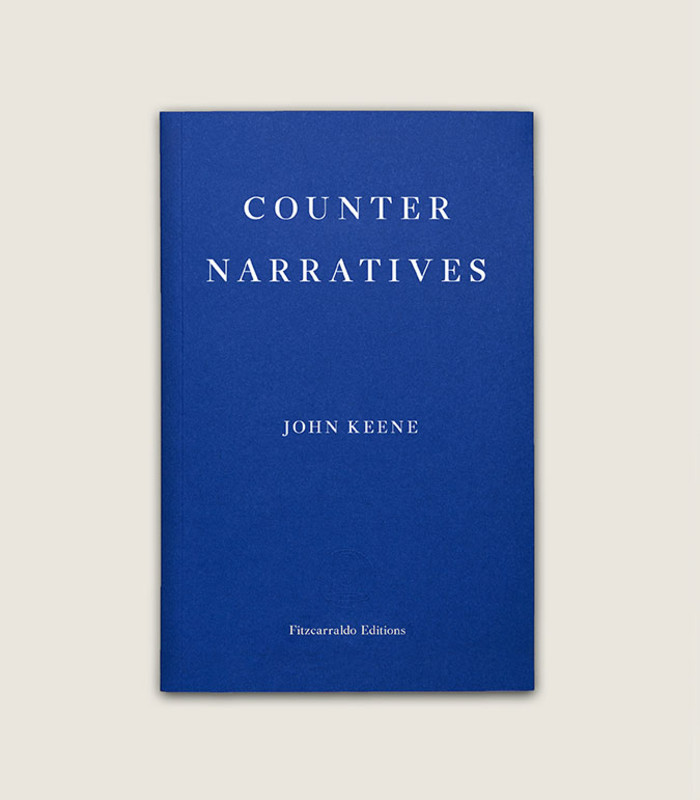
It has been over a full year now since Counternarratives was originally published in hardcover in the US by New Directions, followed by a May 2016 paperback edition, and two months since it appeared with Fitzcarraldo Editions in the UK, so it's very good news to me and my publishers that it continues to generate positive reviews and responses.

Among the recent US notices was Lucy Ives' brief and praiseworthy mention in her online New Yorker discussion of Danielle Dutton's new novel Margaret the First: A Novel (Catapult, 2016), "How Archival Fiction Upends Our View of History," in which she also praises Marlon James's multi-award winning novel A Brief History of Seven Killings (Riverhead, 2014). This is excellent company by any measure.

To quote Ives:
Keene’s polyvocal narratives masquerade as “primary-source documents” and present convincing first-person testimony, while at the same time establishing undercurrents that undermine the victors’ tales—and any hope that we will ever fully settle on the truth.

***

While in Los Angeles for the Associated Writing Programs Annual Conference, I had the opportunity to chat about Counternarratives with Michael Silverblatt for his renowned KCRW FM program Bookworm. Though our conversation flowed like spring water and exceeded the allotted time, I wasn't sure how it would turn out. The result satisfied me tremendously, and I hope it's the same for Bookworm's and KCRW 's listeners. Many thanks to Michael Silverblatt, Alan Howard, Connie Alvarez, and everyone at KCRW, as well as Mieke Chew at New Directions, and Alan Felsenthal at Sound Cave.

You can find the conversation here.

***

Last December, Daniel Green posted on his blog
The best book I read in 2015 was John Keene's Counternarratives. Since I will have a review of the book upcoming in Kenyon Review Online, I will not delineate its virtues here, except to say it's the kind of challenging, formally innovative work that is also simply enjoyable to read. In the meantime, an interview with Keene from On the Media: https://www.wnyc.org/radio/#/ondemand/533522
This is the highest praise, so I was curious to see what his review said about the book. It has now appeared at Kenyon Review Online, and is quite laudatory. Thank you, Mr. Green. Here is his conclusion:
In its engaging, often exhilarating use of alternative or unorthodox forms, Counternarratives abundantly demonstrates what “innovative” fiction at its best can accomplish: sometimes narrative content that challenges longstanding presumptions can be adequately expressed only through equally challenging extensions of form.
***

On the UK side of the Atlantic, the Times Literary Supplement "Summer books" section, which went live June 22, 2016, included a shoutout by editor Ben Eastham, who included it in his reading picks, noting that it sits at the "summit" of one of his stacks of books. Since his review is brief I'll quote the heart of it, which says that
Keene is among the contemporary American writers pushing at the boundaries of fiction, his angry, exhilarating stories about race and American history another counter-example (if it were needed) to the lazy assumption that literary innovation should be confined to the ivory tower.
Thank you, Ben Eastham and TLS!

***

In addition to the TLS's mention, another British publication, The New Internationalist's May 2016 issue included a concise but praiseworthy review of Counternarratives, which became Counter Narratives, in keeping with the book's title on Fitzcarraldo's cover. (The review, unfortunately, is only accessible to subscribers.)

***

Lastly, the French version of Counternarratives is slated to appear from Éditions Cambourakis as Contrenarrations on August 17! I had the pleasure of reading Bernard Hoepffner's precise and exacting translation, which manages, I think, to capture the spirit of the book and most of its style, but in ways that are profoundly French, so if you are in France in a few months then, please grab a copy! It does not yet have a cover (several good options are under debate), but the Advanced Readers' Copies are circulating, so below is a photo.


Thursday, January 28, 2016

Who Runs the Publishing Industry?

UPDATE: Jonathon Sturgeon has just posted a piece on Flavorwire comparing the publishing industry to the Motion Picture Academy of Arts and Sciences, and gives Counternarratives a shout-out in the process.

The semester has begun, Blizzard Jonas and all, and I can already see my blogging pace dwindling, so I am going to try to follow a plan I set out a few years ago but have never followed, which is to maintain my blogging activity by posting micro introductions to interesting things I find on the web, and just let the articles speak for themselves. (I also hope to do this with the stubs of pieces I've begun but not finished in the recent past.)
Marlon James at the Man Booker Prize ceremony
So here goes. Last year Marlon James, author of several novels, including the 2015 Man Booker Prize-winning novel A Brief History of Seven Killings (Riverhead, 2014), stated at a Guardian-sponsored event in London that the publishing industry "panders to that archetype of the white woman, that long-suffering, astringent prose set in suburbia. You know, 'older mother or wife sits down and thinks about her horrible life'."

He went on to say:
[B]ecause white women readers dominate the market, “the male editors will only accept one type of story. Everyone knows what a New Yorker story will look like. I could have been published 10 times over – I knew that there was a certain kind of prose I could have written; intense scenes that hinted, rather than explored.”
In its report on James's remarks, linked above, the Guardian noted that "Women, particularly white women, make up the vast majority of regular fiction readers, purchasing two thirds of all books sold in the UK. Almost 50% of women classify themselves as avid readers, compared to 26% of men." He expanded a bit on these assertions in a highly entertaining and informative Guardian Books podcast.

James was responding, in fact, to a Tin House essay, "On Pandering," by Claire Vaye Watkins, who received multiple prizes for her 2010 collection Battleborn. Watkins' is a rich, exploratory attempt to make sense of her experiences as a white woman writing in a tradition that usually valorizes white men, abets sexism and racism, and consciously and unconsciously urges women, including white women, to write against their perspectives and themselves.

Claire Vaye Watkins
To quote her:
The stunning truth is that I am asking, deep down, as I write, What would Philip Roth think of this? What would Jonathan Franzen think of this? When the answer is probably: nothing. More staggering is the question of why I am trying to prove myself to writers whose work, in many cases, I don’t particularly admire? I recently finished Roth’s Indignation with nothing more lasting than a sincere curiosity as to whether Roth is aware that these days even nice girls give blow jobs.

I am trying to understand a phenomenon that happens in my head, and maybe in yours too, whereby the white supremacist patriarchy determines what I write.

I wrote Battleborn for white men, toward them. If you hold the book to a certain light, you’ll see it as an exercise in self-hazing, a product of working-class madness, the female strain. So, natural then that Battleborn was well-received by the white male lit establishment: it was written for them. The whole book’s a pander. Look, I said with my stories: I can write old men, I can write sex, I can write abortion. I can write hard, unflinching, unsentimental. I can write an old man getting a boner!
In The New Republic, Phoebe Maltz Bovy took issue with James's assessment, penning a response, "Don't Let Men Attack Pumpkins Spice Literature,"filled with links to others responding to Watkins' essay. In it she asserted that James was half-right, and was focusing on literary sexism. She contrasted his take with freelance writer Nicole Perkins' reading of "On Pandering" in the Los Angeles Times, and stressed the need for a more intersectional understanding of the literary marketplace, and for the voices of women of color to be heard (yes!). (NYRB critic, author, translator and blogger Tim Parks offered thoughts about conformity in literature that sidestepped any discussion of race or gender, but which I thought connected at certain points with what all these critics were saying.)

There have been many other essays and articles on the lack of diversity and need for equity in publishing, including in children's literature. There are even organizations, like We Need Diverse Books, dedicated to highlighting and transforming this situation. A few years ago, a former student and I attended a great workshop in Brooklyn on diversifying children's literature, especially in the speculative fiction and fantasy genres. Shortly before he passed away the late, highly acclaimed writer Walter Dean Myers and his son Christopher--who used the term "apartheid"--published essays in the New York Times calling for diversity in children's literature. But the need across all genres remains, and not just in the US, but in other plural Western societies, like the UK.

Yesterday, Electronic Literature posted an article based on a new publishing diversity baseline survey by children's book publisher Lee and Low showing that the US and Canadian publishing industries are overwhelmingly white and dominated by cis-gender, abled heterosexual women. Moreover, executive level publishing jobs US and Canadian publishing executives are even more concentrated in the hands of straight, cis-gender, abled white women. Shades of Hollywood, though with a gender reversal. These are the decision-makers in the book biz.


These facts suggest that real diversity, beyond lip service, is necessary if the publishing even wants to begin to reflect the reality of the society around them; James' critique has a basis in the sheer facts of who runs the industry; and that Watkins' understanding of the internalization of male-centered values extends beyond writers, to the people and institutions that put books into readers' hands.

I'll conclude by saying that my own experience as an author has tended more towards what Marlon James says, though I have never let that stop me. In fact, I even encountered pushback from industry people--though not, thankfully, my publisher, New Directions, whose chairperson is the legendary editor Barbara Epler--concerning Counternarratives. In other ways, however, I have been fortunate to encounter people from all backgrounds--all races and ethnicities, genders and sexualities, national origins, class, religious affiliation, physical abledness--who have been supportive of my work, and whose work I could enthusiastically support.