Showing posts with label Northwestern University. Show all posts

Monday, May 22, 2017

10th Annual Writers' Festival at Northwestern


Remove the "10 Annual" portion of this blog post's title, and this could appear to be one of several I wrote during my decade at Northwestern University, including the one marking the fifth annual festival, my last while there, in 2012. In fact, I was there for the festival's creation in 2007. The Annual Writers' Festival arose from a desire to convene during one week and place in conversation distinguished authors from the three major creative genres, poetry, fiction and creative nonfiction, that we were teaching at the undergraduate and graduate levels. When I first taught at NU, each quarter roughly brought a visiting writer from a different genre. The major visiting writer to participate on his own as the undergraduate creative writing guest before the festival began was Junot Díaz, I believe, in the fall of 2007, right after his novel The Brief Wondrous Life of Oscar Wao was published, and just before it received the Pulitzer Prize and National Book Critics Circle Award. 

Cathy Park Hong reading her work
Bringing the visiting writers and literary events together meant that the students would be able to interact with them at the same time, and see them interact with each other. It also ensured maximization of our--faculty, staff, and student--resources. The festivals turned out to be a great success, and I can still remember some of the events as if they had occurred yesterday. Because of them, I had the pleasure of meeting and hearing Brigit Pegeen Kelly read before she passed away; observing George Saunders warmly share his bounty of wisdom with student; watching Nami Mun thrill a room of student writers; feeling my pique soar as David Shields threw down the gauntlet about fiction's supposed irrelevance; and immersing myself in ZZ Packer's novel-in-progress.

Sasha Hemon at his craft talk
It was thus a profound surprise and deep honor to be invited as one of this year's guests, along with two excellent writers, poet and critic Cathy Park Hong and fiction and nonfiction writer Aleksander (Sasha) Hemon, to participate in the tenth version of the festival. Returning for the festival meant that I would have the opportunity to see many former colleagues, creative writers, scholars and staff members, and also be in dialogue with and listen to Cathy and Sasha offer their thoughts and share their work. Since I knew how the schedule unfolded, I knew that I would need to read and be ready to discuss the work of the student writers, prepare a craft talk (on the novella, I decided, since the undergraduate fiction majors and minors were in the midst of writing them), be ready for a guided conversation, and give a reading.

Cathy talking about speculative poetics
Each of these turned out to be very enjoyable, and given that our festival ran concurrently with a scholarly conference--I even ran into one of its speakers, Philip Brian Harper, who teaches at NYU, twice while there!--and a reading that brought Zadie Smith to campus the same evening as my reading, the strong student and faculty attendance and participation were even more heartening. Some highlights for me were meeting the graduate and undergraduate students, seeing and hanging out with my former coworkers, taking notes as Cathy theorized and discussed what she described as "Speculative Poetics," and hearing Sasha read a powerful nonfiction piece spurred by the election of Donald Trump. It also felt uncanny at times to be walking around Evanston (and to be in O'Hare Airport, the scene of so many waking nightmares), which I had not set foot in five years but felt like I'd only been away from for a week at most. (I did get to see my cousin Raquel, her husband Walter, and their two adorable cats, so that was an added bonus of being back there.)

A clip from Cathy's talk, featuring a performance
by Latasha Natasha Nevada Diggs
I owe a debt of gratitude and offer my thanks to the English Department Undergraduate Program in Creative Writing, and all the other festival sponsors. (Thanks to the Evanston Literary Festival, which also listed our events.) Thanks to Jennifer, Averill, Brian, Eula, John, Juan, Rachel, Shauna, Rachel, and Reg, and everyone else who made the festival possible. Thanks also to Cathy and Sasha for their work and fellowship. I really appreciated getting an opportunity to meet and discuss writing by Tara, Sophie, Zoë, Mackenzie, Danny, and Troy. In addition, it was such a pleasure to also see Susannah, Brian, Helen, Harris, and Andrew, and to run into Jay, Jeff and Kate (who were leaving a dinner with...Phil Harper!). It was a great capstone to a long, full semester, and the best way to see Chicago again after a while away.

Here's a write-up by Maddie Burakoff in Northwestern's student newspaper, the Daily Northwestern. Chicago Magazine also picked the Writers Festival as the top arts and cultural event to do that week!

I was so involved I barely took pictures, so the ones above and below are the best of the lot.

One of our post-event dinners, in Evanston
A find, from one of Evanston's used
bookstores

Leafy, shady Evanston

Tuesday, May 19, 2015

Congratulations to the 2015 Graduates

2015 Commencement at Rutgers University-Newark,
at the Prudential Center, Newark, NJ
(photo © Rutgers University-Newark Facebook)
When I switched back from teaching on the quarter to the semester system in 2012, I wasn't sure how long it would take me to readjust, but in truth it took no time to reacquaint myself with the fact that May, rather than June, would bring a swift conclusion to the academic year, with final exams and grading compressed into a rapid-fire period, and graduation following swiftly thereafter. (I confess that I do like semesters more--a lot more!--than quarters.)

This year, my sabbatical-sick leave has kept me away from campus for most of the last five months, so the spring academic calendar has remained fairly hazy, but when May rolled in, I knew graduation events would also arrive soon. This past Saturday evening I was able to drop by the celebration for our graduating Rutgers University-Newark MFA students, who received their hoods at a ceremony that afternoon. They, like the rest of the graduating students from all the university's constituent divisions walked at the university-wide Commencement ceremony, which was held at the Prudential Center in Newark on Monday.

Rutgers University-Newark's 2015
Commencement speaker, Earl Lewis,
President of the Andrew W. Mellon Foundation
(photo © Rutgers University-Newark Facebook)
Because of the sabbatical I did not advise any MFA or undergraduate students this spring, but I was fortunate to have many of the graduating writers in classes that included last spring's Writers at Newark and last fall's fiction workshop, and I taught some of the departing undergraduates in courses ranging from Foundations of Literary Study to my courses on contemporary African Diasporic Fiction and the Black Arts Movement. Both groups were diverse in every way, and I feel fortunate to be able to say that I have learned as much from them as they from me.

To all of the 2015 Rutgers-Newark MFA graduates, as well as my many undergraduate students who have received their degrees this week, I offer my heartiest and warmest CONGRATULATIONS! I look forward to staying in touch in the years to come, and as I always say to the writers among you, please keep writing!

***

Over the decade that I taught at Northwestern, I supervised quite a few students: 13 MFA theses as first reader; 11 as second reader; 15 MFA student independent studies; 11 undergraduate creative writing honors theses; 4 undergraduate literature or African American Studies theses; 2 undergraduate internships; 1 MA independent study (which was curtailed when the student was injured in a car accident); and 7 undergraduate creative writing or literature independent studies. These superb students have gone on to do wonderful things in the literary and other worlds, and I treasure having had the opportunity to work with all of them, as I do with all my students, going back to NYU, Brown, and of course, now at Rutgers-Newark.

Yet it was not until a few weeks ago that I could offer congratulations to my last NU MFA thesis advisee, Whitney Youngs, who submitted as her thesis an excerpt of a novel she is writing. I was delighted to serve as her first reader, to read the manuscript through again, and to be able to sign off on her behalf. As a result, Whitney will receive her MFA degree in June! I have watched Whitney grow as a writer and person since she enrolled in an MA/MFA workshop I taught many years ago, and it has been a special pleasure to work with her in shaping and polishing her fiction, especially this novel, which I hope she completes and publishes.

To Whitney, congratulations many times over, and to all my students, including the Northwestern MA/MFA and undergraduate students with whom I worked and who are also receiving their degrees this June, CONGRATULATIONS AND THANK YOU!

Wednesday, May 01, 2013

Remembering Richard Iton

Richard Iton
Last week I sadly learned of the death, after the recurrence of a previous illness, of my former Northwestern University colleague Richard Iton. Like all of the full-time members in Northwestern's African American Studies Department, Richard was a distinguished scholar in several fields, and he brought this interdisciplinarity to bear in his scholarly and critical work, and in his teaching. A political scientist by training, with a PhD from Johns Hopkins University, he explored the relationship between black popular culture and political and social movements and formations. The author of two award-winning books, including In Search of the Black Fantastic: Politics and Popular Culture in the Post-Civil Rights Era (Oxford University Press, 2008) and Solidarity Blues: Race, Culture, and the American Left (University of North Carolina Press, 2000), his interests encompassed a wide range of topics, such as the Black Diaspora and transnationality, postcolonial studies, and critical race studies. Richard could and did speak as authoritatively about Hegel, Gramsci and Fanon as about the history of African American comedy or hip hop, and he once thrilled students by giving them a short course, in the span of a few hours, on hip hop's history and aesthetic and cultural stages up to today. He also played a key role in designing and implementing Northwestern's very rigorous and highly regarded doctoral program in African American Studies, one of the leading ones in the US, and it was not only his intellectual vision, but his diligent administrative work that, alongside that of others, brought the NU PhD in African Americans to fruition. His passing represents a great loss to the department, the university, and the fields in which he worked. It also represents the loss of a warm, generous, down-to-earth, funny, brilliant person, someone who succeeded, many times over, in bringing talented new scholars into the world. Rest in peace, Richard, and we will truly miss you, your exceptional and focused mind, your generous, amazing spirit.

The official statement from Celeste Watkins-Hayes, the chair of African American Studies at Northwestern:

Mourning the passing of our Dear Colleague, Richard Iton

April 25, 2013 -- Last night, we received reports of the passing of our colleague, teacher, and friend Richard Iton. We have been working to confirm this information, and we just received word from Northwestern Memorial Hospital that these reports are unfortunately true. Our hearts are broken and our minds are jarred. But we can take comfort in the fact that Richard touched many lives and made remarkable contributions to our department, our university, and our discipline. We will share details about services when we receive them from Richard's family. In the meantime, let's lean on each other for support.

Yours in sympathy,
Celeste Watkins-Hayes, PhD
Chair, Dept. of African American Studies


Here is a video of Richard speaking last year at Cornell University:

Sunday, May 27, 2012

Valediction Forbidding Mourning, or Farewell to Evanston & Chicago

My office bookshelf
Part of my office bookshelves, soon to be packed up


Since my colleagues and students at both institutions know, and since my family members and most friends know, and since C has asked me more than once when I'm going to do so, I figured that now that the spring quarter is nearly over (yes, it runs until mid-June) and I've already begun packing up, I can share with J's Theater readers who do not already know that, after nearly a decade in Chicago and Evanston, at the university (Northwestern), I will head to a new one this fall, back home in New Jersey (Rutgers-Newark). I shall be teaching similar but slightly different things, in a similar, very amenable configuration, and am now winding down at the former institution and up at the new one.

As even infrequent readers of this blog will know, I have greatly enjoyed many aspects of my time at NU.  I will certainly treasure the relationships and friendships I developed with so many wonderful students, colleagues and staff, and will always consider them invaluable.  I particularly cherish the opportunities to teach a range of courses at the undergraduate and graduate level, in creative writing and literary and cultural studies. Although I previously had taught at the secondary school level, in non-academic settings, as an adjunct, at a superb private university, and as part of public and private university-sponsored writing programs before arriving at NU, I can say without hesitation that it's there that I truly learned how to teach, and how to learn from my students and colleagues. Shortly after arriving I applied and was admitted as a fellow into the university's Center for Teaching Excellence, which aims to improve college-level teaching. My year in that program taught me a great deal. But more important has been my time in the classroom, listening to my students, working to create the conversations that ensure dynamic learning, figuring out how to adapt and change when needed, and observing my students' learning processes to improve my teaching for subsequent classes. Crucial too has been observing colleagues who are excellent teachers. Several years ago one colleague said at her investiture ceremony that to become a better teacher, one of the models she followed was that of one of her teachers, who was always "present in the moment"--and I have striven every day to take that to heart, to make that my practice.

I also learned about many other aspects of university-level teaching, including how to be an administrator, how to serve on multiple committees simultaneously without losing one's mind, how to work with colleagues across different fields and departments, how to be a junior colleague and to advocate for them once I'd moved up the ranks, and how to survive the tenure process. I learned how to advocate for and support students, especially women, students of color, queer, and working-class students, who sometimes do not have the support they need or enough people to advocate on their behalf. I learned that one of the most important things that I could do was to be in the room and speak up. I learned that one can read hundreds of job applications, 54 student short stories, masters and doctoral theses chapters, honors and independent study projects, and a mountain of committee-related material, and still work on (some of) my own writing. I learned that zilch happens without the remarkable support staff who really keep everything running. I learned that laughter is one indispensable element of being a professor, and may have to be deployed more than one ever envisioned. I learned that university administrators can be approachable, and that they can often be allies if you get communicate with them. I feel utterly fortunate to have had wonderful chairs in place during my time at Northwestern; each of them was different, but demonstrated how to lead in their various ways.

I especially learned that it's possible to teach anything at the undergraduate and graduate levels in the inhospitable-to-learning quarter system, and that when I've reached students, the knowledge they acquired and built upon would be there not just for subsequent courses but for years to come.  I will miss these students and the prospect of teaching them, and my many extraordinary colleagues, in a range of fields, who have taught me so much. But I also am deeply excited to my new position at a new and very different institution in a new and very different city, my soon-to-be-colleagues, and my new students, whoever they may be. I'm looking forward to many new challenges (and to forgoing others, like long-distance commuting), all of which this past decade has prepared me for.

I'll like to end with a photo of one of the last Northwestern students I worked with, my honors advisee this year, Steve Koteff, reading a selection of his superlative novel(la), WalMart, at the annual English department prizes ceremony. Not only did this novella earn Steve departmental honors, but it also received the English Department's 2012 Thesis Prize in Creative Writing, and this dazzlingly gifted young man will be heading to Syracuse University this fall to continue his studies. Congratulations to him and to all my students who are graduating this year, and a million thank yous to all my Northwestern students, colleagues and staff for many wonderful, insightful, amazing years.

My honors undergraduate student, fiction writer extraordinaire Steve Koteff
My final NU undergrad honors student, thesis prize-winner Steve Koteff (c)

Saturday, May 05, 2012

Christopher Cozier @ NU + Adbustered!

Christopher Cozier (b. Trinidad 1959). Tropical Night,
2006–present. Ink, pencil, stamps.
Two hundred drawings, each 9 x 7 in.
(22.9 X 17.8 cm). Courtesy of
the artist, from Brooklyn Museum site
Yesterday, under the auspices of the X and at the invitation of my colleague Krista Thompson, Trinidadian award-winning artist and curator Christopher Cozier (1959-).  A Senior Research Fellow at the Academy of the University of Trinidad & Tobago, Cozier is also an administrator and curator of the Alice Yard art space, located in Port of Spain, which he established with architect Sean Leonard, writer Nicholas Laughlin, and others, and serves the editorial board of the Caribbean critical/theoretical journal Small Axe. He visited Northwestern to talk about his recent projects, his curatorial practice and how the two informed each other.

I remembered his name--though I did not recall his work and hadn't heard him speak about it then--from a previous exhibit at the university, Out of Sight, which Krista Thompson and another colleague, Huey Copeland, organized in 2007 on the 200th anniversary of the abolition of slavery (1807-2007). As part of his presentation, which he divided into three parts, he talked about the evolution of his work over the last few years and how "curatorial enterprises" had shaped it and contributed to what he called its "moving locations." What became clear is that there are throughlines between the earlier work and more recent projects, with certain visual vocabularies, such as iconic or fragmented bodies; forms, such as flags; and discourses, such as the bureaucratic, repeatedly coming to the fore. Among the ironies he noted was that as a young educated Trinidadian one of his parents' hopes for him was a government job (which would have meant security in the old days), but he chose a career in the arts instead, yet has returned to symbols of bureaucracy, from his use of office furniture and implements, to his abiding interest in rubber stamps, over and over, which is perhaps more ironic in a post-colonial state.

He showed a number of pieces, such as a fenced in winners' platform that he debuted in Denmark, but then had to rethink when restaged in the context of Haiti, and which provoked very different interactions with participants, and the same was true of an installation piece/sculpture that involved Chinese rules strung from a line, which in Haiti also led to very different responses (such as, people borrowed/took the rulers). Other wonderful, simple-yet-fiendishly complex projects, which Cozier scales up and down depending upon the circumstances, included his Boxes of Fear (2006), which began as tiny boxes stamped with "FEAR" as if manufactured in the US, but which he expanded to a 2000-box installation, on pallets, ready for export, in a show in Puerto Rico. He also talked about a very recent project involving benches, which he drafted--he is a very gifted draftsman--and then turned into a rubber stamp, but which have since morphed into various kinds of benches, paper and otherwise, which can be assembled, transported, and rethought depending upon the context and circumstances.

Part of the delight in hearing him talk was seeing how he transformed each of these kernels of ideas and concepts, many as he noted originally created in his notebooks--his mobile studio--into various related projects. What was also fascinating to learn about was his work with Alice Yard and how that was informing his practice, both as an artist and as a curator, how he was rethinking the local in relation to Trinidad specifically, and the Caribbean more broadly, in relation to the global artworld and capital flows, how social media had become a new and powerful means for communication across the islands and the Diasporas (Caribbean, African, South Asian), but also for disseminating work. He described one digital catalogue he and others prepared for the Wrestling show, and how it was downloaded 33,000 times shortly after being posted. To quote him: "With the Internet  a whole new way of reading the work comes into being," and a new discursive space is inaugurated and formed. Also, as he said, with social media, the "eyeline" for the visual changes. I have been thinking around this in relation to the literary, but his statement crystallized something for me as I am now trying to write about the relationship between the digital and black literary practice.

Cozier talked about so many other things I cannot even hope to capture them here, but I'll end by noting that during the Q&A with Thompson and the audience, one of the points he focused on was "space" itself, both in terms of artistic practice and in terms of the space of Alice Yard as an exhibition and performance site. As with so much in the Americas the house and grounds, like the neighborhood and suburb, Woodbrook, where Alice Yard is located, have a history, and that is part of what Cozier and those affiliated with the center have been unearthing or reconstructing.  That is to say, there's a lineage and heritage, a cultural (and sociopolitical DNA) in this space, belonging to the family of Sean Leonard, that ties it to earlier and older artistic traditions. What Cozier also noted was that it is space suited to local arts and artists, as opposed to the sorts of sites that exist all over the globe, and which could be interchangeable, important as they are, for the global art trade. Instead, Alice Yard is, he pointed out, a space for social interactions, local, trans-Caribbean, trans-Atlantic, and yes, in some cases, global, but permeable, mutable, organic, which people of all kinds can enter and interact with. Key to all of this is the idea of action--action defines the space, which changes with it.

If you click on the Alice Yard link you can find out more about what's happening there and visit if you're passing through Trinidad. Cozier also blogs, at Visual Matters, and on there you can find lots of images of his work, as well as his critical thoughts. Small Axe is also a site to check out, for current critical Caribbean thought and practice in a range of media; Cozier oversees its sxspace blog platform, which features very up-to-date material on projects throughout the Caribbean and neighboring spaces (like Suriname). An artist, curator and thinker to follow, no doubt.
 
Christopher Cozier pointing out his artwork
Christopher Cozier talking about his work

+++

On the personal front, C mentioned that we'd received a sizable number of the May/June 2012 edition of Adbusters' magazine, focusing on Regime Change. Though I agree with and support Adbusters' work, I wasn't sure what was going on until I remembered that they'd requested to use photo I'd snapped in the New York subway a summer ago and then posted to Flickr, and now it was appearing in this edition!

Oddly enough I'd seen this issue in a store, flipped through but had missed the photograph I took, which looks like it might serve as a lead into one of the magazine's sections. I told myself I'd buy it the next time I was in the store, but it appears I won't have to.

photo
The cover
And here's the photo. (C snapped the photo below from the magazine, and texted it to me.)

photo
My photo in the issue (© John Keene)

I still don't have a copy of the issue yet, but I look forward to flipping through it soon. I think this is a first for me, at least as an adult and with my permission, having a photograph featured in a magazine, and of all magazines, Adbusters no less. I won't be quitting my day jobs, but it is nice to see that even a snapshot can gain a wider audience now and then.

If you want to order copies of this or any issue of Adbusters or learn more about the organization, which played an initiatory role, in part, in the Occupy movements in the US and which seeks to do exactly as the image above says, to stop a system that forces people "to live like rubbish" by functioning as a "network of culture jammers and creatives working to change the way information flows, the way corporations wield power, and the way meaning is produced in our society," you can click on the links above, or visit here.

Friday, May 04, 2012

Locating African Diaspora: Mexico & Ecuador, at NU + Nathaniel Tarn Reads

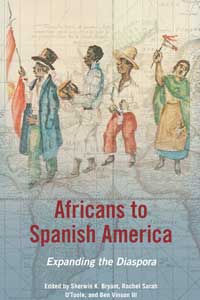
Thursday was the joint. First, in the early afternoon, two leading scholars in the field of Afro-Latin American history, Ben Vinson III, the Herbert Baxter Adams Professor of Latin American History and the Director of the Center for Africana Studies at Johns Hopkins University, and Sherwin Bryant, who teaches in the departments of African American Studies and History at Northwestern University, spoke on "Locating African Diaspora: Exploring Blackness in Mexico and Ecuador" at the invitation of Northwestern's Colloquium on Ethnicity and Diaspora.  Rather than simply delivering standard scholarly talks, both Vinson and Bryant, whose work focuses on the materiality of the colonial-era Americas, engaged in a conversation, through a recounting of their research trajectories, presentations of their current research, and questions each posed for the other. Throughout they returned to a number of salient issues in contemporary Afro-Latin historical research, many of which underpin the anthology they recently co-edited, with Rachel Sarah O'Toole, Africans to Spanish America: Expanding the Diaspora (Urbana: University of Illinois Press, 2012).

To simplify, and I must because though my interest in their work is great, this is not my field, for Vinson, who has been exploring the material and cultural history and function of castas (castes) in Mexico, three questions he has been asking include how do we define "race" and was it sufficiently explanatory as an interpretive tool; where does Latin American fit into the "Diaspora" and how do we read Afro-Latins in the African Diaspora in light of recent work on transnationalism and globalism; and lastly, what is the relationship of slavery to freedom, and how do modern understandings of both enslaved and free experiences shift our concepts of both.  With regard to race, he pressed the query of whether it was the best rubric through which to understand the some of the historical, social, political, and economic issues in the history of Afro-Mexicans, though he did note that other angles into understanding Afro-Mexican history by their nature might thus be ways of understanding "race" and related issues such as racial formation and identification. He talked about research on very specific and "extreme" castes in Mexico as a means of demonstrating how these categories proved mobile, useful, and habitable, and informed both local and national self-perceptions.

For Bryant, undergraduate and graduate level study drew him to his research, and in particular to the topic of slavery in the Americas. His subsequent research on Quito, Ecuador led him back to "slavery" as a key issue, not only as a way of understanding a deeply entrenched social system, but also of people of African descent as "political subjects" within the framework of slave societies and societies with enslaved people.  Recent archival research and study have led to deeper knowledge of slavery not just as an economic system but as a way of understanding systems of  "governance, sovereignty, display, and circulation of power."  One of the most powerful points he raised, about thinking of race in other ways (and he cited another colleague, Barnor Hesse) beyond its reducibility "to the body" or "phenotype," but in language, cultural practice, and so forth, sparked my thinking.  Another vital point he raised involving constructing a genealogy of the idea of race (and racial formation) before the rise of 19th century racial pseudoscience, which has continued to infect discussions of race up through today.

After their individual presentations, each pressed the other on unresolved issues, demonstrating for those present the very lively debates underway in the field. (I should note that it was particularly enriching for me to hear them talk about these strands in Mexican, Ecuadorian and Latin American history, since I think it's probably the case that in the US there is little public consciousness about blackness in either country, which affects governmental conversations and policies concerning both. I can recall Afro-Mexicans even importuning then-candidate Barack Obama for help, before he was elected, but as to whether he has ever responded to them or has ever broached any bilateral discussions with Mexico's government about their plight, I have heard and read nothing.) After their exchanges, Vinson and Bryant opened the floor to questions, which led to a number of insightful exchanges on their specific research projects and the larger topics they're engaging.

Historian Ben Vinson III talking about his work on Afro-Mexicans
Ben Vinson III speaking on his research

Historian Sherwin Bryant giving a talk about his work on Afro-Latins in Ecuador
Sherwin Bryant speaking on his research (Vinson at left)

+++

Afterwards, I hurried over to the English department so as not to miss Franco-British-American poet, critic, translator, editor, and antropologist Nathaniel Tarn (1928-), who was this academic year's final reader for the Poetry and Poetics Colloquium's reading series. I'd heard Tarn's name even before I came across his poetry, which with his works of criticism totals over thirty volumes, the most recent being Avia: A Poem of International Air Combat, 1939-1945 (Exeter, Shearsman Books, 2008), and Ins and Outs of the Forest Rivers (New York, New Directions, 2008), but I'd never heard him read.

After my colleague Harris Feinsod introduced Tarn, the poet read poems from Ins and Outs of the Forest Rivers as well as new poems, but not without expressing a deeply pessimistic view on the future of humankind who, he suggested, are moving inexorably toward self-destruction.  He leavened that grim pronouncement with his work, often dark but also demonstrative of language's ability to shape experience. Afterwards I had the opportunity to chat with him and he could not believe that I was honored to meet him, so let me underline that fact again. It was quite an honor, and I look forward to returning to his work soon. (I also had the opportunity to meet poet Joseph Donahue, who teaches at Duke University and who was traveling with Tarn for part of his reading tour.)

Tarn & Feinsod chatting before Tarn's reading
Nathaniel Tarn chatting with Harris Feinsod

Harris Feinsold introducing Nathaniel Tarn before his reading
Feinsod introducing Tarn

Nathaniel Tarn & Harris Feinsod
Tarn during the Q&A (Feinsod at right)

Sunday, April 22, 2012

5th Annual Writing Festival @ Northwestern

A couple weeks ago (April 12-14) the undergraduate Creative Writing Program at Northwestern University held its 5th Annual Writing Festival, a three-day event bringing together students, faculty and three writers representing each of the three major genres--poetry, fiction and creative nonfiction--in which the program offers major and minor curricular tracks.

This year's visiting writers were poet Kate Daniels (who teaches at Vanderbilt University), creative nonfiction writer Jane Brox, and fiction writer ZZ Packer (teaching this semester at the University of Texas, Austin).  Each individually hosted a master class for the students, gave a reading of their work, and then together participated in a conversation on their lives and work guided by three of my colleagues, Sheila Donohue, Brian Bouldrey, and Rachel Webster. In her master class, Daniels spoke about the "garrulous poem" (which would describe her sinous, talky, information and action-rich poems); Brox in hers talked about transitions both with her specific books and across the span of her writing life; and Packer combined narratology and critical theory with practical reading in her presentation on voice. I was unfamiliar with Brox's nonfiction, so it was enlightening to hear her read and talk about it, and though I had read Daniels' and Packer's work, I felt like I heard and learned something new with their readings and presentations. All the events were packed, which was great to see, and my conversations with students after the event affirmed that they had gotten a great deal from the presentations and the readings. I certainly did, as I have every prior year.

A special highlight this year was the participation of students from Evanston Township High School, the local public high school.  During the month of March, several colleagues and I, led by poetry professors Mary Kinzie, Rachel Webster and Susannah Gottlieb, the force behind the Poetry and Poetics Colloquium, and aided by graduate student and poet Laura Passin, supervised half a dozen outstanding senior undergraduate poetry students, who led the high school students in writing exercises at Evanston Township High School and via online workshops. Mark Onuschek, the English teacher and program coordinator, along with nearly all the high school students who participated in the program and many of their parents were present at the Writing Festival event, and nearly all of the students read one of their poems, as did their undergraduate student mentors. It was wonderful to have writers at this level present and to hear their work in conversation with the established writers.

Here are a few photos from the events (no drawings, unfortunately, as I did last year of David Shields).

Kate Daniels, Northwestern Univ. Writers' Festival
Kate Daniels, at her master class

Jane Brox, Northwestern Univ. Writers' Festival
Jane Brox, leading her master class

Rachel Webster, Northwestern Univ. Writers' Festival
Rachel Webster, introducing the student writers

NU student & ETHS student, Northwestern Univ. Writers' Festival
Undergraduate poet Jonathan Ayala, and an ETHS student poet (in red)

ZZ Packer giving her master class
ZZ Packer, leading her master class

Panel of writers, Northwestern Univ. Writers' Festival
The writers' panel (Donohue, Packer, Brox, Bouldrey, Daniels, Webster)


Tuesday, April 10, 2012

Northwestern's 5th Annual Spring Writers' Festival

This week at Northwestern brings the 5th annual Spring Writers' Festival, featuring poet Kate Daniels, fiction writer ZZ Packer, and creative nonfiction writer Jane Brox. In addition to master classes with the students and private conferences with senior majors, all of the writers will be giving readings over the next few days. Also, the students at Evanston Township Public High School that I mentioned will also be reading in, on Wednesday.  If you're in or near Evanston, please consider attending any of these events. They're free and open to the public!

Tuesday, April 10

5:00 p.m.
A reading by Jane Brox
Hilton Orrington
9th Floor
Hinman Auditorium

Wednesday, April 11

3:00 p.m.
A special presentation of poetry by ETHS students
Hilton Orrington
9th Floor
Hinman Auditorium

5:00 p.m.
A reading by ZZ Packer
Hilton Orrington
9th Floor
Hinman Auditorium

Thursday, April 12

3:30 p.m.
A guided conversation with three authors
led by Brian Bouldrey, Sheila Donohue, and Rachel Webster

Scott Hall
Guild Lounge

5:30 p.m.
A reading by Kate Daniels
Scott Hall
Guild Lounge

This year’s festival authors and events are sponsored by the Department of English Creative Writing Major and the Department of African American Studies.

Friday, November 04, 2011

Christian Bök Reading/Xenotext @ Northwestern

As part of its exhibit Tango with Cows: Book Art of the Russian Avant-Garde, 1910-1917 (September 23-December 11, 2011), the Mary and Leigh Block Museum of Art at Northwestern University hosted "Beyonsense," a reading of early 20th century and contemporary Russian and trans-linguistic sound poetry.  The university's Poetry and Poetics Colloquium and the Department of Slavic Languages and Literatures served as co-sponsors, and the event featured poet, translator and Northwestern professor Ilya Kutik, and Christian Bök, a pioneer in the field of conceptual writing and professor at the University of Calgary. Northwestern's contemporary Russian literature scholar Nina Gourianova introduced the reading.

After Nina's brief, crisp and informative walk through the historical moment in which this art blossomed, Ilya and Christian took turns respectively reading the Russian and English translations, mostly by Paul Schmidt--or the aural experiments of what gestured towards and beyond the grasp of both languages--of poems by Alexei Kruchenykh (1886-1969), Velimir Khlebnikov (1885-1922), Vladimir Mayakovsky (1893-1930), and David Burliuk (1882-1967), among others.  A good deal of this poetic art falls under the rubric of zaum (заумь), a portmanteau word coined in 1913 by Kruchenykh from the roots za-, meaning "beyond, behind" and the noun um, meaning "mind, nous," thus giving the new word the connotation of "transsense" or "beyondsense." As both Ilya and Christian expertly delivered them, these sonic experiments gave you the feeling of something thrilling but ultimately elusive, which, I imagine, was the authors' intention.  Ilya noted before many of his readings how famous and well known many of these poems were among Russians, and I tried to think of some equivalent, among experimental poetry, for English speakers, and couldn't find one other than nursery rhymes and some song and rap lyrics. There are few schools, certainly few elementary or secondary ones, where experimental poetry of any sort, let alone this kind, might be taught.

Ball's "Karawane"
Once he'd finished reading the work of others, Ilya recited part of one of his poems, and I'd never heard him read before, so I wish he'd read more. Christian followed with performances of several famous sound poems, including Hugo Ball's (1886-1927) "Karawane" (Caravan), written in 1916, which Ball infamously delivered at the Cabaret Voltaire in a giant metallic lobster suit. (Ball also issued the landmark "Dada Manifesto" that same year, introducing to the public that major early 20th century artistic movement.) Christian then performed some of his own work, including a libretto based in part on his Xenotext project, about which I'll say more below.  He has a real gift for transforming his mouth, throat and body--because to present and perform these poems it requires the whole body--into the kinds of instruments need to present such works, and he did not flag. 

Afterwards one of my colleagues asked Christian if he used a score of some sort, and he said that he did not, though it appeared as though he had assimilated an internal score, based on careful study and practice, of how these works might be presented to an audience. (I thought he might have drawn up a conceptual score, of the sort Morton Feldman or Cornelius Cardew, were known for, but on the pages were the words alone.) Were any of the Russian predecessors invoked to begin the evening listening on some distant plane, I can only imagine they were impressed as those of us in the audience.


Ilya Kutik (l) and Christian Bök performing
Ilya Kutik and Christian Bök performing
Images of famous Russian avant-garde book art
Kasimir Malevich, front and back covers for 2nd edition of Game in Hell, from 1914, by Alexei Kruchenykh and Velimir Khlebnikov, lithograph with pencil, Collection of Museum of Modern Art. Image of a famous Russian avant-garde book  
Tango with Cows, from 1914 (Vasily Kamensky and Vladimir Burliuk, wallpaper and letterpress, Collection of Getty Research Institute
Scholar Nina Gourianova 
Nina Gourianova, introducting the event


Christian Bök performing, from the Block's Youtube Channel


The next day, Christian spoke to the Poetry and Poetics Colloquium about his Xenotext Experiment, an extraordinary, multiyear effort, in which--and here I am being reductive in the extreme--he inserted a poem that could, with great difficulty, be transformed into genetic code, into a bacterium, such that the bacterium would organically express (translate, as an exact reverse) as opposed to merely carry, the poem, within itself. Thus would be born a self-replicating poem that, if it survived, would continue to self-replicate, as biological material does, ad aeturnam. Among the challenges he has faced are the difficult of writing a poem in English that could not only be translated into the language of proteins but which the proteins could then express as a linguistically coherent poem in the process, and then of designing and folding a protein such that the bacterium would not, as it has done, destroy the poem.  He did engineer the bacterium to bioluminesce (light up) when the expression occurred, and it did, for the time the poem existed; that is as far as things have gotten. 

That he has even reached this marker is remarkable; that he eventually will, with the aid of computers and perhaps an online community of protein folding gamers, solve the problem of finding the most elegant biological arrangement possible, I am sure. As it was, though, I have rarely seen such a daring artistic project laid out so clearly and cogently. Afterwards I asked him about the ethics of authorship in relationship to this project given his founding role with conceptual writing and its disregard for originality, intentionality, and even relevance, and he admitted that once he'd written up a book, anyone could put his or her name to it--but then again, he'd only be writing up a book about the project, while the bacteria themselves would be, if and when things finally do work, writing the poem, from now until forever. Bacteria, do your work!
 
At the Poetry and Poetics Colloquium workshop for Christian Bök 
Christian Bök giving his talk on his Xenotext Experiment.
Christian Bök explaining his Xenotext project
Christian showing the QR code formed by the proteins

Christian Bök explaining his Xenotext Experiment, from YouTube


Monday, September 26, 2011

Raúl Zurita @ Northwestern

Earlier this evening, the university's Poetry and Poetics Colloquium and Workshop held its first event of the fall, a reading by Raúl Zurita, accompanied by one of his many fine translators, Anna Deeny.  A number of units within the university, as well as the Poetry Foundation, sponsored Zurita's visit, and for their generosity I offer deep thinks. I have previously written a little about Zurita's work on this blog, noting his former compatriot Robert Bolaño's imaginative (mis-)treatment of his life in the former's novels, especially Distant Star (Estrella distante), and even translating (a very tiny example of) one of his works, "[Zurita]," myself. When Zurita came through Chicago several years back, I was away, so I didn't get to see him, but I was determined not to miss tonight's event. And he did not disappoint. I won't try to recap the reading, which lasted a little under an hour, but I will say that I felt moved in a way I haven't by hearing poetry in a while, at least since last spring.

One of the things that Zurita's poetry offers is an sublime gravity, a dizzying weightiness masked by humor, breeziness, riduculousness, absurdity--the absurdity of a world in which people are disappeared or dropped out of planes or tortured for disagreeing with a political dictatorship, and the society for the most part looks in the other direction, closes its eyes, talks in circles, and enjoys the "economic successes" the murderous regime touts, which primarily benefit those at the top of the social, political and financial pyramid. Zurita read from several of his books, including Purgatorio (1979), Sueños para Kurosawa (2009), and the often astonishingly beautiful La vida nueva (1994), which plays with Dante's legendary title in rethinking what a new life might mean under the circumstances in which Zurita and his fellow countrypeople were living before and at the time he wrote the book. It forms the final title in a trilogy that includes Purgatorio and Anteparaíso (1982), the first of Zurita's works I ever came across, and itself a rethinking, in so many ways, of Dante's worldview, while also drawing on the aesthetic daring of that great poetic ancestor.

After the reading, Zurita answered questions from the audience, including responding to a fine one, I believe by my colleague Jorge Coronado, in which he noted off the cuff that it was only the desert, the mountains, and the sea that showed "compassion" to those who were killed or dropped onto or over these natural sites. I am still thinking about that one.

Jorge Coronado introducing Raúl Zurita (at right)
Jorge Coronado introducing Anna Deeny (translator) and Raúl Zurita
Anna Deeny (translator) and Raúl Zurita (at right)

Anna Deeny and Raúl Zurita, reading his poetry