Showing posts sorted by relevance for query nicanor parra. Sort by date Show all posts

Friday, December 02, 2011

Nicanor Parra Wins Cervantes Prize

What is an antipoet? That answer I'll leave to someone else, but a self-styled holder of that moniker, the Chilean poet Nicanor Parra (1914-), a trained mathematician and physicist who has been publishing since the 1930s and whose 1954 collection Poemas y Antipoemas electrified readers across the globe, yesterday received the 2011 Miguel de Cervantes Prize, widely considered the highest honor in Spanish-language literature.

Parra has famously rejected what he considered the pomp and formality of the poetry business, as well as the elaborate style of Spanish-language poetry, choosing instead a more colloquial, often humorous approach.  He has written poems with titles like "Chistes para disorientar la polícia/poesía" ("Tricks to disorient the police/poetry") "Toda la poesía es mierda" ("All poetry is shit"); "¡Silencio mierda!" ("Shut the hell up!"); "La muerte supersónica" ("Supersonic death"); and Like other writers who step outside the mainstream he has not received the sort of acclaim due him, though he did receive Chile's National Prize for Literature in 1969 (following in the footsteps of Nobel Laureates Pablo Neruda and Gabriel Mistral), and he is rumored to have been nominated several times for the Nobel itself.

There are several English translations of his work, including Antipoems, translated by Jorge Elliott (City Lights, Pocket Poets Series No. 12, 1960); Poems and Antipoems, edited by Miller Williams and translated by Fernando Alegría (New Directions, 1967); Poems and Antipoems, edited by David Unger (New Directions, 1985); Antipoems: How to Look Better & Feel Great, translated by Liz Werner (New Directions, 2004), and After-Dinner Declarations, translated by Dave Oliphant (Host Publications, 2009).

EPITAFIO

De estatura mediana,
Con una voz ni delgada ni gruesa,
Hijo mayor de profesor primario
Y de una modista de trastienda;
Flaco de nacimiento
Aunque devoto de la buena mesa;
De mejillas escuálidas
Y de más bien abundantes orejas;
Con un rostro cuadrado
En que los ojos se abren apenas
Y una nariz de boxeador mulato
Baja a la boca de ídolo azteca
-Todo esto bañado
Por una luz entre irónica y pérfida-
Ni muy listo ni tonto de remate
Fui lo que fui: una mezcla
De vinagre y aceite de comer
¡Un embutido de ángel y bestia!

EPITAPH
 
Of medium height,
With a voice neither shrill nor low,
The oldest son of an elementary school teacher
And a piecework seamstress,
Naturally thin
Though fond of good eating,
With drawn cheeks
And oversize ears,
A square face,
And slits for eyes,
And the nose of a mulatto boxer
Over an Aztec idol's mouth
-All this bathed
In a light halfway between irony and perfidy -
Neither too bright nor totally stupid,
I was what I was: a mixture
Of vinegar and olive oil,
A sausage of angel and beast!

Copyright © Nicanor Parra, translated by Jorge Elliot, from Antipoems (translated by Jorge Elliott), San Francisco, City Lights Books, The Pocket Poets Series, Nº12, 1960. All rights reserved.


Monday, April 02, 2012

Poem: Nicanor Parra

One of the living greats, Nicanor Parra (1914-), whom I posted about last December on the occasion of his receipt of the Cervantes Prize, has among his delectable trove the following gem, a poem written to young (and all) poets, that could serve as a distillation of his entire approach to poetry, and a guide for any poet--or writer, for that matter--who thinks that she must follow one school or style or method. The ultimate challenge is always the one Parra, in his witty way, identifies. Here goes:

YOUNG POETS

Write as you will
In whatever style you like
Too much blood has run under the bridge
To go on believing 
That only one road is right.
In poetry everything is permitted.

With only this condition of course,
You have to improve the blank page.

Copyright © Nicanor Parra, translated by Miller Williams, from Poems and antipoems, Edited by Miller Williams. Translators: Fernando Alegría and others. New York: New Directions Pub. Corp., 1967. All rights reserved.

Thursday, January 25, 2018

Remembering Ursula Le Guin, Visionary Fiction Writer & Nicanor Parra, Anti-Poet

Photograph by Dana Gluckstein / MPTV Images
via New Yorker
Let me start my note about Ursula K. Le Guin (1929-2018) by pointing out that I always write her name as "Ursula LeGuin," closing that Breton gap between "Le" and "Guin." As it turns out, that was the original spelling of her husband Charles' name, but when they married in France, when both were in graduate school, a clerk urged Mr. Le Guin to use the linguistically correct form. This is neither here nor there, really, except that Ursula Le Guin was very attentive to naming, and more specifically, to language and its power, using and probing it to explore alternatives to the oppressive structures that defined our real world in her visionary fiction career, which spanned half a century, and which left a deep and lasting mark on literature.

Bibliomane and bibliophile though I am, I first learned about Le Guin's work when I saw the first film version--now hard to find--of her 1971 novel The Lathe of Heaven on PBS, when I was a high schooler in 1980, and recall being transfixed by it. The novel, a dystopia set in 2002 Portland, Oregon, turns on the powers of the protagonist, Charles Orr, who can willfully dream new realities, past or present, into being. A psychologist, William Haber, figures out a way to manipulate Orr, for nefarious purposes, but one of the most enlightening aspects of Le Guin's novel is how she explores the potentially devastating consequences of what may, without extensive consideration and extrapolation into the future, seem to be positive or even neutral changes to our reality. To give one example, when Haber utilizes his machine to have Orr eliminate racism, the result is that all people end up turning the same, dull color of light "gray," which addresses the issue of color prejudice but also eliminates a major component of human difference, beauty and identity. (Of course one could also argue with the idea that racism hinges solely on skin color and does not also entail physiognomy and other distinguishing traits, let alone structural and system components, but in the sense that "color prejudice, "as the classicist George Snowden famous put it, lies at the heart of the European project of racial categorization and scientific racism, Le Guin made a justifiable choice.)

The Lathe of Heaven is a powerful example of how her work was less interested in technology, and more engaged with profound philosophical, sociological, anthropological, and, like much realist fiction, psychological questions. I think it once saw it called "soft science fiction," though there is nothing lesser about how she and others explored alternate ways of imagining our world, or alternative and parallel ones they had created from their imaginations. The Lathe of Heaven was a standalone work, though, and not part of her well known Earthsea and Hainish cycle series, for which she is best known. The five Earthsea books, commencing with A Wizard of Earthsea (1968), depict an archipelagic world in which magic plays a key role, and whose characters tend, as I learned with surprise upon reading A Wizard, brown-skinned. The Hainish novels, exemplified by The Left Hand of Darkness (1969), tackle social, political and cultural questions head on; in this novel, a visitor from one planet ventures to another, where he encounters a very different cultural context, including ambisexual characters, which unsettles his initial attempts to understand and connect with them. Social, political and cultural questions run throughout all her work, but Le Guin highlights them in these novel such that it would be hard to walk away from them not somewhat transformed by the questions she raises and allows the texts, and her readers, to mull over. If there were ever a set of works ripe for serialization on TV, and a more opportune time than our current moment of social and political crisis, I could hardly name them. So perhaps some director and production companies will take a hint, negotiate with heirs, and, once greenlighted, start filming.

In addition to her speculative fictional novels for adults, Le Guin also published collections of short stories, one of which, "The Ones Who Walk Away from Omelas," I have taught a number of times over the years. Her work also includes works for children, and works of nonfiction, including essays and a guide for better writing, Steering the Craft (1998), which I am proud to admit is sitting on work table right now. (I'd fished it out in preparation for rereading, as my sabbatical got underway.) She remained a powerful feminist, anti-racist, progressive voice till the very end, delivering a knockout speech at the 2014 National Book Awards, where she overtly critiqued capitalism and the hyper-commercialization of books.  She concluded her brief, powerful oration with the following words:

We who live by writing and publishing want and should demand our fair share of the proceeds; but the name of our beautiful reward isn’t profit. Its name is freedom.

Though Le Guin is no longer among the writing, the conceptual power, assured craft and vivid world-making of Le Guin's art, in the fullest senses of that term, should ensure readers return to it. I know I plan to, beginning with the Earthsea books. May she rest in peace.

‡‡‡


Regular J's Theater readers know that I am a fan of Nicanor Parra's (1914-2018), and have featured his work and posts about him several times over the years. Back in 2012, I posted his anti-poem "Young Poets," and one year prior, I wrote about his receipt, tardy though it was, of the Cervantes Prize, one of the highest honors for a Spanish-language writer. The very idea of the anti-poem, which is to say, a literary work that in many ways eschews what are thought to be the fundamentals of poetry while nevertheless employing poetry's unique resources, especially drawn from everyday speech and the vernacular, have long fascinated me, as has Parra's wittiness and humor, and his willingness to incorporate non-lyric elements in poetry, including images, drawings and charts.

I also have regularly lamented that he was not awarded the Nobel Prize (see the first link above), a prospect extremely unlikely at this point, now that he has passed at the age of 103, but then any number of major authors have been and will be passed over, including John Ashbery, who died late last year, and Ursula Le Guin, who I plan to memorialize below. Neither inventiveness nor longevity was enough to move Parra onto the laureate plane, but not winning the Nobel Prize is not the end of the world (and winning it, as a certain musician did a few years ago, is no guarantee of great poetry), and Parra will remain a vital poet for anyone who is interested in poems--or anti-poems--that make the most out of the simplest means.

Here are a few Parra poems I posted on Twitter that I wanted to share here. Note the first, partiularly cheeky if you ask me. (The first two poems are from, Antipoems: How to Look Better & Feel Great, antitranslation by Liz Werner (@NewDirections, 2004), and the second from After Dinner Declarations, translated & w/ an intro by Dave Oliphant (Host Publications, 2009). Consider drafting an anti-poem, and enjoy.


Thursday, April 26, 2012

Poems + Translations: Ana Cristina César

Ana Cristina César (from http://tomzine24.wordpress.com)
Several years ago I came across the poetry of Ana Cristina César (1952-1983), and was immediately struck by how different they looked and sounded in Portuguese, to much of the Brazilian poetry I had been reading. Or they looked different primarily because I did not yet have a context for them. As I read more and studied up on César, I learned that there were, in fact, a number of poets (Cacaso, Chacal, Francisco Alvim and Paulo Leminski, among others) with whom and with whose work hers was in conversation, though that did not diminish the singular quality of her poems for me. I also learned that she was and is still considered one of the most important Brazilian poets of the 1970s era.  A native of São Paulo, she lived in Rio de Janeiro, studied and spent time in London, and later resided in Brasília. What I was detecting in the Portuguese was a poetry that, whether written in verse or prose, often unfolds like a conversation or dialogues, the intimacy enhanced and mitigated by Cesar's quiet, often irreverent, sometimes quite dark humor; a wide range of references, allusions and irony; and above all by her attentiveness to the power and limits of eros.  A queer, feminist poet, César produced poetry that represents a critique, in important ways, of the traditions, in Brazilian and more globally, of poetry as it has developed.  Sometimes her poetry doesn't look like poetry at all; it approximates what another poet I've am drawn to, Nicanor Parra, has called anti-poetry.  At the very least it raises the question of what is poetic, what is literary, and who has the power to designate it as such. American literature and culture was particularly important to her at one stage in her life, and one her strangest little poems comprises nothing more than an index of names of figures she considered significant to her life and art. It is, appropriately, titled "Index of Proper Names" ("Index onomástica"); I include it below.

As the dates above suggest, hers was a brief life, though she began publishing her poetry in childhood, and by the time she was in her 20s, she had gained public notice as an avant-garde pioneer, ranking among the best of the Poetas marginas (Marginal Poets). She was also queer, and her work espoused a discernible feminism. Her fame inside and outside Brazil has steadily grown since her death, by suicide, at the age of 31. During her lifetime she published several collections, including the acclaimed Luvas de pelica (Kid Gloves, 1980), and A teus pés (At Your Feet, 1982), as well as the prose work Literatura não é documentação (Literature Is Not Documentation), on the politics of documentary filmmaking.  I have translated a number of her poems, and featured a rough translation of one (with a companion poem by another Brazilian poet favorite of mine, Leminski), on this blog back in 2010.  Although there is a fine British selection of her poems, Intimate Diary, translated by Cecilia McCullough, Patricia E. Page, and David Treece (Boulevard Books, 1997), I don't believe an American one exists. A fellow translator told me the other day, however, that a very famous American poet is now translating Cesar, so her translations will probably appear in book form before any of mine do. At least I have this blog.

Here then are "First Lesson" and "Index of Proper Names," both of which I translated from a bilingual Spanish-Portuguese anthology of her work entitled Álbum de Retazos: Antología Critica Bilinguë, Ana Cristina César, edited by Luciana Di Leone; Florencia Garramuño; and Ana Carolina Puente, Buenos Aires: Corregidor, 2003. The first is overtly about poetry of a particular kind, the second about literature more broadly. Both press at the very limits of what lyric poetry is; are they--especially the second--even poems as we usually know them? Also it's Poem in Your Pocket Day; both of these poems are short enough to carry around in a pocket or your memory, whichever's easier.

FIRST LESSON

The genres of poetry are: lyric, satirical, didactic,
    epic, light.
The lyric genre comprises lyricism.
Lyricism is the translation of a subjective feeling, sincere
    and personal.
It is the language of the heart, of love.
Lyricism is also so named because in other times
    sentimental verses were declaimed to the sound of
    the lyre.
Lyricism can be:
a) Elegiac, when it treats sad matters, almost always death.
b) Bucolic, when verse about rustic subjects.
c) Erotic, when verse about love.
Elegiac lyricism comprises the elegy, the dirge, the
    threnody, the epitaph, and the epicedium, or funeral
    oath.
Elegy is poetry which treats dolesome topics.
The dirge is poetry in homage to a dead person.
It was declaimed beside a bonfire on which the corpse was
    incinerated.
Threnody is a poetry which reveals the heart's sorrows.
Epitaph is a short verse form engraved on tombstones.
Epicedium is a poetry which relates to the life
    of a dead person.
I look for a long while at a poem's body
until I lose sight of whatever is not body
and feel, separated between my teeth,
a filament of blood
on my gums

INDEX OF PROPER NAMES

Alvim, Francisco
Augusto, Eudoro
Bandeira, Manuel
Bishop, Elizabeth
Buarque, Helô
Carneiro, Angela
Dickinson, Emily
Drabik, Grazyna
Drummond, Carlos
Freitas F°, Armando
Holiday, Billie
Joyce, James
Kleinman, Mary
Mansfield, Catherine
Meireles, Cecilia
Melim, Angela
Mendes, Murilo
Muricy, Katia
Paz, Octavio
Pedrosa, Vera
Rhys, Jean
Stein, Gertrude
Whitman, Walt

All poems, Copyright © Ana Cristina César, 2006, 2012; Translations by John Keene, 2010, 2012. All rights reserved.

Monday, October 08, 2012

How Nobel

Haruki Murakami at MIT, in 2005 (Wikipedia)
Almost every year since I've been blogging here I present a short brief on the imminent Nobel Prize in Literature, arguably the world's most important literary award. Only once have I accurately named one of the writers who ended up winning, and then only in passing: Harold Pinter, the late, highly original British playwright, screenwriter, actor, and political activist, and 2005 recipient. Among the many writers I've hoped would be recognized, none have. I did call yet again last year for a poet to be honored after 15 years of that genre being overlooked, in favor of fiction, and the Swedish Academy, to its credit and no intervention of mine, honored the Swedish poet Tomas Tranströmer. He was a widely acclaimed choice, though he did fall within the recent trend of the Academy looking within Europe's borders (or just outside).

Beyond Mario Vargas Llosa, J. M. Coetzee and Orham Pamuk, every laureate since 2000 has been European (and once could make a case for including Turkey within the European matrix). I also am including Doris Lessing, who was born in Kermanshah, Persia (now Iran), and spent her formative years in Zimbabwe, but writes in a European language and has lived most of her adult life in the UK, and V. S. Naipaul in that group, though he hails originally from Trinidad and Tobago, but he has long been not just a virtual but an actual Briton. There has never been a laureate from Canada, Brazil, Argentina, Algeria, Lebanon, South Korea, Kenya, Cuba, Jamaica, Indonesia, Haiti, or quite a few other countries with vibrant literary histories, traditions and cultures. And, as I need not remind anyone, the list of deceased extraordinary writers who were overlooked since the establishment of the Nobel Prize in Literature is vast, while some of those who have been honored (René Sully Prudhomme, Erik Axel Karlfeldt, Bjørnstjerne Bjørnson, etc.) have vanished into the pages of oblivion.

If one trusts Ladbrokes betting line, this year's winner will be Haruki Murakami, the Japanese fiction writer, whose magnum opus, 1Q84, appeared early this year in English translation.  For critics in Japan and across the globe the mammoth tome confirmed his status as one of the most inventive and important living contemporary authors.  I'm a huge fan of Murakami's and think he is deserving, but I also think there are many other authors, some older and with fewer hours left on their clocks, such as the great poet Adonis (Adunis), or Guyana's Wilson Harris, or Nicaraguan poet Claribel Alegría. Anti-poet Nicanor Parra is another. There apparently has been a kibosh on US writers since Toni Morrison's prize in 1993, and in 2008 in Horace Engdahl, then the Permanent Secretary to the Swedish Academy, spelled out the reason, describing US literature as "too isolated, too insular," and decried US writing (unfairly, of course), attributing to authors a critique of the American publishing industry: "They don't translate enough and don't really participate in the big dialogue of literature.... That ignorance is restraining." As I said, I thought then and think the criticism was unfair, and unfairly mischaracterizes all US literature by looking only at a portion of the whole. I take it, though, that the US, despite having a number of deserving writers, will be overlooked again this year.

Back to Ladbrokes, after Murakami, the Irish fiction writer William Trevor is high on the list, as are Mo Yan, a Chinese writer; Canadian writer Alice Munro; the Hungarian Peter Nadas; Cees Nooteboom, a Dutch fiction writer; and Ngugi wa Thiong'o, the great Kenyan innovator.  Unaccountably Bob Dylan is also high on the list. I must be the only person I know not to have leapt, at some point, on the Bob Dylan train, but I'm willing to own that. (He has written some amazing songs, but I also think people just go overboard with their praise of him.) Ultimately it will come down to the academy members and their aesthetics and politics. Any of those leading the Ladbrokes list, save Dylan, or many of the others on its rolls, would be a great choice. Or perhaps the Swedish scholars and writers will surprise us, with another amazing writer still under the radar. It's unlike, but not impossible. Just no Dylan, please. Please. We'll know in any case Thursday morning.

ADDED TRIFLE:

Why Albert Einstein never received the Nobel Prize in Physics for his theory of relativity.

Thursday, June 30, 2005

Poem: Raúl Zurita

ZuritaOne of my taglines for several years has been "my god is ghetto," which in 1982 floated, like several other similar phrases, in 8-foot letters of smoke above the city of New York. But that wasn't my doing: Raúl Zurita had contracted a skywriter to declaim lines from his poems above one of the world's great artistic capitals (and the homebase of the United Nations) both to publicize his second book, Anteparaíso, which is one of my favorites, and to call attention to the marginal peoples of the world (including those of his native country, Chile, which was under the control of right-wing dictator Augusto Pinochet). Supposedly these poetic valentines by this little known poet were visible from many different parts of Gotham.

Zurita has more than once undertaken the grand gesture. A few years before the skywriting stunt, he had grown so disillusioned with the persecution and brutality that were taking place in Chile that as part of a performance piece in front of the Museum of Fine Arts in Santiago, the capital, after burning his face and masturbating, he tried to blind himself with ammonium acid so that he would never have to see them again (lay eyes upon here takes on more than a metaphorical meaning). He failed, thankfully, which allowed him to accomplish another powerful artistic, but less self-destructive gesture: to finish his trilogy of volumes based in part of Dante's exalted trilogy, and informed by his study of mathematics and his travels across Chile's long, high terrain, in particular, the Atacama Desert, which serves as the basis for a sequence of strange and strangely comic poems. The first volume was Purgatorio (1979) and the last was La Vida Nueva (1994), referring of course to Dante's later La vita nuova.

In the interim he has also published a number of other books of poetry, read all over the globe, and witnessed the political transformation in Chile; whereas he was herded, like thousands of other people, into the hold of the Maipo, a ship, and tortured in 1973 as part of the post-coup crackdown, by 1993, he had served as his country's poet laureate, his voice joining those of some of Chile's greatest lyric artists, including Gabriela Mistral, Pablo Neruda and Nicanor Parra. In 2003, he broke a 3-year silence to publish INRI, a book of poems commemorating the 30th anniversary of the September 11, 1973 overthrow of Salvador Allende and the thousands of victims of torture and murder, the disappeared, in the decades that followed.

Here is my translation of a trifle of his work, one of those brief lyrics in which he speaks of speaking with a version of himself.

[ZURITA]

As in a dream, when all was lost
Zurita told me it was going to clear
because in the very depths of night
he had seen a star. Then
huddled against the back
of the boat's planked deck
it seemed to me that the light again
lit my lifeless eyes.
That was it. I felt sleep invade me:

[ZURITA]

Como en un sueño, cuando todo estaba perdido
Zurita me dijo que iba a amainar
porque en lo más profundo de la noche
había visto una estrella. Entonces
acurrucado contra el fondo de tablas del bote
me pareció que la luz nuevamente
iluminaba mis apagados ojos.
Eso bastó. Sentí que el sopor me invadía:

Copyright © Raúl Zurita, 2005. Translation by John Keene, with thanks to Zurita's frequent translator, Jack Schmidt.

Wednesday, October 09, 2013

2013 Nobel Prize in Literature

UPDATE: Alice Munro (1931-) was awarded the 2013 Nobel Prize in Literature for her "mastery of the contemporary short story." Brava! As I wrote below, she is one of the best writers today, and as the Nobel Committee notes, has achieved utter mastery with the short story form. 


Alice Munro (AP/Peter Morrison)
If you haven't read any of her fiction, you can find some free online examples here on Open Culture. Among these, "Free Radicals" and "Runaway" are favorites. One of her earliest stories, "Boys and Girls," is also available at the link.

***

According to the Swedish Academy, tomorrow it will announce the 2013 Nobel Prize in Literature. Every year, usually a week or so before the award announcement, I post my annual blog entry about this award and the writers I hope will win, in the process tossing around a few guesses and suppositions, before concluding that no one I would be championing would be considered. (I have read that if one is a literature professor one can officially nominate writers, but I also think this comes with the proviso that one must be invited to do so, literature professor or not, by the Swedish Academy. I am officially a literature professor, among other things, but I would want to chance harming the possibility that a writer I admire might be cooled out because an unknown was writing letters on her or his behalf.)

Haruki Murakami


Last year the literature award went to Chinese fiction writer Mo Yan, someone whom I don't think I'd ever mentioned. I don't read or speak Chinese and cannot vouch for Mo's work at all, though the English translations do not appear to elevate it, at least in my opinion, outside the ordinary.  The year before that the poet Tomas Tranströmer received it. I repeatedly broached his name, in 2005, 2006, and 2009, not so much because I was a huge fan of Tranströmer's, but mainly because it kept popping up in online shortlists, he was a widely known and internationally renowned poet, and he was fairly prodigious in his output. 

Not that that matters; some Nobelists (T. S. Eliot, Elias Canetti, etc.) have produced relatively little, while others (Doris Lessing, J. M. G. LeClézio, etc.) have produced quite a bit. Quality is not the same thing as bean-counting; ultimately it should come down to the sustained quality of the work, though Alfred Nobel, a multimillionaire dynamite executive, stressed idealism. This has kept a few potential Nobelists away from Stockholm, though given some of the recent winners, like Mario Vargas Llosa, a politically conservative author whose works include a great deal of controversial material, and Elfriede Jelinek, one of the most unreadable fiction writers of the late 20th century whose novel The Piano Teacher is a model of anti-idealism, it's probably fair to say that the Swedish Academy is not following the letter of Nobel's will. (Which is a good thing.)

Ladbrokes' betting agency annually draws up an odds list of potential winners. I've cited these before too. Topping this year's list is Haruki Murakami, a leading Japanese writer and one of the most inventive contemporary novelists. Japan's Nobelists include two quite original figures: Yasunari Kawabata, the 1970 winner, whose prose demonstrates almost gnomic compression and who committed suicide not a few years later; and Kenzaburo Oe, the 1994 winner, who primarily writes about his developmentally disabled son, though he has managed to transform this narrative constant in several works of great originality. Murakami, whose work can be divided into more straightforward realist fiction (Norwegian Wood is an excellent example of this) and work that incorporates speculative elements, sometimes very successfully (the stories in The Elephant Vanishes and After the Quake exemplify this, as does his novel The Wind-Up Bird Chronicle), and he has written several masterpieces, as well as extremely ambitious giant works that demonstrate a writer of tremendous skill and daring, so the Nobel Committee could do far worse.

Ngũgĩ wa Thiong'o
Also high on Ladbrokes' list are Canadian Alice Munro, one of the best short fiction writers of the late 20th and early 21st century (and a huge favorite; whenever I have the opportunity, I teach her work); Svetlana Aleksijevitj (Alexievich) a Ukrainian author and journalist whose work I once assigned in a "Situation of Writing" course some years ago at Northwestern; Joyce Carol Oates, about whom I'll say nothing, out of decency; Peter Nadás, a Hungarian novelist whose books look enticing but which, at least the ones I've seen translated, are as large as my living room; former Swedish Academy member and playwright Jon Fosse, who probably should not be rated this highly; Ko Un, the highly ranked Korean poet whose name is a perennial (and whom I featured in my poetry month posts a few years ago; Assia Djebar, the very gifted Algerian feminist author who used to teach at NYU and became the first woman of Arab descent, I believe, to gain a seat in the Académie Française; Thomas Pynchon, an author I once avidly read and enjoyed, though I have not been able to bear his more recent work, but who would at least have to emerge from hiding in plain sight, I surmise, to receive the medal and speechify if he were honored; Ngũgĩ wa Thiong'o, the great Kenyan fiction writer and thinker who would be a first for his country and Eastern Africa below the Sahara; and Adunis, the highly lyrical Syrian author who also would be a great choice for a number of reasons.

It very well could be any of these writers (please, Swedish Academy, not Joyce Carol Oates if you are going to pick an Anglophone fiction writer; you have Munro and countless other authors to choose from, so please, just don't do it, and if it must be an American writer, there are so many others who don't just churn books out, but actually have created art), or some writer who is far lower on Ladbrokes's list, like Nuruddin Farah, or Yves Bonnefoy, or Michel Tournier, or Duong Thu Huong, or Leila Aboulela, or Juan Goytisolo, or Mia Couto. Any of them would be very deserving. (They also have Junot Díaz, Jonathan Franzen, Shyam Selvadurai, Bob Dylan, Maya Angelou, and other unlikely winners--this year--in the mix too.) 

Several authors I always advocate for--Wilson Harris, Jay Wright, Adelia Prado, Maryse Conde, Kamau Brathwaite, etc.--are not even on Ladbrokes' list. Then there are writers that I am completely aware of who very well could emerge as top choices. Herta Müller strikes me as someone along these lines, but certainly there are many others. Perhaps they will surprise us all and give a joint award, something that should have happened more often, so that Nicanor Parra and John Ashbery, or Alexander Kluge and Ama Ata Aidoo, or Prem Ananda Toer and Elena Ferrante, an author whose work engraves itself on the inside of your consciousness. Another good choice among younger authors would be Alain Mabanckou. He is really one of the best Francophone and African authors writing today, and each of his last four books has been very good to exceptional. (Broken Glass is, I think, the finest of them.) In general poets and dramatists are selected less frequently these days, it appears, though this could be either genre's year. The streak of Europeans also ceased last year, so that's something too. And then there are newer literary genres; will the committee decide to do something radical and award the prize to a graphic novelist? Someone working in hypertext, since this year's Chemistry prize went to three researchers who work heavily with computers. I doubt so, but I guess we will see. 

Adelia Prado

As I type this, I have on the table beside me a novel by the late Robert Bolaño, one of the great figures in contemporary literature, who wrote more and better and far more original work than many people on Ladbrokes' tally, but who died too young--too early--to merit consideration. He joins the ranks of quite a few major authors, writing since the Nobel Prizes were first awarded, who were completely overlooked, including Leo Tolstoy, Marcel Proust, Franz Kafka, James Joyce, Marianne Moore, César Vallejo, Xavier Villaurrutia, Raja Rao, Jorge Luis Borges, and many more, were totally passed over, for various reasons. I think Philip Roth is going to join this group too, though who can say? I used to think it might be the great Mozambican writer José Craveirinha, one of the finest in his language and a major figure in African poetry, as he had already received the Camões Prize, the most esteemed award for a Lusophone author, and published quite a bit, but he passed away in 2003. There is the problem of translation, of course, but perhaps someone will bring the most deserving authors' work into Swedish, or English, as I once read that most of the Academy members do read English. (In Craveirinha's case, I hope to rectify that one of these days.) 

On a final note, ccording to the Nobel Prize site, the most popular literature laureates, in order, are John Steinbeck, Rabindranath Tagore, Ernest Hemingway, William Faulkner, Seamus Heaney, Gabriel García Márquez, Winston Churchill, Pablo Neruda, William Golding, and Albert Camus. The site unfortunately does not clarify what "popular" means. Sales? Website hits? Queries? Books about them?  Does anyone know?


Wednesday, October 07, 2015

Who Will Receive the 2015 Nobel Prize in Literature?


UPDATE: Svetlana Aleksijevitj/Alexievich, a Ukrainian native now long resident in Belarus, and author of several major works of nonfiction and fiction, including Voices from Chernobyl: The Oral History of History of a Nuclear Disaster, her masterpiece, was awarded the 2016 Nobel Prize in Literature.

You can read more about Alexievich's life and work here. Voices from Chernobyl: The Oral History of History of a Nuclear Disaster was translated into English by Keith Gessen and has been republished by Macmillan Publishers (and Picador). A documentary based on this work is forthcoming next year.

The Swedish Academy's official announcement, with more information about Alexievich, is here.

***

This is Nobel Prize week, and as I have done nearly every year over the last decade, I cannot help but speculate on this blog, which began in 2005 with a focus on literature, about this year's winner in the literary category. The honoree will be announced tomorrow, I believe. (Here are my posts from 2005 (and after Harold Pinter won in 2005); 2006; 2007; 2008; 2009; 2010; 2011; 2012; 2013; and post-award to Patrick Modiano in 2014.)

My batting average has admittedly been poor, in part because I keep thinking that the Swedish Academy, which awards the prizes, will end its focus on Europe in favor of the broader literary world, and yet for the past decade, the annual prizes have been weighted towards European writers, or, in the case of Alice Munro--whose work I am a huge fan of--writers of European descent across the globe. The last 15 Nobelists include Patrick Modiano (2014); Alice Munro (2013); Mo Yan (2012); Tomas Tranströmer (2011); Mario Vargas Llosa (2010); Herta Müller (2009); Jean-Marie Gustave LeClézio (2008); Doris Lessing (2007); Orhan Pamuk (2006); Harold Pinter (2005); Elfriede Jelinek (2004); J. M. Coetzee (2003); Imre Kértesz (2002); V. S. Naipaul (2001); and Gao Xiangjin (2000).

Three of these writers, LeClézio, Lessing and Coetzee, come from Africa, but all are of European descent; one, Vargas Llosa, is Latin American, and again, primarily (wholly?) of European descent; and two come from the most populous country on earth, China, which before the selection of Gao, an exile living in France, had never had a Nobel Laureate in literature. Of this gathering, I wholeheartedly endorsed the selections of Munro, Tranströmer, Pinter, Coetzee, and Kértesz. I did not know of either Mo's or Gao's work before their selections. I have long been a fan of Modiano's, as my linked post above makes clear, but I think there are better Francophone fiction writers, with far greater range, such as Michel Tournier, or the much younger Alain Mabanckou (French-Congolese), and in any case, because of both Modiano's and LeClézio's awards, France's greatest living poet, Yves Bonnefoy, was overlooked yet again.

 Orhan Pamuk was clearly a political choice, and is a fine writer, but I slogged--as if wading through mucilage--through several of his books, including Snow and Black Book. Each had great moments and set pieces, but in general, I am not a fan. I may be alone in this judgment, though. I do think Müller is an exceptionally gifted writer and have written before on the blog about her prose, particularly in Nadirs, but there are other German-language writers of great talent who should have been higher in the queue, like Alexander Kluge, one of the true originals in any language. I also believe Vargas Llosa is prolific and not the worst choice, but with so many other talented Latin American fiction writers who have been overlooked, I thought his selection was a wasted choice. Lessing's selection made an important political point, though I do not like her work at all, and it was a very good choice to select writers from China, about whose literature I am completely ignorant (though I have since read one novel by Mo Yan in translation and am trying to catch up). Meanwhile, a path-blazing writer like Assia Djébar (of Algeria), for example, who in some key ways renovated the literature of her country while adding a vital voice to contemporary letters, not only was passed over, but passed away in the meantime.

Of course the Europeanist slant is the Swedish Academy's prerogative. They are Europeans, after all, and hold the literatures of that continent in the highest regard, which should hardly be a surprise. Yet the Nobel Prize has long been a global literature prize, sometimes given for a lifetime's achievement, and at other times for a work or series of works that seem to capture the spirit of the age. Many of its winners have been major innovators in their national and global literatures, and have had an outsized influence on writing that follows. Others have been eccentric choices that few people knew of and perhaps even fewer read today. And then there have been other choices like Jelinek that remain confounding. Her choice, in fact, led one member of the committee to resign in disgust. I am not sure if it merited that level of response, but apparently the rancor around her selection was significant.

So: given the tendencies of the Swedish Academy, who will they choose tomorrow? Critic and book lover Shigekuni makes some smart picks on his eponymous blog. High at the top of his list is someone I have repeated touted since 2005, and one of my favorite writers in the world, the highly original Guyanese-British writer--there really is no one who writes like him--Wilson Harris, who is now 94 years old, and who published his last novel several years ago. Harris would be an excellent and inspired choice, but for that reason I doubt it will happen. Another writer from the Anglophone world that Shigekuni points to is John Ashbery, now 88. Ashbery is one of the writers who survives from the remarkable generation of American poets born between 1925 and 1935, whose oeuvres still loom larger in our national literature, and he has been, like Harris, utterly original as he has also become, without question, one of the most influential poets not just in the English language, but globally. (To the dismay of some, I should add.) I am not sure, however, whether Ashbery's recent poetry, which sometimes reads like a parody of his best work, may have harmed his chances.

Shigekuni additionally mentions Nathaniel Mackey, another major American--and African American--poet (and fiction writer), who has finally begun to receive his due. Given two of Mackey's (and our) direct literary ancestors, the extraordinary poets Jay Wright and Edward Kamau Brathwaite, are still alive, I almost feel that either or both of them should receive the award first, but any of these authors, but especially Harris, Wright and Brathwaite, would be excellent. An African writer that Shigekuni cites, the Nigerian fiction writer Buchi Emecheta, strikes me as unlikely, though she certainly has a large and strong body of work. I have feeling that as with Guadeloupean writer Maryse Condé, one of my perpetual favorites, Nicaraguan fiction writer Claribel Alegría, and Brazilian poet Adélia Prado, all of these incredibly talented will continue to be overlooked by the Nobel committee, though the work of any of them should the award. Two other Latin American poets who probably will be passed over but who merit the award are Raúl Zurita, the singular, innovative Chilean poet so beautifully translated into English by poet Daniel Borzutzky, and his fellow Chilean Nicanor Parra, who is aging towards the clouds at 101--yes, he is 101 years old!--but whose poetry still cuts like a well-honed razor.

Other writers Shigekuni mentions who would be top choices, and one of whom may emerge as the Prize recipient, include Ngugi wa Thiong'o, whose prodigious writing not only sets a high standard but also helped to spark a crucial shift in African and decolonialist/post-colonial writing in general when he elected to write in Gikuyu, a language indigenous to Kenya, rather than in English. Ngugi also has been outspoken politically throughout his career, and as Shigekuni mentions, was jailed and went into exile as a result. Another is the lyrical master of Arabic poetry Adonis (Adunis, pen name of Ali Ahmad Said), a native of Syria, who has more than established himself as one of the leading figures in his language. Adonis's poetry is politically aware and clear-sighted, and has been widely and deeply praised. (I featured one of his poems back in 2005; in 2013 I had the almost inexpressible pleasure of meeting him in person, and shared a photograph of him on J's Theater.)

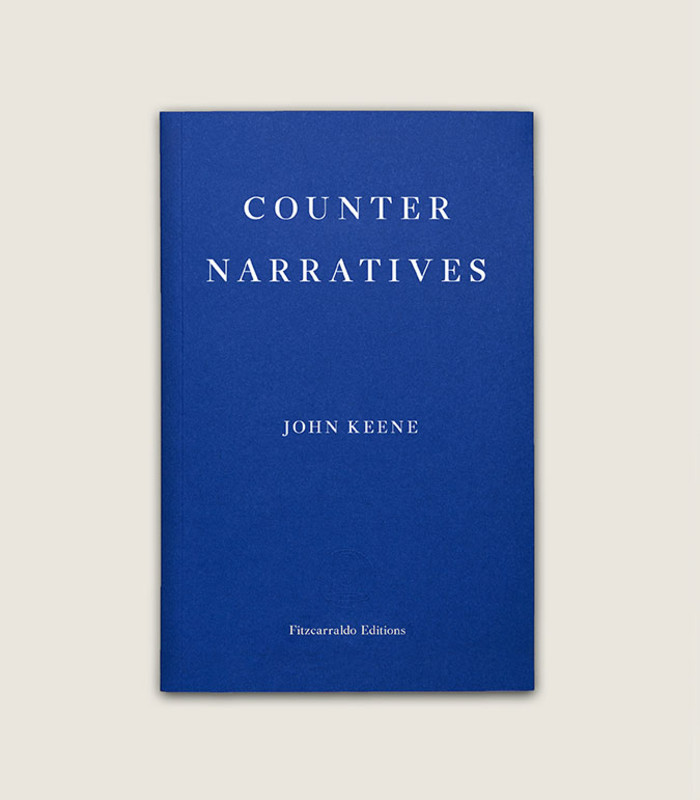
My thought is that given the turmoil in the Middle East, and the fact that the Swedish Academy has not honored a poet since Tranströmer and few others in the last 15 years, as well as no writer working in Arabic since Egyptian fiction writer Naguib Mahfouz in 1988, Adonis will be the pick, though it very well could be Ngugi, who more than deserves it. Ladbrokes, the betting site, has Ngugi third at 6/1, and Adonis twelfth at 20/1 but either really should be a top choice. Will the Swedish Academy do the right thing, or will it be one of the usual suspects high on Ladbroke's list? First there is the Ukrainian writer Svetlana Aleksijevitj, whose work I am not at all familiar with, though I know she is a journalist of some note.  Also high on their list are Japan's Haruki Murakami, a writer I do enjoy reading and have taught many times; Joyce Carol Oates (???); and Jon Fosse, whom I read as I was writing Counternarratives, and found compelling and somewhat like a more abstracted Pinter.

Also on the list are perennials Philip Roth; Peter Handke, who may be disqualified because of the controversy that still surrounds his pro-Serbian statements; John Banville, a writer's writer I think is very good but perhaps not Nobel-worthy; and Nawal El Sadawi, the Egyptian feminist I remember reading in my early 20s with enthusiasm. If it must go to a European writer, and it isn't one of the very senior figures like Bonnefoy, Lászlo Krazsnahórkai, who received last year's Man Booker International Prize, and whose most recently translated book into English, Seiobo There Below (New Directions, 2014), merits the epithet "sublime," ought to be the choice. That novel is peerless, and, like the late Roberto Bolaño's 2666, represents a possible, vital path for other writers to follow. (Krasznahórkai) currently is in New York City, so I am angling to find a way to meet him before he heads back to Hungary).

Lastly, there are the Swedish Academy's geographical gaps. Since Rabindranath Tagore received the Nobel Prize in 1913, no writer from that country has received the Nobel, yet India abounds in superb writers, as does much of South Asia in general. No Korean has won the award, though Ko Un is often cited as a likely choice. Indonesia's literature also has gone unrecognized. In the Americas, Brazil's rich literary tradition has never been honored with a Nobel; should it go to a Brazilian, I predict it will be either Lygia Fagundes Telles, now up in years, or the prodigious João Gilberto Noll, from the far south of the country, who published, as my colleague put it, several very "strange"--but to me striking--novels several decades ago, and who seems to be at the top of favorite lists among Brazilianists I know. (I had the pleasure of meeting Noll several years ago at a dinner in Evanston, and though he had lived and taught for a while in the United States, we rambled about haltingly, more because of my nerves than his, in Portuguese.)

Whomever they pick, the Swedish Academicians will certainly spur us to comment. If it's an obvious choice, we'll say, Of course we knew this was coming. If things go as they have of late, though, we might just be saying, well, of course I knew Mia Couto (Mozambique) or Patricia Grace (New Zealand) was going to receive the award! But really, we didn't! I will most certainly update this blog post either way.

Monday, October 03, 2016

Updated: Perennial Post: Who'll Receive the 2016 Nobel Prize in Literature?

UPDATE:

ABSURDITY (A short Nobel Prize in Literature play*)

Swedish Academy Guy 1: Ngugi should get it.
SA Guy 2: Ko Un. Very good poet, I hear. I don't read...Korean?
SA Guy 3: Um, is Philip Roth dead?
SA Guy 4: That Brazilian guy...what is his name? You know. Guys?
SA Woman: Any women???
Quorum: Dylan!!!


*In memory of playwright, activist and provocateur Dario Fo (1922-2016), 1997 recipient of the Nobel Prize in Literature.


***

Can Xue (Bellelettrista.com)
Another year, another year of speculation: who will win the 2016 Nobel Prize in Literature, whose announcement has now been pushed back to next week? (The same thing happened 11 years ago.) Almost every year that I've blogged here, I've devoted longish columns to forecasting about this most widely known, recognized and publicly exalted (and execrated, in some quarters) of literary prizes, and more often than not, I've been wrong about the possible winners, though I have at times tossed out names of people who did go on to win. Cast a wide enough net and you will catch something.

Some of the potential honorees who appeared in my first J's Theater wish list back in 2005 are no longer with us. Assia Djébar, Carlos Fuentes and E. L. Doctorow (the latter two my former teachers), to name a few, have departed for that distant library in the heavens. (Still others I pointed to in subsequent posts, like Andrée Chedid, Pramoedya Ananta Toer, and Mahasveta Devi, also have passed since that initial post 1l years ago.) One writer I did state ought to win, Harold Pinter, received the prize that year, though I can't say I singled him out. (I was and remain a fan of his work.) While I have frequently mentioned Patrick Modiano as a fascinating case study (of a writer who essentially writes the same book over and over) to my students, I did not think he'd slip past far more inventive and compelling French writers like Yves Bonnefoy or Michel Tournier (both of whom died earlier this year). Remaining on the French tip, I still am baffled by J. G. M. LeClézio's win in 2008.

Prior Nobel posts: 2005 - (2005 discussion of Pinter) - 2006 - 2007 - 2008 - 2009 (1) - 2009 (2) - 2010 - 2011 - 2012 - 2013 - 2014 - 2015.

In any case, as many critics, I included, have noted, the prize--which is the result of ideologically tinged choices by a relatively tiny committee of Europeans but has global ramifications--has in recent years increasingly turned towards European literature, with roughly 11 honorees out of the last 15 either born or based on that continent. Additionally, only 4 of the 15 have been women. The imbalance is not only one of region and gender but of genre: only one writer working primarily as a poet, Tomas Tranströmer, has been awarded, and the same is true in terms of drama: since 2000 only dramatist Harold Pinter has received the award. (Elfriede Jelinek writes both fiction and plays, but I believe she received the award based on her novels.) Last year's winner, Svetlana Alexeievich, practices a form of creative nonfiction that had not been highlighted among prior winners, though a few past laureates, including former British Prime Minister Winston Churchill and philosopher Henri Bergson have been recognized for nonfiction prose. I also don't think an openly gay or queer writer has won in some time, but I could be wrong. That appears to be a blind spot among the Nobel judges.

(And as I have pointed out many times in the past, quite a few of the greatest writers were completely overlooked by the Nobel committee. That is going to continue to happen with a prize going to only one writer per year, most of whom are European and male, and which overlooks work by women, work that is very formally innovative, politically complicated, and work not regularly translated into major European languages. One writer about whom I'll post soon, Elena Ferrante, strikes me as potentially falling in this category, not just because of the controversies that have swirled around her "identity," but also because her dazzling, profound work is also so popular, within and outside Italy.)

So: instead of a long argument about the history of the award, a rundown of good or bad prior choices, and so on, here's a short list of people I think are deserving. I should point out that I tweeted thoughts to Shigekuni about his Nobel Prize list, and we have some overlap. I also found Two Lines Press's conversation, arranged in betting fashion, intriguing, though I wish they'd gone a bit deeper with their praise and critiques. I admire a number of the writers they include, some of whom make my list. A third and superb run-down of the global greats appears at The Birdcage. One thing that I think should occur is more double prizes, or even a triple prize, as sometimes occur in the Chemistry and Physics categories. Some of the writers listed below are getting up there in age, so rather than dragging things out, honor several in one swoop, and be done with it!

(I should point out that Ladbroke's list is out, and as usual, it includes some of the usual suspects and some idiosyncratic choices. These are the folks the bettors think might win. At the top is Haruki Murakami, a writer whose work I'm quite fond of, but who should not be selected over any of the people listed below. Yet again, Philip Roth and Joyce Carol Oates are high on the list. Others who appear include John Banville, Jon Fosse (I read him for the first time a few years ago and was charmed), Peter Handke (politics may doom him again), Peter Nadas (he wrote a giant novel, which always impresses people), Amos Oz (I'm a fan), A. B. Yehoshua (also a fan of his), Adam Zagejewski (beloved by comp lit people), Juan Marsé (hmm), Kjell Askildsen (never read him but I know he's controversial), and Doris Kareva (never read her). Note that other than Murakami, Adonis (in second place at 6/1 odds), Ngugi wa Thiong'o (fourth at 10/1 odds), Oz and Nadas, all of the other writers are...European! Do scroll down for some of the interesting choices below.)

Frankétienne (Allison Shelley for
The New York Times)
Anyways, here's my list:

‡. Adonis - One of the major poets in contemporary Arabic literature, enchantingly lyrical and formally daring, he'd be a timely pick, and probably should have received the Nobel Prize a few years ago.

‡. John Ashbery  - Perhaps the most influential living English-language poet, 89 years old and still writing and publishing.

‡. Tahar ben Jelloun - Prolific, intense, and a major living North African and Francophone fiction writer.

‡. Can Xue - She has been labeled by male critics as crazy, but this self-taught genius is a lodestar in Chinese-language literature. Her chances of winning the prize right now are probably low, however, because of the recent award to Mo Yan and a prior one in 2000 to Gao Xiangjin. From what I can tell based on the translations of the work of all three, Can is the best and most aesthetically daring of these three.
`
‡. Juan Goytisolo - Among living Spanish-language writers, he is a pathblazer, and his trilogy, which includes Count Julian, is a landmark in Hispanophone literature. One of my favorites of his works is a much more modest but highly inventive and entertaining work, The Garden of Secrets. He's openly gay and has harshly criticized European colonialism, so he may never win.

‡. Nuruddin Farah - One of the most important writers of East Africa, an author of influential, engaging and beautiful novels, Farah would be a great choice.

‡. Frankétienne - Haiti's powerhouse, a master artist in Caribbean and African Diasporic literature, this author has left his mark in numerous genres, and should have won the Nobel Prize over some of the lackluster picks of recent years. He has predicted his death will come in 2020, so get on it, Swedish Academy!

‡. Patricia Grace - Grace has deeply enriched New Zealand and Maori literature, Grace is the author of numerous highly praised novels, collections of short stories, and children's books. She received the 2008 Neustadt International Prize.

‡. Wilson Harris - Guyanese-British, utterly original, prolific, and now 95 or so. One of my heroes and one of the greats.

‡. Kim Hyesoon - I cannot read Korean, but I am highly persuaded by poet Don Mee Choi's excellent translations of Kim's work. No writer from Korea has ever won the award, so Kim would be  a positive first.

‡. Ismael Kadaré - An Albanian writer, and thus a European, though Albania remains figuratively and literally on the margins of Europe. I have read only one of his novels and it was as good as the novels I've read by any of the last 10 laureates, and outrageously funny.

‡. Laszlo Krasznahorkai - As European fiction writers go he is in a category of his own. His Seiobo There Below is, like past laureate J. M. Coetzee's Elizabeth Costello an innovation on the novel form deserving the highest praise. I believe his health is stellar, but I think it should go to several others who are older and more frail first. But very deserving.

‡. Abdellatif Laâbi -This Moroccan poet's oeuvre ranks among the finest in contemporary Francophone and North African literature.

‡. Antonio Lobo Antunes - I have long been a fan of his, but I cannot ever forget how my Azorean teacher, guiding me through Portuguese conversation, dismissed him as a writer who needed "the dictatorship" and "war" to have something to write about. She was much more positive about other Portuguese writers like Jorge de Sena, Fernando Namora, and of course, José Saramago, who received the Nobel Prize.

‡. Friederike Mayröcker / Alexander Kluge - German-language writers haven't had to suffer long droughts in recent years, but these two are so original they deserve some kind of major honor. Mayröcker is an Austrian poet and playwright, while Kluge is a German fiction writer, philosopher and filmmaker. Their work looks like no one else's. Both are up there in years, so give it to both of the if one is even in the running.

‡. Cormac McCarthy - His prose is singular, his scope is narrow, and his work is most certainly not of an "idealistic" nature, which was Alfred Nobel's charge for the prize, but when McCarthy is on, he is really on. I should note that I am rereading The Road with my graduate seminar now, and it is even more moving than my first reading of it. Blood Meridian is one of the greatest and most disturbing American novels of the last 50 years too.

‡. Nicanor Parra - He is 102. (102!!!) His poems are scrumptious morsels that make you go Wow. He is a pioneer of "anti-poems." His oeuvre is considerable, inventive, and impressive. He should have received the Nobel Prize two decades ago.

‡. Adélia Prado - One of Brazil's leading poets, highly readable, a poet of daily life, desire, the soul laid bare, prolific, and the recipient of many national awards. Very consistent and consistently very good.

‡. Ngugi wa Thiong'o - A pioneering, politically engaged and prodigious writer who has transformed the landscape of African literature. An excellent choice.

‡. Ko Un - Again, I don't read Korean, but his name has popped up for years as a potential winner. He's a poet so that would be a plus no matter what.

‡. Jay Wright - If there were a prize solely for originality and daring, or for lyric excellence, Wright would have won it long ago. He is one of the main predecessors to poets like Nathaniel Mackey. He's 81....

‡. Raúl Zurita - One of the leading Latin American poets, highly original, compelling ironic and strange, and quite prolific. He also wrote against the Chilean dictatorship while living under it.