UPDATE: Svetlana Aleksijevitj/Alexievich, a Ukrainian native now long resident in Belarus, and author of several major works of nonfiction and fiction, including Voices from Chernobyl: The Oral History of History of a Nuclear Disaster, her masterpiece, was awarded the 2016 Nobel Prize in Literature.
You can read more about Alexievich's life and work here. Voices from Chernobyl: The Oral History of History of a Nuclear Disaster was translated into English by Keith Gessen and has been republished by Macmillan Publishers (and Picador). A documentary based on this work is forthcoming next year.
The Swedish Academy's official announcement, with more information about Alexievich, is here.
***
This is Nobel Prize week, and as I have done nearly every year over the last decade, I cannot help but speculate on this blog, which began in 2005 with a focus on literature, about this year's winner in the literary category. The honoree will be announced tomorrow, I believe. (Here are my posts from 2005 (and after Harold Pinter won in 2005); 2006; 2007; 2008; 2009; 2010; 2011; 2012; 2013; and post-award to Patrick Modiano in 2014.)
My batting average has admittedly been poor, in part because I keep thinking that the Swedish Academy, which awards the prizes, will end its focus on Europe in favor of the broader literary world, and yet for the past decade, the annual prizes have been weighted towards European writers, or, in the case of Alice Munro--whose work I am a huge fan of--writers of European descent across the globe. The last 15 Nobelists include Patrick Modiano (2014); Alice Munro (2013); Mo Yan (2012); Tomas Tranströmer (2011); Mario Vargas Llosa (2010); Herta Müller (2009); Jean-Marie Gustave LeClézio (2008); Doris Lessing (2007); Orhan Pamuk (2006); Harold Pinter (2005); Elfriede Jelinek (2004); J. M. Coetzee (2003); Imre Kértesz (2002); V. S. Naipaul (2001); and Gao Xiangjin (2000).
Three of these writers, LeClézio, Lessing and Coetzee, come from Africa, but all are of European descent; one, Vargas Llosa, is Latin American, and again, primarily (wholly?) of European descent; and two come from the most populous country on earth, China, which before the selection of Gao, an exile living in France, had never had a Nobel Laureate in literature. Of this gathering, I wholeheartedly endorsed the selections of Munro, Tranströmer, Pinter, Coetzee, and Kértesz. I did not know of either Mo's or Gao's work before their selections. I have long been a fan of Modiano's, as my linked post above makes clear, but I think there are better Francophone fiction writers, with far greater range, such as Michel Tournier, or the much younger Alain Mabanckou (French-Congolese), and in any case, because of both Modiano's and LeClézio's awards, France's greatest living poet, Yves Bonnefoy, was overlooked yet again.
Orhan Pamuk was clearly a political choice, and is a fine writer, but I slogged--as if wading through mucilage--through several of his books, including Snow and Black Book. Each had great moments and set pieces, but in general, I am not a fan. I may be alone in this judgment, though. I do think Müller is an exceptionally gifted writer and have written before on the blog about her prose, particularly in Nadirs, but there are other German-language writers of great talent who should have been higher in the queue, like Alexander Kluge, one of the true originals in any language. I also believe Vargas Llosa is prolific and not the worst choice, but with so many other talented Latin American fiction writers who have been overlooked, I thought his selection was a wasted choice. Lessing's selection made an important political point, though I do not like her work at all, and it was a very good choice to select writers from China, about whose literature I am completely ignorant (though I have since read one novel by Mo Yan in translation and am trying to catch up). Meanwhile, a path-blazing writer like Assia Djébar (of Algeria), for example, who in some key ways renovated the literature of her country while adding a vital voice to contemporary letters, not only was passed over, but passed away in the meantime.
Of course the Europeanist slant is the Swedish Academy's prerogative. They are Europeans, after all, and hold the literatures of that continent in the highest regard, which should hardly be a surprise. Yet the Nobel Prize has long been a global literature prize, sometimes given for a lifetime's achievement, and at other times for a work or series of works that seem to capture the spirit of the age. Many of its winners have been major innovators in their national and global literatures, and have had an outsized influence on writing that follows. Others have been eccentric choices that few people knew of and perhaps even fewer read today. And then there have been other choices like Jelinek that remain confounding. Her choice, in fact, led one member of the committee to resign in disgust. I am not sure if it merited that level of response, but apparently the rancor around her selection was significant.
So: given the tendencies of the Swedish Academy, who will they choose tomorrow? Critic and book lover Shigekuni makes some smart picks on his eponymous blog. High at the top of his list is someone I have repeated touted since 2005, and one of my favorite writers in the world, the highly original Guyanese-British writer--there really is no one who writes like him--Wilson Harris, who is now 94 years old, and who published his last novel several years ago. Harris would be an excellent and inspired choice, but for that reason I doubt it will happen. Another writer from the Anglophone world that Shigekuni points to is John Ashbery, now 88. Ashbery is one of the writers who survives from the remarkable generation of American poets born between 1925 and 1935, whose oeuvres still loom larger in our national literature, and he has been, like Harris, utterly original as he has also become, without question, one of the most influential poets not just in the English language, but globally. (To the dismay of some, I should add.) I am not sure, however, whether Ashbery's recent poetry, which sometimes reads like a parody of his best work, may have harmed his chances.
Shigekuni additionally mentions Nathaniel Mackey, another major American--and African American--poet (and fiction writer), who has finally begun to receive his due. Given two of Mackey's (and our) direct literary ancestors, the extraordinary poets Jay Wright and Edward Kamau Brathwaite, are still alive, I almost feel that either or both of them should receive the award first, but any of these authors, but especially Harris, Wright and Brathwaite, would be excellent. An African writer that Shigekuni cites, the Nigerian fiction writer Buchi Emecheta, strikes me as unlikely, though she certainly has a large and strong body of work. I have feeling that as with Guadeloupean writer Maryse Condé, one of my perpetual favorites, Nicaraguan fiction writer Claribel Alegría, and Brazilian poet Adélia Prado, all of these incredibly talented will continue to be overlooked by the Nobel committee, though the work of any of them should the award. Two other Latin American poets who probably will be passed over but who merit the award are Raúl Zurita, the singular, innovative Chilean poet so beautifully translated into English by poet Daniel Borzutzky, and his fellow Chilean Nicanor Parra, who is aging towards the clouds at 101--yes, he is 101 years old!--but whose poetry still cuts like a well-honed razor.
Other writers Shigekuni mentions who would be top choices, and one of whom may emerge as the Prize recipient, include Ngugi wa Thiong'o, whose prodigious writing not only sets a high standard but also helped to spark a crucial shift in African and decolonialist/post-colonial writing in general when he elected to write in Gikuyu, a language indigenous to Kenya, rather than in English. Ngugi also has been outspoken politically throughout his career, and as Shigekuni mentions, was jailed and went into exile as a result. Another is the lyrical master of Arabic poetry Adonis (Adunis, pen name of Ali Ahmad Said), a native of Syria, who has more than established himself as one of the leading figures in his language. Adonis's poetry is politically aware and clear-sighted, and has been widely and deeply praised. (I featured one of his poems back in 2005; in 2013 I had the almost inexpressible pleasure of meeting him in person, and shared a photograph of him on J's Theater.)
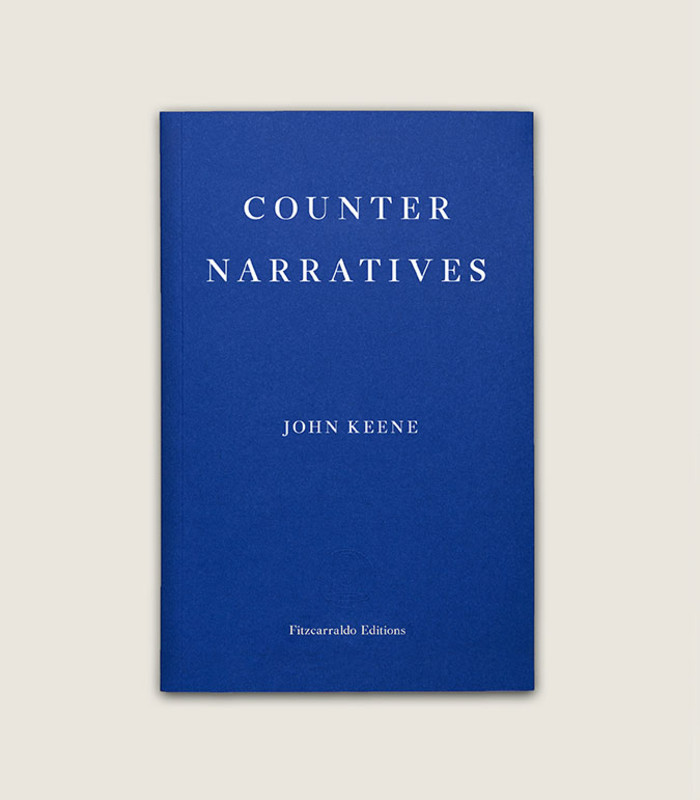
My thought is that given the turmoil in the Middle East, and the fact that the Swedish Academy has not honored a poet since Tranströmer and few others in the last 15 years, as well as no writer working in Arabic since Egyptian fiction writer Naguib Mahfouz in 1988, Adonis will be the pick, though it very well could be Ngugi, who more than deserves it. Ladbrokes, the betting site, has Ngugi third at 6/1, and Adonis twelfth at 20/1 but either really should be a top choice. Will the Swedish Academy do the right thing, or will it be one of the usual suspects high on Ladbroke's list? First there is the Ukrainian writer Svetlana Aleksijevitj, whose work I am not at all familiar with, though I know she is a journalist of some note. Also high on their list are Japan's Haruki Murakami, a writer I do enjoy reading and have taught many times; Joyce Carol Oates (???); and Jon Fosse, whom I read as I was writing Counternarratives, and found compelling and somewhat like a more abstracted Pinter.
Also on the list are perennials Philip Roth; Peter Handke, who may be disqualified because of the controversy that still surrounds his pro-Serbian statements; John Banville, a writer's writer I think is very good but perhaps not Nobel-worthy; and Nawal El Sadawi, the Egyptian feminist I remember reading in my early 20s with enthusiasm. If it must go to a European writer, and it isn't one of the very senior figures like Bonnefoy, Lászlo Krazsnahórkai, who received last year's Man Booker International Prize, and whose most recently translated book into English, Seiobo There Below (New Directions, 2014), merits the epithet "sublime," ought to be the choice. That novel is peerless, and, like the late Roberto Bolaño's 2666, represents a possible, vital path for other writers to follow. (Krasznahórkai) currently is in New York City, so I am angling to find a way to meet him before he heads back to Hungary).
Lastly, there are the Swedish Academy's geographical gaps. Since Rabindranath Tagore received the Nobel Prize in 1913, no writer from that country has received the Nobel, yet India abounds in superb writers, as does much of South Asia in general. No Korean has won the award, though Ko Un is often cited as a likely choice. Indonesia's literature also has gone unrecognized. In the Americas, Brazil's rich literary tradition has never been honored with a Nobel; should it go to a Brazilian, I predict it will be either Lygia Fagundes Telles, now up in years, or the prodigious João Gilberto Noll, from the far south of the country, who published, as my colleague put it, several very "strange"--but to me striking--novels several decades ago, and who seems to be at the top of favorite lists among Brazilianists I know. (I had the pleasure of meeting Noll several years ago at a dinner in Evanston, and though he had lived and taught for a while in the United States, we rambled about haltingly, more because of my nerves than his, in Portuguese.)
Whomever they pick, the Swedish Academicians will certainly spur us to comment. If it's an obvious choice, we'll say, Of course we knew this was coming. If things go as they have of late, though, we might just be saying, well, of course I knew Mia Couto (Mozambique) or Patricia Grace (New Zealand) was going to receive the award! But really, we didn't! I will most certainly update this blog post either way.