Showing posts with label Nicanor Parra. Show all posts

Thursday, January 25, 2018

Remembering Ursula Le Guin, Visionary Fiction Writer & Nicanor Parra, Anti-Poet

Photograph by Dana Gluckstein / MPTV Images
via New Yorker
Let me start my note about Ursula K. Le Guin (1929-2018) by pointing out that I always write her name as "Ursula LeGuin," closing that Breton gap between "Le" and "Guin." As it turns out, that was the original spelling of her husband Charles' name, but when they married in France, when both were in graduate school, a clerk urged Mr. Le Guin to use the linguistically correct form. This is neither here nor there, really, except that Ursula Le Guin was very attentive to naming, and more specifically, to language and its power, using and probing it to explore alternatives to the oppressive structures that defined our real world in her visionary fiction career, which spanned half a century, and which left a deep and lasting mark on literature.

Bibliomane and bibliophile though I am, I first learned about Le Guin's work when I saw the first film version--now hard to find--of her 1971 novel The Lathe of Heaven on PBS, when I was a high schooler in 1980, and recall being transfixed by it. The novel, a dystopia set in 2002 Portland, Oregon, turns on the powers of the protagonist, Charles Orr, who can willfully dream new realities, past or present, into being. A psychologist, William Haber, figures out a way to manipulate Orr, for nefarious purposes, but one of the most enlightening aspects of Le Guin's novel is how she explores the potentially devastating consequences of what may, without extensive consideration and extrapolation into the future, seem to be positive or even neutral changes to our reality. To give one example, when Haber utilizes his machine to have Orr eliminate racism, the result is that all people end up turning the same, dull color of light "gray," which addresses the issue of color prejudice but also eliminates a major component of human difference, beauty and identity. (Of course one could also argue with the idea that racism hinges solely on skin color and does not also entail physiognomy and other distinguishing traits, let alone structural and system components, but in the sense that "color prejudice, "as the classicist George Snowden famous put it, lies at the heart of the European project of racial categorization and scientific racism, Le Guin made a justifiable choice.)

The Lathe of Heaven is a powerful example of how her work was less interested in technology, and more engaged with profound philosophical, sociological, anthropological, and, like much realist fiction, psychological questions. I think it once saw it called "soft science fiction," though there is nothing lesser about how she and others explored alternate ways of imagining our world, or alternative and parallel ones they had created from their imaginations. The Lathe of Heaven was a standalone work, though, and not part of her well known Earthsea and Hainish cycle series, for which she is best known. The five Earthsea books, commencing with A Wizard of Earthsea (1968), depict an archipelagic world in which magic plays a key role, and whose characters tend, as I learned with surprise upon reading A Wizard, brown-skinned. The Hainish novels, exemplified by The Left Hand of Darkness (1969), tackle social, political and cultural questions head on; in this novel, a visitor from one planet ventures to another, where he encounters a very different cultural context, including ambisexual characters, which unsettles his initial attempts to understand and connect with them. Social, political and cultural questions run throughout all her work, but Le Guin highlights them in these novel such that it would be hard to walk away from them not somewhat transformed by the questions she raises and allows the texts, and her readers, to mull over. If there were ever a set of works ripe for serialization on TV, and a more opportune time than our current moment of social and political crisis, I could hardly name them. So perhaps some director and production companies will take a hint, negotiate with heirs, and, once greenlighted, start filming.

In addition to her speculative fictional novels for adults, Le Guin also published collections of short stories, one of which, "The Ones Who Walk Away from Omelas," I have taught a number of times over the years. Her work also includes works for children, and works of nonfiction, including essays and a guide for better writing, Steering the Craft (1998), which I am proud to admit is sitting on work table right now. (I'd fished it out in preparation for rereading, as my sabbatical got underway.) She remained a powerful feminist, anti-racist, progressive voice till the very end, delivering a knockout speech at the 2014 National Book Awards, where she overtly critiqued capitalism and the hyper-commercialization of books.  She concluded her brief, powerful oration with the following words:

We who live by writing and publishing want and should demand our fair share of the proceeds; but the name of our beautiful reward isn’t profit. Its name is freedom.

Though Le Guin is no longer among the writing, the conceptual power, assured craft and vivid world-making of Le Guin's art, in the fullest senses of that term, should ensure readers return to it. I know I plan to, beginning with the Earthsea books. May she rest in peace.

‡‡‡


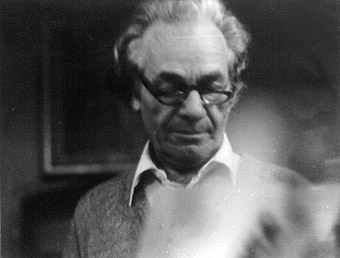
Regular J's Theater readers know that I am a fan of Nicanor Parra's (1914-2018), and have featured his work and posts about him several times over the years. Back in 2012, I posted his anti-poem "Young Poets," and one year prior, I wrote about his receipt, tardy though it was, of the Cervantes Prize, one of the highest honors for a Spanish-language writer. The very idea of the anti-poem, which is to say, a literary work that in many ways eschews what are thought to be the fundamentals of poetry while nevertheless employing poetry's unique resources, especially drawn from everyday speech and the vernacular, have long fascinated me, as has Parra's wittiness and humor, and his willingness to incorporate non-lyric elements in poetry, including images, drawings and charts.

I also have regularly lamented that he was not awarded the Nobel Prize (see the first link above), a prospect extremely unlikely at this point, now that he has passed at the age of 103, but then any number of major authors have been and will be passed over, including John Ashbery, who died late last year, and Ursula Le Guin, who I plan to memorialize below. Neither inventiveness nor longevity was enough to move Parra onto the laureate plane, but not winning the Nobel Prize is not the end of the world (and winning it, as a certain musician did a few years ago, is no guarantee of great poetry), and Parra will remain a vital poet for anyone who is interested in poems--or anti-poems--that make the most out of the simplest means.

Here are a few Parra poems I posted on Twitter that I wanted to share here. Note the first, partiularly cheeky if you ask me. (The first two poems are from, Antipoems: How to Look Better & Feel Great, antitranslation by Liz Werner (@NewDirections, 2004), and the second from After Dinner Declarations, translated & w/ an intro by Dave Oliphant (Host Publications, 2009). Consider drafting an anti-poem, and enjoy.


Monday, April 02, 2012

Poem: Nicanor Parra

One of the living greats, Nicanor Parra (1914-), whom I posted about last December on the occasion of his receipt of the Cervantes Prize, has among his delectable trove the following gem, a poem written to young (and all) poets, that could serve as a distillation of his entire approach to poetry, and a guide for any poet--or writer, for that matter--who thinks that she must follow one school or style or method. The ultimate challenge is always the one Parra, in his witty way, identifies. Here goes:

YOUNG POETS

Write as you will
In whatever style you like
Too much blood has run under the bridge
To go on believing 
That only one road is right.
In poetry everything is permitted.

With only this condition of course,
You have to improve the blank page.

Copyright © Nicanor Parra, translated by Miller Williams, from Poems and antipoems, Edited by Miller Williams. Translators: Fernando Alegría and others. New York: New Directions Pub. Corp., 1967. All rights reserved.

Friday, December 02, 2011

Nicanor Parra Wins Cervantes Prize

What is an antipoet? That answer I'll leave to someone else, but a self-styled holder of that moniker, the Chilean poet Nicanor Parra (1914-), a trained mathematician and physicist who has been publishing since the 1930s and whose 1954 collection Poemas y Antipoemas electrified readers across the globe, yesterday received the 2011 Miguel de Cervantes Prize, widely considered the highest honor in Spanish-language literature.

Parra has famously rejected what he considered the pomp and formality of the poetry business, as well as the elaborate style of Spanish-language poetry, choosing instead a more colloquial, often humorous approach.  He has written poems with titles like "Chistes para disorientar la polícia/poesía" ("Tricks to disorient the police/poetry") "Toda la poesía es mierda" ("All poetry is shit"); "¡Silencio mierda!" ("Shut the hell up!"); "La muerte supersónica" ("Supersonic death"); and Like other writers who step outside the mainstream he has not received the sort of acclaim due him, though he did receive Chile's National Prize for Literature in 1969 (following in the footsteps of Nobel Laureates Pablo Neruda and Gabriel Mistral), and he is rumored to have been nominated several times for the Nobel itself.

There are several English translations of his work, including Antipoems, translated by Jorge Elliott (City Lights, Pocket Poets Series No. 12, 1960); Poems and Antipoems, edited by Miller Williams and translated by Fernando Alegría (New Directions, 1967); Poems and Antipoems, edited by David Unger (New Directions, 1985); Antipoems: How to Look Better & Feel Great, translated by Liz Werner (New Directions, 2004), and After-Dinner Declarations, translated by Dave Oliphant (Host Publications, 2009).

EPITAFIO

De estatura mediana,
Con una voz ni delgada ni gruesa,
Hijo mayor de profesor primario
Y de una modista de trastienda;
Flaco de nacimiento
Aunque devoto de la buena mesa;
De mejillas escuálidas
Y de más bien abundantes orejas;
Con un rostro cuadrado
En que los ojos se abren apenas
Y una nariz de boxeador mulato
Baja a la boca de ídolo azteca
-Todo esto bañado
Por una luz entre irónica y pérfida-
Ni muy listo ni tonto de remate
Fui lo que fui: una mezcla
De vinagre y aceite de comer
¡Un embutido de ángel y bestia!

EPITAPH
 
Of medium height,
With a voice neither shrill nor low,
The oldest son of an elementary school teacher
And a piecework seamstress,
Naturally thin
Though fond of good eating,
With drawn cheeks
And oversize ears,
A square face,
And slits for eyes,
And the nose of a mulatto boxer
Over an Aztec idol's mouth
-All this bathed
In a light halfway between irony and perfidy -
Neither too bright nor totally stupid,
I was what I was: a mixture
Of vinegar and olive oil,
A sausage of angel and beast!

Copyright © Nicanor Parra, translated by Jorge Elliot, from Antipoems (translated by Jorge Elliott), San Francisco, City Lights Books, The Pocket Poets Series, Nº12, 1960. All rights reserved.