Showing posts with label classical music. Show all posts

Saturday, February 10, 2018

The Music of Florence Price

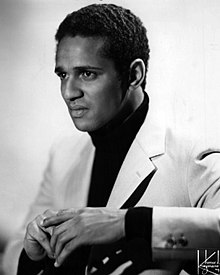
Florence Price
The treasures of the past may seem lost, but often enough, they are merely forgotten, or hidden. Such is the case with the music of Florence Price (1887-1953), an African-American composer whose work has never entered the mainstream canon, but which was very much in the current of the classical music of her time. In 1933, the Chicago Symphony Orchestra performer her "Symphony in E," making her black woman to have her work performed by a US symphony orchestra. Yet, as Micaela Baranello reminds readers in today's New York Times, Price probably never receive a reply to her repeated requests for consideration from Serge Koussevitzky, the famous conductor of the Boston Symphony Orchestra and champion of new music, who commissioned or premiered works by the likes of Alexander Scriabin, Maurice Ravel, Paul Hindemith, Igor Stravinsky, Albert Roussel, Bela Bártok, and Leonard Bernstein, just to name a few.

All were white men; Price did not register on Koussevitzky's radar, nor on that of many other major conductors. Baranello states, however, that she was well known among the major African American intellectuals of her era, corresponding with W. E. B. DuBois, among others. She also set poems by Langston Hughes and Paul Lawrence Dunbar to music. Price's background, in fact, primed her for success as a member of DuBois's "Talented 10th." Born the daughter of a prominent dentist in Little Rock, Arkansas, she showed musical talent early on, and enrolled in the New England Conservatory at the age of 14. Because of the widespread racism of that era, she passed as non-black person, claiming that she was from Pueblo, Mexico, and studied with the head of the NEC, the famed composer George W. Chadwick.

Yet numerous struggles marked her life from this point forward. Eventually she settled in Chicago, where she continued her studies in music and other disciplines at a number of institutions, including the University of Chicago and the Chicago College of Music (now a division of Roosevelt University), and, after a divorce, raised her two daughters as a single mother and worked as an organist for silent movies and under a pseudonym, wrote advertising jingles for radio. In addition to pieces she composed on her own, she also collaborated frequently with her former student, fellow composer and pianist, and frequent collaborator Margaret Bonds. It was a first prize win and public recognition for her Symphony in E in the 1932 Wanamaker Foundation Awards that led to conductor Frederick Stock's premiere the subsequent year of her orchestral piece.

Though Price's music did receive performances during her lifetime, including Marion Anderson's delivery, at her landmark 1939 concert at the Lincoln Memorial, of Price's arrangement of spiritual "My Soul's Been Anchored in De Lord," in the years after her death from a stroke, a good deal of her work was thought to have been lost. In 2009, as critic Alex Ross relates in his recent New Yorker discussion of Price's life and work, homeowners Vicki and Darrell Gatwood found a cache of her manuscripts in what was her former summer house, in St. Anne, Illinois, outside Chicago. This has led to a mini-resurgence in interest in Price's work, including new recordings and performances, among them Janacek Philharmonic's  premiere recording of her First Violin Concerto, with University of Arkansas professor and violinist Er-Gene Kahng as soloist.

Price's oeuvre draws from a number of aesthetic springs, chief among black spiritual and vernacular music traditions, as well as American and European early 20th century Modernism. Her Second Violin Concerto "reflects the richly chromatic language of [American] composers like William Schuman and Roy Harris," and, as musicologist Douglas Shadle recently learned, she even studied with Harris briefly in 1940. To quote Baranello:
Marquese Carter, a doctoral student at Indiana University who specializes in Price’s work, said in an interview that she “uses the organizing material of spirituals. You may not hear direct quotation, but you will hear playing around with pentatonicism, playing around with call and response, some of these organizing principles that African-American scholars like Amiri Baraka have pointed out as indicative of black musical discourse.”

“Florence Price is a representation in music of what it means to be a black artist living within a white canon and trying to work within the classical realm,” Mr. Carter added. “How do we, through that, create a sound that sounds our culture, sounds our experience, sounds our embodied lives?” 
***
“Everything she was doing was musically mainstream but at the same time idiosyncratic,” he said. “Her music has kind of a luminous quality that strikes me as her own. Our understanding of American modernism of the 1930s and 1940s is not complete without Price’s contribution.”

Price's compositions are numerous, and despite recent interest, the question remains: who will perform, let alone premiere, many of these works? Baranello argues, and I agree, that if US symphony orchestras are serious about diversifying not just their audiences but their repertoires, composers like Price and Bonds--and María Teresa Carreño García, William Grant Still, R. N. Dett, Adolphus Hailstork, Anthony Davis, Tania León, and many others--offer a direct and corrective option. According to Baranello, the Fort Smith Symphony plans to record all four of her symphonies for Naxos, but far more orchestras need to step up, now and in the future. Yesterday, NPR featured Price's Violin Concerto No. 2 on its "Songs We Love" page.

Here are YouTube links to Florence Price's music:


Excerpts from Florence Price, Violin Concerto No. 2 (1952), dedicated to Minnie Cedargreen Jernberg, excerpts with the Janacek Philharmonic Orchestra, Er-Gene Kahng, violin, Ryan Cockerham, conductor


Karen Walwyn, piano, New Black Music Repertory Ensemble, Leslie B. Dunner, conductor, from Albany TROY1295


New Black Repertory Ensemble, Leslie B. Dunner, conductor


Night by Florence Price, Amy Petrongelli, soprano, Blair Salter, piano, Kerrytown Concert House, Ann Arbor, MI

Tuesday, October 22, 2013

Samy Moussa & Daniel Kidane

Not long ago, via Norman Lebrecht's Slipped Disc blog on Arts Journal, I saw mention of two young art music composers I'd never heard of before, Samy Moussa (b. 1984-) and Daniel Kidane (b. 1986-).

Samy Moussa
Moussa is a native of Montreal, Canada, and studied at the University of Montréal, in the Czech Republic, and at the Hochschule für Musik und Theater München, as well as with major contemporary composers including Magnus Lindberg, Salvatore Sciarrino, Pascal Dusaupin, Peter Eötvös, Matthias Pintscher, and the maestro Pierre Boulez. He has collaborated with a number of Canadian and European orchestras and ensembles, and composed two operas as well as a number of chamber works. In 2010 he became Music Director of the INDEX Ensemble in Munich.  In 2012 he received the Bayerischen Kunstförderpreis for his conducting with the INDEX Ensemble and this year won the Composers’ Prize 2013 from the Ernst von Siemens Music Foundation. I saw his name mentioned in conjunction with the Lucerne Festival, at which Pierre Boulez commissioned a new orchestral work from him, to premiere in 2015.

Here's a short piece from the Ernst von Siemens foundation on Moussa, whom it calls "the hedonistic composer." (?)

Here are some videos of Moussa's work:


Ernst von Siemens Foundation clip on Moussa


Moussa's "Kammerkonzert"


Moussa's "Cyclus for Orchestra," (2007) performed by the National Youth Orchestra of Canada

Daniel Kidane

Kidane is British, studied at composition at the Royal College of Music Junior Department, followed by the St. Petersburg Conservatoire, after which he attended the Royal Northern College of Music, receiving a BMus (Hons) and a Masters. Several British orchestras have premiered his works. The Manchester Camerata selected his piece "Feuersturm," a musical evocation of the 1945 bombing of Dresden, Germany, for its 2010 season. This year the London Philharmonic Orchestra's Leverhulme Young Composers' program selected him for a 2014 orchestral premiere.

Kidane has a Myspace page featuring a few of his compositions, most of them from 2008 and 2009, when he had just finished his undergraduate studies.

Here are a few of Kidane's compositions, a number of which are available on Soundcloud.


Daniel Kidane's "Temporal Decay," courtesy of the London Chamber Orchestra

Kidane's "Piano Trios" (including "Flux and Stasis" and "Carceri"
Kidane's "Metamorphosis for solo cello"

Monday, February 04, 2013

Daniel Barenboim @ Edward Said Memorial Concert, Columbia University

Daniel Barenboim and Ara Guzelimian
One of the highlights of living in Chicago was the presence of the Chicago Symphony Orchestra, one of the best philharmonic orchestras in the country, and up through 2010, one of the world's great pianists and conductors, Daniel Barenboim, helmed it. I did not see Barenboim conduct as much as I could have or would have liked, but I can remember several memorable concerts he led or in which he performed, and so when two friends suggested I join them to see him speak about his friendship with the late scholar, critic, and musician Edward Said, and then conduct a short chamber concert at which he would also perform, I wasn't going to pass on the opportunity.

The Institute for Comparative Literature and Society (ICLS) at Columbia University and The Cogut Center for the Humanities (CCH) at Brown University sponsored the talk, "Remembering Edward W. Said: A Conversation with Daniel Barenboim and Ara Guzelimian," as well as the subsequent performance by selected members of the Seville-based West-Eastern Divan Orchestra. Both took place at Columbia's Miller Theater. I hadn't realized it, but this was but the first event in larger program, running throughout 2013 at Columbia, that will commemorate Edward W. Said on the 10th anniversary of his passing. I looked online and cannot find the other events, but I expect they will be posted at some point down the road.
Daniel Barenboim
Guzelimian is the Dean and Provost of the Juilliard School, and he knew how to elicit lively, warm, but quite candid remarks from Barenboim about his relationship with Said and his wife, who was in the audience, and about the founding of the Western-Eastern Divan Orchestra, which involved a fascinating story in which a young Barenboim aided two young Syrian musicians in entering a concert by Arthur Rubinstein (whose daughter also was in the audience, just two seats away from us), only to have students of one of those young musicians many years later present themselves to his assistant as candidates for the orchestra, which brings together young musicians from Israel and the Jewish Diaspora, and the Arab world. As busy as both men were, Barenboim noted that until the end of Said's life, they spoke every day. He went on to register a number of resonant points about culture, music, what Said meant and still means to him, and what sort of work in the world he saw the orchestra undertaking.

Its skill was on display in particular in three of the pieces it performed that night: Pierre Boulez's Mémoriale and Messagesquisse, the latter a favorite of mine and so expertly rendered I wish I had been able to record it (verboten, naturally) and post it here. The soloist, Hassan Mataz El Molla, was particularly adroit in leading and playing his violoncello off against the sextet of violoncellos producing the sonorous buzzing background Boulez devises. Between the two Boulez pieces came an original composition by K. Azmeh, who performed the clarinet solo entitled Prayer, a tribute to Edward Said. Though it possessed some pretty moments, it felt a bit underdeveloped and overshadowed by the virtuosic Boulez pieces. I also couldn't help but think of Douglas Ewart's more successful and dazzling compositions, expertly performed on a range of woodwinds, that I used to catch at Chicago's Velvet Lounge.

Last on the bill Franz Schubert's Piano Quintet in A major D.667, "The Trout." Both Barenboim and his son Michael performed in the latter piece, and I must say that while at the end of the piece I felt as I had heard an animated sewing machine, as I often do when I listen to Schubert's music, I also thought he accompanists in particular were sharp, summing with panache piece's playfulness as well as its darker notes. Barenboim's rhythm seemed a little off at first, but by the middle of the piece he was in sync, and brought the quintet to a powerful close.

L-R: Daniel Barenboim, Yosef Abraham,  Nassib
Ahmadieh, Julia Deneyka, and Michael Barenboim

Saturday, May 19, 2012

50+ Years of Musicmaking: André Watts

Watts in 1971
Continuing the theme of invoking the great ones when they're still with us, I meant to post an entry on a true maestro, André Watts (1946-), who made his concert début with the New York Philharmonic 50 years ago this upcoming December when another maestro, Philharmonic conductor and composer Leonard Bernstein, invited the 16-year-old Watts to perform Franz Liszt's Piano Concerto No. 1 in E-flat at a Young People's Concert. The Philharmonic taped Watts's performance and broadcast it on CBS in January 15, 1963.  Right before the airing of the December concert, Bernstein again called upon Watts to spell an ill Glenn Gould, who was the scheduled soloist, for the Philharmonic's regular subscription series, and he again played the Liszt Concerto. So electrifying was his performance that not only the audience, but the entire orchestra gave him a standing ovation.  He has never looked back. Over the years he continued his musical studies, has performed all over the world, and now teaches at Indiana University's famed Jacobs School of Music. In 2011 President Barack Obama awarded him the National Medal of the Arts.

Watts today
Recently I listened to a podcast interview with him, from the National Endowment the Arts' Art Work Podcast series, in which he talked about his life and career, from his earliest years growing up in Europe as a son of a Hungarian mother and an African-American GI father, to how Bernstein selected him for that breakthrough Young People's Concert, to his love of certain musicians (Liszt especially) and lack of interest in others (Igor Stravinsky and Béla Bartók, two of my favorites), and much more.  Back in 1999, The Chicago Tribune featured a micro-interview with him, and it underlines what the NEA interview suggests, which is that he's got a buoyant sense of humor, doesn't take himself too seriously, and is grateful for all the success he's achieved, but is always pushing himself further. I'm also attaching some YouTube clips of Watts' setting the keyboard on fire. These are pieces I rarely listen to (I am much more a 20th and 21st century fan, J. S. Bach excepted, but played this well I can listen to them over and over.) Enjoy my fellow Gemini.

Non-embed: Watts performing the opening to Mendelssohn's Piano Concerto No. 1, in G-minor


André Watts performing Beethoven's Moonlight Sonata (video 1 of 2)

Watts performing Beethoven's Moonlight Sonata (video 2 of 2)

André Watts performing in Liszt's Sonato Tokyo

André Watts performing Scarlatti sonatas

Wednesday, January 04, 2012

Elliott Carter: Still Ticking-Tocking Away

Elliott Carter
Richard Termine/The NY Times

I'd wanted to post this almost exactly a month ago, when, on December 8, 2011, friends of the composer Elliott Carter (1908-) organized a concert on behalf of his imminent 103rd birthday (December 11) at New York's 92nd Street Y, but J's Theaters perhaps now know how such things go. At the concert, which Carter attended, the performers played a series of the composer's works, all of them written in recent years and, astonishingly, nine--NINE--written since he turned 100 in 2008. I find this just almost inconceivable, but Carter has been incredibly productive in his latter years, and continues to generate works that are not mere echoes or refinements of his earlier work, but which constitute significant efforts in themselves.  For those unfamiliar with Carter's music, which is, I know, not to everyone's taste--and which generates, like Arnold Schoenberg's music, wails even in advance of its hearing--his great insight and innovation was to create works in which individual instruments play their lines, at varying tempos, simultaneously, occasionally shifting into harmonies or counterpoint, only to speed or slow right back out of such. The effect is sometimes one of jarring stratification, at others of a lyrical, atonal strangeness that feels akin the soundworld around us.  Charles Ives, another major American composer whom Carter met when he was young, pioneered compositions along these lines, as have others, but Carter's unusual instrumental combinations, and his variety of tempos, pitches and stratified lines sound unlike anyone else's.

Carter's early works were in a neoclassical mode, but after the mid-century, as he was approaching the age of 50, he began writing work that sounded like serialism but which did not use serial techniques. A good example of this work is the breathtaking the Double Concerto for harpsichord, piano, and two chamber orchestras of 1959-61, in which the harpischord, with its chamber orchestra, and the piano with its own basically produce simultaneous concerti. It has to be listened to be believed (that harpsichord!). The first time I heard it, on a CD--because I have rarely been able to hear Carter's music live--I was spellbound by what sounded like incommensurable soundworlds being fused. Think of a somewhat inebriated Haydn playing his music alongside a contemporary orchestra, on a busy city street. Among his other notable works from this period are the Variations for Orchestra (1954-5), the Concerto for Orchestra (1969), based on a poem by the French Nobel laureate poet Saint-John Perse; the Piano Concerto (1964-65), written to honor the 85th birthday of Igor Stravinsky, whose influence on Carter's earliest music was significant; and the almost unbelievably immense Symphonia: Sum Fluxae Pretium Spei (1993-1996), written, as is evident from the dates, when he was in his 80s. Carter has set the music of a number of American poets, including William Carlos Williams, T. S. Eliot, e. e. cummings, Elizabeth Bishop, Robert Lowell, and John Ashbery to music, especially over the last three-and-a-half decades.

On the New York Review of Books blog, the critic and pianist Charles Rosen offers a fine reading of Carter's music in relation to its exploration of temporality (all music, of course, represents sounds articulated within a temporal framework), "Elliot Carter's Music of Time," and discusses the December 8, 2011 concert, as well as one that ensued a few days later at the Juillard School's Alice Tully Hall. There the new music ensemble Axiom (who on their Myspace page feature a free recording of one of my favorite classical pieces, Claude Debussy's Prélude à l'après-midi d'un faune) performed Carter's Three Explorations, which, according to Rosen, is a song cycle to lines from Eliot's Four Quartets. Rosen highlights what he feels were the more successful pieces and performances, the overall appraisal a positive one; the New York Times's Anthony Tommasini gave the concert a positive review as well.  The 92nd St. Y's site posted videos of Carter talking about his life and work.  The NYRB site features a link to a snippets of the pieces performed at the Y as well as of Three Explorations; all are worth listening to. I am including a few Elliott Carter videos below for any who are curious. I personally hope to hear Carter's music live before he departs this earthly plane, but let me say in any case, Belated Happy 103rd Birthday, Eliott Carter.

Saturday, November 19, 2011

The Music of Roberto Sierra

Roberto Sierra
Earlier this year I came across a contemporary classical music composer whose music I wasn't previously familiar with but which I've been returning to of late, Roberto Sierra (1953-).  Born in 1953 in Vega Baja, Puerto Rico, Sierra studied composition in Puerto Rico and in Europe, including at the Hochschule für Musik in Hamburg with György Ligeti. Sierra has since gone on to compose in a range of forms, including opera (El mensajero de plata), works for full orchestra (Missa Latina, Júbilo, Sinfonias 1-4, Concierto Barroco), chamber orchestra (Doce Bagatelas for String Orchestra, El éxtasis de Santa Teresa for soprano and Chamber Orchestra), chamber pieces (Flower Pieces, Concierto de Cámera), and works for solo performers (Ritmorro for clarinet, Bongo O for bongo), and orchestras all over the world have both played and commissioned his music.

His Missa Latina, premiering in 2006 at the Kennedy Center in Washington, DC, with Leonard Slatkin conducting the National Symphony Orchestra, garnered tremendous praise, and he's received a range of awards, including the 2004 Kenneth Davenport Competition for Orchestral Works, for his Sinfonia No. 1, commissioned by the St. Paul Chamber Orchestra, and Albany Records received the Serge and Olga Koussevitzky International Recording Award (KIRA), for its recording of his Sinfonia No. 3, "La Salsa."  I like the way Sierra's music synthesizes many different influences, ranging from the Spanish, Indian and African of his native Puerto Rico, to contemporary Spanish and European, and American art music, to jazz. In the Sinfonia No. 3, "La Salsa," or the Fandangos, one can hear links with popular Puerto Rican and Caribbean music, and the musical currents of predecessors like Joaquín Rodrigo, Isaac Albéniz and Enrique Granados. He wrote several of his most recent compositions, the Concerto for Saxophones and Orchestra and Caribbean Rhapsody, for the saxophonist James Carter. Like nearly all classical composers these days, he also teaches, and is professor of music at Cornell University.

You can find Sierra's music on labels such as Naxos, EMI, New World Records, Albany Records, Koch, New Albion, Koss Classics, BMG, Fleur de Son, and others. I often listen to the few offerings directly available on the Naxos site, which I subscribe to, and have purchased some of his CDs and selected works from iTunes too. Most are available on the iTunes store. If you are a practicing musician and want to play his works, you can get them directly from Subito Music Publishing, G. Schirmer, or Editions Orphee depending upon the piece.

Here are a few videos from YouTube featuring excerpts of Sierra's work. Enjoy!


Piano Trio #3, 4th movement, played by Trio Arbós
Mambo 7/16, played by Cuarteto Latinoamericano

Concierto Barroco (part 2), guitar soloist, Rémi Barrette, with orchestra

Tumbao, from Sinfonia No. 3, "La salsa," performed by the Eastman Wind Ensemble
Fandangos (excerpt), Robert Franz, conductor, Mansfield Symphony

Flower Pieces (excerpts), Valerie Potter, flute, and Anne Eisfeller, harp
Concierto de Cámera (premiere), Imani Winds, Miami String Quartet

Bongo o

Saturday, January 16, 2010

Tata Nano Coming + Boulez Becalmed + CC & Kundiman in Bkyn

Tata Nano
A few years back I posted about MDI compressed-air automobile technology, developed by Guy Negre in France, which seemed to me to be an option that US automakers in Detroit or elsewhere might consider investing in. The ongoing problems with US automaking, symbolized at the time by the faltering Chrysler-Daimler Benz deal, were central in my mind. One of the articles I'd linked to said that Indian auto powerhouse, Tata Motors, had leapt on the technology and was going to start producing compressed-air models later that year. Three years later, it doesn't appear as though Tata has gotten that far with the compressed-air technology, but it has produced the least expensive car on earth ($2,500 US), the Nano, which it'll begin selling over here very soon. The Christian Science Monitor writes that Tata is finalizing a European model, which will require changes to the system's engine to meet the EU's much higher auto-emission standards, and is said to be "tinkering" with its US version. The images remind me of some of the tiny cars C and I saw in Sicily and have seen in other parts of Europe. The price, which is expected to come in at about $8,000 US for the EU and US models, would beat the best current offerings on the market, and I'd love to test one out. I also wonder how well they'd sell in the US, where size, safety, and comfort are paramount. Hitting one of the Evanston or Chicago Sheridan Road potholes might twist the tiny car's axles like a pretzel, and the snow and heavy rains in many parts of the country would also pose a challenge. But I'm excited about seeing one of these in the metal, and even taking one for a spin. Just not on Sheridan Road.

Monday, September 07, 2009

The Gonzales Cantata @ The Rotunda, Philadelphia

Happy Labor Day.

Millions of people all over the US face very tough times right now; the unemployment ranges from the official 9.7% to the morely likely 16.4% or higher, and runs as high as 40% or more in parts of some states, like California, and in some metropolitan areas, particularly among certain groups like African American men and young people. The Obama administration and Federal Reserve chief are touting a recovery that began in August, but so far the country continues to shed jobs, though at a slower rate than before. From what I can tell, there appears to be little indication, despite the helpful suggestions and arguments of labor advocates and workers themselves, employed and unemployed, economists, and others, that those in charge are taking the longer-term issues of labor in this country to heart, except in an abstract sense. The financial industry and multinational corporations appear to be the chief concern of the nation's economic leaders, and our mainstream corporate media. We heard a lot of airy rhetoric about "Main Street," as tiresome a cliche as there is, during the campaign season and again early in the year, but Wall Street continues to hog all the air--and money--in the room, and the neoliberal agenda among the Democrats, and a corporatist right-wing agenda among the GOP, continues unabated. Perhaps one thing to do today is think about the present state of working people, especially working-class and poor people, in this country and globally, and consider ways that you can help to refocus the discussion to ensure that this country and its industries creating viable and sustainable jobs here, but also helping to create conditions for viable and sustainable jobs elsewhere.

Lewis HineLewis Hine (American, 1874-1940)
[Panels for National Child Labor Committee Exhibit], after 1904. Gelatin silver print; 3 1/2 x 5 15/16 in. (8.9 x 15 cm). The Metropolitan Museum of Art, New York, Purchase, The Horace W. Goldsmith Foundation Gift, through Joyce and Robert Menschel, 1993 (1993.43.289)


***

Yesterday we dipped down to the City of Brotherly Love to see Melissa Dunphy's The Gonzales Cantata. As longtime fans of J's Theater know, I'm fond of operas and orchestral music, particularly anything written from the late 19th Century forward, and I'm also a political junkie, so I was very happy when C suggested we check out this piece, which we first learned about from the invaluable Rachel Maddow Show. The Gonzales Cantata, part of the Philly Fringe and Live Arts Festivals, ran for three shows at The Rotunda, a crumbling but beautiful former Christian Science church (meeting house?) and now contemporary performance space designed by the famous early 20th century Beaux Arts architects Hastings and Carrère (architects of my beloved New York Public Library Research Branch, at Bryant Park), on (the edge of) the University of Pennsylvania's campus. I hadn't been to Philadelphia since I gave a reading a few years ago, and hadn't been on Penn's campus since a friend lived right near it a lifetime ago, so I really relished the quick trip from Jersey City.

According to the press materials, Australian native Dunphy quite inventively conceived of the cantata after watching the exasperating (my word) US attorneys firing scandal hearings on TV. How often have you watched our crazy political dramas and thought to yourself, I'm basically watching a (soap) opera? Dunphy did, and then pulled it off. (Hint: someone ought to consider the Blago story as grist for a musical drama of some sort.) She used truncated versions of the hearings transcripts and Gonzales's resignation speech to create her libretto, and then set the words to music that incorporate baroque, classical, Romantic and modernist, but overall tonal, traditions. While the piece did lack narrative drama and drive, its ending already known and its "story" an extended ellipsis whose true backstory remains greatly unknown to us even 2 years later, Dunphy more than made up for it through her confident, charged composition and orchestration, her pragmatic inventiveness in the cantata's construction, and the work's frequent wittiness and use of irony. Since most of the Senators grilling Gonzales were men, Dunphy reversed the performers' genders, so all of the individual male roles, and most of those in the chorus, were sung by women and vice versa. In addition, to highlight the preening quality of the politicians, all of them appeared as sashed pageant contestants, the male Senators in gowns and elegant dresses, crowned with tiaras, the female one (Feinstein), in quasi-white tie. None of the Senators were singled out, at least by Dunphy, for ridicule, their words being enough of an indictment, but the character of Gonzales was structured so as to emphasize the combination of absurdity, idiocy and criminality he embodied during his Attorney General tenure.

One of the highlights of the piece was Dunphy's playful incorporation Gonzales's repetition, 72 times during the original hearings, of "I can't recall" to the Senators' questions about the attorney firings. She also juxtaposed his repeated contradictions of his having been in control and not in control of the firings, and she managed to rekindle real outrage when the chorus recited only a portion of the Bush administration's crimes, including the widespread use of torture and illegal spying on Americans, in which Gonzales played a central role. I personally began asking about halfway through the hour-long piece why Gonzales was not in jail, which provoked a bigger question I think we can never ask enough: why aren't numerous members of the previous administration at the very least on trial, either here in the US, or at the International Criminal Courts, in the Hague.

My abilities to assess voice quality are minimal, but I found most of the individual singers, as well as the chorus, vocally gifted and assured. The young women singing the Gonzales and Senator Pat Leahy parts, and the young man who sang as Feinstein, had pipes. Dunphy conducted a small orchestra of strings and harpsichord, a clever, baroque touch, very deftly, managing to wring an immersive, often dramatic and thrilling soundscape from a tiny ensemble. One of my favorite moments was just before the Senatorial chorus lodges its complaints against Gonzales, and Dunphy switched from a Bachian mood, which in a few spots perhaps didn't work to the best advantage of the piece, beautiful as the music was, to something evoking a Bernard Herrmann score (think Psycho). An addition treat was her orchestration of three "patriotic" songs, including the treacly, jingoistic "Let the Eagle Soar," which were sung often in near falsetto by a very talented tenor and accompanied by the harpsichord and flutes. As you might imagine, the Republican anthem was appropriately syrupy, sentimental, and yet, in its performance, astonishing at the same time.

Some photos:
Waiting to enter the performance
The line to enter the Rotunda
A pre-cantata performance of patriotic songs
The perfomance of the patriotic songs
Melissa Dunphy
Composer Melissa Dunphy, during her pre-performance talk
Conductor and chorus
Dunphy, conducting the chorus (The singer of the Gonzales part is at the front of the lectern)
Cantata program and flyer
The Gonzales Cantata program and postcard
The cantata underway
The cantata underway; Leahy stands at the lectern, opening the piece; the supertitles are visible at left; the orchestra, led by Dunphy, is in the chancel area up front
The Rotunda's chandelier/sculpture
The Rotunda's original main chandelier, now a floor sculpture
Alexander Liberman's "Covenant," at Penn
Alexander Liberman's "Covenant," on Locust Walk, University of Pennsylvania campus

Sunday, November 30, 2008

Post-T-Day Notes

I am, as is often the case these days when I fly, recuperating from a (terrible) cold. For once I did get a flu shot, and try to prep for the Petri dish conditions on the plane, but this time I was ringed by ill travelers, so I think my fate was sealed, despite the best efforts of Zicam, Emergen-C, orange juice, lots of water, and so on. My and our Thanksgiving was nevertheless wonderful, and I'll be working off the added pounds for weeks to come, but I do wish there were a way not to get sick from flying short of wearing a (gas/surgical) mask. One of these days I hope to figure it out.

===

I should note that one of the first bits of international news I heard on Thanksgiving Day morning concerned the horrific series of attacks, lasting for three days, in Mumbai, India. As of the most recent tally, over 195 people were killed, nearly 300 were injured, and the physical destruction to Mumbai's chief attractions and the psychological damage to its people and to India more broadly, as well as the further destabilization of India's already fraught relationship with neighbor Pakistan, are as of this point still incalculable. According to this Daily Mail account by the lone surviving terrorist, the original aim of this gang was to kill around 5,000 people and cause inestimable destruction. 3 RDX bombs they had planted which could have raised the death and destruction totals and razed the Raj, were thankfully either defused or did not go off. The recriminations in the Indian government have begun, as have accusations of Pakistan's complicity, but I sincerely hope before anything escalates at the national level between these two nuclear powers that they, and other nations, including the United States, can sit down and figure out what happened and how, even in light of the intractable problem of Jammu and Kashmir, as well as other issues, to prevent it in the future.

People hold a candle-light vigil, for the victims of the terrorist attack in Mumbai. (AP Photo)
‡‡‡

On a different continent, another horror was playing out: the politically oriented, socially fractious riots in Jos, Plateau State, Nigeria, where over 350 (or considerably more, depending upon the source) people have died, countless have been injured, and residents of certain neighborhoods have had to flee their homes (photo at left, IRIN). The Plateau state governor has dispatched troops to calm the violence, which was led by armed bands of opposing political factions that closely mirrored the Muslim and Christian divisions in many parts of central and northern Nigeria. What appeared to spark the riots were allegations that the People's Democratic Party (PDP) had unfairly won the elections. As the first article I linked to suggests, the Nigerian federal government should probably step in to calm the tensions and assure, to the extent possible, the fairest and most transparent resolution to the electoral contest.

+++

On a completely different note, I've been following of late in some of the conversations composer and Juillard School professor Greg Sandow has initiated on his blog around current problems with classical/European-American art music. He is now compiling a list of what he suggests are ways that classical music "doesn't connect" with contemporary audiences. There have been some excellent thoughts and suggestions, from Sandow and others in the classical music field, and I haven't had too much to add, except on a few points where I can speak without sounding like too much of a fool. Sandow has more than once attempted to analogize the condition of the contemporary classical music world--meaning more than just composers and compositions, for example, and encompassing all of the related institutions--to other art genres and forms, noting for example that classical music concerts tend to emphasize a fairly historically and formally narrow collection of composers and works, especially at the expense of the new.

One of my first thoughts about this was that, in fact, if you take literature, every single genre, in almost every nation, society, and culture around the world, presents new works alongside the classics, and it would be very strange, for example, to read only or primarily works from 200+ years ago, whether they were poetry, drama, fiction, nonfiction, criticism, and so on, even though in some cases those works still hold tremendous sway over contemporary literary production. In the case of American literature, of course, British literature from Modernism backwards looms large, which is unsurprising, but there isn't a single major institution in the academic or publishing realms, no matter how fixated it might be on the importance of British literature in relation to American or any other literature, that would primarily or only teach British texts from, say, the British Renaissance, employ scholars in this area, invite people to present talks on or read from texts written during that period. I don't think even British Renaissance (and perhaps say Italian, French, and German Renaissance) scholars and enthusiasts would find that all too interesting. And yet it is very much the case in the classical music world that the music produced from the late Baroque period through the late Romantic era (roughly Bach to Mahler), primarily in German-speaking countries but with some selections from France, Italy, and Britain, garners the overwhelming share of attention and programming at most orchestras. In some cases, most work produced in the 20th and now 21st centuries, beyond selected composers and works, does not get played very much if at all.

One could make all sorts of arguments about why this happens, and that is what Sandow and company have been engaging in for some time (years, really). I'm interested to know what other J's Theater readers think about this. If we were to look at other genres of say, music, especially popular music, which Sandow does reference quite frequently, I would argue that if the musical genre is still living, which is to say, if people are still creating within the generally accepted forms and modes of that music, it's common to hear both the older, sometimes oldest, forms of that music as well as the most recent. Jazz would be one example, but rock & roll, or the much younger hip hop would also fit the bill. Or maybe none of these musical forms can be analogized to classical music in the same way, because of incommensurabilities, like history and chronology and technology and systems of distribution and performance, and so on. What do you think?

===

I didn't post anything on the 125th edition of "The Game," and I truly didn't pay much attention to it, but when I learned the results, I was quite happy that a certain team based in New Haven did not win (they did not score a point). Nevertheless, the Crimson and the Bears finished in a tie for the league championship. The University's team, the Wildcats, finished 9-3, ranked 25th in the country, which means a Bowl visit.

***

Lastly, this Sierra Leonean begs to differ on a key, recent US historical point, while a black St. Louisan demonstrates he's living in a parallel universe. Chacun à son goût, I think the phrase goes....