Showing posts with label art music. Show all posts

Tuesday, April 10, 2018

Cecil Taylor (1929-2018)


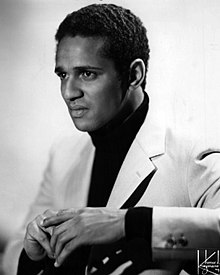
Another one of the greats, Cecil Taylor, is gone. He passed away on April 5. As longtime J's Theater readers know, I've posted about Taylor many times, including on his 86th birthday, back in 2015; when he appeared on NPR back in 2012 (along with my poem about him and his music, "Dark to Themselves," which appeared in Jazz Poems, edited by Kevin Young); my afternoon in 2007 watching the marvelous documentary Imagine the Sound with Northwestern colleagues Kevin Bell and Ed Roberson; back in 2005, on his 75th birthday; and again in 2005, when I saw him perform live at the Blue Note, in Manhattan ("Apraxia, apraxia, apraxia!"). (I wanted to meet him then but only got a glimpse of him peering out through the crack in his green room door.)

I described how he opened the performance like this (the Keith I mention is Keith Obadike, who was there with his wife and fellow artist Mendi, as were Christopher Stackhouse, his partner Kelly Kivland, and a friend of theirs named Lute):

Taylor, as Reggie H. and others have described, entered dramatically, this time in his striped socks after his bassist and drummer had opened the set as a duo, Balgochian doing some interesting moanful bow-work with the lowest portion and register of his bass strings. Then he extracted a handwritten score/graph/chart, which I assume, in my gross musical ignorance, contained the melodic kernel he was going to develop and improvise off of, as well as some harmonic guides and cues, some text and the gods know what else (scribbles? quotes?), CT proceeded to recite an opening poem that riffed off "Chinampas 1," which I listened to again today. Then he and the trio launched into this long and furious set. Afterwards I told Mendi and Keith that it reminded me of a player piano that had caught the Spirit (and spirits) and was revved up by multiple motors. Keith put it more succinctly: "A player piano speaking tongues." Krall, who appears on CT sessions from around 1996 forward, seemed to flow well with CT, sometimes pacing, other times mirroring, other times chasing CT's polymetric races along the keyboard, but Balgochian sometimes seemed out of sync as if he couldn't catch up or missed some of his cues (sometimes his expression betrayed this) or just wasn't up for it, though he gave it a valiant effort. He did know enough to stop on a dime, like Krall, when CT (maybe giving a visual cue) ended the pieces.


Reading some of the obituaries of Taylor, I appreciated how they captured differing facets of who he was and what he accomplished. He was, as the 2005 performance demonstrated, at his very core a poet--experimental, searching, daring, profound, uncompromising, his medium and grammar extending from words into space, and onto the keyboard, via notes themselves. Sound and time were his true media. Pushing the evolving jazz conventions from the very beginning, Taylor kept developing and trying out new possibilities, individually and with ensembles. A native of Queens, he deftly combined a wide array of influences, drawing from the blues, other African-American, Euro-American and European sources--he studied at the New York College of Music and the New England Conservatory--to an often sublime invention, and though one could draw throughlines from his early career to the works of the last few year, Taylor almost never repeated himself.

Among the musicians Taylor recorded with are innumerable greats: Earl Griffith, Steve Lacy, Buell Neidlinger (who passed earlier this year), Sunny Murray (who passed late last year), John Coltrane, Gil Evans, Jimmy Lyons, Andrew Cyrille, Mary Lou Williams (!), Max Roach, Dewey Redman, Elvin Jones, and Peter Brötzmann. He also performed with dancers, including Min Tanaka and Mikhail Baryshnikov. Taylor's detractors, including Miles Davis (another great innovator) and Branford Marsalis, were legion, but so were his admirers, including former President Jimmy Carter, who invited him to perform at the White House. (Just imagine the current resident even vaguely considering such a thing.) One of my favorite albums of his is Great Paris Concert of 1966, which includes the masterpieces "Student Studies (Part 1)," "Student Studies (Part 2)," and "Niggle Feuigle." I also love his late-career trio recording with Dewey Redman and Elvin Jones, Momentum Space, particularly the songs "Is," "It," and "Spooning." One commemoration I especially appreciated was Jason Moran's discussion of Taylor's artistry, and how it took him years to grasp what Taylor was up to.

Cecil Taylor was outed by the critic Stanley Crouch, and became one of the most high-profile gay figures in jazz, though he sidestepped that term while remaining unapologetically himself. His oeuvre, I would argue, queered jazz as we know it, and its influence continues to ripple out in instrumentalists who may or may not appear to have any direct ties to him. Taylor's relationship to his blackness was solid and complex, and was a topic about which he could be combative, as when, back in 1964 while participating in a "Jazz Weekend" at Bennington College, he defined  what jazz was and could be, avowing its roots in African-American life, culture and experience, to the displeasure of some on a panel discussion and in the crowd. In 2013, he received the prestigious Kyoto Prize; the Inamori Foundation, the award's grantor, praised his life's work, though "free jazz" only scratches the surface:
One of the most original pianists in the history of free jazz, Mr. Cecil Taylor has developed his innovative improvisation departing from conventional idioms through distinctive musical constructions and percussive renditions, thereby opening new possibilities in jazz. His unsurpassed virtuosity and strong will inject an intense, vital force into his music, which has exerted a profound influence on a broad range of musical genres.
A contractor he had befriended stole nearly the entire amount, before being caught, tried and convicted.

A few videos about Taylor, including one of my favorites, "Les grandes répétitions":

"Les grandes répétitions"

A fragment from Ron Mann's Imagine the Sound

Interview, from the Snapshots Foundation (full interviews here)

Cecil Taylor performing at Ornette Coleman's memorial, in 2015

Dark to Themselves

As I concluded in my poem tribute, "Their ears are still learning." 

Saturday, February 10, 2018

The Music of Florence Price

Florence Price
The treasures of the past may seem lost, but often enough, they are merely forgotten, or hidden. Such is the case with the music of Florence Price (1887-1953), an African-American composer whose work has never entered the mainstream canon, but which was very much in the current of the classical music of her time. In 1933, the Chicago Symphony Orchestra performer her "Symphony in E," making her black woman to have her work performed by a US symphony orchestra. Yet, as Micaela Baranello reminds readers in today's New York Times, Price probably never receive a reply to her repeated requests for consideration from Serge Koussevitzky, the famous conductor of the Boston Symphony Orchestra and champion of new music, who commissioned or premiered works by the likes of Alexander Scriabin, Maurice Ravel, Paul Hindemith, Igor Stravinsky, Albert Roussel, Bela Bártok, and Leonard Bernstein, just to name a few.

All were white men; Price did not register on Koussevitzky's radar, nor on that of many other major conductors. Baranello states, however, that she was well known among the major African American intellectuals of her era, corresponding with W. E. B. DuBois, among others. She also set poems by Langston Hughes and Paul Lawrence Dunbar to music. Price's background, in fact, primed her for success as a member of DuBois's "Talented 10th." Born the daughter of a prominent dentist in Little Rock, Arkansas, she showed musical talent early on, and enrolled in the New England Conservatory at the age of 14. Because of the widespread racism of that era, she passed as non-black person, claiming that she was from Pueblo, Mexico, and studied with the head of the NEC, the famed composer George W. Chadwick.

Yet numerous struggles marked her life from this point forward. Eventually she settled in Chicago, where she continued her studies in music and other disciplines at a number of institutions, including the University of Chicago and the Chicago College of Music (now a division of Roosevelt University), and, after a divorce, raised her two daughters as a single mother and worked as an organist for silent movies and under a pseudonym, wrote advertising jingles for radio. In addition to pieces she composed on her own, she also collaborated frequently with her former student, fellow composer and pianist, and frequent collaborator Margaret Bonds. It was a first prize win and public recognition for her Symphony in E in the 1932 Wanamaker Foundation Awards that led to conductor Frederick Stock's premiere the subsequent year of her orchestral piece.

Though Price's music did receive performances during her lifetime, including Marion Anderson's delivery, at her landmark 1939 concert at the Lincoln Memorial, of Price's arrangement of spiritual "My Soul's Been Anchored in De Lord," in the years after her death from a stroke, a good deal of her work was thought to have been lost. In 2009, as critic Alex Ross relates in his recent New Yorker discussion of Price's life and work, homeowners Vicki and Darrell Gatwood found a cache of her manuscripts in what was her former summer house, in St. Anne, Illinois, outside Chicago. This has led to a mini-resurgence in interest in Price's work, including new recordings and performances, among them Janacek Philharmonic's  premiere recording of her First Violin Concerto, with University of Arkansas professor and violinist Er-Gene Kahng as soloist.

Price's oeuvre draws from a number of aesthetic springs, chief among black spiritual and vernacular music traditions, as well as American and European early 20th century Modernism. Her Second Violin Concerto "reflects the richly chromatic language of [American] composers like William Schuman and Roy Harris," and, as musicologist Douglas Shadle recently learned, she even studied with Harris briefly in 1940. To quote Baranello:
Marquese Carter, a doctoral student at Indiana University who specializes in Price’s work, said in an interview that she “uses the organizing material of spirituals. You may not hear direct quotation, but you will hear playing around with pentatonicism, playing around with call and response, some of these organizing principles that African-American scholars like Amiri Baraka have pointed out as indicative of black musical discourse.”

“Florence Price is a representation in music of what it means to be a black artist living within a white canon and trying to work within the classical realm,” Mr. Carter added. “How do we, through that, create a sound that sounds our culture, sounds our experience, sounds our embodied lives?” 
***
“Everything she was doing was musically mainstream but at the same time idiosyncratic,” he said. “Her music has kind of a luminous quality that strikes me as her own. Our understanding of American modernism of the 1930s and 1940s is not complete without Price’s contribution.”

Price's compositions are numerous, and despite recent interest, the question remains: who will perform, let alone premiere, many of these works? Baranello argues, and I agree, that if US symphony orchestras are serious about diversifying not just their audiences but their repertoires, composers like Price and Bonds--and María Teresa Carreño García, William Grant Still, R. N. Dett, Adolphus Hailstork, Anthony Davis, Tania León, and many others--offer a direct and corrective option. According to Baranello, the Fort Smith Symphony plans to record all four of her symphonies for Naxos, but far more orchestras need to step up, now and in the future. Yesterday, NPR featured Price's Violin Concerto No. 2 on its "Songs We Love" page.

Here are YouTube links to Florence Price's music:


Excerpts from Florence Price, Violin Concerto No. 2 (1952), dedicated to Minnie Cedargreen Jernberg, excerpts with the Janacek Philharmonic Orchestra, Er-Gene Kahng, violin, Ryan Cockerham, conductor


Karen Walwyn, piano, New Black Music Repertory Ensemble, Leslie B. Dunner, conductor, from Albany TROY1295


New Black Repertory Ensemble, Leslie B. Dunner, conductor


Night by Florence Price, Amy Petrongelli, soprano, Blair Salter, piano, Kerrytown Concert House, Ann Arbor, MI

Wednesday, March 25, 2015

Happy 86th Birthday & Cecil Taylor à Paris

Cecil Taylor
Today is pianist and composer Cecil Taylor's 86th birthday. One of the true originals of late 20th century American music, a pioneer in free jazz and a master in exploring the intersections between improvisation and notated European classical traditions, Taylor has been sparking admiration and dissent since founding his own band in the mid-1950s. Some years ago on this blog I wrote a short review of hearing him live at the Blue Note. On YouTube there are numerous videos of Taylor playing away, and several documentaries or trailers about, as well as interviews with him.

One of my favorites is Cecil Taylor à Paris: De l'autre côté du chemin de fer (mislabeled Les grandes répetitions 1968 on Youtube). This was one of five documentaries on contemporary music, under the title of Les grande répétitions, that were filmed for French TV in 1965 and 1966, and as the video shows, it was directed by Luc Ferrari and S. G. Patris, and produced by the great electronic musician Pierre Schaeffer. The short film features Taylor in several poetic, revelatory exchanges about his music and life, including some clever, controversial mythmaking by Taylor, bizarre clips by the filmmakers, and vibrant performances by Taylor's quartet, with Jimmy Lyons on saxophone, Alan Silva (misnamed Ron Silva in the credits) on bass, and Andrew Cyrille on drums.

Ferrari and Patris filmed the documentary shortly after Taylor had completed recording one of his greatest albums (and one of my favorites), Student Studies (The Great Paris Concert), and he and his combo are in exceptional form. Taylor's assured, percussive playing is especially thrilling, and it's clear that the excitement of the groove extends to all members of the combo, who rock the walls of their set in a room in the Place des Vosges, in Paris's Marais district.  I would have embedded the video but the original poster has removed that option, so please click on the title above to see the video, and here are some screen caps of Cecil Taylor and the film. Enjoy! 


Tuesday, December 04, 2012

Thomas Adès's The Tempest @ the Met


Thomas Adès The Tempest

Irony, or perhaps, uncanniness. Which is the apter characterization to invoke when noting that on a chilly but precipitation-free night the weekend before Tropical Storm Sandy, a real-world tempest, tore through the region, I went with a friend to see British composer Thomas Adès (1971-) conduct the Metropolitan Opera's performance, the New York premiere, of his second opera, The Tempest (2004)? The real tempest did foreclose any possibility of my writing a positive review of the piece right after seeing it, but it has not diminished my enthusiastic appraisal of Adès's mastery of and in this form. The opera, running about two hours and 40 or so minutes and a co-production that premiered at the Festival d'Opéra de Québec in July, is easily the best new work of its kind I have heard in many years, and in its richness and inventiveness of orchestral writing and assured dramatic and sonic presentation of the opera's core story, cements the composer's status as one of the chief contemporary heirs to Benjamin Britten, Britain's greatest modern operatic composer and one of the finest in the history of European art music.


Before the Met Opera's performance of The Tempest, by Thomas Adès
The Metropolitan Opera House, before the curtain rose


The Tempest, William Shakespeare's final play (1610-1611) and a staple of high school and college literature courses, is a strange, disturbing and beguiling work, perhaps a comedy in the oldest sense of the word, which has attracted many an interpreter and adaptor, among them composers, before. It has innate dramatic potential, its vivid, clear plot turning on revenge and romance, as well as the supernatural. It includes characters, like the magus Prospero, the deposed Duke of Milan; his daughter Miranda; the native servant Caliban; and the members of the intrigue-ridden, shipwrecked Milan court, including Prospero's duplicitous brother, Antonio; Alonso, the King of Naples; Naples' son, Ferdinand; and those Shakespearean staples, the fools, in this case the drunken butler Stefano and the jester, Trinculo. Any combination of these characters would make for an interesting operatic scenario, but Adès maintains them all, winnowing their interactions down for the purposes of the opera's momentum, and its music. What also is clear to any reader of the play is its wealth of ideas and themes, among them familial relationships and the nature and effects of power, the role and effects of art (especially if the latter is viewed as a kind of magic), parental love and domesticity, and, as Adès astutely brings to the fore, colonialism, which, as critic Paul Gilroy noted, speaking of the "Black Atlantic," is the corollary of Modernity, and which, as Sylvia Wynter among others noted, makes possible the very problematic conceptualizations of "man" and the "human" as we know them.


Audrey Luna as Ariel, at the opera's beginning
(Sarah Krulwich/New York Times)


One of the reasons Adès succeeds with his operatic version is because he is willing to do two things: compress the play into a manageable shape that retains nearly all of its key elements, and two, step away from Shakespeare's extraordinary language in favor of a more score-friendly libretto, by Meredith Oakes, which benefits his music even as the libretto itself falls short.  Rather than strictly follow the play's baggy act-by-act progression, Adès pares, writing three acts and seldom using exposition to explain or backtrack, so that the drama itself, which sharpens into view, rushes forward along with the music. Another reason The Tempest works so well is that Adès more severely etches the contours of each character, giving the opera a much more current feel. Prospero rages, in vengeance and intoxication, at least at first, with his power; Miranda is not just a defiant child but a feminist; the drunk and jester are really buffoonish; only Caliban has been softened and made more audience-friendly.  For my friend, who plays music and can read scores with ease but who confessed knowledge with English and American literature, especially Shakespeare, I had to explain a bit about what was going on at first, but by the second act he had figured figured out what Prospero was up to, who Ferdinand was and why his courtship of Miranda was so problematic, what Caliban's role was, and how the court of Naples ended up on the island. There is still a bit of description in the libretto, but between the visual imagery production chief Robert Lepage employs, vividly evoking the La Scala Opera House as well as the remote island where first Prospero and Miranda, and later, by Prospero's "art," the Neapolitan court find themselves grounded, and the clarity of roles and the music's own powers at narration, the story itself proves no hurdle.


Alan Oke as Caliban, emerging from the prompter's box
(Sarah Krulwich/New York Times)


My knowledge of musicological terminology is limited, so I will say only a little about the score itself. From what I could make out, Adès's idiom is tonal, but shot through with dissonances, especially in the first act, and richly textured so that it sounds anything but sweet or obvious, and very contemporary while also not breaking the ear. There is an enchantingly lyrical duet between Miranda and Ferdinand, and, my friend noted to me, a quintet passacaglia at the end of the third and final act, when Prospero blesses the coupling of his daughter and the King's son, releases Ariel, and agrees to return to Milan and forsake his powers. Adès associates each main character with a particular orchestral motif, though not as obviously, to my ear, as Richard Wagner, but enough such that a sense of continuity and recognitions develops. One that I was able to note was Antonio's, which struck me as bombastic, fittingly enough, for a character who betrays his brother for power, a title and monetary gain. Adès also sets the vocal line of Ariel (Audrey Luna), the enslaved water-spirit, at the upper-most reaches of a coloratura soprano's range, forcing the singer to produce near screech-like vocalizations that were akin to tuning into a frequency from another planet, in the best way. That Luna not only pulls off the singing but does so while climbing and hovering through the air (when her body double isn't doing so) makes her one of the performance's treasures. Especially strong are Simon Keenleyside, who debuted as Prospero in 2004 and reprises it here; Isabel Leonard, in a mezzo-soprano range, as Miranda; and Alan Oke as Caliban, dressed by Lepage as something truly monstrous, out of Where the Wild Things Are, but whose aching celebration of his matrimony (for it was his mother, Sycorax, buried under the sands, whom Shakespeare recalls), and his failed attempts to befriend and help Prospero break one's heart.


Audrey Lima as Ariel
(Sarah Krulwich/New York Times)


The libretto, however, was the opera's main--and only, as far as I could see it--flaw. I am not a libretto-mane and certainly, Oakes could hardly compete with Shakespeare under the best of circumstances, but her use of rhyming couplets with sometimes questionable prosody and slant rhymes became wearisome after a fashion. Perhaps I was already more attuned to the poetic rhythms than many listeners, but I found myself not only being able to predict what the concluding rhyme-word of each pair of sentences might be, but also having to block them out at times because they assumed an almost metronomic effect that was nowhere evident in Adès multilayered score. In some cases, such as Ariel's famous poem, the compression worked for the music's sake, but Shakespeare's own verse--and in the play, Ariel sings in verse--might have proved the better choice, not just to break up the monotony of the couplets, but because of the beauty of the playwright's language. I thought this might have been an option in several other places as well, such as at the play's end, where Prospero reverts to verse, of an exquisite sort, to declare the loss of his powers, and beg mercy of a power higher than himself: "As you from crimes would pardon'd be, / Let your indulgence set me free."


The cast taking its curtain call, with Adès at the center


Yet even taking the libretto into account, the opera marks a major success. I hope it returns, and if so, I will proselytize to get people to see it. I am no big fan of pre-20th century opera, and many other operaphiles I have come across cannot bear 20th and 21st century repertoire, but this is one opera I think quite a few people might enjoy. Adès, I also hope, will find the time and support to write another one before too long!


Saturday, May 19, 2012

50+ Years of Musicmaking: André Watts

Watts in 1971
Continuing the theme of invoking the great ones when they're still with us, I meant to post an entry on a true maestro, André Watts (1946-), who made his concert début with the New York Philharmonic 50 years ago this upcoming December when another maestro, Philharmonic conductor and composer Leonard Bernstein, invited the 16-year-old Watts to perform Franz Liszt's Piano Concerto No. 1 in E-flat at a Young People's Concert. The Philharmonic taped Watts's performance and broadcast it on CBS in January 15, 1963.  Right before the airing of the December concert, Bernstein again called upon Watts to spell an ill Glenn Gould, who was the scheduled soloist, for the Philharmonic's regular subscription series, and he again played the Liszt Concerto. So electrifying was his performance that not only the audience, but the entire orchestra gave him a standing ovation.  He has never looked back. Over the years he continued his musical studies, has performed all over the world, and now teaches at Indiana University's famed Jacobs School of Music. In 2011 President Barack Obama awarded him the National Medal of the Arts.

Watts today
Recently I listened to a podcast interview with him, from the National Endowment the Arts' Art Work Podcast series, in which he talked about his life and career, from his earliest years growing up in Europe as a son of a Hungarian mother and an African-American GI father, to how Bernstein selected him for that breakthrough Young People's Concert, to his love of certain musicians (Liszt especially) and lack of interest in others (Igor Stravinsky and Béla Bartók, two of my favorites), and much more.  Back in 1999, The Chicago Tribune featured a micro-interview with him, and it underlines what the NEA interview suggests, which is that he's got a buoyant sense of humor, doesn't take himself too seriously, and is grateful for all the success he's achieved, but is always pushing himself further. I'm also attaching some YouTube clips of Watts' setting the keyboard on fire. These are pieces I rarely listen to (I am much more a 20th and 21st century fan, J. S. Bach excepted, but played this well I can listen to them over and over.) Enjoy my fellow Gemini.

Non-embed: Watts performing the opening to Mendelssohn's Piano Concerto No. 1, in G-minor


André Watts performing Beethoven's Moonlight Sonata (video 1 of 2)

Watts performing Beethoven's Moonlight Sonata (video 2 of 2)

André Watts performing in Liszt's Sonato Tokyo

André Watts performing Scarlatti sonatas

Wednesday, January 04, 2012

Elliott Carter: Still Ticking-Tocking Away

Elliott Carter
Richard Termine/The NY Times

I'd wanted to post this almost exactly a month ago, when, on December 8, 2011, friends of the composer Elliott Carter (1908-) organized a concert on behalf of his imminent 103rd birthday (December 11) at New York's 92nd Street Y, but J's Theaters perhaps now know how such things go. At the concert, which Carter attended, the performers played a series of the composer's works, all of them written in recent years and, astonishingly, nine--NINE--written since he turned 100 in 2008. I find this just almost inconceivable, but Carter has been incredibly productive in his latter years, and continues to generate works that are not mere echoes or refinements of his earlier work, but which constitute significant efforts in themselves.  For those unfamiliar with Carter's music, which is, I know, not to everyone's taste--and which generates, like Arnold Schoenberg's music, wails even in advance of its hearing--his great insight and innovation was to create works in which individual instruments play their lines, at varying tempos, simultaneously, occasionally shifting into harmonies or counterpoint, only to speed or slow right back out of such. The effect is sometimes one of jarring stratification, at others of a lyrical, atonal strangeness that feels akin the soundworld around us.  Charles Ives, another major American composer whom Carter met when he was young, pioneered compositions along these lines, as have others, but Carter's unusual instrumental combinations, and his variety of tempos, pitches and stratified lines sound unlike anyone else's.

Carter's early works were in a neoclassical mode, but after the mid-century, as he was approaching the age of 50, he began writing work that sounded like serialism but which did not use serial techniques. A good example of this work is the breathtaking the Double Concerto for harpsichord, piano, and two chamber orchestras of 1959-61, in which the harpischord, with its chamber orchestra, and the piano with its own basically produce simultaneous concerti. It has to be listened to be believed (that harpsichord!). The first time I heard it, on a CD--because I have rarely been able to hear Carter's music live--I was spellbound by what sounded like incommensurable soundworlds being fused. Think of a somewhat inebriated Haydn playing his music alongside a contemporary orchestra, on a busy city street. Among his other notable works from this period are the Variations for Orchestra (1954-5), the Concerto for Orchestra (1969), based on a poem by the French Nobel laureate poet Saint-John Perse; the Piano Concerto (1964-65), written to honor the 85th birthday of Igor Stravinsky, whose influence on Carter's earliest music was significant; and the almost unbelievably immense Symphonia: Sum Fluxae Pretium Spei (1993-1996), written, as is evident from the dates, when he was in his 80s. Carter has set the music of a number of American poets, including William Carlos Williams, T. S. Eliot, e. e. cummings, Elizabeth Bishop, Robert Lowell, and John Ashbery to music, especially over the last three-and-a-half decades.

On the New York Review of Books blog, the critic and pianist Charles Rosen offers a fine reading of Carter's music in relation to its exploration of temporality (all music, of course, represents sounds articulated within a temporal framework), "Elliot Carter's Music of Time," and discusses the December 8, 2011 concert, as well as one that ensued a few days later at the Juillard School's Alice Tully Hall. There the new music ensemble Axiom (who on their Myspace page feature a free recording of one of my favorite classical pieces, Claude Debussy's Prélude à l'après-midi d'un faune) performed Carter's Three Explorations, which, according to Rosen, is a song cycle to lines from Eliot's Four Quartets. Rosen highlights what he feels were the more successful pieces and performances, the overall appraisal a positive one; the New York Times's Anthony Tommasini gave the concert a positive review as well.  The 92nd St. Y's site posted videos of Carter talking about his life and work.  The NYRB site features a link to a snippets of the pieces performed at the Y as well as of Three Explorations; all are worth listening to. I am including a few Elliott Carter videos below for any who are curious. I personally hope to hear Carter's music live before he departs this earthly plane, but let me say in any case, Belated Happy 103rd Birthday, Eliott Carter.

Saturday, November 19, 2011

The Music of Roberto Sierra

Roberto Sierra
Earlier this year I came across a contemporary classical music composer whose music I wasn't previously familiar with but which I've been returning to of late, Roberto Sierra (1953-).  Born in 1953 in Vega Baja, Puerto Rico, Sierra studied composition in Puerto Rico and in Europe, including at the Hochschule für Musik in Hamburg with György Ligeti. Sierra has since gone on to compose in a range of forms, including opera (El mensajero de plata), works for full orchestra (Missa Latina, Júbilo, Sinfonias 1-4, Concierto Barroco), chamber orchestra (Doce Bagatelas for String Orchestra, El éxtasis de Santa Teresa for soprano and Chamber Orchestra), chamber pieces (Flower Pieces, Concierto de Cámera), and works for solo performers (Ritmorro for clarinet, Bongo O for bongo), and orchestras all over the world have both played and commissioned his music.

His Missa Latina, premiering in 2006 at the Kennedy Center in Washington, DC, with Leonard Slatkin conducting the National Symphony Orchestra, garnered tremendous praise, and he's received a range of awards, including the 2004 Kenneth Davenport Competition for Orchestral Works, for his Sinfonia No. 1, commissioned by the St. Paul Chamber Orchestra, and Albany Records received the Serge and Olga Koussevitzky International Recording Award (KIRA), for its recording of his Sinfonia No. 3, "La Salsa."  I like the way Sierra's music synthesizes many different influences, ranging from the Spanish, Indian and African of his native Puerto Rico, to contemporary Spanish and European, and American art music, to jazz. In the Sinfonia No. 3, "La Salsa," or the Fandangos, one can hear links with popular Puerto Rican and Caribbean music, and the musical currents of predecessors like Joaquín Rodrigo, Isaac Albéniz and Enrique Granados. He wrote several of his most recent compositions, the Concerto for Saxophones and Orchestra and Caribbean Rhapsody, for the saxophonist James Carter. Like nearly all classical composers these days, he also teaches, and is professor of music at Cornell University.

You can find Sierra's music on labels such as Naxos, EMI, New World Records, Albany Records, Koch, New Albion, Koss Classics, BMG, Fleur de Son, and others. I often listen to the few offerings directly available on the Naxos site, which I subscribe to, and have purchased some of his CDs and selected works from iTunes too. Most are available on the iTunes store. If you are a practicing musician and want to play his works, you can get them directly from Subito Music Publishing, G. Schirmer, or Editions Orphee depending upon the piece.

Here are a few videos from YouTube featuring excerpts of Sierra's work. Enjoy!


Piano Trio #3, 4th movement, played by Trio Arbós
Mambo 7/16, played by Cuarteto Latinoamericano

Concierto Barroco (part 2), guitar soloist, Rémi Barrette, with orchestra

Tumbao, from Sinfonia No. 3, "La salsa," performed by the Eastman Wind Ensemble
Fandangos (excerpt), Robert Franz, conductor, Mansfield Symphony

Flower Pieces (excerpts), Valerie Potter, flute, and Anne Eisfeller, harp
Concierto de Cámera (premiere), Imani Winds, Miami String Quartet

Bongo o

Monday, May 16, 2005

Modernism & the Classical Music Audience

This past week a colleague, who's primarily a literary scholar, and I were discussing the persistant aesthetic conservativism we encounter in many quarters around these parts (though usually not among students, who despite their training tend to devour things they haven't seen before, whether it's the fiction of Samuel Delany or the poetry of Sianne Ngai). We both expressed frustration with the recalcitrance towards change or openness that we've butted against, and have concurred that in addition, other factors such as racism and ethnocentrism (the inexcusable failure, in 2005, to select any non-white authors for a contemporary novel-writing course, for example), homophobia, class issues (only works about the middle and upper classes are chosen, etc.), are still too operative. In fact, some of the people we were discussing wanted to act as though entire whole traditions of Anglo-American writing, from Sterne through the post-Language school of authors, had never existed. Even modernism as a practice informing the present is a problem for them, though specific works by the canonical Modernists (Eliot, Joyce, Stevens, Moore, Woolf, Faulkner, Hemingway, etc.), especially the males, interestingly enough, are less so.


In thinking about our discussion, I recalled composer and critic Greg Sandow's very thoughtful and thought-provoking March entry on Arts Journal, titled "Modernism (Sigh)," which looked at the strong resistance among the mainstream American "classical music world" to what he calls "modernism" in Euro-American classical (or art) music. His specific point of reference was the ongoing negative response, among some American critics, audiences and many orchestras, to the 12-tone or dodecaphonic, and subsequent serial methods of composition of the Second (or New) Viennese School, comprising the composer Arnold Schoenberg (1874-1951; pictured at right, in a self-portrait from 1911) and his pupils Alban Berg (1885-1935) and Anton von Webern (1883-1945), which made its first appearance in the post-World War I period. (Schoenberg had previously broken major ground first with densely harmonic pieces that pressed the tonal system to the breaking point, and followed these with a series of expressionistic, increasingly revolutionary works between 1905 and the outbreak of the war). I emphasize American, because a number of European orchestras do play these composers' and their successors' works; conductor and composer Pierre Boulez, whom I've previously written about, founded the Ensemble Contemporain in part to perform and record such music.

Though I'm not a musicologist, I believe you could also quite easily make the argument that, in addition to 12-tone composition, a number of other innovative developments, such as those pioneered prior to the Second Viennese school by Liszt, Wagner, Dvorak, Mahler and Scriabin, and contemporaneously with 12-note composition by Debussy, Bartók, Stravinsky, Ives, Satie, Varèse, Weill, Schulhoff, Villa-Lobos, as well as others within this Euro-American classical matrix, and certainly outside it, in musics traditions and genres that informed some of these innovations, such as ragtime, jazz, blues, and a range of other Western and non-Western musics and forms, and so on, also constitute versions or expressions of what we could label "modernism" or even "Modernism." Some of these "modernisms," particularly the ones falling into variations on traditional tonality, have entered the canon, but others linger on the periphery. None of them excites the passionate rage, though, among critics and, supposedly among the mainstream of concertgoers, of the Schoenberg school and its defenders.

What provoked Sandow's piece in particular--and he has written quite sympathetically, I think, on Schoenberg's music--was a San Francisco Chronicle commentary, "Modernist Music Masters Flail Their Batons at Evil Music Critics," by Josh Kosman, on a New York Times interview, titled "Schoenberg, Bach and Us," that reporter Daniel Wakin conducted with the acclaimed Metropolitan Opera and Boston Symphony Orchestra conductor James Levine, and two leading and highly lauded composers, John Harbison, and Charles Wuorinen. Wakin wanted the trio to chat about the state of contemporary music and their respective musical visions on the eve of a Levine/BSO performance at Carnegie Hall of new works by each composer. The interviewer framed the state of contemporary Euro-American classical music as still being riven by a division between tonal composers and serialists, which was certainly reductive (since such an ahistorical reading leaves out whole swathes of composers and reinscribes a dichotomy that was challenged decades ago) but if provocation was the aim, it did its job.

Levine, one of the major contemporary enthusiasts of the Second Viennese School and its offshoots, and Wuorinen, an avowed and uncompromising serialist, defended their purview in a dismissive, obscurantist fashion, in part blaming the audience for the failure of certain kinds of serialist and avant-garde composers and works to enter the standard repertoire, while also framing the composer-audience relation as quasi-sacerdotal. On the other hand, MIT professor Harbison, in my opinion, sort of muddled along. Though cast as a tonalist, he has used dissonant harmonies (cf. his opera The Great Gatsby, which I saw at the Met) and occasional serialism as well, so he could have emphasized the crossing of these two contrasting strands, which in any case first appear already in Berg's music from the 1920s (cf. his operas Wozzeck and Lulu).

Sandow, following Kosman's lead, compared popular acceptance and assimilation of modernist and even post-modernist developments in other artistic genres--and he cited the Abstract Expressionist painters--such as visual art, literature, dance, drama, film, and architecture to the classical musical audience's resistance to the work of Wuorinen and others championed by Levine, like innovative American composer Elliott Carter (who nears his 100th birthday). His reasons were:
  • "First...music takes more commitment than visual arts." That is, you don't have to sit for hours in front of a Pollock painting, you can just zip into a gallery and race through it. But what kind of "commitment" does he mean? Temporal? Sensory? Cognitive? Adrian Piper says in one of her essays that she likes to stare for a long time at a visual work of art, as an experience in and of itself, as well as a means to understanding and interpreting it. And Piper, in a somewhat Deweyan turn, is right--to experience Pollock truly, you do have to do more than glance and run. Sandow's argument also doesn't take into account that nowadays you can now listen to snippets of Schoenberg's or anyone else's music in digital form, and "ignore the rest." In fact, because of the resistance of orchestras to playing a lot of this music, you now have few options for hearing much of it except in album or CD or purely digital form.
  • "Second, music depends on performance." This is an excellent point, though even in Schoenberg's day, performances and options for hearing his and his adepts works were just as scant and at times so awful that listeners had no chance of hearing what he had actually written. (When they did, they sometimes rioted.) It helped Mahler that he conducted some of own music and had excellent interpreters; Webern also was a talented conductor of his fellow composers. In any case, poor or shoddy performances or highly idiosyncratic ones may throw a listener off. Sandow states that the audience may pick up on "something tentative" in such manglings of some of the more difficult works (though one could also quip "How would they know the difference"?), especially if the orchestra is still in its learning stages. He thinks that an orchestra probably wouldn't do so with the works of Beethoven or Shostakovich, though the truth is that an incompetent orchestra can butcher anything, and this is 2005, not 1955. Orchestras, and musicians themselves, have had half a century to encounter such works--"modern" in such parlance refers to rather old artifacts now, and "new" and "contemporary" classical or art music is in some cases quite different. Do audiences regularly hear the major orchestras performing even the newest, highly tonal work that's out? Not on your life. When Charlie Parker and Dizzy Gillespie first began pioneering in bebop, or Thelonious Monk began his pianistic experiments, or even later with John Coltrane, Cecil Taylor and Albert Ayler, such music struck many as difficult and strange, though now performers have a much better handle on what these geniuses were up to and can replicated it if they want to (though Wynton Marsalis doesn't touch the latter). A top pianist should be able to perform Schoenberg's Piano Concerto without a hitch, I would think; certainly there are very difficult scores, but 56 years after Schoenberg's death, is this score still that forbidding? I have heard it performed on CD by Brendel and Uchida, and both sparkled. Are they rarities and exceptions? Aren't there standard works that require more technical expertise? Can't musicians manage those? If so, I assume the same I would think would be true of Schoenberg and other experimentalists, though I am not that exactly cognization of how formal undergraduate and graduate musical performance education works, so I could be quite wrong.
  • "Third, music may be more encompassing -- and more emotional -- than visual art." Maybe this is true, and since I'm not a cognitive scientist, I admit my limits, but "encompassing" of what? One's spatiotemporal, cognitively ontological experience of the work? Empirically is this true? What about films or television, the latter of which at times generates brain wave functions that approach a trance-like or alternatively comatose state--isn't that about as encompassing as you can get? Aren't some classical compositions now frequently deployed as background music, achieving what Satie aspired to, musical "furniture"? Think about all the times you've heard not rock or pop or hiphop piped in a store, but Handel or Vivaldi. There must be emotional and affective responses, but are we "encompassed" any more than when a large painting hangs near or a TV movie is playing beside us as we're doing something else? On top of which, aren't some convenience stores actually playing the likes of Mozart to drive away loiterers? If Mozart is so, well, pleasant, how is this possible, except as a demonstration of the fallacy of universal appeal of certain types of music, and the issue of socialization. The thuglets and loiterers aren't reared hearing Mozart, Haydn, etc., but other kinds of music, and hearing this "beautiful" stuff blaring, in essence auditory bug spray, drives them away. Sandow underlines his point when he says it "hurts us more to listen" to certain works than to look at unfamiliar and potentially unpleasant paintings, but I'm not so sure--and in terms of cinema, well--people can really be unnerved, since film combines a number of other artistic genres, including music, into a continuously unfolding whole. The disorientation caused by a work like Repulsion or Eraserhead or Ichi the Killer, or the nausea-inducing dissonant music, swirling camera action, and blurred optics of the gay-bashing scene in Irreversible, like that film's horrifying 1o-minute brutal rape scene, outdo almost all unpleasant music I've heard, except perhaps some works of Milton Babbitt. But Mozart alone was enough for those kids. so....

  • "Fourth, the classical music audience may be notably conservative." I believe this is true, or perhaps it is true that the classical musical establishment, like most establishments, is conservative, and has more sway over a large number of its adherents. Sandow adds that they might be "preselected," and that "they tend to be people who aren't very interested in new directions in art," though I again am not so sure about this. Isn't this then an issue of socialization? If you're taught--with constant reinforcement--to enjoy certain kinds of art without experiencing other kinds, particularly in such a controlled environment as the classical musical world has become, aren't you more likely then to gravitate towards what is championed? With the destruction of public musical education, many people have fewer options for learning to read music or appreciate it, and no sense of the history of Euro-American music, let alone other American musical forms, except as they're popularly received and marketed. On top of this, the constant bashing of Schoenberg and the refusal by many orchestras even to regularly program numerous composers (take your pick), including a long list of 20th century tonalists, also must play a role. (Reggie H. tells me that the TV show The West Wing recently got in its licks, though inexplicably against one of his earliest, beautiful, tonal compositions, the Verklärte Nacht (Transfigured Night), which is one of the few of his works in the repertoire.) Do these conservative audiences freak out when they hear William Grant Still? Roy Harris? Marc Blitzstein? Amy Beach? Walter Piston? Alan Hovhannes? Ralph Shapey? In fact, a number of these orchestras appear stuck in a pre-1900 mode, which is bizarre and one of the reasons many are in trouble. No other artforms have stopped a century ago, particularly in the United States (think again of the numerous developments in American film, dance, literature, architecture, etc.) and, in fact, neither has what we now label classical music, though you'd never know it if you studied subscription series.

  • Kosman and Sandow both posit that there may be cognitive auditory aspects to why this music hasn't "caught on," and perhaps they're correct. 12-note music challenges the auditory system's expectations--it is, in a sense, artificial or unnatural. But some of it parallels tonal music quite well, and then there is the case of works that mix the two and other kinds of tonal systems, or in which the tonal performance approximates 12-note composition, as in Berg's early and stunning String Quartet. But let's also keep in mind that in some cases jazz, rock, ambient and other genres of music have assimilated some elements of polytonal, polychromatic, and even expressionistic pantonal music successfully, drawing new listeners, so ideally, it should be possible for the classical music crowd also to adapt, unless it is that case that many simply don't want to go beyond the boundaries of what the establishment and they view as "classical."
    still
    Kosman and Sandow also both point to Schoenberg's infamous argument that his discoveries (which, incidently, Joseph Matthias Hauer also settled on around the same time) represented the "future" of music. Actually, Schoenberg, who had an ego bigger than the Matterhorn, claimed that his 12-note method would secure the supremacy of German music for centuries! I think it's important to situate the man in his tumultuous time, a period of tremendous change, two world-shattering wars, and one of the worst regimes in the entire annals of humankind. We should also consider that he had Wagner as a fairly immediate model and Schopenhauer in part on the brain, and, though he did not hesitate to leave Berlin at the first sign of overt racism and anti-Semitism from Hitler's government, had earlier want to secure his place in a system that essentially--this word is key--wanted to erase him and others like him from its ranks. The strangeness and disorientation of his music always conveys this to me, which may be in part why I like so much of it--there is always something dreadful churning up behind it, even at its most beautiful, and in some cases this is the subject of the works itself, as in the Erwartung. Furthermore, American orchestras play Wagner without hesitation despite his grossly anti-Semitic statements; they don't hesitate to program Strauss, who toadied up to Hitler as well, nor Orff, who remained in Germany too; few people take these composers' actions or words as the ultimate measure of them (though until recently Wagner's music wasn't performed in Israel), so why should Schoenberg's far less disturbing commentary not be historicized and contextualized as well?
    Vision of Christ
    The hubris of his American successors is another issue, which needs to be decoupled from his work. Their careerism, their attempts to create music that was more systematic than aesthetically pleasing, their pronouncements about their and their adherents' importance, and the network they created, deserve criticism, but this group should also be historicized and contextualized as well. They weren't operating in a political or social vacuum either. But it seems that many in the classical music world are unwilling to forgive some of these people just yet, and automatically start the blame game at Schoenberg's door. Yet it's not just the serialists, as I said above. There are as many mainstream tonal composers, some of whom I listed above, as serialists, who are not performed, so the argument about conservatism goes beyond aesthetics and cognition to something deeper and broader, which I believe is a fear about breaking outside the narrowly established boundaries of what the establishment deems important. In one of the most diverse nations on earth, with a diverse musical culture, this repertoire is excessively German and Austrian, and heavily slanted upon the early 20th century-heading-backwards. There are other composers--and I've mentioned some like Still or Nathaniel Dett or Rufus Hailstork, who are rarely performed, in part I think because they're black, and thus get overlooked or also don't meet the expectations of "black" music. And what about the paucity of performances of works by women? Or what about the other American traditions--I'm thinking of George Antheil, or Cage, Feldman, Wolff, etc., or the minimalists and post-minimalists and microtonalists, and on and on, who are performed far less than Haydn or Mendelssohn, or younger composers like Michael Torke and Thomas Adès, who is highly praised in his native Britain. What about Tan Dun, Tania Leon, Paquito D'Rivera? Philip Glass's work is both demanding and popular, yet concert halls aren't playing his appealing Violin Concerto or his best symphonies every season. I think it's fear, and it is probably going to spell the end of the classical system as we have known it, which might not be a bad thing.

    Sandow does declare that perhaps some artists will only draw a coterie. This has always been the case. People who don't really know that much about art are drawn immediately to Norman Rockwell, René Magritte, Salvador Dalí, and Andy Warhol, who about as different as artists can be. Yet the fan bases of Elie Nadelman or Jane Freilicher or Bob Thompson, I would imagine, are much smaller. Look at Christo and Jeanne-Claude: they draw millions, while other artists, for a variety of reasons, simply don't gain a lot of adherents at all. There is nothing wrong with this, and such things change too. Artists who drew condemnation, scorn, and few spectators in past years are now celebrated. It may never happen for the Schoenberg crowd, but then again, who knows? I would imagine that his Erwartung, despite its specific subject matter, mirrors quite well the topsy-turvy emotions many people feel, both here and overseas, at some of what is going on all around them. All those shrieks and yelps, shifting notes, and the unhinged quality of the drama--it's a hell of a lot more appropriate than Mozart's Jupiter Symphony.
    Leon
    Finally, I should add that once I went to a concert at Carnegie Hall with Byron M., a friend, composer and musician, to see a performance of Schoenberg's Gurrelieder, an extremely lush, late-Romantic work whose style the composer had already abandoned by the time it finally premiered in Vienna. Outside the concert hall, a guy was selling tickets--basically scalping them--for Schoenberg! I wouldn't have believed it if I hadn't seen it with my own eyes, but I did. The hall was packed, as at every performance of Schoenberg's music I've ever attended, including the Met's revival of Moses und Aron, his tough, astonishing, unfinished opera. Obviously there is an audience for this music that so exercises the likes of the New York Times' critics, and many concert subscribers. If the orchestras knew what was better for them, they'd be trying to reach more of the possible audiences out there instead of catering to an increasingly aging, and diminishing one.

    An addendum: In the New Statesman, Joseph Horowitz has written an interesting though cursory article, "A Culture of Performance," on the history of American classical music. He lays its demise at the doorstep of marketing culture, writing,

    "These culture consumers were sold a bill of goods - that all great music was old and European - by the "music appreciation" movement, a commercial enterprise whose chief exponents included David Sarnoff of the National Broadcasting Corporation (NBC). Notwithstanding the efforts of America's composers, of whom the most voluble was Aaron Copland, an avalanche of music appreciation bibles, recordings and broadcasts sidelined the quest for an indigenous musical voice earlier pursued by Ives, George Whitefield Chadwick (yet to be acknowledged as America's first symphonic nationalist) and (even earlier) Louis Moreau Gottschalk, with his saucy Caribbean delicacies."

    I'm not sure I buy all of this, but it is interesting. ("Caribbean delicacies"?) As far as an "indigenous musical voice," it's quite clear what that was...and is. Both Dvorak and Delius clearly saw its source: African America.