Showing posts with label book reviews. Show all posts

Tuesday, August 09, 2016

Counternarratives' TLS Trifecta + Cosmonauts Avenue Review

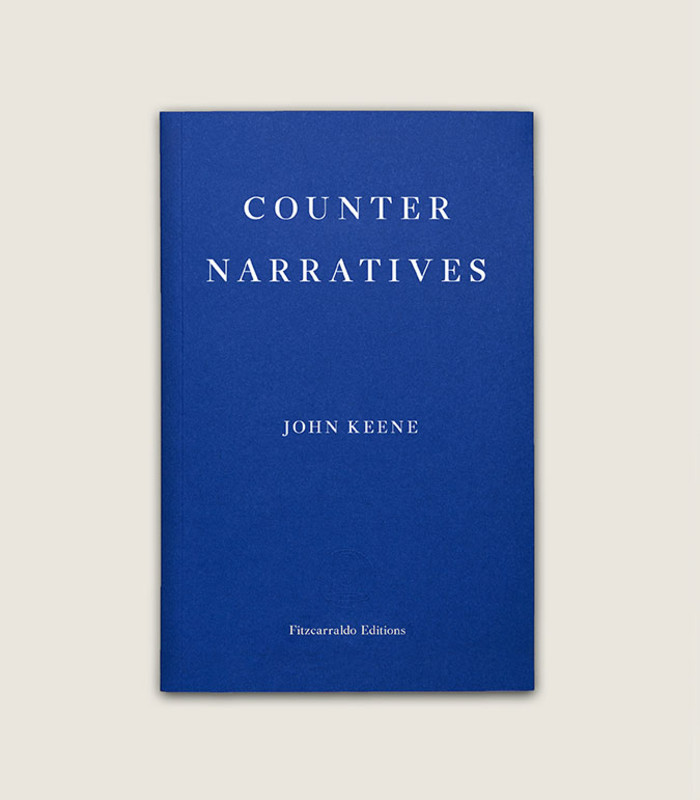
In its British version Counternarratives continues to earn reviews, and I am very happy to report a rare trifecta in the Times Literary Supplement. (I say this not to humblebrag but out of real astonishment; other than the Wall Street Journal, not a single major US newspaper save the Wall Street Journal reviewed Counternarratives, though thankfully many magazines, journals and independent reviews more than made up for the big press's silence.) To the TLS, I say thank you, and thanks again!

First, critic Kate Webb published the longest, most rhapsodic and perspicacious of the three, entitled "Exceed Every Limit." It was one of the best reviews the book has received so far. Here is one quote I particularly enjoy, as she identifies one of my key intellectual-genealogical through-lines, via the greats Edward Said and Paul Gilroy. She also teaches me a new word, "polytych":

As its title suggests, Counternarratives contains “writing back” of the kind Edward Said once proposed; its stories are imbued with potent dialectical energy, bringing to mind Paul Gilroy’s key idea of the “Black Atlantic as a counte­­r­­culture of modernity”. Keene is not simply an oppositional writer, however: in his richly detailed accounts of black lives through history, dividing lines are continually crossed. So there are escapologists and prophets, motifs of cultural appropriation, false consciousness, prohibited desire, illicit knowledge, forbidden artistry, and everywhere the struggle for transcendence. Counternarratives consists of thirteen individual fictions – some of flashing brevity, others the length and intricacy of a novella. Together they act like a polytych: each story has its own integrity but an underlying intellectual coherence allows the reader to intimate their author’s power and purpose, and to identify the arrival of a writer who, like one of his own characters, has “a will of lead and a satin tongue”.

Another very positive TLS notice came from fiction editor Toby Lichtig, who decided to create his own alternative Man Booker Prize longlist of the "top thirteen novels from the past year," and placing Counternarratives on it, with in the aim in part to include "a little bit more experimental writing" than this year's Man Booker Prize committee did. He mentions Kate Webb's review specifically in his comments:

Our [TLS] reviewer...was hugely impressed by this dazzling retelling of colonial history in the Americas, a "writing back" inspired by writers from Jean Rhys to Edward Said but achieved with a unique vision that is all the author's own. "We have", wrote Webb, "become accustomed in recent years to the revisionary spirit of much postcolonial fiction, but the ambition, erudition and epic sweep of John Keene’s remarkable new collection of stories, travelling from the beginnings of modernity to modernism, place it in a class of its own."

Lastly, as I mentioned a few posts ago, in TLS's suggested summer reading list, critic and author Ben Eastham placed it "at the summit" of his book stack, adding:

Keene is among the contemporary American writers pushing at the boundaries of fiction, his angry, exhilarating stories about race and American history another counter-example (if it were needed) to the lazy assumption that literary innovation should be confined to the ivory tower.
To Webb, Lichtig and Eastham, and to the TLS I offer my heartfelt thanks!

***

I am always surprised when people ask me if it is OK to conduct an interview, because until Counternarratives I had participated in so few, and I relish opportunities to answer questions, no matter how challenging, about my work.  For me these interviews are always conversations, and if they bring more readers to my writing or to that of the interviewer or interviewers, or to any of the people I mention in passing, so much the better.

One fruit of such a conversation recently appeared in Cosmonauts Avenue, which published a chat I had with one of my and our brilliant Rutgers-Newark MFA students, Soili Smith, who when she's not producing writing of impressive depth and philosophical heft, is supervising tree planting in British Columbia. It was a joy to speak with Soili, and I hope readers found something interesting in the interview, which actually covers some new ground, I think!

A long quote, about novellas--we can never have enough of that form, can we?:
SS: I know I’ve asked you about this before, but I want to discuss novellas. I find in the world of literary journals and magazines, especially in the age of prolific digital publication, the novella is becoming a bit of a dirty word. I’ve heard it said that some publishers find novellas unmarketable to broad audiences. Counternarratives contains a number of stories that the book itself claims as novellas. What do you think the place for the novella is in literature? What’s its importance in your book?

JK: That’s a great question. Obviously there’s a long tradition of novella writing. Some of the greatest works, including in American literature, could be considered novellas. And it’s so bizarre to me, at a time when people express, in every venue you can think of, how much of a premium their time is, that there is this resistance to a form that is, of course, bigger than a short story, but is shorter than a 400 page novel. I love novels, and even did a sort of unconventional thing by writing a condensed 81 page novel [Annotations, New Directions Paperback]. But with [Counternarratives], well I’ll say this: part of the reason there are novellas in this book is that I used to teach an undergraduate Creative Writing course at Northwestern in which we required—for the Fiction majors—that in the first half of the year they write three or four short stories that they revised, and then in the second half we had this insane but wonderful requirement that they write a novella. I used to tell people about this and they would say, John you’re making this up, because it’s so improbable. But the students did it! Year after year, and it was invigorating but also brutal, because when you’ve got fifteen to seventeen students writing novellas, you have to read all those novellas. And you don’t just have to read one draft, you read multiple drafts. There was one point where I taught this class and I really thought I was going blind. Later on I realized, okay, I’m asking these students to do this, I read novellas all the time, why don’t I try to do this? What is it to write a novella? And it was exhilarating. There are several in the book: “Our Lady of Sorrows,” I think “The Aeronauts” could be one, and then “A Letter on the Trials of the Counterreformation in New Lisbon.” I feel like what those do in the space of this book, is they kind of press the limits of form and contemporary American storytelling. Just as those very brief, almost poetic, lyrical pieces suggest the possibilities of condensation, the novellas demonstrate the possibilities of expansion. So without writing a full novel, what might you do with this form? What’s possible? Can we write an epic in short fiction? And because all of these stories speak to each other, you have the lyric brevity and narrative density and expansion in conversation in interesting ways. I highly encourage [novella writing], but I will say publishers in general, I mean New Directions does publish a certain number of novellas every year. Melville House does as well, and Nightboat Books too, just to name a few publishers, but in general, there is a real hesitancy about it, which I personally don’t understand. I think a lot of it has to do, again, with conventions in American literary life, publishing culture, commercial culture. If you look at a book like Seize the Day by Saul Bellow, which is a remarkable book, it’s hilarious, devastating, and it’s a novella. And Henry James wrote novellas. I mean…

Friday, October 09, 2015

Counternarratives on WNYC's/NPR's On the Media + The Nation & Konch Reviews


Three weeks back, through serendipity's hand, Counternarratives and its author made their way into the WNYC studios and onto the air, courtesy of On the Media host Brooke Gladstone, producer Kimmie Regler, and their amazing staff. Why do I lay this turn of fortune at serendipity? Because it was not the the usual route of a New York Times review (there hasn't been one) or a galvanizing PR campaign (none exists), but old-style independent bookstore advocacy by the exceptional people at Park Slope Community Bookstore. They sold--and championed--the book to Brooke Gladstone's husband, who in turn passed it onto her, and after she read it, and shared it with Kimmie Regler, they decided the book and I should be on the air.

What I had originally thought would be a hour-long session extended to over two, I believe, with Gladstone (about and to whom I had to kvell, as I am a longtime fan) posing a wide array of questions and inviting me to read (and re-read) selections from the book, including from "Our Lady of the Sorrows," the novella at the heart of the collection and a text I'd never read from publicly. Afterwards, Gladstone, Regler and their team went to work and cooked up a delicious, distilled confection that also drew in musician and host Terrance McKnight, who with his rich bass voice read the part of Jim (aka James Alton Rivers), from my story "Rivers," and included musical selections by Georges Bizet ("L'Arlesienne Suite No 1 (III. Minuet)"), Jim Taylor ("Little Rose Is Gone/Billy in the Lowground"); George Whitefield Chadwick ("String Quartet No. (II. Andante semplice)"), and John Scofield ("After the Facts").

The result: "Every Story Has a Twin."

You can hear the show here, and you can find the rush(ed) transcript here. I couldn't be happier with the beautiful work Gladstone, Regler, and the On the Media staff did, and it has been one of the best boosts the book has received thus far. Many thanks to everyone involved!

***

Of the many things about which I can express gratitude concerning Counternarratives, one is the steady stream of reviews, and excellent ones, that have appeared since the book's début in May. It feels, at least to me, almost inconceivable that nearly five months have passed since I got the official word from New Directions that Counternarratives was on bookstore shelves, and from shortly before its appearance the notices have flowed in. Two of the very best are the most recent. 

In esteemed progressive magazine The Nation, writer and critic Ben Ehrenreich recently provided an appraisal not only of the new book but of my first as well, in his review "Literature as Map to Liberty." This is without question one of the finest reviews I've received. A quote:

Counternarratives is no less ambitious or complex a work than Annotations, but it is considerably more approachable. Yet it is a book of such richness that it’s hard to know where to begin, so I’ll start with a moment—and there are many of these—where Keene’s text slides into another’s. This one occurs in a novella with the sly, unwieldy title “Gloss on a History of Roman Catholics in the Early American Republic, 1790–1825; or the Strange History of Our Lady of the Sorrows.” Like many of his stories, it’s quite epic for its length. It follows a young and variously gifted enslaved woman named Carmel as she accompanies her erstwhile master (mistress, really—a teenage girl holds title to her body) from Haiti in the throes of revolution to a Catholic convent school in Kentucky, which was then on the far western fringes of the young American Republic. Keene interrupts the narrative with several brief intertextual meditations on “the role of duty,” one of which leads with a quote from Gilles Deleuze and concludes with a question: “Within the context shaped by a musket barrel, is there any ethical responsibility besides silence, resistance and cunning?”

“To speak of culture,” Keene wrote in Annotations, “is to foreshadow a battle.” With Counternarratives, Keene is engaged, the battle roaring on several fronts at once. As in his previous book, there are missing texts at work in all these stories. This time, they are the reader’s assumptions and expectations, the dominant narratives—historical and political as well as strictly literary—with which we conjure the world and reproduce it, exclusions and erasures intact. Probably the most exemplary of them in that regard is “Rivers,” a tender and brutal tale in which Keene avenges a historic injustice, granting Mark Twain’s Jim the opportunity to narrate his own post-Huckleberry life. Tom Sawyer has aged into a less charming version of the glib sadist we always knew he was. Huck is broken and earnest and sad. And Jim, who has in freedom renamed himself James Alton Rivers, is something Twain never allowed him to be: a man of complexity and depth, with his own loves, tragedies, desires. Even here, Keene lets the telling be hinged on white hunger for a narrative in which Jim will always be pushed aside. The story is spurred by a—presumably white—reporter’s question about “the time you and that little boy…” Jim shushes him with a glance, annoyed because “this is supposed to be an interview about the war and my service in it”—at 46, Jim enlisted in the First Missouri Colored Troops and fought with them all the way to Texas. He seldom even thinks of Huck Finn anymore, “not even in dreams or nightmares.” I won’t give away the end, but you will never think of either Jim or Huck in quite the same way after reading it.

Another review, sidereal, if I may use that word, with an understanding as deep as a seismograph's needle, appeared in Konch Magazine, the journal that Ishmael Reed has been publishing for decades (the online archives, however, only go back to 2008). Reviewer, author and artist D. Scot Miller sussed out aspects of the collection that almost no other reviewers have mentioned. Here is a snippet:

And passage requires papers. Permits, letters, carte de visits, journals, diaries, and newspaper clippings give access, and decipher the cipher secreted within the stories. Mute Carmel creates specific languages for all she encounters, and draws maps as she secretly learns how to “make marks”, while Red learns how to mark time, creating a map of Civil War Washington D.C. in his head, but not free to walk its streets without his freedom papers. Jim Rivers has his in a water-proof metal locket laced around his neck when he bumps into “Mr. Tom Sawyer, Sir”, and the boy who tried to lead the fugitive slave deeper into the south years before in Rivers. It’s Rivers who gives a pass-key in the passage, “Have you ever noticed how on the decisive day the future reveal themselves as a ghost language and you got to do more than just pay attention but use all the knowledge and wisdom you have ever gained to interpret it?...the gleaming dressing the leaves with omens and auguries, printing clues in shadowed patterns in the grass and soil you just needed to discern if you could, because the real test is always to go beyond mere guessing to following the map the world around you sets forth.”

There are clues along the way, but they are coded in the ghost languages of history. A dedication to Samuel Delany invites the reader to seek, and find them through Möbius strips, through fractured text, peering between columns, or nestled between subtle breaks in type, notation, and marginalia. Keene posits history as a map of time, with language as the passage to freedom from time, through time. Time un-marked and un-timed, conjured by a multi-lingual tongue of a mix of Portuguese, Spanish, Haitian French, English, Pig Latin, German, and Arabic, like a poem from The Hallucinated City, containing neither rhyme nor meter, speaking what remains unsaid.

What is not being unsaid? The “unknown knowns” found in Langston Hughes’ "Blues" (“He slept like a rock/Or a man whose dead.”), the gentle caress between Carmel and Sophie, or Red and Horatio. Keene succeeds in “un-queering” history by queering historical text. Not so much re-writing it, as reclaiming it.
Many thanks to both reviewers and to The Nation and Konch!

Sunday, August 23, 2015

Checking In + Summer Notes about Counternarratives

The setting sun in St. Petersburg,
where I went for my niece's
wedding in July
The last few weeks ushered in an unexpected blogging hiatus. Between work on the house, C's birthday, end-of-August deadlines, and preparations for classes and my stint as chair, August has barreled forward, leaving my blogging here in the wake. So many national (the death of Sandra Bland in prison and other police-related deaths, the growing influence of the Black Lives Matter movement, the presidential campaign-circus, etc.) and international (the P5+1 Iran nuclear deal, the President's trip to Africa, etc.) news-making have occurred over the summer, and events continue to race by faster than I could ever cover or capture them, so rather than starting stubs as I used to do, to be completed down the road, I've mostly tweeted about them but haven't posted anything longer for lack of time or attention. I have long thought a better solution might be to post short entries, with just a few thoughts, perhaps with photos and links, and leave it at that. I may post longer entries when I can. I'll begin trying that this week.

***

Counternarratives continues to receive reviews, and thankfully very good ones. One of the finest came from the pen of a writer I deeply admire, Vincent Czyz, who also is an alumnus of Rutgers-Newark. Though I never had the opportunity to work with him while he was in the MFA program, we have developed an acquaintance based in part of aesthetic affinities that Samuel R. Delany pointed out in reference to our work. Vince's review, "Counternarratives--Stories About History's Metamorphosis," appears in Boston's Arts Fuse, an online arts magazine.

The tagline alone made me leap for joy: "What John Keene has given us in Counternarratives is fearless fiction." Here's a bit more (and he mentions the story "Anthropophagy," which explores a day in the life of Mário de Andrade, one of my Modernist heroes):

Among Keene’s priorities is language itself. While the notion of the invisible brushstroke became passé among painters more than a century ago, “transparent prose” — composed of disposable sentences designed simply to move characters through plots and meant to vanish in the reader’s consciousness as soon as they are read — still dominates short fiction. Keene, however, weights his sentences almost as though he were composing lines of verse. “The morning light” in “Anthropophagy,” for example, “is too bright to bear except in blinks, winks, the armor of fished-out-of-pocket spectacles.” Here is a striking passage from the same vignette: “ … the hours fall away, disappear, he lying on his side, in dreams or awake and a record cycles on the player, Debussy, Villa-Lobos, Pixinguinha, or a disc grooved from the recordings of catimbo from his journeys across the northeast, its sonorities drumming out a bridge between the present and the past …” And in “On Brazil” Keene offers this description of Portuguese soldiers lost in the jungle: “Sheer, green walls of trees that smothered the sunlight rose before them. An interminable carnival of beast and birds crisscrossed the canopies above, while insects spawned in the pens of Satan swarmed the ground beneath their feet.” The description is not only elegantly accomplished, it is specific in its reflection of the collective psyche of foreigners — of Christian invaders.

Two other recent reviews have appeared in the Michigan Quarterly Review and the Barnes & Noble Review. As with nearly all of them I don't know the reviewers and wasn't expecting to appear in either publication, but in both cases the reviewers grappled with the book, and offered some insights for potential readers to think about.

Eric McDowell's review, "Counternarratives: The Power of Narrative," in the Michigan Quarterly Review, is perspicacious in its exploration of the book's treatment of "narrative." To put it simply, he gets it. A quote:
What about writers and stories who keep us both thinking critically and, at the same time or by turns, drawn in empathetically? Consider John Keene’s recent and deeply rewarding collection out from New Directions, Counternarratives
The book’s title already asserts the power of some stories to push back, challenge, or yes, counter the harm done by other stories. Keene’s “Counternarratives” (and “Encounternarratives,” accounting for about half of the collection) themselves are often about competing, stratified orders—Portuguese and Dutch imperialists, indigenous inhabitants of the “new world,” slaves abducted from Africa, to draw only a few examples from the beginning of the book, which proceeds chronologically—and are set during times of political and personal upheaval. But rather than simply retell the history of the Americas that has already been handed to us by our school books, in a feat of defamiliarization Keene’s work strives to offer us new perspectives, new versions, new voices. Not only new, but needed: these stories help restore agency, depth, and dignity to figures formerly denied full representation—Jim from Huckleberry Finn (“Rivers”), say, or the acrobat silent and frozen in Edgar Degas’s famous painting (“Acrobatique”)—as well as to the anonymous victims of white systems of oppression and control.
In the Barnes & Noble Review, Christopher Byrd offers a different take, via my first book, Annotations (New Directions, 1995). As he points out, the scope of the works is different, and, I must add, the mediation of discourses is more overt in the new book, something he marks as emotional "distance" and "flatness." He also connected the book to contemporary societal crises, which I'm always glad to see reviewers do. A quote:
“The Aeronauts,” was the first story in the collection to win me over from the outset on account of the fact that the main character in portrayed in a number of different lights — calculating, randy, industrious, capable of speaking in different registers to different people — in other words, fully human. 
In “Acrobatique” — a wonderfully measured account of the black acrobat Olga “Miss LaLa” Kaira, who attracted the painterly eye of Degas — the artiste sums up her ambition:
I intend to spend every waking hour in the air, to soar with the brio of a sparrowhawk and glide with a sparrow’s ease and float, as Kaira [my partner] and I do, as the audience perches on the tips of their seats, with the lightness of two creatures who have fully emerged from the chrysalis, how I want to suspend the entire city of Paris or even France itself from my lips if I could achieve that, how I aim to exceed every limit placed upon me unless I place it there, because that is what I think of when I think of freedom, that I have gathered around me people who understand how to translate fear into possibility, who have no wings but fly beyond the most fantastical vision of the clouds . . .
One finds a similar sense of complicated interiority and self-possession in the book’s other stories which move further away from the all-consuming context of slavery — which, again, leaves the reader to wonder if that was the point of the suffocating flatness of the earlier stories.
Do check all the reviews out, many thanks to Vincent, to Eric McDowell and to Christopher Byrd, and many thanks also to former colleague Eula Biss, who mentioned Counternarratives as one of her summer reads on the National Book Critics Circle blog. A good word from Eula, one of the best out there, is golden.


Monday, May 11, 2015

Counternarratives News & Readings

With the new book,
at New Directions'
offices (selfie)
With the publication date just one week away, positive advance notice for Counternarratives thankfully continues to roll in. Last week, Vanity Fair (!) chose the collection for its "Springs Reads for Parks and Picnics" list. It is in excellent company, with new books by my former Northwestern colleague Aleksandar Hemon; the late authors of the novel that became Andrei Tarkovsky's film Stalker, Boris and Arkady Strugatsky; the highly regard fiction writer Jim Shepard; and Nell Zink, whose debut novel The Wallcreeper, from small indie publisher Dorothy Project, has been a sensation; and the extraordinary Anne Carson, whose Antigonick, a retelling of the Sophokles' Antigone, is being reissued in paperback with new illustrations.

Like the most recent review in Harper's, this brief one was laudatory, saying that
the latest work by John Keene, the award-winning novelist, poet, translator, and professor, has been accruing buzz for months. A book of “stories and novellas” that spans from the 17th century to present day, Keene’s ambitious, confident storytelling is matched by his complex, evocative, and compelling voice: in one story, Jim, a free man, and Huckleberry Finn re-unite; in 1920s New York, Langston Hughes and Xavier Villaurrutia, the Mexican poet, have an intriguing meeting; a slave escapes his captors during the American revolution. Keene finds inspiration in newspaper clippings, memoirs, and history, and anchors them in the eternal, universal, and mystical. 
To that I say: Thank you, Vanity Fair!

Also, at Library Journal Barbara Hoffert chose Counternarratives for its Spring/Summer list of "12 New Collections from Writers to Watch." Thanks, Library Journal!

Recent Readings


Photo by Jeff Beck
On March 24, at the invitation of poet, critic and Dean Dr. Jeffrey Beck, I read at Kean University, in Union, just down the road from Rutgers-Newark. I'd never been to Kean before, so I appreciated the opportunity to share my work there.  The reading brought out a good crowd, and afterwards Jeff led a Q&A that focused on many aspects not only of the story I read, "Cold," from Counternarratives, but on the collection and my prior published work.

His questions were thoughtful and provocative, as were those of the audience members, and made me think about elements of the stories and my work in general I had not extensively considered. The event was taped, so I hope the transcript will be publicly available. Many thanks to Jeff and to Kean University and the program's sponsors!

Photo by IRADAC
Last month, on April 29, I was invited to delivered the annual Audre Lorde/Essex Hemphill Memorial Lecture at the City University of New York Graduate Center, under the auspices of the Institute for Research on the African Diaspora in the Americas and the Caribbean (IRADAC).

Previous Lorde/Hemphill Memorial Lectures include Hortense Spillers, Cheryl Clarke, and Thomas Glave. After some introductory remarks (and a little competition from a raucous Rent Stabilization meeting in the auditorium next door), I read the story "Blues," in Counternarratives, which felt especially appropriate for the event.

Reading under the auspices of Audre Lorde and Essex Hemphill, two of my heroes--and I noted in my remarks that I had the incredible fortune to meet and interview Essex at the Dark Room House a few years before he passed away--was an honor I will always cherish. Many thanks to all who came out, thanks for the great post-reading questions and commentary, and deep thanks especially to Robert F. Reid-Pharr, director of IRADAC, for the invitation and his hosting, and to Zee Dempster, for ensuring that everything ran smoothly and her patience and kindness.

Upcoming Readings

On June 2, I'll be reading and in conversation with Jeffrey Renard Allen, at Community Bookstore in Brooklyn, at 7 pm, and on July 1, I'll be reading and in conversation with Christine Smallwood, New Books Editor at Harpers, at McNally Jackson Bookstore in SoHo.

On May 21, I'll be reading poetry with some of my favorite writers, Erica Doyle, Christopher Stackhouse, and Harmony Holiday, along with the 10-piece band King Holiday, as part of the Brooklyn Museum's "Art off the Wall: 'Decoding Basquiat'" event. This reading and musical performance accompany the Brooklyn Museum's Basquiat: The Unknown Notebooks exhibition, which runs until August 23, 2015. The events begin at 6:30 pm and run for three hours.

Friday, April 17, 2015

Hilst Translation Makes Longlist + New Counternarratives Review in Harper's

Hilda Hilst
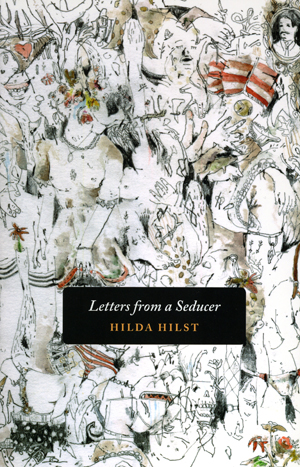
Last February Nightboat Books published my translation of Hilda Hilst's Letters from a Seducer (Nightboat Books), and despite its formal daring and thematic outrageousness (it contains an insatiable character named "Little Butthole," which should give you a clue about how wild it is), I have worried from time to time that it might fall into the literary publishing rabbit hole. So many books, and not so many translations, but without a champion a book can and may disappear. Any positive news about it, therefore, is welcome. It was extremely positively and welcome news to learn, then, that the book had made the Longlist for the 2015 Best Translated Book in Fiction Award, which is sponsored by the Center for translation at the University of Rochester. Many thanks to the Center, and especially to editor, curator and critic Daniel Medin, a member of the judges' panel, who has written and spoken favorably about the translation in the past and again for this award.

As part of the process of selection for the next stages, including the finalist list, which will be named on May 5, and the award, to be given out on May 25, judges present arguments, in a variety of formats, for why certain books deserve to advance and win. Daniel interviewed me about Letters, and you can read the entire exchange here. It isn't very long, and gives a brief overview of Hilst's work, including my favorite passage in Portuguese. (NB: A stray apostrophe crept into the word "wont," though I meant the older adjectival form, meaning "likely," not the contracted future verb form.) A snippet:
DM: Letters from a Seducer is a part of Hilst’s famous “pornographic tetralogy.” How are these works different from what she was had been doing before? What distinguishes Letters from the others? 
 JK: Let me begin by saying that all of Hilst’s prose fiction is experimental, from her initial fiction text, Fluxo-Floema (1970), on, and is informed by her prior primary focus as a poet and a playwright. (She continued writing poetry throughout her life, I should note.) Her earliest poetry, published in the 1950s, is fairly conventional, but by the 1960s you can detect subversive notes, experiments with earlier Lusophone (and Iberian) forms, etc., so that when she began writing prose, it was hardly surprising that she would not follow the standard route. Yet I think it’s fair to say that her fiction is distinctive even from parallel experiments that were happening in Brazilian literature at the time, as a comparison between her texts of the 1970s and those of her close friend, Lygia Fagundes Telles, one of the major fiction writers of Brazil and in the Portuguese language, will suggest. While a book like The Obscene Madame D (1982) does overtly treat sexual themes, in the “porno-chic” works, as she called them, she more openly and directly uses and plays with pornographic language and discourse, and the works themselves turn in part on themes that might be considered pornographic, except that Hilst’s artistry, irony and wit transform them into something quite different. Letters (1991) is the second novel and masterpiece of the four texts; one of them, Contos d’Escarnio: Textos Grotescos (1990) is a collection of stories; Bufólicas (1992) comprises poems; and O Caderno Rosa de Lory Lamby, or Lory Licky’s Pink Notebook (1990), as I think the brilliant translator Adam Morris dubbed it, is an extremely ludic, graphic precursor to Letters written in the voice of a child. (And possibly not publishable in the US, despite its relentless humor.) With Letters, Hilst reaches the pinnacle of the tetralogy and, I think, her art, fusing all the strands that have come before into a profound text about writing, living, sex, human mortality, and so on. It is also quite funny; she never sheds her humor, even at some of the most outrageous moments in the text, which is one of the things I really appreciate about her work.
Getting to the finalist stage and winning are both tremendous long shots, and the other long-list books represent exalted company, many by some of the best translators out there, of major living and deceased writers, but I am very happy that the book is getting some recognition, and if this brings more readers not just to this translation, but to the others, by Rachel Gontijo Araújo and Nathanaël, and to the one by Adam Morris, that will be a very good thing! Que fique mais da Hilst em inglês!

***

Miss La La at the Cirque
Fernando,
Edgar Degas, 1879
(National Gallery, London,
Oil on canvas.)
Reviews continue to come in for Counternarratives, and the most recent is the best by far. In the May 2015 Harper's Magazine, Christine Smallwood pens a thoroughgoing, engagingly thoughtful review of the book. (Her review unfortunately is only available for subscribers to Harper's, but it's in the newsstands now.) Framing the review with images of the Mississippi near Vicksburg, Mississippi, and Edgar Degas's famous 1879 painting Miss La La at the Cirque Fernando (the subject of my story "Acrobatique"), Smallwood begins with a discussion of Mark Twain's The Adventures of Huckleberry Finn and the homoerotics and racial dynamics of that text, noting its contemporary survival in the form of "bromances" (and, I'd add, the curdled buddy films that once starred Eddie Murphy and Danny Glover, and now feature Kevin Hart), as a way of shifting into a discussion of how my approach to Twain's text (and The Adventures of Tom Sawyer), "Rivers," like the rest of the collection, represents and embodies the concept of a counternarrative.

Smallwood writes, "John Keene takes aim at this sacred cow and shoots it straight in the hip," describing the story's plot and noting that this could have come off as "corny," but its execution transforms it into something else. (And I should note that I was a little nervous about taking on the Jim and Huckleberry story, and was surprised that almost no other black writers had done so--because it is so iconic? Because Twain's fame and reputation looms so large? Because it wasn't worth the time of doing so?--but also felt that imagining some aspects of Jim's life after that novel, a few glimpses, would be worth the risk.) She goes on offer the following beautiful assessment of the entire collection, for which I will forever be grateful: "Counternarratives is an extraordinary work of literature. Keene is a dense, intricate, magnificent writer," before going on to discuss my background a bit (though Christopher Stackhouse accidentally becomes "Charles") and more of the stories, even quoting several of them.

One quote:

In "The Aeronauts," for example, a Philadelphia freedman with an uncanny memory joins the Union Army Balloon Corps. The story ends with him in the balloon, feeling "something not quite fear and not quite elation, I can't put a name to it, I try to utter it but cannot." Naming it, Keene suggests, would only contain the moment, and make it less than what it is. His characters refuse to accept freedom that is given by others--they either take it by force or resist it altogether. In this way they are the avengers of Twain's Jim, who wasn't aware of his freedom until he had gone to great trouble to gain it a second time.

Again, many thanks to Harper's both for reviewing the book and for the superlative review, and I urge J's Theater readers to preorder a copy! The corrected galleys have been submitted, will be out now on May 21, 2015!

Monday, March 30, 2015

Counternarratives Reviews & PW Interview Posted

In a little over a month from now, my next book, Counternarratives, will be appear (the new cover is at right, featuring original arork by the vernacular artist Ike Morgan), and so far the early reviews have been strong. Two weeks ago Kirkus, which is known for fairly stringent reviews, gave the collection a strong review, and this past weekend Publishers Weekly gave the book an even better review, covering quite a lot of ground concisely and cogently.

Although I told New Directions after the PW review that I won't look at any more reviews (it's best to stop while you're ahead, no?), I do look forward to longer readings (that others can read and recount to me) that will explore the complex explorations of nationality, sexuality and religion that run throughout the text. I also hope someone will talk about the variations in style and voice, and the ways in which form and content are in conversation with each other.

I was happy that in this review that reviewer mentioned one of the stories that nearly didn't make it into the book, "Persons and Places," which I initially wrote as a piece of microfiction, and which is as much about form as content, in that in a very brief space it puts two of the important figures of the turn-of-century intellectual world, one now well canonized (W. E. B. Du Bois) and the other mostly forgotten (George Santayana) in brief but charged proximity. At first I thought it might be too brief to include (especially alongside several novellas), but I think it works on its own terms and as part of the larger whole.

I was very pleased too that PW's Yulia Greyman posed a few questions for me to answer; they're now live on the site under the title "Literary Mixtapes: PW Talks with John Keene" (March 27, 2015). Here's a glimpse of the opening page (many thanks to Gabe Habash at PW and to my college dean, Professor Jan Ellen Lewis, who forwarded links and .pdfs!). It was also delightful that she mentioned the "philosophical concerns" the book raises. Alongside all the action, mystery, and so on, there's a good deal of thinking going on!


Wednesday, March 18, 2015

Quote: William Deresiewicz

"With its subject and size, [Karl Ove Knausgaard's] My Struggle has invariably drawn comparisons to [Marcel] Proust’s [À laRecherche [du temps perdu], the great prose epic of the self remembered—comparisons the book itself does much to invite. But here are some things that the Recherche contains that Min Kamp does not: wit, satire, comedy, verbal and symbolic complexity, psychological penetration, sociological reach, the ability to render complicated situations, a genuine engagement with the subtleties of memory, the power to convey the slow unfolding of the self. And here is something that Proust did that Knausgaard did not: he took his time. The Recherche, only fractionally longer than Min Kamp, was labored at for thirteen years. About a page a day of finished prose appears to be the speed limit for a sustained work of competent literary fiction. You want to write shit? Write fast."
-- William Deresiewicz, "Why Has My Struggle Been Anointed a Literary Masterpiece," The Nation, June 24, 2014.

Tuesday, January 27, 2015

2 New Hilst Reviews: The Quarterly Conversation & Three Percent

Literary translation is, as anyone who engages in it knows, a labor of love. The financial rewards are minimal, and outside of the case of some highly regarded translators (Gregory Rabassa, Susan Jill Levine, etc.), many US readers may have no idea of who has translated the non-English works they deeply admire. Perhaps readers do recall that Chris Andrews and Natasha Wimmer have dazzlingly captured the richness of Roberto Bolaño, but can anyone who professes to love Karl Ove Knausgård's My Struggle, for example, name the translator(s) who transformed the six Norwegian volumes of his Min Kamp into English? It's therefore always heartening when a review notices the challenges and successes of a translation, particular with regard to a writer like Hilst who, as at least one critic has noted, was known to baffle even her fellow Brazilian readers.

In "In the Funnel of Infinity: Life Portraits by Hilda Hilst," which appears in The Quarterly Conversation, critic and translator Christine Craig reads and writes about all three of the extant English translations of Hilst's prose works: the first one to be published, the novel The Obscene Madame D., translated collaboratively by Rachel Gontijo Araújo and Nathanaël (Nightboat, 2012); the novella With My Dog Eyes by Hilda Hilst, translated by Adam Morris (Melville House Press, 2014); and Letters from a Seducer by Hilda Hilst, translated by me (Nightboat, 2014). While most of the joint reviews of these books have focused primarily on the first two, Craig, in her thorough and insightful analysis of Hilst's themes and ideas, devotes a number of paragraphs to Letters, and provides one of the best reading yet I've seen of what Hilst's work is doing.

Craig examines many of the thresholds Hilst's novels explore and exploit, beginning with the psychological torment caused by the divergence between the two halves of the human, the animal and the psychic/symbolic, that her avatar Ernest Becker, the dedicatee of With My Dog Eyes, investigated in his philosophically profound and psychologically invaluable anthropological studies, particularly The Denial of Death. As a symbolic creature with psychological and affective interiority, man is the animal that suffers from the knowledge of our eventual death, which can lead to mental illness, a perception that Hilst understood because of her personal history, and which she wove extensively into the fabric of her texts.

Craig goes on to assess Hilst's understanding of the line between meaningful and meaningless language, and her inverting of the idea of "saint[hood]" as something beyond human limits, "the symbolic equivalent of death," often marked by the disgusting. At one point, citing my mention of Deleuze and Guattari in the Music & Literature roundtable from last year, she expands upon the reference, via Brian Massumi's reading of Deleuze, in order to show how Hilst's fiction sits at the nexus between "transcendence (orgasm's explosion of possibilities)" and "immanentism (life's sad remainder: the abandoned fish)." To quote her:
In “The Autonomy of Affect,” Massumi describes it as the simultaneous point of emergence and vanishing of “the unclassifiable, the unassimilable, the never-yet felt, the felt for less than half a second, again for the first time—the new.”

In his own writing, Karl is plagued by a “crazy urge” to reproduce the fundamental language of Daniel Schreber as described in Memoirs of My Nervous Illness. It is, as Karl writes, the desire “to not make sense of some things, some words, of my own life.” In his memoirs, Schreber, a schizophrenic former judge, painstakingly explains, with ample footnotes, his own personal delusional system, according to which his body has been overwhelmed by “nerves of voluptuousness”—nerves which, according to Schreber, naturally occur on all surfaces of the female body but which, on the male body, remain concentrated in the genitals. The propagation of Schreber’s own nerves has effectively turned him female (“unmanned” him, as he writes). What’s more, his overabundant nerves are constantly under invasion by God’s penetrating “rays,” agitated into a state of insupportable vibration—the source of his “nervous illness.”

Schreber’s fundamental language, or nerve-language, in which Karl would aspire to write, is the vibratory language of euphemism and coded paradox through which God’s rays “speak” to Schreber’s nerves and against which Schreber’s only defense is not thinking, or more precisely, the cultivation of “not-thinking-of-anything-thoughts” through semantic satiation: he repeats words until they grow meaningless and his thoughts turn empty and mechanical. Schreber reasons that if he can cease thinking entirely he might trick God into believing him dead.
There is also this gem about my translation, though the credit does go to Hilst, whose lead I followed:

Letters from a Seducer brings us directly into the work of the two fictitious writers, Karl and Stamatius (“Tiu”). We first get to know Karl—depraved “aristocrat” and widely published author—through his love letters to a distant, cloistered sister, Cordelia, in which he speculates about her implied affair with their father, supposed to have occurred when they were both teenagers and both in love with him. Suffice it to say Karl has his doubts. Prove it, he says: “Prove to me you had in your hairy cavern the big paternal cock and curls.” Karl has a seemingly endless supply of sly, poetic euphemisms for his sister’s vagina, but his best is perhaps: “your purse, your poor pussy so without pursuers”—a turn of phrase for which translator John Keene (and not Karl) actually deserves our applause.
Madeleine LaRue, Associate Editor of Music and Literature, in her post "The Books I Haven't Forgotten, Or In Lieu of a Plot," on the January 25, 2015 weblog Three Percent, cogently and succinctly discusses four translated books from 2014, the first two from New York Review Books, Last Words from Montparnasse, by Qiu Miaojin, translated by Ari Larissa Heinrich, and The Woman Who Borrowed Memories: Selected Stories, by Tove Jansson, translated by Thomas Teal and Silvester Mazzarella; the third The Elusive Moth, by Ingrid Winterbach, translated by Iris Gouws, from Open Letters Press; and Hilst's Letters. All she recommends as worth reading, even though the site had previously not devoted a freestanding review to any of them. About Hilst's Letters she says:
And one more word on my most recent read: Like Last Words from Montmartre, Letters from a Seducer by Hilda Hilst (translated from the Portuguese by John Keene) is passionate and epistolary, but its tone couldn’t be more different. Letters from a Seducer is an irreverent catalogue of outrageous, theatrical sexualities. Hilst delights in breaking taboos and detailing fetishistic obsessions, making constant fun of phallocentrism and bourgeois sensibilities. But she does it with a good sense of humor and often great literary panache. (Translator John Keene deserves praise for the number of euphemisms he’s managed to generate for various body parts alone.) Behind the absurdity are also flashes of deep feeling, comical desperation in the face of writing, and these meditations lend Hilst’s short novel staying power as literature, and not only as (in the author’s own words) “brilliant pornography.”
I'll take the praise, and note that Hilst actually uses "euphemisms," or rather, quite striking metaphors, many of them in current use in contemporary Brazilian popular and vernacular idioms, and that those body parts--and sexual acts--appear with such profusion in the text that I sometimes had to duck just to get to the next sentence! Now doesn't that make you want to read it?

Wednesday, May 09, 2012

Book Reviews in Drunken Boat + The Chronicle Attack on Black Studies Grad Students

I often forget to post little things I've done or have been up to, but: the online (and print) journal Drunken Boat has published my review of two delightful books, Jorge Carrera Andrade's Micrograms (Wave Books, 2011), and Rosmarie Waldrop's Driven to Abstraction (New Directions, 2010). The reviews editor, poet Shira Dentz,  also asked last fall for five books I'm reading, so I imagine that'll post at some point soon. I'll just add that that I had no idea how important Carrera Andrade was to the history of 20th century Latin American letters, but it turns out he's a big deal, and Micrograms, translated by Alejandro Acosta and Joshua Beckman, is a superb introduction to his work.

+++

For a variety of reasons, not least because I am an affiliate faculty member of Northwestern University's extraordinary African American Studies Department and feel so close to its faculty and students I almost could not compose a calm response, I have held back on commenting on the vicious, ignorant, racist attack, in the pages of the Chronicle of Higher Education, on the dissertations of brilliant graduate students Ruth Hays, Keeanga-Yahmatta Taylor, and LaTasha Levy. Nevertheless a number of friends contacted me and pressed me to respond. As is widely known now, the attack followed a glowing piece, "Black Studies: Swaggering Into the Future," by Stacy Patton, which coincided with a conference, "A Beautiful Struggle: Transforming Black Studies in Shifting Political Landscapes--A Summit of Doctoral Programs," held at Northwestern on April 12-14, 2012, sponsored by Northwestern's African American Studies Department in conjunction with the Northwestern Graduate School. The packed conference brought together faculty, students and staff from the small number of American universities that offer Ph.D.-level studies in African American and African/Africana/Black Studies.

The conference was superlative, and brought people from all over the US. As my former dean, the distinguished sociologist Aldon Morris, told me with elation filling his smile, the Chronicle had positively written up  and even used the word "swagger" to describe African American Studies, underling what many across academe acknowledged, that it was now a mature and vibrant field. It is. Then came the hatchet job, NOT on faculty members--that would not be unexpected--but on vulnerable GRADUATE STUDENTS, and not only did the hack show utter disdain for the entire field, but she mocked these students' work without ever reading a single page of their dissertations, of any papers they'd written, of anything by them. She not only knew nothing about them or their work, but made clear that she didn't care to.

Many people have responded with eloquence to this attack, not least among them these students, who are so smart and impressive I cannot but praise them. But one thing I also noticed that was a few people who supported these students and Black Studies chose, in response, to pick other fields to ridicule. A prominent black blogger and pundit whose work I greatly admire decided to start signifying on Twitter about medieval studies. I responded to him, but I had earlier responded to friends who, in a private email, questioned whether there weren't works in other fields that could not be denounced as obscure, and so forth. In response I wrote the following, which I have adapted slightly to remove the names of the people I was responding to, but I think it expresses my thoughts about both the racist hack, and the larger game she was engaging in, which I wish people would try to keep in mind. It's not just about Black Studies, or these wonderful graduate students, who to this lazy, hateful hack were ready targets.

My note:

Yes to everything you, ___, and you, ___, and everyone who has spoken on behalf of Ruth, Keeanga-Yahmatta and LaTasha, and Black Studies (and Ethnic and Women's and Gender and Queer Studies), have said. This is a battle both inside and outside academe, it's ongoing and we're hardly post-ANYTHING, racism and white supremacy rear their heads daily, and people like Naomi Schaefer Riley, in their gross ignorance, do speak for many, but we can never let them have the last word.

One of the things we should always consider is the larger political economy in which such hateful rhetoric emerges, how it aims to shape the public and private discourse, how its insidiousness feeds into long-standing and continuing discourses that then erupt as political agendas and platforms, and public policies, that are always incredibly and disparately harmful to people of color, especially Black people; to women; to sexual and religious minorities and dissidents; to working-class and poor people; and so forth.

For every Naomi Schaefer Riley spewing this crap, there are hundreds of people working very hard to enact the empty beliefs and values, if they can be called that, behind what she's saying. And these enactors work in multiple ways, often in seemingly benign ones. So we should stand with these three brilliant graduate students and with everyone working in Black Studies and similar fields, but we should also not lose sight of the larger picture, which is that we are still in a pitched battle, and it's not about to end anytime soon, no matter how much many people want to hoodwink or lull us into thinking it will.

As colleagues across the country will attest, the humanities, the social sciences, and the arts, at all levels, but especially at public institutions, are under attack. Attacking graduate students in African American Studies was a no-brainer for this person, and the Chronicle knew exactly what they were doing (yes, the journal fired the hack and its editor issued an the apology for the hack's journalistic malfeasance) in allowing her to hack away. But we should all always keep in mind that similar attacks have been launched against ethnic studies in general and in specific (cf. the ban on Latino/a Studies in Arizona), on women's studies, on gender studies, on LBGBQ/queer studies (think of all the snark about queer studies papers at past MLA conferences, etc.), but alsothe most traditional fields in the humanities and social sciences, as well as the arts.

The vital work that humanities scholars and social scientists do, alongside that of artists of all kinds, is vital for the production of human knowledge and the survival of human societies. There are many out there who have little desire for this vital work to continue; they know that the more ignorant most people are, the great the power they, the powerful, can wield.  The hack who penned that Chronicle attack is on the payroll of these folks; we shouldn't ever forget that, or the danger that they pose. It's not about to disappear anytime soon.