Showing posts with label Chronicle of Higher Education. Show all posts

Wednesday, May 09, 2012

Book Reviews in Drunken Boat + The Chronicle Attack on Black Studies Grad Students

I often forget to post little things I've done or have been up to, but: the online (and print) journal Drunken Boat has published my review of two delightful books, Jorge Carrera Andrade's Micrograms (Wave Books, 2011), and Rosmarie Waldrop's Driven to Abstraction (New Directions, 2010). The reviews editor, poet Shira Dentz,  also asked last fall for five books I'm reading, so I imagine that'll post at some point soon. I'll just add that that I had no idea how important Carrera Andrade was to the history of 20th century Latin American letters, but it turns out he's a big deal, and Micrograms, translated by Alejandro Acosta and Joshua Beckman, is a superb introduction to his work.

+++

For a variety of reasons, not least because I am an affiliate faculty member of Northwestern University's extraordinary African American Studies Department and feel so close to its faculty and students I almost could not compose a calm response, I have held back on commenting on the vicious, ignorant, racist attack, in the pages of the Chronicle of Higher Education, on the dissertations of brilliant graduate students Ruth Hays, Keeanga-Yahmatta Taylor, and LaTasha Levy. Nevertheless a number of friends contacted me and pressed me to respond. As is widely known now, the attack followed a glowing piece, "Black Studies: Swaggering Into the Future," by Stacy Patton, which coincided with a conference, "A Beautiful Struggle: Transforming Black Studies in Shifting Political Landscapes--A Summit of Doctoral Programs," held at Northwestern on April 12-14, 2012, sponsored by Northwestern's African American Studies Department in conjunction with the Northwestern Graduate School. The packed conference brought together faculty, students and staff from the small number of American universities that offer Ph.D.-level studies in African American and African/Africana/Black Studies.

The conference was superlative, and brought people from all over the US. As my former dean, the distinguished sociologist Aldon Morris, told me with elation filling his smile, the Chronicle had positively written up  and even used the word "swagger" to describe African American Studies, underling what many across academe acknowledged, that it was now a mature and vibrant field. It is. Then came the hatchet job, NOT on faculty members--that would not be unexpected--but on vulnerable GRADUATE STUDENTS, and not only did the hack show utter disdain for the entire field, but she mocked these students' work without ever reading a single page of their dissertations, of any papers they'd written, of anything by them. She not only knew nothing about them or their work, but made clear that she didn't care to.

Many people have responded with eloquence to this attack, not least among them these students, who are so smart and impressive I cannot but praise them. But one thing I also noticed that was a few people who supported these students and Black Studies chose, in response, to pick other fields to ridicule. A prominent black blogger and pundit whose work I greatly admire decided to start signifying on Twitter about medieval studies. I responded to him, but I had earlier responded to friends who, in a private email, questioned whether there weren't works in other fields that could not be denounced as obscure, and so forth. In response I wrote the following, which I have adapted slightly to remove the names of the people I was responding to, but I think it expresses my thoughts about both the racist hack, and the larger game she was engaging in, which I wish people would try to keep in mind. It's not just about Black Studies, or these wonderful graduate students, who to this lazy, hateful hack were ready targets.

My note:

Yes to everything you, ___, and you, ___, and everyone who has spoken on behalf of Ruth, Keeanga-Yahmatta and LaTasha, and Black Studies (and Ethnic and Women's and Gender and Queer Studies), have said. This is a battle both inside and outside academe, it's ongoing and we're hardly post-ANYTHING, racism and white supremacy rear their heads daily, and people like Naomi Schaefer Riley, in their gross ignorance, do speak for many, but we can never let them have the last word.

One of the things we should always consider is the larger political economy in which such hateful rhetoric emerges, how it aims to shape the public and private discourse, how its insidiousness feeds into long-standing and continuing discourses that then erupt as political agendas and platforms, and public policies, that are always incredibly and disparately harmful to people of color, especially Black people; to women; to sexual and religious minorities and dissidents; to working-class and poor people; and so forth.

For every Naomi Schaefer Riley spewing this crap, there are hundreds of people working very hard to enact the empty beliefs and values, if they can be called that, behind what she's saying. And these enactors work in multiple ways, often in seemingly benign ones. So we should stand with these three brilliant graduate students and with everyone working in Black Studies and similar fields, but we should also not lose sight of the larger picture, which is that we are still in a pitched battle, and it's not about to end anytime soon, no matter how much many people want to hoodwink or lull us into thinking it will.

As colleagues across the country will attest, the humanities, the social sciences, and the arts, at all levels, but especially at public institutions, are under attack. Attacking graduate students in African American Studies was a no-brainer for this person, and the Chronicle knew exactly what they were doing (yes, the journal fired the hack and its editor issued an the apology for the hack's journalistic malfeasance) in allowing her to hack away. But we should all always keep in mind that similar attacks have been launched against ethnic studies in general and in specific (cf. the ban on Latino/a Studies in Arizona), on women's studies, on gender studies, on LBGBQ/queer studies (think of all the snark about queer studies papers at past MLA conferences, etc.), but alsothe most traditional fields in the humanities and social sciences, as well as the arts.

The vital work that humanities scholars and social scientists do, alongside that of artists of all kinds, is vital for the production of human knowledge and the survival of human societies. There are many out there who have little desire for this vital work to continue; they know that the more ignorant most people are, the great the power they, the powerful, can wield.  The hack who penned that Chronicle attack is on the payroll of these folks; we shouldn't ever forget that, or the danger that they pose. It's not about to disappear anytime soon.

Friday, January 06, 2012

Thinking About the MLA, Queer Theory, Literary Study

I described this quarter's movement thus far--it's been only one week and had I followed the suggested teaching schedule I would have taught 7 class sessions, instead of 4--to a colleague at another university as akin to being on, and simultaneously racing, a maglev train, and I won't get off it or be able to lower my pace until late March. So my posting may be very intermittent until then. Last year at this time, and just days into the new quarter I was heading to Los Angeles to undertake my responsibilities on a hiring committee that was interviewing people at the annual conference of the Modern Language Association. I spent most of my few days there in a single large room, asking tough questions of very smart and interesting people, and my evenings recuperating, and that's all I'll say about that, other than great hires emerged from the experience. One highlight of the trip, however, was having the opportunity finally to meet and hang out with poet-genius Will Alexander, which was a delight (and when I returned to Los Angeles last spring, I spent an afternoon not far from the UCLA campus with him and Chris Stackhouse), and also with several old friends, among them my former Dark Room Collectivist, writer and scholar Bethany White, and my former co-worker, the multiplatform artist Ella Turenne.  I don't think I had time to attend a single MLA panel or reading, though I did run across many anxious colleagues who appeared to be presenting at or excited about one or the other.

This year, no MLA. I had no reason to go beyond wanting to see, once and for all, the city of Seattle, which I've never set foot in. (Nor have I ever visited Portland, which I want to visit even more after a mini-marathon of the Carrie Brownstein-Fred Armisen zaniness known as Portlandia. The show is so bizarre and hilarious that it probably has planted an irrevocably skewed vision of the city in my head and any time spent there will be a let-down, but nevertheless, I'd love to go there.)  Nevertheless, I did see that, according to Stacey Patton in The Chronicle of Higher Education, at this year's conference the major focus will be a justification of why teaching literature--and by extension, the humanities and cultural studies--matters. As many a major scholar (Judith Halberstam, Rita Felski, etc.) has articulated far better than I, literary studies faculty have for decades now not made a compelling or convincing case, particularly to those outside academe, for studying literature or for the importance of various critical and methodological approaches, which have become caricatures in portrayals by people on the right and even among journalists and non-academics.  This is not to deny that a good many scholars and literary critics have engaged people outside academe and some, like bell hooks or Stephen Greenblatt, to name two, regularly reach audiences outside university and college walls.  But I do sometimes think that important conversations occurring within academe often don't filter out, and that the many valuable aspects of these conversations are not self-evident without some explanation, some guidance, some justification, however rendered, to people outside academe. 

We live in an age and in a society in which "expert" knowledge is viewed with perhaps more skepticism than an any other time over the last 200 years (and I certainly do acknowledge that this is perhaps a bit hyperbolic and that, as Richard Hofstadter pointed out half a decade ago, the US in particular has always possessed a strong anti-intellectual strain, even as it has produced some of the major thinkers, scholars, and creative people to have emerged over the last two centuries). Just saying that scholarly and critical work, especially literary scholarship and criticism, and the teaching of literature, are important, or that it's necessary for professors to pore over a given work, and to teach students how to do so, to do so with them, to guide them in doing so, holds less weight with many outside academe than it once did.  Yet, as I have pointed out more than once to my students and to friends and colleagues, our contemporary political sphere undoubtedly draws a great deal--too much--of its water from the well of a not-very-good work of prose fiction, a novel, Atlas Shrugged, by Ayn Rand. I would venture that far more people animated by Rand's thought and ideology have read this work or her other creative texts, like the better written but still stilted The Fountainhead than have puzzled through her more overtly economic or philosophical treatises. In fact, these books are among the most effective vessels of and for her ideas; what someone teaching literature can do is explain, perhaps in ways that someone who doesn't do so, is why and how.

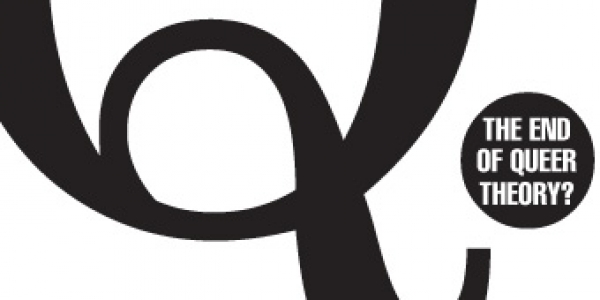
One area where this intra-academic knowledge in some ways appears to to have filtered out and yet at others has not is with what is now falls under the broader rubric of queer studies. In the current issue of the Chronicle, both Michael Warner, chair of Yale's English department and a major scholar and critic, and William Germano, dean of the faculty of humanities and social sciences at Cooper Union, muse on the end of Duke University's Series Q, an imprint of influential books in queer studies--and lesbian and gay studies before that--and on the current state of the field, which, it has struck me as I have begun teaching what I think is the first course in my current department in LGBTQ literature and theory ("American LGBTQ Literature Since Stonewall"), and here I echo both Warner and Germano, is as germane as ever.  In some ways, the popular discourse about lgbtq issues is much further along than it was when I was an undergraduate in the late mid-to-late 1980s, or when I was in graduate school in the mid-to-late 1990s. But in as much as some of the key insights of many figures of that era have diffused throughout popular discourse, and we are further along politically and socially, I and anyone else who opens her or his eyes on a daily basis can see how certain things still carry over. It is no longer surprising to me how frequently people adhere to binary notions of sexuality; how frequently offensive terms like "tranny" are tossed about, and how transvestitism, transsexualism, and transgenderism pose a quandary for many; how confused many people still are about the differences between sex, sexual orientation, sexual object choice, and so forth; and how the unrepressed, the normative--heteronormativities and now, homonormativities--not only never left, but in some quarters are thriving. Outside of Logo and MTV, turn on the TV, and what do you see? I think the answer to this question is clear enough.

Lesbian and gay studies, and queer studies coming shortly thereafter, unpacked and examined a great deal of what lies at the core of these issues, and for some in the academy, I sometimes think it really may feel as if the matter, the issues, were long settled. (Or maybe that's just my perspective as I listen to people talk about lgbtq issues within academe vs. outside it.) But in fact, it's not even settled in academe itself. I can recall, as I told my class on Wednesday, how a colleague on the board of the Center for Lesbian and Gay Studies at the City University of New York Graduate Center in the late 1990s spoke enthusiastically of a "post-gay" moment, and many, perhaps most people present, agreed with him. In many senses, particularly in the wake of queer theory and queer studies, we were at a point where we could speak, at least in academic terms, of moving away from the sorts of identitarian-dentificatory-based (i.e., linked to individual psychologies, with  communities arising from these identifications) ways of thinking about the world to approaches that examined larger structures, institutions, the fluidities and mobilities and intersectionalities of self-fashioning and presentation, of performance in the world, in varying contexts, and this was, certainly, exhilarating. But those older approaches were not without their value, because outside the walls of academe, they were and still are in contestation. 

Think about the It Gets Better series of videos and the discourse around this, and how there's little discussion of how other issues, like race and ethnicity, class, gender variance and dissidence, and so forth, factor into how young people not only may be treated but whether or not they'll be able to deal with bullying, homophobic, and heterosexist violence and oppression.  It may get "better" if you are young and white and male-identified and queer and upper-middle-class, and have support networks around you, but if not, then what? That is not to say things are hopeless, but rather that the insights of lesbian, gay, bisexual and transgender studies, and queer studies, especially as they have explored the state of the world with increasingly greater nuance, do offer ways of addressing some of the questions the standard responses in the It Gets Better videos have set forth.

I say all of this to suggest that teaching literature and the insights gained from doing so over the last century have have many purposes, offer many tools, in the world.  One, as the Chronicle article says Stephen Greenblatt suggests, is bringing us towards an understanding of "aesthetic pleasure" and appreciation. Implicit in the idea of the "aesthetic," as not only Clyde Taylor, who wrote a superb critical book some years ago about the European idea of the aesthetic and its multiple, sometimes problematic valences, but going millennia back, Plato and Aristotle themselves would suggest, are questions of the political, the economic, the social and cultural. Literature can help us to better understand these aspects of the world; it never appears in a vacuum and some of the most important things that professors teaching literature do include (but are not limited to) introducing students to works they have not read before; guiding them through and teaching them new ways of reading those works--including ways that they may already be familiar with; helping them understand how those works function in relation to other works, to the times in which they were written, to other periods and times, and to the present moment; exploring the various registers of literary texts, for every work operates on a variety of frequencies, some quite obvious, some quite hidden; and inculcating the multiple potentialities and worths, which should include skepticism of those very values at times, of literature, art and the humanities as human enterprises, of reading and writing, of language and languages themselves, which constitute the primary ways we as human animals, all of us, not just some select few of us, communicate. Of course, as I said, scholars far more distinguished than I have already hashed this out with brio and panache, and are certainly doing so at the MLA right now (or have been doing so). But in case any J's Theater readers wonder what people do in literature classrooms, it's a lot more important and engaging than tossing around gobbledygook. It goes to the very heart of who we are as human beings and creatures in this large and vast world.


Wednesday, November 30, 2011

What Is a Publisher? or, Changes in Scholarly Publishing

Work, and not post-turkey recovery keeps me from these pages. We're now in reading week, which means conferences with the undergraduates, honors and theses manuscripts and other program and departmental materials to read, and final preparation for next quarter, which begins January 3, 2012. Brief indeed will be my break.  I am trying to complete a syllabus for a new course, one of three I'll be teaching come January, which falls under the department's theory rubric, in post-Stonewall American LGBTQ literature, and though I have taught some of the theoretical and creative texts I'm considering for it, I'm still trying to figure out how best to map some of the theoretical texts onto the rough 40-year historical timeline I've conceptualized. Book orders need to be in by tomorrow, so I will certainly figure it out soon!

***

As he always does, Reggie H. forwarded along a very important link the other day that I have not yet been able to stop thinking about. In Monday's Chronicle of Higher Education, in the Prof. Hacker section, which offers tips on teaching, technology and productivity, Adeline Koh, a professor of literature at Richard Stockton College, New Jersey discusses her experiences at THATCamp Publishing in Baltimore. Koh, whose scholarly interests include postcolonial theory and literatures, 20th century British literature, African and Southeast Asian literature, global feminist theory, and the digital humanities, describes THATCamp (The Humanities and Technology Camp) Publishing as an "'unconference'" that explored the salient issues around contemporary academic publishing, including, as she breaks them down

  1. Who should publish digital scholarly research?
  2. Should digital academic research be published by the university press, or the university library?
  3. How should the process of peer review change?
  4. And finally, who should provide the work that goes into producing a publication—editing, peer review, administration and graphics?
As she continues

THATCamp Publishing provided a forum for three stakeholders in this changing industry: traditional academic publishers, libraries-as-publishers, and faculty. While traditional publishers are interested in the bottom line, libraries-as-publishers are focused on the problem of access. Faculty, on the other hand, are concerned with how their publications will lead to promotion, tenure, and the advancement of knowledge. THATCamp Publishing highlighted how the evaporation of funding for scholarly publishing and the rise of the Internet as a low-cost, easy-access means of dissemination are radically changing the nature of this industry, and the inter-relationships of these three stakeholders.
On a more fundamental level, you could perhaps say the central question of the conference was and is, Who and what is a publisher? Beside this question we might ask, Who can (afford to, these days) and should publish scholarly journals and books? Koh focuses on university libraries, but I would say that small, independent academic e-publishers could step into the breach, but the problems of funding, revenues and humanpower remain. What happens when the technological infrastructure and conditions make publishing easier yet undercut the financial model that has supported scholarly book publishing up to today? What happens when the revenue and funding streams, even after structural reconfiguration, no longer exist, and what might counterbalance this financial loss? How do these changes and challenges effect future scholars, those emerging from graduate school, those already holding tenure-track positions, and those already tenured?  And, perhaps most pressing to me, are academic institutions and faculties, especially hiring and tenure committees, taking into account these technological, structural and economic changes?

My questions, which aren't rhetorical, exceed in some cases Koh's focus, though they're linked. She homes in on the issue of scholarly journals and their financial and structural relationship to monographs.  As she points out, at many presses, the scholarly journal subscriptions have subsidized the scholarly monographs, which often do not sell well enough to avoid balance-sheet losses. When the journals go online, however, cutting the revenue stream and making the subsidy structure no longer viable, what happens to the monographs? 

She goes on to talk about open access journals and asks about peer review in light of these changes. For many peer review scenarios, anonymity, which allows referees to speak their minds freely, is key; in the absence of anonymity will referees be as candid? Will they pay a price for their candor? Koh also asks how open can journals be in permitting commentary, and what about trolls or people seeking primarily to be nasty and flippant? Even controlling for these challenges, what about the academic and possible financial capital that referees gain from engaging in this (now anonymous) process? For faculty members at every stage of their career, serving as outside referees and peer reviewers is an important responsibility, but if it becomes a free-for-all in the future, how much weight will doing so carry?

There is the even more pressing issue of underwriting the work associated with producing journals and scholarly books. Where is the money to come from? As things stand, many colleges and universities may provide subvention funds, from various sources, which go to publishers to help scholars publish worthy books that will not result in sufficient sales. But subvention funds to cover publishing costs is one thing; as Koh says, "Upon signing a contract with a traditional publisher, authors and editors generally expect that the publisher will be responsible for work like copyediting, administration, finding peer reviewers, graphic design, and marketing." University libraries, which Koh points out have gotten into the game of publishing, do not, like some smaller presses, provide such activities, but see themselves as offering "publishing support services." I think it's inarguable to say that they cannot afford the complete roster of services traditional university publishers could, and as Koh goes on to point out, their relationship to the university presses with which some of them may be affiliated remains unclear and "in flux." Again, where is the necessary funding to come from?

It is 2011 and we are not, however, going to turn back the clock. E-publishing is here to stay. I was thus happy to learn that these issues, which I have broached in relation to mainstream publishing (and to a lesser degree, academic publishing) in my Situation of Writing class and also bring up in other courses, are part of lively cross-institutional discussions and wish I could have attended THATCamp.  Yet given how much these changes are upon us, I must note that I have not heard more than a passing discussion, in my department at least, of any of this in the 9 years I have been at the university. It is as if it does not exist, or is occurring in some off-stage realm that does not directly concern humanities--literature--scholars, at a time when the role, place and teaching of humanities in higher education are themselves, like the current university model, facing economic and existential threats.

In my email response to Reggie H. and others in our email circle, I pointed out that at the university, the library oversees the press, so that a version of the library-as-publisher model is already underway, down to the library and the university requiring that the press minimize losses, with the result that everything, from editing to marketing, operates on a shoestring, and financial subvention is required for certain types of publications. Also, it's the case that some journals have faced closure because of costs. This isn't theoretical, but the reality, and has been thus for some years now. On the other hand, let me be clear that, as far as I know, the library is not itself yet directly publishing journals, or books. 

I also stated that, in my experience, some humanities faculty members of previous generations who are still teaching may not be sure how to evaluate any scholarly work that does not appear in a major cross-field journal, in a well-known specific sub-field journal, in a new journal from major journal publisher, or that, in the absence of any of these, does not have a major scholarly name or institution associated with it. E-versions of these journals would probably pass muster, but new open access options would be a problem. They respond the same way with book manuscripts; they must come from one of the major presses for academic books, or from one of the chief press known to be theoretically or methodologically progressive, or from a press known for expertise in a particular field or subfield. I have sat through more than a few meetings where issues concerning a given publishing house, contracts and so forth, have arisen.

My question to Reggie H and others is: what will change this attitude given that in increasingly more humanities fields, there is minimal readership for and no publishing money to issue the books--monographs based on dissertations--that graduate students are still producing and must produce? In some fields that continue to grow, or where scholars, with a second or successive books, feel able to write for broader audiences, there may be broader readerships out there who will mean a loss is less likely. But how many people even in certain fields can get through some of the admittedly valid and important scholarly works being produced, and if publishers are saying they cannot afford to produce because the former economic model has vanished as a result of technological changes, what is going to happen and when will faculties make the shift?  Will we return to the point where a first or in the cases of certain institutions, a second book, is less important? Will only those who manage to produce books be tenurable, and how will this affect what's studied? Will online and open access books be taken seriously sooner rather than later as things change? Which publishers will be considered valid?

These questions are valid for the publishing industry as a whole, as e-publishing increasingly takes hold. Many creative writers and authors of other sorts are coming to terms with the changes and trying to stay apace if they cannot get out front of what's going on, as are literary agents, mainstream publishers, libraries, the bookselling industry, and so forth. I think universities are also doing so, but I do think that there should be more discussion in departments and among scholars of these shifts, which are happening right now and aren't going to change. I thus thank Adeline Koh, THATCamp, and the Chronicle for putting them front and center, and would love to hear J's Theater's readers' thoughts on how this all is unfolding.