Showing posts with label Hilda Hilst. Show all posts

Monday, June 04, 2018

*Essays On Hilda Hilst* Now Available


Thanks to the dedication of editors Adam Morris and Bruno Carvalho, Essays on Hilda Hilst: Between Brazil and World Literature, the first English-language scholarly volume dedicated to the work of one of Brazil's most singular and path-blazing authors, is now available for purchase. Published by Springer this month, the book opens with an insightful introduction about Hilst (1930-2004) and her relation to the category of "World Literature," by Morris, a gifted translator and scholar who produced an exceptional rendering of Hilst's 1986 novella Com os meus olhos de cão (With My Dog Eyes, Melville House, 2014), as well as works by Jõao Gilberto Noll, Beatriz Bracher, and other major contemporary Portuguese-language writers, and Carvalho, a Princeton professor of Spanish and Portuguese, whose scholarly interests span an array of topics and whose study Porous City: A Cultural History of Rio de Janeiro (2013), received the Brazilian Studies Association Robert Reis Book Award in 2014. Other essays in the volume explore different aspects of the late author's oeuvre, ranging from her plays (Tatiana Franca Rodrigues Zanirato), fiction (David William Foster), poetry (Alva Martinez Teixeiro), and broader theoretical, political and ideological readings (Deneval Siqueira Azevedo Filho, Eliane Robert Morães, Morris, and Nathanaël).

For my part, I contributed a revision of a talk I delivered in at the New York Public Library back in 2014, "Translating Brazil's Marquis de Sade," which explores the complexities of Hilst's Cartas de um Sedutor (Letters from a Seducer), for which Carvalho wrote the introduction, and the challenges I--and anyone--might face bringing it and her work in general into English. (In "Derelict of Duty, "Nathanaël also discusses some challenges faced co-translating Hilst's A obscena Madame D (The Obscene Madame D, Nightboat and A Bolha Editora, 2013). It is especially exciting to see this essay in print and in this volume, which I hope will serve as an enticing overview and introduction that I hope sparks more studies in English about Hilst, and spurs more translations of Hilst's work. I believe a translation of Hilst's Fluxo-Floema is on its way soon, and this year, Hilst's Of DeathMinimal Odes, translated by Laura Cesarco Eglin, will be published by co•im•press.

Please consider getting a copy of this volume, or at least suggesting your nearest library do so. And please, read Hilda Hilst!

Friday, April 17, 2015

Hilst Translation Makes Longlist + New Counternarratives Review in Harper's

Hilda Hilst
Last February Nightboat Books published my translation of Hilda Hilst's Letters from a Seducer (Nightboat Books), and despite its formal daring and thematic outrageousness (it contains an insatiable character named "Little Butthole," which should give you a clue about how wild it is), I have worried from time to time that it might fall into the literary publishing rabbit hole. So many books, and not so many translations, but without a champion a book can and may disappear. Any positive news about it, therefore, is welcome. It was extremely positively and welcome news to learn, then, that the book had made the Longlist for the 2015 Best Translated Book in Fiction Award, which is sponsored by the Center for translation at the University of Rochester. Many thanks to the Center, and especially to editor, curator and critic Daniel Medin, a member of the judges' panel, who has written and spoken favorably about the translation in the past and again for this award.

As part of the process of selection for the next stages, including the finalist list, which will be named on May 5, and the award, to be given out on May 25, judges present arguments, in a variety of formats, for why certain books deserve to advance and win. Daniel interviewed me about Letters, and you can read the entire exchange here. It isn't very long, and gives a brief overview of Hilst's work, including my favorite passage in Portuguese. (NB: A stray apostrophe crept into the word "wont," though I meant the older adjectival form, meaning "likely," not the contracted future verb form.) A snippet:
DM: Letters from a Seducer is a part of Hilst’s famous “pornographic tetralogy.” How are these works different from what she was had been doing before? What distinguishes Letters from the others? 
 JK: Let me begin by saying that all of Hilst’s prose fiction is experimental, from her initial fiction text, Fluxo-Floema (1970), on, and is informed by her prior primary focus as a poet and a playwright. (She continued writing poetry throughout her life, I should note.) Her earliest poetry, published in the 1950s, is fairly conventional, but by the 1960s you can detect subversive notes, experiments with earlier Lusophone (and Iberian) forms, etc., so that when she began writing prose, it was hardly surprising that she would not follow the standard route. Yet I think it’s fair to say that her fiction is distinctive even from parallel experiments that were happening in Brazilian literature at the time, as a comparison between her texts of the 1970s and those of her close friend, Lygia Fagundes Telles, one of the major fiction writers of Brazil and in the Portuguese language, will suggest. While a book like The Obscene Madame D (1982) does overtly treat sexual themes, in the “porno-chic” works, as she called them, she more openly and directly uses and plays with pornographic language and discourse, and the works themselves turn in part on themes that might be considered pornographic, except that Hilst’s artistry, irony and wit transform them into something quite different. Letters (1991) is the second novel and masterpiece of the four texts; one of them, Contos d’Escarnio: Textos Grotescos (1990) is a collection of stories; Bufólicas (1992) comprises poems; and O Caderno Rosa de Lory Lamby, or Lory Licky’s Pink Notebook (1990), as I think the brilliant translator Adam Morris dubbed it, is an extremely ludic, graphic precursor to Letters written in the voice of a child. (And possibly not publishable in the US, despite its relentless humor.) With Letters, Hilst reaches the pinnacle of the tetralogy and, I think, her art, fusing all the strands that have come before into a profound text about writing, living, sex, human mortality, and so on. It is also quite funny; she never sheds her humor, even at some of the most outrageous moments in the text, which is one of the things I really appreciate about her work.
Getting to the finalist stage and winning are both tremendous long shots, and the other long-list books represent exalted company, many by some of the best translators out there, of major living and deceased writers, but I am very happy that the book is getting some recognition, and if this brings more readers not just to this translation, but to the others, by Rachel Gontijo Araújo and Nathanaël, and to the one by Adam Morris, that will be a very good thing! Que fique mais da Hilst em inglês!

***

Miss La La at the Cirque
Fernando,
Edgar Degas, 1879
(National Gallery, London,
Oil on canvas.)
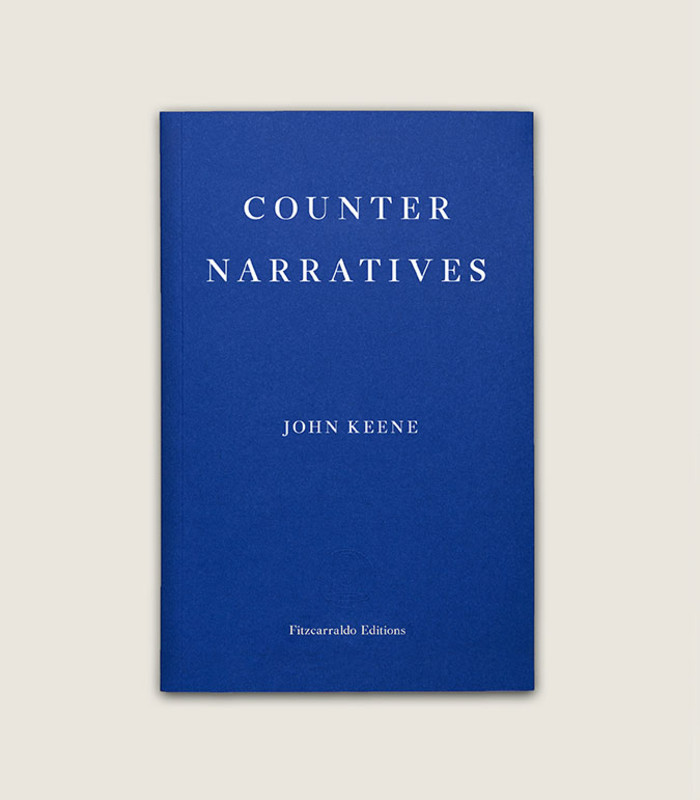
Reviews continue to come in for Counternarratives, and the most recent is the best by far. In the May 2015 Harper's Magazine, Christine Smallwood pens a thoroughgoing, engagingly thoughtful review of the book. (Her review unfortunately is only available for subscribers to Harper's, but it's in the newsstands now.) Framing the review with images of the Mississippi near Vicksburg, Mississippi, and Edgar Degas's famous 1879 painting Miss La La at the Cirque Fernando (the subject of my story "Acrobatique"), Smallwood begins with a discussion of Mark Twain's The Adventures of Huckleberry Finn and the homoerotics and racial dynamics of that text, noting its contemporary survival in the form of "bromances" (and, I'd add, the curdled buddy films that once starred Eddie Murphy and Danny Glover, and now feature Kevin Hart), as a way of shifting into a discussion of how my approach to Twain's text (and The Adventures of Tom Sawyer), "Rivers," like the rest of the collection, represents and embodies the concept of a counternarrative.

Smallwood writes, "John Keene takes aim at this sacred cow and shoots it straight in the hip," describing the story's plot and noting that this could have come off as "corny," but its execution transforms it into something else. (And I should note that I was a little nervous about taking on the Jim and Huckleberry story, and was surprised that almost no other black writers had done so--because it is so iconic? Because Twain's fame and reputation looms so large? Because it wasn't worth the time of doing so?--but also felt that imagining some aspects of Jim's life after that novel, a few glimpses, would be worth the risk.) She goes on offer the following beautiful assessment of the entire collection, for which I will forever be grateful: "Counternarratives is an extraordinary work of literature. Keene is a dense, intricate, magnificent writer," before going on to discuss my background a bit (though Christopher Stackhouse accidentally becomes "Charles") and more of the stories, even quoting several of them.

One quote:

In "The Aeronauts," for example, a Philadelphia freedman with an uncanny memory joins the Union Army Balloon Corps. The story ends with him in the balloon, feeling "something not quite fear and not quite elation, I can't put a name to it, I try to utter it but cannot." Naming it, Keene suggests, would only contain the moment, and make it less than what it is. His characters refuse to accept freedom that is given by others--they either take it by force or resist it altogether. In this way they are the avengers of Twain's Jim, who wasn't aware of his freedom until he had gone to great trouble to gain it a second time.

Again, many thanks to Harper's both for reviewing the book and for the superlative review, and I urge J's Theater readers to preorder a copy! The corrected galleys have been submitted, will be out now on May 21, 2015!

Tuesday, January 27, 2015

2 New Hilst Reviews: The Quarterly Conversation & Three Percent

Literary translation is, as anyone who engages in it knows, a labor of love. The financial rewards are minimal, and outside of the case of some highly regarded translators (Gregory Rabassa, Susan Jill Levine, etc.), many US readers may have no idea of who has translated the non-English works they deeply admire. Perhaps readers do recall that Chris Andrews and Natasha Wimmer have dazzlingly captured the richness of Roberto Bolaño, but can anyone who professes to love Karl Ove Knausgård's My Struggle, for example, name the translator(s) who transformed the six Norwegian volumes of his Min Kamp into English? It's therefore always heartening when a review notices the challenges and successes of a translation, particular with regard to a writer like Hilst who, as at least one critic has noted, was known to baffle even her fellow Brazilian readers.

In "In the Funnel of Infinity: Life Portraits by Hilda Hilst," which appears in The Quarterly Conversation, critic and translator Christine Craig reads and writes about all three of the extant English translations of Hilst's prose works: the first one to be published, the novel The Obscene Madame D., translated collaboratively by Rachel Gontijo Araújo and Nathanaël (Nightboat, 2012); the novella With My Dog Eyes by Hilda Hilst, translated by Adam Morris (Melville House Press, 2014); and Letters from a Seducer by Hilda Hilst, translated by me (Nightboat, 2014). While most of the joint reviews of these books have focused primarily on the first two, Craig, in her thorough and insightful analysis of Hilst's themes and ideas, devotes a number of paragraphs to Letters, and provides one of the best reading yet I've seen of what Hilst's work is doing.

Craig examines many of the thresholds Hilst's novels explore and exploit, beginning with the psychological torment caused by the divergence between the two halves of the human, the animal and the psychic/symbolic, that her avatar Ernest Becker, the dedicatee of With My Dog Eyes, investigated in his philosophically profound and psychologically invaluable anthropological studies, particularly The Denial of Death. As a symbolic creature with psychological and affective interiority, man is the animal that suffers from the knowledge of our eventual death, which can lead to mental illness, a perception that Hilst understood because of her personal history, and which she wove extensively into the fabric of her texts.

Craig goes on to assess Hilst's understanding of the line between meaningful and meaningless language, and her inverting of the idea of "saint[hood]" as something beyond human limits, "the symbolic equivalent of death," often marked by the disgusting. At one point, citing my mention of Deleuze and Guattari in the Music & Literature roundtable from last year, she expands upon the reference, via Brian Massumi's reading of Deleuze, in order to show how Hilst's fiction sits at the nexus between "transcendence (orgasm's explosion of possibilities)" and "immanentism (life's sad remainder: the abandoned fish)." To quote her:
In “The Autonomy of Affect,” Massumi describes it as the simultaneous point of emergence and vanishing of “the unclassifiable, the unassimilable, the never-yet felt, the felt for less than half a second, again for the first time—the new.”

In his own writing, Karl is plagued by a “crazy urge” to reproduce the fundamental language of Daniel Schreber as described in Memoirs of My Nervous Illness. It is, as Karl writes, the desire “to not make sense of some things, some words, of my own life.” In his memoirs, Schreber, a schizophrenic former judge, painstakingly explains, with ample footnotes, his own personal delusional system, according to which his body has been overwhelmed by “nerves of voluptuousness”—nerves which, according to Schreber, naturally occur on all surfaces of the female body but which, on the male body, remain concentrated in the genitals. The propagation of Schreber’s own nerves has effectively turned him female (“unmanned” him, as he writes). What’s more, his overabundant nerves are constantly under invasion by God’s penetrating “rays,” agitated into a state of insupportable vibration—the source of his “nervous illness.”

Schreber’s fundamental language, or nerve-language, in which Karl would aspire to write, is the vibratory language of euphemism and coded paradox through which God’s rays “speak” to Schreber’s nerves and against which Schreber’s only defense is not thinking, or more precisely, the cultivation of “not-thinking-of-anything-thoughts” through semantic satiation: he repeats words until they grow meaningless and his thoughts turn empty and mechanical. Schreber reasons that if he can cease thinking entirely he might trick God into believing him dead.
There is also this gem about my translation, though the credit does go to Hilst, whose lead I followed:

Letters from a Seducer brings us directly into the work of the two fictitious writers, Karl and Stamatius (“Tiu”). We first get to know Karl—depraved “aristocrat” and widely published author—through his love letters to a distant, cloistered sister, Cordelia, in which he speculates about her implied affair with their father, supposed to have occurred when they were both teenagers and both in love with him. Suffice it to say Karl has his doubts. Prove it, he says: “Prove to me you had in your hairy cavern the big paternal cock and curls.” Karl has a seemingly endless supply of sly, poetic euphemisms for his sister’s vagina, but his best is perhaps: “your purse, your poor pussy so without pursuers”—a turn of phrase for which translator John Keene (and not Karl) actually deserves our applause.
Madeleine LaRue, Associate Editor of Music and Literature, in her post "The Books I Haven't Forgotten, Or In Lieu of a Plot," on the January 25, 2015 weblog Three Percent, cogently and succinctly discusses four translated books from 2014, the first two from New York Review Books, Last Words from Montparnasse, by Qiu Miaojin, translated by Ari Larissa Heinrich, and The Woman Who Borrowed Memories: Selected Stories, by Tove Jansson, translated by Thomas Teal and Silvester Mazzarella; the third The Elusive Moth, by Ingrid Winterbach, translated by Iris Gouws, from Open Letters Press; and Hilst's Letters. All she recommends as worth reading, even though the site had previously not devoted a freestanding review to any of them. About Hilst's Letters she says:
And one more word on my most recent read: Like Last Words from Montmartre, Letters from a Seducer by Hilda Hilst (translated from the Portuguese by John Keene) is passionate and epistolary, but its tone couldn’t be more different. Letters from a Seducer is an irreverent catalogue of outrageous, theatrical sexualities. Hilst delights in breaking taboos and detailing fetishistic obsessions, making constant fun of phallocentrism and bourgeois sensibilities. But she does it with a good sense of humor and often great literary panache. (Translator John Keene deserves praise for the number of euphemisms he’s managed to generate for various body parts alone.) Behind the absurdity are also flashes of deep feeling, comical desperation in the face of writing, and these meditations lend Hilst’s short novel staying power as literature, and not only as (in the author’s own words) “brilliant pornography.”
I'll take the praise, and note that Hilst actually uses "euphemisms," or rather, quite striking metaphors, many of them in current use in contemporary Brazilian popular and vernacular idioms, and that those body parts--and sexual acts--appear with such profusion in the text that I sometimes had to duck just to get to the next sentence! Now doesn't that make you want to read it?

Friday, April 25, 2014

First Review of Hilst Translations


A few posts back I mentioned that the somewhat altered and edited version of an online roundtable discussion about Hilda Hilst was now live on the website Music & Literature, but I had not realized that in early April, in preparation for the roundtable, writer and critic Adam Z. Levy posted an insightful, well-considered and very praiseworthy review both of my translation of Hilda Hilst's Letters from a Seducer (Nightboat Books/A Bolha Editor, 2014) and of scholar Adam Morris's recent superb translation of Hilst's earlier novella, With My Dog-Eyes (Melville House, 2014) about a mathematician whose eyesight and consciousness are disintegrating.

Some quotes from Levy's review (which heartened me tremendously when it singled out my rendering both of Hilst's seemingly inexhaustible lexicon of terms for sexual organs, as well as of the multiple registers of idiom and discourse in the character Karl's letters, effectively capturing their often absurd--and I do mean absurd--humor):

If the abnegation of traditional values and hierarchies runs through Hilst’s life, her attempt to find a literary analogue becomes clear with the arrival in English of two more of her novels: With My Dog-Eyes (published in Brazil in 1986, and this month in Adam Morris’s translation) and Letters from a Seducer (translated by John Keene). Letters from a Seducer is the third book in her “pornographic tetralogy,” which solidified her notoriety upon its Brazilian release in 1991. Included in the quartet are a book of poems and three novels (O Caderno Rosa de Lory Lamby, Contos D’Escárni / Textos Grotescos, and Cartas de um sedutor). Though Hilst’s later writing is considered radically different than her earlier work, the break represented by the tetralogy is merely an intensification and deepening of themes Hilst had long explored. Her “pornographic” books are united by the violence with which she works to undo the grammar of systems of confinement—language, gender, sexuality, and form—and the tenderness and comedy with which she scours the bleakness of circumstance for something that an optimist might call hope.

and

There is an Ouroboric quality to Kéres’s descent from genius to madness, concurrent with the novel’s own formal descent from coherence to chaos. Many of the pleasures and challenges of reading Hilst’s fiction can be found in this loop. By the end of the book’s sixty-two pages, Kéres has fractured and dissociated almost entirely from himself. Hilst renders this with a mix of first- and third-person narration, with Kéres hovering over himself—and over the text—as an intermediary between the reader and the professor’s thoughts:
Amós Kéres. From here I can hear him comparing the lucidity of an instant to the opacity of infinite days, I can hear him thinking of the various manners of madness and suicide. The madness of the Search, which is made of concentric circles and never arrives at the center, the obscuring, incarnate illusion of finding and understanding . . . From here can I hear him thinking how should I kill myself? or how should I kill in me the various forms of madness and be at the same time tender and lucid, creative and patient, and survive?
As Kéres fractures and becomes increasingly diffuse, Adam Morris does an impressive job handling the sudden shifts in perspective and the disorienting rhythms of the text. Toward the end, it is almost impossible to know whom to attribute various lines of exposition and thought, as though Kéres himself were a poem emptied of signification, and Hilst seems to ask whether this is liberation or the essence of madness itself.

and

In the back of my book, in a column that carries over to a second page, I noted the following euphemisms that Hilst uses for penis: catfish, pole, blunt, harmonica, banana, pod, thrush (as in “to pluck one’s thrush”), piece, club, table leg, rosy mallet, bat, tombstone, creeper, strap, box, nib, basket, and gourd. There is also starfruit-loquat-hole, rosy pulp, poompoom, dove, hairy cavern, butterfly, chocha, and petunia, where female genitalia are concerned. 
But the pornographic nature of the novel reaches further than the physical. The three short sections that constitute Letters from a Seducer are narrated by two men: Karl, the seducer of the title, and Stamatius (Tiu, for short) an impoverished writer who is resentful of Karl’s money and manner. Karl’s letters are the most accessible and the most enjoyable, although enjoyment and accessibility are categories of which I imagine Hilst herself would be suspicious. The letters are lustfully written to Karl’s forty-year-old sister, Cordélia (named with reference to King Lear), who lives alone in the country. “Cordélia, my sister, come out of your cloister / The countryside ages women and cows,” one of Karl’s teasing lyrics goes. Karl’s own cloister is his family’s estate in an unnamed Brazilian city, where he lives with two German servants who putter about the house, muttering passages of Jean Genet by heart. Karl’s voice is arch and affected, often to the point of hilarious parody, but Hilst endows him with a clever self-consciousness and serial seducer’s charm. That John Keene’s translation captures the humor of Karl’s constant suggestiveness and change in register is a remarkable achievement of its own.

If you haven't picked up either book--they're short!--please do, and also do not forget the brief, enthralling The Obscene Madame D, the first of Hilst's works to appear in book form in English, translated collaboratively and with great panache by Nathanaël and Rachel Gontijo Araújo (Nightboat Books / A Bolha Editor, 2012)!

Wednesday, April 09, 2014

Hilda Hilst Online Roundtable

The young Hilda Hilst
Over the last few months I participated in an online roundtable about Hilda Hilst, whose sublime and sublimely perverse novel Letters from a Seducer (Nightboat Books, 2014) I translated last year. Organized by critic and author Sarah Gerard, the roundtable, which comprised questions posed by Sarah (and translator Caroline Aguiar), and responses by authors, translators, scholars and publishers including Alex Forman, Rachel Gontijo Araújo, Adam MorrisNathanaël, Stephanie Sauer, and I, does give a deeper sense of who Hilst was, and what she was up to. The conversation is now live at Music and Literature.

One unfortunate aspect of the conversation, however, is that it appears to have been reordered and edited, with some errors inserted, after the fact--by Music and Literature or someone else I'm not sure. Nevertheless, it reflects our real-time online exchanges, and for the most part (or at least my part) did not receive any subsequent polishing. Were we onstage, bodily as opposed to virtually, this is the sort of conversation--without the remixing--you might hear.

One highlight:

Caroline Aguiar: Hilst was willing to explore the limits of language while going deep into aspects such as God and immortality. At the same time, she was deeply connected with the very core elements of human existence, such as passion, comradeship, life, and death, often finding inspiration not only in philosophical books but also books on biology, physics, anatomy, and math. How do you interpret the fact that the public is now more interested and prepared to embrace Hilst’s view of literature than any time before? 
Nathanaël: This seems a recasting of the first question of our conversation. As I think a number of us have indicated previously the question of the timeliness of these translations seems to mislead the apprehension one might have of Hilst’s work; John has underscored the degree to which this is already an Anglo-centric question, since Hilst arrived in other languages well in advance of these efforts here; so perhaps the question is one, if it does indeed need to be asked at all—and I’m not personally convinced that it does—of the English language’s belatedness and hitherto lack of receptivity. And the way in which borders between languages are more or less passable. On the occasion of the U.S. film release of Macunaíma in 1968, the U.S. public’s ability to receive the work was, according to one critic, limited by its impoverished understanding of Brazilian specificities and political realities within a larger South American context, with which it was somewhat more familiar. It would seem to me, though, that this kind of limitation is a consequence of a kind of deliberate ignorance. And I am concerned that the same kind of short-sightedness can lead us to congratulate ourselves misguidedly for identifying a particular moment as a zeitgeist. Literature has no time and articulates itself reiteratively with a reader. 
Alex Forman: Caroline makes an important point about the elements of the metaphysical in Hilst’s literature, ideas brought over from other fields such as philosophy, math, and science. And though I don’t immediately see the math, I do find biology, and I want to think more about this… I do see a predominant focus on literature itself (the notion of Literature) in a sort of meta-textual writing and the Metaphysical. In the books I have read, there are monster narrators who eat little children; we have children whose living uncles turn into great authors of Brazilian literature (in a game of smoke and mirrors) and narrators who speak from beyond the grave. We have multiple interior voices—some, like John mentioned earlier, come from Hilst’s fascination with recording seance-like encounters with spirits, while others seem to be simply the “voices in our heads” at play in her fascination with mental illness. So many of these elements are in communion with Brazilian culture. They end up being the manifestation of a cultural reality, a stream that runs permanently beneath the surface here, so much so that it is never described but simply permeates daily rituals. Hilst works it all into her literature as fantastical and absolutely natural, absorbed and accepted by her characters in such a way that we, her readers, come to accept it too.

Thursday, March 13, 2014

Nightboat Books Launch Photos

Below are few photos from last night's Nightboat Books new publications launch at Callicoon Fine Arts on the Lower East Side. Many thanks to everyone who came out to hear and celebrate the release of Gracie Leavitt's first full collection of poems, Monkeys, Minor Planet, Average Star, which features a self-portrait by the late Emma Bee Bernstein on its cover (and a moving tribute poet, "Reverse," to Bernstein inside), and my translation of Hilda Hilst's Letters to a Seducer, which Nightboat published in conjunction with Brazilian publisher A Bolha Editora

Joining us were two friends and fellow writers, Claire Donato and Reggie Harris, who each read an incisive poem in the spirit of the books. We had a good crowd by the time the event began, and it was even fuller when artist Thomas Kovachevich, whose show is currently underway at Callicoon, presented his poem-without-words, a slow, remarkable, profound piece involving autonomously curling lens paper on blue fabric amidst a bed of water.  It felt especially fitting given the work already presented. Many thanks to everyone who came out and thanks also for buying the books!

I urge you to check out Thomas's exhibit at Callicoon if you're on the Lower East Side; it runs until March 30, 2014. Also, if you can, please do purchase (or urge your local public, college or university library to order!) copies of Gracie's collection and the Hilst novel.

At Callicoon before the reading
(poet & publisher Stephen Motika
at center) 
Some of the attendees before
the reading 
Stephen introducing the event
Thomas's collaborator
in the event pouring the water 
The laying out of
the azure fabric sheets
The collaborator places the
pieces of lens paper on the fabric
The paper begins its dance 
More paper 
A bearded, bowtied blogger
reading from the Hilst
(photo by C) 
Making a point of some
sort about Hilst
(photo by C)
Another photo of yours truly
and the full crowd
(Photo by Andrew Blackley--thanks!)

Monday, February 03, 2014

New Books: Poetry & Translation

A number of new books now grace my desk, so here is a little information on several that I have had a hand in. I'll begin with Rodney Gomez's Mouth Filled with Night, the second winner of the Drinking Gourd Poetry Chapbook Prize, a national honor given to an emerging poet of color, resulting in a beautiful chapbook published by Northwestern University Press. During my final year and a half at Northwestern, I served on the planning committee and as a judge for the inaugural prize, when a committee of poets and literary scholars awarded to Kristiana Rae Colón, for her striking, powerful book of poems, Promised Instruments.

Before I left, I again participated on jury that selected Rodney Gomez's vivid, moving poems for this year's prize. As the images below show, these are not just impressive first literary sallies, but beautiful books in themselves, and I highly recommend both, as well as eminent poet and Northwestern professor Ed Roberson's Closest Pronunciation, which was also published, as a volume by a senior poet, in conjunction with the contest. Since I left Northwestern I am no longer involved in the Drinking Gourd Poetry Chapbook contest, but I wish the winners my heartiest congratulations, and the prize itself, which introduces the work of writers who might otherwise see publication by such a distinguished press to a wide audience, the very best.

Rodney Gomez's Mouth Filled with Night (2014)
Kristiana Rae Colón's Promised Instruments (2012)
Ed Roberson's Closest Pronunciation (2012)
***
During the period that I was moving back to New Jersey, I began to become involved in helping to launch another wonderful, invaluable book publishing project, The African Poetry Book Series, one component of the African Poetry Book Fund, which the multitalented, prodigious and visionary poet and critic Kwame Dawes helms, at the University of Nebraska. Its mission, to quote the APBF website is as follows:

The African Poetry Book Fund promotes and advances the development and publication of the poetic arts through its book series, contests, workshops, and seminars and through its collaborations with publishers, festivals, booking agents, colleges, universities, conferences and all other entities that share an interest in the poetic arts of Africa. The Fund is committed to seeking the resources to support this mission and to ensure that all its efforts are carried out with excellence.

The Fund will, through the Series and other projects, promote the writing and publication of African poetry through an international complex of additional collaborations and partnerships. The Fund and its partners will offer support for seminars, workshops and other publishing opportunities for African poets.

The other APBF editorial board members include Chris Abani, Matthew Shenoda, Gabeba Baderoon, and Bernadine Evaristo. Distinguished figures from the worlds of literature, business and publishing fill the Advisory Board.

Among the first books the APBF will publish, two are now in print: the winner of the first Sillerman First Book Prize for African Poets, which is Kenyan poet Clifton Gachagua's wry, ever-fresh and compelling Madman at Kilifi, and the great, late Ghanaian poet, novelist, teacher and mentor Kofi Awoonor's The Promise of Hope: New and Selected Poems, 1964-2013, which was in process before his tragic death last fall at the Westgate Towers in Kenya, and which serves as a fine tribute to his extensive poetic gifts and legacy. Both books, published by the University of Nebraska Press, will officially reach bookstores on March 4, 2014, but you can put your orders in now and receive them as soon as they appear. More APBF books are on the horizon, so check the APBF site to see when they will appear.

Clifton Gachagua's Madman at Kilifi and
Kofi Awoonor's The Promise of Hope: New
and Selected Poems, 1964-2013

***

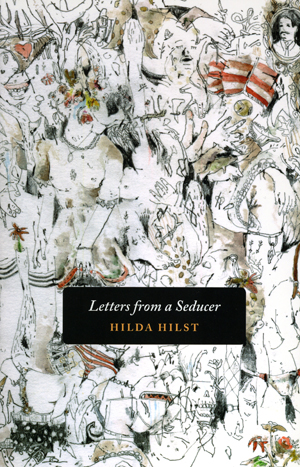
Finally, but not least, a year's work has now achieved fruition with the official release, as of today, of Brazilian writer Hilda Hilst's 1991 masterpiece Letters from a Seducer, which I translated into English last year, working closely with Brazilian publisher A Bolha Editora and its editors, Rachel Gontijo Araújo and Stephanie Sauer (now no longer with the house), and US publisher Nightboat Books and its head, Stephen Motika, who have jointly released the volume pictured below. You can purchase a copy directly from University Presses of New England, who distribute Nightboat's books, or from one of the many online bookstores. Or you can check your local bookstore and if they don't have a copy in-store, urge them to order one or some. I will say only that this text of Hilst's isn't for the faint of heart, just as it wasn't in the original Portuguese, but if you looking for a book that truly charts a distinctive path in late 20th century literature, with a heady dose of trangressive sex, literary intertextuality, meta-critique of writing, and textual depth and music, as well as humor, that could give William S. Burroughs or Kathy Acker runs for their money, Hilst's Letters from a Seducer should be in your hands, pronto.

Hilda Hilst's Letters from a Seducer

Monday, January 20, 2014

Two Events in Chicago: New Translation & Red Rover Series Vulnerable Rumble Performance

UPDATED: See: corrected "Codes of Vulnerability."

January, to those in the literary studies and related fields, means the annual conference of the Modern Language Association (MLA). This year's gathering took place in Chicago, but instead of heading to give a paper, sit on a hiring committee or interview for a job, I headed to attend two off-site events, one focused on translation and organized by Patrick Durgin, a poet and publisher of Kenning Editions on January 10, the second an experimental reading that the Red Rover Series organized at the Outer Space Studios in Wicker Park on January 11. Given the bad run of weather in the Midwest and more than a decade of familiarity with sudden snowstorms and treacherously icy runways, I was concerned about whether I would even get there by the time of my evening event, and my concern was not misplaced, because the first leg of my connecting flight, from Newark to Philadelphia, was delayed by 1 1/2 hours, which meant that I had to run--literally, sprint, with my bad knees--to my departing gate, which in Philadelphia's airport requires transport via a winding, slow bus! I barely made the flight (by minutes), landed in Chicago, picked up my rental car, and then spent 2 1/2 hours in driving iced rain, in part because I hopped on the expressway and a fire on a CTA train (on which my cousin's husband was riding to his job at the airport!) necessitated a partial shutdown of the highway, which meant that after being stuck in gluelike traffic I had to divert via local roads to my hotel, gliding across sheets of ice, past mountains of snow (Chicago had gotten 9 inches in its last snowfalls) and amidst crazy driving....I arrived at my first scheduled event a bit out of harried, but thankfully, in one piece, and on time (7:30 pm).

The translation event, pithily titled New Translation, was held at the School of the Art Institute of Chicago's Sharp Building on Friday. The translators included Nathanaël (speaking, with her usual cogency and grace, about translating Hervé Guibert from French), Anna Deeny (speaking about translating several different Hispanophone writers, including Alejandra Pizarnik and Raúl Zurita from Spanish), Daniel Borzutzky (speaking about translating Zurita and Gabriel Soto Román from Spanish), Urayoán Noel (speaking about translating Amanda Berenguer's "concrete poetry," which he defined in relation to the usual connotations of this term, from Spanish), Jonathan Stalling (speaking about several different authors from Chinese and his creation of a "phonotactic" structure to do so), Jennifer Scappettone (speaking about translating F. T. Marinetti's "aerofiction" and "aeropoetry" from Italian), Joshua Clover (speaking about translating--which he called the "last gasp of close reading"--Jean-Marie Gleize from French), and I. Translator Johannes Göransson was unable to attend. 

The event unfolded without a moderator; we were to time ourselves, reading a small amount of our translations and speaking about the process and anything else related to the topic, theoretic, critical, scholarly, or otherwise. With 8 translators, however, things went long, though everyone offered up insightful comments about their practice and the texts they were translating. Daniel Borzutzky in particular offered one of the most clarifying presentations, linking our presence in Chicago to the Chicago School of Economics, which used Chile, Raúl Zurita's and Daniel's native country, then under the control of a military dictatorship, as its testing ground, with sometimes disastrous, often problematic results (its Social Security program, its huge inequality gap several decades ago, etc.), and was now using turning those same neoliberal policies back on the US, in particular Chicago, under the tenure of "liberal" Democratic mayor Rahm Emanuel. Another really interesting point he made, echoed by others, was how transgressive Zurita's writing about nature was, in light of the Pinochet dictatorship and its severe censorial constraints.

I ended up going last, and so restricted my comments to the minimum, instead reading a few sections of Hilst as well as a little of her Portuguese to convey the rhythmic and sonic challenges her work posed even for Lusophones reading it aloud. I also noted how she played with the idea contained in the word "oco" (hollow, hole) throughout, telling the reader that Stamatius, both through her use of words echoing this one ("coco," "trouco," "toco," "pouco"--all of which contain the sound of "oco," or "OH-koo") and by having one of the protagonists, Stamatius/Tiu, tell the readers he was going into his own "hollow," and then titling the final section of the novel "De outros ocos" ("Of Other Hollows"). I also answered a question about Hilst's use of a pornographic linguistic register and discourse, to which Nathanaël, who with Rachel Gontijo Araújo collaboratively translated Hilst's The Obscene Madame D, added important information. It was an excellent event, and afterwards most of us headed a few doors down for dinner and drinks, and multilingual conversation.

A snapshot of the panel (© Jennifer Scappettone)
Poet, critic and Cal Arts professor Christine Wertheim,
before the event began
The translators, from left: Urayoán Noel, Daniel Borzutzky,
Anna Deeny, looking down, Nathanaël, and assorted attendees
(Joshua Corey is wearing glasses)
More of the attendees (translator Steven Teref sits
next to Christine Wertheim at right)
Patrick Durgin, organizer
Joshua Clover, Jonathan Stalling, Urayoán Noel

***

The second event that brought me to Chicago was "The Vulnerable Rumble," a reading-performance organized by local poets and activists Jen Karmin and Laura Goldstein, along with Laura Mullen in from Louisiana, as part of their Red Rover Series. Established back in 2005 by Jennifer and Amina Cain, the Red Rover Series has insistently fostered innovative poetic practice and performance or, as the series subtitle states, "[readings that play with reading]." During my decade in Chicago I was fortunate to catch a number of their events and participate in several of them; we even partnered together on May 2011's "Poetry for Labor" event at Haymarket Square downtown. Saturday's gathering, held at the Outer Space Studio, the upstairs artist-run performance space in the Wicker Park neighborhood, was #71, and staged as a special event for (and in response to?) the MLA's theme of "Vulnerable Times," or, in MLA President Marianne Hirsch's words
Vulnerable Times addresses vulnerabilities of life, the planet, and our professional disciplines, in our own time and throughout history. Its aim is to illuminate acts of imagination and forms of solidarity and resistance that promote social change."
As always, Jen, Laura and Laura thought carefully and creatively about this theme, and devised an open, aleatory program that, as I told Carla Harryman (one of the liveliest and most daring participants, whom I'd read for years but never met until this event), felt akin to what one might have encountered decades (the 1960s-1980s) ago, before poetry readings turned into tidy, academic-friendly affairs. Or, as I thought to myself, somewhat like the vibrant performances that Thomas Sayers Ellis thought up from time to time for the Dark Room Writers Collective. 

Some two dozen-plus poets--Kazim AliAmaranth BorsukAmy CatanzanoB. K. FischerChris GlomskiAlan GoldingRob Halpern, Carla Harryman, Lyn Hejinian, Douglas KearneyPhilip Metres, Laura Moriarty, Ladan OsmanDanielle PafundaLily Robert-Foley, Kenyatta RogersHeta RundrenJennifer Scappettone, Evie Shockley, Jonathan StallingDivya Victor, Barrett Watten, Christine Wertheim, Keith Wilson, Ronaldo V. Wilson, and Kate Zambreno, as well as Jen, Laura and Laura--were scheduled to perform. Whether all of us did I cannot say; the poets I know from the list above all did make appearances, but several of I know but never met I cannot say for sure read. At any rate, while Red Rover has more than once presented readings that break the usual form of reading, I could not remember one I'd attended--and none I'd ever participated in--that included so many poets and with such a free-form approach. 

Laura, Jennifer and Laura imaginatively theorized and wrote the event's aims and approach in their "a vulnerable manifesto," which they read from at the evening's start, pointing out "often an order that allows one voice at a time to be heard, or one voice, the automatic discomfort at interruption- the exposure of muted layers that slide up against brains not programmed with patience." And: "if i hold you off for a minute before i must succumb, will i experience the rare sensation of my voice as presence? it's all i can think of in this moment but maybe you will think of more. i think more can happen that we haven't thought of yet, i'm sure." More specifically, all of the participants received a list of nine loose guidelines, or "Codes of Vulnerability," which were also posted around the studio space. 

1. The curators announce the beginning and end of the performance.
2. Readers self-determine the order by choosing when to appear onstage.
3. The evening proceeds by readers interrupting each other to take turns onstage. 
4. Readers can choose to stand in silence, as a signal that they will soon begin.
5. If a reader does not wish to be interrupted, shake head or make a stop signal with hand.
6. Readers can halt or disable their own live readings. 
7. Duets and choral readings are divine, welcome co-readers by waving hands forward.
8. Readers can reappear and read more than once.
9. Strategies are encouraged to respect each reader’s time and space for the work to be heard. 
10. Failure is also encouraged.  See Judith Halberstam’s The Queer Art of Failure,
“Work together. Revel in difference. Fight exploitation. Decode ideology. Invest in resistance.” 
Indication by raising the hand or shaking one's head. Duets and choral readings. Self-halting and disabling. Strategies to encourage reader time. Failure. What principles, and I say that without irony. Oh, if only more poets would internalize many of these! What became clear as the evening proceeded was that many of us did, and rather quickly; there were some who read briefly, some who leapt in and then out, some who paired up more than once but never too long, some who added a theatrical or performative element to change the reading dynamics, and a few who seemed to step right back into the usual holding-of-the-floor at length, as if any other approach would not do. But, as Jennifer said and underlined, even failure at these "codes" was acceptable, so anything went.

One other interesting and important element was the presence of a stool featuring the works of Amiri Baraka, who'd passed away only days before. In a note to participants, Jen Karmin called attention to Baraka's death, and several of us decided that, if we could, we'd honor him by reading his work. To facilitate this for everyone, Jen provided several Baraka texts, including Dutchman, which factored in several times later on, and, I think--though I could have this wrong--The Amiri Baraka Reader. I made a point of creating a .pdf featuring several Baraka poems, as well as my own, and determined that before I read anything I'd written, I'd bring him into the space with me, and for all of us.

There were many highlights, but the event launched with performances that set the tone for what might follow. First, Christine Wertheim, crouched in the front left corner of the room, took one of Jen Karmin's hands (I believe it was Jen's) and began a cry-wail that turned into a series of repeating lines, after which Lily Robert-Foley and Heta Rundren, emerging from their seats along the right wall's floor, rose and began an antiphonal song-chant that instantly shifted the tone and atmosphere. In an order I cannot recall, Kazim Ali moved into the front of the space, and shortly thereafter Doug Kearney glided through the packed crowd reading Amiri Baraka's "Ka'Ba." Someone from Robert Halpern's Music for Porn before Halpern did, reminding me of Halpern's reading last year at Poets House in NYC, and later Halpern himself read from the text himself--or did someone else also read from it? Yes: Lily Robert-Foley.

Amy Catanzano read a long, funny piece that riffed off net-speech. Jonathan Stalling sat and read/sang softly, intently in Chinese. Doug, Ronaldo V. Wilson and Amaranth Borsuk read in tandem, and Lyn Hejinian read twice with others: once with Barrett Watten, and once, towards the night's end, with Jennifer Scappettone, partially to the accompaniment of "Planet Rock" (I think), played by Ronaldo on his computer. Phil Metres, who was sitting beside me, read while on his hands and knees, and tore up and handed out pages from one of his books. I got one and erased some of the words, but I did not read them. His "The Blues of Charles Graner," exploring the horrors of the participants in Abu Ghraib, became:

The Blues

the Christian
knows
but the corrections
officer can't
help love
a grown man
piss him

Later on, B. K. Fischer (I think) read, as Jen Karmin and Evie Shockley pulled at opposite ends of the rope, and then Evie, the floor hers alone, read a powerful poem, playing artfully with repetition, recursion and subtraction. Ronaldo ended the evening wearing a black mask, a paisley scarf wrapped around his head, on his side, as Jen (and Laura G.?) intervened by removing chairs. It was over. We all applauded.

(I should also note that I finally met a poet I'd first heard about when I was 18 years old, from her son,  who was one of the first people I met in my freshman year of college: Lyn Hejinian. A very good friend, Dorothy Wang, who attended the event, had mentioned meeting up with Lyn Hejinian the day before, and said she would be reading at this event, which I almost could not believe--after all these years, after quoting her in my first book, after reading and following her work for decades, I would actually meet this extraordinary poet in the flesh! I finally did meet her, and she was as lovely and gracious as I imagined. So that was another highlight of the evening for me.)

At some point early on, Carla Harryman--celebrating her birthday!--rose and inspected a plastic pot featuring various implements (a jump rope, a cone hat, a kazoo with streamers), and then, with Baraka's Dutchman, interrupted someone reading. There was a chair (visible in the photos below), and when things slowed a bit, I rose, suppressing my anxiety about interrupting anyone and just inserting myself into the proceedings, and, with Baraka's "An Agony. As Now," one of my favorites of his early poems, she and and I went back and forth, she reading Lula's lines from Dutchman, and I channeling Baraka. We performed the exchange, which seemed fitting given the format and the texts. I even felt like Clay/Baraka declaiming! I decided to practice a bit of self-curtailment and near the end of the poem I stopped. Maybe I even uttered this. I think it just felt too strange simply to walk off, though that is what I did. Did someone else join Carla Harryman? Did she stop too? Did anyone raise her or his hand? Did anyone nod a head to bring others up? I want to think someone did. Interruption was less frequent than patience and politeness mixed with volition about taking the floor. It worked.

Later Christine began reading from Dutchman. I thought about another Baraka poem, "SOS." Or "Letter to E. Franklin Frazier," which cuts me to the bone, to read with her. Or the poem I worked on listening to others. Or one of the ones I'd purposefully brought. But I stayed in my seat because some inner mechanism said, you have had your turn, and let others have the floor. So I sat and listened and watched and wrote. But I was utterly in the moment. It was thrilling, in the true sense of that word, and wonderful--full of wonder--in the deep sense of that word too. Like: I wonder if people are also finding this as fun as I am. I wonder if mixed in with the fun is a kind of anxiety about what might come next. I wonder when the poets I know who haven't gone will get up and should I act in some way to ensure they get a chance? I wonder how people are responding to this resetting of power, and authority, and exchange? I wonder if the men will respect the codes? They (we) did, and I thought it a remarkable event. Afterwards others concurred, or that's what I thought I heard. I want to do it again. And in the break I heartily thank Jen, Laura and Laura, and all the other participants as well as everyone else present, in the audience, for making it such a marvelous experience. Because that's what it was. An experience, with the emphasis on the root of that word that links to experiment. As the Red Rover Series has succeeded in pulling off, for nearly ten years.

A few photos (I aimed the lens at the light sources so some of the photos are a bit dark.)

Jennifer Scappettone and Christine Wertheim
Kate Zambreno holding forth
Carla Harryman
Alan Golding
Barrett Watten and Lyn Hejinian
(with Evie Shockley, Danielle Pafunda
and Christine in back)
Amaranth Borsuk, Douglas Kearney
and Ronaldo Wilson
B. K. Fischer, Phil Metres (kneeling)
and Jen Karmin
Some of the performance
Ronaldo V. Wilson
Ronaldo, at the evening's
conclusion
The door to the wonderful

Thursday, January 02, 2014

The New Year + Great Early News About Hilst Translation

It feels both strange and exciting to note here that we are now in 2014; this past year seemed to unfold glacially, with ample amounts of time cocooning everything (MLA, AWP, the spring semester, writing this summer, etc.). Perhaps time felt this way because I was still in the midst of transitioning to new--or returning to prior--life rhythms and, like everyone around me, also  recovering from the psychic effects of the fall 2012 hurricane. Time at various points seemed to stand still. This past fall, however, accelerated much more quickly than last year (again, perhaps because we avoided nature's violent, watery intermission), and December in particular raced by so fast it was over before I knew it.

The year brought good news, some of which I'll talk about soon, but very sad news closer to home as well. Three friends, all under 50, passed away: Donald Agarrat, whom I memorialized several months ago, and more recently, my former colleague José Estéban Múñoz, with whom I served on the board of the Center for Lesbian and Gay Studies (CLAGS) in the late 1990s, and Gerard Fergerson, for many years one of my dearest friends, and among the smartest and most dynamic people I have ever known in life, who incidentally, among the many wonderful things he did for me, introduced me to CLAGS. I will post tributes to both of them very soon. Another person that I knew from the time I was in my early 20s, the activist, writer, editor, journalist, and bookstore founder, John Mitzel, also passed away after a long illness in Boston.

As of the second week of December, classes concluded, and as of January 1, I relinquish my post as Acting Chair of AAAS to my predecessor. The fall undergraduate English course, "Introduction to Literary Studies," provoked my usual pangs of apprehension when I learned I'd be teaching it, but it turned out quite well in the end, if my students' coursework, responses and comments are any indication. As far as the Acting Chair stint went, it turned out to be a lot more work than I'd envisioned (though isn't that always the case?), but it was also an excellent introduction to the university system's innards, and I had the opportunity to tackle a few important projects, which I resolved successfully, as well as initiate some exciting events for this upcoming semester.

Somehow or other I completed not just the translation but multiple revisions of the Hilda Hilst novel, Letters from a Seducer (Cartas de um sedutor), jointly published by Nightboat Books and A Bolha Editora, and it has not only been repeatedly proofed, blurbed (by Dodie Bellamy, Samuel R. Delany, and Ronaldo V. Wilson!), but has gone to the printer and should be out very soon (the schedule date is now February 4, 2014). (You can even order it from distributor University Presses of New England/UPNEBarnes & Noble or that other behemoth site that I will pass on naming. You know which one I mean.) I have said publicly that it probably was a bit insane to have agreed to translate that book, which even in the Portuguese is no two-step, during a period when I had two sizable classes and lots of other pending duties, but looking back I'm glad I did, and am even happier about the resulting text.


I do wonder how readers who have been enthusiastic about the first Hilst novel that appeared in English, The Obscene Madame D (A obscena senhora D), beautifully and collaboratively translated by Nathanaël and Rachel Gontijo Araújo, will respond to this one, especially given that it is far more sexually transgressive and explicit, the language thornier--there are moments in the text that look wrong even in Portuguese, à la Clarice Lispector, though they are exactly what Hilst intended--and the structure of the novel far more experimental.

In fact, in Letters from a Seducer Hilst produces an anti-novel . I was trying to think of a musical comparison, and instantly and interestingly enough, at least to me, the post-modern work of the late Russian composer Alfred Schnittke came immediately to mind; he is best known for combining an conventional styles (for example, preexisting or pastiche versions of baroque compositions) with one or more very different, disparate styles, holding them all together via a compelling associative vision, profound craft and wit, and, to a huge degree, the willingness of the listener to accept, if not fully grasp, what he's up to and go along. That's what Hilst does in and with this novel, though in it she attempts and achieves many other things as well. In fact the book feels like it could serve as a source text for a course I taught years at at Northwestern on contemporary aesthetics and what I called "danger zones"; in it she treats in various ways aspects of conventional aesthetic theory, as well as those touchier areas I specifically focused on, including pornography, sentimentality, horror, conceptualism, and, to a lesser degree, the posthuman.

Although the translation is not yet on bookshelves it has received some early praise in draft form. Translator, editor, program director, and scholar Daniel Medin wrote the following in the December 17, 2013 edition of Three Percent: a resource for international literature at the University of Rochester:

Occasionally, a work of brilliance will make it possible for a virtuosic translator to outdo, line for line, a great deal of what’s recently appeared in her target language. In 2012, the English of George Szirtes for Satantango’s Hungarian struck me as superior to the sentences of most novels written that year in English. The same’s true of John Keene’s version of Letters from a Seducer by Hilda Hilst. Scheduled to appear this month, it was perhaps my most unforgettable reading experience of 2013. I’m terribly eager to read more Hilst now—and impatient to get my hands on Keene’sAnnotations too.

Medin and Scott Esposito also discuss the translation in their podcast at Two Lines Press. A snippet of the translation will appear in an upcoming edition (No. 10, I believe) of the The White Review.

I am looking forward to discussing and possibly reading from it at an upcoming panel on translation that will take place in Chicago, on January 10th, during the Modern Language Association's annual convention. The event, New Writing in Translation, a roundtable, will take place at 7:30 PM in the Sharp Building of the School of the Art Institute of Chicago, 37 S. Wabash Avenue. As the organizer describes it, "this roundtable event will consist in a self-guided survey of recent translation projects by leading contemporaries in the field. Rather than being led by generalizable themes in the theory and practice of translation, each participant will read a brief excerpt from a recent translation project and then discuss the vicissitudes of working on it." The Writing (MFAW) Program of SAIC will host the event, and other participants include Daniel Borzutzky, Jen Scappettone, Anna Deeny, and Joshua Clover.

Lastly, I will be reading with Vincent Czyz at Word-Jersey City on January 15, 2014. I believe we both will read a little poetry and I'll be reading from the Hilst as well, so if you are in Jersey City, please join us.