Showing posts with label international poetry month. Show all posts

Friday, April 01, 2022

Imani X. Davis Reads "Napoleon Club" + Happy National/International Poetry Month

HAPPY POETRY MONTH!

Back in 2018 I posted a clip on here of a young performer, Orlando Watt, on YouTube performing a snippet of my poem "Words," which had appeared on the Academy of American Poets' Poetry Daily, courtesy of the amazing poet Dawn Lundy Martin. It is rare to have anyone read or perform my work, and I didn't know Watt, but I loved his interpretation, which he subsequently removed from YouTube. I believe he stated that it was part of his audition reels, which I also appreciated, because if one of my poems can in any way help another young artist get a gig, that for me is an unexpected but added bonus of creating it.

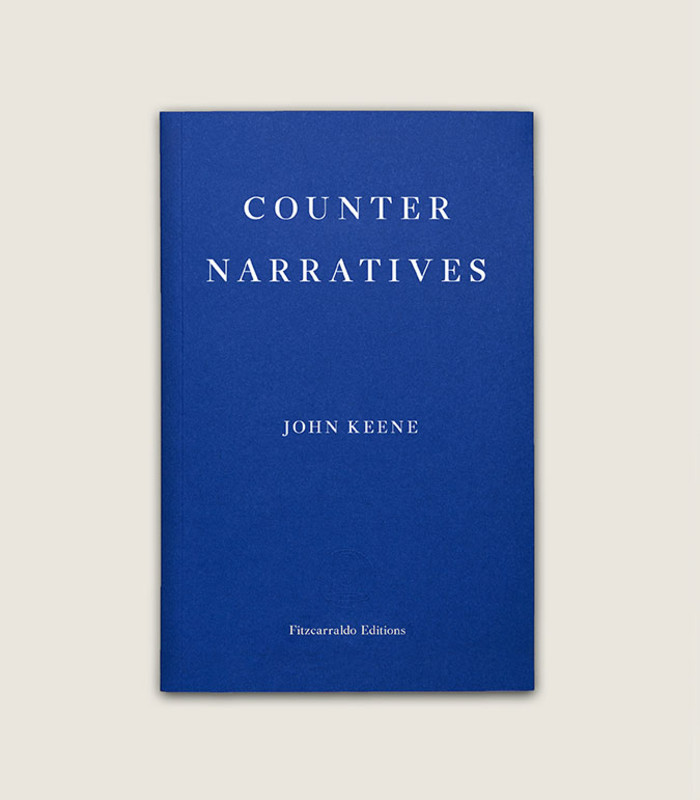
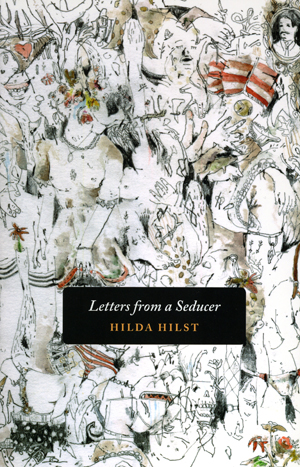
This morning while scrolling on Twitter I came across a tweet by Mani (Imani X. Davis), a doctoral student I've never met but who very kindly selected another poem of mine, "Napoleon Club," which like "Words" appears in my new collection Punks, to read online, and they do so beautifully. What a marvelous way to launch National/International Poetry Month, which begins today!

Many thanks to Imani X. Davis, and thank you especially for selecting a poem from Punks. You can follow this scholar and reader at @imanixdavis on Twitter, and please do read some poetry this month if you can!


And here is the video (many thanks again!):


Sunday, April 29, 2018

Poems + Translations: Arnaldo Antunes


Last year I had the pleasure of translating a small cache of poems by Arnaldo Antunes (1960-), a Brazilian musician, composer and writer, who is very famous in his home country, but not as well known on these shores. A former member of the rock & roll  band the Titãs (Titans) and an extensive collaborator with the Brazilian singer Marisa Monte (1967-), Antunes has been publishing his poetry since the early 1980s, and, like his music, it has the capacity for being both seemingly straightforward and accessible, while also proving quite playfully complex. One of my favorite of his musical works is Os Tribalistas (EMI/Phonomotor), a 2002 project with Monte and Bahian musician Carlinhos Brown (1962-).

One challenge with Antunes's poetry is the magic he wields with apparently simple elements combines into challenging verbal artifacts. I am thinking for example of a poem I translated entitled "Pedro de pedro," whose title may seem easy enough, but which is actually quite difficult to render into English. Why? Because "pedro" means "stone" or "rock" and that "de," meaning "of," adds layers of nuance, creating in English the following possibilities: "Stone's stone," "Rocky stone," "Stony stone," "Stone made out of stone," etc.

Of course I can't write all of these into the English translation, which demands that I pick one (I did), but I nevertheless want and need to to give a sense of what a native Portuguese speaker would pick up and puzzle over, yet understand, seeing the title alone. The polysemous nature of such poetry, which abounds in Antunes's work, deeply fascinates me, leading me to attempt to translate the untranslatable, but then, isn't that what all translators at some level are up to? Na impossibilidade fica possibilidade, não?

Antunes also has played with concrete and digital poetics over the years. You can find a variety of examples if you search online. You also can view an array of his musical and visual artistry at his personal site. In 1993, shortly after leaving Titãs, he released a collaborative LP, Nome (Name) guest-starring Monte, João Donato and Arto Lindsay, which was a multimedia music-and-poetic project with a computer-animated video that later traveled to various art museums and galleries. He has continued exploring poetry's materiality, and its nexus with visual art and the digital, and after a bit of scrounging about online, I found three examples of his poems, on Brazil Escola and  that merge the poetic and visual, emphasizing language's materiality and multiplicity.


 The first poem feels very appropriate to the political and social situations in Brazilian and US society today:

    PER

    DER

    BER

LI       TA


    LOS

    ING

    BER

LI        TY


The second involves a little visual play, with the flying upside down once the wing(s) come(s) out (or off, in which case the upside flying also signifies falling!)--and, I should note, the pronoun-less verb is both (2nd person informal in Brazil) imperative and (3rd person) indicative, so "spread" or "s/he/they spread/open):

TIRA
A ASA


E VOA


SPREAD
YOUR WINGS


AND FLY

or

S/HE/THEY SPREAD/S
OUT HIS/HER/THEIR WINGS


AND FLIES/FLY


This third piece is a quartet (or, thinking of visual art, a tetrych) of poems, one partly in English, one the same in the both languages, the other two in Portuguese, and all together forming a kind of crossword puzzle when viewed from afar:

IMAG
IGAB
YBTES

IMAG
IGAB
YTES

(Or "Imagigabytes," a neologism, but really what we produce with every creative thought)

***

IN-
VENTO
VENTO
DENTRO

I IN-
VENT
WIND
WITHIN

This one needs no explication; even if you speak no Portuguese, if you say it aloud it you can here the rhyme, and the inward sound of "dentro" (within, inside) vs. "vento" (wind); is it that "r" that does the trick?

***

MIRA
NA ESTRELA
E ASSOPRA

AIM
AT THE STAR
AND BLOW

This is quite simple too; my translation misses the visual design of the poem, in which the "blowing" is clearly attenuated; stars are far away, as we know.

***

YOU CAN THINK EVERYTHING
TUDO PODE SER PENSADO

VOCE PODE PENSAR TUDO
EVERYTHING CAN BE THOUGHT

With this one I reversed the translations, so that his English becomes Portuguese and vice versa. As we human beings steadily learn, almost anything can be thought, though that does not mean we need to act on it.

All translations and commentary © Copyright John Keene, 2018.

Friday, April 20, 2018

Poem: John Keats

John Keats


If there is a perennial pre-1900s poem about art from the Anglo-American literary tradition, the English Romantic poet John Keats's (1795 - 1821) "Ode on a Grecian Urn" would be it. Keats, in contemplating the Greek artifact, sets a standard for how to write about it, and art in general. The "tl;dr" version of this poem would be "Art lasts, life is brief, the beauty in seemingly dead, antiquated art provides deeper truth." Our mortality is assured, and the art work's instructive and illuminatory qualities will outlast us, a sentiment that would not have been lost on Keats, who died very young from tuberculosis, his health rapidly declining after he published his first book of poems in 1817. This poem's argument pretty much agrees with many of the poems I've posted so far in as much as their argument interrogates the relationship between art and life, between artifact within the moment it was created and the moment, millennia later, in Keats's case (and ours), in which an art lover, a connoisseur, a viewer looks at and tries to understand it, to gain something from it.

The "Grecian urn" that Keats's speaker is viewing--or thinking of--has not been cracked or chipped, unlike so much of what people bring these days to The Antique Roadshow, eager to learn the financial value of some heirloom or family treasure, or a painting, poster or dresser they picked up at a garage sale or church fair; it would not be out of place in the Metropolitan Museum of Art, given its pristineness. Its specific references also remain somewhat opaque to a viewer like Keats. We would assume that a scholar of Hellenic pottery would be able to grasp what the urn's images depict, what "leaf-fringed legend haunts about" the urn's curves and sides, who those "men or gods are," "what maidens loth?" (I love that "loth," though there is no conceivable way to weave it into contemporary conversation or prose.)

Akin to Friedrich Nietzsche's notion of the Apollonian and Dionysian, in The Birth of Tragedy, Keats assesses the tension between the "cold pastoral" (punctuated by an exclamation point) the urn's form and still imagery embody, and the "wild ecstasy" the urn depicts, its record of human and deific pleasure and excess, and how what we cannot know from experience but gain from the art work can delight us even more, just as we take pleasure in the very act of trying to figure out what the urn is showing us. It will survive and a new generation will come along to try and figure out what the urn's images mean, what its function was, just as some four centuries later I am reading and interpreting Keats, and finding knowledge and truth in his poem.

As for "beauty" being "truth" and vice versa, reading this too simplistically is a problem. Scientific considerations of symmetry, the role of mathematical order in nature and natural systems and so forth set to the side, I don't think that Keats is necessarily saying that something "beautiful" is intrinsically "true" (or good, for that matter). The relationship between the two that Plato explores is, we know today, much more complicated than a facile reading would imply. The beautiful can be quite false, and fake things can beguile us far more than something intrinsically beautiful (by various criteria). Yet, as Keats seems to be saying, there is something lasting in truly beautiful art, something that compels us generation after generation, even taking into account the effects of the social and political,  cultural shifts and changes, and so on. And we can learn something from that lasting beauty, those art works that do survive. That is all "ye" need to know, or at least something we should not forget too quickly.

ODE ON A GRECIAN URN


by John Keats


 Thou still unravish’d bride of quietness, 
  Thou foster-child of Silence and slow Time,
Sylvan historian, who canst thus express 
  A flowery tale more sweetly than our rhyme:
What leaf-fringed legend haunts about thy shape 
  Of deities or mortals, or of both,
    In Tempe or the dales of Arcady?
  What men or gods are these? what maidens loth? 
What mad pursuit? What struggle to escape?
   What pipes and timbrels? What wild ecstasy?
 
Heard melodies are sweet, but those unheard 
  Are sweeter; therefore, ye soft pipes, play on;
Not to the sensual ear, but, more endear’d, 
  Pipe to the spirit ditties of no tone:
Fair youth, beneath the trees, thou canst not leave 
  Thy song, nor ever can those trees be bare;
    Bold lover, never, never canst thou kiss, 
Though winning near the goal—yet, do not grieve;
  She cannot fade, though thou hast not thy bliss, 
    For ever wilt thou love, and she be fair!

Ah, happy, happy boughs! that cannot shed 
  Your leaves, nor ever bid the Spring adieu;
And, happy melodist, unwearied,
  For ever piping songs for ever new;
More happy love! more happy, happy love! 
  For ever warm and still to be enjoy’d,
    For ever panting, and for ever young; 
All breathing human passion far above,
  That leaves a heart high-sorrowful and cloy’d, 
    A burning forehead, and a parching tongue.

Who are these coming to the sacrifice? 
  To what green altar, O mysterious priest,
Lead’st thou that heifer lowing at the skies, 
  And all her silken flanks with garlands drest?
What little town by river or sea shore, 
  Or mountain-built with peaceful citadel,
    Is emptied of this folk, this pious morn? 
And, little town, thy streets for evermore
  Will silent be; and not a soul to tell 
    Why thou art desolate, can e’er return.

O Attic shape! Fair attitude! with brede 
  Of marble men and maidens overwrought,
With forest branches and the trodden weed; 
  Thou, silent form, dost tease us out of thought
As doth eternity: Cold pastoral!
  When old age shall this generation waste, 
    Thou shalt remain, in midst of other woe
Than ours, a friend to man, to whom thou say’st,
  ‘Beauty is truth, truth beauty’—that is all 
    Ye know on earth, and all ye need to know.

Below is an image of the Sosibios vase, which Keats sketched and which inspired his poem, along with his drawing below it:


Sosibios vase, image
from the Louvre
Keats's drawing of the Sosibios
vase in 1818, his annus mirabilis

Sunday, April 01, 2018

Inter/National Poetry Month + Poem: W. H. Auden

W. H. Auden
Every month should be Poetry Month--and Fiction Month and Literature Month--we could go down the list, but since 1996, roughly a year after the Academy of American Poets, inspired by Black History Month (every month should be...) and Women's History Month (every month should be...), convened with poets, academics, booksellers, and poetry lovers to create a month dedicated specifically to poetry. During the first decade or so of this blog, I usually posted close to a poem a day each April, often inspired by one theme or another (poets in translation, etc.).

When I went to Cuba in April 2009, when it was almost impossible to post daily, I somehow managed to. (How did I manage to?) I've slacked off in recent years because the rest of my responsibilities have crowded in on my time, but throughout this month I hope to post some poetry, at least periodically. Though it may make "nothing happen," as W. H. Auden famously said, he also continued, if you stay with that same poem, "In Memory of W. B. Yeats," it eludes the grasp of executives (unless of course it's set to music) and "survives / a way of happening, a mouth." That is, it gives voice to experiences, to visions, to feelings, in its particular form of representation, sometimes otherwise incommunicable, that we need and must listen to.

I guess since I have cited and quoted Auden's great poem, I should direct J's Theater readers to my post from 2012, which features it, and here, instead, is another Auden gem, "Musée de Beaux Arts," which I had to read in junior high and did not fully understand, though I get it now. As with so many of Auden's poems, the politics seem fitting for today; art offers a picture and mirror of the human sorrows we endure, and yet, at the same time, like the mundanities of life, it exists amidst the most unspeakable horrors, includes those enacted by the "torturer" whom Auden directly names. Sometimes, as in Pieter Breughel the Elder's "The Fall of Icarus," which Auden saw in 1938 at the Musées Royaux des Beaux-Arts de Belgique, nearly a year before the start of the then-brewing Second World War, at the and which he discusses ekphrastically in the poem's second stanza, the two happen at the same time; there is the horror of the boy falling from the sky, even as the rest of life--and death--go about their business.

Perhaps that should be the month's theme: ekphrastic poems. (Have I already done that? Hmmm.) Happy Inter/National Poetry Month!

MUSÉE DES BEAUX ARTS


by W. H. Auden


About suffering they were never wrong,
The old Masters: how well they understood
Its human position: how it takes place
While someone else is eating or opening a window
                                 or just walking dully along;
How, when the aged are reverently, passionately waiting
For the miraculous birth, there always must be
Children who did not specially want it to happen, skating
On a pond at the edge of the wood:
They never forgot
That even the dreadful martyrdom must run its course
Anyhow in a corner, some untidy spot
Where the dogs go on with their doggy life and the torturer’s
                                                        horse
Scratches its innocent behind on a tree.

In Breughel’s Icarus, for instance: how everything turns away
Quite leisurely from the disaster; the ploughman may
Have heard the splash, the forsaken cry,
But for him it was not an important failure; the sun shone
As it had to on the white legs disappearing into the green
Water, and the expensive delicate ship that must have seen
Something amazing, a boy falling out of the sky,
Had somewhere to get to and sailed calmly on.

Copyright © W. H. Auden, from Another Time (New York: Random House, 1940). All rights reserved.

And, the painting once attributed to Pieter Breughel the Elder, "Landscape with the Fall of Icarus," oil on canvas, c. 1560s, Royal Museums of Fine Arts of Belgium.


Wednesday, May 18, 2016

Poetry Month Blogging at Harriet (On Translation)

Rosetta Stone (from AfricaWrites.org)
During the most recent (Inter)National Poetry Month, poet and critic Daniel Borzutzky was invited to serve as one of the Poetry Foundation's four guest editors on its online site Harriet, and as part of his editorial charge he invited a host of poets and critics to contribute short blog essays on various themes. The poets he invited included Don Mee Choi, Lucas de Lima, Jen Hofer, and Cecilia Vicuña, as well as yours truly. When Daniel and Michael Slosek first invited me, I said yes (after assurance that only one post would be needed), and then, as April approached and innumerable deadlines closed in, I worried about what I might contribute. 

After reading sparkling thoughts by Cecilia, and then Don Mee's brilliant essay, though, I developed cold feet, which froze when I viewed Lucas's stellar entry. Daniel, however, was a calm, patient and encouraging helmsman, and eventually I was able to send an essay his way, to join the others, as well as Jennifer's dazzling entry, which concluded the series, for all of which he wrote illuminating introductions. I should add that because of a little rights quibble with the Poetry Foundation the essay temporarily vanished from Harriet, but it has been reposted and is available for everyone to see.

I have posted links to the blog posts, which are all smart and concise essays, and quite creative. Mine, "Translating Poetry, Translating Blackness," arose out of longstanding concerns I have had about the body of translated work available to US and Anglophone readers, and culminated initially in a talk I gave last year at the Thinking Its Presence: Racial Representation conference at the University of Montana, organized by Prageeta Sharma, Joanna Klink and Dorothy Wang, and named after Dorothy's eponymous, foundational study.

I should note that all of the translations in my essay are my originals, so any faults therefore are mine. Also, I asked and received permission from the Poetry Foundation to publish a snippet of Daniel's introduction, and from my essay. To read the full piece, which isn't long, please do go straight to Harriet, and if you enjoy it and the other essays and find them useful in any way, please do let the Poetry Foundation know. I believe they'd appreciate hearing from readers. (Please also check out the great entries curated by Dawn Lundy Martin,  Brandon Shimoda, and Stephanie Young.)

Lastly, it is tremendous honor to note that the esteemed translator Susan Bernofsky, who has brought Robert Walser, Jenny Erpenbeck, and Yoko Tawada among other major writers to US readers, wrote a beautiful piece about my essay and the topic in general, which she posted on her blog, Translationista. Please do check it out, and if you are are so motivated, please consider undertaking translation!

***

Don Mee Choi: "Darkness, Translation, Migration"

Lucas de Lima: "Poetry Betrays Whiteness"

Jen Hofer: "Proximate Shadowing: Translation as Radical Transparency and Excess"

Cecilia Vicuña: "Language Is Migrant"

John Keene: "Translating Poetry, Translating Blackness"

From Daniel's introduction to my blog post:
How does the absence of texts in translations deny individual readers reflections of their race and identity as it is presented in other countries and cultures? What does it mean that U.S. readers might not even be aware of the presence of black people, let alone black writers, in countries like Pakistan and Iraq? How does this absence limit our understanding of both the black diaspora in general and, more specifically, as John alludes to in a footnote, of the very different and often times very complex conceptions of race found in countries such as Cuba, Brazil, and the Dominican Republic? Part of the question I’m hearing here is that at this moment in the U.S., when opinions about race continue to be presented as essential truths, that it would do a world of good for unitedstatesians to understand that some of our ideas about race are arbitrary, and that others have been constructed to fit the needs of historical, establishment powers.
And from my essay:
Why is this absence of translated black voices significant? One of the ongoing problems, if I can state it bluntly, is that if we already are experiencing serious and ongoing crises in American society in part through the omission, elision, and erasure of, and indifference to narratives, stories, and other forms of imaginative expression, in all their complexity, of black American people’s lives and existences—an issue that affects not only black Americans but everyone in the society; as the Native American writer Bill Yellow Robe, among many others, underlined in a talk he delivered at the 2016 Thinking Its Presence conference, the same is true with narratives, stories, plays, and so on by indigenous peoples, to give another glaring example—we further limit our understanding of the world, in multiple ways, in the absence of black stories and voices from outside the Anglosphere, which is not a coherent whole, but nevertheless is limited in its capacity to convey the breadth of experience of black peoples across the globe. Just as black Americans are hardly a “fringe,” neither are black people and voices from the rest of the world.

Friday, April 26, 2013

Poem: Adam Johnson

Adam Johnson (1965-1993), not the recent Pulitzer Prize winner but the late lyric poet bearing his name, was one of the promising British versifiers of his generation when he died of HIV-related disease in the early 1990s. A native of Stalybridge, Cheshire, he arrived on the London literary scene in 1984, and cut a stylish figure, while also producing poems very much in keeping with the mainstream conventions of that era. What began to set him apart was his fastidiousness with language and his openness in writing from the perspective of an openly queer young poet, taking up the thread that predecessors Thom Gunn, W. H. Auden and others had bequeathed him. Like so many queer male poets of that moment, of that generation, my generation, he was cut short before he even reached his prime. Johnson published one book in his lifetime, a second appeared only weeks after his death at 28; his Collected Poems, edited by Neil Powell, did not appear until 2002. Johnson's poems are usually only a few stanzas long, show almost no formal experimentation or elaborate wordplay, draw upon observations of nature, and often invoke an unnamed beloved, though he was quite clear who, in later years, this was: James Levondowski, his love for whom underlines many lines. Below is "Nocturne," one of Johnson's earlier poems that shows the talent he possessed and gives a hint of what might have been possible had he lived longer. All art is ultimately in part a memorial, and in the case of those many artists struck down before they were able to accomplish what they hoped to, it's but a tiny cenotaph, yet one that, especially in Johnson's case, keeps drawing us back, to read, and remember.

NOCTURNE

October makes censers
Of these wooded places.
Out of the cool ether
Of darkness strike the
Branching crystals of trees,
By night's definition
Of a rarer substance -
The texture of bark
Is wholly light's privilege.

The path leads us to
A locked gate we climb. There is
Tension in our nearness -
The feel of you, our hands
Clasped in recognition
Of their own engaged warmth.

In embracing we earth,
Here, where a stream's course
Through banks of cypresses
Designs a garden,
The motion of its cool blade
As purposeful as blood.

Now the spell of your voice
Concedes to other sounds,
Falling into dark air
That cherishes each note -
This water easing
Over known rocks, through reeds,
The soft consent of leaves.
Drawing me close, there is
Nothing you would not give.

December 1986

Copyright © The Estate of Adam Johnson, from Adam Johnson, Collected Poems, edited by Neil Powell, Manchester: Carcanet, 2003. All rights reserved.

Wednesday, April 10, 2013

Poem/Translation: Xavier Villaurrutia

I could not possibly post poetry about the night without again posting a poem by Xavier Villarrutia, one of whose poems I translated and posted back in January. Here is another, "Cuando la tarde," which, like all his poems, I enjoy reading aloud in the Spanish and then in the English. The lush sensuality of his poems, his language that approximates touch while also capturing a particularly powerful experience of yearning, is on full display here. The poem's messages are self-evident, but I would only call attention to the final line, where the heart of the matter lies, and, both in his Spanish and the English translation, bursts forth at the end of the line: el deseo. Desire, indeed, rising like that ash, that dust, that smoke, that absence of light, in the night.

***

CUANDO LA TARDE

Cuando la tarde cierra sus ventanas remotas,
sus puertas invisibles,
para que el polvo, el humo, la ceniza,
impalpables, oscuros,
lentos como el trabajo de la muerte,
en el cuerpo del niño,
vaya creciendo;
cuando la tarde, al fin, ha recogido
el último destello de luz, la última nube,
el reflejo olvidado y el ruido interrumpido,
la noche surge silenciosamente
de ranuras secretas,
de rincones ocultos,
de bocas entreabiertas,
de ojos insomnes.

La noche surge con el humo denso
del cigarillo y la chimenea.
La noche surge envuelta en su manto de polvo.
El polvo asciende, lento.
Y de un cielo impasible,
cada vez más cercano y más compacto,
lluevo ceniza.

Cuando la noche de humo, de polvo y de ceniza
envuelve la ciudad, los hombres quedan
suspensos un instante,
porque ha nacido en ellos, con la noche, el deseo.

Copyright © Xavier Villarrutia, from Nostalgia de la muerte. Introduction by César Antonio Molina. Madrid: Huerga y Fierro Editores, 1999. All rights reserved.

WHEN EVENING

When evening closes its distant windows,
its invisible doors,
so that the dust, the smoke, the ash,
impalpable, obscure,
slow as the work of death
in the body of a child,
keep growing;
when evening, finally, has recovered
the last glimmer of light, the last cloud,
the forgotten reflection and the interrupted sound,
night surges silently
from secret slots,
from hidden corners,
from half-open mouths,
from sleepless eyes.

Night surges forth with the dense smoke
of cigarette and chimney.
Night surges forth wrapped in its mantle of dust.
The dust rises, slowly.
And from an impassive sky,
each time closer and more compact,
ash rains.

When the night of smoke, of dust and ash
envelops the city, men stay
suspended but an instant,
because in them is born, with the night, desire.

Copyright © Translation by John Keene, 2013. All rights reserved.

Saturday, April 06, 2013

Poem: Charles Baudelaire


Whenever I think of Charles Baudelaire's The Flowers of Evil (Les fleurs du mal), which rattled Francophone poetry when it initially appeared in 1857 and which continues to resound in that and other literary traditions up through today, I associate it with the nocturnal. That is, with things that occur at night, darkness and darkened streets, alleys, rooms--the mind and heart themselves. A glance at the 1857 or expanded 1861 table of contents shows, however, that most of the poems do not treat the night so much as they cast Baudelaire's dark, critical and coruscating poetic light on various aspects of city life, and with a candor that until that time had been quite rare for many centuries in the literature of any country, let alone France.
Baudelaire, a self-proclaimed revolutionary and avant-gardiste, admirer of Edgar Allan Poe and ally of Gustave Courbet, a critic of estimable talent and a post-Romantic figure,knew what he was doing with his remarkable volume, and had to leave out six poems that were thought to have gone too far. As he famously wrote in the prefatory poem, speaking of his reader and himself, "You know him reader, that refined monster / --Hypocrite reader, -- my double, -- my brother," and, as a way of thinking of all the poems in the volume, he notes in my favorite of all his poems, "Correspondences," that "Man passes through forests of symbols / which look at him with familiar eyes"; the poems of The Flowers of Evil represent Baudelaire's poetic journey through those forests and his attempt to record them. The attempt has lost little of his power in the 150+ years since the book first appeared. Here, from The Flowers of Evil, is "Evening Twilight," in two translations. All are taken from the online Flowers of Evil website.
EVENING TWILIGHT

Now is the graceful evening, friend of the criminal;
Now it comes like an accomplice, stealthily; the sky
Closes slowly like a gigantic bedroom,
And Man, impatient, changes to wild beast.

O evening, lovable eveningtime, longed for by him
Whose arms can truthfully say: Today
We have worked! — It is evening that lightens
Spirits consumed by a fierce sorrow,
The stubborn savant whose forehead grows heavy,
And the bent laborer gaining again his bed.

Meanwhile unhealthy demons heavily awake,
Like business men, in the atmosphere,
And fly and strike the shutters and the awning.
Across those lights the wind tortures
Prostitution is ignited in the streets;
Like an ant-hill she opens her escapes,
Spawning all over a secret path,
Like an enemy's sudden attack;
She stirs on the breast of the city of dung
Like a worm that steals his meals from Man.
Here and there one hears kitchens hissing,
The screaming of theatres and orchestras roaring;
The plain tables, where gambling throws its pleasures,
Fill up with bawds and cheats, accomplices,
And thieves, who know no truce nor grace,
Soon go to get to work, they also,
Depart to force gently safes and doors
For a few days' living and to clothe their mistresses.

Reflect, O my soul, in this most solemn time,
And close your ears to this roar.
It is the hour when the sorrows of the ill are sharpened.
Dark Night grips them by the throat; they fulfill

Their fate and move into the common whirlpool;
The hospitals are full of their sighing. — More than one
Will no more come back to seek the perfumed soup,
Beside the fire, at night, by a beloved soul.

Still most, most of them have never known
Home's sweetness nor have they really lived.

— Geoffrey Wagner, Selected Poems of Charles Baudelaire (NY: Grove Press, 1974)

 Twilight

Behold the sweet evening, friend of the criminal;
It comes like an accomplice, stealthily; the sky
Closes slowly like an immense alcove,
And impatient man turns into a beast of prey.
O evening, kind evening, desired by him
Whose arms can say, without lying: "Today
We labored!" — It is the evening that comforts
Those minds that are consumed by a savage sorrow,
The obstinate scholar whose head bends with fatigue
And the bowed laborer who returns to his bed.

Meanwhile in the atmosphere malefic demons
Awaken sluggishly, like businessmen,
And take flight, bumping against porch roofs and shutters.
Among the gas flames worried by the wind
Prostitution catches alight in the streets;
Like an ant-hill she lets her workers out;
Everywhere she blazes a secret path,
Like an enemy who plans a surprise attack;
She moves in the heart of the city of mire
Like a worm that steals from Man what he eats.
Here and there one hears food sizzle in the kitchens,
The theaters yell, the orchestras moan;

The gambling dens, where games of chance delight,
Fill up with whores and cardsharps, their accomplices;
The burglars, who know neither respite nor mercy,
Are soon going to begin their work, they also,
And quietly force open cash-boxes and doors
To enjoy life awhile and dress their mistresses.

Meditate, O my soul, in this solemn moment,
And close your ears to this uproar;
It is now that the pains of the sick grow sharper!
Somber Night grabs them by the throat; they reach the end
Of their destinies and go to the common pit;
The hospitals are filled with their sighs. — More than one
Will come no more to get his fragrant soup
By the fireside, in the evening, with a loved one.

However, most of them have never known
The sweetness of a home, have never lived!

— William Aggeler, The Flowers of Evil (Fresno, CA: Academy Library Guild, 1954)


LE CRÉPUSCULE DU SOIR

Voici le soir charmant, ami du criminel;
II vient comme un complice, à pas de loup; le ciel
Se ferme lentement comme une grande alcôve,
Et l'homme impatient se change en bête fauve.

Ô soir, aimable soir, désiré par celui
Dont les bras, sans mentir, peuvent dire: Aujourd'hui
Nous avons travaillé! — C'est le soir qui soulage
Les esprits que dévore une douleur sauvage,
Le savant obstiné dont le front s'alourdit,
Et l'ouvrier courbé qui regagne son lit.
Cependant des démons malsains dans l'atmosphère
S'éveillent lourdement, comme des gens d'affaire,
Et cognent en volant les volets et l'auvent.
À travers les lueurs que tourmente le vent
La Prostitution s'allume dans les rues;
Comme une fourmilière elle ouvre ses issues;
Partout elle se fraye un occulte chemin,
Ainsi que l'ennemi qui tente un coup de main;
Elle remue au sein de la cité de fange
Comme un ver qui dérobe à l'Homme ce qu'il mange.
On entend çà et là les cuisines siffler,
Les théâtres glapir, les orchestres ronfler;
Les tables d'hôte, dont le jeu fait les délices,
S'emplissent de catins et d'escrocs, leurs complices,
Et les voleurs, qui n'ont ni trêve ni merci,
Vont bientôt commencer leur travail, eux aussi,
Et forcer doucement les portes et les caisses
Pour vivre quelques jours et vêtir leurs maîtresses.

Recueille-toi, mon âme, en ce grave moment,
Et ferme ton oreille à ce rugissement.
C'est l'heure où les douleurs des malades s'aigrissent!
La sombre Nuit les prend à la gorge; ils finissent
Leur destinée et vont vers le gouffre commun;
L'hôpital se remplit de leurs soupirs. — Plus d'un
Ne viendra plus chercher la soupe parfumée,
Au coin du feu, le soir, auprès d'une âme aimée.

Encore la plupart n'ont-ils jamais connu
La douceur du foyer et n'ont jamais vécu!


Friday, April 05, 2013

Poem: Rainer Maria Rilke

Rainer Rilke
My very first post in 2005 was a notice about Jay Wright; my second offered a poem by Rainer Maria Rilke (1875-1926), a poet who needs little introduction, one of the most original versifiers in late 19th and early 20th century German-language and European poetry, a poet whose vision into the inner heart of things can often provoke a feeling beyond the limits of astonishment. Every so often I will read a bit of Rilke to disorient my sense of language, beginning with the German and then with English translations or, if it is simple enough, a rarity with Rilke, with my own English versions.

Take the poem below, its title declaring its aptness for this month's selections. It opens with the personification of the evening (Der Abend) changing its robes, which Stephen Mitchell adroitly translates as "puts on the darkening coat," held for it by a row of old trees, and then we get one of those abruptions Rilke is famous for--the semicolon, followed by the direct address, familiar, du schaust--you look, or watch, which of course you have already been doing, and before your eyes, as evening settles in, from you (von dir) the lands grow different (scheiden), or as Mitchell says, grow distant (distinct), one "himmelfahrendes" (traveling to the sky, to heaven) and one that falls (fällt)...okay, by this point, what began as a fairly simple conceit has turned into something quite strange. That is Rilke. He is already beyond the mere image, impression, vision, into something deeper, beyond.

By the second stanza you are utterly unsettled; the lands' departures have left you in nowhere, in a no-place, which is an inner space and outer one, one material as those houses but not those houses, and one like that feeling, barely expressible, that surges up to the sky, like, as he says, never losing the exactitude of the German rhymes, like a star (Gestirn). (There is also the play on the word "Stirn," which in German means "end," to which you have come though the scope of the poem bursts through the plane of the screen. And there is the repetition and echo of the opening line's Abend...wechselt [evening changes] in the final line's abwechselnd [alternated; taken turns].) Earthly, unearthly, at the same time. There are poets, and there are poets. And there is Rilke.

ABEND
Der Abend wechselt langsam die Gewänder,
die ihm ein Rand von alten Bäumen hält;
du schaust: und von dir scheiden sich die Länder,
ein himmelfahrendes und eins, das fällt;
und lassen dich, zu keinem ganz gehörend,
nicht ganz so dunkel wie das Haus, das schweigt,
nicht ganz so sicher Ewiges beschwörend
wie das, was Stern wird jede Nacht und steigt -

und lassen dir (unsäglich zu entwirrn)
dein Leben bang und riesenhaft und reifend,
so dass es, bald begrenzt und bald begreifend,
abwechselnd Stein in dir wird und Gestirn. 


EVENING

The sky puts on the darkening blue coat
held for it by a row of ancient trees:
you watch: and the lands grow distant in your sight,
one journeying to heaven, one that falls;
and leave you, not at home in either one,
not quite so still and dark as the darkened houses,
not calling to eternity with the passion
of what becomes a star each night, and rises;
and leave you (inexpressively to unravel)
your life, with its immensity and fear,
so that, now bounded, now immeasurable,
it is alternately stone in you and star.

Copyright © Rainer Maria Rilke. Translation © by Stephen Mitchell from The Selected Poetry of Rainer Maria Rilke. New York: Vintage, 1989.


Thursday, April 04, 2013

Poem: Osip Mandelshtam


Of Osip Mandelshtam's (1891-1938) Poems, which appeared in 1928, Robert Chandler writes that they "register a disintegration so absolute that the magnificent tragedy of Tristia is no longer possible, for tragedy presupposes the existence of generally accepted values." (Selected Poems, p. 90) The poem below shows that disintegration, the outer world of Stalinist persecution pressing in like a tumor, or a vise, on the poet's perceptions, such that the stars that Rilke could see shimmering through sky and skin and wall are, to Mandelshtam's eye, dissolving like salt into the troubled solvent of the world around him. 10 years after the appearance of this volume, he would be dead, in a gulag, a "transit camp," named "Vtoraya Rechka," near Vladivostok, Russia. Up to this point he was gaining a waxing reputation as one of the greatest poets of his generation. He went through several formal shifts: initially a populist poet, he became one of the foremost symbolists of the Acmeist group, even writing its manifesto, The Morning of Acmeism (1919), before turning to neo-classical models. He also wrote critical essays, memoirs, and imaginative prose. Throughout, his crystalline precision, deft associativeness, and vivid imagery endure.

In 1933, he wrote a poem considered critical of Soviet dictator Joseph Stalin, which he delivered in private circles, but the fact of the poem, as well as his career up that point, spelled certain doom, and by the end of the year, he was arrested. His punishment was neither death nor the gulag (yet), but exile to the Urals. After he attempted suicide and because of the intercession of Nikolai Bukharin, he and his wife Nadezhda were allowed to "choose" to move to Voronezh. He continued to write, including a poem clearly praising Stalin, but this was not enough to counter the inventiveness and freedom of his work, which led to the Soviet literary hackdom's 1937 condemnation  of him and his work for "counterrevolutionary" activities, another arrest, and a subsequent sentence of five years in a correction camp. He never made it out. His published work, as well as the poems his wife Nadezhda, friends and editors preserved, are testimony to his exceptional talents, as well as his capacity for revealing the beauty in truth, bleak as it sometimes--often--is.

[I was washing at night in the courtyard]

I was washing at night in the courtyard,
Harsh stars shone in the sky.
Starlight, like salt on an axe-head--
The rain-butt was brim-full and frozen.
The gates are locked,
And the earth in all conscience is bleak.
There's scarcely anything more basic and pure
Than truth's clean canvas.
A star melts, like salt, in the barrel
And the freezing water is blacker,
Death cleaner, misfortune saltier,
And the earth more truthful, more awful.

Copyright © Osip Mandelstam, from Selected Poems, selected and translated by James Green, Forewords by Nadezhda Mandelshtam and Donald Davie, Introduction by Donald Rayfield. London: Penguin, 1991. All rights reserved


Saturday, April 28, 2012

Poems: Nikki Giovanni

Nikki Giovanni
(www.afropoets.net)
Ah, Nikki Giovanni (1943-). When I was in junior high and starting high school she was my favorite poet. There was something about the directness of her address, the humorous way she dealt with frustration and rage (though she wasn't always so funny), her articulation of power in the face of marginalization, her truthfulness about what it meant and means to be young and black and living in the US (and she was at least a generation or two older than me, but everything she wrote spoke immediately to me), her sophisticated use of vernacular, all of it made her a poet I could not get enough of. There were other poets I adulated at this age, but alongside nearly all of them, Giovanni held pride of place until I turned 16 or so, and then I drifted away from her work.

I used to be able to recite "Nikki-Rosa," "Ego-Tripping," and some of her other poems by memory. Now I can only summon a few lines. But I have been fortunate to be able to teach her work in the intervening years, to junior high and high school students, and then to college students, and I marvel at how readily they take to her, how powerfully her work continues to resonate.  Among literary scholars, though, she doesn't make the same impact. I sometimes think it's because she's considered not especially profound or interesting or innovative, that she's read as too simple and not worthy of research beyond work on the Black Arts Movement. That may be just my misreading, but I would be hard-pressed to recall any discussion of I've had with folks teaching poetry and poetics, except those working specifically in African American literature, or with other creative writers, over the last 10 years, in which her name arose.

That is, outside of the moment when the tragic events at Virginia Tech thrust her back into public view. Yet this year at the Associated Writing Programs conference in Chicago, her public conversation with Thomas Sayers Ellis--which I couldn't attend because I was teaching at that hour--reportedly was packed.  Among the creative writing community she still is a draw. That results not only from her poetry, which speaks for itself, but from her work as a teacher, consciousness-raiser, and mentor, especially to younger writers. She has taught at Virginia Tech since 1987, where she is now Distinguished Professor, and has received many awards for her poetry, which can be found in more than two dozen collections. She also has published essays, children's book, and recorded her work on vinyl and CD.

Here are two early poems by Giovanni that capture some of what I described above. Both are also about being a poet and writing poetry, which is to say, about art, artists and their power.  As a young poet who saw the need for and participated in a social and cultural revolution, she was aware, even when expressing her doubts, that what she was doing had some value. Poetry does make things happen, pace W. H. Auden (whose poem in which this formulation, more carefully and fully stated, I probably should select for tomorrow), though not in the ways that poets might imagine and that others dismiss. What is clear is that good poems do survive, and their work continues long after they were written and for that we should always be thankful. So thank you to Giovanni, and here are two of her poems. Enjoy.

kidnap poem

ever been kidnapped
by a poet
if i were a poet
i'd kidnap you
put you in my phrases and meter
you to jones beach
or maybe coney island
or maybe just to my house
lyric you in lilacs
dash you in the rain
blend into the beach
to complement my see
play the lyre for you
ode you with my love song
anything to win you
wrap you in the red Black green
show you off to mama
yeah if i were a poet i'd kid
nap you

My Poem

i am 25 years old
black female poet
wrote a poem asking
nigger can you kill
if they kill me
it won't stop
the revolution

i have been robbed
it looked like they knew
that i was to be hit
they took my tv
my two rings
my piece of african print
and my two guns
if they take my life
it won't stop
the revolution

my phone is tapped
my mail is opened
they've caused me to turn
on all my old friends
and all my new lovers
if i hate all black
people
and all negroes
it won't stop
the revolution

if i never write
another poem
or short story
if i flunk out
of grad school
if my car is reclaimed
and my record player
won't play
and if i never see
a peaceful day
or do a meaningful
black thing
it won't stop
the revolution

the revolution
is in the streets
and if i stay on 
the fifth floor
it will go on
if i never do
anything
it will go on

Copyright © Nikki Giovanni, "kidnap poem" and "My Poem," from The Selected Poems of Nikki Giovanni, New York: William Morrow & Co., 1996. All rights reserved.