Showing posts with label Paulo Leminski. Show all posts

Monday, January 04, 2016

Translations: Paulo Leminski

Paulo Leminski (photo Julio Covello)
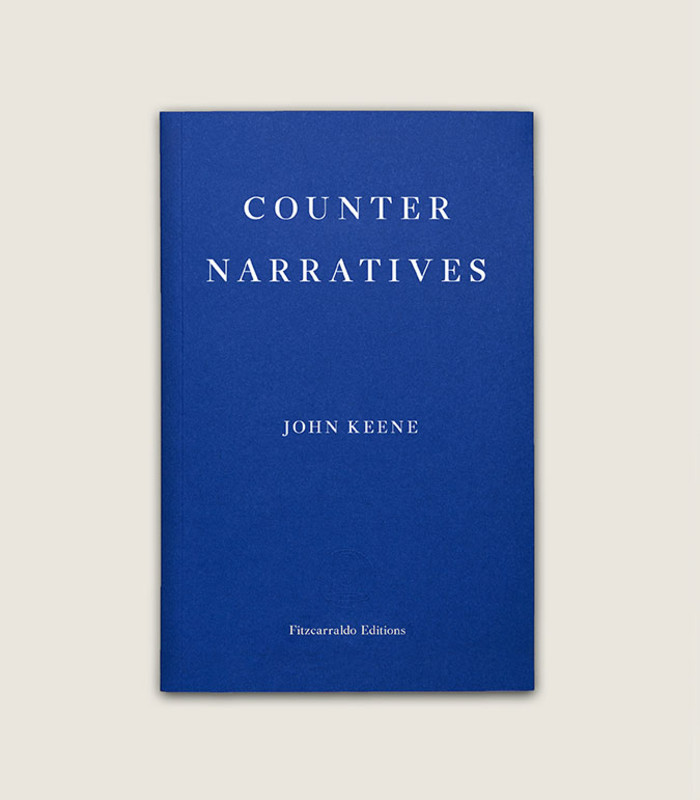
It has been eons since I've posted translations; the last, I think, were several poems by Sunjata, from French. Over the last few days, as the new year rolls in, I've been reviewing old translations I'd completed but never published, and I found a trove of translated short poems by Paulo Leminski (1944-1989), whom I've featured several times on this blog. He remains a favorite of mine. My first led to a lively conversation in the comments section with Kai hingeing on the sonorities of vowel sounds in Spanish and Portuguese and the word "dezenas" (close but distinct from "dozenas"), which led me to think even more carefully not just about Leminski's work but about translating poetry in general. I find translating poetry considerably harder but more rewarding than translating most prose (though writers deeply rooted in their native languages, like Guimarães Rosa, are more difficult or even impossible to render into another language, though people still do so).

As I wrote about Leminski before--and here I'm going to be lazy and collage parts of my previous postings--he is mostly unknown in the United States, though he is acclaimed as one of the important 20th century poets in his native Brazil. (You can scan a thorough bibliographic timeline here.) A native of Curitiba, Paraná State, he was incredibly prodigious in his brief 45 years, producing "poetry, fiction, biographies, criticism, journalistic pieces, translations, children's literature, performance scores, song lyrics, and photographs" before suffering the effects of cirrhosis of the liver. As I also wrote, "He also found time to become a martial arts master!" He apparently did not sleep.

I also wrote:

A good deal of Leminski's best known poetry is brief and linguistically playful, almost defying translation; a poem like "Ali," which turns on the Portuguese word for "there" and homonyms formed through verb juxtaposition while also referring to and riffing off the name of his second wife, "Alice," loses most of its zip in English. He also like forms such as the hakai and Leminski's work also shows affinities with the Concrete work of his good friends Haroldo (1929-2003) andAugusto de Campos (1931-). One of the best sites for translations is Edson Froes's Kamiquase: p. leminski, which features translations by Michael Palmer, Chris Daniels, and others.

Here are several of those short, linguistically playful poems, all taken from Leminskianas: antologia variada, by Paulo Leminski, with the collaboration of Maria Esther Maciel; Célia Pedrosa y André Dick and with a prologue by Mario Cámara (Buenos Aires: Ediciones Corregidor, 2005).

soprando esse bambu
só tiro
o que lhe deu o vento


breathing in this bamboo
I get only
what the wind lets through

***

mês s/ fim
vem de fora
ou de dentro
esse cheiro de jasmin?


month w/out end
it is coming from outside
or from within
this scent of jasmine?

***

a hora do tigre


um tigre
que se entigre
não é flor
que se cheire
não é tigre
que se queira
ser tigre
dura a vida
inteira


The Hour of the Tiger

a tiger
which entigers
is not a flower
it has no odor
is not a tiger
that can be desired
being tiger
lasts an entire
lifetime

***

And a slightly longer poem, about Leon and Natalia Trotsky:

El viejo León y Natalia en Coyoacán

desta vez não vai ter neve como en Petrogrado aquele dia
o céu vai estar limpo e o sol brilhando
você dormindo e eu sonhando

nem casacos nem cossacos como en Petrogrado aquele dia
apenas você nu e eu como nasci
eu dormido e você sonhando

não vai mais ter multidões gritando como en Petrogrado aquele dia
silêncio nós dois murmúrios azuis
eu e você dormindo e sonhando

nunca mais vais ter un dia como en Petrogrado aquele dia
nada como un dia indo atrás de outro vindo
você e eu sonhando e dormindo


Old Leon and Natalia in Coyoacán

this time there was going to be no snow as in Petrograd that day
the sky would be clear and the sun shining
you sleeping and I dreaming

Neither overcoats nor Cossacks like in Petrograd that day
only you and I just as I was born
Me sleeping and you dreaming

there would not be screaming multitudes as in Petrograd that day
silence we two blue murmurs
I and you asleep and dreaming

there would never be a day like those in Petrograd that day
nothing like a day departing behind another arriving
you and I in dreams and sleeping

All poems copyright © the estate of Paulo Leminski Filho, from Leminskianas: antologia variada, by Paulo Leminski, with the collaboration of Maria Esther Maciel; Célia Pedrosa y André Dick and with a prologue by Mario Cámara (Buenos Aires: Ediciones Corregidor, 2005). All translations copyright © John Keene, 2015.

Monday, September 27, 2010

Myopic Books Reading & Translations: Ana Cristina Cesar & Paulo Leminski

On Saturday evening, as part of the great Myopic Books reading series that Larry Sawyer organizes and runs, I participated in a reading to honor two new books, both translations by wonderful writers: Daniel Borzutzky's new translation of Chilean poet Raúl Zurita's Song for his Disappeared Love (Action Books, 2010), and Kristin Dykstra's translation of Cuban poet Omar Pérez’s Did You Hear About the Fighting Cat (Shearsman Books, 2010).

Paul Martinez Pompa reading
Paul Martínez Pompa

After last night's reading, at Myopic Bks
The audience after the reading

Larry Sawyer at the Myopic Reading
Organizer Larry Sawyer

Kristin Dykstra, Paul Martinez Pompa, Daniel Borzutzky, and I
Kristin Dykstra, Paul Martínez Pompa, Daniel Borzutzky, and I, after the reading (taken by Gabriel Gudding)

Paul Martínez Pompa and I also read, and because the event was celebrating translation, I read translations of two poets I've been translating over the last few months, Brazilian writers Ana Cristina Cesar (1952-1983) and Paul Leminski (1944-1989), both of whom were contemporaries of Zurita (Pérez was born in 1964), and are highly regarded in contemporary Brazilian and South American letters.  Both also have been linked as part of the loosely affiliated "marginal poets," an affiliation based in part on their novel and somewhat experimental, though differing approaches to poetic style and address.

Cesar was a queer São Paulo-born poet who studied and spent time in London, before later living in Brasília, and her poetry often unfolds like conversation, or dialogues, the intimacy enhanced and mitigated by her wide range of references, allusions and irony.  Her fame has steadily grown since her death, by suicide, at the age of 31. Leminski, whose ancestry included African and Polish roots, often played with rhyme and rhythms, while also incorporating poetic forms such as haikai and haibun, drawings and calligraphy, and other languages, such as English.  I find myself drawn back again and again to the work of both, and was delighted to have an opportunity to read some of these publicly. I am posting one translation by each below.  Enjoy!

ANA CRISTINA CESAR

GRAMAS

O coração tem pouca ironia de tardinha
Segredos carnais à flor da pele
poemas descarnados aguardando

A vida recusa transportar-se para outeiros
buracos cavados por doninhas
ervas que florescem

O coração tem pouquíssimo fôlego na piscina
Nos quintais dispara úmido
Nas salas fechadas cuida das buzinas

A vida se encarrega das janelas
mas acaba descendo em correria
Não cabe Não suporta Não tem peso


GRAMS

The heart has little irony in the late afternoon
Carnal secrets on the surface of the skin
skinny poems, just waiting

Life refuses to carry itself off to the hills
holes dug by weasels
grass flowering

In the pool the heart has almost no breath left
In the yards it fires wet
In closed rooms it avoids car horns

Life is put in charge of the windows
But it ends up plummeting in a rush
It does not fit Gives no support Is weightless

Copyright © Ana Cristina Cesar, from Antigos e soltos: poemas e prosas da pasta rosa. Organized by Viviana Bosi. Rio de Janeiro: Instituto Moreira Salles, 2008. Translation © by John Keene, 2010. All rights reserved.

PAULO LEMINSKI

É e é

    Dura o diamante
Dentro da pedra pura.
    De agora em diante
Só o durante dura.


It is and it is

    The diamond endures
Within the pure stone.
    From now going forward
Only the meantime holds on.

Copyright © Paulo Leminski, from From Leminskiana: antología variada. Selection, chronology and prologue by Mario Cámara. Critical texs by Maria Esther Maciel, Célia Pedrosa and André Dick. Testimonies by Augusto de Campos, Décio Pignatari, Haroldo de Campos, Waly Salomão, and Jorge Mautner. Poems by Régis Bonvicino. Bueos Aires: Corregidor, 2005. Translation © John Keene, 2010. All rights reserved.

Friday, July 27, 2007

Translation: Paulo Leminski

LeminskiHere is another translation, by a poet little known in the US, I imagine, but highly regarded in his native Brazil, the late Paulo Leminski Filho (1944-1989, at left, from Alguma Poesia). Hailing from Curitiba in Brazil's south, Leminski was extraordinarily prolific, publishing poetry, fiction, biographies, criticism, journalistic pieces, translations, children's literature, performance scores, song lyrics, and photographs, before cirrhosis of the liver cut his life short. He also found time to become a martial arts master!

One of his biographies focused on João da Cruz e Sousa (1861-1898), a central figure in Brazilian Symbolism and pioneering writer of African descent. (Cruz e Sousa was born in slavery in Desterro, now the stunningly beautiful state capital city of Florianópolis, and died an impoverished victim of racism and tuberculosis in Sítio, Minas Gerais state.) The biography's full, unfortunate title, João Cruz: o negro branco [which translates as the Black White Man or the White Black Man], like its choice of subjects was significant; in looking at Cruz e Sousa's life, Leminski also explores the contours of his own experiences as a person of mixed ancestry (Polish and Black in his case) and as a self-declared Afro-Brazilian. Though Leminski's work, unlike Cruz e Sousa's, did not extensively treat racial themes or subjects, his work also did not meet with disdain and incomprehension, but rather widespread acclaim.

A good deal of Leminski's best known poetry is brief and linguistically playful, almost defying translation; a poem like "Ali," which turns on the Portuguese word for "there" and homonyms formed through verb juxtaposition while also referring to and riffing off the name of his second wife, "Alice," loses most of its zip in English. He also like forms such as the hakai and Leminski's work also shows affinities with the Concrete work of his good friends Haroldo (1929-2003) and Augusto de Campos (1931-). One of the best sites for translations is Edson Froes's Kamiquase: p. leminski, which features translations by Michael Palmer, Chris Daniels, and others.

I've taken this short poem from Christian Rocha's Gropius page, featuring 50 of Leminski's poems. The title is a playful geneology:

Rosa Rilke Raimundo Correia

Uma pálpebra,
Mais uma, mais outras,
Enfim, dezenas
De pálpebras sobre pálpebras
Tentando fazer
Das minhas trevas
Alguma coisa a mais
Que lágrimas

Rosa Rilke Raimundo Correia

One eyelid,
Plus one, still others
Finally, tens
Of eyelids upon eyelids
Trying to make
From my darknesses
Something more
Than tears

An alternative translation, based on my exchange with Kai (thank you!) in the comments section:

One eyelid,
Then one more, then others
Ultimately many, tens
Of eyelids upon eyelids
Trying to fashion
From my dark moments
Something more
Than tears

Copyright © Paulo Leminski, 1989, 2007. Translation by John Keene