Showing posts with label Jeffery Renard Allen. Show all posts

Monday, May 29, 2017

Random Photos

A sampling of photos from April and May, two incredibly busy months!
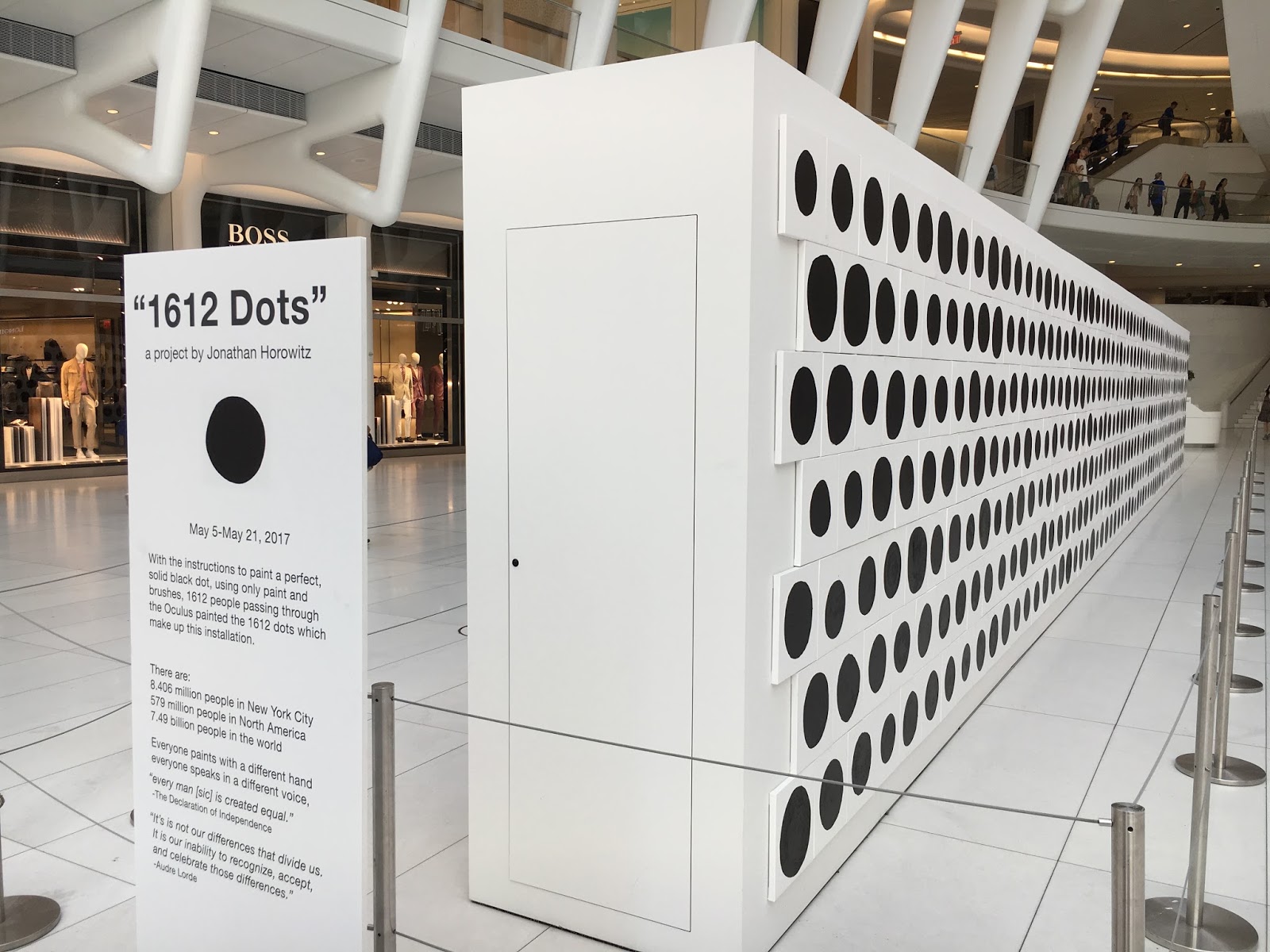
"1612 Dots," a participatory, conceptual
 sculpture in Brookfield Place,
World Trade Center
Geese and goslings, Jersey City
The flyer for A Stray, a superb film
by one of my Rutgers-Newark MFA
advisees, filmmaker and fiction writer
Musa Syeed
Musa introducing his film, A Stray
At the Montclair Literary Festival (l-r: Sam Lipsyte
Garth Risk Hallberg &
 Nicholas Delbanco),
with our host introducing the event, The Sanctuary at First 

Elena Delbanco at the Montclair Literary Festival
Cleaning the pedestrian walkway,
mall in downtown Jersey City
One of my brilliant honors undergraduate
students, Madani Sheikh, presenting his
work at the Rutgers-Newark Student Research Fair
My other honors undergraduate
student, Secilia Flores, presenting her
work at the Rutgers-Newark Student Research Fair
A mural underway, Jersey City
Colm Toibín, and my colleagues MFA program
director Jayne Anne Phillips and Brenda
Shaughnessy, Writers @ Newark reading series

The packed house for the Writers @ Newark reading
David Hyde Pierce signing autographs
outside Hello, Dolly! on Broadway
Lower Manhattan, infogged (befogged?)
Newark doorway
My brilliant former student Serena Lin,
reading at her farewell event (before moving
back West), in Brooklyn
Pondering pigeon
A truly gifted author, poet and fiction writer
Jeffery Renard Allen, with whom I read
this year's MELUS conference, at a panel
organized by Keith Byerman
MIT's postmodern and avant-garde
Stata Center
A discarded twist brush, which was sitting
right in front of my building at
Rutgers-Newark
Lincoln, Illinois

Wednesday, June 03, 2015

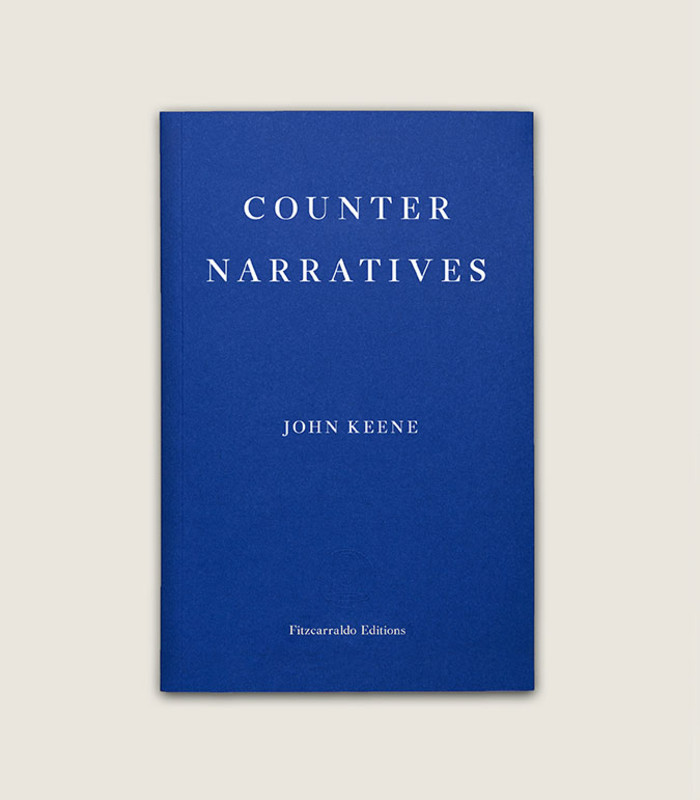
Counternarratives Launch at Community Bookstore (UPDATED)

UPDATED: I've posted the YouTube video of the event below!

***

Last night's reading at Community Bookstore in Park Slope, Brooklyn marked the first official event in my launch of Counternarratives, and an exciting, enjoyable event it was. Before a full audience, the great Jeffery Renard Allen, author of a number of award-winning works, including the novels Rails Under My Back and The Song of the Shank, a friend and writer I admire tremendously, joined me, reading an excerpt from the latter novel before I read the ending of the story "The Aeronauts," in which free black Philadelphia-native and teenager Theodore ("Red") accidentally sails off in a sabotaged balloon into Confederate airspace early in the US Civil War. (That snippet always chokes me up a bit.)

Jeff then posed some questions, about form, politics, race, history, and my (still unfinished) novels, before we opened up the discussion to the floor. It was a delight to bring the book into the world in live conversation with Jeff, with whose work I think of my own always in conceptual, intellectual and literary conversation, and exhilarating to be able to read from the now published book before a live audience, filled with many old friends, colleagues, former students, and my wonderful publisher New Directions' key members, among them my editor, Barbara Epler.

Below are a few photos from the event. There's video which I hope to upload soon. I have two more readings on the near horizon, on June 23 at Word Bookstore in Jersey City, and on July 1, in conversation with Christine Smallwood, at McNally-Jackson in Manhattan, so please come out if you can. And if you'd like me to come to your local bookstore or university to read, or chat, drop me a note! Thanks so much again to Community Bookstore and their amazing staff, to New Directions, and everyone who came to help launch the book!

Jeff and I
(Photo by Barbara Epler)
Reading from "The Aeronauts" 
(Photo by Barbara Epler)
Reading from "The Aeronauts" 
(Photo by Barbara Epler)
Chatting with friends and former students
Miriam Rocek, her lovely girlfriend,
and Brooke Sossin
(Photo by Barbara Epler)
The video from Community Bookstore, courtesy of New Directions!

Friday, June 20, 2014

Word for Word Lunch Poems at Bryant Park + Jeffery Renard Allen at Powerhouse

Among the many treasures New York City offers year-round is the weekly Word for Word series at the outdoor Bryant Park Reading Room, right behind the New York Public Library's Schwarzman Research Branch. Organized by Paul Romero, the poetry readings occur on Tuesdays (and some Wednesdays) in the evening and Thursdays at lunch time from January through the late fall, , except on major holidays, and feature a diverse range of readers. This year's lunchtime readings have been organized around specific presses and poetry organizations and groups, so poets published by Coffee House Press, Song Cave Press, WordTech Communications, and affiliated with CUNY and Blue Flower Arts have read so far.

Yesterday, as part of a summer-long tribute to the 50th Anniversary of the publication of Frank O'Hara's (1926-1966) legendary Lunch Poems (City Lights Books), Patricia Spears Jones invited four fellow poets to read poems inspired by O'Hara book and work, and one of his central figures and themes, New York City. Poets Lydia Cortes, Sharan Strange, Jocelyn Lieu, and Jessica Greenbaum, as well as Patricia, each read a poem by O'Hara--including some of my favorites, like "A Step Away from Them" and "Steps"--followed by their own. O'Hara's casual tone, his engagement with the everyday, his often breezy treatment of desire and love, his incisive humor, and his urbanity, all surfaced in the poems of each poet. 

Cortes read several poems that dealt with her Puerto Rican heritage; Strange also explored city life, including a poem that mentioned another poet who was present, Thomas Sayers Ellis, snapping photos throughout, and ended with an unforgettable tribute to her mother; Lieu read a series of "Hard Times Haikus" that weren't exactly haikus but distilled experience, with concision and wit, as effectively as that form can; Jessica Greenbaum invoked Florence Nightingale; and Patricia, accompanied by rain, and then by an umbrella-bearing Paul Romero, brought Paris, philosophers, Ellis (again), curses, and Freedom Summer into the mix. Though I headed off to lunch with another poet friend who attended the reading, the poems, O'Hara's and everyone elses, were satisfyingly filling all by themselves.

Lydia Cortes
Jessica Greenbaum
Jocelyn Lieu
Sharan Strange
Paul Romero, and Patricia Spears Jones
***

Later that evening, at the Powerhouse Arena in Dumbo, Brooklyn, poet, fiction writer and professor Jeffery Renard Allen read from his acclaimed new novel The Song of the Shank, which fictionalizes the life of Thomas Green "Blind Tom" Wiggins (1849-1908), a 19th century enslaved African American whose piano performances were legendary in their day. Jeff began the reading by talking how an Oliver Sacks article he read years first hipped him to Blind Tom's story; he noted his particular fascination with Sacks's discussion of the "autistic sublime," which he attempted to depict in his text. Other aspects of Blind Tom's life, such as his performances on behalf of the Confederacy, and his refusal, after a certain point, to perform, required a complex rendering that Jeff, as the author, had to negotiate.

He then described how he transformed Wiggins's troubling story into a novel, which took him a decade to write and which involved several false starts. His ultimate discovery entailed eliding certain historical specificities, staying aslant of Blind Tom's interiority, pushing the boundaries of realism, and taking a few other authorial liberties to bring the story to life. He also learned a few things he did not know before, such as that "the blind can cry." (I didn't know this either, but I won't forget it.) Although there are no recordings of Blind Tom's music, a Brooklyn-based performer, John Davis, has reconstructed some of them, but Allen relied primarily on his imagination. The stellar reviews he has received so far strongly affirm his approach.

After Jeff finished reading and answering questions, performer Genovis Albright accompanied him, performing one of Blind Tom's infamous tunes, "The Battle of Manassas," which sounded a lot like "Dixie." One of Blind Tom's performance techniques was to play multiple tunes--sometimes three at once--simultaneously, and Albright appeared to do this briefly, which immediately brought to mind the music of Charles Ives. I asked Albright about this, specifically mentioning his symphonies, but he wasn't sure what I meant, and afterwards I sent Jeff a note thanking him for the reading but also rhetorically wondering whether any Ives scholars had investigated whether he heard Blind Tom's performances. Given that both may have lived in and around New York at the same time, it would not be inconceivable, would it? Jeff's reading deeply sparked my interest, and The Song of the Shank is at the top of my list of summer reads.

Jeffery Renard Allen
Genovis Albright

Thursday, January 14, 2010

Writing in Flight + More on Haiti + Congrats to Jeffery Renard Allen

I'm beginning this blog post with a little test: using GoGoinflight.com's service, I'm connecting to the Net while on my flight. I learned about this from tech guru @karsh (many thanks!), and signed up as soon as I could. From what I can tell, it's available only on certain airlines and certain flights. The American Airlines one I'm on had "Wi-fi on board" signs running along the length of the overheard storage area, alerting me that it was available, but most of the ones I've been on have not had Wi-fi service. It's not cheap, so I probably won't be using it that often, but I wanted to try it out. Given the costs of flights these days, Wi-fi should be free. But that's another matter.

+++

Speaking of Twitter, I have incorporated tweeting into one of my undergraduate classes, and so the brilliant seniors in the required "Situation of Writing" class now have a wonderful feed going at @GetItWrite392 . They are tweeting on various aspects of the writing world and life, publishing, literary culture, and so forth, and have so far linked to some great material, including a witty piece by Colson Whitehead and an article on MFA programs. If you're at all interested or amenable, please follow their tweets, and if you have suggestions for articles, let them know by tweeting to @GetItWrite392 . We're landing soon, so I'll post more later.

+++

Rays of good news amid the ongoing tragedy in Haiti: Chelsey Kivland, the sister (and in-law) of friends of mine, had not been heard from since the earthquake had leveled most of Port-au-Prince. Chelsey is a graduate student in anthropology at the University of Chicago, and has been studying and living in Haiti for several years now. Her family in suburban Chicago was terribly worried about her. According to the Consular Section of the US Embassy, she has contacted her family to say that she's alive and okay. I know they are hoping to see her at home very soon. Another friend, Philippe, wrote to say that his grandmother in Jacmel, which was also hit by the earthquake, has been located and alive, and our neighbors, who have an extensive family network in Haiti, have also said that their family members have been reached and are okay.

Philippe also sent this link to Tracy Kidder's very thoughtful New York Times Op-Ed piece on Haiti, "Country Without a Net," which focuses on supporting organizations in Haiti run by Haitians.

In the Daily Beast, Tunku Varadarajan drops some serious science on France's particularly brutal and venal history involving Ayiti/Haiti. A pretty picture it ain't.

Back in 2008 in the New York Review of Books, Madison Smartt Bell offered an overview of Haiti and Haitian culture via its literature, one of its great gifts to the world.

Foreign Policy offers this rundown of Haitian history, from the French colonial period to today. (Note, FP's slant is right of center, but it's still informative).

We shouldn't ever forget that part of that history includes 750 Haitian troops under French General Lafayette helping the American revolutionary forces to defeat the British at the Siege of Savannah, in 1779.

+++

The most recent news from Haiti, however, is still extremely dire. Estimates of the dead there range from 50,000 to 200,000, with many hundreds of thousands more injured, which would make this one of the most destructive natural disasters ever to have occurred, and one of the worst in the Western Hemisphere as well. Nevertheless, Haitians themselves, along with the search and rescue teams, have continued to pull people from the rubble and debris that now covers Port-au-Prince. Some of these rescues verge on the miraculous, and the more people and equipment that are in place the more possible they are. Another immediate necessity is getting water and food, medical care, clothing, and various forms of mobile shelter, to the living, and according to the reports I've read, this is occurring, though slowly.

In addition to short term medical, financial, rescue, logistical, administrative, resource, and other kinds of aid, the country will need longer-term assistance to help rebuild its infrastructure, its economy, and its civil society, all of which were already severely stressed. It has been very encouraging to see the commitment that other countries, and millions of people in the US and across the globe, have made to help the people of Haiti out, and I hope that the funds and resources reach the people instead of flowing into the pockets of middlemen, crooks and others. If you are unsure about where or whom to donate to, pick one of the traditional organizations, like the Nobel Prize-winning organization Doctors Without Borders/Médicins sans frontières, who have a proven track record of excellent work. Every little bit counts!

+++

To end on a better note, let me congratulate a friend, Jeffery Renard Allen, whose collection of stories, Holding Pattern, was awarded the 2010 Ernest J. Gaines Award for Literary Excellence! Allen, a Chicago native, sets these sometimes impressionistic, vernacularly grounded stories in play through his poet's ear for language and eye for place, giving them a linguistic texture and richness that's unlike a great deal of what constitutes contemporary American short story writing. (This collection and others of Jeffery's have been among the J's Theater monthly Book picks.) It's wonderful to see that this collection and Jeffery, who teaches at Queens College-CUNY and New School University, being honored in this way, and in the name of one of the important living 20th century African-American fiction writers, whose best known works might be the 1971 novel The Autobiography of Miss Jane Pittman and the 1993 National Book Critics Circle winner A Lesson Before Dying. Congratulations to Jeff, who will be honored in Baton Rouge on January 28, 2010, and do pick up this volume and his other work when you can!