Showing posts with label Gukira. Show all posts

Saturday, February 27, 2021

16th Blogiversary

The Translation Project's Black
History Month tweet, from February 21, 2021,
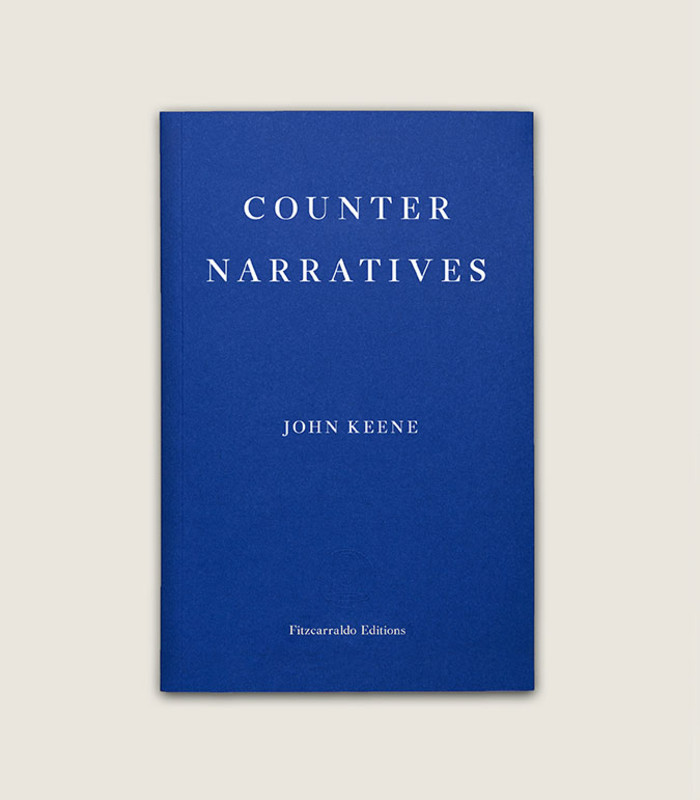
 highlighting my essay "Translating Poetry,
Translating Blackness"

Happy Black History Month and Happy Almost-End-of-February 2021. We are almost a year into the Covid-19 pandemic, and it has been over a year since I posted on this blog. It sometimes amazes me that more than a decade and a half has passed since I first began blogging, back in 2005, during what was a decidedly different time in the online world. Social media platforms as we know them barely existed; blogging was still a somewhat new and exciting activity, though the bloggers who inspired me had been blogging for several years; and people read and commented on blogs, including this one. I have over 2,000 non-spam comments attesting to that. 

16 years later, blogs and blogging do still exist, and the term "the blogs" is often bandied about on reality shows as a catch-all for any site, blog or not. This is the case despite that period perhaps ten years ago when some in the media trumpeted blogging's demise, and despite the proliferation of quasi-blog-like sites, like Tumblr and Instagram, the former of which has done away with words altogether, and both of which are now part of many peoples' daily consumption, even if blogs as they once existed--as they existed in 2005--seldom are. I won't rehearse my blogging history, which is available via a search of this prior blogiversary posts on blog (I started off blogging about poetry and the arts, etc.), but blogging here was, at least for that first year, and certainly for the next decade or so, a vital experience for pondering the sometimes imponderable, conveying some of my enthusiasms and interests, especially across the arts, posting translations, sharing photographs (from daily life, events I attended, my random walks through NYC, Chicago and elsewhere), and just having a scratchpad to play, in written form.

Things began to change demonstrably, I think, in 2014-2015 when I began chairing a department. My free time increasingly disappeared, which meant that that I had to rearrange my priorities, with some things suffering more than others, among them blogging. (A colleague queried whether I had In 2013, my second year at Rutgers-Newark (I was acting chair for part of that year) I blogged 140 times; by 2014 it had fallen to 59. I made an effort over the next few years to blog a bit more and got up to 78 and 71 blog posts, successively, in 2015 and 2016, but my entries plummeted in 2017. In 2018, I again made a strong push to blog, and nearly reached 100 posts, but most of them that year appeared during National Poetry Month, and by the end of the year, I was down to a 1-a-month trickle. Two years ago I only managed six posts, a miracle I sometimes think, in that I had one of my busiest and most draining years in academe, and I think I consciously tried to post something, though the results were, as the total underscores, paltry. 

This past year, the Covid-19 pandemic, which is still very much with us, didn't result in a flood of posts, but rather a feeling of PTSD-style wordlessness, at least in terms of blogging, that I am still trying to process. I had a few blog stubs I began, and I will try to finish some of them, even if they consist mostly of links and images, but I also feel like the silence--the absence of posts--is testimony to what has transpired over these last 17 months (since February of 2020). Most of the people who were blogging when I began or who started during the last 16 no longer do so, at least regularly, though Gukira bucks that trend, with entries that are always rich, subtle, lyrical, and distinctive, however brief. This month he continues his readings of Dionne Brand's remarkable 2018 collection The Blue Clerk. I keep thinking that I will again be able to find the time and focus to blog, but I also increasingly feel, as I pointed out in a blog several years back, reading itself appears  fallen by the wayside, and videos, whether on Youtube or IG's stories--which Facebook, tellingly, has adopted, even though it owns Instagram--or TikTok, accompanied by music and each with its own distinctive set of active participants, have become increasingly predominant, so perhaps even occasional posts, as loose and free as possible, might be the thing to aim for.

One of the many types of blog posts I tried to include over the years entailed reviews, of films, series videos, and books of course, and I feel proudest of some of those, which still hold up. One of my most read posts (4,100 views) is a short review of Christopher Honoré's 2010 feature film Homme au bain, starring the writer Dennis Cooper and the porn star François Sagat. Perhaps its stars drew more readers than most of my other posts, though I think it provided a helpful introduction to the film, the best I have seen by Honoré. I also have been able to write about more recent offerings like Terence Nance's 2018 Afrofuturist masterpiece series Random Acts of Flyness (one of the strangest and most original things I have ever seen on TV), Boots Riley's 2018 film Sorry to Bother You (I dream of more films like this!), and John Trengove's 2018 film Inxeba (Wound), which also spurred a series of typically, thoughtfully dazzling responses from Gukira (Ke'guro). One of my favorite films, which I haven't seen in years, is Tsai Ming-Liang's slow, astonishing Goodbye, Dragon Inn. I remember watching it and thinking, the viewership for a film like this is probably very small, but I most certainly am one of those cineastic people, yet in reviewing it, I tried to make it legible for a wider array of potential viewers. Perhaps if and when I find the opportunity I'll try a few more reviews this year, so keep an eye out.

I'll wind down here, and say that I feel like I've accomplished something just by posting something on this blog today. (I also deleted a slew of spam comments, which also felt like an achievement!) I am still chairing and teaching (including a graduate novel workshop this semester) and supervising theses, all via Zoom (like everyone else), every day of every week feels even more busy than usual (each seems to be triple-booked at a minimum in terms of Zoom meetings, calls, etc.), and my stack of required reading grows and grows, but it feels invigorating even to have gotten this far in this post. It is here. It is done. & I am going to try to post more.


Wednesday, February 27, 2019

14th Blogiversary

Photo by Rachel Eliza Griffiths

Fourteen years ago, on February 27, 2005, I began blogging at J's Theater. I was regularly reading the blogs of friends and writers, artists, political commentators, and others I'd never met but felt a desire to be in conversation with, and so I started this blog. I viewed it as a creative and cultural space, with far less emphasis on politics and responsive to the news cycle--which has sped up incalculably more these days now that Facebook and Twitter have taken off--than it has assumed at various points. More than anything, however I wanted it to be a site where I could try thoughts and ideas out, imperfect as they might be, without the usual concern of perfection or even the struggle, customary as well, to get them into print. (My entire writing career has entailed a struggle to get my work into print.)

From writing about poetry and poets, like Jay Wright, as I did in my first post, to my life and experiences at the university (which has become a new university over the years I've blogged), to reviews of books and films, to snippets about Black history, art and culture, and history, art and culture over all, to translations from Portuguese, Spanish, French, and, I sometimes am amazed to admit, Dutch and German, to posts about rugby, track and field and other less popular (in the US imagination, at least) sports, my iPhone and iPad sketches, and on and on, J's Theater has provided an ideal space for me to explore, (mostly--haha!) pressure-free, as I see fit. It also has served as a site of documentation at times for cultural activities, and especially was so during my decade in Chicago, which wasn't even a decade ago but feels like a lifetime has passed between then and now.

I've repeatedly debated whether to keep blogging or to quit. One great frustration after the earliest years (2005-2008 or so) was the sharp drop off in comments, which were for a while replaced by spam, which disappeared (thanks, Blogger?), only to reappear in recent years with a vengeance. It thankfully is very easy to delete these days, but that requires its own dedicated attention. Far more pressing were my academic responsibilities, which have grown to include 12-month administrative duties that devour more mental space and energy than I ever imagined. I don't think it's any surprise that before this year, 2014, the first year I became a department chair (acting during that year) and 2017, just before my last sabbatical, saw the fewest posts. It was not for lack of interest, but time and vigor.

Not so long ago, we were told that blogging was dead. No one blogged, everyone had moved to YouTube, Facebook and Twitter. And Tumblr, which was and is a blogging platform that in essence mostly deprioritized words. (It also has banned not just pornography, but nudity in general, that's another matter.) And Instagram, which is all pictures (for the most part). And Snapchat, of course. Now there's Tiktok, and other walled gardens. One thing I loved and still do about blogging (though to its credit, Twitter also is almost fully public) via Blogger, WordPress and similar sites is that whatever you published was and remains visible to all; a private company does own this platform, but the blog remains more a public square-style venue than many other options out there. For good and ill, of course. The dazzlingly brilliant Kegur'o M, who continues to blog at Gukira: Without Predicates, is a stellar example of the good that can come from a blogger at the top of their game.

But that public aspect is one that I cherish, and one reason I hope to continue blogging. I also wish some of my old blogging friends, many listed on the blogroll to the right, and other bloggers I never interacted with but who've given up blogging, would start up again. No shade against Medium, but before ideas are fully polished, why not bounce them off readers on a blog? You can always--well, so far--revise as you go.

Wednesday, January 20, 2016

Gukira on Claudia Rankine's *Citizen: An American Lyric* & "microaggressions"

A week ago I posted about two standout examples of literary criticism, a young Barack Obama's super-concise reading of T. S. Eliot's "The Waste Land," and Frank Kermode's extraordinary disquisition on the word and concept of "shudder" in that and other works by Eliot and a range of authors. Neither is exactly a model of traditional literary criticism, which brings me to another stellar example, at Gukira: With(out) Predicates, the brilliant Keguro Macharia's thought-site (to call it a blog barely does it justice).

In his January 19, 2016 post "microaggressions," Keguro shows what another approach to critical writing about literature might look like, exploring Claudia Rankine's highly lauded 2014 collection Citizen: An American Lyric (Graywolf) with a level of discernment, analytical brio and lyric verve that marks all of his writing. I won't try to summarize the piece's argumentation except to say that it takes one on a journey both into Rankine's book and into the aesthetic, social and political discourse surrounding it. He begins by pointing out that the book "circulates as an aesthetic object that documents microaggressions," and then continues:

The “micro” in microaggressions suggests the low hum of noncatharsis Sianne Ngai taught us to call “ugly feelings.”

Nothing explodes. 

Nothing releases. 

An archive builds. 

We are far from anger, far from rage, far from the demands created by the word racism.
Instead, we are in the world of microaggressions, the world of archive building, the world of opportunities created by the aesthetic object to engage in a dialogue on race or a conversation on race, in which we are encouraged to share our stories of racialization, of being marked by race, singled out, unseen in our particularities and embedded within histories we did not create and do not want to own.

Learning from Fanon, we scream that we are not our histories. 

Frantz Fanon is only one of many figures he thinks with--alongside, to, and through--beginning with Elizabeth Alexander and Barack Obama (whom he also critiques). As importantly, Keguro historicizes and defines the term "microaggression," so ubiquitous these days, in order to show what it means--what meanings emerge--from, around and because of the circulation of an "aesthetic object that documents microaggressions." The (current) aesthetic object that documents microagressions--in American society. Is much of the extant criticism about the book about the book or about the discourse that surrounds it--"the wreck and not the story of the wreck / the thing and not the myth that surrounds it," quoting, as he does Adrienne Rich? 

As I note above, this essay--in the truest sense of the world,  a trying out of thought, an attempt to think into and through ideas--concludes on a powerful note. I'll quote it:

I conclude this writing a week after Obama’s State of the Union speech, on the Monday designated this year as Martin Luther King, Jr. Day. I am arrested by the question of lag, caught by the duration of the pause. The “micro” in “microaggressions” might describe the lag that one must overcome—that return to the untime of unmaking, that disembedding from the human that one overcomes but does not overcome. How long is that pause? How is it measured? What happens in that pause? 

Chester Pierce names that pause as where the cumulative takes hold. What accretes in the pause, and how? A model of resilience reaches for the grit in the oyster, the pearl-making potential of adversity. Recall, the much-lauded Citizen is the aesthetic object that documents microaggressions. White space can be a pause. Pauses are cumulative. Something accumulates in the pause. How long is that pause? How is it to be measured? How does one measure pauses as they accumulate? How does one evaluate the pause that is considered an aesthetic object? 

how does one live—how can one breathe—in the pause

This is one dazzling example of how one thinks--in the pause.

Sunday, September 29, 2013

Gukira on Kangemi & Westgate

Businessman Abdul Haji crouches near an elephant
sculpture in the mall during the attack
(© Goran Tomasevic / Reuters / REUTERS)
There are probably very few people who could approach the tragic Westgate Shopping Mall attack and, with insightful brilliance link it to other events in Kenya as well as to a broader understanding of disposability as Gukira does here, so in case you have not headed over to his site, below is a small snippet, and here's a link to the full post: "two places."

Following the Kangemi demolitions, many Kangemi residents protested the government’s actions. They blocked roads, set tires on fire, raged and mourned. They mourned that their lives were so disposable; they raged that their livelihoods had no value. With very few exceptions, Kenya remained silent. These were not lives worth valuing. A death in Kangemi is not worth mourning. 
Reports indicate that president Uhuru Kenyatta was personally affected by Westgate—a nephew and his fiancée were killed. Photographs from Westgate have traveled across the world. We know names and faces and occupations and relationships.
*
Who will grieve with the mourners?
*
For the past few months, I have been thinking about disposability, about its reach and grasp and ever-expanding power. And while I continue to learn from Judith Butler about whose lives are grievable, about who is deemed worth grieving, thinking about disposability leads me to ask about killability.
 
To be disposable is to be ungrievable. Not to merit grief or thought. We have other words for this: acceptable losses, collateral damage. Yet, disposability is not passive, not simply a category into which we place the ungrievable. Instead, it is a hungry logic and practice. It becomes ever-more voracious as it eats. 
Copyright © Gukira 2013, All rights reserved.