|
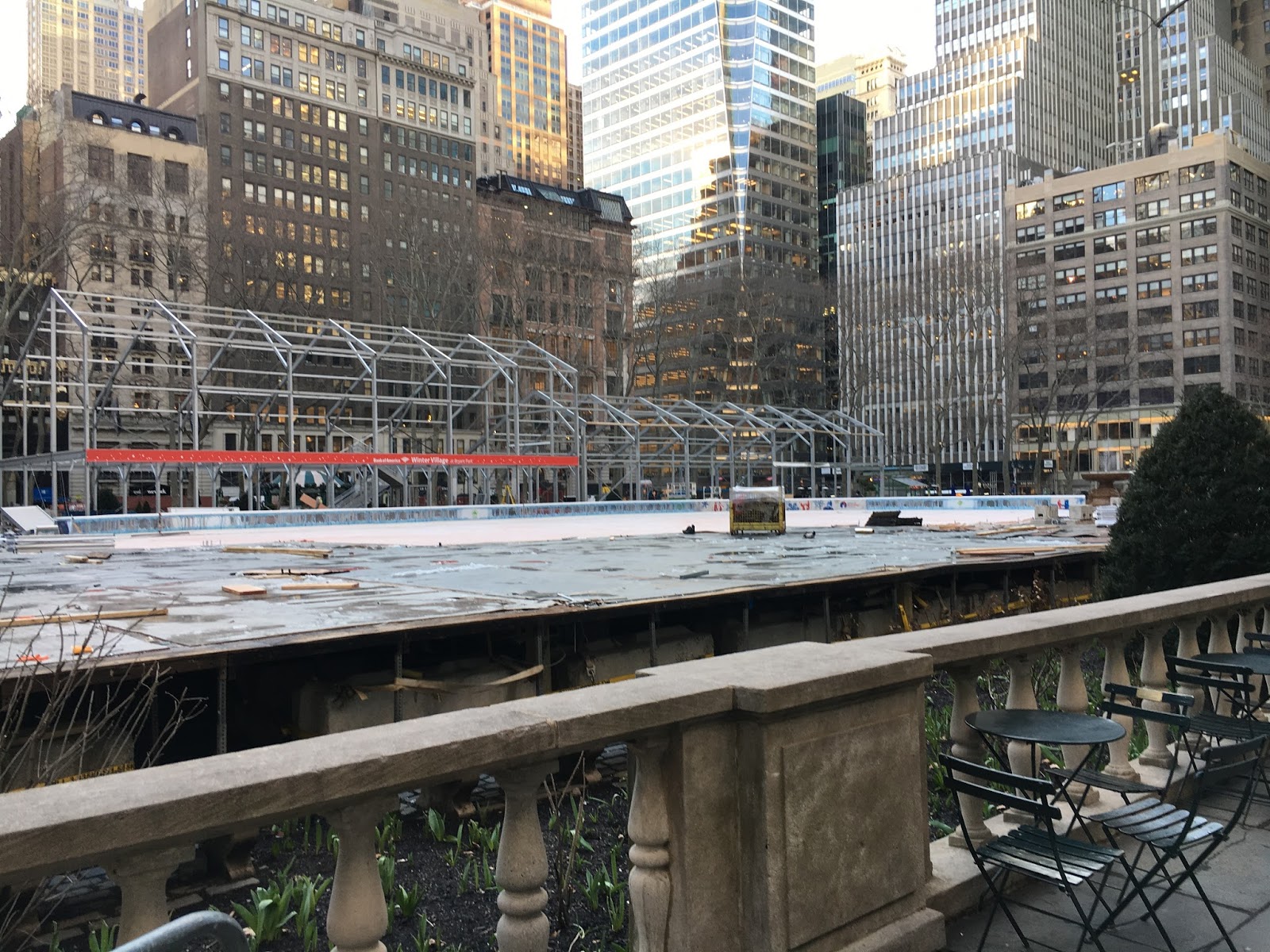
The Cooper Union's Main Building
with student protest signs in
the windows, 2013 |
For most of its history,
The Cooper Union for the Advancement of Science and Art was
free for all students who attended. Let me say that again, because I recall the first time I learned this and could not believe it. The Cooper Union, established in 1859, charged
no tuition to any of the students who attended. This policy of full scholarships resulted directly from directives by its founder, industrialist Peter Cooper, who wanted to create a school along the model of France's École Polytechnique that would be open to qualified students regardless of their race, religion, sex, social status, or family wealth. This was an incredibly progressive vision 170 years ago, and would certainly qualify as such today, especially at time when most public and private institutions grow increasingly unaffordable for a large portion of the US population, leading to campus economic, social and racial-ethnic stratification and segregation. As a result of the zero-tuition policy and its excellent faculty, Cooper Union had long attracted a stellar student body and boasted of one of the highest enrollment yields in the US. Yet one thing I wondered while attending graduate school at the hyper-expensive university next door to Cooper Union was how long it could maintain its tradition of no tuition, particularly in light of New York's increasing gentrification.
It turns out that Cooper Union
might have been able to maintain free tuition but for a series of moves, among them prior sales of land holdings in the West Village, and then the decision under the prior president, George Campbell, Jr., to build an admittedly acclaimed, LEED-certified, $175 million new building at 41 Cooper Square to house its engineering and art schools. This starchitect Thom Mayne-designed building was completed in 2009, and Cooper Union reported took out a fixed-rate mortgage loan, with an $81 million pre-payment penalty, to fund it, at a time when the school's revenue was basically nil beyond revenues
from its $723 million endowment and annual payments it received from its ownership of the land beneath the
Chrysler Building. (It had also apparently borrowed $51 million more, according to economist Felix Salmon, to fund "all the infrastructure needed to charge all those fees in the first place," along with "$8 million in additional fees to do so!) The engineering faculty had voted twice, it turns out, against the new building, and fundraising to support it came in below forecast.
Despite a Wall Street Journal article claiming that Cooper Union had weathered the global financial crisis without problems, by 2011 there were rumors of financial straits, and in 2012 the Board of Trustees approved the policy sift to charge tuition for Cooper Union's graduate programs, beginning in September 2013, which augured the eventual levying of fees on undergraduates.
In May 2013, to protest the likelihood of undergraduate tuition, students occupied administrative offices in the Foundation Building for a week, which brought widespread media attention to the crisis underway, and
several protesters stayed in new president Jamshed Bharucha's office for 65 days. The Board of Trustees, in conjunction Bharucha, who had arrived two years before and immediately begun raising the issue of a serious budget deficit, voted to impose undergraduate tuition, up to $19,500 per year, on a sliding scale, for students admitted beginning in the fall of 2014. (Even this tuition, exorbitant in relation to the prior price policy, would make the school one of the least expensive private schools to attend in the US.) This shift
spurred an investigation by the New York State Attorney General, Eric Schneiderman concerning the school's real estate dealings and a lawsuit
by an alumni group, the Committee to
Save Cooper Union. (I should note that although I have no ties to the Cooper Union, I have supported the Committee to Save Cooper Union advocacy group with small donations, since I think utterly necessary to preserve its unique, progressive vision, tradition and policies.)
 |
Cooper Union's New Academic Building
(Hyperallergic.com) |
Under pressure for Schneiderman's investigation,
the board voted 13-6 in April 2015 not to renew Bharucha's contract for next year. Two nights ago,
five trustees who had supported Bharucha and charging tuition resigned. They were Martin Epstein, real estate honcho and former board chair; Vassar President Catherine Hill; investment banker Monica Vachher; Cooper alumnus and starchitect Daniel Liebeskind; and architect and oil services heir François de Menil. Epstein blasted the rest of the student, faculty and alumni protesters and the board, with Artnet News reporting that he wrote, "I know that there are some in the Cooper Community that will take my
resignation as a false victory of some sort....As a donor, I am withdrawing my financial support for the
college." For his part, Liebeskind pointed out that "As an alumnus of the school who had joined the Board recently, I
expected that in this difficult time of change, there would be a
meaningful and open discussion—one which would assure Cooper Union's
stability and future....My experience was far from that."
Then yesterday,
Bharucha also resigned, and will take up a post next year as Visiting Scholar at Harvard University's Graduate School of Education. In his farewell letter, he argued on behalf of his tenure and the new tuition plan, stating that
The class completing its freshman year was the first to be admitted
under the 2013 Financial Sustainability Plan, and the class just
admitted will be the second....These two classes uphold Cooper’s unparalleled standard of excellence.
With need-based financial aid, we have also been able to increase access
to those who can least afford it, as shown by an increase in the
proportion of students eligible for Federal Pell Grants.
In response to Bharucha's departure, the remaining members of the board praised his tenure, writing, "The financial exigencies with which [Bharucha] was confronted upon his arrival
were not of his making and he deserves credit for sounding the alarm
about the need to take urgent action to ensure Cooper Union’s long-term
financial sustainability." Cooper Union's’s current vice president for finance and administration William Mea will become interim president until the board can find a replacement for Bharucha. But who in her right mind would take this job?
Felix Salmon has argued that the blame for Cooper Union's financial and administrative difficulties lies squarely
not just with the prior president Campbell and with Bharucha, but also with the various rosters of the enabling Board of Trustees. Why, he has asked,
did they greenlight a building for which the institution had not raised sufficient funds? Harvard, where Bharucha heads this fall, has an endowment of $36.4
billion as of last June--and rising, as it is
now well along in a $6.5 billion fundraising effort that has already raised about 77% of that total--decided at the peak of the global financial crisis, when its endowment dipped temporarily to about $26 billion in 2009,
not to build a new museum of contemporary art along the Charles River. Was it neoliberal hubris and a desire to transform Cooper into a very different kind of school that led Campbell, Bharucha and their board supporters to go the route they did? Does this ethos still exist among the remaining board members, and do they have a viable plan for the future?
Perhaps more importantly, who will possibly step into the breach at this point to lead a school that remains so internally riven? Will the next leader have board support to return Cooper Union's undergraduate program, at least, to full scholarship status? Or have the dice been cast such that there is no turning back, such that what was Cooper Union's unique calling card, will be lost for good? (New York (and nearby New Jersey) do have a wide array of high quality public and private art and engineering institutions, with a major one--
Cornell Tech--under development.) And what about Cooper Union's students, who were once guaranteed not only relief from worrying about funding their educations but a unique intellectual freedom, within the school's academic constraints, to construct their educations as they saw fit and then, debt-free, to elect careers that did not depend on them having to pay back massive loans? I ask all these questions not to suggest that institutions should not change and evolve, but to ask, in the tumultuous transformation of the Cooper Union, what have we, and American higher education more broadly, lost?