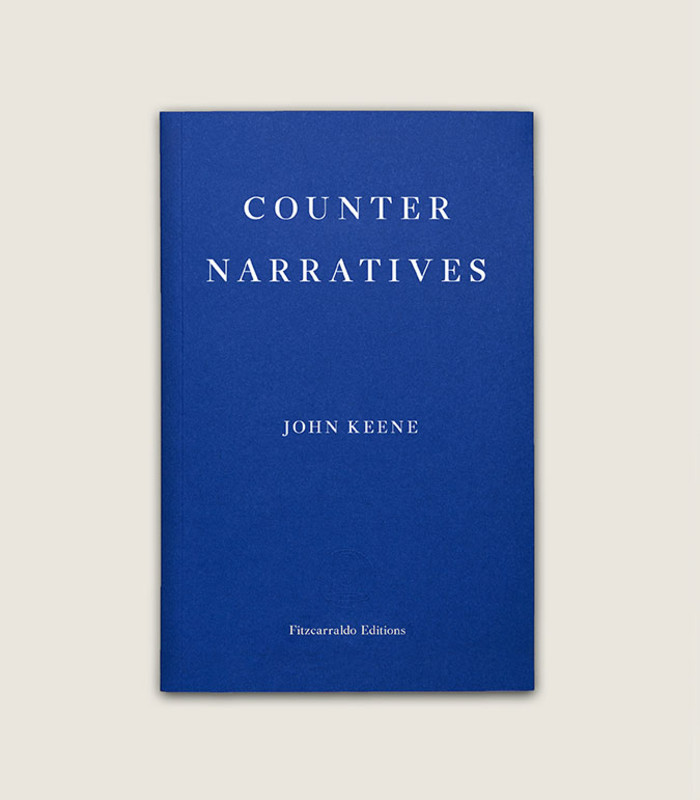
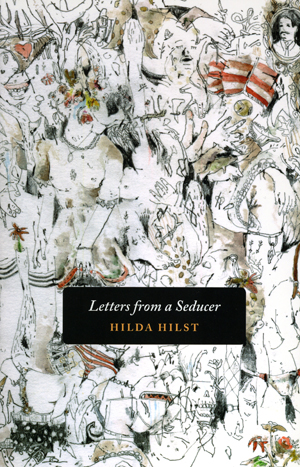
Here is a snippet from one of the Lost and Found: The CUNY Poetics Document Initiative chapbooks I picked up last weekend, a letter circa Spring 1955, from Frank O'Hara (1926-1966) to Kenneth Koch (1925-2002), during the years when they were consolidating their friendship, and just beginning to publish the poetry that subsequent generations of readers now know as the earliest examples of New York School writing. I like this letter because it gives a clear sense of O'Hara's jaunty and campy sensibility and style, as well as little hints of what he (then toiling at the front desk at the Museum of Modern Art) and Koch (then traveling in Europe with his wife, Janice Elwood Koch) were up to. It mentions one of the famous episodes in American mid-century poetry history, the initial rejection of both O'Hara's and John Ashbery's (1927-) [called "John Ash" and "J A" below] first collections of poetry by the Yale Series of Younger Poets Prize in 1955, a situation that the judge, W. H. Auden (1907-1973), later rectified when he asked that O'Hara and Ashbery send their collections to him directly, and he chose--though not enthusiastically, according both to his then assistant and eventual close friend and associate of O'Hara, Koch and Ashbery, James Schuyler (1923-1991), and to his somewhat disaffected introduction--Ashbery's volume, which was published the next year, in 1956, as Some Trees. The CUNY chapbook includes notes to all the references, but here are some clues if you're not familiar with these names: Larry [Rivers] (1923-2002), Grace [Hartigan] (1922-2008), and [Jean-Paul] Riopelle (1923-2002) were visual and plastic artists; Joe [Brainerd] (1941-1994) was an author, collagist, cartoonist and painter; Wystan is W. H. Auden; and Koch's two versions of "The Circus," the first one praised here, are among his best and most famous single poems). I highly recommend them.
***
May 9, 1955
New York
Dear Kenny,
Not knowing where you are, I'm writing you back in Paris. Doubtless you two have gone to Labrador or Aden, there's no way of guessing.
Have you see the art show we sent to the Orangerie? and have you seen the Musée d'Art Moderne show, which has a Hartigan in it? Write me your impressions.
I'm sending you my first poem in French. If you find any mistakes please let me know. Otherwise, I hope you'll be able to get it printed in the French Vogue with a suitable decoration by Riopelle. Does it sound French, I wonder?
How is Janice? Would she like to sell me her painting of Joe by Larry I have grown passionately fond of it and would buy it at whatever price (but I know she only paid $25, honey, and ten years have not yet passed), but couldn't afford anything over $50, I don't think unless it were long-range. The money might come in handy, however, as your stay continues so let me know.
John Ash has writen a miraculous new 3 act play which takes place in the Canadian Northwest and is full of Mounties and Indians. It is more or less of an homage à Rin Tin Tin, with Pirandelloesque touches. It is full of something like fresh mountain air and has a simplicity like quicksand. You'll adore it.
We both sent books to Yale with disastrous results. Mine was returned because it arrived too late and then John's was returned because they are so stupid. And now Wystan will not see either of them. That preliminary screening gimmick is a crime--there can't be so many each year. You'd think he'd realize that no lesser person than himself should be allowed to make even the first rejections--what's the sense of his being editor if his choice is limited to the final 15 manuscripts and they are weeded out by a perfectly ordinary commercial publishing system? He was complaining before he left that there were so few interesting ones, and this certainly explains that. Oh well, who cares? But he might have liked John's enough to do it...
Are you too busy traveling to write? or writing to travel? Send me another delicious postcard, a note, some poems (I loved the ones you sent J A, especially Geography and the Circus). As you always do, give me the feeling about your works that "Alps on Alps arise" or whatever that line is.
Love to both,
Frank
From "this pertains to me which mean to you": The Correspondence of Kenneth Koch & Frank O'Hara 1955-1956 PART 1. Josh Schneiderman, editor. New York: Lost and Found: The CUNY Poetics Document Initiative, Series 1, Number 2, Winter 2009.
Like the President and First Lady of the United States, I have Irish ancestors, so in honor of Saint Patrick's Day, let me say: Sláinte!
Bayard Rustin & Rev. Martin Luther King Jr.
Today is also marks what would have been the 100th birthday of Bayard Rustin (1912-1987), the civil rights and peace activist, author, and queer pioneer.
This month, in conjunction with this centennial, City Lights Bookstore is publishing I Must Be Resist: Bayard Rustin's Life in Letters: Bayard Rustin, edited by Michael G. Long, foreword by Julian Bond (2012). (You can download a pdf copy of a Q&A with Michael Long here.)
Today on City Lights Bookstore's relatively new blog, there is an Issuu document version of Rustin's response to a request by the late black queer author, journalist and activist Joseph Beam (1954-1988), to contribute to an anthology that would later become the one of the groundbreaking books of black LGBTQ literature, In the Life: A Black Gay Anthology (Boston: Alyson Press, 1986).
Since Issuu allows easy embedding, I'm posting it here. Rustin explains why he will not be contributing, noting that he was not in the vanguard of fighting for gay rights (yet he was at the same time out to leaders of the Civil Rights movement, like Rev. Dr. King, Jr., and others) and that although he fully supported equal rights for homosexuals, he considered "orientation" to be a "private matter."
The City Lights blog features a number of Rustin's letters (in Issuu format), as well as other marvelous material (including a post on Audre Lorde and another on Cherríe Moraga, for women's history month), so please do pay it a visit, and if you can, get or ask your library to order this new Rustin text.
I always worry about being a Cassandra, I really do. I have to stop myself from photographing empty storefronts, going on about the unsustainability of the current low-tax safety-net-slashing agenda of both major parties, tweeting about every new revelation concerning how utterly the previous and current administrations have shredded the US Constitution (cf. Jane Mayer's extremely upsetting but revelatory New Yorker article on NSA whistleblower Thomas Drake, etc.). I learned during the 2002-2003 period that few people wanted to hear about what were to me clearly evident lies about the anthrax attacks, WMDs, Saddam Hussein's links to Al Qaeda, etc. emanating from the Bush administration; and a year or so later not to ask everyone I knew, WHO is buying all these houses and condos and HOW are they doing this? even though the entire "Flip It"/real estate mania simply did not make any sense to me at all. But I realized I was starting to sound like a deranged person by bringing these things up, so I stopped doing so and channeled them towards other outlets (like this blog).
But I cannot keep my eyes and mouth closed. I have been back in New Jersey and New York for approximately two weeks now. I daily visit the New York Public Library, where I am trying to complete a large project. On my way to and from the library in just these two weeks I have noticed and noted many things, some good, some bad, some uncategorizable, but one of the most disturbing has been seeing young women with children begging on the streets and subways. At least 5 times now in just two weeks, I have seen women, with a small child in their lap or beside them, seated on the sidewalk or in the subway (twice in the 42nd St. station), with little cardboard placards, asking for change and help. FIVE TIMES. IN TWO WEEKS. They are all different women and children. Perhaps full-time New Yorkers have been seeing this deeply saddening and upsetting human manifestation of poverty and it no longer raises eyebrows. Perhaps others have sounded the alarm and continue to. Perhaps this is so widespread and no one any longer takes notice. Perhaps people are blogging about (because I haven't seen it mentioned in any newspaper), but to me, this betokens how truly economically grave things are right now.
I am old enough to recall the legions of homeless people who populated New York's streets in the 1980s and early 1990s. I can also recall Chicago's (and Evanston's) homeless crisis, which only moderately abated during the past decade's fake "boom" years. Remembering New York during its down years (which were, I should add, not its worst, as during that era I grew up in another city which was plummeting towards its nadir), I knew there were numerous homeless women and children, and that there still are, but I cannot recall seeing, in such a short period of time, so many on the street begging and pleading (one woman was singing) for money. Perhaps I did not notice back then; perhaps this was much more common during the last economic disaster I can recall, which was in any case nowhere as severe as the current one, though it paralleled it in some key ways. One difference between then and now was that the wealth gap, though growing, was not as large then as it is today, and New York was much less excessive in its glitz. Though it had its superrich, it was still the New York of squeegee men, of the potholed West Side Highway, of the too-dangerous-to-wander-through-at-night Central Park. The Meatpacking District was a meatpacking district. You could rent an apartment in the East Village or Washington Heights for $500. Tom Wolfe's Bonfire of the Vanities captured it quite well. New York today is something else; parallel, increasingly incommensurate worlds. Each world is growing unavailable, beyond glimpses, to the other. The world of women singing for change, begging for change, pleading in Spanish for change, as their children hover beside them, as passersby don't blink and eye and those with means slide by via car service, oblivious, is a tragic one indeed. I know it's not only New York, I know there are millions of homes under foreclosure and people are sleeping in cars and tents and on the streets all over the country, but this is what I'm seeing now, repeatedly.
I could not stop myself from taking pictures today. We have to do something; the broken record of austerity and fiscal contraction to preserve the rich's bounty isn't working, and I don't know that many people will keep taking this. We can be tranquilized only so long before we wake up, or we don't.
Near Madison Square
Near Herald Square
+++
On a related note, though this has perhaps less to do with economics and more to do with cultural expression, I have been noticing more and more people running around in pajamas. Not children, but adults. Not pajama-like clothing, which is to say, loose-fitting, wide-legged pants or slacks, perhaps in cotton or silk, and so on. No. I mean plaid pajama pants and tops, housecoats, slippers and houseshoes. I thought I was hallucinating this in Chicago, and said I would start making a mental note, but then the end of the academic year rolled around and I stopped paying attention--to this phenomenon at least. Then I returned to Jersey City and lo, here we go with the pajamas. What is up with that?
I have some suppositions, but I'm curious to know if any J's Theater readers have noticed this. I must say that I have not noticed it so much in New York City (Manhattan), but in Jersey City, particularly right up to last week, I've seen pajamaists intermittently. As I disembarked from the light rail this evening I spotted one young man with pajama pants on! He was the only one, though, at least that I noted. I have not, thankfully, seen anyone in a nightgown (well, that's not true--I saw a man wearing one last week), a nightshirt, a union suit, or, gods forbid, teddies or similar lingerie. But those plaid pajama pants...were they giving them away at Old Navy or H & M or something?
What also pushed me think of this is the story of Deshon Marman, the 20-year-old University of New Mexico football player who was pulled from US Airways flight 488 and arrested, jailed and released on $11,000 bond--I am not making this up--after allegedly failing to pull up his sagging sweatpants, which, in a video giving his side of the story, I believe I hear him calling them "pajamas." The issue of "saggers" and "sagging" is not one I'm going to debate here, though I will say that arresting anyone for sagging is insane, and jailing him or her is unconscionable. But what is up with the--a grown man, no less, not an infant or toddler--wearing pajamas pants on a flight, a short flight no less, not one in which, say, he'd be in the air for 7-12 hours and might want to stretch out and sleep? I fly a bit more than I'd want to, but I fortunately haven't seen this that much; 1-2 times in the last few years, usually teens or 20-something, but is it now more common than I imagine?
I understand the desire to be comfortable and the increasing casualness of clothing in our society. I grasp that underwear has become outerwear, and a big business as such. I am all for self-expression, creative expression, free expression. Truly. But I wonder whether we moving to the point where there is no line between what one wears in the streets or on a plane (or anywhere outside one's house) and then comes home and plops between one's sheets? Or vice versa? And yes, I know that W. H. Auden was known to scoot through the streets of New York in a housecoat and slippers, etc., but one brilliant Anglo-American eccentric decades ago doesn't justify or explain this...well, I hope it's not a trend.
On a very different note, I wanted to point to Tim Parks's very recent New York Review of Booksarticle "Your English Is Showing," on translation and the linguistic effects of English as a lingua franca. A response to a May 11, 2011 post entitled "Franzen's Ugly Americans Abroad," on European reception of Franzen's most recent work and the global literary marketplace, Parks's newer essay takes a different tack, one explored by not a few contemporary scholars of comparative literature and translation--I can think almost immediately of a talk poet and critic Mónica de la Torre gave several years ago on the literary strategies of Brazilian Concretists, part, I believe, of her dissertation--but refracted through his own experience. To summarize, he suggests that rather than non-Anglophone writers (and I would say that it's the case for Anglophone native writers too) choosing to write in the current global literary language of English, though some do (Bahian poet and fiction writer Valdeck Almeida de Jesus, for whom I've written two introductions, is one example), they have begun to internalize a particular more easily-translatable English grammar and prose style that is reshaping their prose in their native tongues. This is different, I gather Parks suggesting, from those South American writers who were heavily influenced by the American rhythms, in translation even, of William Faulkner, say; or from bilingual or multilingual writers, like Jorge Luis Borges or Oe Kenzaburo, who internalized the rhythms of English and French respectively, thus shaping their prose in particular ways; or even of Thomas Wyatt taking the Italian sonnet form and rethinking it, reshaping it, towards his own ends. What Parks is interested in links up with the ideas of critics like Pascale Casanova and Franco Moretti in interesting ways--though he doesn't mention either in this piece. What he does say is:
Of course as soon as one has excited oneself with an idea, one finds confirmation of it everywhere. As I said in my recent blog post, Peter Stamm very much fits this description, likewise the German Siegfried Lenz, and many other French and Italian authors. So strong is the flavor of English in the Italian of the bestselling thriller writer Giorgio Faletti that a number of readers suggested it was actually translated into Italian from an English original written by someone else. At my own university, IULM, in Milan, we have a project GLINT (Global Literature and Translation) of which one area involves studying the extent to which Italian syntax has shifted toward English models over the last fifty years. There is no shortage of evidence. Contemporary Italian more frequently puts the adjective before the noun, more frequently uses possessives for parts of the body, more frequently introduces a pronoun subject, all changes that suggest an influence from English.
So that is the intuition. The idea is not so much the old polemic that English is simply dominant and dangerous; but rather that there is a spirit abroad, especially in the world of fiction, that is seeking maximum communicability and that has fastened onto the world’s present lingua franca as something that can be absorbed and built into other vernaculars so that they can continue to exist while becoming more easily translated into each other.
As I noted above, he's asserting something that goes beyond particular writers or national language, and suggesting, rightly I think, what's happening in a broader sense. As I noted above, I think it affects Anglophone writers as well; simpler and more straightforward prose fiction has a better chance not only of being published, of traveling and of being publicly acclaimed and rewarded than more complex, linguistically oriented work, but it's more like to be read by a wider array of people, including those whose native language is English and those whose isn't.
This is even more true for writers working in almost any other language. I think of the fine but relatively straightforward prose of Roberto Bolaño and compare it to the experimental style of Juan Goytisolo or the extroardinarily complex texts of Julián Ríos, for example. I set them in opposition not to establish a hierarchy of value (I think all have their merits and are great writers), but to suggest that by its very nature the prose of Bolaño has received and will continue to receive greater attention than those of the other two Spanish-language writers, in part because he is translatable in ways they are not (and Ríos's Poundemonium, say, is less translatable than Goytisolo's Makbara, though both have been well translated).
As to the effects on the prose styles in the languages themselves, and of English's direct influence, how incredibly fascinating. I will have to read much more carefully. The last few non-English works I've read, however, show little of English's, particularly American literary and spoken English's effects....