Showing posts with label Tomas Tranströmer. Show all posts

Thursday, April 26, 2018

Poem: Tomas Tranströmer

Tomas Tranströmer
(World Literature Today)

In 2011, Tomas Tranströmer (1931-2015), a highly regarded but perhaps not widely known Swedish poet, translator and psychologist, received the Nobel Prize in Literature. I wrote a short blog post about him and featured some of his poems. I did not, however, delve into a discussion of his biography, since it was up at the Nobel site, and I was somewhat indifferent to his selection. Given some of the bizarre Nobel literature choices (save Alice Munro) since Tranströmer, and the ongoing scandals linked to the Swedish Academy, which awards the literature Nobel, Tranströmer's honor looks like a recent high-water point for that organization.

His poetry certainly holds up; a lyric poet to the core, he has a gift for creating mystery and drama out of observations of everyday life, and a skill for utilizing metaphor to suggest great depths below and beyond the surface of the visible world. There is something charged and spiritual in so many of his poems that while I think it might be wrong to call him either a metaphysical or a religious poet, he is, I think it fair to say, a poet of the spirit and, conversely, of immanence. In the three poems of his I quoted back in 2011, you can see this most directly in "Strophe and Antistrophe" (I love that title), when he is describing both reality and something within and beneath--beyond--it: "Sudden change: beneath the float of heavenly hulls / glide the tethered ones. / Stern high, at an impossible angle, / leans the carcass of a dream, black / against a pale red strip of coast."

The sensory and sensuous apprehension of the world pulses dialectically in these lines, which paint a picture, but not a verisimilitudinous one. Instead, it is painterly in the stricter sense, of capturing what lies in in the mind, before the eyes and fingertips, while being interpreted and transformed by them. As it turns out, Tranströmer was alert to how other artists might be engaging with the world around them, and in "Vermeer," his short poem about Johannes Vermeer (1632-1675), the Dutch Golden Age painter, whose exquisite intimate portraits had to wait several centuries before they received widespread acclaim. Careful, slow, deliberate, with an exceptional eye and gift for depicting light, he is now praised as an Old Master.

In "Vermeer," beautifully translated by Samuel Charters and which I am borrowing from the Painters and Poets blog, Tranströmer is chattier than usual, and appears to have devised a formal game for himself, which entails repeating "wall," one pictorial element that appears in the first of the images below, in nearly all of the stanzas. One way to read this repetition apart from being a result of observation and description of the paintings is by noting some of its possible metaphorical meanings; a wall of time separates us from the lifeworld and vision of Vermeer, and no amount of research can make him, his process or his perception of the world fully knowable. (David Hockney created a stir when, a few years ago, he argued and demonstrated the several of the Old Master painters like Vermeer, may have used optical devices, including special lenses and camerae obscurae, to produce works of such pinpoint precision.) That has stopped writers and even Hollywood from trying, though; Vermeer's iconic "Girl with a Pearl Earring" (one of its many names) spurred an eponymous 1999 historical novel, by Tracy Chevalier, which then became a belauded 2003 film starring Scarlett Johansson--as well as an allegedly dreadful 2008 play, which I've never seen.

Yet what does a work of art--a poem, a short story or novel, a play--about someone from the past do but allow us another means to "know" that gone world, to access, imaginatively, its vistas, its landscapes, including of feelings? Like a filmmaker with magic powers, Tranströmer is taking us into Vermeer's scenes, his world--"straight through the wall into the bright studio / into the second that goes on living for hundreds of years"--captured and preserved for posterity in these paintings, aware of course that in so doing, it can disorient us--"it hurts to go through walls, it makes you sick / but it is necessary"--but, as so many of these poems have shown, that defamiliarization is salutary in the end. A new sense of language, of time, of space, of ourselves and others, however brief and temporary, is important, so that, like the "emptiness" and against the nihilism, we can say as the paintings--and something within them--say, "'I am open."


VERMEER


by Tomas Tranströmer, translated by Samuel Charters


No sheltered world . . . on the other side of the wall 
        the noise begins
the tavern begins
with laughter and bickering, rows of teeth, tears, 
        the din of bells
and the mentally disordered brother-in-law, the bearer
        of death that everyone must tremble for.

The great explosion and the delayed tramp of rescuers
the boats that strut at anchor, the money that creeps
        into the pocket of the wrong person
demands piled on demands
Cusps of gaping red flowers that sweat premonitions 
        of war.

Away from there and straight through the wall 
        into the bright studio
into the second that goes on living for hundreds 
        of years.
Paintings titled The Music Lesson
or Woman in Blue Reading a Letter --
she's in her eighth month, two hearts kicking 
        inside her.
On the wall behind her hangs a wrinkled map of 
       Terra Incognita.

Breathe calmly . . . An unknown blue material is nailed
       to the chair.
The gold upholstery tacks flew in with unheard-of speed
and stopped abruptly
as if they had never been anything but stillness.

The ears ring with either depth or height.
It's the pressure from the other side of the wall
that leaves every fact suspended
and holds the brush steady.

It hurts to go through walls, it makes you sick
but it's necessary.
The world is one. But walls . . .
And the wall is part of yourself --
Whether you know it or not it's the same for everyone,
everyone except little children. No walls for them.

The clear sky has set itself on a slant against the wall.
It's like a prayer to emptiness.
And the emptiness turns its face to us
and whispers,
"I am not empty, I am open."


Tomas Tranströmer,"Vermeer," from Painters and Poets, originally in Art and Artists: Poems, an anthology of ekphrastic poems by Emily Fragos, Knopf, 2012. Copyright © Tomas Tranströmer, Emily Fragos, 2012. All rights reserved.

Here are a few Vermeer paintings that Culture Trip's Lani Seelinger recommends you see if you are unfamiliar with his work. Tranströmer's poem explicitly references the first two, I believe.

The Little Street (1657–58), oil on canvas,
Rijksmuseum, Amsterdam

The Music Lesson or A Lady at the Virginals
with a Gentleman, c. 1662-65, oil on canvas,
Royal Collection, Buckingham Palace

View of Delft, 1659-60, oil on canvas,
Mauritshuis, the Hague

Saturday, April 07, 2012

Microeconomics of American Poetry + MLA Rankings of American Writers

Tomas Tranströmer (center), receiving the 2011 Nobel Prize for Literature
Many a--or any--writerof but the most impenetrable fictional prose (and agent of said) can look at the success of a J. K. Rowling or Stephenie Meyer or Suzanne Collins, or all of the writers, including Toni Morrison, Cormac McCarthy, and Ursula Hegi, who graced the Oprah Winfrey Show after being picked by her book club, and imagine that they might be the next one, the one, to galvanize minds, hearts and wallets, just as nonfiction writers can take their pick of journalists, biographers, advice columnists, memoirists, and memory-fabulists, and imagine a book that becomes indispensible and flies off the shelves, but for poets, this truly is as rare as a lump of coal that spontaneously turns into a diamond.  It does happen, and to prose writers of diverse gifts and varying complexity; this is the subtext, I have known since graduate school, and sometimes the topic of discussion, of every fiction and nonfiction workshop, though most fiction and nonfiction teachers, this one included, strive to keep the focus on the work and the genre themselves.

Last December I came across Rachel Friedman's New York Magazine listicle, entitled "Livelihood of the Poets," about the microeconomics of poetry, which I could not find the time to post to this blog, but which I am now linking to, since Poetry Month is better than never. Friedman's focus was the sales bump and monetary rewards the most recent Nobel Laureate, Tomas Tranströmer, garnered, but the glib piece, comprising selective charts and minimal commentary, mainly served to show how financially unrewarding the poetry field, narrow understood as teaching and selling books, can be. Even accounting for downscaled projections, Friedman's numbers--which I have not verified--do open the eyes. Here are just a few, but if you click on the link above, you can see the rest of the short piece for yourself. One thing they underline is why so many poets nowadays have a back-up plan of getting, at the very least an MFA or a PhD, why so many hustle books and journals and zines out like pancakes, why the stakes of publishing and being publicly championed really are higher than many non-poets might imagine or admit, and why so many poets are looking for angles, on themselves, their work, the world, anything. Unless you're rich or know how to set your work to (country) music, you'd better scramble, or you'll starve. But back to Friedman; the snarky titles are hers, not mine, as are the typos.

THE WASTELAND
Estimated poetry M.F.A.’s [sic] awarded, according to M.F.A.-world blogger Seth Abramson, in …
2001: 700
2006: 1,000
2011: 1,400
Approximate number of jobs available to teach [sic] M.F.A. programs: 750

and

WIDELY KNOWN IN NARROW CIRCLES
Best-selling poetry books of 2011

Horoscopes for the Dead / Billy Collins
Copies sold: 18,406
*Author’s est. earnings: $44, 177

Leavings / Wendell Berry
Copies sold: 2, 928
*Author’s est. earnings: $4,377

Come, Thief / Jane Hirshfield
Copies sold: 2,250
*Author’s est. earnings: $5,625

*Assumes a 10 percent royalty rate.

282,000 Copies of Tim Tebow’s autobiography, Through My Eyes, sold since its May release.
Poetizing ain't no jive. Be kind, buy some books of poetry by LIVING POETS as well as the not-so-living ones, and please read them. As a former professor (and very acclaimed fiction writer) of mine told me and my fellow fiction-writing classmates, "You can always learn from the poets." Even (especially) if you're a poet, even if not.

‡‡‡

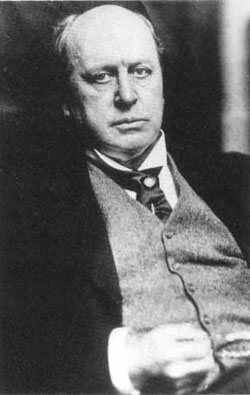
Henry James
The other day Reggie H. sent me a link to D. G. Myers's Commentary (yes, I am still rinsing out my eyes) literary blog post, "MLA Rankings of American Writers," for which I thank(ed) Mr. Reggie H. and which I duly Tweeted, as I am wont to do with such things.  Myers decided to review the Modern Language Association's International Bibliography, to cull those writers receiving the most frequent focus of scholarly attention since 1987, i.e., the apogee of the "culture wars" era. (Allan Bloom would issue his The Closing of the American Mind  Let me note that Myers is clear that this is not an MLA-sanctioned or supported ranking, but that he--who disaffiliated himself from the organization a decade ago--compiled it himself.

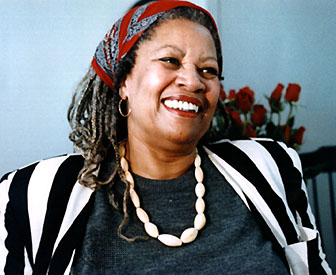
Toni Morrison
He also notes that despite all the brouhaha about radical literary academe's alleged fixation on the race-sex-gender triad (all of which should be part of any discussion of any book, along with class, etc.), on identity politics, on "the culture of resentment," or the "school of resentment," or whatever guff Harold Bloom and similar dinosaurs are spewing out at the current moment, and despite the worry even among some alleged "liberal"-leaning types that the Anglophone masters have been dethroned, it turns out that--guess what, haters!--many, many familiar names still top the list. AND MOST ARE MEN. I need not tell you their race, either. Are you ready? Here goes:

( 1.) Henry James (3,188 items) [+1]
( 2.) William Faulkner (2,955) [-1]
( 3.) T. S. Eliot (2,659) [+1]
( 4.) Herman Melville (2,579) [-1]
( 5.) Vladimir Nabokov (2,290) [+5]
( 6.) Ernest Hemingway (2,220) [-0-]
( 7.) Edgar Allan Poe (1,958) [-2]
( 8.) Toni Morrison (1,950) [+9]
( 9.) Nathaniel Hawthorne (1,751) [-4]
(10.) Walt Whitman (1,647) [-2]
(11.) Emily Dickinson (1,623) [+2]
(12.) Ezra Pound (1,620) [-3]
(13.) Willa Cather (1,482) [+5]
(14.) Ralph Waldo Emerson (1,326) [-3]
(15.) Wallace Stevens (1,122) [-1]
(16.) Edith Wharton (1,087) [+5]
(17.) Henry David Thoreau (1,076) [-5]
(18.) F. Scott Fitzgerald (1,002) [-3]
(19.) Flannery O’Connor (935) [+3]
(20.) Mark Twain (882) [-4]
(21.) John Steinbeck (823) [+2]
(22.) William Carlos Williams (772) [-0-]
(23.) Saul Bellow (706) [+2]
(24.) Richard Wright (670) [+2]
(25.) Robert Frost (661) [-5]

There are only 5 women, 2 black folks--and 1 person who could be considered latino (Williams) on this list, though I would argue that he usually is not. Not 20 women and 10 black people (or any latinos or latinas, any asian-americans, etc.). There are also 2 openly queer people--Walt Whitman and Willa Cather--on this list. Not 15, etc.  One of these women also is one of the black people, and she is still writing and living among us, and her name is Toni Morrison, and she received the Nobel Prize in Literature. (She is the only living person on this list.) The other four women are all deceased; one wrote brilliantly in obscurity in the 19th century, two at the turn of the 20th, the last was one of the greatest short-story writers the United States has produced. So there you go: these are who literary scholars are writing about, not whose books are flying off shelves, not whom Harold Bloom (or Helen Vendler or anyone else including people claiming to be open-minded but basically reinscribing this same tired reactionary rhetoric) is convinced no longer even makes her or his way into a dissertation, let alone a classroom, not the who the people who are endlessly whining about the leftist, anti-Western canon, Marxist, Socialistic professoriate claim have supplanted these hardy souls, etc. I would imagine that were Myers or anyone else to do a similar survey of the most frequently appearing British authors since 1987, we could probably guess who would appear in the top 25 (the first gentleman's name, I would surmise, begins with an "S" and ends with an "e," and rhymes with "Bakes here"....)

If and when you hear anyone who has not recently set foot in an English department that teaches American literature or trains people to do so start yapping about how faculty and graduate students in American literature are studying everyone but the folks above--THE CANON, as it has existed for some time--please direct them not even to this blogpost, but to Myers, since they're more likely to believe him than me.

(BTW, do look at the comments. Some are, as such outbursts of expressivity on such sites always are, priceless.)

Thursday, October 06, 2011

Tranströmerei (Nobel Prize for Literature, 2011) + 3 Poems by Tranströmer

Tranströmerei it is. A poet, and so I cheer.
Not my first choice, not even my fifth
but I'm glad see the Swedish Academy
acknowledge that artists toiling
in the oldest literary art deserve
recognition too. Recognize!

Tomas Tranströmer's (1931-) personal biographical information, with bibliography, is available at the Nobel Prize for Literature website. Instead of recounting it or faking an appraisal of his poetry--

because though I have read it
and even mentioned him before
as a possible Laureate on here
aeons ago I would be telling
tall tales if I said I read him regularly or
considered him a poet I ever
turned to* except on days like today--

Here are three Tranströmer poems not translated by Robert Bly (1926-), whose translations of today's laureate predominate across the Net. See what you think. (*Teju Cole is a huge fan of his. I'm a huge fan of Teju Cole. So transitively...?)

(An interview with Tranströmer, on translation.)

Tranströmer is not without gifts, ample ones:

FROM MARCH '79

Tired of all who come with words, words but no language
I went to the snow-covered island.
The wild does not have words.
The unwritten pages spread themselves out in all directions!
I come across the marks of a roe-deer's hooves in the snow.
Language but no words.

Copyright © Tomas Tranströmer, from The Wild Marketplace, translated by John F. Deane, Dublin: The Dedalus Press, 1983. All rights reserved.

And this:

DEEP IN EUROPE

I am a dark hull floating between two lock-gates
rest in the hotel bed while the city around me wakens.
The silent clamor and the gray light stream in
and raise me slowly to the next level: the morning.

Overhead horizon. They want to say something, the dead.
They smoke but don't eat, they don't breathe but they keep their voice.
I'll be hurrying back through the streets as one of them.
The blackened cathedral, heavy as a moon causes ebb and flow.


Copyright © Tomas Tranströmer, from For the Living and the Dead: New Poems and a Memoir, edited by Daniel Halpern, this poem translated by Robin Fulton, Hopewell, New Jersey: The Ecco Press, 1995.


And this:


STROPHE AND ANTISTROPHE


The outermost circle belongs to myth. There sinks the helmsman
erect among glittering spines of fish.
How far away from us! When the day
suffocates in windless unrest--
like the Congo's green shadow holds
the blue men in its vapor--
when all of this flotsam on the heart's slow
twining river
piles itself up.


Sudden change: beneath the float of heavenly hulls
glide the tethered ones.
Stern high, at an impossible angle,
leans the carcass of a dream, black
against a pale red strip of coast.  Deserted,
the years drop downhill, quick
and silent as sled shadows, doglike, enormous,
run over snow,
reach the forest.


Copyright © Tomas Tranströmer, from Windows & Stones: Selected Poems, translated by May Swenson, with Leif Sjöberg, Pittsburgh: University of Pittsburgh Press, 1972.