Showing posts with label Stanford University. Show all posts

Friday, May 06, 2016

Counternarratives' British Life + Saroyan Prize Short List


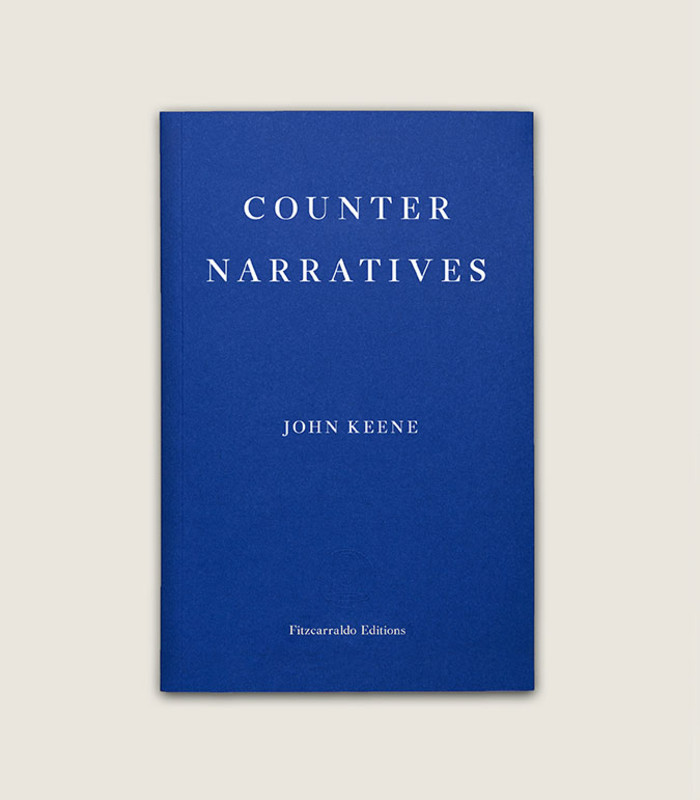
This April, Fitzcarraldo Editions, a new, small and vibrant publisher, issued Counternarratives in the UK and British Commonwealth countries--in its enchanting Yves Klein International Blue dust jackets--and since then, the collection has found not only a new set of readers, but spurred a new set of reviews. Two micro reviews appeared in the British publications The Lady and Buzz Magazine, the latter of which named Counternarratives its Book-of-the-Month for April 2016. Thanks so much to both reviewers for their reviews!

The collection received a different kind of mention in The Telegraph when critic Anthony Cummins included it in a May 1, 2016 article entitled "Clear-eyed and cutting edge: has the short story come of age?" In this short essay he discusses contemporary short fiction on both sides of the Atlantic, arguing that short stories may be more commercially viable and aesthetically daring on US shores, but that some British writers are, like their American peers, showing what short stories might do.

Among the writers he essays are some well known for their play with short fictional form and content: Helen Oyeyemi, Greg Jackson, Philip Hensher, and Mark Haddon. Into this mostly British mix he adds a side of Counternarratives, calling it "postmodernism with blood in its veins," and goes on to say that "This is no average work of historical fiction...rather, it’s a set of complex and unpredictable tales about slavery and racism." It's quite gratifying to note the book's distinctive approach to the short story form, its evident post-modernism, and its against-the-grain approach to historical fiction conventions. Many thanks to Mr. Cummins, and to The Telegraph.

***

One very pleasant surprise came earlier this week when I learned that Counternarratives had made the short list for the biennial 2016 William Saroyan International Prize for Writing, administered by the Stanford University Libraries. The Saroyan Prize takes its name from the late, award-winning playwright and fiction writer, and the 14 other books on the short list include works by Amina Gautier and T. Geronimo Johnson, among other very talented writers, and prior recipients have included Kiese Laymon, Daniel Orozco, Rivka Galchen, George Hagen, Nicole Krauss, and Jonathan Safran Foer, so I'm not getting my hopes up, but it is nice to receive this level of recognition. The awards will not be announced until later in the year. 

Sunday, May 06, 2012

France Elects Socialist Hollande + A Black, Gay Olympic Male Gymnast?

New French President François Hollande
with his partner, journalist Valérie Trierweiler (AP)
Leave it to France to show the world how it's done. Today, after 5 years of right-wing governance that helped to solidify the pro-austerity approach now ravaging Europe, the French people began the process of revolt, voting in their presidential contest's second round to send their globe-trotting, pro-US, plutocrat-enabling head of state, Nicolas Sarkozy, back to the wealthy suburb of Neuilly-sur-Seine. In his place they elected the former First Secretary of the Socialist Party, François Hollande, as the 24th President of the French Republic (and Co-Prince of Andorra), with a vote of 52% to 48%. Sarkozy becomes only the second French President to serve one term in the last 40 years.

Where Sarkozy has maintained a non-stop narcissistic show and meddlesome razzle-dazzle within France and globally, punctuating it with extremist rhetoric and policies at times, Hollande has suggested he will remain "M. Normal," and has promised to take a more measured approach politically.  But he has proposed measures such as raising the federal marginal tax rates to 75%; reducing France's dependence on nuclear power in favor of renewable sources; recruiting 60,000 more teachers, as well as judges and police officers; push for full marriage equality; restoring the retirement age to 60 for workers who have contributed more than 41 years of labor; and building more public housing. These policies, as well as more centrist ones such as lowering the corporate and small-business tax rates and creating a public investment bank,  while not going as far as his last Socialist predecessor François Mitterand (whose radical, nationalizing, pro-worker policies in 1981 sent shockwaves throughout the country and continent), are all to the left of Sarkozy (or most of the leaders of Europe, the United States, or even Canada, for that matter).
 
Light in touch as he may hope to be, Hollande cannot proceed too slowly or at too far a remove on the global stage, for the Eurozone, especially the countries (Ireland, Spain, Portugal, Italy, and certainly Greece) on its periphery, its ill.  As President he has the power and platform to rethink the German-led fiscal and monetary approach that is strangling the periphery nations; whether he can persuade Germany's Chancellor Angela Merkel to adopt a different approach or pressure the European Common Bank toward more effective monetary policies remains to be seen.  Too, his election, is only the first step; French voters next have the opportunity to elect their parliament, which has been under the control of the combined conservative parties, led by Sarkozy's UMAP party, but which will likely shift to the left, giving President Hollande a Prime Minister he can work with, and legislative power.  On economic issues his power could increase as well if  if Marine LePen's extreme-right National Front party, which now has no representatives either in the National Assembly (Lower House) or Senate (Upper House), cannibalizes seats at the expense of Sarkozy's UMAP.

As an aside or adjunct, it struck me that most of Europe, like many of the major industrialized countries across the globe, save in Latin America, either has been under the control of center-right or right parties or has fallen under their control, so France's shift is a dramatic one. But I also realized--and perhaps I am making too much of this--that the United States, having been under truly far-right control for 8 years, under George W. Bush, began the shift in 2006 by handing control of Congress to the Democrats, and cemented the shift in 2008 by electing Barack Obama by a 53%-47% margin over John McCain and returning the Democrats to power in both houses. Though the president, who has governed along the lines of Dwight Eisenhower, with an interventionist foreign policy and mini-wars, and phantasmally liberal social and economic policies adopted by his predecessors, has been repeatedly deamed a "socialist" by his opponents, the American voters, seeking changes in direction on the social, economic and political fronts in 2008 have gotten more continuity than they sought, which has meant a slow and stuttering economic recovery crippled to a great degree by de facto fiscal austerity, a glacial deescalation of the foreign wars, and increasing assualts on civil liberties. One might then say that US voters, having lived through the worst of the worst--though certainly Silvio Berlusconi ranks up there, and Jacques Chirac, another rightist politician, was no dance in a nightclub--sought but did not get what the French voters think they've achieved now. One can only hope that Hollande can secure a National Assembly (the more powerful of France's two houses) to support his vision and push it, and that President Obama, who looks like he will be reelected, and the Democrats in Congress, even if they only retain control of the Senate, as well as whatever remains of the moderate elements of the GOP, pay attention. Forward, yes, but change, absolutely!

Also: Here's Professor Paul Krugman on François Hollande's win, and the elections in Greece, in which voters drubbed the two major parties, the center-right New Democracy (Conservative) party and center-left Pasok (Socialist), selecting legislators from much farther to the left (Syriza--Coalition of the Radical Left, which finished second, after ND, and the Democratic Left) and to the right (the Independent Greek Party and the ultra-rightwing neo-Nazi Golden Dawn). An anti-austerity, anti-bailout coalition, led by Syriza, with rightist elements, very well could take power, sending the markets tanking and Greece out of the eurozone....

===

Robert G. sent this link to Cyd Ziegler Jr.'s article today on the Outsports site, which reported that the United States very well could, for the first time ever, have an out, gay gymnast on its Olympic men's gymnastic team. Who is he? Josh Dixon, a 2011 Stanford University graduate and seven-time All American, who yesterday finished second out of 72 competitors at the US men's qualifiers in Colorado Springs, Colorado, also tying for the top spot in two events, the floor exercise and the high bar. Oh, and Dixon is an African-American and Japanese-American adoptee who grew up in a multiracial, accepting home, which led him to feel comfortable coming out, an experience that his Stanford teammates, and fellow students, as well as gymnastic competitors, have nurtured through their support over the last few years.

According to Ziegler, his next challenge is the Visa Championships in June (7-10) in St. Louis; the top 15 finishers at that meet will proceed to the Olympic Trials, which run June 28 to July 1, in Dixon's hometown of San Jose, and he very well could be one of the 6 young men to compete for the USA. I just knocked on wood, and am wishing him the best.


Here's a YouTube video of Dixon during his sophomore year, in 2009, competing for the Cardinal in the floor exercises:

Friday, January 27, 2012

Blogs vs. Term Papers

Thank the gods it's Friday afternoon, which means a little respite from classes, at least once the afternoon rolls around. I often feel like I've just emerged from a threshing machine by Friday morning, and today was no different, but by the end of class I felt as I often do when I finish teaching, mentally and intellectually energized, and I even after some student meetings, capable of completing and launching a few new blogposts. So here goes!

***

Often these days I am late in coming to various interesting online conversations, so I only just stumbled over Matt Richtel's article in last week's New York Times, "Blogs vs. Term Papers," on how some faculty members are rethinking ways of sparking student interest in writing essays and critical thinking.  I won't restate his piece but he does explore some of the strategies and new tools, including blogs, categorized by some under the rubric of the "new literacy," that literature and other humanities faculty are using in place of or in addition to the standard short and long-form essays. Among his examples are Cathy Davidson at Duke University, who in the course he cites has jettisoned term papers for internal and external, extensive blogging, and Andrea Lunsford at Stanford University, who has second-year writing students produce a 15-page essay quickly, then expand it into a range of new media forms. As Richtel notes, the students connect well with these alternative forms but, in the case of Lunsford's course, also seek to revise their essay.

Richtel's piece got me thinking about my own use of blogs in a few courses; one of the most successful efforts, I think, was a few years back, in 2009, when I asked students in my aesthetic theory course to post their thoughts on a public blog, "Thinking Aesthetics," and, as you'll see, they often wrote quite thoughtful, sometimes very insightful short responses to the often difficult reading. (One student later told me that this was one of the most difficult courses he had ever taken at Northwestern, but he appreciated it tremendously.) These posts did not preclude essays, but I saw them as another way for the students to wrestle with the material outside of the class, and in preparation for their essays, and most really took to it. I tried from time to time to cite some of their comments in my in-class remarks, though I realize now I could have been more systematic about doing so to integrate these musings more completely.

Here's a snippet on an essay on horror, by one of my former students, George S.--this is an undergraduate writing, mind you:

The theory put forth by Kendall Walton and Alex Neill [in Berys Gaut's article "The Paradox of Horror"] on why people may enjoy horror films and other experiences which provoke negative emotions is absolutely fascinating. It essentially separates the emotion from what it is actually happening, thus it is not the emotion which is negative but occurrence which prompted it. In the case of the death of a loved one, it is not that we are sorrowful because we feel sorrow, but rather because we have lost someone close to us. “That is, it’s the situations rather than the emotions which are distasteful or undesirable, which we (metaphorically?) describe as painful or unpleasant.” (Gaut, 323) The idea of separation of emotion and event is interesting in that it inherently questions the meaning of any emotion. Perhaps we have been conditioned to feel certain ways after certain events, through witnessing other people go through them or simply through pop culture, but who is to say that the emotions of sadness or grief are objectively the correct emotions to feel after an event like the loss of a loved one?

I have also utilized blogs in my creative writing classes in the past, one time in lieu of the journals I ask the students to keep, and I learned this probably wasn't so good, because rather than these online journals being a place where the students really could put anything down--and be writing, by hand, or cutting and pasting things in, or drawing, or all sorts of things that weren't possible in the way they are now on touchscreens and tablet computers--they  became for some a public performance above all. I still do allow blogs and word-processed journals, but most students, I've found, like the physicality of bound paper, codex journals. They like the freedom and challenge of writing or doing whatever they want in them, and they realize that they're portable--and so they can repeat their "eavesdropping" exercise in a way they would have a harder time doing with a laptop, tablet or phone (without using a microphoned recording device).  Some of them, I hope, take up the habit permanently if they already have not.

In the introductory undergraduate creative writing classes I also use threaded conversations, divided up according to groups.  I have found that since the quarter class lengths often do not afford enough time for all the students to comment on the readings on technical and theoretical aspects of writing or by established writers, the threaded conversations offer another means for them to do this. With the graduate fiction students, I ask them to post annotations--short 1-2 page long commentaries--on the critical or creative texts we're reading, and again, I always come across wonderful insights they make as they're working through the texts; often they do cite these commentaries in our in-class discussions.  These annotations are a requirement of the MA/MFA program, and I think about how the online posting method means that not only I but their classmates will have an opportunity to peruse and comment on--or at least mull over--what they're writing and thinking about outside the workshop discussions.

In the fall of 2010, after repeatedly setting up and then not really being able to implement wiki-related projects for my classes, I had all the students in my African-American literature course sign up for Wikipedia in the first week of the course, and one of their requirements was to develop a new entry or revise an existing entry for a writer we discussed in the course or whose work, even if not discussed, would be germane to what we were exploring. They had to use scholarly sources from the library, and produce the citations, which they would then enter on the Wiki page. Nearly all the students produced real advances on the pages that existed, and I felt this was one of the most important projects they undertook given how readily people, even faculty colleagues, who were once disdainful or at least more skeptical, cite Wikipedia as the first and sometimes the final authority. (I have one good friend who frequently sends Wiki links in place of his own commentary; I always want to say, but you can't trust Wikipedia so fully, though I know that many people now do.)

With my current LGBTQ literature class I am requiring all of the undergraduate students (the graduate students have other projects underway) to undertake a Wiki revamp, but I also have assigned two short response papers (I am reading the first set this weekend, and they are quite strong) and a final term paper. Short response papers are to me a very good diagnostic in terms of gauging where students are, how thoroughly they're able to analyze and understand the material, and what sorts of larger inferences they can make based on what they've read. This is officially a theory course, satisfying the department's literature major theory course requirement, but I've also learned that in general, students find theory--and this course includes some exciting theoretical materials from the early post-Stonewall era to the contemporary "post-gay"/"post-Queer"--much more palatable when coupled with creative texts, so their response papers proceed from that pairing.

Lastly, as J's Theater readers know, I have incorporated my beloved Twitter into at least one class. I am always trying to think of more ways to use it, but thus far, I've only been able to slot it into the "Situation of Writing" course for senior-year majors. Their feed, @GetItWrite392: The Situation, runs throughout the length of the course.  This last time I gather from casual conversations that the students were not so impressed, but previous attempts have gone better, and it has provided a spur for the students to seek out  material on writing and publishing and promote it to the wider world, to contact writers they admire directly, and to start conversations with each other and their followers in a way they couldn't within the confines of the classroom or in a closed, Blackboard Course Management System-type space. Twitter makes nearly the entire world open to them. I am less of a fan of Facebook, which I see as having erected very clear walls around itself, so I have not undertaken any Facebook-related projects, but scholars like Jeff Nunokawa have, and they appear quite successful. Maybe I will try out Facebook, or perhaps Google+, which I'm on and which I notice has decided, creepily, to integrate everything in a more Facebook-like manner (to quantify those algorithms to sell to advertisers!), but which also offers the possibility of using Google Docs and Google Books in interesting ways.

In the end I don't think it's good to eschew critical essays, short or long, completely; they require modes of thinking and writing that are valuable to students for many reasons. I do grasp the need for other approaches, however, and as I continue to teach I'm going to continue to examine what others are doing and experiment in my own classes to learn what works and what doesn't so that my students will have the best learning experience I can make possible.