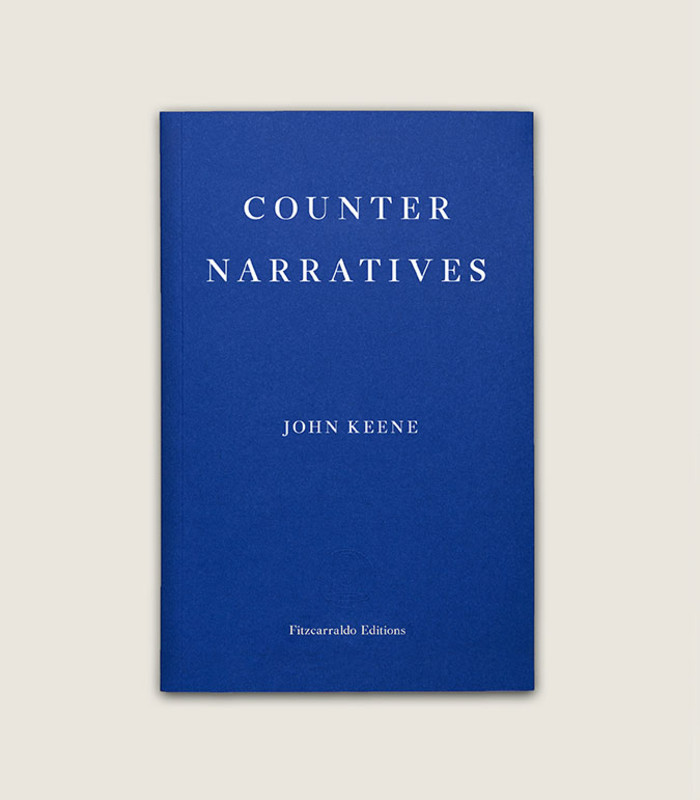
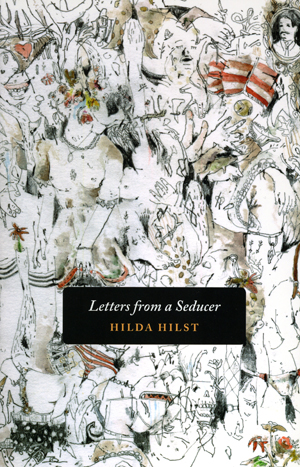
First, today's poem about poetry, by a poet I've posted before (I realized today that all the poets I've blogged this month are ones have previously appeared on here over the last 7 years, so it's greatest hits time to start), but a great poet is just that, someone whose work you want to return to. And so today it's
Robert Duncan (1919-1988), the pioneering queer avant-gardist who played a central role in what became known as the
Beat, Black Mountain and
San Francisco Renaissance movements of the 1950s and 1960s, and whose poetry drew from multiple sources (Biblical imagery, Classical Greek, the high lyricism of the troubadors, Renaissance poetry, and Romantic poetry, the fertile delta of Modernism, etc.) to carve out an original path as one of the most significant avant-garde American poets of the 20th century. For most of his adult life Duncan was politically active on the left, and also lived openly as a gay man, with his partner, the artist
Jess Collins (1923-2004), at a time when very few of his peers dared to.
I first read Duncan's poetry in junior high; "
My Mother Would Be a Falconress," which appears in a subsequent book,
Bending the Bow (New Directions, 1968) and which was in the anthology I read in English class, is a strange, terrifying, exhilarating poem that I still remember encountering. In its mythologized yet direct, incantatory staging of the child's struggle with the parent (the child metaphorized as a falcon, the parent-mother as the falconress), it not only seemed to speak immediately to my sense of self and my peers, but also upended the very order of poetry as I was learning it. It led me, a few years later, to more of his work, which I am still reading with fascination and pleasure. Below is his poem, "Poetry, A Natural Thing," from his important 1960 collection
The Opening of the Field. In this poem he takes up
T.S. Eliot's idea of the poet's impersonality, while making a case for the power of language, poetic language, which is both the result of human culture and of the natural world, and for the poem itself (like the work of visual art referenced, the painting "by Stubbs," of the moose) as thusa "natural thing," a source and force of cognition, of
truth. Enjoy.
POETRY, A NATURAL THING

    Neither our vices nor our virtues
further the poem. "They came up
    and died
just like they do every year
    on the rocks."

    The poem
feeds upon thought, feeling, impulse,
    to breed    itself,
a spiritual urgency at the dark ladders leaping.

This beauty is an inner persistence
    toward the source
striving against (within) down-rushet of the river,
    a call we heard and answer
in the lateness of the world
    primordial bellowings
from which the youngest world might spring,

salmon not in the well where the
    hazelnut falls
but at the falls battling, inarticulate,
    blindly making it.

This is one picture apt for the mind.

A second: a moose painted by Stubbs,
where last year's extravagant antlers
    lie on the ground.
The forlorn moosey-faced poem wears
    new antler-buds,
    the same,

"a little heavy, a little contrived",

his only beauty, to be
    all moose.
Copyright © 1960 by Robert Duncan, “Poetry, a Natural Thing” from
The Opening of the Field, New York: New Directions Publishing Corporation, 1960. All rights reserved.
***
 |
| Sonia Sanchez, 2011 (Photo, Phillyburbs.com) |
Today's second poem is a series of haiku by the poet
Sonia Sanchez (1934-), a key figure in the
Black Arts Movement and in subsequent developments in African-American and American poetry. Like Duncan, she has been a politically and socially engaged poet, speaking out about and against racism, sexism, imperialism, and homophobia, among many other issues, while also serving as a (beloved) teacher and mentor, and a bridge across multiple poetry movements. She is currently the
Poet Laureate of
Philadelphia.
 |
Elizabeth Catlett
Legend's Ball, 2005
(AP Photo
Michael A. Mariant, File) |
A few years ago, she wrote
a series of haiku, a form she has increasingly worked in over the years, for the artist
Elizabeth Catlett (1915-2012), an African-American sculptor and printmaker, and longtime resident and citizen of
Mexico, whose work also spans generations, from the 1940s through the politically and culturally revolutionary period of the 1960s and 1970s. Some of her images, such as her print "Sharecropper" (1968/1970), are iconic in African-American and American visual art. Catlett passed just a few days ago, in
Cuernavaca, Mexico, where she was active in the arts community and had lived for decades, having previously taught, as the first female professor of sculpture and head of the sculpture department, at the
Autonomous University of Mexico in
Mexico City from 1958 to 1975. In 2006,
Oprah Winfrey selected her as one of 18 women she honored as part of her
Legends Ball, (which I blogged about
here), bringing her name and work back to American public consciousness.
I hope Sister Sonia and Beacon Press, which published the book,
Morning Haiku (2010) in which these first appeared, do not get upset at me for reposting these haiku; I direct you to her website, but I also wanted to post them here as a tribute to her and Elizabeth Catlett, two artists whose works, in art, politics, culture, and life, like Duncan's, have blazed the way for those who follow. Here are her haiku, preceded by her note to Elizabeth Catlett. One thing Sister Sonia does in these poems is give a sense of the swift movement, the vibrancy, of Catlett's sculpting, as the materiality of the words themselves take sculptural shape on the page (or here, screen). Together the 6 haiku create a sculptural form as firm as the flesh, as fluid as the wind, before our eyes.
“In loving memory of a great woman. You will be missed.
It was an honor to walk on this earth with
you.” —Sonia Sanchez

6 haiku
(for Elizabeth Catlett
in Cuernavaca)

1.
La Señora
making us remember
flesh and wind

2.
O how you
help us catch
each other’s breath

3.
a woman’s
arms climbing with
colored dreams

4.
Elizabeth
slides into the pool
hands kissing the water

5.
i pick
up your breath and
remember me

6.
your hands
humming hurricanes
of beauty.
Copyright © Sonia Sanchez, "6 haiku (for Elizabeth Catlett in Cuernavaca)", from
Morning Haiku, Boston: Beacon Press, 2010. All rights reserved.