|
| Kendrick Lamar (pitchfork.com) |
Recording released on April 14, 2017, a virtuosic song collection unified by its vernacular authenticity and rhythmic dynamism that offers affecting vignettes capturing the complexity of modern African-American life.With his win, Lamar became the first musician not working in a classical/Euro-American or jazz idiom to receive the award, and only the fifth African American since the Music prize was initially awarded in 1943. In fact, there was no Black winner at all until classical composer George Walker won in 1996 for Lilacs, for voice and orchestra. Since then, the other recipients have been Wynton Marsalis in 1997 for Blood on the Fields, the first strictly jazz composition to win; Ornette Coleman's jazz LP Sound Grammar, which won in 2007; and Henry Threadgill's In for a Penny, In for a Pound, in 2016.
Indeed, the Music category award roll was, until Walker's award, notorious for excluding not just Black musicians, but all music not falling under the general rubric of "classical music," and in particular, academic classical compositions. Some of the greatest American musicians, including Duke Ellington (posthumously, in 1999), George Gershwin (posthumously, in 1998), John Coltrane (posthumously, in 2007), Thelonious Monk (posthumously in 2006), and Scott Joplin (posthumously, in 1976!), received "Special Citations," but were otherwise ignored, as were all forms of popular music, however symphonic or orchestral, in the Music category.
Interestingly enough, musical theater, beginning with Of Thee I Sing, by George S. Kaufman, Morrie Ryskind, and Ira Gershwin, was honored in the Drama category as far back as 1932, and over the years, other musicals, like Richard Rodgers' and Oscar Hammerstein II's South Pacific in 1950, were recognized, as "Drama," but not as "Music." This was about as close as the Pulitzer Music juries got to the popular music of the moment.
The honoring of hip hop marked an immense shift and might be a harbinger of things to come, as judges in this category, joining their peers in others, may now decide to take a broader view of the contemporary artistic landscape. Lamar is the real thing; about as far as you can get from hip hop-lite and user-friendly lyrics, he's insistently innovative and political, and very much grounded in the language and culture of his native South Central Los Angeles. (None of this year's music judges were hip hop musicians, but adding some now may also help to shake things up in the future.) But we will, I guess, see what happens going forward. The two finalists in the Music category fell into the more traditional classical/art music vein: Michael Gilbertson, for his string composition Quartet, and Ted Hearne, for his cantata for chamber orchestra, electric guitar, and percussion Sound from the Bench. In past years, either might have won.
I can imagine, however, that some classical musicians, who may already feel beleaguered by the shifts in the music industry as a whole and the reported declines in attendance at classical concerts, may now feel concern that what was their protected sphere, as far as widely known US national awards go, no longer exists. That may be true, but then perhaps the award should not have been called "Music," but more strictly named to reflect how much music and how many musicians had been excluded from consideration. Some prior classical music winners--Aaron Copland (1945), Charles Ives (1947), Virgil Thomson (1949), Gian-Carlo Menotti (1950), Samuel Barber (1958), Steve Reich (2009), and of course Marsalis and Coleman, have been in the ears of the wider public, or some of their music has (I recently heard one of Reich's most famous pieces, "Come Out," sampled in a hip hop song, and Barber's Adagio for Strings has been performed more than once on TV, etc.), but in general, far too many of the Music winners remained mostly unheard and unknown to a degree unlike anyother category, including Poetry or Drama.
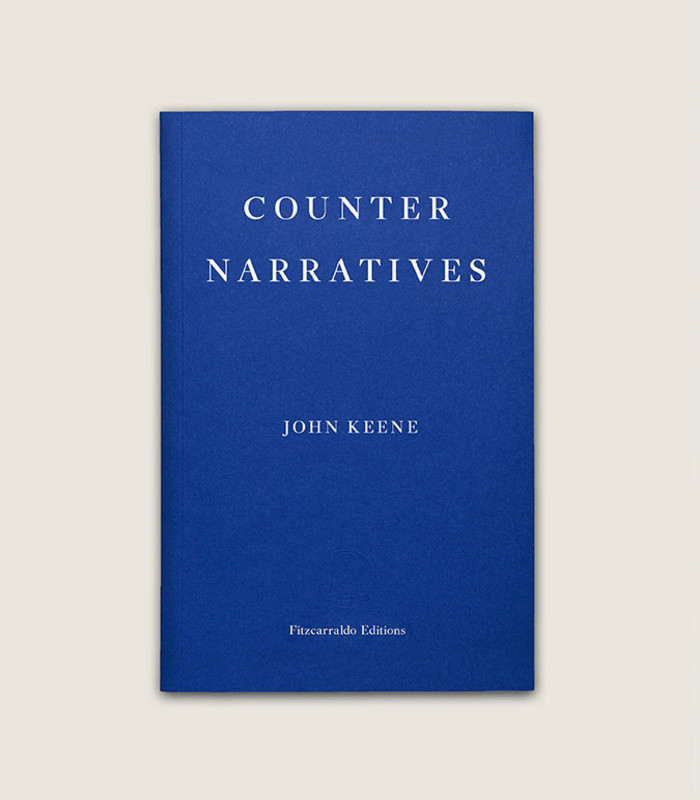
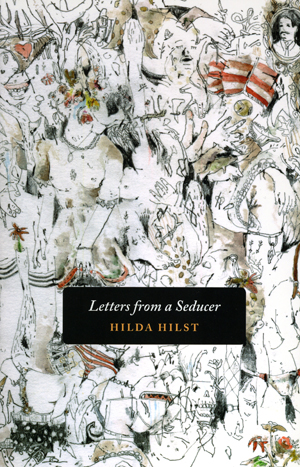
Other winners in the "Letters, Drama & Music" section included poet Frank Bidart, for Half-Light: Collected Poems 1965-2016 (Farrar Straus & Giroux), a nod towards his status as one of the senior, major figures in American poetry, and someone who had never received a Pulitzer before. I was very happy to see that the two finalists were two poets I know and admire, and collections I thought were stellar: Patricia Smith, for her collection Incendiary Art (TriQuarterly/Northwestern University Press), and Evie Shockley, for her collection semiautomatic (Wesleyan University Press). Given the threats university presses are facing these days, this was also a good vote of confidence in publishing in a genre that has remained the least commercial.
 |
| The poetry citation |
The Fiction winner was novelist Andrew Sean Greer, for his comic novel Fiction Less (Lee Boudreaux Books/Little, Brown and Company), and the finalists were In the Distance, by Hernan Diaz (Coffee House Press), and The Idiot, by Elif Batuman (Penguin Press). In the Drama category, Maryna Majok's Cost of Living received the award; the two finalists were Everybody, by the very brilliant and talented young playwright Branden Jacobs-Jenkins, and The Minutes, by actor and playwright Tracy Letts. Bidart's and Greer's awards may have marked one of the rare times that the poetry and fiction winners were both out, gay male writers; had Jacobs-Jenkins also been honored, it would have marked a very rare trifecta.
In the History category, Jack E. Davis's The Gulf: The Making of an American Sea, by Jack E. Davis (Liveright/W.W. Norton), an exploration of the history of the Gulf of Mexico, received the committee's nod. The two finalists were Fear City: New York’s Fiscal Crisis and the Rise of Austerity Politics, by Kim Phillips-Fein (Metropolitan Books), and Hitler in Los Angeles: How Jews Foiled Nazi Plots Against Hollywood and America, by Steven J. Ross (Bloomsbury). The Biography recipient was Prairie Fires: The American Dreams of Laura Ingalls Wilder, by Caroline Fraser (Metropolitan Books); the two finalists in that category were Richard Nixon: The Life, by John A. Farrell (Doubleday), and Kay Redfield Jamison's Robert Lowell, Setting the River on Fire: A Study of Genius, Mania, and Character (Alfred A. Knopf).
Lastly, under the arts and letters aegis, in the category of General Nonfiction, the winner was the highly praised study Locking Up Our Own: Crime and Punishment in Black America, by James Forman Jr. (Farrar, Straus and Giroux). The two finalists were Notes on a Foreign Country: An American Abroad in a Post-America World, by Suzy Hansen (Farrar, Straus and Giroux), and The Evolution of Beauty: How Darwin’s Forgotten Theory of Mate Choice Shapes the Animal World—and Us, by Richard O. Prum (Doubleday)
I must admit that I have tended to pay less attention to the News winners, but some did catch my eye this year. First, art critic and provocateur--and former reality show judge!--Jerry Saltz received the Pulitzer in Criticism for his commentary in New York Magazine. I sometimes strongly disagree with Saltz's readings of exhibits and the general culture, but I do think he knows how to get readers to think about art and society.
In the Public Service category, the recipients were The New York Times, for coverage led by Jodi Kantor, and The New Yorker's Ronan Farrow, for their exploration of the sexual predation, harassment and abuse in Hollywood and other realms of US life, in response to the #MeToo moment and movement. The Washington Post won in the category of Investigative Reporting for its coverage of the Alabama Senate race, and its revelations of the Republican candidate Roy Moore's sexual abuse of an underage teenager; in part because of this necessary reporting, he may have been defeated by Democrat Doug Jones.
I must admit to some skepticism about the dual award in the National Reporting category, however; while the Washington Post rightly deserved a Pulitzer for its thoroughgoing attempts to enlighten the American public about Russian interference in the 2016 campaign, the Pulitzer board moved the New York Times into contention for this award as well, and then jointly named that paper as a winner. Yet the Times has never explained its bizarre October 31, 2016 report that the FBI had determined there was no Russian interference in the election, which we now know was completely wrong based on multiple accounts, and not long after former public editor Liz Spayd attempted to answer the strange report--who gave the Times this information?--she was let go. Will we ever know what or who was behind that Times report, which provided official establishment and news ballast and support for the Trump campaign? Should the Times have been awarded a Pulitzer Prize for this work given this massive blunder?