Showing posts with label Japan. Show all posts

Friday, April 27, 2018

Poems: Shin Yu Pai

Shin Yu Pai
(Seattle Review of Books)

Back in 2008, the multi-talented Shin Yu Pai published a book of collected poems entitled Sightings: Poems 2000-2005 with 1913 Press. Comprising a range of formal, material and textual experiments, it also showed her to be both an artist at heart and in her practice. The poems were mostly brief, political, playful, and never repetitive, marking her out as as someone not following the main experimental crowds. After reading Sightings, I added her to my list of poets to follow, and I have, including blogging her poetry several times, once for her baseball poems in 2011 (scroll past the break), and once for a very witty still life poem in 2012. She has since published several more full collections of poems, including AUX ARCS (La Alameda, 2013) and Adamantine (White Pine, 2010), two of whose poems I quote below, as well as limited edition artist books, works on paper, photography, and collaborative projects of various kinds.

In 2015, the poet and scholar Michael Leong curated a collection of poems about visual art, "Lines of Sight," by nine Asian American writers for the Asian American Writers Workshop's The Margins journal. One of the poets he included was Shin Yu Pai, and when I remembered that she was one of the poets--the others were Christine Wong Yap, Debora Kuan, Eileen Tabios, Jennifer Hayashida, Mei-Mei Berssenbrugge (whom I highlighted earlier this month), Walter K. Lew, O Woomi Chang, and John Yau (whose work will close out the month--I said that I would have to include her here. (Please do check out the entire portfolio.)

Michael featured four of Pai's poems, but to whet readers' interests and encourage that you head over to AAWW's website I'm only going to feature two, both from Adamantine. The first is entitled "Lunch Poem," which immediately made me think of Frank O'Hara (1926-1966) and his eponymous, beloved collection, but when you the photograph her poem is in conversation with, her poem's title becomes clearer, shaking off (a bit) the New York School avatar's influence. Instead, we are exploring Indian artist Subodh Gupta's hanging sculpture, a shiny excrescence whose surface appears to be both bumpy--all those fissures between the pails--and, from a short distance, a silvery, pulsating button.

In this poem, Pai plays with the lunch pails and boxes the image invokes, the vast world those pail carriers index, opening with a statistic about how rare it is that they "[go] missing." It is brief enough to be a poem she might have thought up and mulled over during a lunch-time exploration of it, whether it hung in an art museum or a wall near wherever she was spending any time. The poem itself bells like a vessel--a bit plumper here than on The Margins site because of my lack of kerning tools--that has been filled, or, by its end, by author and reader, like the lunchtime diner, emptied.


LUNCH POEM


by Shin Yu Pai


(after Subodh Gupta)
                     6,000,000

             to one: the delivery that

        goes missing – a lunch pail that fails

        to arrive @ its destination; domestic

       articles bear homemade offerings produced

    by housewives & dadi jis for their men-folk –

        fleet-footed dabbawallas dispatch, carry,

    & collect steel boxes by the thousands packed

         lunch boys sport starched cotton nehru

         caps pilot familiar passages – the son

       of a railway guard solders stainless-steel

              tiffin carriers a new class

                     of metalwork


Subodh Gupta. Untitled, 2008,
Stainless steel, Houston Museum of Art.
(Photo: Deena DeNaro-Bickerstaffe.)

The second poem is entitled "Bell(e)," and speaks to an actual ornamental bell, by the late Japanese-American artist Toshiko Takaezu, produced in 1997, and one of many she produced during her career. Pai's title injects a bit of polysemy through that final "e," making the word French as well as English, and highlighting the beauty inherent in Takaezu's sculpture, with its patinated surface color and graceful, parabolic form. That silent "e" also embodies the silence and latent sound to be released, once the bell sounds...its beautiful sounds.

"Bell(e)" tells in swift strokes about how such a bell might have been handled "in centuries / past," but now it hangs in what looks like a greenhouse, "a museum / of curative plants." Where the poem goes is beyond description to an evocation of the bell(e)'s potentiality, as I note above, showing the reader its anticipation--and ours--of its "stillness & / gathering before / the shudder / of first sound," that is, when it finally is rung or struck, how it dreams of the sounds within sounds that will come, or that reappear, as part of and after that reverberation, like the poem itself.

Here is a short paragraph about Takaezu from Wikipedia (linked above):
Takaezu treated life with a sense of wholesomeness and oneness with nature; everything she did was to improve and discover herself. She believed that ceramics involved self-revelation, once commenting, "In my life I see no difference between making pots, cooking and growing vegetables... there is need for me to work in clay... it gives me answers for my life."[5] When she developed her signature “closed form” after sealing her pots, she found her identity as an artist. The ceramic forms resembled human hearts and torsos, closed cylindrical forms, and huge spheres she called “moons.”
The bell pictured below is an "open" ceramic forms, but its capacity for "self-revelation," and its connection to nature are both aspects that Pai discerns in her poem.

BELL(E)


After Toshiko Takaezu


in centuries
past, sunk
beneath soil

to draw earth’s
vital force, inert
vessel of

sound + light,
conserved

in a museum
of curative plants
the moment of

stillness &
gathering before
the shudder

of first sound

dreaming
the shake of chime
hum &

g o n g


Toshiko Takaezu. Bell (1997). Seattle’s Volunteer Park
Conservatory. (Photo courtesy Myra/Flickr.)

Both poems, Copyright © Shin Yu Pai, from Adamantine, White Pine Press. Buffalo, NY 2010. All rights reserved.

Monday, July 18, 2011

News Bits + Word Quiz (Angela Carter)

Nelson Mandela, 93! & family
(Peter Morey/EPA)
Some news links that struck me today:

NY Times: "Obama taps former Ohio official for Consumer Agency"
(No Elizabeth Warren, but Obama does pick one of her close associates and a foe of the banks' excessive power and sway)

McClatchy: "Justice Dept. lawyers contradict FBI findings in anthrax case"
(i.e., the case against Bruce Ivins was weak, and the real culprits remain out there, as Glenn Greenwald and others argued long ago)

Guardian UK: "News Int'l hacking whistleblower Paul Hoare found dead in his apartment"
(Talk about strange "coincidences"....)

LA Times: "Borders finds no buyer, moves towards liquidation"
(One of the major chains is on its last leg, or half of one, and could be gone by the end of this week)

Raw Story: "US Senate confirms first openly gay district judge, Paul Oetken"
(Another major advance for LGBTQ equality, a month after NY State's approval of same sex marriages)

Mail & Guardian: "South Africans mark Nelson Mandela's birthday"
(Madiba turns 93)

The Mainichi Daily News: "Over 500 cows found shipped after having eaten radiactive straw near Fukushima reactor disaster"
(The ongoing worst nuclear reactor disaster ever, in northeastern Japan and exceeding that of Chernobyl, has not gotten anywhere near the coverage it deserves, and the Japanese government's response remains inadequate)

LA Times: "NFL owners may approve new labor deal on Friday"
(More revenue money for players, a lower salary cap, lower bonuses for rookies, $1 billion for pensions and benefits, and greater emphasis on safety, especially brain injuries)

***

WORD QUIZ: ANGELA CARTER
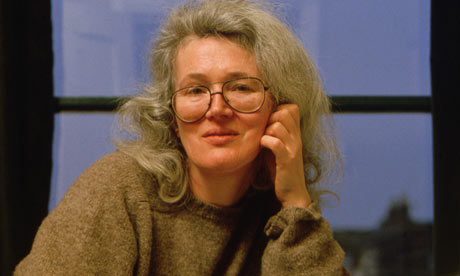
Most J's Theater readers in the US are probably well past their PSAT, SAT and ACT experiences--though I keep it fairly clean, so the youngsters can drop in here too if they like--and are probably not thinking about vocabulary tests. (I can't recall if there are vocabulary tests on the GMATs, MCATs, etc.--if so, keep reading). Recently, however, in the course of returning to stories in Burning Your Boats: The Collected Short Stories (London: Chatto & Windus, 1995), by the late, prolific and ever beguiling British writer Angela Carter (1940-1992) who, as her biographical dates suggest, died far too young, I found myself noting down a number of words from her stories that I had to look up or that I knew but felt compelled, because of their beauty and rarity, to record, in my notebook.

Carter usually incorporates these words, most of which are Latinate in origin, in such a way that they feel integral to the narrative voice and the narrative itself; in Bloody Chamber's stories, for example, the narration is often elevated in such a way as to take the reader outside of any chronological time, yet Carter will then juxtapose the exalted and sometimes baroque diction and syntax with a very contemporary word or phrase, a very up-to-date intonation, so as to jar the reader out of any easy or simplistic identification or understanding of what's going on. It also makes for thrilling prose; with language so arrestingly vertiginous, the plot and characters need not do all or even most of the work.

One quote, from "Master" (p. 76):

He travelled by jeep through an invariable terrain of architectonic vegetation where no wind lifted the fronds of palms as ponderous as if they had been sculpted out of viridian gravity at the beginning of time and then abandoned, whose trunks were so heavy they did not seem to rise into the air but, instead, drew the oppressive sky down upon the forest like a coverlid of burnished metal."

So: here's the challenge. Without looking up the words, see how many of the follow 10 you can define off the top of your head. The answers appear after the break (if you're reading this on the iPhone/iPad app, I'm not sure how it'll appear, so perhaps cover the answers with your fingers). I should add that I used one of these words in my second book and in my current one, and it remains as strange to me now as it did then, which is why I have employed it.

1.  palliasse
2.  lancinating
3.  stertorous
4.  osier
5.  linnet
6.  castellated
7.  reticule
8.  cloisonné
9.  lustratory
10.  prothalamion

Sunday, January 10, 2010

Review: Alexander Sokurov's "The Sun"

The SunIt is appallingly cold in Chicago, but I nevertheless headed downtown to the Gene Siskel Film Center last night to see a screening of Russian director Alexander Sokurov's remarkable 2005 film The Sun, the third in his tetralogy of films on major historical figures. (The first, Moloch (1999) focused on Adolf Hitler, and the second, Taurus (2000), explored Vladimir Lenin's life; the fourth, I've read online, with treat Goethe's Faust, which perhaps is another way of saying he's shooting a film about Richard Nixon.) The Sun, a 110 minute feature, takes as its protagonist Japanese Emperor Hirohito (Emperor Showa) (1901-1989), narrowing in on his life during the final days of World War II, after the US has dropped the atomic bombs on Hiroshima and Nagasaki, and begun its conquest of the main Japanese islands. I use the word "narrow" purposely, because Sokurov has produced something other than a biopic and instead, almost in keeping with Hirohito's marine biological preoccupations, focused in almost scientific fashion on the this pivotal historical and social moment, when this living embodiment of tradition and spirituality to his people--a descendent of the Sun God--accepts his country's defeat and renounces his divinity to become, as his wife says, both with bemusement and perhaps a touch of resignation, "a commoner" in the service of preserving what remains of his nation. Throughout Sokurov's treatment is more poetic than verisimilitudinous, though it mostly tracks the factual record, but its manipulation of time, its explorations of the spiritual underlining the human, and its immersion in the mise-en-scène, always chief interests of this director, here seem particularly apt. Hours and days, some of the most important in world history, meld into into indefinable time, almost as one imagines they must have for an emperor-deity existing almost outside of calendars and clocks, yet this same expanded, unreal temporality is punctuated with prosaic elements that underline this figurehead's humanness, even if his humanity is ultimately remains in question. In addition to depicting Hirohito, superlatively inhabited by Issey Ogata--down to what appears to have been the Emperor's strange labial tics, hesitant manner of speaking and almost robotic, ceremonial gait--getting dressed in military finery to meet with his war cabinet, Sokurov also shows him examining a hermit crab specimen, writing haiku, querying the astonished leader of a nearly destroyed scientific institute about the Northern Lights, and clumsily comforting his wife, all signs of apparent normalcy yet all amidst the destructive finale of the war he approved and oversaw.

In a sense, Sokurov's theme is the negotiation between royalty and humanity, between the exalted state and national state of the royal body and personhood (and I think here of Ernst Kantorowicz's famous but perhaps forgotten study of medieval European kingship, The King's Two Bodies), and his lonely human individuality, which Sokurov portrays in all their ironies. As Emperor and God, and living symbol and embodiment of Japan, Hirohito is viewed here by his courtiers and servants, like the Japanese people in general, as almost beyond the corporeal, always apart from them, and yet, as a living figure, they must serve his mundane personal needs, down to buttoning him into shirts, bowing deeply and averting their gaze when he is nearby, and opening and closing doors for him. His own negotiation of his status is a central element of the drama; at one point, he demands to be left alone, to think for himself--and make the momentous decision of capitulation and renunciation--yet his elderly servant is by habit almost unable to let him out of his sight, for fear that he might go a second without being properly attended to. It is a serious but comical moment, one of many in the film. Another comes when he agrees to the American military's demand to be photographed. Stepping outside of the laboratory where he has holed up--the Imperial Palace having been heavily bombed--Sokurov shows Hirohito, wearing neither the elaborate morning (and mourning) suit in which he goes to dine with General MacArthur (Robert Dawson) nor a kimono, but a simple tweed suit, with waistcoat and fedora, uneasily and unassumingly approaching the American military press gang, with none of the imperial pomp that might be expected, before he is directed to stand amidst the roses in the nearby garden. This tiny, bespectacled figure, posing with apparent diffidence and pleasure, leads some of the Americans to suggest that he favors Charlie Chaplin, to which he replies, with a tinge of amusement and to the absolute horror of his chamberlain, "Do I really look like that actor?" The shock of the Japanese around him--and perhaps even today for hardcore imperialists--is palpable. But Sokurov has only shortly before shown Hirohito in his beautifully appointed bunker, gazing consolingly not only through his family photo book, which includes snapshots of Hitler and Chancellor von Hindenburg, but through a picturebook of Hollywood stars, including Marlene Dietrich, Greta Garbo and none other than the "Little Tramp" himself, Chaplin. Later still he claims not to see popular films at all. The effect is, as I've suggested, ironic by many degrees.

The SunSokurov's further dramatizes the concept of negotiation, in reference to the relationship between the US and Japan, still complex and ongoing. The Americans we see through its GIs and officers, in their crisp khaki, mostly white, mostly full of boisterous cheer, but also brimming at points with disrespect, yet always in full command of this country on which they have leashed the then-ultimate weapon in a successful effort to win a war. Dawson's MacArthur engages in mental games with Hirohito; he orders him around, cuts him off, commands him to eat, and at one point claims to have a pressing appointment, though we see he has secreted himself away to spy on this "childlike" figure, to use his term, who, he also comes to recognize, is a lot smarter and wilier than he'd imagined. (Sokurov shows this as well earlier when, in the meeting with the War Cabinet, Hirohito commands them to fight on, by way of an inscrutable poem written by his grandfather, the Meiji Emperor, which is to say, in essence to the death.) Hirohito in fact does surprise him, and the viewer; when the Japanese-American translator begs him to speak Japanese, as by diplomatic protocol and because of his elevated station, Hirohito nevertheless speaks fluent if somewhat stiff English, noting to MacArthur that he can also speak French, Spanish, German, Chinese, Russian, and a host of other languages, noting at the same time that as the defeated party, he will use the language of the victor. When left alone, he examines the wares in the dining room, before waltzing by himself and peering out on the devastated landscape of Tokyo; this, we gather, he realizes is what he's wrought. As such, he commands if not the viewer's sympathy, then perhaps a modicum of acknowledgement that he is something other than a monster or a buffoon, an empty figurehead or a caricature thereof. Hirohito's sense of his and his nation's severely straitened circumstances, particularly in relation to the USA, are clear on Ogata's mobile face, just as MacArthur's sense of his value are clear on Dawson's. The hierarchy of the victor and vanquished is apparent on one level, yet not so much on another.

One of the most interesting moments in the film to me, and which I haven't seen any other reviewers mention, was the Hirohito's repetition, once as a throwaway comment and later as part of a rant, about one of the causes of the war. As Sokurov presents it, Hirohito carried inside him an ember of rage and resentment at the US's racial and white supremacist policies, particularly California's Racial Exclusion Act of 1924, which barred Japanese immigration, and in the film mentions this early on to an elderly servant, who nods it off, but later, as he is seething about his military's failures, he cites it again, specifically mentioning Japan's support for global brotherhood after the First World War and the Golden State's anti-Japanese legislation and US racism, which provoked the military leadership. I found myself wondering whether this was Sokurov's intervention or one of Hirohito's actual hobbyhorses; in fact I think most Americans would be hard pressed to register any of the specifics the history of anti-Asian prejudice in this country beyond the Japanese internment during World War II and more recent attacks, in the 1990s, let alone grasp that this might have been a historical fuel for World War II. Yet I also had to note the irony, very likely intentional by Sokurov, of this excuse for a war that was already a budding possibility after the failure of Japanese civilian government control of the military in the 1920s and Japan's alliance with the most racist regime that has ever ruled anywhere on earth, the German Nazi Reich, and Japan's own extreme brutality, based in part on a feeling of ethnic and cultural superiority, against its neighboring Asian states, such as China, Korea, and the Phillipines, both before and during the Second World War. Sokurov thus pushes the underlying discourse beyond the usual commonplaces, forcing the viewer to take a more nuanced reading of history from a personal and geopolitical standpoint.

I have said little about the technical aspects of the film, but I should note that despite being shot in digital video, the cinematography is often pristine, with the right amount of color bled from the images to render them vivid yet of the past, and a slight haziness enhancing the otherworldiness of the subject matter. Sokurov's uses of long and close shots, and a static camera, repeatedly capture the at-times sarcophogal atmosphere, the mood, of the Emperor's life, its spatial contours, the mise-en-scène unfolding, like the leaves of a chrysanthemum outwards, towards the wider world of which, we soon realize, Hirohito is very much a part. The slow, stately pacing only enhances this. Breaking what could have been too much visual and temporal gravity, however, are several lyrical and fantastic moments, such as when Hirohito imagines the firebombing of Tokyo, and instead of airplanes, we see fish-bird-like creatures zooming through an animated, fiery space before turning into, becoming bombs. This episode manages to link the Emperor's fascination with the natural world to his poetic sense of time and space, and his achronological existence and his chronotopic perception of the war, while also showing both how out of touch and simultaneously in touch he is. He is shown finally viewing the destruction of Tokyo on his car trip to meet with MacArthur; his has been aware of what has been happening, and yet, we gather, unlike the British royal family during World War II, has been studiously kept away from it. In the end, the viewer leaves without an assured sense that Hirohito has fully gotten what he's presided over; when he is told that the engineer who recorded his surrender speech, broadcast over the radio and marking the first time most Japanese had ever heard his voice, has committed hari-kiri, and he asks his chamberlain if he tried to stop him and is told "No," there is a glimmer of the Emperor's recognition, or perhaps the viewer projects one, of the unspeakable chain of tragedies that have occurred in his name and of the radically changed world to come, before he heads off with his wife, the Empress, to reunite with his children, now returned from safekeeping in the countryside. It is, in the end, a strange and riveting portrait of a man and figurehead who, even today, remains, for intentional and non-intentional reasons, a historical and personal enigma.