One of the results of the hurricane and its aftermath has been mass-scale dislocation, displacement, diaspora. More people than the total residents of numerous counties in the United States have dispersed northwards, westwards, eastwards--away from what had been their home, temporary or permament. One of the questions I asked a few posts ago was, what will happen not only a week from now, but six months, or a year, or several years from now, to all of the survivors? Other questions arise: who among them will return to New Orleans, southern Louisiana, and the Mississippi and Alabama gulf coast area? When? What will determine whether or not they come back? What of their homes--what images, memories, sounds, smells, textures, interior spaces and impressions, dreams and nightmares, scars--do they carry with them? Do they carry with them psychogeographic map they can put into words and images? What spaces and places are theirs now, will be theirs? How do they think of home, of place, of location now? What traces of them have survived the storm, what history, what cultural and social artifacts, what imprints and footprints?
Basquiat_in_Brooklyn's recent post about the upcoming term at NYU provoked a temporary pang of nostalgia for those afternoons and evenings in Main Building, 19 University Place, the aeries of Bobst, the computer room at Third Avenue North, the African Studies department, Washington Square Park and the West and East Villages, and so on--but mainly underlined for me that I'd been asking these questions, not about the Gulf Coast tragedy but about certain literary texts, back last spring. I had the opportunity to devise a new graduate English course in the area of African-American literary studies, so I decided I'd teach a course, under the general rubric of Topics in Contemporary Literature, and I'd call it "Dis/locations in Contemporary African Diasporic Fiction."
Actually, it was initially "Contemporary African Diasporic Literature," but after juggling a number of novels, books of poetry, plays, and cross-genre works, I decided I'd restrict the primary texts to novels and short story collectioons, for the sake of consistency, and try to mix in works I've taught before with ones I haven't. I also wanted works from across the Diaspora, but in such cases unless students can read in other languages, you have to go with translated works in English, which is one reason I work on translations. I had an idea of some of the texts I wanted to read with my students, but the list quickly swelled to about 40, which wouldn't be practical under any circumstances.
My final list has come down to:
Calixte Beyala,
Your Name Shall Be TangaOctavia Butler,
KindredMaryse Condé,
The Last of the African Kings or I, Tituba, Black Witch of SalemSamuel R. Delany,
Atlantis: Model 1924Junot Díaz,
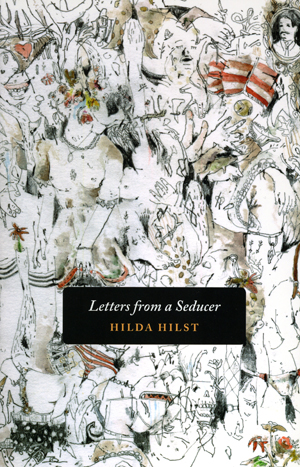
DrownRenee Gladman,
The ActivistMarilene Felinto,
The Women of TijucopapoWilson Harris,
CarnivalEarl Lovelace,
Salt: A NovelNalo Hopkinson,
The Salt RoadsZakes Mda,
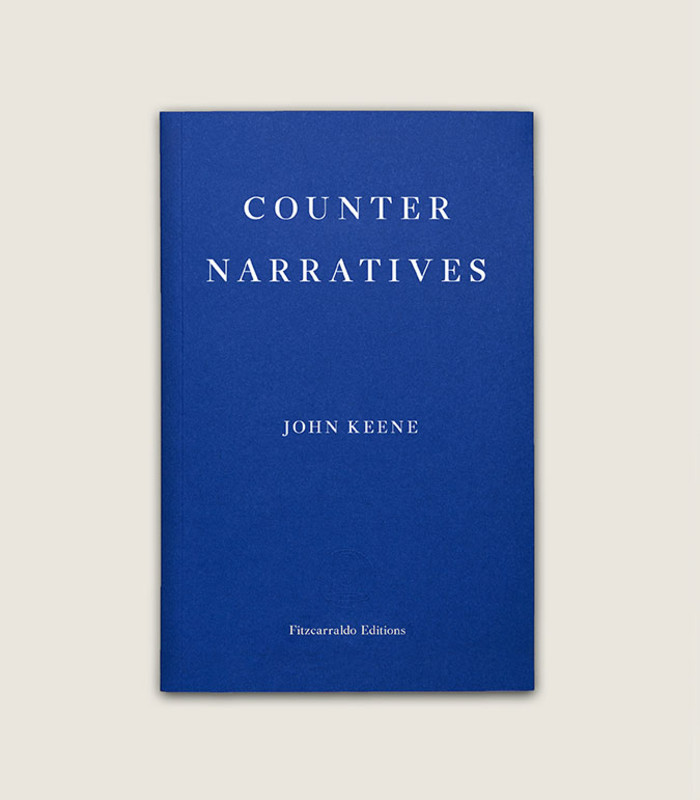
The Heart of RednessCaryl Phillips,
Crossing the RiverPatricia Powell,
The PagodaEdgardo Rodríguez Juliá,
The RenunciationFran Ross,
Oreo
Colson Whitehead
, The Intuitionist
Further winnowing things down, I believe I will invite the grad students to look at the texts by Beyala, Delany, Lovelace, and Phillips on their own, but I may change this. In the past I've taught Condé's
I, Tituba (one of my favorite texts of all time), Delany's
Atlantis (ditto--I have read this book perhaps 15 times, and every time I read it I find something new), Díaz's
Drown, Felinto's
The Women of Tijucopapo, Phillips's
Crossing the River, and Rodríguez Juliá's
The Renunciation in my undergraduate history and myth in African Diasporic literature class (along with works by Ishmael Reed, Toni Morrison, Edwidge Danticat, John A. Williams, Thomas Glave, and others), and I've also used stories from
Drown in every undergraduate fiction course I've taught over the last few years. I enlisted Whitehead's
The Intuitionist for my graduate fiction workshop last year, and the students loved it (how could they not, it's an extraordinary book), and Ross's
Oreo a few years ago when I taught a group of very keen advanced undergraduates in Providence. They found the book funny and charming, which it is. I've never taught Renee's novel, nor any works by Beyala, Hopkinson, Lovelace, Mda, or, astonishingly for me given the strong affinities on many levels, Wilson Harris (whose works are hard to get ahold of). It almost feels blasphemous to type that, but it's true. But now's the time. If I teach this class again, I hope to substitute works by Zadie Smith, Tisa Bryant, Manuel Olivella Zapata, Mayra Santos, Luis Rafael Sánchez, Ben Okri, Werewere Liking, Danzy Senna, Jeffrey Renard Allen, Loida Maritza Pérez, V. Y. Mudimbe, Ngugi, Pauline Melville, Esmeralda Santiago, and others.
In terms of critical and theoretical texts, I have been thinking of a wide array of texts, by critics such as Adorno, Alexander, Anderson, Anzaldua, Bachelard, Baraka, Bell, Benjamin, Bhabha, Bloch, Brathwaite, Boyce-Davies, Butler, Carby, Césaire, Delany, Deleuze and Guattari, Edwards, Eshun, Fanon, Gayle, Gilroy, Giscombe, Glissant, Hall, Harris, Heidegger, (C.L.R.) James, JanMohamed, Kant, Lacan, Lorde, Lyotard, Marcuse, Massey, McClintock, Morrison, Moten, Muñoz, Narayan, Neal, Nietzsche, Okpewho, Parmar, Scarry, Schechner, Spivak, Stone, Trinh, Weheliye, Wittgenstein, and Wynter, to name a few. Their various theoretical interventions, I think, will provide analytical lenses through which to view and frame the course's chief theme of dis/locations.
More specifically, I'm interested in locations and dislocations, as inflected by race, ethnicity, class, sexuality and gender, ideology, economics, politics. Out of the general theme, I hope to examine such issues--in an order related to the order in which we'll be reading the specific texts, beginning with Rodríguez Juliá and ending with Gladman--as interiority and various kinds of imaginaries; exteriority and object(ive) social, political and ideological relations; essentialisms and more fluid forms of identity and identity relations, including various kinds of socially constructed identitarian spaces, cosmopolitanisms, and the ethics of types of identities; power relations and macro/microregimes (of power); centeredness and decenteredness, margins, fragmentation; presence, presentness and absence; authenticity as site of experience; liminal, border and extreme positionalities; questions and notions of home, homelands, home spaces; exile; displacement; nomadism; hybridity and hybrid spaces; the body (with and without organs), embodiment and embeddedness, and non-Cartesian bodies, language, linguistic, symbolic and discursive systems and structures; cultural and social positions and positionalities; geographical/geophysical, topographical, psychogeographical, psychological, and abstracted spaces and locations; African philosophical views of space/location/positionality, and their relation to metaphysical and mythological realms; African-American aesthetic theories of location, monunital cognition, non-objectivity, and Muntu principles; other kinds of ontologies and ontological spaces, including phantom/ phantasmal spaces; modern/Modern and postmodern/post-Modern (including late Capitalist and post-Industrial) locations; post-colonial and subaltern locations; enunciated and unenunciated spaces; diaspora as a location, diasporic spaces, including diasporas in and as process and practice; sign systems as socially embedded locations; chronotopes; smooth/ striated spaces, and nomad/sedentary spaces; deterritorialization and reterritorialization; imagined communities, filiations and non-filiated relationships as loci; imaginary wish-landscapes and utopian spaces, including the idea of the not-yet-born; sites of performance and performativity; Lacanian topologies; Heideggerian Being/being and existential positionality; virtual/cybernetic space(s), and the post-subjective and post-human. And there are others....
In an undergraduate class, I would of course choose perhaps a handful of these to focus on, but I'm looking forward to delving into as many of them as possible, in relation to the primary creative texts, to see what sorts of conversations develop, and how much I learn as we explore these works. I also want to screen John Akomfrah's
The Last Angel of History, and Julie Dash's
Illusions or
Daughters of the Dust. The quarter system is just too brief, though....
Reading or rereading and thinking about many of these works have proved one of the joys of this summer, and reawakened in me a feeling quite different from nostalgia, closer to sheer excitement and aliveness, sometimes exceeding my ability to put it in (simple) words. I will try to say a bit more about some of the themes of this course down the road, and welcome any suggestions for additional topics and themes that you think might be applicable....
***
As for reading for pleasure, there are so many books on the list I may have to wait until I actually finish one of the ones I'm currently working on.
"And then there is using everything"--
Gertrude Stein (on the façade of Brown University's department of literary arts building)


 The new quarter begins next week, so I've headed back to to the midwest, a transition that's become familiar but never routine or easy, though the intra-term commuting is less disorienting now than it was a few years ago. The mental resettlement is the hardest part; it is an issue, in part, of translation. I have the voyager but not the nomad in my blood, the rooted ambassador but not the rootless journeyman. (Back to dis/locations....)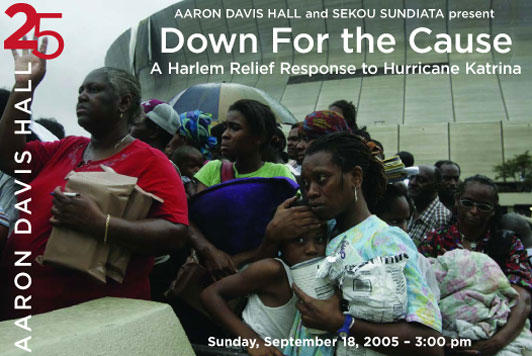
 Philosopher and art critic


 Tonight, the
 If religion, according to Marx and Engels, is the opiate of the masses, then professional sports are one of several reliable narcotics. They do make me trip at times, and I've been on a little high as I've watched tennis player and most-beautiful-man-on-the-tour
  The
The  Finally, returning to the New Orleans (whose St. Louis Cathedral is pictured at left) theme, this is a poem I wrote years ago that mentions the city. It's based on a family story, and mentions the first Black U.S. Senator,


 A number of bloggers (