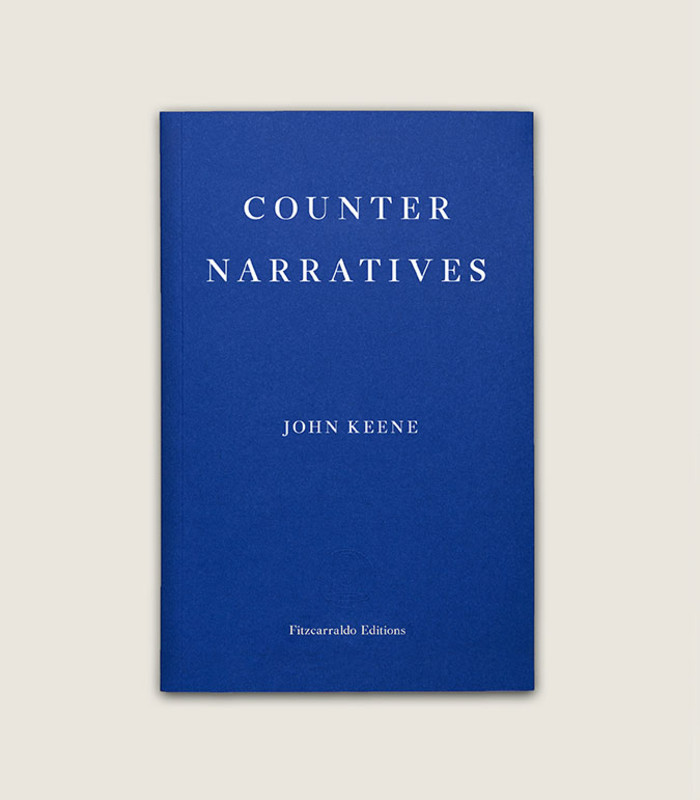
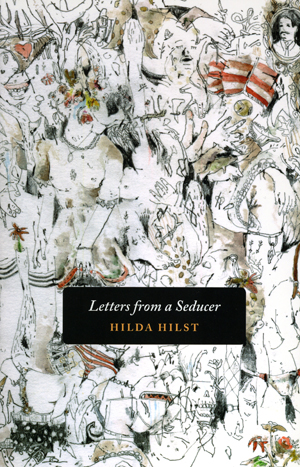
Audiologo notes the the passing of the great Israel "Cachao" Lopez.
Exittheapple remarks about the "coons on myspace."
Cherryl blogs about a teacher who was fired after teaching Freedom Writers.
Gukira poses some of the press's potential questions to Senator Odreamy.
Field, a big Odreamiac ("Obamaholic"), posts his Fieldisms.
Bejata posts Tim Wise's reading of the media-driven Obama-and-Wright brouhaha.
(Prof.) New Black Man remembers one of my favorite actors, Ivan Dixon.
Among so many other good things, Rod 2.0 writes about Brazil's new HIV prevention efforts.
Meanwhile Joe notes that according to the CDC, new HIV rates are allegedly up 48%.
Jasmyne is in a new space, bright and full of light.
Blabbeando lets readers know about a film that'll premiere at the Chicago Film Festival.
Thursday, March 27, 2008


Wednesday, March 26, 2008
Paul Mpagi Sepuya
is a (very) young artist, now living in Brooklyn, whose (nude, especially) portraiture and installation art are garnering increasing attention. Of course he blogs.
Here's Sepuya (at right), with Printed Matter's AA Bronson, from a photo taken (by Sepuya, 2008, all rights reserved) when Bronson interviewed Sepuya for BUTT 22 (NotSafeForWork!), a (maga)zine he has appeared in several times:
Here's an image from Sepuya's series "beloved object + amorous subject, revisited." (There's more on his site.)

To read his thoughts on his life and work, try Butt, # 22.
His installation "Subject-Object Proof no.2", a special project for PULSE Art Fair, New York City (part of the Armory Show), is on view from tomorrow until Sunday. Art critics, get writing.
Here's an image from Sepuya's series "beloved object + amorous subject, revisited." (There's more on his site.)

To read his thoughts on his life and work, try Butt, # 22.
His installation "Subject-Object Proof no.2", a special project for PULSE Art Fair, New York City (part of the Armory Show), is on view from tomorrow until Sunday. Art critics, get writing.
Monday, March 24, 2008
Nico Pitney's A Mosaic: 4,000 Americans Dead
From the Huffington Post, Nico Pitney's "A Mosaic: 4,000 Americans Dead" (click on it to enlarge):

Sunday, March 23, 2008
Feliz Pascua: Rabbits + Black Writers on the Black Church
From the artists of Pënz: Plague No. 1: Rabbits.

˝˝˝˝
Via Professor Zero, Anxious Black Woman on two black writers on the Black Church.
Feliz Pascua/Happy Break!
˝˝˝˝
Via Professor Zero, Anxious Black Woman on two black writers on the Black Church.
Feliz Pascua/Happy Break!
Saturday, March 22, 2008
Wura Natasha Ogunji's "infinite return (bird on the sun)"
A back post. I'd been thinking of posting a link to this video before, but since I've posted a link to Pënz, why not post it now? Wura Natasha Ogunji, performing "infinite return (bird on the sun)."
Enjoy!
Enjoy!
Friday, March 21, 2008
End of the Quarter + SNL on Hulu
The quarter is finally over; these past ten weeks at times felt like twenty-two. There's but a week's break before the new quarter, with all its demands (classes, visitors, conferences, admissions, honors theses, and so much more), begins. Come Monday, after submitting grades, bit more sleep, a lot of reading, a whole lot of prepping for the new quarter, planting and gardening, visits to the city, and, most importantly, that tax thing.
To mark it, a bit of inspired silliness, from Saturday Night Live, via the addictive Hulu: Charles Barkley and Björk, on Sundance Channel's Iconoclasts.
To mark it, a bit of inspired silliness, from Saturday Night Live, via the addictive Hulu: Charles Barkley and Björk, on Sundance Channel's Iconoclasts.
Thursday, March 20, 2008
Quote: Monchoachi + A Responsible Plan to End the Iraq War
 The "first word" is the word that the poet attempts to restore in a universe deafened by the din of massive destruction, all the languages [langages] relentless in their desertifying of the world. The "first word" is quite simply the word. And the poet a warrior, the greatest of warriors, because--to take up the words of Celan, words of a burning timeliness--"exposed in that previously unforeseen sense, and thereby frighteningly in the open [auf das unheimlichste in Freien], the poet goes to language with his entire being, sore with reality and seeking reality.
--Monchoachi, from his "Speech on the Reception of the Prix Max Jacob (2003)," translated by Brent Hayes Edwards, in Edwards, "The Specter of Interdisciplinarity," PMLA, 123.1, January 2008, p. 193.
+++
5 years of war, with no end the US's participation in this manufactured disaster in sight/site. In addition to the 90,000-200,000+ Iraqis killed, and countless maimed, the 4.5 million now displaced and in internal or external exile, that country's destroyed infrastructure, its looted treasury, and its jerry-rigged political system, nearly 4,000 US troops have been killed and 40,000+ have been injured, some seriously. It is not a stretch to say that all of them have suffered some form of trauma after serving over there.
But there is an end in sight/site, even if some of the presidential candidates say they want to initiate a troop withdrawal but shadow-text to their advisors that it's just talk, or one of them wants 10o to 100,000 years of war. Some members of Congress have come up with a "Responsible Plan to End the War in Iraq." Their plan aims to:
1. End U.S. Military Action in Iraq
2. Use U.S. diplomatic power
3. Address humanitarian concerns
4. Restore our Constitution
5. Restore our military
6. Restore independence to the media
7. Create a new, U.S.-centered energy policy
How? You can read about how they plan to do so here, sign the petition, and send the links to your friends. Above all, urge your own Congresspeople and the presidential candidates to sign on to the plan, and use the site's discussion to reorient the discourse on the Iraq War. All the horrors we're constantly warned will happen if we withdraw our troops have already happened. The sectarian killings and cleansing, the soft-partitioning the country, the rise of extremism (especially in the South), the fomenting of anti-US rage and vengeance, the creation of Al Qaeda pockets, all of it has already taken place. The issue now is, do we continue to worsen the problem or do we address the damage we've done by getting out and truly working in a multilateral way to empower the Iraqi people's sovereignty, while also addressing and rectifying the extreme damage we've aided and abetted for years, but in an accelerated fashion since 2001, to our own political system and society?
In case you're wondering which Congresspeople and Congressional candidates are behind this plan, they include:
Darcy Burner candidate for U.S. House, Washington Donna Edwards candidate for U.S. House, Maryland Eric Massa candidate for U.S. House, New York Chellie Pingree candidate for U.S. House, Maine TOM PERRIELLO candidate for U.S. House, Virginia Jared Polis candidate for U.S. House, Colorado George Fearing candidate for U.S. House, Washington Larry Byrnescandidate for U.S. House, Florida STEVE HARRISON candidate for U.S. House, New York SAM BENNETT candidate for U.S. House, Pennsylvania Harry Taylor candidate for U.S. House, North Carolina Alan Grayson candidate for U.S. House, Florida Dennis Shulman candidate for U.S. House, New Jersey Larry Grant candidate for U.S. House, Idaho Leslie Byrne candidate for U.S. House, Virginia Bill O'Neill candidate for U.S. House, Ohio Steve Novick candidate for U.S. Senate, Oregon Jeff Merkley candidate for U.S. Senate, Oregon
Edwards, remember, defeated the DINO Albert (Bear) Wynn, from Maryland, in the primary earlier this year. Support these candidates if you can and care, and above all, do what you can to further their plan!
Tuesday, March 18, 2008
Obama's Speech + Poetic Clichés
I listened to Barack Obama's Jeremiah Wright and race speech today, first on the radio and then, switching rooms, on TV. I was astonished. First because he had to deliver such a speech in the first place, and second because of how remarkable it was, on so many levels. Most remarkable to me was the quality of mind it reflected; rather than taking the easy path of poll-driven, platitudinous drivel, of phrases calculated to placate and pacify (which in fact was the speech's ostensible aim), he managed to discuss the Wright affair, the Black church, and black anger, with great honesty and candor while also justifying why he had held the minister in such high regard in the first place. He then wove into this a discussion of race and racism from various sides of the racial line, historicizing it, personalizing it, criticizing how it has played and continues to play out on the American stage, acknowledging not only black people's but whites' grievances, and contextualizing it within the a politics and public discourse that have shifted somewhat with the times, but which have also often failed us, all of us.
Along the way he managed, as he has done so often, to weave a narrative that was compelling, at times riveting, while also underlining that, against the smearmongers, his Christian faith is truly one of his foundations. Like one of his idols, Abraham Lincoln, he managed yet again to demonstration a grasp of rhetoric--and its power--that seems almost from another time. He even briefly quoted one of the greatest American writers, William Faulkner, who also remains, as any student of American literature knows, one of the most important chroniclers of race and racism as they unfold within a historical dynamic. Certainly Faulkner, who publicly professed ignorance at times on racial issues but in his fiction and private life showed nuance, would have grasped what Obama was arguing so cogently, with such nuance, even if it was immediately clear that many in the TV punditocracy (punditocrisy?) seemed to miss completely.
As I said before, Obama had to go this route, because of the caricature of Wright and black liberation theology that has been circulating, because of the dimness of chatter that has infected the airwaves, because of the stakes he faces if he wants to continue towards the nomination; but with this speech, he has demonstrated that necessity is truly the mother of invention, and has revealed one of the reasons he ought to be compared to John F. Kennedy, which I've often thought a bit ridiculous. Yes, there is his youth, his intellect, his beauty, his credentials, his coolness, which functions as a kind of glamor and nobility, and there is, at the same time, the thin resumé and some callowness and egotism (but who would ever run for president and want to win were she or he not an egotist to some extent?--and we certainly do not want another James Buchanan, ever), but unlike Kennedy, he was not born to great wealth, pedigree or expectations. What this speech, and his willingness to deliver it, his skill at doing so, the passion in it, represented is what I mentioned second, a quality of mind that is very, very high, certainly in the same league with Kennedy, perhaps surpassing him. I don't know if it will save Obama's candidacy; those who would find a reason not to vote for him now have one, if they didn't already, and as I saw tonight on the monitors at my gym, CNN is still flaying the Wright outtakes and pumping its pundits as if Obama had not said a word today.
But whatever happens, Obama did himself and the country a great service today. I only hope he has an opportunity to do so again, and, fanciful as I know it is, that the country--at least more of us--can take up the challenges his speeches laid bare.
And now, some quotes:
and
and
So we'll see....
===
Waldo Jaquith (great name for a poet--though he is not one) of the Virginia Quarterly Review intended to write a blog post about how poets using what he suggests are clichéed terms were not likely to get published in the journal, but when he checked the journal's pages, he found the opposite to be true. His chart, which I reproduce here:
There there are the 10 most common titles of submissions; percentage of inappropriate submissions; rate and number of international submissions; and the "angry letter" from rejected poets/artistes.
So now you know. I'm not sure if the following doggerel will fly, but maybe I should try it.
REMEMBER: HOW TO GET PUBLISHED IN VQR
Water is the death
of stone,
the rust-darkness
of cat bone,
fish birth of blood's
most ancient tones,
our heads, our
hearts: poetry.
(Hmm, it scans! 5 points if you describe the meter.)
Along the way he managed, as he has done so often, to weave a narrative that was compelling, at times riveting, while also underlining that, against the smearmongers, his Christian faith is truly one of his foundations. Like one of his idols, Abraham Lincoln, he managed yet again to demonstration a grasp of rhetoric--and its power--that seems almost from another time. He even briefly quoted one of the greatest American writers, William Faulkner, who also remains, as any student of American literature knows, one of the most important chroniclers of race and racism as they unfold within a historical dynamic. Certainly Faulkner, who publicly professed ignorance at times on racial issues but in his fiction and private life showed nuance, would have grasped what Obama was arguing so cogently, with such nuance, even if it was immediately clear that many in the TV punditocracy (punditocrisy?) seemed to miss completely.
As I said before, Obama had to go this route, because of the caricature of Wright and black liberation theology that has been circulating, because of the dimness of chatter that has infected the airwaves, because of the stakes he faces if he wants to continue towards the nomination; but with this speech, he has demonstrated that necessity is truly the mother of invention, and has revealed one of the reasons he ought to be compared to John F. Kennedy, which I've often thought a bit ridiculous. Yes, there is his youth, his intellect, his beauty, his credentials, his coolness, which functions as a kind of glamor and nobility, and there is, at the same time, the thin resumé and some callowness and egotism (but who would ever run for president and want to win were she or he not an egotist to some extent?--and we certainly do not want another James Buchanan, ever), but unlike Kennedy, he was not born to great wealth, pedigree or expectations. What this speech, and his willingness to deliver it, his skill at doing so, the passion in it, represented is what I mentioned second, a quality of mind that is very, very high, certainly in the same league with Kennedy, perhaps surpassing him. I don't know if it will save Obama's candidacy; those who would find a reason not to vote for him now have one, if they didn't already, and as I saw tonight on the monitors at my gym, CNN is still flaying the Wright outtakes and pumping its pundits as if Obama had not said a word today.
But whatever happens, Obama did himself and the country a great service today. I only hope he has an opportunity to do so again, and, fanciful as I know it is, that the country--at least more of us--can take up the challenges his speeches laid bare.
And now, some quotes:
In my first book, Dreams From My Father, I described the experience of my first service at Trinity:
"People began to shout, to rise from their seats and clap and cry out, a forceful wind carrying the reverend's voice up into the rafters....And in that single note - hope! - I heard something else; at the foot of that cross, inside the thousands of churches across the city, I imagined the stories of ordinary black people merging with the stories of David and Goliath, Moses and Pharaoh, the Christians in the lion's den, Ezekiel's field of dry bones. Those stories - of survival, and freedom, and hope - became our story, my story; the blood that had spilled was our blood, the tears our tears; until this black church, on this bright day, seemed once more a vessel carrying the story of a people into future generations and into a larger world. Our trials and triumphs became at once unique and universal, black and more than black; in chronicling our journey, the stories and songs gave us a means to reclaim memories that we didn't need to feel shame about...memories that all people might study and cherish - and with which we could start to rebuild."
That has been my experience at Trinity. Like other predominantly black churches across the country, Trinity embodies the black community in its entirety - the doctor and the welfare mom, the model student and the former gang-banger. Like other black churches, Trinity's services are full of raucous laughter and sometimes bawdy humor. They are full of dancing, clapping, screaming and shouting that may seem jarring to the untrained ear. The church contains in full the kindness and cruelty, the fierce intelligence and the shocking ignorance, the struggles and successes, the love and yes, the bitterness and bias that make up the black experience in America.
And this helps explain, perhaps, my relationship with Reverend Wright. As imperfect as he may be, he has been like family to me. He strengthened my faith, officiated my wedding, and baptized my children. Not once in my conversations with him have I heard him talk about any ethnic group in derogatory terms, or treat whites with whom he interacted with anything but courtesy and respect. He contains within him the contradictions - the good and the bad - of the community that he has served diligently for so many years.
I can no more disown him than I can disown the black community. I can no more disown him than I can my white grandmother - a woman who helped raise me, a woman who sacrificed again and again for me, a woman who loves me as much as she loves anything in this world, but a woman who once confessed her fear of black men who passed by her on the street, and who on more than one occasion has uttered racial or ethnic stereotypes that made me cringe.
These people are a part of me. And they are a part of America, this country that I love.
and
In the end, then, what is called for is nothing more, and nothing less, than what all the world's great religions demand - that we do unto others as we would have them do unto us. Let us be our brother's keeper, Scripture tells us. Let us be our sister's keeper. Let us find that common stake we all have in one another, and let our politics reflect that spirit as well.
For we have a choice in this country. We can accept a politics that breeds division, and conflict, and cynicism. We can tackle race only as spectacle - as we did in the OJ trial - or in the wake of tragedy, as we did in the aftermath of Katrina - or as fodder for the nightly news. We can play Reverend Wright's sermons on every channel, every day and talk about them from now until the election, and make the only question in this campaign whether or not the American people think that I somehow believe or sympathize with his most offensive words. We can pounce on some gaffe by a Hillary supporter as evidence that she's playing the race card, or we can speculate on whether white men will all flock to John McCain in the general election regardless of his policies.
We can do that.
But if we do, I can tell you that in the next election, we'll be talking about some other distraction. And then another one. And then another one. And nothing will change.
That is one option. Or, at this moment, in this election, we can come together and say, "Not this time." This time we want to talk about the crumbling schools that are stealing the future of black children and white children and Asian children and Hispanic children and Native American children. This time we want to reject the cynicism that tells us that these kids can't learn; that those kids who don't look like us are somebody else's problem. The children of America are not those kids, they are our kids, and we will not let them fall behind in a 21st century economy. Not this time.
and
This time we want to talk about the shuttered mills that once provided a decent life for men and women of every race, and the homes for sale that once belonged to Americans from every religion, every region, every walk of life. This time we want to talk about the fact that the real problem is not that someone who doesn't look like you might take your job; it's that the corporation you work for will ship it overseas for nothing more than a profit.
This time we want to talk about the men and women of every color and creed who serve together, and fight together, and bleed together under the same proud flag. We want to talk about how to bring them home from a war that never should've been authorized and never should've been waged, and we want to talk about how we'll show our patriotism by caring for them, and their families, and giving them the benefits they have earned.
I would not be running for President if I didn't believe with all my heart that this is what the vast majority of Americans want for this country. This union may never be perfect, but generation after generation has shown that it can always be perfected. And today, whenever I find myself feeling doubtful or cynical about this possibility, what gives me the most hope is the next generation - the young people whose attitudes and beliefs and openness to change have already made history in this election.
So we'll see....
===
Waldo Jaquith (great name for a poet--though he is not one) of the Virginia Quarterly Review intended to write a blog post about how poets using what he suggests are clichéed terms were not likely to get published in the journal, but when he checked the journal's pages, he found the opposite to be true. His chart, which I reproduce here:
submitted published
water  19.9%  24.8%
death  14.1%  15.2%
blood  11.7%  13.8%
stone  11.1%  16.0%
bone  9.1%  7.8%
poetry  7.6%  10.3%
heart  7.5%  6.7%
fish  7.0%  5.3%
birth  5.5%  7.4%
darkness3.9%  17.0%
rust  3.3%  2.5%
cat  2.3%  2.8%
There there are the 10 most common titles of submissions; percentage of inappropriate submissions; rate and number of international submissions; and the "angry letter" from rejected poets/artistes.
So now you know. I'm not sure if the following doggerel will fly, but maybe I should try it.
REMEMBER: HOW TO GET PUBLISHED IN VQR
Water is the death
of stone,
the rust-darkness
of cat bone,
fish birth of blood's
most ancient tones,
our heads, our
hearts: poetry.
(Hmm, it scans! 5 points if you describe the meter.)
Monday, March 17, 2008
Sunday Poetries (Congratulations to Ed Roberson, Marilyn Nelson in Evanston)
Let me extend my heartiest and most heartfelt congratulations to poet and colleague Ed Roberson, who has just been named the winner of the prestigious Shelley Memorial Award by the Poetry Society of America. The awardee is selected, according to the PSA's website, "with reference to genius and need." Previous recipients include many of the major figures in 2oth century American literature, including Marianne Moore, e. e. cummings, Robert Penn Warren, Elizabeth Bishop, Kenneth Rexroth, Robinson Jeffers, Anne Sexton, Adrienne Rich, John Ashbery, Galway Kinnell, Gwendolyn Brooks, Gary Snyder, Robert Duncan, Hayden Carruth, Mona Van Duyn, Ann Waldman, Jean Valentine, Thom Gunn, Michael Palmer, and Lyn Hejinian. Since Brooks received the award in 1975-76, a handful of African-American writers, including Etheridge Knight, Lucille Clifton, Angela Jackson, and Yusef Komunyakaa, have been so honored.
I've previously written about Ed and posted excerpts from his poetry on here, but I think it's always necessary to point out how singular and sustained in excellence his work of the last 40 years has been. When I think of his poems, what comes to mind is playful but continual questioning of the lyric, a deft weaving of the observed material world, often grounded in the scientific, with a distinctive, fractured, sometimes recursive metrics, a fragmentation arising out of poetics and politics, that often reaches me not only as poetry but as song. It is challenging, vital, necessary poetry, and it's great to know the PSA is honoring it, and Ed. He will receive his award later this spring, with this year's winner of the Frost Medal, Big Daddy Michael S. Harper.
›››
Yesterday afternoon I headed over to the Evanston Public Library to hear poet Marilyn Nelson read from her work. In conjunction with her reading, a group of children performed some of her poems from her award-winning volume Carver: A Life in Poems, which schoolchildren had performed earlier in the afternoon. I'd heard Marilyn read once or twice before, the last time at Cave Canem's 1oth Anniversary Celebration, in the fall of 2006 (was it that long ago?), but this was the first time I had the opportunity to immerse myself in her words, in her stories, in the work she's been doing, which is, I realized, directly in conversation with my own. Marilyn has been excavating and animating history, and in particular, African-American history, through her poetry for some time, but her recent books have focused specifically on figures both well known (Carver) and less well-known, like Venture Smith, an important African-American historical figure in East Haddam, Connecticut, where she makes her home; the eager young black girls of the Quaker Miss Crandall's school, in Canterbury, Connecticut (she wrote the eponymously titled, illustrated book, with fellow poet Elizabeth Alexander); and the International Sweethearts of Rhythm, a multiracial all-female swing band from Piney Woods, Mississippi, that traveled all over the country during the pre and early post-World War II period (1937-1950).
In much of her recent work, Marilyn has turned to established and fixed forms and traditional meter, but the surprising images and turns of phrase that characterized the highly praised poems in free verse of her early career remain, and her rhymes, which she handles so skillfully, do many things at once, arresting the ear with music and figuration, advancing the poems' narratives and ideas, and grounding the verse in your mind so that you can hear the echoes even as she's begun to move to the next poem. I haven't taught the introductory poetry class, but if I ever do, I will use the sestina she read as a model of how form can work directly in the service of, by embodying, theme and idea.
It was a wonderful way to spend an afternoon, and I am looking forward to Marilyn's forthcoming books, The Freedom Business, and The International Sweethearts of Rhythm, which I believe may be out later this year. Afterwards, at the reception, I was able to meet her son, Jacob Wilkenfeld, and her daughter-in-law, Rita, who's from Brazil and now studying at the university, and then a host of Chicagoland writers (Toni Asante Lightfoot, Eliza Hamilton Abegunde Bispo de Jesus and her husband Andre Bispo de Jesus, Krista Franklin, Kelly Norman Ellis, Parneshia Jones), and visitors (Amanda Johnston) went out to break bread in Evanston.
I brought my camera for a change, and her are some photos:

Marilyn's son Jacob Wilkenfeld introduced her

Marilyn reading

Chicagoland folks breaking bread in Evanston (L-R: Eliza Hamilton Abegunde Bispo de Jesus, Toni Asante Lightfoot, Amanda Johnston, Kelly Norman Ellis, Naomi Ellis, Parneisha Jones, Jacob Wilkenfeld, Rita Wilkenfeld, two friends, Marilyn Nelson, Krista Franklin, and I)
I've previously written about Ed and posted excerpts from his poetry on here, but I think it's always necessary to point out how singular and sustained in excellence his work of the last 40 years has been. When I think of his poems, what comes to mind is playful but continual questioning of the lyric, a deft weaving of the observed material world, often grounded in the scientific, with a distinctive, fractured, sometimes recursive metrics, a fragmentation arising out of poetics and politics, that often reaches me not only as poetry but as song. It is challenging, vital, necessary poetry, and it's great to know the PSA is honoring it, and Ed. He will receive his award later this spring, with this year's winner of the Frost Medal, Big Daddy Michael S. Harper.
›››
Yesterday afternoon I headed over to the Evanston Public Library to hear poet Marilyn Nelson read from her work. In conjunction with her reading, a group of children performed some of her poems from her award-winning volume Carver: A Life in Poems, which schoolchildren had performed earlier in the afternoon. I'd heard Marilyn read once or twice before, the last time at Cave Canem's 1oth Anniversary Celebration, in the fall of 2006 (was it that long ago?), but this was the first time I had the opportunity to immerse myself in her words, in her stories, in the work she's been doing, which is, I realized, directly in conversation with my own. Marilyn has been excavating and animating history, and in particular, African-American history, through her poetry for some time, but her recent books have focused specifically on figures both well known (Carver) and less well-known, like Venture Smith, an important African-American historical figure in East Haddam, Connecticut, where she makes her home; the eager young black girls of the Quaker Miss Crandall's school, in Canterbury, Connecticut (she wrote the eponymously titled, illustrated book, with fellow poet Elizabeth Alexander); and the International Sweethearts of Rhythm, a multiracial all-female swing band from Piney Woods, Mississippi, that traveled all over the country during the pre and early post-World War II period (1937-1950).
In much of her recent work, Marilyn has turned to established and fixed forms and traditional meter, but the surprising images and turns of phrase that characterized the highly praised poems in free verse of her early career remain, and her rhymes, which she handles so skillfully, do many things at once, arresting the ear with music and figuration, advancing the poems' narratives and ideas, and grounding the verse in your mind so that you can hear the echoes even as she's begun to move to the next poem. I haven't taught the introductory poetry class, but if I ever do, I will use the sestina she read as a model of how form can work directly in the service of, by embodying, theme and idea.
It was a wonderful way to spend an afternoon, and I am looking forward to Marilyn's forthcoming books, The Freedom Business, and The International Sweethearts of Rhythm, which I believe may be out later this year. Afterwards, at the reception, I was able to meet her son, Jacob Wilkenfeld, and her daughter-in-law, Rita, who's from Brazil and now studying at the university, and then a host of Chicagoland writers (Toni Asante Lightfoot, Eliza Hamilton Abegunde Bispo de Jesus and her husband Andre Bispo de Jesus, Krista Franklin, Kelly Norman Ellis, Parneshia Jones), and visitors (Amanda Johnston) went out to break bread in Evanston.
I brought my camera for a change, and her are some photos:

Marilyn's son Jacob Wilkenfeld introduced her

Marilyn reading

Chicagoland folks breaking bread in Evanston (L-R: Eliza Hamilton Abegunde Bispo de Jesus, Toni Asante Lightfoot, Amanda Johnston, Kelly Norman Ellis, Naomi Ellis, Parneisha Jones, Jacob Wilkenfeld, Rita Wilkenfeld, two friends, Marilyn Nelson, Krista Franklin, and I)
Tuesday, March 11, 2008
Sunday Thoughts (Obama, Economic Collapse, Haneke & Noé)
Nearly a week has passed since I began this post, and I admit that, now, at the end of this quarter (exams start tomorrow), I just don't have to time to keep it up. Next quarter will be as bad if not worse, I think. So what's to do? I guess pop in from time to time and, when the air is clear, come up with something of interest. April is poetry's month, so I'm going to aim for a poem at least every other day if I can, though on the nights when I have to write out my lectures I realize I'll be lucky to copy over or type out even a haiku. But I will try.
Now, on to news that now feels like it's from the last century:
Barack Obama won Mississippi's primary [on Tuesday], after having Wyoming's caucuses on Saturday [a week ago]. According to the Clintonistas, who are still working that surrogate-racist-remark angle, these states don't count. I agree that it's unlikely Obama will win either Mississippi or Wyoming in the general election, but a recent SurveyUSA poll showed that he could probably carry some other states Democrats haven't won in a while, like Colorado and Virginia, while Hillary Rodham Clinton would win the Kerry states plus Florida and Ohio. (With a little help from Diebold, but you didn't hear that from me.)
In both cases, they defeat the establishment media's favorite McKrush by a hair. Looking at the SurveyUSA maps, though, I think it's fair to say that Obama would carry New Jersey (I mean, seriously) over McCain, and probably Pennsylvania as well, while Clinton would win Washington State and Oregon, which I cannot see going for Senator 100-years-in-Iraq. But what do I know? I thought Al Gore won. (That's right, he did.) I thought John Kerry would pull out Ohio. (He may have, but we'll never know, will we?) I thought...Bill Bradley didn't have a chance in hell, which is why I didn't join his campaign as a speechwriter. Well, my judgment isn't always so off.
Obama has a real test before him with Pennsylvania, which looks like prime Clinton territory, especially with all the Clinton boosters seeded throughout the state, and Hillary's ancestral roots in Scranton. From the governor, Ed Rendell, to Philadelphia's mayor, Mike Nutter, the state has Clintonland stamped all over it. (I'm not sure who new anti-abortion US Senator Bob Casey Jr. is supporting.) Even still, Obama will probably close the gap considerably, especially if he figures out a way to address the concerns that were raised during the Ohio-Texas scramble, about his fitness to occupy the warmonger's seat, his double-talking on NAFTA (which is to say, his credibility and claims to offer a new politics), and his ability to convince the Children-of-the-Corn zombies devouring those viral Muslim-smearing emails that he's not going to recite Osama bin Laden's verses at his inaugural--or, I must update, to don a daishiki, quote Amiri Baraka's onomatopoetic machine-gun verses, and rename the federal buildings after deceased Black Panthers.
(Truthfully, were Jeremiah Wright's comments about the racism Obama faced, or the US's global meddling and destructiveness that controversial? I know the answer...).
***
Meanwhile, New York State has a new governor, David Paterson. He's New York's first African-American governor, and the first legally blind person to become governor of any US state. Paterson's to the left of his predecessor on many issues, and has a strong track record on LGBTQ rights.
***
How about the horrid Bear Stearns news--first, they were on the brink of insolvency on Friday and had to be bailed out by the Federal Reserve, which has been working hard to keep a number of banks afloat, and JP Morgan Chase, and today they were snapped by JP Morgan Chase for the astonishingly cut-rate price of about $2/share--along with all the other negative financial indicators, like net job losses, rising inflation, the plummeting dollar, and increasing foreclosures and dead home sales? I remember that when I was graduating from college and considering what to do with my life, or rather, what to do that would help me pay off my student loans, and chose to work at a commercial bank (Boston then had half a dozen or so, nearly all of which have merged into one conglomerate) rather than an investment bank, Bear Stearns was one of the houses that someone of my classmates headed to, though they didn't seem, at least in my perception, to hold it in the same stellar regard as Morgan Stanley, Lehman Brothers, Merrill Lynch, and some of the other investment firms. It nevertheless was until recently one of the premier firms, and just a year ago, its shares were selling at $170. The bank that employed Sanford Weill, Pursuit of Happyness author Christopher Gardner, and other important figures in Wall Street history is now kaput--and I doubt it'll be the last one to hover on the brink. All in all, the world of high finance looks extremely precarious right now, and from what I read on the Internets, some major economists have little confidence that despite the well-known acumen that Fed Chair Ben Bernanke possesses, neither he nor anyone else may be able to do anything to sort things out in the short term. A "depression" seems unlikely, and the scenario I suggested to C, "stagflation" (remember that?) may not come to pass (we can hope), but the recession is already with us, and may worsen before it wanes. (A Bush in office and economic problems: talk about the worst kind of dèja vu.)
Another question: given the Fed's massive underwriting over the last few months of the US's shaky financial institutions, are we witnessing the covert nationalization of some of these banks and non-banking financial institutions?
Is this more socialization of debt, as profits continue to be privatized?
And where's the outcry, from the right-wing and the DLC types, about this form of "socialism"?
***
I thought about going to see Michael Haneke's new film Funny Games last night, but passed on it. I'm a fan of his work--especially the outré The Piano Teacher, The Time of the Wolf, Code Inconnu, and Caché--but this new remake of his previous Austrian version of the same film sounds especially gratuitous and not really worth forking over $10 for. I'm also not a big fan of the film's primary actors, Tim Roth, Naomi Watts (who really is overexposed--memo to Hollywood, there are other actresses out there, including American actresses), or Michael Pitt, whose performances always seem to be lubricated by quaaludes, so I'll wait until Netflix carries the film to see it if I do.
I'm very curious, however, about Gaspar Noé's upcoming film, Enter the Void, still in production, which appears to be about post-mortal consciousness, if such a thing exists, with really visually stunning mandalas, time travel, and so forth woven into the script. His Irréversible is one of the more thematically and emotionally disturbing films to appear in the last 10 years, though his I'll Stand Alone and Carne aren't far behind. Both Hanneke and Noé seem motivated by a Schopenhauerian interest in pre-rational destructive behavior, a a hyper-Nietzschean view of power, and a post-Marxian, anti-bourgeois desire to shock by demonstrating the power of human cruelty and its consequences. But Haneke's approach centers more on violence and questions of ethics than Noé's, who is chiefly fascinated to explore two emotions, desire and disgust. Both locate their experiments in the domestic sphere, which they seem to want to explode. Noé's new film does not seem to touch upon his usual preoccupations, but then I've only read (badly) the French descriptions and writeups. There's a dead body involved, so who knows where he'll go?
Hanneke would be a good choice to direct the film version of Cormac McCarthy's The Road--close as it is in some ways to The Time of the Wolf--but John Hillcoat (who?) is doing the honors. Charlize Theron, Viggo Mortenson, Robert Duvall, Guy Pearce, and Michael K. Williams*--Omar, from The Wire!--are in it. I dread to see what it's going to turned into, especially given Hillcoat's background in music videos, but such is Hollywood. Perhaps Noé, whose treatment of homosex has veered from homophobic to enlightened, could consider filming one of the late Guillaume Dustan's novels. Nicolas Pages is probably too linguistically complex, but Dans ma chambre (In My Bedroom) or Je sors ce soir (I got Out Tonight) would be worth tackling. That is, unless another director (François Ozon? Lional Baier? Gaël Morel? Robert Sallis?) gets to them first. I doubt an American director, especially one backed by Hollywood, would touch these books, since they are relentless anti-sentimental, extremely graphic, and populated by a constellation of characters most American "gay" (male) feature films aren't interested in....
*For readers of The Road, can any of you predict which character Williams will play? When I think about the book, none comes quickly to mind.
Now, on to news that now feels like it's from the last century:
Barack Obama won Mississippi's primary [on Tuesday], after having Wyoming's caucuses on Saturday [a week ago]. According to the Clintonistas, who are still working that surrogate-racist-remark angle, these states don't count. I agree that it's unlikely Obama will win either Mississippi or Wyoming in the general election, but a recent SurveyUSA poll showed that he could probably carry some other states Democrats haven't won in a while, like Colorado and Virginia, while Hillary Rodham Clinton would win the Kerry states plus Florida and Ohio. (With a little help from Diebold, but you didn't hear that from me.)
In both cases, they defeat the establishment media's favorite McKrush by a hair. Looking at the SurveyUSA maps, though, I think it's fair to say that Obama would carry New Jersey (I mean, seriously) over McCain, and probably Pennsylvania as well, while Clinton would win Washington State and Oregon, which I cannot see going for Senator 100-years-in-Iraq. But what do I know? I thought Al Gore won. (That's right, he did.) I thought John Kerry would pull out Ohio. (He may have, but we'll never know, will we?) I thought...Bill Bradley didn't have a chance in hell, which is why I didn't join his campaign as a speechwriter. Well, my judgment isn't always so off.
Obama has a real test before him with Pennsylvania, which looks like prime Clinton territory, especially with all the Clinton boosters seeded throughout the state, and Hillary's ancestral roots in Scranton. From the governor, Ed Rendell, to Philadelphia's mayor, Mike Nutter, the state has Clintonland stamped all over it. (I'm not sure who new anti-abortion US Senator Bob Casey Jr. is supporting.) Even still, Obama will probably close the gap considerably, especially if he figures out a way to address the concerns that were raised during the Ohio-Texas scramble, about his fitness to occupy the warmonger's seat, his double-talking on NAFTA (which is to say, his credibility and claims to offer a new politics), and his ability to convince the Children-of-the-Corn zombies devouring those viral Muslim-smearing emails that he's not going to recite Osama bin Laden's verses at his inaugural--or, I must update, to don a daishiki, quote Amiri Baraka's onomatopoetic machine-gun verses, and rename the federal buildings after deceased Black Panthers.
(Truthfully, were Jeremiah Wright's comments about the racism Obama faced, or the US's global meddling and destructiveness that controversial? I know the answer...).
***
Meanwhile, New York State has a new governor, David Paterson. He's New York's first African-American governor, and the first legally blind person to become governor of any US state. Paterson's to the left of his predecessor on many issues, and has a strong track record on LGBTQ rights.
***
How about the horrid Bear Stearns news--first, they were on the brink of insolvency on Friday and had to be bailed out by the Federal Reserve, which has been working hard to keep a number of banks afloat, and JP Morgan Chase, and today they were snapped by JP Morgan Chase for the astonishingly cut-rate price of about $2/share--along with all the other negative financial indicators, like net job losses, rising inflation, the plummeting dollar, and increasing foreclosures and dead home sales? I remember that when I was graduating from college and considering what to do with my life, or rather, what to do that would help me pay off my student loans, and chose to work at a commercial bank (Boston then had half a dozen or so, nearly all of which have merged into one conglomerate) rather than an investment bank, Bear Stearns was one of the houses that someone of my classmates headed to, though they didn't seem, at least in my perception, to hold it in the same stellar regard as Morgan Stanley, Lehman Brothers, Merrill Lynch, and some of the other investment firms. It nevertheless was until recently one of the premier firms, and just a year ago, its shares were selling at $170. The bank that employed Sanford Weill, Pursuit of Happyness author Christopher Gardner, and other important figures in Wall Street history is now kaput--and I doubt it'll be the last one to hover on the brink. All in all, the world of high finance looks extremely precarious right now, and from what I read on the Internets, some major economists have little confidence that despite the well-known acumen that Fed Chair Ben Bernanke possesses, neither he nor anyone else may be able to do anything to sort things out in the short term. A "depression" seems unlikely, and the scenario I suggested to C, "stagflation" (remember that?) may not come to pass (we can hope), but the recession is already with us, and may worsen before it wanes. (A Bush in office and economic problems: talk about the worst kind of dèja vu.)
Another question: given the Fed's massive underwriting over the last few months of the US's shaky financial institutions, are we witnessing the covert nationalization of some of these banks and non-banking financial institutions?
Is this more socialization of debt, as profits continue to be privatized?
And where's the outcry, from the right-wing and the DLC types, about this form of "socialism"?
***
I thought about going to see Michael Haneke's new film Funny Games last night, but passed on it. I'm a fan of his work--especially the outré The Piano Teacher, The Time of the Wolf, Code Inconnu, and Caché--but this new remake of his previous Austrian version of the same film sounds especially gratuitous and not really worth forking over $10 for. I'm also not a big fan of the film's primary actors, Tim Roth, Naomi Watts (who really is overexposed--memo to Hollywood, there are other actresses out there, including American actresses), or Michael Pitt, whose performances always seem to be lubricated by quaaludes, so I'll wait until Netflix carries the film to see it if I do.
I'm very curious, however, about Gaspar Noé's upcoming film, Enter the Void, still in production, which appears to be about post-mortal consciousness, if such a thing exists, with really visually stunning mandalas, time travel, and so forth woven into the script. His Irréversible is one of the more thematically and emotionally disturbing films to appear in the last 10 years, though his I'll Stand Alone and Carne aren't far behind. Both Hanneke and Noé seem motivated by a Schopenhauerian interest in pre-rational destructive behavior, a a hyper-Nietzschean view of power, and a post-Marxian, anti-bourgeois desire to shock by demonstrating the power of human cruelty and its consequences. But Haneke's approach centers more on violence and questions of ethics than Noé's, who is chiefly fascinated to explore two emotions, desire and disgust. Both locate their experiments in the domestic sphere, which they seem to want to explode. Noé's new film does not seem to touch upon his usual preoccupations, but then I've only read (badly) the French descriptions and writeups. There's a dead body involved, so who knows where he'll go?
Hanneke would be a good choice to direct the film version of Cormac McCarthy's The Road--close as it is in some ways to The Time of the Wolf--but John Hillcoat (who?) is doing the honors. Charlize Theron, Viggo Mortenson, Robert Duvall, Guy Pearce, and Michael K. Williams*--Omar, from The Wire!--are in it. I dread to see what it's going to turned into, especially given Hillcoat's background in music videos, but such is Hollywood. Perhaps Noé, whose treatment of homosex has veered from homophobic to enlightened, could consider filming one of the late Guillaume Dustan's novels. Nicolas Pages is probably too linguistically complex, but Dans ma chambre (In My Bedroom) or Je sors ce soir (I got Out Tonight) would be worth tackling. That is, unless another director (François Ozon? Lional Baier? Gaël Morel? Robert Sallis?) gets to them first. I doubt an American director, especially one backed by Hollywood, would touch these books, since they are relentless anti-sentimental, extremely graphic, and populated by a constellation of characters most American "gay" (male) feature films aren't interested in....
*For readers of The Road, can any of you predict which character Williams will play? When I think about the book, none comes quickly to mind.
Monday, March 10, 2008
Monday Rambles
I admit that I could keep posting on The Wire every day. But I won't. I did forget to mention that I was glad to see the multi-talented Eisa Davis, the subject of a fine profile in the gray raggedy-andy, and the resplendant Wendi (Dawn) Grantham, whom I haven't seen since I was a senior in college (or maybe it was a few years after that), but who even then was going places, both making appearances. Eisa's character finally let Bubbles upstairs to eat at the dinner table, while Wendy's character showered forced retiree Lester Freemon with love as he tinkered with his model furniture.
I'm not sure what Wendy's up to as of now, but Eisa is currently starring in Passing Strange (think Stew!) which Dr. Audiologo, like so many other supersharp people I know, suggests we ought to see. I know I ought to see it. Ought to have seen it! A musical about a black rocker? Seriously, why the hell haven't I bought my ticket yet?
***
Huge news in Chicagoland: Physicist and anti-Iraq war, anti-telecom immunity Democratic candidate Bill Foster defeats multimillionaire right-winger Jim Oberweis to take former Speaker of the House Denny Hastert's suburban-to-rural district 53%-47%. He will serve the remainder of Hastert's term, and run against Oberweis again in November.
Although the district went for Bush in 2000 and 2004, and Hastert won it 60-40% in his last race, Foster rose in the polls over the last few months, and received a late-in-the-campaign ad endorsement from Barack Obama. Rather than running as a quasi-Republican, he took strong liberal and progressive stands on several key issues.
Oberweis, as part of his campaign, had spent millions from his dairy company and banking fortune, and received endorsements top Republicans, including John McCain, who came to campaign for him. The Republican National Congressional Committee even sank $1 million+ into the race on Oberweis' behalf. No ice cream, though!
Though we're talking about Illinois, which has been trending bluer for years, this was still a reliably Republican district, so I hope it's a harbinger of what we'll see this fall, across the country.
***
Eliot Spitzer: whyyyyyyyyyyyyyyy? Hubris?
***
Anthony has photos of Carnival up on his site. Carnival in Santo Domingo. Here's one.

Marccelus has photos of Carnaval on his site. The 11th Fantasia Gay in Salvador da Bahia. Here's one.

I'm sure I'm not the only one who wished Chicago celebrated Carnival/Carnaval/Mardi Gras/something lively like this. (New York also really has no excuse, you know.) I mean, little St. Louis celebrates Mardi Gras. I couldn't find any good images of it, though.
***
Orlando Patterson, for a long time not one of my favorite people, has an interesting take on Hillary Clinton's 3 AM ad. He sees the specter of D. W. Griffiths' Birth of a Nation in it. Uh oh....
***
Tonight, the one and only Ronaldo Wilson is reading at the Poetry Project. With a Diné (Navajo) poet named Orlando White, who's studying now at Brown. I love the anagrammatic symmetry of their first names. Only a palindrome would be better. For several years, I have borne Ronaldo's 2007 book of poems/novel, Narrative of the Life of the Brown Boy and the White Man, back and forth between New Jersey and Illinois, dipping into it every so often, and it is remarkable, so I am elated (I almost typed delighted, which is a word I actually do say from time to time, even though it sounds writerly) that it will be published later this year, by the University of Pittsburgh Press, since it won the 2007 Cave Canem Prize.
From the Poetry Project's email:
Once upon a time Ronaldo and I sent a few emails back and forth about the Williams sisters (he taught a class on them). I told him I favored Venus, while he is Serena partisan (though I love watching Serena too). Actually, I adore them both. That led me to draw up a comparison, along the following lines. Which one are you? I think Obama is Venus, and Hillary is Serena. But not really (sorry, Serena!).
Venus: tall, cygnine, demure, aloof
Serena: average in height, voluptuous, gregarious, volatile
Venus: often seems not to care whether she wins or loses
Serena: always appears to turn every match into a life-or-death battle
Venus: cobalt, xenon, platinum
Serena: tungsten, neon, gold
Venus: huffs politely
Serena: shrieks volubly
Venus: often has wrist injuries, sometimes has calf injuries
Serena: often has leg injuries, haven't seen her in a wrist-wrap
Venus: rarely shows emotion, her face is a mask
Serena: is all about the emotion, and turns matches into masques, beginning with her outstanding costumes
Venus: sometimes shows up not really pressed about how her hair looks, and loves hairpins, barettes and so forth, because, really, it's just not that important in the scheme of things
Serena: hair is always did, down, gives extensions of life, and half the time looks as though she could go right from a tennis match to a soundstage
Venus: has some of the fastest serves in the game
Serena: hits balls in spots that leave some of her opponents baffled as to how she did so
Venus: sometimes plays like she's never been anywhere near a court
Serena: always plays like she was a champion at some point, though perhaps not recently
Venus: is never harassed about her weight, but about her commitment to tennis
Serena: is often harassed about her weight, which I secretly think some of her opponents wish would grow so problematic it would keep her off the court
Venus: has not won all the majors, but has won more Wimbledons than anyone else of late
Serena: has won all the majors, nearly completing a grand-slam, but no more than 3 of any one
Venus: keeps her love life private, though she is rumored to have been dating an Italian bodyguard (or someone along those lines)
Serena: dates high-profile African-American professional athletes, and poses eagerly on the red carpet with them
Venus: speaks French quite well, and needs an opportunity to do so at Stade Roland Garros (hint, hint)
Serena: may speak French, but certainly speaks her mind, sending tennis commentators and fans into apoplexy
Venus: has a parallel career as a designer of clothes and interiors, and deigns to play tennis at times
Serena: has a parallel career as an actress, designs her own clothes, including that catsuit that nearly made a male friend of mine lose his mind, and is into tennis intensely, when she's into it
Venus: sometimes manages to give about 75% and walks away with a championship
Serena: often givens 150% and so much drama that you are drained after watching her, but you want to see more
Venus: against Serena, she's painful to watch, because she doesn't play like she wants to win
Serena: against Venus, she's painful to watch, because she wants to win but doesn't like to show it
Venus: really the serene goddess, if you think about it
Serena: really the love goddess, if you think about it
Venus & Serena: two of the best tennis players and sportspeople of all time
Does Ronaldo mention either Venus or Serena in his book? You'll have to read it to find out....
I'm not sure what Wendy's up to as of now, but Eisa is currently starring in Passing Strange (think Stew!) which Dr. Audiologo, like so many other supersharp people I know, suggests we ought to see. I know I ought to see it. Ought to have seen it! A musical about a black rocker? Seriously, why the hell haven't I bought my ticket yet?
***
Huge news in Chicagoland: Physicist and anti-Iraq war, anti-telecom immunity Democratic candidate Bill Foster defeats multimillionaire right-winger Jim Oberweis to take former Speaker of the House Denny Hastert's suburban-to-rural district 53%-47%. He will serve the remainder of Hastert's term, and run against Oberweis again in November.
Although the district went for Bush in 2000 and 2004, and Hastert won it 60-40% in his last race, Foster rose in the polls over the last few months, and received a late-in-the-campaign ad endorsement from Barack Obama. Rather than running as a quasi-Republican, he took strong liberal and progressive stands on several key issues.
Oberweis, as part of his campaign, had spent millions from his dairy company and banking fortune, and received endorsements top Republicans, including John McCain, who came to campaign for him. The Republican National Congressional Committee even sank $1 million+ into the race on Oberweis' behalf. No ice cream, though!
Though we're talking about Illinois, which has been trending bluer for years, this was still a reliably Republican district, so I hope it's a harbinger of what we'll see this fall, across the country.
***
Eliot Spitzer: whyyyyyyyyyyyyyyy? Hubris?
***
Anthony has photos of Carnival up on his site. Carnival in Santo Domingo. Here's one.
Marccelus has photos of Carnaval on his site. The 11th Fantasia Gay in Salvador da Bahia. Here's one.
I'm sure I'm not the only one who wished Chicago celebrated Carnival/Carnaval/Mardi Gras/something lively like this. (New York also really has no excuse, you know.) I mean, little St. Louis celebrates Mardi Gras. I couldn't find any good images of it, though.
***
Orlando Patterson, for a long time not one of my favorite people, has an interesting take on Hillary Clinton's 3 AM ad. He sees the specter of D. W. Griffiths' Birth of a Nation in it. Uh oh....
***
Tonight, the one and only Ronaldo Wilson is reading at the Poetry Project. With a Diné (Navajo) poet named Orlando White, who's studying now at Brown. I love the anagrammatic symmetry of their first names. Only a palindrome would be better. For several years, I have borne Ronaldo's 2007 book of poems/novel, Narrative of the Life of the Brown Boy and the White Man, back and forth between New Jersey and Illinois, dipping into it every so often, and it is remarkable, so I am elated (I almost typed delighted, which is a word I actually do say from time to time, even though it sounds writerly) that it will be published later this year, by the University of Pittsburgh Press, since it won the 2007 Cave Canem Prize.
From the Poetry Project's email:
from "The Brown Boy’s Black Father Loses It"How can you not want to rest of this book? Claudia Rankine, in her infinite wisdom, selected it for the Cave Canem Prize.
"In the dream, the brown boy’s father is crazy. He is naked and has come out into a kitchen scattered with open boxes, his cock, shiny, hard and sticking straight into the room. The brown boy knows he must get his father to a mirror so he can get him to look at his own eyes. If he can only drag him out of the kitchen, and down the hallway where he sees a mirror against a wall, he thinks, maybe, he can save him."
Once upon a time Ronaldo and I sent a few emails back and forth about the Williams sisters (he taught a class on them). I told him I favored Venus, while he is Serena partisan (though I love watching Serena too). Actually, I adore them both. That led me to draw up a comparison, along the following lines. Which one are you? I think Obama is Venus, and Hillary is Serena. But not really (sorry, Serena!).
Venus: tall, cygnine, demure, aloof
Serena: average in height, voluptuous, gregarious, volatile
Venus: often seems not to care whether she wins or loses
Serena: always appears to turn every match into a life-or-death battle
Venus: cobalt, xenon, platinum
Serena: tungsten, neon, gold
Venus: huffs politely
Serena: shrieks volubly
Venus: often has wrist injuries, sometimes has calf injuries
Serena: often has leg injuries, haven't seen her in a wrist-wrap
Venus: rarely shows emotion, her face is a mask
Serena: is all about the emotion, and turns matches into masques, beginning with her outstanding costumes
Venus: sometimes shows up not really pressed about how her hair looks, and loves hairpins, barettes and so forth, because, really, it's just not that important in the scheme of things
Serena: hair is always did, down, gives extensions of life, and half the time looks as though she could go right from a tennis match to a soundstage
Venus: has some of the fastest serves in the game
Serena: hits balls in spots that leave some of her opponents baffled as to how she did so
Venus: sometimes plays like she's never been anywhere near a court
Serena: always plays like she was a champion at some point, though perhaps not recently
Venus: is never harassed about her weight, but about her commitment to tennis
Serena: is often harassed about her weight, which I secretly think some of her opponents wish would grow so problematic it would keep her off the court
Venus: has not won all the majors, but has won more Wimbledons than anyone else of late
Serena: has won all the majors, nearly completing a grand-slam, but no more than 3 of any one
Venus: keeps her love life private, though she is rumored to have been dating an Italian bodyguard (or someone along those lines)
Serena: dates high-profile African-American professional athletes, and poses eagerly on the red carpet with them
Venus: speaks French quite well, and needs an opportunity to do so at Stade Roland Garros (hint, hint)
Serena: may speak French, but certainly speaks her mind, sending tennis commentators and fans into apoplexy
Venus: has a parallel career as a designer of clothes and interiors, and deigns to play tennis at times
Serena: has a parallel career as an actress, designs her own clothes, including that catsuit that nearly made a male friend of mine lose his mind, and is into tennis intensely, when she's into it
Venus: sometimes manages to give about 75% and walks away with a championship
Serena: often givens 150% and so much drama that you are drained after watching her, but you want to see more
Venus: against Serena, she's painful to watch, because she doesn't play like she wants to win
Serena: against Venus, she's painful to watch, because she wants to win but doesn't like to show it
Venus: really the serene goddess, if you think about it
Serena: really the love goddess, if you think about it
Venus & Serena: two of the best tennis players and sportspeople of all time
Does Ronaldo mention either Venus or Serena in his book? You'll have to read it to find out....
Sunday, March 09, 2008
The Wire: Finis + Travels & Brain Camp
The Wire: is it really over? What a finale! I know folks who haven't yet seen all the prior four seasons, so I'll keep my thoughts to a minimum, but what a series of climaxes and denouements, with narrative braiding and unexpected twists superior to many a novel out there. Another of the strongest and most appealing aspects of the show for me was the way that David Simon, his writers and producers, and his cast, maintained a consistency and depth of characterization over multiple seasons; the only character whose motivation was least clear to me this season was Kima, which I attribute to the writers' inability to find the right character to take the potentially devastating steps she did. Who else could have done it? The characterizations of the newsroom people, save Gus Johnson, were also shallower than what Simon and company served up in previous seasons, and I attributed this to the lack of narrative space and time to fill them out. 10 shows simply were not enough. I cannot figure out what drove the yuppy reporter to his unethical actions, because even his early statement and demonstration of his ambition rang more than a little hollow--and I can't attribute it solely to bad acting--and yet his behavior, reflecting the many journalistic scandals over the last ten years, was all too plausible.
My favorite final notes tonight included the utterly cynical and predictable take on the newspaper industry, with the racial and gender critiques woven in without being uttered; the ridiculously random yet perfect resolution to the "homeless killer" plotline, with its manifold ramifications for all involved; Marlo Stanfield's return, replete with a bit of streetfighting, to the only thing he truly knows; Daniels' final demonstration of an inner ethical compass, despite the consequences, as a counterstatement to the cynicism filling the air of nearly every other space in the show; and little Michael's figurative and literal reprise of the series' anti-hero, Omar, with a hooded accomplice in tow. (Bernie, Reggie and I had broached a possible reading of this after a domestic scene early this scene.) The show's culmination also represented one of the best multi-season explorations of local and state politics that I can recall. I told C that given how close the show sometimes hewed to reality down there I imagine Maryland's governor, the former Baltimore mayor Martin O'Malley, is probably more relieved than almost anyone else that it's finally ended. Then again, I think the most relieved party may be the Baltimore Sun.
◊◊◊
This past week was like brain camp! I want to go back! (Photos coming soon....)
After getting an opportunity to spend some time at home, on Tuesday evening I participated in a Poets House-sponsored panel, The Harlem Renaissance Revisited, which included the marvelous scholar-poet Evie Shockley, who inimitably brought to light the work of poet Anne Spencer, and the amazing multitalented duo Mendi + Keith Obadike, who spoke about the influence of several Harlem Renaissance-era musicians and poets on their own work. I offered some remarks on a longtime hero, Richard Bruce Nugent, whose life and works, such as "Smoke, Lilies and Jade," like other pathbreaking texts from this period and group I see as being integral, in key ways not only to the subsequent development of Black queer literary and cultural production, but also to Black avant-garde and American avant-garde traditions. Amiri Baraka drawing from the notebooks of Nugent and Hughes, Hurston and Spencer: can you picture it? Before the panel, I met with several Borough of Manhattan Community College classes, and answered their questions on the Harlem Renaissance, which ranged from the paucity of high profile female poets, to why Langston Hughes got so many props, to when exactly the Harlem/New Negro Renaissance ended and why. Great questions, and many thanks to the professors and students, one of whom was analyzing a Langston Hughes poem as we walked to the auditorium--you gotta love it!
I was so glad that friends like Tisa, Patricia Spears Jones, and Kaemanje were present, and it was also a pleasure to see Tom Wirth, who edited the Nugent omnibus volume, Gay Rebel of the Harlem Renaissance (Duke) several years ago, and passed on a copy of Nugent's posthumous roman à clef, Gentleman Jigger, which he edited and I am reading now and cannot put down! Langston Hughes, Zora Neale Hurston, Countee Cullen, Carl Van Vechten, Aaron Douglas, Alain Locke, W.E.B. DuBois, A'Lelia Bundles, and many other high-profile Harlem Renaissancers make their appearances herein, sometimes to shocking effect. Had he published this back when he wrote it, he not only might have provoked Wallace Thurman--a central figure ("Rusty") in the text and the foil of Nugent's alter ego, "James 'Stuartt' Brennan"--whose Infants of the Spring is like a mirror of this text (Nugent calls the Thurman character a "plagiarist" in the book, though Wirth's introduction argues that the matter remains unresolved), to an even earlier death, but he might have found himself exiled from New York permanently. I recommend it, and if I hadn't already crammed my spring course with reading material (how on earth is that going to work?), I'd be adding it to the list. Thanks to Stephen Motika of Poets House, and Alison Meyers of Cave Canem, among many others, for making this event possible.
On Wednesday I flew out to Indiana University to participate in a reading with Evie Shockley; our host was the gentle, brilliant, beautiful poet-scholar Ross Gay, along with poet Cathy Bowman, who heads the Creative Writing Program, and Margo Crawford, one of the smartest people I have met. (Margo's mind moves like subatomic particles, and I'm not kidding.) The reading was lots of fun: I read a new story, and Evie TORE IT UP with her poems! I had never heard her read more than a poet or two from her collection, A Half Red Sea--in fact, I don't think I'd ever heard Evie read outside of a CC reading, incredibly enough--so this opportunity was platinum. She also read newer poems whose concision, subtlety and punch could serve as models for any poet, and three final pieces which closed out the evening perfectly. Along the way she invoked Ella Fitzgerald, Henry Bibb, Gwendolyn Brooks, mathematics, Nappyphilia, and countless other things in utter congruence in that way that only Evie can. If only I could figure out a way to bring her and Ross to the university, at least for a day! I will only add that Ross's introductions set the bar high, and you know you gotta bring it when he sets the standard. Later we all hung out, and I got to chat with Cathy and Margo, and Ross and Evie, and another colleague of theirs, who wrote an award-winning bio of Nella Larsen, and had the sort of conversation I often dream would or could occur regularly in these parts. The next day we met with some of the graduate writing students, and Ross, Margo and they all posed excellent questions, with Evie supplying her customary super brain power, and some of which I didn't think of the answers to until I was on the plane back to O'Hare, but what can you do? I still ran my mouth. Oh--and the "non-objective" was part of the philosophical underpinnings of the Black Arts Movement, referring back to the central African principle of muntu. If only I'd have thought of that definition a few days ago. As I said, what can I do? Nevertheless, I felt like my head had expanded from all I learned and I was in one of the best moods I could imagine in Chicago in a long time, even after I got on the road and nearly destroyed my axle on a pothole the size of Lake Michigan.
Then it was back to grind, but Friday provided a LOT more brain-nourishment when, after meeting with highly accomplished prospective graduate students to the English department, and a very talented young person who's been admitted to the African American Studies program, I went to hear Gayatri Spivak give a talk on "Rethinking Comparativisms." One of the most eminent of my colleagues and her former graduate school classmate at Cornell, Samuel Weber, introduced her, and then he let her do her thing. I have seen Spivak talk before, and I place her in the avatar category, so it was a thrilling ride she took me and everyone else on, not only in the lecture, which was supposed to include clips from Sissoko's film Bamako (Keguro, I thought of you!)--only no one could figure out how to work them in that "smart" lecture hall, which meant that Spivak had to act them out! Just imagine that!--but also in the question and answer period. Afterwards, I was able to attend a dinner with Spivak, whom I didn't get to speak to until the very end, as she was departing, but I did meet some new colleagues in the German and Comparative Literature departments, with whom I gabbed about several figures we were mutually interested in (Yannis Ritsos, Alexander Kluge, Immanuel Kant, Walter Benjamin, etc.), I learned a strange new fact about how many Enlightenment philosophers and mathematicians made their keep, and I got to chat at length with a colleague I rarely see on campus, Jillana Enteen, who had some perceptive and enlightening takes on the talk.
One aspect of the talk that most interested me was Spivak's reading of Pascale Casanova's The World Republic of Letters, a book of the month pic on here years ago and also the subject of a short post; I even taught a little of the book a few years ago, to the bafflement of my students, in part because Casanova's theorization was only tangentially germane, though useful I thought, to the subject matter at hand. But Spivak's breakdown of the terms of Casanova's premise, concerning minor literatures' relations to the hegemonic languages and their literatures, as well as the larger global field of literary production and publishing, caught my attention, I only wished she'd have said more about this, though it was clear that her argument's aims were different: "policy," as she put it. And not policy regarding the question of global literary production, reputation-making and historicization, which are Casanova's, as I read them. For that's for another day, of course; perhaps when Casanova returns to the university to speak, since I unaccountably missed her talk here a month ago.
Then on Saturday evening, I went to see Toni Asante Lightfoot participate in a dance performance at Link's Hall in Boystown: Choreographing Coalitions: Dancing the Other in the Self's first show, which included dances by Darrell Jones, Gesel Mason and David Roussève. I'm nobody's dance critic, so I'll keep it brief: Gesel performed two works, the first a brief, smooth piece "No Less Black" (2000), with a text she'd originally written in 1998 or so, which Toni read in accompaniment. After a video interlude, the second startled me beyond speech: called "Jumping the Broom" (2005), it was one of David Roussève's pieces, and linked the horrors encountered by two enslaved people who dared marry to the battles facing many LGBTQ people who want to marry nowadays. As it was a Roussève piece and given Gesel's performance, which was visceral in the pain and struggles it portrayed (she was bound wrist and ankle, crawled and dragged herself across the floor, and wrenched the text out of her core), the equivalence (the subject of Spivak's critique) came off as fitting. After a short break, during which I wasn't sure where my emotions were, a group of five very fabulous young people, four gorgeous young people (Darrell Jones, Damon Demarcus Greene, JSun Howard, and Awilda Rodriguez Lora, accompanied I'm told by a member of the House of Avant-Garde who was wearing a gas mask and white jumpsuit!) began practicing for their piece, excerpts from third Swan from the end (2007), which was perhaps the blackest, gayest dance performance I've seen that wasn't in a club or at a spot like the old, pre-Giuliani West Side Piers. Evoking all manner of black gay public and private (dance) performance and gesture, from keekeeing to vogueing to strutting to runway walking to bodily reads, all to a House soundtrack, these four dancers turned it out (serve!), and even managed to include a hilarious bit that C and I had witnessed live years ago at the Octagon, a performance of one of Oprah's bits from The Color Purple! (Darrell Jones told me afterwards that he indeed gotten it from there!) Had they included Harmonica Sunbeam/Sheila Noxzema's Spiderman hustle, which C and I also saw live years ago (and which I hope appears in a film somewhere someday), I swear I would have jumped through the roof in astonishment or joined them myself. As it was, it was hard not to stay in my seat. Part of what made it all so much fun was that Krista, Abegunde, Toni (after her performance), and Toni's husband Setondji were there, and did our own keekeeing. Thank you Gesel, thank you Darrell and your crew, and thank you Toni, for always coming up with ways to make Chicago feel like one of the most exciting cities in the world!
Tonight I finished an introduction that has been needling me for weeks, to another author's book, and my brain is tired, which means back to the grindstone!
My favorite final notes tonight included the utterly cynical and predictable take on the newspaper industry, with the racial and gender critiques woven in without being uttered; the ridiculously random yet perfect resolution to the "homeless killer" plotline, with its manifold ramifications for all involved; Marlo Stanfield's return, replete with a bit of streetfighting, to the only thing he truly knows; Daniels' final demonstration of an inner ethical compass, despite the consequences, as a counterstatement to the cynicism filling the air of nearly every other space in the show; and little Michael's figurative and literal reprise of the series' anti-hero, Omar, with a hooded accomplice in tow. (Bernie, Reggie and I had broached a possible reading of this after a domestic scene early this scene.) The show's culmination also represented one of the best multi-season explorations of local and state politics that I can recall. I told C that given how close the show sometimes hewed to reality down there I imagine Maryland's governor, the former Baltimore mayor Martin O'Malley, is probably more relieved than almost anyone else that it's finally ended. Then again, I think the most relieved party may be the Baltimore Sun.
◊◊◊
This past week was like brain camp! I want to go back! (Photos coming soon....)
After getting an opportunity to spend some time at home, on Tuesday evening I participated in a Poets House-sponsored panel, The Harlem Renaissance Revisited, which included the marvelous scholar-poet Evie Shockley, who inimitably brought to light the work of poet Anne Spencer, and the amazing multitalented duo Mendi + Keith Obadike, who spoke about the influence of several Harlem Renaissance-era musicians and poets on their own work. I offered some remarks on a longtime hero, Richard Bruce Nugent, whose life and works, such as "Smoke, Lilies and Jade," like other pathbreaking texts from this period and group I see as being integral, in key ways not only to the subsequent development of Black queer literary and cultural production, but also to Black avant-garde and American avant-garde traditions. Amiri Baraka drawing from the notebooks of Nugent and Hughes, Hurston and Spencer: can you picture it? Before the panel, I met with several Borough of Manhattan Community College classes, and answered their questions on the Harlem Renaissance, which ranged from the paucity of high profile female poets, to why Langston Hughes got so many props, to when exactly the Harlem/New Negro Renaissance ended and why. Great questions, and many thanks to the professors and students, one of whom was analyzing a Langston Hughes poem as we walked to the auditorium--you gotta love it!
I was so glad that friends like Tisa, Patricia Spears Jones, and Kaemanje were present, and it was also a pleasure to see Tom Wirth, who edited the Nugent omnibus volume, Gay Rebel of the Harlem Renaissance (Duke) several years ago, and passed on a copy of Nugent's posthumous roman à clef, Gentleman Jigger, which he edited and I am reading now and cannot put down! Langston Hughes, Zora Neale Hurston, Countee Cullen, Carl Van Vechten, Aaron Douglas, Alain Locke, W.E.B. DuBois, A'Lelia Bundles, and many other high-profile Harlem Renaissancers make their appearances herein, sometimes to shocking effect. Had he published this back when he wrote it, he not only might have provoked Wallace Thurman--a central figure ("Rusty") in the text and the foil of Nugent's alter ego, "James 'Stuartt' Brennan"--whose Infants of the Spring is like a mirror of this text (Nugent calls the Thurman character a "plagiarist" in the book, though Wirth's introduction argues that the matter remains unresolved), to an even earlier death, but he might have found himself exiled from New York permanently. I recommend it, and if I hadn't already crammed my spring course with reading material (how on earth is that going to work?), I'd be adding it to the list. Thanks to Stephen Motika of Poets House, and Alison Meyers of Cave Canem, among many others, for making this event possible.
On Wednesday I flew out to Indiana University to participate in a reading with Evie Shockley; our host was the gentle, brilliant, beautiful poet-scholar Ross Gay, along with poet Cathy Bowman, who heads the Creative Writing Program, and Margo Crawford, one of the smartest people I have met. (Margo's mind moves like subatomic particles, and I'm not kidding.) The reading was lots of fun: I read a new story, and Evie TORE IT UP with her poems! I had never heard her read more than a poet or two from her collection, A Half Red Sea--in fact, I don't think I'd ever heard Evie read outside of a CC reading, incredibly enough--so this opportunity was platinum. She also read newer poems whose concision, subtlety and punch could serve as models for any poet, and three final pieces which closed out the evening perfectly. Along the way she invoked Ella Fitzgerald, Henry Bibb, Gwendolyn Brooks, mathematics, Nappyphilia, and countless other things in utter congruence in that way that only Evie can. If only I could figure out a way to bring her and Ross to the university, at least for a day! I will only add that Ross's introductions set the bar high, and you know you gotta bring it when he sets the standard. Later we all hung out, and I got to chat with Cathy and Margo, and Ross and Evie, and another colleague of theirs, who wrote an award-winning bio of Nella Larsen, and had the sort of conversation I often dream would or could occur regularly in these parts. The next day we met with some of the graduate writing students, and Ross, Margo and they all posed excellent questions, with Evie supplying her customary super brain power, and some of which I didn't think of the answers to until I was on the plane back to O'Hare, but what can you do? I still ran my mouth. Oh--and the "non-objective" was part of the philosophical underpinnings of the Black Arts Movement, referring back to the central African principle of muntu. If only I'd have thought of that definition a few days ago. As I said, what can I do? Nevertheless, I felt like my head had expanded from all I learned and I was in one of the best moods I could imagine in Chicago in a long time, even after I got on the road and nearly destroyed my axle on a pothole the size of Lake Michigan.
Then it was back to grind, but Friday provided a LOT more brain-nourishment when, after meeting with highly accomplished prospective graduate students to the English department, and a very talented young person who's been admitted to the African American Studies program, I went to hear Gayatri Spivak give a talk on "Rethinking Comparativisms." One of the most eminent of my colleagues and her former graduate school classmate at Cornell, Samuel Weber, introduced her, and then he let her do her thing. I have seen Spivak talk before, and I place her in the avatar category, so it was a thrilling ride she took me and everyone else on, not only in the lecture, which was supposed to include clips from Sissoko's film Bamako (Keguro, I thought of you!)--only no one could figure out how to work them in that "smart" lecture hall, which meant that Spivak had to act them out! Just imagine that!--but also in the question and answer period. Afterwards, I was able to attend a dinner with Spivak, whom I didn't get to speak to until the very end, as she was departing, but I did meet some new colleagues in the German and Comparative Literature departments, with whom I gabbed about several figures we were mutually interested in (Yannis Ritsos, Alexander Kluge, Immanuel Kant, Walter Benjamin, etc.), I learned a strange new fact about how many Enlightenment philosophers and mathematicians made their keep, and I got to chat at length with a colleague I rarely see on campus, Jillana Enteen, who had some perceptive and enlightening takes on the talk.
One aspect of the talk that most interested me was Spivak's reading of Pascale Casanova's The World Republic of Letters, a book of the month pic on here years ago and also the subject of a short post; I even taught a little of the book a few years ago, to the bafflement of my students, in part because Casanova's theorization was only tangentially germane, though useful I thought, to the subject matter at hand. But Spivak's breakdown of the terms of Casanova's premise, concerning minor literatures' relations to the hegemonic languages and their literatures, as well as the larger global field of literary production and publishing, caught my attention, I only wished she'd have said more about this, though it was clear that her argument's aims were different: "policy," as she put it. And not policy regarding the question of global literary production, reputation-making and historicization, which are Casanova's, as I read them. For that's for another day, of course; perhaps when Casanova returns to the university to speak, since I unaccountably missed her talk here a month ago.
Then on Saturday evening, I went to see Toni Asante Lightfoot participate in a dance performance at Link's Hall in Boystown: Choreographing Coalitions: Dancing the Other in the Self's first show, which included dances by Darrell Jones, Gesel Mason and David Roussève. I'm nobody's dance critic, so I'll keep it brief: Gesel performed two works, the first a brief, smooth piece "No Less Black" (2000), with a text she'd originally written in 1998 or so, which Toni read in accompaniment. After a video interlude, the second startled me beyond speech: called "Jumping the Broom" (2005), it was one of David Roussève's pieces, and linked the horrors encountered by two enslaved people who dared marry to the battles facing many LGBTQ people who want to marry nowadays. As it was a Roussève piece and given Gesel's performance, which was visceral in the pain and struggles it portrayed (she was bound wrist and ankle, crawled and dragged herself across the floor, and wrenched the text out of her core), the equivalence (the subject of Spivak's critique) came off as fitting. After a short break, during which I wasn't sure where my emotions were, a group of five very fabulous young people, four gorgeous young people (Darrell Jones, Damon Demarcus Greene, JSun Howard, and Awilda Rodriguez Lora, accompanied I'm told by a member of the House of Avant-Garde who was wearing a gas mask and white jumpsuit!) began practicing for their piece, excerpts from third Swan from the end (2007), which was perhaps the blackest, gayest dance performance I've seen that wasn't in a club or at a spot like the old, pre-Giuliani West Side Piers. Evoking all manner of black gay public and private (dance) performance and gesture, from keekeeing to vogueing to strutting to runway walking to bodily reads, all to a House soundtrack, these four dancers turned it out (serve!), and even managed to include a hilarious bit that C and I had witnessed live years ago at the Octagon, a performance of one of Oprah's bits from The Color Purple! (Darrell Jones told me afterwards that he indeed gotten it from there!) Had they included Harmonica Sunbeam/Sheila Noxzema's Spiderman hustle, which C and I also saw live years ago (and which I hope appears in a film somewhere someday), I swear I would have jumped through the roof in astonishment or joined them myself. As it was, it was hard not to stay in my seat. Part of what made it all so much fun was that Krista, Abegunde, Toni (after her performance), and Toni's husband Setondji were there, and did our own keekeeing. Thank you Gesel, thank you Darrell and your crew, and thank you Toni, for always coming up with ways to make Chicago feel like one of the most exciting cities in the world!
Tonight I finished an introduction that has been needling me for weeks, to another author's book, and my brain is tired, which means back to the grindstone!
Friday, March 07, 2008
Congrats to NBCC Winners!
Congratulations to this year's winners of the 2007 National Book Critics Circle Award, the second of the big three annual, semi-comprehensive publishing awards (the other two being the National Book Awards, which are given out in the fall, and the Pulitzer Prizes, which are awarded in the spring).
This year's winners include several books highlighted here as books of the month or mentioned in my posts, and the remarkable fact that three of the winners this year are writers of color, all of African descent (Junot Díaz, Harriet A. Washington and Edwidge Danticat). Here are this year's winners:
Criticism
The Rest is Noise, by Alex Ross (an exceptional, accessible work of music criticism, and I thank Reggie for suggesting I check it out)
Poetry
Elegy, by Mary Jo Bang
General Nonfiction
Medical Apartheid, by Harriet Washington
Autobiography
Brother, I'm Dying, by Edwidge Danticat (a heartwrenching, outstanding work of nonfiction by one of the best writers writing today)
Fiction
The Brief Wondrous Life of Oscar Wao, by Junot Díaz (this is far away one of the best, most inventive, most intellectually engaging (to me) novels I have read in years, and I am going to teach it this spring quarter--I can't wait!)
This year's winners include several books highlighted here as books of the month or mentioned in my posts, and the remarkable fact that three of the winners this year are writers of color, all of African descent (Junot Díaz, Harriet A. Washington and Edwidge Danticat). Here are this year's winners:
Criticism
The Rest is Noise, by Alex Ross (an exceptional, accessible work of music criticism, and I thank Reggie for suggesting I check it out)
Poetry
Elegy, by Mary Jo Bang
General Nonfiction
Medical Apartheid, by Harriet Washington
Autobiography
Brother, I'm Dying, by Edwidge Danticat (a heartwrenching, outstanding work of nonfiction by one of the best writers writing today)
Fiction
The Brief Wondrous Life of Oscar Wao, by Junot Díaz (this is far away one of the best, most inventive, most intellectually engaging (to me) novels I have read in years, and I am going to teach it this spring quarter--I can't wait!)
Tuesday, March 04, 2008
Nonfiction Writer Busted for Fictional Tale
More nonfiction fakery, though as I told C tonight, when I first read about this book, I immediately thought, this story doesn't sound right.
Now, there very well may be a young, white-Native (African?) American person who's running drugs for the Bloods in Los Angeles. And s/he very well may have a loving foster mother figure named "Big Mom," a dead brother named Terrell, an estranged, living brother with three kids named Taye who's moved out Washington State, a sister named NeeCee who was a suicide, and another sister named Nishia who braids hair and with whom she's also estranged. And s/he very well make it past the age of 20, to, say, 33, graduating from college and living her/his adult years as a single parent with an adorable little child of her/his own. And s/he may decide to write a book. I can imagine seeing that book, whether self-published or picked up by a mainstream publisher, on a table not only at Barnes and Noble, but at Book Expo. S/he might even manage, if s/he really has managed to graduate not just from the University of Oregon's undergraduate college, but from its graduate writing program, or some other one, to have the book displayed on a table at AWP, outside the room where s/he is speaking on a panel.
But I seriously doubt s/he is going to receive co/ghost-writing help from the child of one of the New York Times's former Book Review editors--oh, yes, they may actually have been in an MFA program together, and may have bonded, and even discussed the difficult experiences of said young person-wannabe writer after a workshop during which the ex-drug runner's story met with sheer bafflement or excessive praise from classmates, accompanied by an estimable degree of palpable discomfort at discussing the issues of race, class and gender, etc.--and a $100,000 (!) advance and then not only glowing reviews from the likes of Michiko Kakutani but also a profile in the Times's Home and Home section, NPR letting her dilate for a good while about her "past," etc.
But I could be wrong, I admit it. It happened that way for MargaretB. Jones Seltzer. Who is really from Sherman Oaks, is not part-Native American, and hasn't yet graduated from anyone's university, not that that ultimately matters. But just saying. At any rate, I smelled the rot from this rat all the way across the room.
Some questions: How long did this fantasist think she was going to get away with her constellation of lies? Did she think no one was going to investigate or look into the tale? (Obviously the New York Times has learned nothing about being duped by story peddlers. Cf. Judy Miller, Michael Gordon, etc.) Do the folks at publishing houses like Penguin/Riverhead simply not check out such sensational stories anymore? Would it have taken that much effort to verify even a small portion of this tale? Did Seltzer ever consider that, despite the desire for authenticity, which equates, I realize, with heftier advances and more public adulation and fame, she just ought to have called the damned thing a novel--which is what people been calling such texts which for more than half a millennium have been based either on autobiography or biography or some true tale, or the products of the imagination, or something in between and beyond, and run to around 100 pages or so pages and unfold in prose--and it a day? As a novel, it sounds like it could have been quite provocative. As nonfiction, it looks like it's going to become many writers' nightmare: pulp.
I should add that Ms. Seltzer is not alone: there's this recently exposed sham of a book, by a woman who not only claimed to be a Holocaust survivor, but said she was raised "by wolves." She published the book in the 1990s. (Alarm bells should have gone off right away, people...WOLVES?...)
Then again, aren't these stories apt emblems of the era we're living in? For my part, I'm preparing my memoir of having survived the Battle of Chapin's Farm, in 1864. I fought without having eaten anything for five months after running away from my Maryland plantation, with no shoes, shirt, trousers, or even a musket! And despite all that I nearly smote Robert E. Lee right between his eyes! Et cetera.
UPDATE: Critic and author Daniel Mendelsohn's astute take is here. Some quotes from the piece.
And:
Now, there very well may be a young, white-Native (African?) American person who's running drugs for the Bloods in Los Angeles. And s/he very well may have a loving foster mother figure named "Big Mom," a dead brother named Terrell, an estranged, living brother with three kids named Taye who's moved out Washington State, a sister named NeeCee who was a suicide, and another sister named Nishia who braids hair and with whom she's also estranged. And s/he very well make it past the age of 20, to, say, 33, graduating from college and living her/his adult years as a single parent with an adorable little child of her/his own. And s/he may decide to write a book. I can imagine seeing that book, whether self-published or picked up by a mainstream publisher, on a table not only at Barnes and Noble, but at Book Expo. S/he might even manage, if s/he really has managed to graduate not just from the University of Oregon's undergraduate college, but from its graduate writing program, or some other one, to have the book displayed on a table at AWP, outside the room where s/he is speaking on a panel.
But I seriously doubt s/he is going to receive co/ghost-writing help from the child of one of the New York Times's former Book Review editors--oh, yes, they may actually have been in an MFA program together, and may have bonded, and even discussed the difficult experiences of said young person-wannabe writer after a workshop during which the ex-drug runner's story met with sheer bafflement or excessive praise from classmates, accompanied by an estimable degree of palpable discomfort at discussing the issues of race, class and gender, etc.--and a $100,000 (!) advance and then not only glowing reviews from the likes of Michiko Kakutani but also a profile in the Times's Home and Home section, NPR letting her dilate for a good while about her "past," etc.
But I could be wrong, I admit it. It happened that way for Margaret
Some questions: How long did this fantasist think she was going to get away with her constellation of lies? Did she think no one was going to investigate or look into the tale? (Obviously the New York Times has learned nothing about being duped by story peddlers. Cf. Judy Miller, Michael Gordon, etc.) Do the folks at publishing houses like Penguin/Riverhead simply not check out such sensational stories anymore? Would it have taken that much effort to verify even a small portion of this tale? Did Seltzer ever consider that, despite the desire for authenticity, which equates, I realize, with heftier advances and more public adulation and fame, she just ought to have called the damned thing a novel--which is what people been calling such texts which for more than half a millennium have been based either on autobiography or biography or some true tale, or the products of the imagination, or something in between and beyond, and run to around 100 pages or so pages and unfold in prose--and it a day? As a novel, it sounds like it could have been quite provocative. As nonfiction, it looks like it's going to become many writers' nightmare: pulp.
I should add that Ms. Seltzer is not alone: there's this recently exposed sham of a book, by a woman who not only claimed to be a Holocaust survivor, but said she was raised "by wolves." She published the book in the 1990s. (Alarm bells should have gone off right away, people...WOLVES?...)
Then again, aren't these stories apt emblems of the era we're living in? For my part, I'm preparing my memoir of having survived the Battle of Chapin's Farm, in 1864. I fought without having eaten anything for five months after running away from my Maryland plantation, with no shoes, shirt, trousers, or even a musket! And despite all that I nearly smote Robert E. Lee right between his eyes! Et cetera.
UPDATE: Critic and author Daniel Mendelsohn's astute take is here. Some quotes from the piece.
Each of the new books commits a fraud far more reprehensible than Mr. Frey’s self-dramatizing enhancements. The first is a plagiarism of other people’s trauma. Both were written not, as they claim to be, by members of oppressed classes (the Jews during World War II, the impoverished African-Americans of Los Angeles today), but by members of relatively safe or privileged classes. Ms. De Wael was a Christian Belgian who was raised by close relatives after her parents, Resistance members, were taken away; Margaret Seltzer, the author of “Love and Consequences,” grew up in a tony Los Angeles neighborhood and attended an Episcopal day school.
In each case, then, a comparatively privileged person has appropriated the real traumas suffered by real people for her own benefit — a boon to the career and the bank account, but more interestingly, judging from the authors’ comments, a kind of psychological gratification, too. Ms. Seltzer has talked about being “torn,” about wanting somehow to ventriloquize her subjects, to “put a voice to people who people don’t listen to.” Ms. De Wael has similarly referred to a longing to be part of the group to which she did not, emphatically, belong: “I felt different. It’s true that, since forever, I felt Jewish and later in life could come to terms with myself by being welcomed by part of this community.” (“Felt Jewish” is repellent: real Jewish children were being murdered however they may have felt.)
And:
In an era obsessed with “identity,” it’s useful to remember that identity is precisely that quality in a person, or group, that cannot be appropriated by others; in a world in which theme-park-like simulacra of other places and experiences are increasingly available to anyone with the price of a ticket, the line dividing the authentic from the ersatz needs to be stressed, rather than blurred. As, indeed, Ms. De Wael has so clearly blurred it, for reasons that she has suggested were pitiably psychological. “The story is mine,” she announced. “It is not actually reality, but my reality, my way of surviving.”
“My reality,” as opposed to “actual reality,” is, of course, one sign of psychosis, and given her real suffering during the war, you’re tempted to sympathize — until you read that her decision to write her memoir came at a time when her husband was out of work, or (we real Jews call this chutzpah) that she successfully sued the publisher for more than $20 million for professional malfeasance. Or until you learn about her galling manipulations of the people who believed her. (Slate reported that she got one rabbi to light a memorial candle “for animals.”)
Monday, March 03, 2008
Delirious Hem: Dim Sum + WaPo Trashes Women
Mendi recently pointed me and others towards this site, Delirious Hem: Dim Sum, which I'll let its creators describe:
You can start with this conVERSation: Tonya Foster and Evie Shockley engage in a radiant, critical dialogue/critical notebook, sparked in part by Juliana Spahr's and Stephanie's essay, "Numbers Trouble," as well as "poetics and politics--specifically Gloria Steinem’s NYTimes piece in support of Hillary Clinton and Ishmael Reed’s BlackTimes response to Steinem’s arguments."
A snippet:
§§§
In an attempt to slam female supporters of Barack Obama and Hillary Clinton, i.e., a large portion of the current US electorate, the Washington Post's Sunday Outlook section has outdone itself, yesterday publishing one of its most ignorant, offensive articles in quite some time. Initially titled "We Scream. We Swoon. How Dumb Can We Get?", the following headlines accompanied the piece: first "Women Aren't Very Bright," which was then changed to "Why Do Women Act Dumb?" An untrammeled burst of misogyny and sexism by a notorious female anti-feminist and conservative crank, Charlotte Allen, it's generating outrage all over Blogistan.
You know what you can do: contact the Washington Post and tell the editor or ombudsperson how disgusted you are by this crap.
Oh, and remind that Washington already has a pro-business, right-wing rag, owned by the Moonies and edited by avowed white supremacists, so the Post ought to consider occupying a different niche in the diminishing world that is major-city newspapering.
And to think this paper seriously claimed it was trying to increase its female readership!
Some of us wished the women poets we admired would write more about poetry and poetics, experimental, post-avant. Some of them weren’t writing about these things at all. Why not? They’re busy, some of us surmised. Some of them were writing about these things, but some of us were greedy, and wanted them to write more. Some of them were men, and some of us wanted some of them to write about experimental women poets, gender performativity on the page, masculinity via grotesque, etc. Wanted some of them to write about some of these things more/at all.
What if some of us built a platform? What if the parameters were informal, relatively boundless? What if the form invited conversation and huzzah?
But some of us are busy, too. Some of us can’t possibly fit one more dish on our plates, and some of us can’t possibly spin one more plate in the air, and some of us can’t possibly...
You can start with this conVERSation: Tonya Foster and Evie Shockley engage in a radiant, critical dialogue/critical notebook, sparked in part by Juliana Spahr's and Stephanie's essay, "Numbers Trouble," as well as "poetics and politics--specifically Gloria Steinem’s NYTimes piece in support of Hillary Clinton and Ishmael Reed’s BlackTimes response to Steinem’s arguments."
A snippet:
...despite the increased participation of women within the traditionally male-dominated ‘avant-garde,’ and the various advances of feminism, gender politics continues to be a contested site within aesthetic practice and its articulation/translation/ reception in a still largely phallocentric system.
JS & SY (93-94)ES: Though I’m willing to consider this open to debate, my general feeling is that, indeed, aesthetics still tends to operate in phallocentric terms, especially those aesthetics that have been described as “innovative” or “avant-garde.” Part of what happens when innovative poetics defines itself against “traditional” or “mainstream” poetics is that the latter categories are “feminized,” even in the face of significant or predominant numbers of men practicing such poetics (I’m thinking of Romantic and confessional poetries here). An important related problem is that often African American innovative poetics—in particular, the poetics of the Black Arts Movement—is similarly “feminized” (despite the phallocentrism attributable to BAM itself) as opposed to the (real) (white) avant-garde. This move turns on the significance to BAM “black aesthetics” of asserting a (“black”) “self” in the face of the oppressive and dismissive aesthetic standards that have been imposed upon the writing of African Americans since the era of Phillis Wheatley. An important point related to the foregoing is how critical it is for us to recognize that sexism is racism, at times, without losing the specificity of either category in our analyses.
TMF: This “dismissal” you write of seems related to dismissals of the term ideological as it operates in the world(s) of poetry—too much socially and historically constituted subjectivity is rather passé. I don’t know Evie...I can’t think of phallocentrism without the racialized, nationalized and naturalized. What you point out is important to me in thinking about both the power and the limits of definitions built mainly in opposition. It means that the phallocentric “center” still determines the terms of engagement.
§§§
In an attempt to slam female supporters of Barack Obama and Hillary Clinton, i.e., a large portion of the current US electorate, the Washington Post's Sunday Outlook section has outdone itself, yesterday publishing one of its most ignorant, offensive articles in quite some time. Initially titled "We Scream. We Swoon. How Dumb Can We Get?", the following headlines accompanied the piece: first "Women Aren't Very Bright," which was then changed to "Why Do Women Act Dumb?" An untrammeled burst of misogyny and sexism by a notorious female anti-feminist and conservative crank, Charlotte Allen, it's generating outrage all over Blogistan.
You know what you can do: contact the Washington Post and tell the editor or ombudsperson how disgusted you are by this crap.
Oh, and remind that Washington already has a pro-business, right-wing rag, owned by the Moonies and edited by avowed white supremacists, so the Post ought to consider occupying a different niche in the diminishing world that is major-city newspapering.
And to think this paper seriously claimed it was trying to increase its female readership!
Sunday, March 02, 2008
Random Things
There's no On Demand airing of the final episode of The Wire this week, which is probably a good thing, because I have way too much work to do and I cannot believe that this show is really ending. I have reduced my TV viewing primarily to only this show, Project Runway, whose finale will be this Wednesday (meaning I'll miss it, because I'll be reading with the divine Evie Shockley in Bloomington, Indiana), and, outside of The News Hour with Jim Lehrer and occasionally Chicago Today and Bill Moyers's show, to the news stations on primary/caucus nights. The Wire is far and away the best show on TV, especially in the absence of HBO's other gems like The Sopranos and Six Feet Under, and its combination of documentary-like mimesis (which doesn't always hold) and narrative richness and complexity set it far apart from everything else I can think of on the tube these days. I only wish there were 5 more episodes, or 15--another season!--rather than the imminent finale, which I am convinced is going to leave several of the plotlines's closures ambiguous, much like life--reality--itself.
*****
This weekend C and I went to see Cloverfield. A student of mine--a very talented, advanced fiction student, no less, who knows h-- way around exposition--noted several weeks ago to our class that this movie had the "best exposition" of any movie ever. Ever. Of course this was hyperbole, but nevertheless, I suggested to C, a huge horror movie fan (I'm not), that we see the film. He was game. I am not going to offer a long review this film, which thankfully cost only $5 to see, beyond saying that it was just bad, and not in the good sense, but so bad that I did think it might be worth it, given the matinée price, to cut our losses and walk out. Beyond the CGI artistry, the cinematography (a major one, granted) and the initial appearance of monster(s), the film lacked in every category, from characterization to pacing to plotting, with severe demerits for implausibility and excessive sentimentality. The ending was so predictable and treacly I thought for a second that it might be a false one, and that something else would overturn it. (There is a key nugget at the end of the credits, but it doesn't address the maudlin narrative passage that precedes it.) No such luck.
One pressing question was: why in the hell does the damned monster (or monsters, because it was initially hard to tell if it was one or multiple ones, since the creature was menacing the Lower East Side and Soho, and smashed a tentacle, or something like it, into the Brooklyn Bridge, but shortly thereafter was said to be in Midtown, and then seemed to move uptown towards Columbus Circle, which the intrepid and horribly narcissistic protagonist...oh, I can't even go on) attack Manhattan, and was it only Manhattan, or also Brooklyn, Queens, Long Island in general, the US mainland (i.e, the Bronx and New Jersey, etc.)? Is/are the monster(s) also in the pay of Osama bin Laden and whoever else was behind the 9/11 attacks? Why don't these damned monsters ever run amok on the Great Plains? Or in northern Utah? Or down the Texas Panhandle? Given the proponderance of dinosaur bones in the Dakotas, wouldn't gigantic endlessly multiplying, voracious monstrosities find them a welcome playground, at least in spatial terms? Yes, I get the 9/11 parallels, but still, the film never established even the most basic ground rules or premises for the monster's appearance and its existence in the world. As C kept asking, were monsters attacking elsewhere? What about London? Johannisberg? Beijing? São Paulo? Yes, I know, it's karmic payback to the US alone, and in particular, its center of global finance....
Just an awful movie with insipid characters and some of the most inept pacing I've ever seen on film. It almost makes me think fondly of Crap, I mean, Crash, which was horrible in its own, manifold ways.
*****
 From the banal to the brilliant: a landmark movie is now on DVD: Frameline, the most important distributor of LGBTQ films, has released the late Marlon Riggs's remarkable, landmark film, Tongues Untied. The film has been integrated into undergraduate and graduate LGBTQ, queer, and in some cases, African American, American, film, and performance studies curricula across the US, and is the subject of numerous studies, but when it first was screened in 1989 and 1990 across the country, it generated both praise and controversy, and its 1991 appearance on PBS's POV engendered a great deal of the latter from right-wing critics and agitators, leading to the film's censorship by some TV stations. I believe it, along with Isaac Julien's 1989 film Looking for Langston and the Sankofa Collective's slightly earlier (1986) The Passion of Remembrance, as three of the most important and foundation cinematic works in the late 20th century flowering of Black Diasporic queer art and culture. I've sung the praises of the angel named Essex Hemphill before on this blog, but Marlon Riggs is also someone I admired greatly, as an artist and activist, and considered a hero. In the one time I interacted with him, I found him to be ferocious--ferociously smart, angry, and ill, aware that his time on earth might be coming to an end--this was the era before the AIDS cocktail drugs were widely distributed--but that his work would probably last. Thankfully it has, and here's hoping that all of his videos, including his elegiac 1993 film Je Ne Regrette (Rien), one of my favorites and one of his most beautiful, are available on DVD soon, and that we all take time to watch, think about, discuss, and share them with those who may not have had the opportunity to see them.
*****
Lastly, I am going to make some of these. This site is like Halloween candy, it's hard to put it down. If I make enough and you're anywhere nearby, I'll let you know. That is, unless I devour them all by myself.
*****
This weekend C and I went to see Cloverfield. A student of mine--a very talented, advanced fiction student, no less, who knows h-- way around exposition--noted several weeks ago to our class that this movie had the "best exposition" of any movie ever. Ever. Of course this was hyperbole, but nevertheless, I suggested to C, a huge horror movie fan (I'm not), that we see the film. He was game. I am not going to offer a long review this film, which thankfully cost only $5 to see, beyond saying that it was just bad, and not in the good sense, but so bad that I did think it might be worth it, given the matinée price, to cut our losses and walk out. Beyond the CGI artistry, the cinematography (a major one, granted) and the initial appearance of monster(s), the film lacked in every category, from characterization to pacing to plotting, with severe demerits for implausibility and excessive sentimentality. The ending was so predictable and treacly I thought for a second that it might be a false one, and that something else would overturn it. (There is a key nugget at the end of the credits, but it doesn't address the maudlin narrative passage that precedes it.) No such luck.
One pressing question was: why in the hell does the damned monster (or monsters, because it was initially hard to tell if it was one or multiple ones, since the creature was menacing the Lower East Side and Soho, and smashed a tentacle, or something like it, into the Brooklyn Bridge, but shortly thereafter was said to be in Midtown, and then seemed to move uptown towards Columbus Circle, which the intrepid and horribly narcissistic protagonist...oh, I can't even go on) attack Manhattan, and was it only Manhattan, or also Brooklyn, Queens, Long Island in general, the US mainland (i.e, the Bronx and New Jersey, etc.)? Is/are the monster(s) also in the pay of Osama bin Laden and whoever else was behind the 9/11 attacks? Why don't these damned monsters ever run amok on the Great Plains? Or in northern Utah? Or down the Texas Panhandle? Given the proponderance of dinosaur bones in the Dakotas, wouldn't gigantic endlessly multiplying, voracious monstrosities find them a welcome playground, at least in spatial terms? Yes, I get the 9/11 parallels, but still, the film never established even the most basic ground rules or premises for the monster's appearance and its existence in the world. As C kept asking, were monsters attacking elsewhere? What about London? Johannisberg? Beijing? São Paulo? Yes, I know, it's karmic payback to the US alone, and in particular, its center of global finance....
Just an awful movie with insipid characters and some of the most inept pacing I've ever seen on film. It almost makes me think fondly of Crap, I mean, Crash, which was horrible in its own, manifold ways.
*****
From the banal to the brilliant: a landmark movie is now on DVD: Frameline, the most important distributor of LGBTQ films, has released the late Marlon Riggs's remarkable, landmark film, Tongues Untied. The film has been integrated into undergraduate and graduate LGBTQ, queer, and in some cases, African American, American, film, and performance studies curricula across the US, and is the subject of numerous studies, but when it first was screened in 1989 and 1990 across the country, it generated both praise and controversy, and its 1991 appearance on PBS's POV engendered a great deal of the latter from right-wing critics and agitators, leading to the film's censorship by some TV stations. I believe it, along with Isaac Julien's 1989 film Looking for Langston and the Sankofa Collective's slightly earlier (1986) The Passion of Remembrance, as three of the most important and foundation cinematic works in the late 20th century flowering of Black Diasporic queer art and culture. I've sung the praises of the angel named Essex Hemphill before on this blog, but Marlon Riggs is also someone I admired greatly, as an artist and activist, and considered a hero. In the one time I interacted with him, I found him to be ferocious--ferociously smart, angry, and ill, aware that his time on earth might be coming to an end--this was the era before the AIDS cocktail drugs were widely distributed--but that his work would probably last. Thankfully it has, and here's hoping that all of his videos, including his elegiac 1993 film Je Ne Regrette (Rien), one of my favorites and one of his most beautiful, are available on DVD soon, and that we all take time to watch, think about, discuss, and share them with those who may not have had the opportunity to see them.*****
Lastly, I am going to make some of these. This site is like Halloween candy, it's hard to put it down. If I make enough and you're anywhere nearby, I'll let you know. That is, unless I devour them all by myself.
Subscribe to:
Posts (Atom)