A lovely moment yesterday: Major League Baseball Atlanta Braves baseball player Ozzie Albies, from Curaçao, was captured on film tenderly comforting his best friend and teammate Ronald Acuña Jr., from Venezuela, during a game against the Los Angeles Dodgers. Albies, 21, a 1st and 2nd baseman, is in his first full season at the Major League level, with the Braves, and is batting .278 with 20 home runs. Acuña Jr., a right-handed batting and throwing left field, is also playing his first full MLB season, with Atlanta, and is batting .268 with 11 home runs and 28 RBIs.
Initial social media comments suggested that Albies was consoling his friend after the passing of Acuña's mother, but subsequent reports now state that Acuña mother is still alive. The video provoked some backlash, including predictable outbursts of gay panic and homophobia. Whatever the reasons behind the gesture, it something we rarely see in sports, and thus beautiful and remarkable. It also underlines that there are other ways of expressing friendship, love and comfort between men that counter the norms of rigid, fragile and toxic masculinities. It's also noteworthy and significant, I think, that both of these men are of African descent. May they and their careers flourish!
The fallout from the Pulitzer Foundation's failure to award a fiction prize continues. The New York Times features three articles on it, the first a Media Decoder blog post (whose title is stronger than anything said in it--who's "fuming"?), Julie Bosman's straight news report, the third an Op-Ed by belauded author Ann Patchett (Bel Canto, State of Wonder--which I suggested should have been a Pulitzer fiction consideree). The Daily Beastweighs in with more gossipy Sturm, if not Drang. Reggie H. directed me first to the Publishers Weekly Publishers' Launch site, and then to Laura Miller's Salon piece. Much speculation, none of the three judges are happy, nor are most publishers (or authors, it seems). It appears the board, which does include one truly amazing creative writer (and professor), Junot Díaz, couldn't agree on a choice. It got me thinking, on another note, that a sizable swath of the better-known and most original American fiction writers of the 20th and 21st centuries, have not received the Pulitzer Prize for Fiction for their best works, or at all. This list would include William Faulkner, John dos Passos, Scott Fitzgerald, the major early novels of Ernest Hemingway, Flannery O'Connor, all the Beats (Jack Kerouac in particular), Ray Bradbury, Philip K. Dick, Vladimir Nabokov, Kurt Vonnegut, Jr., William Gaddis, James Baldwin, Thomas Pynchon, Don DeLillo, E. L. Doctorow, Ishmael Reed, Grace Paley, Samuel R. Delany, Donald Barthelme, Ursula LeGuin, Raymond Carver, Joy Williams, Leslie Marmon Silko, Tim O'Brien, Sandra Cisneros, Bobbie Ann Mason, Gayl Jones, John Edgar Wideman, Jayne Anne Phillips, Julia Álvarez, Lois Ann Yamanaka, Charles Baxter, T. C. Boyle, Mary Gaitskill, Sherman Alexie, David Foster Wallace, or George Saunders, just to name a few. An august list, by any measure, though many of these folks are still with us and still writing, so....
+++
Today after the Poetry and Poetics Colloquium event featuring Russian prose writer Andrei Levkin (about which I'll blog tomorrow or so), I was chatting with a senior colleague and noting how humorous I found it that Terry Eagleton (1943-), the leading British Marxist literary and cultural critic who loomed over many discussions when I was an undergraduate in the late mid-1980s and who spent a great deal of his early career attempting, with some success (and help from others), to dispel the idea of literary value or literariness itself, has now decided that, in fact, there is such a thing as literary value and literariness and "literature," and that he, Terry Eagleton, is determined to describe and define it. This is not his first volta face; there was After Theory, almost a dozen years ago (2003). Not that I'm mocking Eagleton, of course; his advocacy of theory, and many of his insights about the relationship between the literary and the aesthetic, interpretation and reading, and capitalist hegemony and empire, the primacy of social construction and the political, and so forth, are still quite valid. We forget them at our peril. Also: No text is completely transparent: this idea blazes as clear as a torch to this reader as day. But it has also always struck me that he and others might have gone too far, as he too has noted, and in The Event of Literature (Yale University Press, 2012), which sounds like he might be toking a good deal of Alain Badiou but isn't, he has taken up the idea, long ago cast away, that there is something called the "literary," or that there is something common to what we might call "literature," that he can subject to an Eagletonian taxonomy. I think many of us could have told him this. Baby, bathwater. According to this Stuart KellyGuardianpiece, Eagleton gets there via a more traditional (and to me reassuring, since I cite this person not infrequently, to bemusement, since I don't think he's considered so valid anymore) route: Ludwig Wittgenstein. The Wittgenstein of the later works, The Philosophical Investigations, Lectures on Aesthetics, Brown and Blue Books, that Wittgenstein, not the one who thought everything could be contained within a logical treatise. According to Kelly, Eagleton essentially returns to a "common sense" (or pragmatic view) of what literature is, creating five categories--fictional, moral, linguistic, non-pragmatic, and normative--which those things we call "literary" possess at least some combination or all of. I haven't read the book, so I can't assess the argument, but it sounds very interesting, and I think Wittgenstein's concepts of familial resemblances and particular kinds of language games are a way back into a means of linking disparate texts. Kelly's critique is generous and fair. He finds Eagleton's argument "elegant" but "fuzzy," witty and sometimes felicitous in his aphoristic skill, but also thinks facts belie certain his assertions, particularly in the "moral" and "linguistic" categories. Kelly concludes with: "When, as a critic, I call something literature, I mean that it expands the field of what literature can be. David Foster Wallace is literature. Jonathan Franzen just tried to write a literary novel." I'm no great fan of Franzen, but The Corrections certain is literature, and I find a good deal of Wallace--I do like some of his work, let me be clear--trying too hard (and his fans, legion though they be, trying very hard to convince others). I guess this means I'll be reading this book at some point, once it's published (officially, May 12, 2012), as I have many of Eagleton's others, with a trained and skeptical eye...
+++
C. C. Sabathia (AP Photo/Seth Wenig)
It's baseball season, and I admit to not following so closely, because I have too many other things to fixate on right now. But I am still saddened that Albert Pujols now wears the uniform of the Los Angeles Angels of Anaheim (the most unfelicitous team name in history), and will not man first base for the World Series champion Saint Louis Cardinals. He went out in style, though, and now has a 10-year mega-contract to ensure that no matter what happens, his family will be set for life. The Cardinals are relying much more on pitching this year, a mix of veterans (Rafael Furcal, Javier Molina, Matt Holliday) and newbies (Matt Carpenter, free agent Carlos Beltrán), and the return of David Freese's bat. So far they've ascended to the top of the NL Central Division's heap, with an 8-3 record. Can they keep it up? I hope so.
The other currently top 2 NL beyond the Cardinals are the Washington Senators (I'm not joking), and the formerly financially shaky Los Angeles Dodgers. The Senators have some of the league's better young players and pitching sensation Stephen Strasburg, who is back from arm surgery and up through today has struck out 19 batters in 19 innings. He's only one of a very sharp pitching staff. The Dodgers have some of the league's best field players, including almost-MVP and Rihanna ex, coverboy Matt Kemp, as well as André Ethier, and Juan Rivera, and superb pitching, including 2011 Cy Young winner Clayton Kershaw, who went 21-5 last year with a 2.28 ERA. Other teams that look good so far: the New York Mets and the Arizona Diamondbacks. The rest of the league, at least thus far? Meh.
This season's major distraction has been Miami Marlins manager Ozzie Guillen's impromptu praise of Fidel Castro, which led to profuse apologies and a 5-game suspension. He probably could have gotten away with what he said anywhere else, including New York, but he'll be apologizing till the end of the season given the team he's managing, unless the Marlins manage to end up scaling their division. That team has pulled out miracles in the past, but this season, I'm not so sure.
In the AL, last year's World Series runners up, the Texas Rangers, are again setting the pace at 9-2. They have the cast and the tools to go all the way this year. Whether they can achieve their aims is another question. They definitely are playoff caliber. The Detroit Tigers lead the AL Central Division, and have been one of the better teams in this league for the last decade. They possess a reliable, solid fielding core, led by outfield Miguel Cabrera, as well as hefty slugger Prince Fielder, and they have the league's best pitcher in Justin Verlander, who won last year's Cy Young Award.
In the AL East, the New York Yankees are middling at 6-5; it is only April, and pitching star C. C. Sabathia just won his first game tonight. But the team in general looks long in the tooth; a number of its veteran players--Derek Jeter, Alex Rodríguez, Raul Ibanez, are approaching the end of their careers and only Jeter isn't playing as if this is the case--and the youngsters--Mark Teixeira, Robinson Cañó, Nick Swisher--haven't yet hit their stride this season. Senescent or not, they're never a team to count out.
The other AL East teams are keeping pace with the Yankees. The Baltimore Orioles, a team accustomed to bottom-dwelling these last few years, leads the division. Reviewing their stats leaders and lineup, I hardly recognize even a single name, save Wilson Betemit. Maybe they have the chops for a run. We'll see. What we can see now is that the Boston Red Sox are in last place, a bit of a surprise after their amazing run in the early 2000s. Stepping to the plate every day for them are David "Big Papi" Ortiz, Dustin Pedroia, and Adrian González, and their always strong corps of hurlers. The Yankees and everyone else are surely keeping an eye on them. Sleeping serpents. Let's hope they keep slumbering, as opposed to lumbering in the bat department, all the way through October.
In the AL West the Angels have posted more losses, 7, than wins, 4. It's only April, though. Albert Pujols is batting only .268, with no homers. I wish him the best, and hope he resumes his Hall of Famer pace. The Angels have good pitching (Jered Weaver, C. J. Wilson, Danny Haren) and a host of veterans alongside Pujols, so they should return to form soon enough. It's going to take everything to catch those Rangers. They really look great, again. Rangers and Cardinals? I'm not betting on it, at least not yet, it the rematch would be sweet.
Chris Carpenter #29 of the St. Louis Cardinals
after final out (Rob Carr/Getty Images)
They did it again! The St. Louis Cardinals, behind last night's extraordinary 3-hit, 9-inning shutout by ace Chris Carpenter, defeated the Major League Baseball best-record holding Philadelphia Phillies, who'd won 102 games, to advance to the National League Championship Series! The Cardinals managed just six total hits and one run, in the first inning, on center-fielder Skip Schumaker's double that scored shortstop Rafael Furcal, who had tripled off the Phillies' leading pitcher, Roy Halladay, but that was enough. As he had on the regular season's final day, Carpenter returned to the form that won him a Cy Young Award back in 2005, striking out 3 and walking none. His final line was 9.0 innings, 3 hits, 0 runs, 0 runs batted in, 3 strikeouts, and 0 home runs. Halladay was nearly as good, allowing 6 hits in 8 innings while striking out 7. He finished the series at 1 win and 1 loss. Reliever Ross Madson did not allow a hit or run, and struck out 2.
One bizarre twist in the game came after the final at bat, when the Phillies lost slugger (and native St. Louisan) Ryan Howard to what appears to be an achilles heel injury. After hiting a weak grounder, he pulled up just feet from home plate, and had to be helped off the field. The Cardinals will now face the Milwaukee Brewers, their midwestern rivals, whom they defeated in the 1982 World Series when the Brewers still were in the American League. Matching up in that league's championship series are the Detroit Tigers, who have the best starter in either league, Justin Verlander, and whom the Cardinals faced and vanquished in the 2006 World Series (after having lost to them in the 1968 matchup), and the Texas Rangers, who have never won a World Series. I am hoping it will be the Cardinals vs. Detroit. (And please, DeWitt family, re-sign Albert Pujols!)
+++
The 2011 Rugby World Cup in New Zealand is drawing to a close. In the first round of match play, the top teams emerging were host New Zealand (4-0-0, W-T-L) and France (2-0-2), which edged Tonga (2-0-2) in Pool A; England (4-0-0) and Argentina (3-0-1) in Pool B; Ireland (4-0-0) and Australia (3-0-1) in Pool C; and South Africa (4-0-0) and Wales (3-0-1) in Pool D.The United States did not finish last in its pool, C, but in the penultimate position, winning 1 match and losing 3. Some of the play has resulted in players being banned for a game or two: England's Delon Armitage suffered this penalty because of his tackle in the match against France.
Now at the quarterfinal stage, Wales today defeated Ireland 22-10, and France topped England 22-19, with two more pairings set for tomorrow, South Africa against Australia, and New Zealand against Argentina. The semifinals will pit Wales against France on October 15, and the winner of the second two matches on October 16, with the 3rd place match to occur on October 21, and the championship on October 23. I tip New Zealand's All Blacks to win it all, but South Africa and Australia are also very strong contenders. Here a few more photos from more recent matches. Enjoy!
France's Dmitri Yachvili tackles England's Manu Tuilagi
Wales' Dan Lydiate attempts to lay out Ireland's Stephen Ferris
Ireland's squad huddle before their match with Wales
South Africa's coach Peter de Villiers at practice
Wallabies stretching during practice
Ma'a Nonu meeting with schoolchildren
Prop Juan Figalio and Argentinian teammates in scrum
Only a month ago New York Yankees shortstop, captain and longtime star Derek Jeterwas maintaining that 3000 hits were "still too far away." At 37 years of age and in the league since 1995, only a year before the Yankees began their late 1990s string of World Series victories (1996, 1998, 1999, and 2000, before they won another in 2009), in all of which he played a vital role, Jeter has faced criticism over the last few years for his faltering bat, but it has been clear even to any casual observer that though he might be at the end of his storied career, he still was going to reach what would only be a major professional milestone and put him the top rank of legends of one of one of baseball's most legendary teams. And today, at Yankee Stadium, he did it, with a home run, becoming only the 28th player ever to reach 3,000 career hits, the second player ever to do so with a home run (former Yankees Wade Boggs, also mostly a singles hitter, was the other), and the first Yankee (amazingly, at least to me), to reach this mark.
The third-inning homer, off a full-count curveball from Tampa Bay Rays lefthander David Price, one of the better pitchers in the American League, was one of five hits Jeter posted in the game, which the Yankees won 5-4, and his performance in the game exemplified how special and exceptional he has always been, despite playing in the shadow at times of far more heralded teammates like Roger Clemens and Álex Rodríguez, both of whom seemed destined for the Hall of Fame before revelations of steroid use, denied in Clemens and admitted in Rodríguez's, have likely derailed their chances. I tend to cast no blame on these or any other roided players but rather on Major League Baseball itself, since it and its teams made billions off these chemically-enhanced stars and looked away in the process for decades, only to turn on them when the secret got out, but I think it's fair to say that however one judges steroid use, Jeter has never been accused of doing so, and has, from his rookie year on, appeared to make the best use of his skills and talents, not only as a player but as a team leader.
It's difficult to imagine the Yankees' teams, great as many have been over the last 17 years and loaded with stars (from Hall of Famers Randy Johnson and Mariano Rivera to Hideki Matsui, Johnny Damon and C. C. Sabathia) and superb supporting players, without him and his quiet determination and resolve. The Pequannock, New Jersey native has never been flashy, never been a showboat, never been anything but a cornerstone, to use an old and perhaps inadequate metaphor, around which which the Yankees' success for a decade and a half has risen. His teammates greeting him at home plate recognize this as readily as Yankee and baseball fans across the league have since he started. The 1996 Rookie of the Yearhas a lifetime .313 batting average, has scored 1727 runs (with more to come) and, despite never being a power hitter, driven in 1159, and has 481 doubles and 4,319 total bases, an .833 OPS, and a .383 on-base percentage, all testimonies to Jeter's excellence. Now that he's crossed 3,000 hit mark, I hope he realizes that he can exit his playing career at the summit. He proved that yesterday, and has nothing left to answer for; his plaque has already been awaiting him in Cooperstown.
New York Timesgraphic on Jeter's 3,000 hits, and his 27 predecessors (from Cap Anson to Craig Biggio).
Jeter's 3,000th hit:
+++
The FIFA Women's Soccer World Cup has been underway since June 26, and enters the quarterfinal stage this weekend. 16 teams have played in four groups, with the USA team in Group C, with Sweden, North Korea, and Colombia. The USA women finished their group play with a 2-1-0 record, good enough to make it to the quarterfinal round, and just short of Sweden's 3-0-0 tally. The top teams in the other groups have been Germany 3-0-0 (Group A), England 2-0-1 (Group B), and Brazil 3-0-0 (Group D), and as of this past Wednesday, the quarterfinal matchups will pair England and France (2-1-0 also), Germany and Japan (2-1-0), Australia (2-1-0) and Sweden, and Brazil and the USA.
I would be telling a huge tale if I said I was at all familiar with any of these teams, let alone the USA women, but based on their play it's clear that they're as talented at controlling the field and scoring as some of their World Cup predecessors. In 3 games they've scored 6 goals so far against 2 allowed, with all six goals coming from different players (Lauren Cheney, Rachel Buehler, Heather O'Reilly, Megan Rapinoe, Carli Lloyd, and Abby Wambach), and outstanding goaltending in Hope Solo. Brazil is one of the tournament favorites--big surprise!--but the US team has surprised more than once in the lead-up to the tournament, so Sunday's matchup should be a great one. If they do get past Brazil, they still will have their feet busy against at least one of the other championship contenders Germany or Sweden. Can they win? I don't know. Will it be a game to watch? Definitely.
Heather O'Reilly of US team, vs. Colombia, World Cup 2011 (FIFA via Getty Images)
Elizabeth Ann Bloomer Warren Ford, better known as Betty Ford (1918-2011), the wife of late 38th president (1974-77), Gerald Ford (1913-2006), has passed away. She was more progressive on many issues, such as equal rights for women and abortion rights, than her husband, and probably would have made a better president than either he or his predecessor.
A certain Nobel Laureate economist thinks the President (OK, quickly, did we elect a Republican in 2008, just asking?) is really off track. Said economic genius ain'talone....
Television is truly imaginatively bankrupt: TNT is resurrecting Dallas, a program appropriate to its era, for a new generation of viewers. Why not, say, Tent/Car City California, or Orlando: Foreclosureville, or, if a show must be set in Texas, San Antonio? Oh, I know, those would require...IMAGINATION.
The NFL lockout, in which the very rich owners are locking out the very rich players, who belong to a union, continues, as the US 8th Circuit Court of Appeals refuses to overturn the lockout. The NBA is also locking out its players. The assault on organized labor continues apace, even in its upper reaches.
The MLB All Star Game takes place next week, in Arizona. It should either have been canceled or moved rather than be played in a state with overtly racist anti-immigration laws, especially considering how many immigrant players fill the league's rosters and its stadiums. As a result, this is one of the first years in many that I can recall in which I did not cast a single vote for any of the players, though if I had, the New York Mets' José Reyeswould have been at the top of my list, and I'm no fan of the Mets. (Sorry, Albert Pujols...).
+++
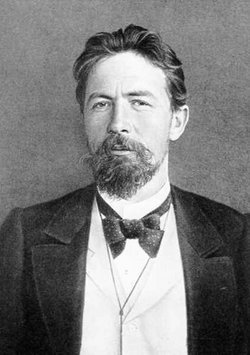
Every year I include on my undergraduate fiction workshop reading list at least one story by Anton Chekhov (1860-1904), who, as I need not tell any reader of this blog, I'm sure, was an exceptional playwright and one of the greatest short story writers ever. His influence flows through many a current of short and even longer fiction of the last century, and he is a writer whose gifts for characterization, scene-setting, tone, stylistic fluidity, varieties of irony, thematic openness and ambivalence, and narrative concision, displayed in all his mature works, offer a lesson any writer can learn from. As I once mentioned to one of my advanced fiction writing classes, the basic argument in Francine Prose's Reading Like a Writer: A Guide for People Who Love Books and For Those Who Want to Write Them (HarperCollins, 2006)is, if all else fails, read and learn from Chekhov. The late Roberto Bolaño says as much (read and learn from Chekhov or Raymond Carver) in one entry I glanced at in Between Parentheses, New Direction's (June 2011) new book of his collected prose.
The current online New York Review of Booksoffers excerpts from a new book, Memories of Chekhov,edited by Peter Sekirin (Mcfarland and Co. Inc. Publishing), featuring memories of Chekhov by his peers, some of them, like Ivan Bunin (1870-1953), received the Nobel Prize in Literature in 1933. (Chekhov likely did not live long enough to merit consideration, though had he survived a few more decades, he ought to have been a leading candidate.)
I got to know Chekhov in Moscow at the end of 1895. I remember a few
specifically Chekhovian phrases that he often said to me back then.
"Do you write? Do you write a lot?" he asked me one day.
I told him, "Actually, I don’t write all that much."
"That’s a pity," he told me in a rather gloomy, sad voice which was
not typical of him. "You should not have idle hands, you should always
be working. All your life."
And then, without any discernible connection, he added, "It seems to
me that when you write a short story, you have to cut off both the
beginning and the end. We writers do most of our lying in those spaces.
You must write shorter, to make it as short as possible."
Sometimes Chekhov would tell me about Tolstoy: "I admire him
greatly. What I admire the most in him is that he despises us all; all
writers. Perhaps a more accurate description is that he treats us, other
writers, as completely empty space. You could argue that from time to
time, he praises Maupassant, or Kuprin, or Semenov, or myself. But why
does he praise us? It is simple: it’s because he looks at us as if we
were children. Our short stories, or even our novels, all are child’s
play in comparison with his works. However, Shakespeare… For him, the
reason is different. Shakespeare irritates him because he is a grown-up
writer, and does not write in the way that Tolstoy does."
A couple weeks ago I did something I haven't done in a while: I watched a live classical music concert on TV. The occasion was the PBSLive from Lincoln Center's broadcast of the New York Philharmonic Orchestra's season opener, which marked the début of its new Music Director, 42-year-old Alan Gilbert. I'd even made a mental note of the broadcast primarily because I saw that it would include Renee Fleming singing songs not by Schubert, or Strauss, or Faure, all likely opening-night and maestro-début and audience friendly choices, but...Olivier Messiaen.
I almost didn't believe my eyes or ears when I heard and saw this after an episode of The Newshour with Jim Lehrer, but then Gilbert, the son of two NY Philharmonic musicians, has from his earliest appearances with the orchestra shown an adventurousness that marks a change from the musty perspectives of his immediate predecessors, both consummate musicians, Kurt Masur and placeholder Lorin Maazel. Gilbert not only chose Messiaen's Poèmes pour Mi (1934), a serious of deeply religious, dramatic connubial songs written by the composer for his first wife, whose nickname was Mi, but also opened with a newly commissioned composition, EXPO, a continuously developing orchestral piece in a tonal idiom by the Philharmonic's composer in residence, Magnus Lindberg, and, after a break, concluded with...not Mozart, not Beethoven, not Brahms, Bruckner, Mahler, or Schumann, but...Berlioz's Symphonie fantastique.
The Lindberg piece, with its echoes of Sibelius and Americana riffs, was pleasant enough to listen to, and Gilbert and the orchestra played it with assurance and verve, as if they were enjoying themselves. This was also the first time in over 45 years that the Philharmonic had included a newly commissioned piece on its opening night program. I'm sorry but that's pretty pathetic, so even more props go to Gilbert. But the Messaien riveted me. Not only did Fleming convey the otherwordliness of the nine song's scores, capturing both their highest and lowest registers and the churning colors between, but Gilbert pushed the orchestra to fully evoke all of Messaien's shadings without ever overshadowing the singer. Perhaps the most striking moment came when Fleming sang the grim "Éprouvante," a wrenching vision of hell that the music did not stint in reflecting. It was also exhilarating to hear work by Messaien, a highly regarded canonical composer whose music nevertheless remains on the other side of the symphonic mainstream, on TV, in prime time. This bodes well, I hope, for future NYPO and other orchestral concert broadcasts, though sometimes tells me they'll still be dominated by the late baroque-to-late Romantic German standards.
As Fleming sang, I intermittently wondered what subscribers and critics thought of Gilbert's choices. As a sign of a new vision, they left no doubt. To people used to a mostly late baroque-to-late Romantic German repertoire with a few outliers (19th century French and Russian, early 20th century European late-Romantic and tonal modernist, a few American composers, and commissioned pieces, never to be played again), was probably upsetting. To end with Berlioz's vast, forward-looking 1830 symphony must have felt like a shockwave. Gilbert and the orchestra showed that they knew the score and in most of its sections, went below the surface to portray the richness of the moods Berlioz was aiming for. I'm no expert on Berlioz's work nor an authority on how other orchestras have played it, but I could hear both Gilbert's and the players' skill and precision, but also passion. It was never mechanical, as Maazel's performances often were.
Anthony Tommasiniraved about Gilbert in his New York Times review of the concert the following day. He praised the Lindberg for not writing a "gnarly, intimidating modern piece"--Mr. Tommasini, it's 2009, and there are so many contemporary composers who do not write "intimidating modern" or "post-modern" or "post-post-modern" or whatever pieces that also are not treacly, neo-Romantic, ersatz movie music outtakes--and rained down kudos for Gilbert's choice of the Messiaen and Berlioz, though he was less fulsome when he described Gilbert's conducting of the latter work, saying that some listeners probably liked to hear it conducted with more of a"sumptuous feeling for color or more fantastical freedom" than on display in this concert. He nevertheless lauded Gilbert's assured and effective conducting, which not only brought the symphony to life but worked well with the two prior pieces, both in French idioms, broadly construed. The article's comment section, however, reflected more displeasure than happiness: lots of complaints not about Gilbert's music-making, which seems unimpeachable, but about his program choices.
I've been wondering about this as I've followed Greg Sandow's blog on classical music for several years. Sandow is a composer and professor at Juillard, and is writing a book about the present state of the US classical music world. One persistent element in his blog commenters' responses is a denial that the US classical music world is any trouble; another is that its audience is aging; a third is that the standard repertoire is just fine. Keeping these frequent threads in mind, I wondered to myself how much outrage there would have been had Gilbert gone farther, and in addition to the Lindberg, programmed all new music to launch his tenure. What if instead of Messiaen (whose career spanned the early to late 20th century) and the 19th century Berlioz, he had played two contemporary, living American composers, like John Corigliano and Ellen Taaffe Zwillich? Or two contemporary non-US composers, like Toru Takemitsu and Thomas Adès? Or two 20th century American composers who weren't exactly mainstream any more, like Roy Harris and William Schuman? Or truly avant-garde 20th century, post-Second Viennese school American composers, like Morton Feldman, Terry Riley, and John Cage? Or a composition in a jazz or rock-inflected idiom by the likes of Elvis Costello, or Wynton Marsalis? Would people have walked out of and lustily booed the concert as occurred at the Metropolitan Opera's premiere last week of the warhorse Tosca, based on Luc Bondy's new staging and direction?
Perhaps a better question is, would it ever happen, even under someone as open to the new as Gilbert? (When the extraordinary conductor James Levine, who heads the Met Opera's orchestra, took over the Boston Symphony Orchestra, which long been moribund under his predecessor, he jumpstarted its formerly progressive repertoire under Fritz Reiner by performing a slew of "difficult" 20th century works. I don't think, however, that he touched the likes of Daugherty, say, or Todd Machover, or Tania León.) It remains to be seen. I should note that Gilbert's second concert as Musical Director was conducting Mahler's Third Symphony, about as standard as things can get. This week he conducted Brahms's Violin Concerto, another standard piece, but paired it with Arnold Schoenberg's less frequently heard Pelleas und Melisande, which Tommasini described in his Friday review, typically, as "formidable" and "demanding," despite it's having been superseded by far more formidable and demanding Schoenberg scores (Chamber Symphony? Fantasie? Violin Concerto?), as well as innumerable more complicated soundworlds including many in rock, jazz, ambient, etc. I take the slotting in of even a fairly old-style (for) Schoenberg piece as a good sign, though. And he spoke to the audience about it! Looking through the upcoming concerts--and Gilbert will be taking the Philharmonic on the road to Japan, South Korea, Vietnam, and Singapore for a chunk of October--through December, it appears as though there will be lots of Mozart, Beethoven and Brahms, unsurprisingly, but throughout the 2009-2010 season Gilbert has slated a range of post-Romantic fare into the main concerts, including performances of Ligeti's Le Grand Macabre (semi-staged), Ives'sSecond Symphony, Anton von Zemlinsky's Lyric Suite, and, as part of the end of 2009 concerts, Webern's Symphony. Additionally, such very up-to-date works as Christopher Rouse's new commission, Zhizn ("life" in Russian), H.K. Gruber's Aerea, and pieces by Nico Muhly, Matthias Pintscher, Lindberg, and others, will be in both the main and Contact: The New Music series concerts.
To me, this programming in Gilbert's first year is a clear sign that the NYPO is moving into both the present and future, much as Baltimore's symphony has done under Marin Alsop, and Los Angeles's will under Gustavo Dudamel. Since I spend a chunk of each year in Chicago, I'm curious to know which directions new Musical Director Riccardo Muti will take the Chicago Symphony Orchestra for the five years of his contract. He is known as a strong conductor of Giuseppi Verdi, late baroque and early Romantic music, and of the standard repertoire, in a lean, recording-friendly idiom, and not so much of anything that new. At least since Mahler's time.
(I am skipping the Lyric Opera of Chicago's offerings this year; they aren't staging a single opera written since 1921--Leos Janacek's Kát'a Kabanová--while the Metropolitan Opera's tiny steps outside its narrow conventional doors are Alban Berg's Lulu, Dmitri Shostakovich's The Nose, and Janacek's From the House of the Dead. The unparalleled season Gérard Mortier had planned for the New York City Opera is now nothing but a phantom, like that opera company itself.)
+++
The Saint Louis Cardinals are now officially in the playoffs, after defeating the Colorado Rockies 6-3 last night. They joined the Los Angeles Dodgers, who have also made the playoffs and currently have the best record in the NL. In the AL, the Yankees are now in the playoffs, having defeated their arch-nemeses, the Boston Red Sox tonight at the new Yankee Stadium 4-2. The Philadelphia Phillies and Los Angeles Angels of Anaheim both seem bound for the playoffs with dwindling magic numbers and the Red Sox are well ahead in the AL Wild Card Race, but the AL Central-leading Detroit Tigers are hanging on for all their lives, and the NL Wild Card race is increasingly a toss up, as Atlanta surges and Colorado falters. I'm just glad the Cardinals and Yankees are in. Now they have to keep winning. EAST RUTHERFORD, NJ - SEPTEMBER 27: Mark Sanchez #6 of The New York Jets runs upfield after catching a pass against The Tennessee Titans during their game on September 27, 2009 at Giants Stadium in East Rutherford, New Jersey. (Photo by Al Bello/Getty Images)
As of tonight, the New York Jets are 3-0; rookie QB Mark Sanchez's 3 straight wins are a league first, and the defense allowed more than 10 points for the first time this season in today's 24-17 victory over the Tennessee Titans. The Saint Louis Rams, however, are 0-3 after another uninspired, sloppy loss, this time to the Green Bay Packers. With the Detroit Lions' victory over the Washington Snyders, the Rams have the longest losing streak, at 13 games dating back to last season. They look awful enough to make it 29 if they maintain this abysmal level of play. But they're in good--or bad--company so far: Miami, Cleveland, Kansas City, Tennessee, and Tampa Bay have also lost 3 games without a win and Carolina has 2 losses without having won one. Which of this sorry group will turn things around first? I say Tennessee or Tampa Bay, but don't hold me to that.
A while back I believed I'd mentioned that I'd heard there'd be a march in Washington for Marriage Equality this fall. One of my former students, sailor and author Miriam (of the bread recipes, who also introduced me to "fan fic"!), asked that I post a more definitive link to the event, Equality Across America, which is set to take place on October 10-11. I don't think I'll be able to attend, because I'll be returning from a black LGBTQ lit conference in Austin, but everyone who supports true and real equality should attend if they can.
As you also may know, earlier this week Congressman Jerrold Nadler proposed repealing the abominable Defense of Marriage Act (DOMA). If this is an issue that matters to you, please do call or email your Congressperson to urge her or him to consider cosponsoring and supporting this bill (along with the public option, investigations into the Bush-Cheney torture regime, repeal of the Patriot Act and Big Oil subsidies, ending the wars in Iraq and Afghanistan, and anything else you believe is pertinent).
+++
The right-wing and mainstream corporate media's (MCM) hyperventilating reactions to President Jimmy Carter's statement that racism underlines a great deal of the conservative outrage towards President Barack Obama and his policies do not surprise me at all. Any thoughtful or considered discussion of race, let alone racism, in the wider media always dissipates like iron steam. What frustrates me, however, is the MCM's continual conflation of "race" with "racism," and their focus on the former, rather than the latter. The MCM cannot seem to untangle the two, willfully I often think, because speaking about the former allows them a way out of addressing the pervasiveness of the latter. Speaking about the latter might also force them to register several premises, which include that those in the MCM also belong to certain races and have experiences shaped by this fact, and that in regular social and political discourse, some people are raced and some are not, and that doing so often occurs through the prism of racism. What's I also find frustrating is the way that the MCM reduces every issue to numbing simplicity, especially when "race" is broached, and in doing so attempts to attribute it to a single cause, as if truly complex economic, political and social phenomena were as easily diagnosed as the mumps.
Bob Somerby, for many years now, and Glenn Greenwald and others more recently have been pointing out that the right wing, with tremendous MCM help, fomented extreme hatred against our last Democratic president, Bill Clinton. (One could go further back, of course; shortly before Kennedy's assassination, "Wanted" posters went up in parts of Dallas.) Almost immediately upon Clinton's election, the nutcases, often funded by extremely wealthy individual and corporate interests, some of the same ones behind the Teabaggers, did everything they could to ruin Clinton's presidency, often in conjunction with the Republican opposition. If anyone thinks it's possible to minimize the craziness Clinton faced, culminating the multiyear, multimillion-dollar investigation, aided eagerly by The New York Times, and for which both President Clinton and Hillary Clinton were exonerated, just recall the ultimate GOP-led act, the attempted impeachment in 1998. I can vividly remember when the uproar among Democrats from that insane spectacle seemed so great as to ever prevent anyone from the GOP ever winning the presidency again, and yet a year later, the GOP and MCM (reporters and columnists at the NY Times and Washington Post, figures from NBC, Fox, etc.) began their "War on Gore," and we ended up with the Supreme Court coup that installed the disaster known as George W. Bush on us.
I mention this history because while I am--as are, I'm sure, quite a few people around the US--quite aware that racism and white supremacy are always in operation in this society, I do believe that attributing the current derangements of the right solely or even primarily to racism denies this prior history, which was still firmly in place when Clinton left office. Racism, while a major source, is still only one of many behind the behavior on display at the town hall rallies, the recent Teabagger rally in Washington, and above all, on the right-wing/corporate propaganda headquarters-channel, Fox News. Had Hillary Clinton won, we wouldn't be seeing the same sort of direct racist and racialist animus (the Curious George T-shirts, the "birther" push, the signs of Obama as a witch doctor, etc.), though racism would be in the mix, as it was during the Clinton years (remember the obsessive push to end welfare, even though corporate welfare reached insane heights under Bush, and affirmative action, which, studies in the late 1990s showed, primarily benefited white women?). With a President Hillary in office, we probably would be seing even more and outlandish displays of sexism and misogyny, and not just from the right, but from the MCM, whose members (Chris Matthews is notorious) have long been among the worst offenders. But attacks on undocumented immigrants and "producerist" arguments, prettified by the likes of David Brooks, wouldn't be unthinkable.
Let me be clear: my aim is not to minimize the particular foci of some of the worst attacks on Obama, but to note that we had the militias, the anti-government nuts, the millenialists, and so on in full force from 1992-2000, alongside a GOP Congressional caucus that took political and personal destruction of the sitting president and complete repeal of the New Deal legacy as its organizing principle. Newt Gingrich did not simply want to stop Clinton's presidency in its tracks, he wanted to shred Clinton personally. Think of some of the most outspoken figures on the right during the impeachment drama and the revelation of Clinton's affair. When their efforts failed repeatedly, this led, as we now see, to even more thuggish tactics, such as installing a president and Congress, by hook or crook (or voting machine) who could just dynamite the government entirely. According to a recent Census report, according to almost every economic indicator the vast majority of Americans finished the 8 years of Bush's presidency worse off than before. The wealthiest .1 percent and many corporate interests--or at least the people running them, if not the shareholders--were the economic losers.
To quote The Atlantic on this topic:
On every major measurement, the Census Bureau report shows that the country lost ground during Bush's two terms. While Bush was in office, the median household income declined, poverty increased, childhood poverty increased even more, and the number of Americans without health insurance spiked. By contrast, the country's condition improved on each of those measures during Bill Clinton's two terms, often substantially.
The Census' final report card on Bush's record presents an intriguing backdrop to today's economic debate. Bush built his economic strategy around tax cuts, passing large reductions both in 2001 and 2003. Congressional Republicans are insisting that a similar agenda focused on tax cuts offers better prospects of reviving the economy than President Obama's combination of some tax cuts with heavy government spending. But the bleak economic results from Bush's two terms, tarnish, to put it mildly, the idea that tax cuts represent an economic silver bullet.
I'm hardly saying anything that most J's Theater readers don't already know, but I mention this record, all but buried by the MCM (tell me, when have you seen any of the major "liberal" or "progressive" MCM reporters or columnists discuss this record at any length, to inform the majority of people out there what's going on) to say that one of the great sources of the rage on display at last weekend's rally, is ignorance, which the MCM have only helped to deepen rather than dispel.
The reasons behind this are numerous, but one central one is that corporate interests (just like our Congress, which willingly works hand in glove with them) benefit by keeping people as misinformed as possible. There is also, as this telling clip of CNBC's scandal-plagued anchor Maria Bartiromodemonstrates, the fact of media personalities' own gross ignorance (again, cf. Chris Matthews). But rather than go on, I'll post the clip below, which has been making its rounds on the Net. It illustrates perhaps more powerfully than anything I might say here what I'm talking about. Please watch it till the end, because it shows, for a rare change, a reporter breaking the supposedly objective, journalistic frame and politely stating and clarifying facts for some of these people. Unfortunately, this happens so very rarely that it's hard not to be cynical. Whatever the source of the MCM's ongoing silence, it's a major problem and will continue to be for the rest of Obama's (or any Democrat's) terms. What's even more unfortunate is that I don't get the sense that he or many in his team, like many in Congress, have any clue or, worse, care at all about this. The results, however, could be something worse than the Bush administration. Mike Huckabee, Sarah Palin, Jim DeMint, Rick Santorum, and any number of other very dangerous characters are lurking out there, and with a heavily corporated-funded campaign with pseudo-populist aspects, we'd all be in very serious trouble. 2001-2008 might end up looking like the Coolidge years.
(Please watch to the end to see the reporter challenge the protesters' ignorance.)
+++
On the sports tip, the New York Jets have started the NFL season 2-0, defeating their nemeses, the New England Patriots 16-9 today, preventing a comeback by the media darling Tom Brady. The Big Green have a sharp new coach, Rex Ryan, and one of the most talented young quarterbacks in the league, rookie Mark Sanchez (at right, Nick Laham/Getty Images) of USC. The Jets don't have the toughest schedule this season, so they could conceivably go 12-4 or 13-3. That is, if they can keep playing like they are now, or even improve. Then the playoffs will be more than a mirage.
The Saint Louis Rams, however, are 0-2, losing 9-7 to a shaky Washington squad, and look no better than their 2-14 predecessors of last season. In fact, they look worse. 10 years ago they were known as the league's highest scoring teams, with iffy defense. Now they have middling defense and no scoring capability at all. Their quarterback is sacked at will, they cannot convert drives into runs, and they make countless mistakes game after game. I am starting to think the new ownership may be trying to once again ship a team out of St. Louis towards more financially beneficial (southern California?) climes. Looking at their schedule, they face both pushover and tough teams (though no AFC East teams, nor the Giants or Eagles, thankfully), but they still could conceivably go 0-16. They do meet the Detroit Lions at midseason, so a 1-15 outcome isn't impossible.
In the MLB, the Yankees have the best record in the AL, at 95-55. Perennial All Star Derek Jeter has broken Lou Gehrig's team hit record, CC Sabathia (at right, AP) is powering his way to a Cy Young Award at 18-7, and the team overall, like the finely tuned machine it has been for long stretches over its history, is humming along under manager Joe Girardi. The other top teams in the AL are the Boston Red Sox, who lead the Wild Card race (again), the Detroit Tigers, and the mouthful but ever talented Los Angeles Angels of Anaheim. The Yankees and the Angels are the teams to beat, but the Red Sox are always dangerous.
In the NL, the Saint Louis Cardinals are again atop the NL West, though they don't have the league's best record. That honor goes to the Los Angeles Dodgers. The Cardinals do, however, have the league's best pitching--two starters, Adam Wainwright (18-8, 2.59 ERA), and Chris Carpenter (16-4, 2.43 ERA), are leading contenders for the NL Cy Young--and its best overall hitter in Albert Pujols (47 home runs, 119 runs scored, 127 runs batted in, .328 average), a latter day Stan Musial. He and the pitching have kept the team afloat; the last week the Cardinals have staggered more than swaggered. The Dodgers, however, have more balance across their lineup, and could be dangerous in the playoffs. The other top teams are the East leaders, the Philadelphia Phillies, last year's World Series champions, who look powerful enough to go all the way, and the current Wild Card leading Colorado Rockies, who always have a strong home-field advantage and great batters. I'm rooting for the Cardinals, but this quartet is a toss-up.
The Cardinals vs. the Yankees (which last occurred in 1964, with the Cardinals winning four games to three) would be my preferred World Series matchup. Will it happen? Let's see.
The Major League Baseball season is underway, and, perhaps for the first time since the 1994 strike, I'm not particularly excited. I will follow the Saint Louis Cardinals' (and a few other teams on the semi-ups, like the Yankees, Mets, Tigers, etc.) play throughout the season. They look to be as middling as they were in the 1970s and 1990s. I'll probably try to go to some baseball games in Chicago, since I'll be teaching through June, and, if I can get my act together, set foot in either Yankee or Shea Stadium when I'm back in the New York area. But my interest has, to put it mildly, dimmed substantially. Maybe it's just that I'm getting older and increasingly feel I don't have the mental or emotional space to devote to retrograde, monopolistic, social, secular opiates like professional baseball (or even college sports--I hadn't realized the NCAA and NIT basketball playoffs had begun until friends on a sports list started posting about and C asked me about the "brackets"). But I do think another part of my disaffection comes from the lingering steroid/performance enhancement scandal, which hasn't been fully addressed, by any of baseball's major players. MLB, including its administration and the owners, and the Players Union have bandied about punitive Band-Aids, when not demonstrating that they're in denial, and Congress's entry into the debacle was just a lot of bad spectacle. So what did we learn? That lots of players were using performance enhancers, but only a few, like Barry Bonds, have been pilloried. That some high profile players like Roger Clemens probably also were doping, but have lied about it, or maybe they haven't. That José Canseco, of all people, is turning out to be one of the most honest people in this whole mess, and he's even fingered the gazillionaire Adonis himself, A-Rod (A-Roid?). The reality seems to be that countless other players from the late 1980s onwards were probably using steroids and performance enhancers, that MLB and the union probably knew, and looked the other way, and that they want to condemn and punish players who got caught, without taking any responsibility for their action in abetting the situation, or admitting that it was beneficial for their bank accounts, which is what it all comes down to in the end, no? With 28 million people just getting by on food stamps these days, who has time for truculent, whining, lying multimillionaires? Well, maybe a few, if they're named Albert Pujols (at top), or José Reyes (at right), or Derek Jeter, or Johan Santana....
•••
And now, for a little nostalgia. 40 years ago, a St. Louis Cardinals baseball player turned in a season-long performance that is unlikely ever to be challenged. I'm talking about Hall of Famer Bob Gibson's astonishing season, when he registered a modern era-record low ERA of 1.12. The league ERA was 2.90. The 32-year-old Gibson's overall numbers were equally remarkable. He threw 28 complete games, 13 shutouts, surrendered only 198 hits in 304 2/3rds innings, and struck out 268 batters. Perhaps his weakest stat was his win-loss total: 22-9, which presses the question, how on earth did this eventual Most Valuable Player award and Cy Young winner lose 9 games?
Derrick Goold offers some answers in his recent St. Louis Post-Dispatch article: Gibson's teammates weren't getting a lot of hits against his pitching opponents, who included some of the other great pitchers of that era: Juan Marichal, Don Drysdale (who pitched 58 2/3rds consecutive scoreless innings, a record that stood for decades), Tom Seaver, Ferguson Jenkins, and Gaylord Perry. To quote Goold:
In his first 10 starts that season, Gibson was 3-5 despite a 1.52 ERA, mainly because opposing starting pitchers had a 1.34 ERA against the Cardinals.
His teammates scored two or fewer runs in eight of Gibson's losses that season and twice he lost 1-0, once when Gaylord Perry twirled a no-hitter.
Eleven of Gibson's 34 starts that summer were opposite another Hall of Fame-bound pitcher. He went 5-5 with a 1.45 ERA in those games.
"We wish we could have done more on his behalf," Cardinals Hall of Famer Lou Brock said. "Not just the ERA, but the victories. He could have won 30. ... As a hitter, you make it a goal to destroy the pitch before it destroys you.
"You could not do that with Bob. You could not destroy his pitch. You don't have a lot of time to come up with a plan to destroy something you can't see."
One of the results of that season was that Major League Baseball lowered the pitcher's mound, shrank the strike zone, and clamped down on trick and illegal pitches. Gibson's record in 1969? 20-13, with a 2.18 ERA, and 269 strikeouts. Only 4 of his 28 complete games that season were shutouts. These days few leading pitchers, who throw fewer games and fewer innings because of the 5-man starting rotations and ample relief corps, ever approach 10 complete games, let alone 4 shutouts or ERAs under 2.00; last year's ERA titlist, Padre Jake Peavy, came in at 2.54; last year's shutout leader, Arizona's Brandon Webb, posted 3; and last year's complete game top finisher, Roy Halliday, only posted 7. The AL Cy Young winner C. C. Sabathia, managed only 4 complete games, 1 shutout, and a 3.21 ERA, while the NL Cy Young winner, Peavy, had no complete games and no shutouts. Both pitchers also only won 19 games. A different game indeed.
Watching TV today as a way of diverting my attention from this cough that is drilling straight up through my throat, I had to turn off CNN, after watching correspondent Fredricka Whitfield giggling like a teenager on whippets over a video clip of University of Florida student Andrew Meyer screaming out the phrase "Don't Tase me, Bro!" just before out of control security guards Tasered him this past September 17. His transgression, you may remember, was pressing that hapless boob Senator John Kerry at a university forum. Anchor T. J. Holmes had initially responded to the Meyer cry clip, which he announced had been named the year's most memorable quote by the Yale Book of Quotations, by pitying the rambling, incoherent reply Miss Teen South Carolina, Caitlin Upton, gave at this past year's Miss Teen America competition. But he quickly joined in the giggling as well. Last night, I saw WPIX anchors Lolita Lopez and Jim Watkins chuckling heartily over the same clip. Assuming these people are not all psychopaths, is watching someone being violently assaulted by cops wielding a potentially lethal electrical device that funny? Are these people that jaded and desensitized, is Tasering people that passé? Yes, I know that we're living in a time in which not only police brutality, but state-sanctioned brutality and torture, have become so normalized they barely merit public comment, let alone outrage, but still, the drollery disturbed the hell out of me. Which makes me wonder: am I being too sensitive, serious? Or is it that the detached, zombified, overpaid media bobbleheads emblematic of so much that's wrong with our media and our society?
UPDATE: Digby notes another appalling CNN moment, this time involving anchor Kyra Phillips, who indifferently described and downplayed the fact that police were attacking the people protesting the Department of Housing and Urban Development's plans to demolish several longstanding housing projects in New Orleans. She then slanted her on-air riff to openly defend the police, using tortured and disengaged language to describe the assaults on the protesters. (I should add that my great uncle has worked for HUD for many years, and is none too fond of the clown now running it, the scandal-plagued Alphonso Jackson, the other Black person in W's Cabinet of Horrors.) One of the commenters in the Digby thread points out that the New York Times's architecture critic Nicolai Ouroussoffrecently penned an excellent piece criticizing HUD's terrible plans. Ourousoff argues that HUD is failing not only to recognize the value of the architecture it seeks to destroy and replace with shoddier, less hurricane-worthy housing in a misguided fantasy of suburbanizing the city, but also to acknowledge the symbolic and social violence of the plans as well. He writes:
The agency refuses to make distinctions between the worst of the housing projects and those, like Lafitte, that could be at least partly salvaged. Nor will it acknowledge the trauma it causes by boarding up and then eradicating entire communities in a reeling city.
In an eerie echo of the slum clearance projects of the 1960s, government officials are once again denying that these projects and communities can be salvaged through a human, incremental approach to planning. For them, only demolition will do.
The difference between then and now is what will exist once the land is cleared. If the urban renewal projects of the 1960s replaced decaying historic neighborhoods with vast warehouses for the poor, HUD’s vision would yield saccharine, suburban-style houses. And the situation is likely to get worse. The government has identified some other historically important public buildings for demolition as part of its push for privatization. Charity Hospital, an Art Deco structure built downtown in the late 1930s, was abandoned after Hurricane Katrina, and its fate is uncertain.
I cannot say it enough, but the crimes against the city and people of New Orleans embody everything that is wrong with this administration and this country we're living in.
{{{
I've passed on commenting on Major League Baseball's very flawed Mitchell Report, which despite its flawed methodology has revealed that a far wider array of major league baseball players than previously assumed were using various kinds of performance enhancement drugs, while the owners, the players union and other players, and the MLB hierarchy looked the other way. One immediate effect of this news, and subsequent reports, should be that fanatical sportswriters need to issue a collective, stentorian apology to Barry Bonds, who has been crucified in the media for denying being a roider, and then to Sammy Sosa (at right, from the Monaga Blog) who until the most recent news about pitcher Jason Grimsley's affidavit, had not been tied conclusively to any performance enhancement drug use.
The false shock and piety, which is to say, sanctimony, from people in the baseball world, including former baseball owner and public welfare maven George W., was totally predictable. What I'm still waiting for some of these folks to admit is how much baseball benefitted from the bulked up stats, and the fact that players began earning outsized salaries compared to other professions in the early 1980s if they made the major leagues and could sustain even a modest career, so there was every incentive to juice up. There still is. For hitting a ball around a field or getting it over the plate, baseball players earn more than most CEOs, who are grossly overpaid as it is. The truth is, an entire era, up through now, will have to be viewed with "enhancements" as the norm, rather than the exceptions. This new realization must be taken into account with all of the stats and records set or none of them. Before steroids there were amphetamines, which still exist, and who knows what someone is cooking up in a laboratory even as I type these words. "Clear" was out there for a while before track and field's authorities discovered it, and only they did so as quickly as they did only with the help of whistleblowers. So long as the financial incentives exist to cheat, people will do so. My question is, who really believes that baseball is the only sport where this is a serious problem? What about the NFL, the NBA, the NHL, and every other sport where chemical enhancement gives athletes an edge? Could the Beijing Olympics possibly be clean? I doubt it.
Which leads me to this link, from the Dallas Morning News: "More professionals, students using brain performance enhancing drugs." Business people, musicians, professional gamers, students...it's definitely not just pro athletes, but our society in general that needs to undergo more thorough self-analysis and critique....
}}}
Yesterday brought a pleasant surprise: an XO computer arrived in the mail, though I'd hardly expected to see it anytime soon. The computer is the result of my participation in the One Laptop Per Child (OLPC) program, the brainchild of visionary MIT professor and Media Laboratory founder and former head Nicholas Negroponte, who decided to develop affordable, networkable computers to empower children in the developing world. The original prototype, which I blogged about here two years ago, has been modified to some extent, but the model I received is a robust, fully loaded little portable machine containing an easy-to-figure, Graphical User Interface (GUI) atop a Linux platform. The software includes a browser, a writing program, several layers of music-making software (which I sampled right away), a recording studio with a camera (for photos, videos and audio--that's me, at left, on screen, photographing myself photographing myself), lots of games, a basic programming tutorial, and the means for children to network with others very easily, either in class or outside it. In fact, I could see children getting started on these machines swiftly and learning not only to write, but to create group projects, make music and visual art projects, create mathematical and statistical programs, write software programs, and even learn to repair their computers and troubleshoot hardware problems.
The XO has great Wifi capability (in fact, its literature say it's a fulltime wireless router), and after C added its MAC address to the base stations here, I was on the Net...in less than 5 minutes. It also easily links to local networks and fosters their creation. It has ports for a microphone (in), headphones (out), and USB-connective devices, a slot for memory upgrades, no harddrive, and only two internal cables--and it saves all projects unless you delete them. The computer's CPU suspends its CPU operation selective, allowing it amazing power savings, or about 1/10th of what a standard laptop consumes. This aspect of the computer mirrors its battery, which lasts between 6-8 hours with average use and can be recharged using a variable energy powercord, as well as via a crank or a solar or wind-powered source, to facilitate use in the many countries where electricity is a premium. The screen rotates so that it can function as an e-book, and the overall machine is compact enough that it can fit in a backpack and appears to be fairly robust, though real world use will probably assist its manufacturers in making it even more so. The only drawback I can see so far is the tiny keyboard, which is perfect for children but a challenge for anyone with larger fingers--but that's the point, this is a computer for children, though I can foresee someone down the road creating something along these lines, affordable and very robust, for adults as well. I certainly hope someone does, because the XO is a sweet little machine.
All in all I think Negroponte's idea was a remarkable one, and I'm very interested to see how the OLPC program unfolds. So far, from what I can tell, it has worked out pretty well where it's been implemented. The computers have been piloted in Nigeria, Brazil, Thailand, Peru, Uruguay, and India, and I sincerely hope that they can be offered to children in many more countries. Here's a quote from one child in Nigeria:
“I use my computer very carefully so that it will not spoil. I use it to type, I use it to write, I use it to draw, I use it to play games... I'm using my computer at home to type assignments.” — T. (Primary 4), Galadima School, Abuja, Nigeria
If you'd like to learn more, you can click on the link above, and if you think you'd like to contribute to the program, donate a computer or volunteer your time and services, click here. If you know of people who write open source, educationally-oriented software that might children can use, please urge them to contact OPLC as well.×




 On the sports tip, the
  In the MLB, the

 I've passed on commenting on