Showing posts with label lockout. Show all posts

Tuesday, September 13, 2016

Classes Have Begun + The LIU Brooklyn Lockout (UPDATED)

Rutgers-Newark
Labor Day has come and gone, and in its wake the school year is off and racing. In addition to chairing African American and African Studies again this year, I have a graduate English seminar on my slate. Last Thursday I taught my first class meeting for this course, which runs under the rubric "Topics in Literature," with the subtitle "Postmodern: Beauty, Ideology, Power." What I'd envisioned was a course exploring key aesthetic concepts, both old and new, as means of apply critical pressure to a wide array of late 20th and 21st century works, in the genres of poetry, fiction and drama, that fall broadly underneath the category of post-modern.

Some of these will be by writers visiting Rutgers-Newark's Writers at Newark reading series this fall: Rickey Laurentis, Robin Coste Lewis, Eileen Myles, Chinelo Okparanta, Kristin Váldez Quade, and Ocean Vuong. Other works include texts that I have taught before, like Adrienne Kennedy's Alexander Play The Ohio State Murders (I love this work!) and poetry by Kenneth Koch, Mei-Mei Berssenbrugge, as well as books I have never taught before but long wanted to, including Peter Weiss's (in)famous play Marat/Sade, Cormac McCarthy's award-winning and popular dystopia The Road, Bret Easton Ellis's masterpiece of visionary satire, American Psycho, and Nnedi Okorafor's stunning novella Binti.

Of course for every text I chose there were many handfuls I had to forgo, but I am teaching an undergraduate African Diasporic fiction class this upcoming spring, so I am going to be aim to include some of the works I could not use this fall in that class--while also being mindful not to overload those students. I hope to post a bit more about the in-class discussions as the semester progresses.

***

UPDATE:
As the New York Times reports, LIU Brooklyn's faculty lockout has finally ended, after 12 days, on September 14. The university's administration and its faculty union agreed to extend the existing contract, which had expired on August 31, to May 31, 2017, or the end of the current academic year. During this period administrators and union officials will negotiate a new contract and the faculty union will not authorize a strike. The end of the lockout averts what was quickly becoming a fiasco for LIU Brooklyn's hardline president and the university, as students staged walkouts and public demonstrations against the policy. Chalk up one loss, however temporary, for the ongoing neoliberal corporatization of American colleges and universities.

While Rutgers-Newark faculty and most of our colleagues are back in classrooms or will shortly be, unionized faculty at Long Island University-Brooklyn find themselves locked out by their current administration. Since their contract expired on August 31, LIU president Kimberly Cline has kept all 400 members of the faculty union off campus. In addition to cutting their pay, Cline and the university have also cut blocked their campus email accounts, dropped their health insurance, and replaced them with temporary scab teachers. Although Cline pledged to students that the lockout would not cause disruptions, it has allegedly transformed LIU-Brooklyn into a site of chaos, with some classes being led by faculty members lacking expertise in their assigned subjects and other classes barely being taught, if at all. In one particularly egregious case, Democracy Now reported, LIU's Chief Operating Officer, Gale Haynes, a political scientist, was slated to teach a yoga class; the university has since called this an "error."

The chief point of contention centers on LIU's new proposed contract for its Brooklyn unionized faculty, which would not only lower their pay and benefits relative to their colleagues at LIU's C. W. Post satellite campus on Long Island, but also gut pay for adjuncts. Once their contract expired, LIU-Brooklyn's unionized faculty barely had time to read and vote on the contract, and probably would have struck for better terms, as they had in the past, but Cline preemptively locked them out when the contract expired. When they voted roughly a week later to reject the contract, Cline did not reopen dialogue, and has given no signal that she or the administration plan to back down, leaving LIU-Brooklyn students, who pay anywhere from $30,000 to $50,000 per year confused and enraged. COO Haynes claims that the university is negotiating in good faith, though neither she nor anyone else in the administration has yet officially proposed more equitable terms. The Long Island University Faculty Federation has filed a complaint over unfair labor practices with the National Labor Relations Board, and, according to a report in Common Dreams, the LIU Faculty Senate has issued a no-confidence vote for Cline.

Were the faculty to accept the current contract, they would be ratifying a two-tier system not just for themselves in relation to their colleagues at C. W. Post, but especially for new Brooklyn faculty members, and in particular, adjuncts. Cline, however, has yet to sign a labor contract with any of the unions at LIU, and rejected outright the possibility of extending the previous contract for five weeks while the university and union negotiated the new one. Instead, as publications such as Common Dreams, The Nation and The Atlantic have pointed out, Cline's goal since becoming president appears  slashing costs at any cost, and cementing neoliberal, anti-labor policies to improve the school's financial picture and credit rating in the short term. The danger for the institution is manifold: its reputation is taking a serious hit; it will be hard, even at a time of academic job scarcity and precarity, to field quality faculty in the future; and it may be driving away current and future students, and alienating alumni. Two hundred LIU students protested yesterday, and there have been rolling protests since the lockout began. Perhaps Cline's goal is to shut the campus down for good in favor of the wealthier Long Island branch, which would be loss for Brooklyn and New York's academic ecology. Right now, though, that doesn't seem such a far-fetched idea.


Democracy Now: "Everything Was Immediately Cut at LIU"

Friday, July 08, 2011

End-of-Week Roundup + Memories of Chekhov

A girl holds a South Sudan flag with stripes symbolising the people, their blood and the land. Photograph: Ho/Reuters
After decades of war, South Sudan is now an independent country! It broke away from Sudan, has its new capital at Juba, and its new president is Salva Kiir. Eight facts about the new Republic of South Sudan. Congratulations!


Elizabeth Ann Bloomer Warren Ford, better known as Betty Ford (1918-2011), the wife of late 38th president (1974-77), Gerald Ford (1913-2006), has passed away. She was more progressive on many issues, such as equal rights for women and abortion rights, than her husband, and probably would have made a better president than either he or his predecessor.

A certain Nobel Laureate economist thinks the President (OK, quickly, did we elect a Republican in 2008, just asking?) is really off track. Said economic genius ain't alone....

Television is truly imaginatively bankrupt: TNT is resurrecting Dallas, a program appropriate to its era, for a new generation of viewers. Why not, say, Tent/Car City California, or Orlando: Foreclosureville, or, if a show must be set in Texas, San Antonio? Oh, I know, those would require...IMAGINATION.

The situation grows worse and worse regarding the hacking scandal at Rupert Murdoch's News International soon-to-be-nonexistent newspaper The News of the World. Its former editor, Conservative-Liberal Democratic former minister Andy Coulson, has been arrested.

The NFL lockout, in which the very rich owners are locking out the very rich players, who belong to a union, continues, as the US 8th Circuit Court of Appeals refuses to overturn the lockout. The NBA is also locking out its players. The assault on organized labor continues apace, even in its upper reaches.

The MLB All Star Game takes place next week, in Arizona. It should either have been canceled or moved rather than be played in a state with overtly racist anti-immigration laws, especially considering how many immigrant players fill the league's rosters and its stadiums. As a result, this is one of the first years in many that I can recall in which I did not cast a single vote for any of the players, though if I had, the New York Mets' José Reyes would have been at the top of my list, and I'm no fan of the Mets. (Sorry, Albert Pujols...).

+++

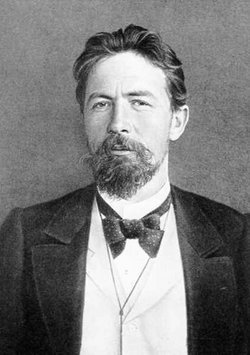
Every year I include on my undergraduate fiction workshop reading list at least one story by Anton Chekhov (1860-1904), who, as I need not tell any reader of this blog, I'm sure, was an exceptional playwright and one of the greatest short story writers ever. His influence flows through many a current of short and even longer fiction of the last century, and he is a writer whose gifts for characterization, scene-setting, tone, stylistic fluidity, varieties of irony, thematic openness and ambivalence, and narrative concision, displayed in all his mature works, offer a lesson any writer can learn from.  As I once mentioned to one of my advanced fiction writing classes, the basic argument in Francine Prose's Reading Like a Writer: A Guide for People Who Love Books and For Those Who Want to Write Them (HarperCollins, 2006) is, if all else fails, read and learn from Chekhov. The late Roberto Bolaño says as much (read and learn from Chekhov or Raymond Carver) in one entry I glanced at in Between Parentheses, New Direction's (June 2011) new book of his collected prose.

The current online New York Review of Books offers excerpts from a new book, Memories of Chekhov, edited by Peter Sekirin (Mcfarland and Co. Inc. Publishing), featuring memories of Chekhov by his peers, some of them, like Ivan Bunin (1870-1953), received the Nobel Prize in Literature in 1933. (Chekhov likely did not live long enough to merit consideration, though had he survived a few more decades, he ought to have been a leading candidate.)

Below is Bunin's excerpt; there are many more at the NYRB site:

I got to know Chekhov in Moscow at the end of 1895. I remember a few specifically Chekhovian phrases that he often said to me back then.

"Do you write? Do you write a lot?" he asked me one day.

I told him, "Actually, I don’t write all that much."


"That’s a pity," he told me in a rather gloomy, sad voice which was not typical of him. "You should not have idle hands, you should always be working. All your life."


And then, without any discernible connection, he added, "It seems to me that when you write a short story, you have to cut off both the beginning and the end. We writers do most of our lying in those spaces. You must write shorter, to make it as short as possible."
Sometimes Chekhov would tell me about Tolstoy: "I admire him greatly. What I admire the most in him is that he despises us all; all writers. Perhaps a more accurate description is that he treats us, other writers, as completely empty space. You could argue that from time to time, he praises Maupassant, or Kuprin, or Semenov, or myself. But why does he praise us? It is simple: it’s because he looks at us as if we were children. Our short stories, or even our novels, all are child’s play in comparison with his works. However, Shakespeare… For him, the reason is different. Shakespeare irritates him because he is a grown-up writer, and does not write in the way that Tolstoy does."