Showing posts with label Paul Krugman. Show all posts

Monday, November 26, 2012

Fiscal Cliff/Austerity Bomb/Phantom Crisis


There have been many excellent reports online about the alleged "fiscal cliff," which is not a cliff at all but more of a "slope," and which really merits a far better metaphor of the kind that Paul Krugman and others have devised, the "austerity" bomb. A while ago, I wrote about what was behind the push for austerity, and I urge J's Theater readers who have not already read Krugman's column today, "Fighting Fiscal Phantoms" to review it, because he not only names the chief player behind the "fiscal cliff"/"deficit scold" testeria, but summarizes why it is hardly what we're being told it is, including by the White House, with the complicity of one of Krugman's employers, the New York Times. His column crystallized for me what I've long thought about why we keep running into this crisis around taxes, the social safety net (i.e., "entitlements"), the government's role, and the establishment media's unwillingness to spell out what's really at stake (or its willingness participate in manufacturing consent by playing up the crisis). When you have multimillionaires like Goldman Sachs's chief, Lloyd Blankfein, hopping aboard Trojan horses like "Fix the Debt" despite the fact that his company has gorged at the government's troughs, the game and fix are clear enough to me. Here are my thoughts, adapted from an email I sent to some friends and broken down into numbered points, about what's really behind the current fiscal cliff crisis.

The GOP and conservative Democrats, agents of the plutocracy (or the 1%, or oligarchy, or billionocracy, whatever designation you like), seek to:

1) slash the social safety net now so that there will be less need later to keep marginal and capital gains tax rates, especially for the 1% and corporations, at even the current historically low levels--making it likely that any future necessary tax increases will disparately impact the middle and working classes and the poor;

2) under the rubric of "tax reform," steadily ratchet down marginal rates on the 1%, lower corporate rates, zero out capital gains taxes, eliminate estate taxes, cut all loopholes that do not benefit plutocrats, and allow various territorial tax schemes that allow the 1% and corporations to avoid US taxes and play other federal, regional or territorial tax regimes against each other;

3) lock in spending for the military and any programs (like Fed Reserve spending) that benefit the top 1%, Wall St., military-industrial complex beneficiaries, and if it takes a war or three to guarantee it, so be it; 

4) privatize as much of the remaining government as possible, so that those with the access and assets can feed off all the new revenue streams and what remains of a severely weakened, defunded governmental system;

5) rhetorically demonize government, via the corporate media (which has a stake in picking the bones of the government dry) to blame it for its failure to address the needs of the 99% (or 47%), while destroying and sucking every last dollar out of it.

Speaker John Boehner, President Barack Obama meet
to discuss the "fiscal cliff," November 16, 2012
(Carolyn Kaster/AP, csmonitor.com)

But it doesn't have to be this way at all. There was a Budget of the Congressional Progressive Caucus that progressives in Congress have seemed incapable of championing, and the result is that the GOP, neoliberals and the establishment media see fit not merely to sneer but to bury it altogether. Even short of the Progressive Budget, though, the default of returning to the Clinton-era tax rates, which involve much more than the federal marginal income tax rates (the top being a relatively low 39.5%; top economists Emmanuel Saez and Thomas Piketty recommend a much higher rate of around 70%), but also capital gains taxes, the estate tax, the alternative minimum tax, and payroll taxes, just to name a few, is a better option that the austerity push with safety net cuts we have before us. De jure austerity has been a complete failure in Europe, and de facto austerity here, in the form of government cuts over the last 3 years, has kept the US economy from growing as robustly as it could. Furthermore, there are fairly simple fixes for Social Security that do no involve raising eligibility or reindexing it, while Medicare's and Medicaid's problems, more difficult to resolve, need not entail raising or restricting eligibility; a single payer system or Medicare-for-all would do more to lower health care costs and ensure Medicare's future than the fixes the GOP and Democrats are proposing.

Krugman states very clearly what I learned in introductory macroeconomics. We are not anywhere close to the Federal Reserve's inflation target for full employment. Price stability is not its only mandate, and the people and corporations sitting on cash will put it to better use as we approach the 4% target. Additionally we will not go bankrupt or encounter the problems of Greece or any of the other European peripheral countries because we have our own central bank and control our own monetary policy and currency. US monetary policy over the last five years has had a beneficial effect on the economy, and the libertarian Republican Ben Bernanke is hardly about to turn into Andrew Mellon or Paul Greenspan. We will not encounter the problems South Korea did in its debt crisis because most of the debt is in our own currency, and primarily owed to the US or American creditors. The cries about a weaker dollar overlook the fact that even in a weakened global economy weak dollars help the US with exports, providing a necessary jumpstart for the economy, and improving our balance of trade.

One thing that Krugman has been begging the President and Congress to consider is the basic Keynesian principle of borrowing now, with borrowing costs at near historic lows, to underwrite a massive jobs and infrastructure bill. We can more than make up the costs by increased revenues from higher tax rates and increased employment, and we will set ourselves up for even greater economic prosperity in the future with an improved and expanded infrastructure, a better educated populace, and an economy that is powering forward. Lastly, cram down legislation, which the banks and Wall Street have fought, and which their agent Timothy Geithner has worked hard to prevent, would be the best plan for the housing crisis. It's unlikely to happen, but that coupled with all the other strategies above, and a vibrant safety net that protects vulnerable Americans, would really help the economy in ways all the tax cuts in the world to billionaires never could.

Sunday, September 11, 2011

Quote: Paul Krugman

"But what became clear in the policy debate after the 2008 crisis was that many economists — including many macroeconomists — don’t know the simplest multiplier analysis. They literally know nothing about models in which aggregate demand can be determined by more than the quantity of money. I’m not saying that they have looked into such models and rejected them; they are unaware that it's even possible to tell a logically consistent Keynesian story. We’ve entered a Dark Age of macroeconomics, in which much of the profession has lost its former knowledge, just as barbarian Europe had lost the knowledge of the Greeks and Romans.

"As long as monetary policy could bear the burden of macroeconomic stabilization, this didn’t seem to matter too much: even as equilibrium business cycle theory became increasingly dominant in graduate study, central banks, like medieval monasteries, kept the old learning alive. But once we were hit with such a severe banking and balance sheet crisis that monetary policy hit the zero lower bound, it was crucial that the economics profession be able to weigh in knowledgeably and coherently on other possible actions. And it turned out that it couldn’t."
--Paul Krugman, from his Presidential Address to the Eastern Economic Association, "The Profession and the Crisis," in Eastern Economic Journal (2011) 37, 307–312. doi:10.1057/eej.2011.8.

Friday, July 08, 2011

End-of-Week Roundup + Memories of Chekhov

A girl holds a South Sudan flag with stripes symbolising the people, their blood and the land. Photograph: Ho/Reuters
After decades of war, South Sudan is now an independent country! It broke away from Sudan, has its new capital at Juba, and its new president is Salva Kiir. Eight facts about the new Republic of South Sudan. Congratulations!


Elizabeth Ann Bloomer Warren Ford, better known as Betty Ford (1918-2011), the wife of late 38th president (1974-77), Gerald Ford (1913-2006), has passed away. She was more progressive on many issues, such as equal rights for women and abortion rights, than her husband, and probably would have made a better president than either he or his predecessor.

A certain Nobel Laureate economist thinks the President (OK, quickly, did we elect a Republican in 2008, just asking?) is really off track. Said economic genius ain't alone....

Television is truly imaginatively bankrupt: TNT is resurrecting Dallas, a program appropriate to its era, for a new generation of viewers. Why not, say, Tent/Car City California, or Orlando: Foreclosureville, or, if a show must be set in Texas, San Antonio? Oh, I know, those would require...IMAGINATION.

The situation grows worse and worse regarding the hacking scandal at Rupert Murdoch's News International soon-to-be-nonexistent newspaper The News of the World. Its former editor, Conservative-Liberal Democratic former minister Andy Coulson, has been arrested.

The NFL lockout, in which the very rich owners are locking out the very rich players, who belong to a union, continues, as the US 8th Circuit Court of Appeals refuses to overturn the lockout. The NBA is also locking out its players. The assault on organized labor continues apace, even in its upper reaches.

The MLB All Star Game takes place next week, in Arizona. It should either have been canceled or moved rather than be played in a state with overtly racist anti-immigration laws, especially considering how many immigrant players fill the league's rosters and its stadiums. As a result, this is one of the first years in many that I can recall in which I did not cast a single vote for any of the players, though if I had, the New York Mets' José Reyes would have been at the top of my list, and I'm no fan of the Mets. (Sorry, Albert Pujols...).

+++

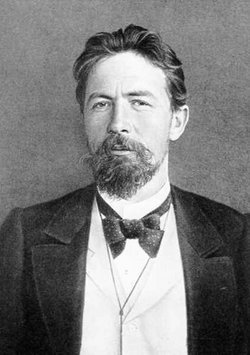
Every year I include on my undergraduate fiction workshop reading list at least one story by Anton Chekhov (1860-1904), who, as I need not tell any reader of this blog, I'm sure, was an exceptional playwright and one of the greatest short story writers ever. His influence flows through many a current of short and even longer fiction of the last century, and he is a writer whose gifts for characterization, scene-setting, tone, stylistic fluidity, varieties of irony, thematic openness and ambivalence, and narrative concision, displayed in all his mature works, offer a lesson any writer can learn from.  As I once mentioned to one of my advanced fiction writing classes, the basic argument in Francine Prose's Reading Like a Writer: A Guide for People Who Love Books and For Those Who Want to Write Them (HarperCollins, 2006) is, if all else fails, read and learn from Chekhov. The late Roberto Bolaño says as much (read and learn from Chekhov or Raymond Carver) in one entry I glanced at in Between Parentheses, New Direction's (June 2011) new book of his collected prose.

The current online New York Review of Books offers excerpts from a new book, Memories of Chekhov, edited by Peter Sekirin (Mcfarland and Co. Inc. Publishing), featuring memories of Chekhov by his peers, some of them, like Ivan Bunin (1870-1953), received the Nobel Prize in Literature in 1933. (Chekhov likely did not live long enough to merit consideration, though had he survived a few more decades, he ought to have been a leading candidate.)

Below is Bunin's excerpt; there are many more at the NYRB site:

I got to know Chekhov in Moscow at the end of 1895. I remember a few specifically Chekhovian phrases that he often said to me back then.

"Do you write? Do you write a lot?" he asked me one day.

I told him, "Actually, I don’t write all that much."


"That’s a pity," he told me in a rather gloomy, sad voice which was not typical of him. "You should not have idle hands, you should always be working. All your life."


And then, without any discernible connection, he added, "It seems to me that when you write a short story, you have to cut off both the beginning and the end. We writers do most of our lying in those spaces. You must write shorter, to make it as short as possible."
Sometimes Chekhov would tell me about Tolstoy: "I admire him greatly. What I admire the most in him is that he despises us all; all writers. Perhaps a more accurate description is that he treats us, other writers, as completely empty space. You could argue that from time to time, he praises Maupassant, or Kuprin, or Semenov, or myself. But why does he praise us? It is simple: it’s because he looks at us as if we were children. Our short stories, or even our novels, all are child’s play in comparison with his works. However, Shakespeare… For him, the reason is different. Shakespeare irritates him because he is a grown-up writer, and does not write in the way that Tolstoy does."

Wednesday, June 16, 2010

Bloomsday + Congrats to the Grads + Buffett's Giveaway + Krugman/Cassandra

It's Bloomsday! "STATELY, PLUMP BUCK MULLIGAN CAME FROM THE STAIRHEAD, bearing a bowl of lather on which a mirror and a razor lay crossed. A yellow dressing gown, ungirdled, was sustained gently-behind him by the mild morning air..." and you know, or know of, the rest. (If not, you can find the entire, remarkable novel, Ulysses, one of the greatest ever written in the English or any other language, here.) You can hear Joyce himself reading from it here, at Bedeutung Blog.

To commemorate today there's the annual Lilac Bloomsday Run, as well as the Bloomsday Festival in Dublin and elsewhere. Apple, steadily gaining a reputation for prudery regarding its iPhone and iPad applications (and the anti-porn comments of its founder-guru), has decided to reinstate Throwaway House's Ulysses Seen app, created by which it had previously censored because of its depiction of partial nudity (an imagined goddess's breasts, Buck Mulligan's penis, egads!)

I haven't seen this app, but given how the entire novel ends, I wonder if that was bowdlerized too. To Apple's credit, they also reinstated a graphic novel version of Oscar Wilde's The Importance of Being Earnest, which features a strip of a male couple kissing, after having heavily censored it.  Something tells me neither Joyce nor Wilde would have been surprised.

^^^

The university's graduation doesn't officially occur until this weekend, but final grades are posted, so I think I can post without caution:

CONGRATULATIONS TO ALL THIS YEAR'S GRADUATES IN THE UNDERGRADUATE AND GRADUATE CLASSES OF 2010!

Some of the seniors (poetry, fiction, creative nonfiction and lit scholars writers all) at the annual Bowling challenge (fiction won, creative nonfiction finished second, and I bowled with poetry this year). Congratulations to all the graduating senior major and minors, and to the other undergraduate students finishing up this week that I taught (including those in the Conceptual Art/Writing class--you were great!), advised or worked with over the last few years!

Congratulations also to one of my graduate fiction thesis advisees, Roya Khatiblou, whose magnificent manuscript received a 2009-10 Distinguished Thesis Award! It was exciting to work with Roya, and with the other graduating fiction students I advised this year, whom I'd also taught in the past, Jennifer Companik and Wendy Schoua Musto.

Lastly, to all the students in the novella class (The Theory and Practice of Fiction, Winter-Spring), congratulations on finishing your novellas! It was a huge, speeded up, often stressful undertaking, and you accomplished in 4 1/2 months what it takes many writers a year or more do but you've all completed your little books, and deserve praise for having done so!