Showing posts with label NBA. Show all posts

Tuesday, April 30, 2013

Jason Collins Comes Out

Jason Collins (© Kwaku Alston/Sports Illustrated)
I continue to be tremendously impressed and moved by the courage of Jason Collins, a current NBA journeyman center and free agent, who announced yesterday in an article ins Sports Illustrated's current (May 6, 2013) online issue, "I'm a 34-year-old NBA center. I'm black. And I'm gay." With those words, he became and now is the "the first openly gay" male athlete playing in a major American male team sport. There have been a number of male and female athletes in individual sports--from Martina Navratilova and Billie Jean King in tennis, to Greg Louganis in diving, and lesbians, bi and trans women athletes in team sports, as well as male athletes in pro sports overseas who have come out. In addition, Sheryl Swoopes and most recently Brittany Griner, in the WNBA, are among the black gay American women who have come out playing for major American team sports. But Jason Collins represents a double first--the first man, and the first black American man, to come out while still active as a player for a major American pro team. He finished this season with the Washington Wizards, after beginning it with the Boston Celtics, and has also played for the former New Jersey Nets, Memphis Grizzlies, Minnesota Timberwolves, and Atlanta Hawks. Though he makes clear in the article that he did not set out to be the first, he has instantly become a trailblazer with this amazing step, and he deserves the highest praise for taking it.

Collins's eloquent Sports Illustrated testament goes beyond just coming out, exploring his journey to those opening lines. So much of what he describes--the fear, the anxiety, the despair, the pain, the ambivalence, the self-delusion, the almost crushing desire to be accepted, to fit it, to not be any more different--are things many lesbian, gay, bisexual, transgender, intersex, and queer people have felt and still feel, sometimes after being out and living openly; coming out is and remains a process, and is never a final act, though that first step out, even today at a moment of fast-moving social progress and ever-expanding acceptance, at least among many in this country, of lgbtiq people, can often be the most difficult one, and for someone in Collins's position--a man of color, a professional athlete, a person raised in a Christian home, someone raised with black middle-class aspiration values--it probably did feel as difficult and risky as he describes. I am not a professional athlete, but many of the feelings he expresses are ones I and many people I know have felt intimately, deeply. Collins describes his journey in a way that welcomes all readers in, to understand what he has gone through, and where he hopes to go next with his life. It is a narrative of personal liberation, but it will probably have resonance in ways Collins has not ever imagined.

Many commentators online have noted how valuable Collins's comments will be for young people struggling with their sexual orientation, and I agree wholeheartedly with this. For young people of color, Collins, Brittany Griner, and many other out public figures probably will play a crucial role in self-acceptance. Seeing someone like themselves who is able to say "I am gay," who does not fall into the usual mainstream representations of queerness, will probably be invaluable. There are already many people who fit this category, but male professional team sport athlete was not one of them. Collins' coming out may also help people his own age and older who are grappling with their sexualities, and may help many heterosexual people who may still not accept and embrace lgbtiq people in part based on stereotypes, or who may still be carrying around abstracted ideas about who is lgbtiq. It may helped parents, grandparents, siblings--like Jason's twin brother, Jarron, who is straight--relatives, neighbors, all kinds of people who still have not been able to fully see the lgbtiq people around them, to see their humanity. Many of Collins's peers in the NBA like Kobe Bryant, Steve Nash, Dwyane Wade, Emeka Okafor, Al Horford, Jerry Stackhouse, Metta World Peace, and Baron Davis, past NBA legends like Karl Malone and Magic Johnson, stars in other sports like pioneer Martina Navratilova and , as well as other prominent figures across the society, including President Barack Obama and First Lady Michelle Obama, former President Bill Clinton, Collins's former Stanford roommate Congressman Joseph P. Kennedy III, and Oprah Winfrey, have all shown their support.

Collins's coming out may prove especially valuable to other male and female athletes who are not yet ready to come out or be out, to live openly publicly (though they may be out to those close to them), and have felt the same sort of pressures of heteronormativity and heterosexism, who because of homophobia believe they have to choose a spouse of the opposite sex and go through the motions of a relationship or a marriage, who have felt despair and because they don't see a single person like them willing and able to be out doing what they do, they feel they cannot be honest even to themselves. This is as true for white male professional team sport athletes as it is for black, latino, asian-american, native american, hapa, and other male professional team sport athletes. Jason Collins has opened that door, and walked through it, joining a number of amazing athletes, like John Amaechi, Kwame Harris, Esera Tuaolo, Roy Simmons, Dave Kopay, and others, who came out after ending their professional careers. It's unclear if any team will sign Collins, but given his talent, skills and determination, for the sheer sake of business, an NBA team would be foolish to pass him up. This doesn't mean there won't still be a bit of a freakshow, that homophobes won't rear their heads, that he won't meet with some rejection or indifference by teammates. I imagine he realizes this; we all do. Some of this backlash began almost as soon as the article and news broke. But he has opened the door, in a different but still significant way as predecessors like Jackie Robinson and Curt Flood did, and others, perhaps a small, single-file line, in the NBA, the NFL, the MLB, the NHL, and the MLS, will walk through, but even a few in one or several will be significant. So I cheer Jason Collins, and appreciate what he has done. I hope has the support he needs, and that all who follow him will be able to find and rely upon it as well.

Sunday, February 12, 2012

Jeremy Lin(sanity)!

Linsanity!


Jeremy Lin [林書豪], born in 1988 to parents from Taiwan.

–A graduate of Palo Alto High School, where he captained his team to a 32-1 record, winning the California Interscholastic Federation (CIF) Division II state title, yet he received no athletic scholarships, and was guaranteed a spot only on the squads of Harvard and Brown.

Lin, leading the Knicks
–AB, Economics, Harvard College (Go Crimson!), 2010, All-Ivy First Team in his junior and senior years, first Ivy Player ever to amass 1,450 points (1,483), 450 rebounds (487), 400 assists (406) and 200 steals (225), and undrafted by the National Basketball Association.

Jeremy Lin (The Canadian Press)
–2010-2011: Golden State Warriors and Reno Bighorns (D-League)

–2011-2012: Erie Bay Hawks and the New York Knicks

AND NOW:

with Lin in the game,

vs. New Jersey Nets, Knicks win 99-92, Lin scores 25 pts.
vs. Utah Jazz, Knicks win 99-88, Lin scores 28 pts.
vs. Washington Wizzards, Knicks win 107-93, Lin scores 23 pts.
vs. Los Angeles Lakers, Knicks win 92-85, Lin scores 38 pts.
vs. Minnesota Timberwolves, Knicks win 100-98, Lin scores 20 pts.
 
Year
Team
GP
GS
MPG
FG%
3P%
FT%
RPG
APG
SPG
BPG
PPG
13
3
16.1
.538
.200
.796
1.9
3.8
.8
.2
11.2

New York Times: "With 38 Points, the Legend Grows"


How long he can keep this up or whether he'll be allowed to continue starting once the Knicks' stars return, who knows, but what a great story, and after the lockout, it's just what the NBA needs.

Add caption

Friday, July 08, 2011

End-of-Week Roundup + Memories of Chekhov

A girl holds a South Sudan flag with stripes symbolising the people, their blood and the land. Photograph: Ho/Reuters
After decades of war, South Sudan is now an independent country! It broke away from Sudan, has its new capital at Juba, and its new president is Salva Kiir. Eight facts about the new Republic of South Sudan. Congratulations!


Elizabeth Ann Bloomer Warren Ford, better known as Betty Ford (1918-2011), the wife of late 38th president (1974-77), Gerald Ford (1913-2006), has passed away. She was more progressive on many issues, such as equal rights for women and abortion rights, than her husband, and probably would have made a better president than either he or his predecessor.

A certain Nobel Laureate economist thinks the President (OK, quickly, did we elect a Republican in 2008, just asking?) is really off track. Said economic genius ain't alone....

Television is truly imaginatively bankrupt: TNT is resurrecting Dallas, a program appropriate to its era, for a new generation of viewers. Why not, say, Tent/Car City California, or Orlando: Foreclosureville, or, if a show must be set in Texas, San Antonio? Oh, I know, those would require...IMAGINATION.

The situation grows worse and worse regarding the hacking scandal at Rupert Murdoch's News International soon-to-be-nonexistent newspaper The News of the World. Its former editor, Conservative-Liberal Democratic former minister Andy Coulson, has been arrested.

The NFL lockout, in which the very rich owners are locking out the very rich players, who belong to a union, continues, as the US 8th Circuit Court of Appeals refuses to overturn the lockout. The NBA is also locking out its players. The assault on organized labor continues apace, even in its upper reaches.

The MLB All Star Game takes place next week, in Arizona. It should either have been canceled or moved rather than be played in a state with overtly racist anti-immigration laws, especially considering how many immigrant players fill the league's rosters and its stadiums. As a result, this is one of the first years in many that I can recall in which I did not cast a single vote for any of the players, though if I had, the New York Mets' José Reyes would have been at the top of my list, and I'm no fan of the Mets. (Sorry, Albert Pujols...).

+++

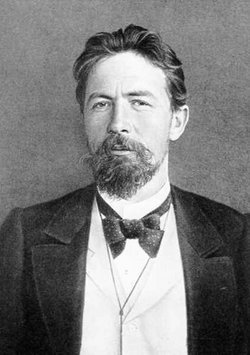
Every year I include on my undergraduate fiction workshop reading list at least one story by Anton Chekhov (1860-1904), who, as I need not tell any reader of this blog, I'm sure, was an exceptional playwright and one of the greatest short story writers ever. His influence flows through many a current of short and even longer fiction of the last century, and he is a writer whose gifts for characterization, scene-setting, tone, stylistic fluidity, varieties of irony, thematic openness and ambivalence, and narrative concision, displayed in all his mature works, offer a lesson any writer can learn from.  As I once mentioned to one of my advanced fiction writing classes, the basic argument in Francine Prose's Reading Like a Writer: A Guide for People Who Love Books and For Those Who Want to Write Them (HarperCollins, 2006) is, if all else fails, read and learn from Chekhov. The late Roberto Bolaño says as much (read and learn from Chekhov or Raymond Carver) in one entry I glanced at in Between Parentheses, New Direction's (June 2011) new book of his collected prose.

The current online New York Review of Books offers excerpts from a new book, Memories of Chekhov, edited by Peter Sekirin (Mcfarland and Co. Inc. Publishing), featuring memories of Chekhov by his peers, some of them, like Ivan Bunin (1870-1953), received the Nobel Prize in Literature in 1933. (Chekhov likely did not live long enough to merit consideration, though had he survived a few more decades, he ought to have been a leading candidate.)

Below is Bunin's excerpt; there are many more at the NYRB site:

I got to know Chekhov in Moscow at the end of 1895. I remember a few specifically Chekhovian phrases that he often said to me back then.

"Do you write? Do you write a lot?" he asked me one day.

I told him, "Actually, I don’t write all that much."


"That’s a pity," he told me in a rather gloomy, sad voice which was not typical of him. "You should not have idle hands, you should always be working. All your life."


And then, without any discernible connection, he added, "It seems to me that when you write a short story, you have to cut off both the beginning and the end. We writers do most of our lying in those spaces. You must write shorter, to make it as short as possible."
Sometimes Chekhov would tell me about Tolstoy: "I admire him greatly. What I admire the most in him is that he despises us all; all writers. Perhaps a more accurate description is that he treats us, other writers, as completely empty space. You could argue that from time to time, he praises Maupassant, or Kuprin, or Semenov, or myself. But why does he praise us? It is simple: it’s because he looks at us as if we were children. Our short stories, or even our novels, all are child’s play in comparison with his works. However, Shakespeare… For him, the reason is different. Shakespeare irritates him because he is a grown-up writer, and does not write in the way that Tolstoy does."