Showing posts with label literary awards. Show all posts

Thursday, June 13, 2019

American Academy of Arts & Letters Ceremonial 2019 & Award

Six years ago, back in 2013, I blogged about attending the American Academy of Arts & Letters' annual Ceremonial award celebration. I was the guest of a friend and colleague, Dorothy Wang, who was a guest of an award-winner, the poet Joanna Klink, and though I had seen some of its award winners and awards I'd seen listed over the years, I had no idea about the organization or where it headquarters were located, let alone about its awards. In fact, I often mistook it for the American Academy of Arts & Sciences, which is located in Cambridge, not New York; they are two similar but distinct organizations. The latter encompasses the sciences and is more of a scholarly honors organization, while the latter primarily focuses, as its name suggests, on arts and letters.

Aububon Terrace (photo by C)
In my previous post, I gave a potted history of the AAAL:
It's an august institution too: a closed honor society of 250 members selected and elected by standing members without outside nomination, it grew out of the National Institute of Arts and Letters, founded in 1898, consisting eventually of 200 members, from which the American Academy of Arts and Letters, a smaller and more elite sub-organization of 50 of the most eminent figures in their fields, emerged in 1904. US President William Howard Taft signed a Congressional act that incorporated the Institute of Arts and Letters in 1907, and the Academy in 1916. In 1976 the two organizations merged, and in 1993, all 250 members merged into one entity now known as the American Academy of Arts and Letters.
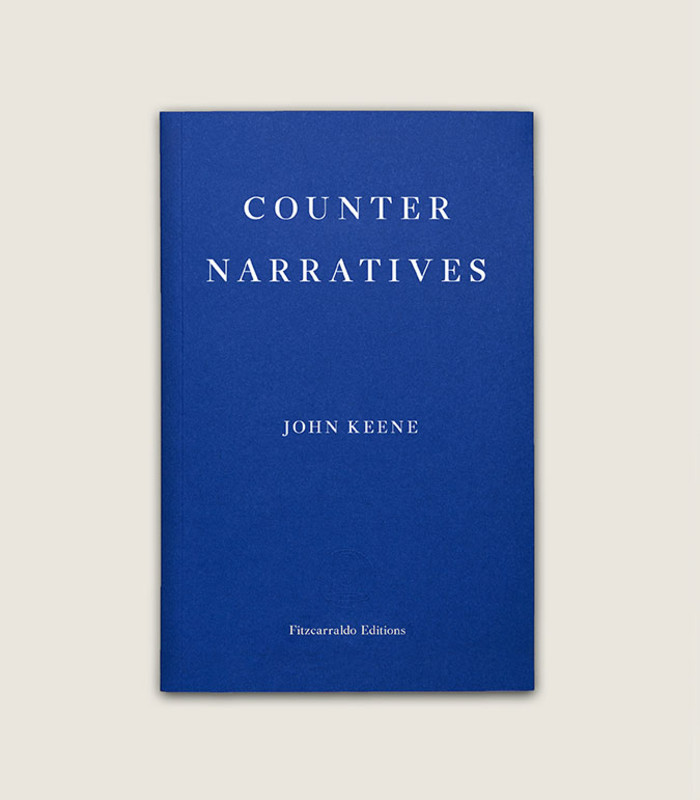
I also mentioned some of its members and the day's award-winners, a few like my former graduate school professor and thesis advisor E. L. Doctorow no longer with us, so won't recapitulate that earlier blog post, but I will say that uncanny pleasure of once again attending a Ceremonial up at Audubon Terrace in Washington Heights, this year, as a recipient, having received the Harold T. Vursell Award in Fiction. This award is given to a writer specifically based on the quality of their prose. (!) J's Theater readers will note my often baroque stylings (and typos, forgive me) here, and perhaps ponder why I was designated a recipient of this prize, but it was primarily for Counternarratives, in which my rhetorical and syntactic play was, I think it fair to say, at its most daring, and so I took the honor as an affirmation of what I attempted in that book, though I also think it's probably not wrong to suggest that all of my published books have in them some sort of experimentation when it comes to prose or verse, and that when it works, it is at least distinctive if nothing else.

As an award recipient, I was invited to a pre-Ceremonial reception and luncheon, which C attended with me, as did my New Directions editor and publisher, Barbara Epler, and I had the opportunity there to tell Jamaica Kincaid once again how much of a fan I was and am. Her prose, as well as her inventiveness as a storyteller and novelist, have been among many powerful influences on my own work. I also had the opportunity to chat with a few fellow award winners or new members, including poets Aracelis Girmay, fellow former Dark Room member Natasha TretheweyMarilyn Chin, Claudia Rankine, and Grace Schulman, and fiction writers Alice Hoffman, Lorrie Moore and my collegue Jayne Anne Phillips, who was elected to the AAAL a few years ago. After the luncheon, as before it, C and I viewed some of the art and literary materials, by members and recipients on display.

One of the more fascinating rooms featured the photos of all the prior and present members, lined up in rows in stall-like spaces. The original members were, unsurprisingly, all white men, a great many of them legendary names in American culture, which got me wondering who had not been a member yet produced work that today we hold in high esteem (F. Scott Fitzgerald, to name one, Ernest Hemingway to name another); on the other hand, many of the names would not register at all to contemporary sensibilities. At a certain point, a few white women's faces pop up, and then, slowly, the further we progressed into the 20th century, there were more white women, a few black writers, like W. E. B. DuBois (was he the first?) and Langston Hughes, and then black classical composers and jazz musicians, Asian American, Latinx, and Native American writers' portraits appear (see the photos below). The Academy's members still strongly reflect the upper reaches of the preponderantly New York-and-northeastern based world of architecture, visual arts, literature, and European-American art music, but the awardees have begun to diversify somewhat more, or so I was told. Certainly this year's winners were more racially and generationally diverse than I recall from 2013.

In one of the rooms featuring paintings
bequeathed by American Impressionist
F. Childe Hassam (photo by C)
One of the rooms in the American Academy
 headquarters  (photo by C)
Members and honorees assembling on stage
 (photo by C)
Once the Ceremonial began, I took my numbered seat on the stage, between Jamaica Kincaid and poet D. A. Powell, also a prize recipient; to his left sat our presenter and a member of the committee that selected us, poet Henri Cole. A row behind me sat Eileen Myles, among others. A number of illustrious members, like sculptors Martin Puryear and Richard Hunt, whom I mentioned in my prior post, and honorees like Meredith Monk and Thelma Golden, were seated in the front row.  This year's recipient of the Gold Medal for Literature, the Academy's highest honor, Toni Morrison, and the Gold Medal for Art, Lee Bontecou, were unable to attend, and so were fulsomely lauded by their presenters. One highlight of this year was the Blashfield Lecture by Pulitzer Prize-winning composer David Del Tredici, once a controversial figure in the American classical music world and now a venerable and venerated elder. Del Tredici's lecture, "The Task of Gayness," explored his coming into his own in his field, and out as a gay man, with humor and concision. Were he to write a memoir, I'd most certainly buy it.

A photo of me walking to receive
my award from Henri Cole (photo by C)
Receiving my award from Henri Cole
(Photo by C)
At the conclusion of the awards ceremony, which ran roughly an hour, another reception unfolded, on a bright and sunny but thankfully not hot afternoon, which afforded us an opportunity to speak with more writers, editors, artists, and others in attendance. It was, all in all, a lovely afternoon, and many thanks to the Academy jury for the award!

Wednesday, March 21, 2018

Prize Season (Republic of Consciousness, Whitings, Jhalaks, & Windham Campbell)

I've titled this post "Prize Season," but when it comes to literary awards in the US and UK, I should be more precise in noting that various honors now appear in a steadily rolling tide from January through December. Since they now tend not to go to the same author or presses, unless there's a consensus book or candidate whom the zeitgeist homes in on, this unfurling calendar is a good thing, especially for writers and independent publishers who tend to remain under the radar.

One such award is the UK-based Republic of Consciousness Prize for Small Presses, founded by writer and publisher Neil Griffiths and now in its second season. Griffiths established the prize to highlight innovative fiction by independent publishers, and more specifically as the prize's name indicates, to reward work that delves deeply into the consciousness of its characters, the worlds it creates. So far he and his jury have managed to do that, generating considerable excitement about British and Irish small press novels and collections of short stories. The Republic of Consciousness Prize proceeds from a fall longlist to a shortlist, and then names a winner early the next year. This year, the shortlist comprised the following six books:

Die, My Love by Ariana Harwicz, tr. Sarah Moses & Carolina Orloff (Charco Press)
Gaudy Bauble by Isabel Waidner (Dostoevsky Wannabe)
Blue Self-Portrait by Noémi Lefebvre, tr. Sophie Lewis (Les Fugitives)
We that are Young by Preti Taneja (Galley Beggar Press)
Attrib. and other stories by Eley Williams (Influx Press)
Darker with the Lights on by David Hayden (Little Island Press)


As tally shows, the prize also encompasses works in translation, a rarity among most prize competitions that are not specifically so designated. This year's winner was Influx Press, which published British writer Eley Williams' highly praised Attrib. and other stories. Williams' book has received extensive praise for its playfulness and profundity. Congratulations to the press and Williams, and I highly recommend her collection! (I should add that last year, my British publisher, Fitzcarraldo received the award for Counternarratives, a turn of events I still find astonishing; though I've met Jacques Testard, the founder and head of Fitzcarraldo, I do hope one of these days to return to the UK and participate in a reading over there.)

***

Another set of honors that graces the first quarter of each year are the Whiting Awards, awarded by the Mrs. Giles Whiting Foundation in New York. Since 1985, the Whitings have been given annual to ten emerging writers of promise, who are secretly nominated by figures in the literary and publishing world, and then selected by the foundation. This year's winners include some of the brightest new lights in contemporary American poetry, fiction, nonfiction, and drama:


  • poet and essayist Anne Boyer
  • fiction writer Patti Yumi Cottrell
  • playwright Nathan Alan Davis
  • playwright and director Hansol Jung
  • poet Rickey Laurentiis
  • playwright Antoinette Nwandu
  • poet Tommy Pico
  • author, dancer, performance artist, and musician Brontez Purnell
  • novelist Esmé Weijun Wang
  • fiction writer and public health scholar Weike Wang


2018 Whiting Award winners
Congratulations to all these writers and artists, and you can learn more about them and find links to their books at the Whiting site, linked above!

***

2017 Jhalak Prize shortlisted titles
Several years ago, authors Sunny Singh and Nikesh Shukla, working with the organization Media Diversified, and with the support of the Authors' Club and an anonymous donor, established the Jhalak Prize to honor outstanding writing by writers of color, or in British terminology, British and British-resident BAME (Black, Asian and Middle Eastern) writers. This is the only prize of its sort presented in Great Britain. The jury selects a longlist, shortlist, and then one winner, who receives a £1000 ($1413) prize. Like the Republic of Consciousness Prize, this was the Jhalak Prize's second iteration; last year, Jacob Ross received the inaugural prize for The Bone Readers (Peepal Tree Press), a crime thriller set in the Caribbean.

This year, on March 15, author Reni Eddo-Lodge received the 2017 Jhalak Prize for her collection of essays Why I'm No Longer Talking to White People About Race (Bloomsbury Circus). The Guardian described Eddo-Lodge's process of writing the book, which began with...a blog post!

Eddo-Lodge’s collection of essays began as a blogpost of the same title in 2014. Opening with her statement: “I’m no longer engaging with white people on the topic of race,” Eddo-Lodge wrote she could “no longer engage with the gulf of an emotional disconnect that white people display when a person of colour articulates our experiences. You can see their eyes shut down and harden. It’s like treacle is poured into their ears, blocking up their ear canals like they can no longer hear us.”

After the blog went viral, Eddo-Lodge spent five years writing the book about “not just the explicit side, but also the slippery side of racism – the bits that are hard to define, and the bits that make you doubt yourself”. Britain, she wrote, “is still profoundly uncomfortable with race and difference”.

Other writers on the shortlist include

  • Nadeem Aslam, The Golden Legend (Faber)
  • Kayo Chingonyi, Kumukanda (Chatto & Windus) 
  • Xiaolu Guo, Once Upon a Time in the East (Chatto & Windus)
  • Meena Kandasamy, When I Hit You: Or, A Portrait of the Writer as a Young Wife (Atlantic Books)
  • Kiran Millwood-Hargrave, The Island at the End of Everything (Chicken House)

Congratulations to Reni Eddo-Lodge, whose book I'm looking forward to reading, and to all of this year's Jhalak Prize-listed authors and titles!

***


Last but not least, I recently learned that I was among the newest cohort of recipients of this year's Windham Campbell Prizes, administered by the Beinecke Library at Yale University. Like the Whiting Awards, recipients cannot apply for these awards; a committee selects prize recipients from a set of nominees.

This year's recipients also include:

  • Sarah Bakewell, a nonfiction writer from the UK;
  • Lorna Goodison, a poet from Jamaica and Canada (who taught for many years in the US);
  • Lucas Hnath, a playwright and actor from the US;
  • Cathy Park Hong, a poet, essayist and my new Rutgers-Newark colleague, from the US;
  • Olivia Laing, a nonfiction writer from the UK;
  • Jennifer Nansubuga Makumbi, a fiction writer from Uganda and the UK; and
  • Suzan-Lori Parks, one of the major living US playwrights.

The prize committee calls out of the blue, so this award was even more of a surprise than usual. Additionally, for each recipient, they write a citation; mine, which was awarded for Fiction, reads, "With coruscating imagination, language and thought, John Keene experiments with concealed scenes from history and literature, stepping outside the confines of conventional narrative." That's about as fine and concise a summation of nearly all my work as anyone might devise.

Congratulations to all of my fellow Windham Campbell Prize recipients, many thanks to the nominators, prize committee, and foundation! There will be a series of events, including a prize ceremony, this upcoming September, so I will be sure to post more then.