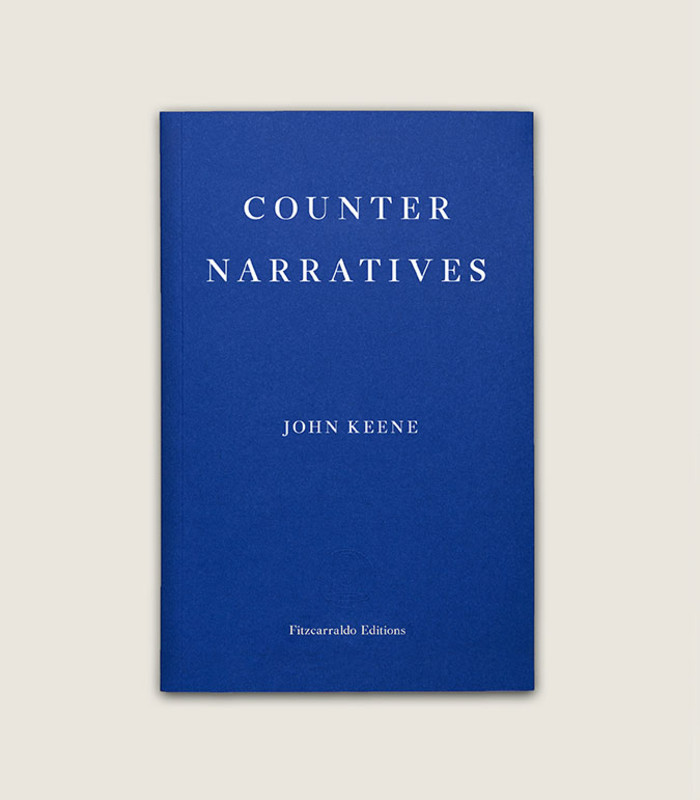
Showing posts with label Nathanaël. Show all posts

Monday, June 04, 2018

*Essays On Hilda Hilst* Now Available


Thanks to the dedication of editors Adam Morris and Bruno Carvalho, Essays on Hilda Hilst: Between Brazil and World Literature, the first English-language scholarly volume dedicated to the work of one of Brazil's most singular and path-blazing authors, is now available for purchase. Published by Springer this month, the book opens with an insightful introduction about Hilst (1930-2004) and her relation to the category of "World Literature," by Morris, a gifted translator and scholar who produced an exceptional rendering of Hilst's 1986 novella Com os meus olhos de cão (With My Dog Eyes, Melville House, 2014), as well as works by Jõao Gilberto Noll, Beatriz Bracher, and other major contemporary Portuguese-language writers, and Carvalho, a Princeton professor of Spanish and Portuguese, whose scholarly interests span an array of topics and whose study Porous City: A Cultural History of Rio de Janeiro (2013), received the Brazilian Studies Association Robert Reis Book Award in 2014. Other essays in the volume explore different aspects of the late author's oeuvre, ranging from her plays (Tatiana Franca Rodrigues Zanirato), fiction (David William Foster), poetry (Alva Martinez Teixeiro), and broader theoretical, political and ideological readings (Deneval Siqueira Azevedo Filho, Eliane Robert Morães, Morris, and Nathanaël).

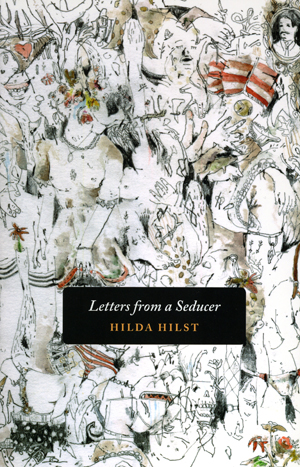
For my part, I contributed a revision of a talk I delivered in at the New York Public Library back in 2014, "Translating Brazil's Marquis de Sade," which explores the complexities of Hilst's Cartas de um Sedutor (Letters from a Seducer), for which Carvalho wrote the introduction, and the challenges I--and anyone--might face bringing it and her work in general into English. (In "Derelict of Duty, "Nathanaël also discusses some challenges faced co-translating Hilst's A obscena Madame D (The Obscene Madame D, Nightboat and A Bolha Editora, 2013). It is especially exciting to see this essay in print and in this volume, which I hope will serve as an enticing overview and introduction that I hope sparks more studies in English about Hilst, and spurs more translations of Hilst's work. I believe a translation of Hilst's Fluxo-Floema is on its way soon, and this year, Hilst's Of DeathMinimal Odes, translated by Laura Cesarco Eglin, will be published by co•im•press.

Please consider getting a copy of this volume, or at least suggesting your nearest library do so. And please, read Hilda Hilst!

Saturday, August 30, 2014

"Pensées" in Recours au Poème

UPDATE: Daily Telegraph art critic Alistair Sooke writes on the August 28, 2014 BBC.com site about Yves Klein's successful development of the ultramarine pigment that cemented his fame: "Yves Klein: The Man Who Invented a Color."

One of the chief reasons I translate writing by non-Anglophone writers is to make their work available to readers who would otherwise have no access to it. However imperfect and faulty my translations I always do hope they offer a glimpse into the work of the translated writers and the worlds from which they come. As a writer myself I always appreciate the opportunity to be translated; it has happened several times, and the most recent instance is one of the best, because the translator is one of the best, a poet in all senses of that word, with a philosophically inclined mind such that she is able to convey multiple layers in every text she carries across languages, including her own. I am speaking with tremendous gratitude about Nathanaël, whom I was incredibly fortunate to have translate one of my very recent poems, "Pensées (After Yves Klein)," a tribute in part to the great, problematic French conceptual artist whose work has haunted me since I first saw it years ago.

Years ago through my job at NYU's Faculty Resource Network I met an artist-scientist, Dr. Adrienne Klein, also a fan of Yves Klein's, and our shared moments of Kleinophilia led in part to the poem "Klein Bottle," which references yet another Klein, the German mathematician Christian Felix Klein (1849-1925), whose non-orientable surface, a staple of topology, the poem invokes. That was an oblique reference to Klein (Yves)--and of course Adrienne and Felix Klein, and mathematics and science--but "Pensées (After Yves Klein)" is more direct. Klein also was one of the intellectual spurs behind one of the most enjoyable classes I ever taught, "Topics in Creative Writing: Conceptual Writing/Art," in 2010. (I fantasize about teaching an updated version of that course at Rutgers-Newark!) I want to say that until that same year, as a result of a mini-exhibit of Klein's work at the Art Institute of Chicago I had never seen any of his paintings or sculptures in person, but this is not correct; a little retrospection reminds me that I certainly did see Klein's work in other museums, including the Guggenheim Museum, which owns several of his works, and MoMA. Encountering Klein's "Blue Sponge Relief" (pictured above) and other images at the Art Institute back in 2010 laid a deep anchor, though, and recently, as I was writing poems about artists and artworks, the "Pensées" emerged.

Since they were about a French artist I sent them to Recours au poème's founding editor, poet and critic Matthieu Baumier, with whom I'd exchanged some emails around the time the online site first began publishing, and did not hear anything back, so it was a surprise and pleasure to learn that Nathanaël would be the translator (she had previously translated some of the poems from Seismosis and succeeded in bringing into French the English rhythms yet also creating a similar, novel music in French), and that she also was preparing a short introductory essay, "Arraisonner le vide" (roughly "Investigating the Void") which manages to encapsulate in a paragraph much of the conceptual richness I was seeking to convey. She also discusses some challenges in translating between the two languages that English in particular produces. I had not thought about it when writing these "Pensées," which are haiku-like in their brevity, but Nathanaël astutely identifies in so many words English's parallel vocabularies, which I drew on. "White" (from English's Germanic roots) and "blank" (from its Norman-Latin ones) are the same word in French, blanc; the same is true with "emptiness" (from Old English) and "void" (from Norman and Latin), which translates as vide. In addition, Nathanaël finds not just an equivalent, but a convincing French music for the English, even as she stays very close to the English syntax. That is quite an accomplishment.

You can find the essay and the entire poem in translation at the Recours au poème site, which if you read French is a bonanza of contemporary Francophone poetry, and I highly recommend it. My former colleague Reginald Gibbons has a series of poems, also beautifully translated by Nathanaël, on the site. Below is a snippet of my poem. Now I just need to find a place to publish the English original!

***

From "Pensées (After Yves Klein)"

Monochrome:
une couleur,
infinité.

*

Monotone:
un accord, puis silence:
une symphonie.

*


Je signe le ciel
J’assigne au ciel
un sens nouveau.

Copyright © John Keene, translation by Nathanaël, 2014. All rights reserved.

Wednesday, April 09, 2014

Hilda Hilst Online Roundtable

The young Hilda Hilst
Over the last few months I participated in an online roundtable about Hilda Hilst, whose sublime and sublimely perverse novel Letters from a Seducer (Nightboat Books, 2014) I translated last year. Organized by critic and author Sarah Gerard, the roundtable, which comprised questions posed by Sarah (and translator Caroline Aguiar), and responses by authors, translators, scholars and publishers including Alex Forman, Rachel Gontijo Araújo, Adam MorrisNathanaël, Stephanie Sauer, and I, does give a deeper sense of who Hilst was, and what she was up to. The conversation is now live at Music and Literature.

One unfortunate aspect of the conversation, however, is that it appears to have been reordered and edited, with some errors inserted, after the fact--by Music and Literature or someone else I'm not sure. Nevertheless, it reflects our real-time online exchanges, and for the most part (or at least my part) did not receive any subsequent polishing. Were we onstage, bodily as opposed to virtually, this is the sort of conversation--without the remixing--you might hear.

One highlight:

Caroline Aguiar: Hilst was willing to explore the limits of language while going deep into aspects such as God and immortality. At the same time, she was deeply connected with the very core elements of human existence, such as passion, comradeship, life, and death, often finding inspiration not only in philosophical books but also books on biology, physics, anatomy, and math. How do you interpret the fact that the public is now more interested and prepared to embrace Hilst’s view of literature than any time before? 
Nathanaël: This seems a recasting of the first question of our conversation. As I think a number of us have indicated previously the question of the timeliness of these translations seems to mislead the apprehension one might have of Hilst’s work; John has underscored the degree to which this is already an Anglo-centric question, since Hilst arrived in other languages well in advance of these efforts here; so perhaps the question is one, if it does indeed need to be asked at all—and I’m not personally convinced that it does—of the English language’s belatedness and hitherto lack of receptivity. And the way in which borders between languages are more or less passable. On the occasion of the U.S. film release of Macunaíma in 1968, the U.S. public’s ability to receive the work was, according to one critic, limited by its impoverished understanding of Brazilian specificities and political realities within a larger South American context, with which it was somewhat more familiar. It would seem to me, though, that this kind of limitation is a consequence of a kind of deliberate ignorance. And I am concerned that the same kind of short-sightedness can lead us to congratulate ourselves misguidedly for identifying a particular moment as a zeitgeist. Literature has no time and articulates itself reiteratively with a reader. 
Alex Forman: Caroline makes an important point about the elements of the metaphysical in Hilst’s literature, ideas brought over from other fields such as philosophy, math, and science. And though I don’t immediately see the math, I do find biology, and I want to think more about this… I do see a predominant focus on literature itself (the notion of Literature) in a sort of meta-textual writing and the Metaphysical. In the books I have read, there are monster narrators who eat little children; we have children whose living uncles turn into great authors of Brazilian literature (in a game of smoke and mirrors) and narrators who speak from beyond the grave. We have multiple interior voices—some, like John mentioned earlier, come from Hilst’s fascination with recording seance-like encounters with spirits, while others seem to be simply the “voices in our heads” at play in her fascination with mental illness. So many of these elements are in communion with Brazilian culture. They end up being the manifestation of a cultural reality, a stream that runs permanently beneath the surface here, so much so that it is never described but simply permeates daily rituals. Hilst works it all into her literature as fantastical and absolutely natural, absorbed and accepted by her characters in such a way that we, her readers, come to accept it too.

Wednesday, September 26, 2012

Catching Up

Catching up here on the blog always feels possible at first thought, but by the time I sit down to begin a post, I realize I have something else to do and the blog goes wanting. I do lament it. Blogging has often been a pleasure and served as a respite for me, but perhaps my new daily and nightly rhythms--and Apple TV, which allows me to stream YouTube music videos and Netflix films from our TV--have so disrupted my previous mindset that it has just become more or too difficult to do. We will see.

Until that moment comes, here are a few photos from recent events. The first two are of the panel discussion, at Poets House, for the Hilda Hilst book launch, and by Reggie H. (Thank you!) It was a fun panel, the book is now out and looks delectable, and Hilst now resides, at least in the form of one book, The Obscene Madame D (with more to come), in a superb English collaborative translation by Nathanaël and Rachel Gontijo Araújo, a first.

Hilda Hilst book panel
Me; poet and critic Nathanäel and A Bolha Editora publisher and poet Rachel Gontijo Araújo, who collaborated the translation; Princeton professor Bruno Carvalho; and Stephen Motika, poet and publisher of Nightboat Books
Hilda Hilst book panel
Me, Nathanäel, Rachel Gontijo Araújo, reading, and Bruno Carvalho
On Tuesday I attended my first MFA Program reading at Rutgers-Newark, and the featured readers were two of today's most acclaimed younger writers, poet Eduardo C. Corral, who was selected by Carl Phillips to receive this year's Yale Series of Younger Poets Prize for his collection Slow Lightning, becoming the first Latino poet to be so honored, and fiction writer Justin Torres, whose stories have been blowing up The New Yorker, and whose first novel, We the Animals, has summoned the highest praise for all quarters. Both read as if they had been doing so, with panache, all their lives. My colleague, the acclaimed poet, nonfiction writer and anthologist Rigoberto González, introduced both writers and moderated a lively Q& A session full of undergraduate and graduate writing students. Both had a good store of bon mots to share, and it was an honor to meet both of them in person.

Eduardo Corral, Justin Torres, Rigoberto Gonzalez
Eduardo C. Corral, Justin Torres, Rigoberto González
Justin Torres
Justin Torres
Eduardo C. Corral
Eduardo C. Corral

Tuesday, September 18, 2012

Hilda Hilst Book Launch This Saturday + Scholars Find, Authenticate Claude McKay Novel

A few weeks back, I mentioned the imminent publication of The Obscene Madame D, the first published English translation of fiction by the late, extraordinary Brazilian novelist Hilda Hilst (1930-2004).

Two presses, Nightboat Books in the US, and A Bolha Editora in Brazil, are jointly issuing poet Nathanaël's superb translation, in collaboration with Brazilian poet and publisher Rachel Gontijo Araújo, of Hilst's novel,  which is now available. I'm delighted to have had a small part in the project through my introduction to the book, and thereby to Hilst's work.

For all who are in or around New York this weekend, there'll be a book launch on Saturday evening, with a reading and panel discussion, by Nathanaël, Rachel, Bruno Carvalho, and me, at Poets House, one of the most beautiful venues for poetry and literature in the city. If you're free, please come by!

BOOK LAUNCH AND READING


The Obsence Madame D by Hilda Hilst
Translated by Nathanaël in collaboration with Rachel Gontijo Araújo
Introduction by John Keene

The first English-language translation by the Brazilian writer Hilda Hilst (1930-2004).

Reading and panel discussion with
with Rachel Gontijo Araújo, Bruno Carvalho, John Keene, and Nathanaël

To be followed by reception and book sale
Saturday, September 22, 6:00pm
Poets House, 10 River Terrace, New York City

This is made possible through Poets House's Literary Partner Program.

***

Claude McKay
One of the most exciting pieces of news to cross the academic wires recently was the announcement that Columbia University doctoral student in English and Comparative Literature Jean-Christophe Cloutier, had found in the university's archives an unpublished novel by the late Harlem Renaissance writer Claude McKay (1889-1948), and then, with his advisor, professor Brent Hayes Edwards, authenticated that it was in fact an original work by McKay, a major figure in early 20th century African-American, Caribbean and African-Diasporic writing.

The 1941 satirical novel, Amiable with Big Teeth: A Novel of the Love Affair Between the Communists and the Poor Black Sheep of Harlem, is set in 1936, marking it as a work from the latter years of the Harlem Renaissance, and according to Felicia Lee's report this past weekend in The New York Times, Cloutier and Edwards have received permission to publish the novel, for which they will write an introduction. As Lee tells the story, Cloutier's discovery came about during the summer of 2009 when he was working as an intern in Columbia's Rare Book and Manuscript Library, and spotted the nearly 300-page bound manuscript in boxes of material donated by Samuel Roth, a Columbia alumnus and former literary publisher, of once-scandalous texts, in his own right.

Cloutier & Edwards (Robert Caplin
for the New York Times)
Cloutier, saw the McKay's name and the title, and found two letters between McKay and Roth, which suggested to him that this might be an important find. He took the materials to his advisor, Professor Edwards, one of the most distinguished figures in contemporary African Diasporic literary and cultural criticism, and they studied the manuscript, noting the concurrences, in theme and style, down to particular word choices, between it and McKay's other works of fiction, which include Banjo (my favorite of his books) and Home to Harlem, one of his best known works. 

They also found a wealth of other archival material that underpinned their supposition about the work's authenticity, including letters between McKay and the writer and critic Max Eastman in which Eastman quotes from the novel, and further correspondence indicating that the publisher E. P. Dutton had contracted with McKay to write Amiable with Big Teeth.  The novel, Lee says, portrays important aspects of the 1930s Harlem experience, among them the experiences of black participants in the Communist Party, as well as other portraits of the rich and vibrant lifeworld of that moment. Lee quotes Edwards saying of Amiable that it will perhaps eventually be viewed "as the key political novel of the black intellectual life in New York in the late 1930s." Thanks to him, and to the budding scholar (who has all but written his ticket to a job and a career), the still dissertating but soon to be Dr.--and Prof.--Cloutier. And eventually, we all will be able to read what sounds like a late masterpiece by McKay.

Thursday, August 23, 2012

Phyllis Diller, My Homegirl + Artists Battle for Home in Rio

Phyllis Diller (UPI)
Shortly after my parents moved us from the city of St. Louis to the suburb of Webster Groves and we joined Holy Redeemer Roman Catholic Church, I began attending its parish school. It was a little over half a mile from my house, and there was no bus service, and my parents both worked so they couldn't drive me to school, which meant I had to walk. (This was in the 1970s when such things were a matter of course.) There were two main routes to get there. One took me past a crossroads straight up a long, curving street, over which a train trestle ran--so I literally lived on the other side of the tracks, on the black (with a few white people) side of Webster--until I reached the next main cross street, Lockwood Avenue, which was the main commercial strip of Webster, and on which sat from one end to the other, the old business district (Old Webster), full of stores; the City Hall; the cinema where I saw The Exorcist and Jaws and Star Wars and countless other movies; the Y; Holy Redeemer Church and school; Webster Groves Public High School; Webster University; the Eden Theological Seminary; Nerinx Hall, a Catholic school for girls; and then, where Lockwood turned into Big Bend Avenue began the Old Orchard business district, which also had lots of shops and restaurants. That was the long but safe route. The quicker route took me across the other major cross-street near me, which included crossing a creek, then up through a maze of increasingly nicer neighborhoods, with some very large homes, including one that belonged to the family that owned the Tums factory (and I would learn, as an adult, that it was in this part of Webster that Jonathan Franzen, among others, had grown up), until I reached the back lot and playground of Holy Redeemer.

In the summers I would ride my bike up through this way; during the school year, it was strictly by foot. One of the houses closest to the playground area, on Mason Avenue, was, like the others, imposing, but my new classmates liked to point it out; I was told that it had once been a shocking salmon color. Most of the other homes in this part of Webster were white, dark green, brick, Tudor-style: classy. The house's prior outré coloring was probably apocryphal, but it stuck in my memory. I was also told, by a knowing classmate, that a famous comedian--comedienne--had lived there. I didn't believe it, but I told my parents, and perhaps they knew that this comedian was from St. Louis. I can't recall. Every so often, when I'd pass the house, I'd think of the story of it having been a sight to look at, and how now it was just another house very close to school and across from other large houses that belonged to my classmates, mostly considering how much larger they were than the houses on my side of town. (I had yet to see some of the mansions in other St. Louis suburbs that my future classmates at Priory lived in.) Years later I did learn that the house had belonged to the famous comedian, that she had lived in St. Louis, in Webster Groves, beginning in the 1960s, and that she always considered not just that house, but the area one of her true homes. I am talking about Phyllis Diller (1917-2012), one of the pioneering women of 20th century American comedy, who passed away the other day.  She gave me many occasions to laugh over the years, and the lore of her outrageously painting house is a little story to treasure that I still carry with me. I hope Webster Groves, which was famous for being so representatively middle American it was even the subject of a documentary in the 1960s (16 in Webster Groves) and the setting for a TV show in the 1970s (Lucas Tanner) too sees fit to honor this often unconventional but important figure. She gave America enough laughs, and future comedians new opportunities, to merit it.

More: Jason Zinoman's tribute to Phyllis Diller in The New York Times.

+++

For Rio de Janeiro to host the Olympic Games in 2016, I knew that as in every other place where the Olympics had been held, including the most recent host, London, there would be private and government battles surrounding the economically working-class and poor areas of the city, with the aim of seizing control of them, and Jonathan WattsGuardian article "Rio artistic collective's sweet deal ends as Olympics development spreads" confirms one example, of which there certain to be many--cf. the favelas. In the case Watts describes, the 50 or so artists working in a former Bhering (Behring?) confectionary factory in Rio are fighting not to be evicted from their studios and offices, which appears increasingly likely as the city gears up for the games and a larger £21 billion ($33 billion, €26 billion) development plan. The former factory, converted over the last three years into a creative hotspot by the artists, sits in Rio's port area, one of the oldest, more run-down and most affordable parts of the city, yet accessible to all of its fashionable neighborhoods and the Guanabara Bay, making it prime real estate for the Olympics-related development.

One thing the artists in this building, called Orestes 28 for its street address, have going for them is that in similar situations in other cities, such as Beijing, the site of the 2008 Olympic Games, artists in certain repurposed spaces were able to claim the mantle of being a cultural treasure and center, and were thus spared eviction and the effects of development and gentrification. The Orestes 28 artists hired a lawyer, made an appeal to Rio's government, and received a judicial revocation of the 30-day eviction order, but even with the Chinese precedent there's no guarantee they'll win out in the end, especially given Rio's lack of space, the development already underway, and the money developers and those politically connected to them stand to make both for the World Cup in 2014, and then two years later for the Olympics. As Watts notes, the artists have a front-row seat at the changes underway, which include not just a new name, "the Marvelous Port," but luxury hotels rising nearby and soon enough, new rail and roadways.  I actually know one of the writers Watt mentions, Rachel Gontijo (Araujo), a poet and publisher (A Bolha Editora), mentioned before on this blog, and for whose English translation of Hilda Hilst's The Obscene Madame D, translated by Nathanaël I have written the introduction. Rachel has been organizing a weekly happy hour at Orestes 28, which has included observing the transformation of the area, but as Watt says it's not clear how much longer this will occur.  I hold out hope, I really do, but...

Wednesday, July 25, 2012

Updates + Congratulations & News

These summer days are zooming by. Although I haven't even been back in New Jersey for a full month, it feels almost or even double that long.  As I mentioned in a post a few weeks back I'd begun to set up my new office, and now it's much further along. I still need to figure out how to get into half of my desk, which appears to be locked from the inside (?), get a few office supplies, and hang more artwork (including a vèvè of La Sirène, who kept watch over my office in Evanston), but things are proceeding pretty well.

The office, coming into order
The office, now mostly in order


The books, in order on the shelves I have several DUPLICATES of books, so I am again putting out a call to find out if any J's Theater readers would like a copy of one of them. If not, I will donate them.

The books are:

Ray Bradbury, Fahrenheit 451
Raymond Carver, Where I'm Calling From
Luis Cernuda, Selected Poems (translated by Reginald Gibbons)
Therese Hak Kyung Cha, Dictée
Jason Epstein, The Book Business
William Faulkner, The Sound and the Fury
Allen Ginsberg, Howl
Thomas Glave, Whose Song? and Other Stories
Nalo Hopkinson, Midnight Robber
Tyehimba Jess, leadbelly
Adrian C. Louis, Bone & Juice
Michael David Lucas, The Oracle of Stamboul (my former undergraduate student!)
Claudia Rankine, Don't Let Me Be Lonely
Adrienne Rich, Diving Into the Wreck
Nathanaël West, Miss Lonelyhearts & The Day of the Locust (2 copies)

A certain very dear person to me was quite skeptical that Newark has a subway system--it does, called the Newark Light Rail, and comprising the old Newark City Subway and an extended light rail component--so here are a few images of it and the Rutgers University-Newark campus. From Newark's Penn Station to the campus, it's 2 stops, or 70 cents. I was a bit incredulous at first at this price, but yes, it's cheaper to go back and forth to campus on Newark's subway than either one way on the PATH, the Hudson-Bergen Light Rail or New York's MTA. The trains are almost identical to the light rail trains that run along the eastern spine of Hudson and Bergen counties, from Bayonne, through Jersey City, to Weehawken. But they do slip underground at first, before ascending to road grade. One line stays in Newark, I believe, and the other runs all the way to Bloomfield. Another line takes you to the now quite famous New Jersey Performing Arts Center, and also to the Bears and Eagles Riverfront Stadium.

The entrance to the Newark subway/lightrail station, in Newark's Penn Station
The entrance, at Newark's Penn Station

photo
A mural in the Newark Penn Station stop

Newark subway/light rail train rolling in
One of the trains, barreling the station

Washington St. subway station, Newark
The Washington St. station entrance, in University Heights

Looking up the hill, Rutgers Newark
On campus, looking up the hill, toward New Jersey Institute of Technology

University Heights, Newark
One of the directional signs, along the campus


***

Now, for a few announcements and congratulations. First, to Dr. Laura E. Passin, newly minted Ph.D., who successfully defended her dissertation "The Lyric in the Age of Theory: The Politics and Poetics of Confession in Contemporary Poetry." Smart, brimming with insight, covering a range of noteworthy poets in unexpected combinations, theoretical without ever turning to theory as a crutch, it is a work much like its author, an incredibly sharp and talented poet and budding scholar I've had the good fortune to get to know from the time she passed her oral exams with panache, on through all of her dedicated efforts on behalf of the Poetry and Poetics Colloquium and the poetry workshops the undergraduate students conducted with the students at Evanston Township High School, and it has been a particularly joy to serve on her thesis committee. Congratulations to Laura, now Dr. Passin, who has a great book on poetry with her dissertation, and a great future ahead of her!

Congratulations also to Nathanaël, someone whose work and works in the world never fail to astonish me, who received a PEN American Center Translation Fund Grant, to support her translation of French writer Hervé Guibert's Mausoleum for Lovers. According to the site, this work is "a posthumous collection of the private journals that the well-known novelist and AIDS activist kept from 1976-1991—a series of literary snapshots of the author’s various objects of desire and mourning and already a classic of French autobiography," and will be published by Nightboat Books.  The PEN blog even features a snippet of Nathanaël's translation.  Congratulations again to Nathanaël, and it goes without saying that I am looking forward to her translation of this work and--I'll say more later--another work she has translated, which will appear this fall.

I've been waiting for the starter's gun to sound and permit me to announce the winner of the first Drinking Gourd Chapbook Poetry Prize, sponsored by the Northwestern University Poetry and Poetics Colloquium in conjunction with the Northwestern University Press, and she is Kristiana Rae Colón! As a member of the inaugural committee of judges, I can attest to how her book of poems, promised instruments, crackled with spirit and soul, and demonstrated how craft can transform one's life and imagination into powerful, memorable poetry. The press will also publish a companion chapbook, Closest Pronunciation, by poet Ed Roberson, who will be writing the introduction to Kristiana's début, and it too is full of poems which show a poet at the height of his girts rendering everyday experiences into artfully cadenced, pitched lyric. The 2013 chapbook guidelines are open, so if you qualify, please submit your work!

And finally, in the July 20, 2012 New York Daily News, the ever-amazing Kwame Dawes discusses the newly established African Poetry Book Series, an exciting, multi-dimensional program under the auspices of the University of Nebraska-Lincoln’s African Poetry Book Fund, that will include books to be published beginning in January 2014, and more, and which I have been fortunate to have been involved with since its conception. Some very exciting titles are in the works, and as things develop I'll announce them here, but many thanks to Kwame and to all the other poets, writers, sponsors, as well as Nebraska-Lincoln, for making this happen!

Wednesday, February 08, 2012

Nathanaël & Ronaldo V. Wilson at "Queer(ing) Poetics"

Nathanaël and Ronaldo Wilson
Nathanaël and Ronaldo V. Wilson

On Monday and Tuesday, under the auspices of the university's Poetry and Poetics Colloquium, writers Nathanaël and Ronaldo V. Wilson came to campus to participate in a two-day event, entitled "Queer(ing) Poetics." On Monday evening they gave dynamic readings before a full audience, and on Tuesday afternoon, they offered statements on their poetics and participated in a conversation with faculty members and students on a range of topics, including translation, phenomenology, autobiography, filiation, and their relation to the term queer itself. I have heard both of them read many times, but never together, and was delighted finally to be able to see them together in conversation, and to hear and consider the points of intersections between their distinct and amazing bodies of work.

Here is the brief introduction I offered for their reading, which I have altered slightly.

***
I would like to welcome everyone to tonight's reading by Nathanaël and Ronaldo V. Wilson, which is sponsored by the Northwestern University Poetry and Poetics Colloquium, the Gender Studies Program, and the Weinberg College of Arts and Sciences Course Enhancement Program. To all of our sponsors, thank you very much.

I begin with a brief introduction of both writers together, and then will ask each of them take the floor in succession.


"Queer," the scholar, critic and poet Eve Kosofsky Sedgwick wrote in her landmark essay "Queer and Now," can refer to: "the open mesh of possibilities, gaps, overlaps, dissonances and resonances, lapses and excesses of meaning when the constituent elements of anyone's gender, of anyone's sexuality are made (or can't be made) to signify monolithically." She continued by noting "the experimental linguistic, epistemological, representation, political adventures attaching to the very many of us who may at times be moved to describe ourselves" in many different ways, including as well "people able to learn from, or identify with such." In this essay Sedgwick goes on to decouple "queer" from gender and sexuality per se, to suggest that other concepts and categories of identifications, such as race and class, might be "queer" or "queered," suggesting that "'queer' seems to hinge much more radically and explicitly on a person's undertaking particular, performative acts of experimental self-perception and filitation."


The work of both of today's visitors exemplifies these and many other aspects of what we might term "queer" poetics. In the work of Nathanaël and Ronaldo V. Wilson, we can see an open mesh of possibilities being continuously woven; at the levels of words and syntax, and at the levels of form and genres themselves.  Both writers create texts that function constitutively entre-genre, to use a term of Nathanaël's, which is to say, between genre—and as the French suggests, between gender, queering the concept of genre and forms themselves to engender new forms, new excesses and surpluses of meaning.

Indeed Nathanaël often works in the interstices of language(s) themselves, French and English, translating—and carrying over the living and dead body of—prior discourse, lyric, narrative, her own and others, poetry into essay into philosophy into history into song, pressing forth and producing texts that elude any single language or easy understanding of signification, even as their meanings take shape before our eyes and crystallize. Indeed, in Nathanaël's work one must work to re-orient oneself—for queering the phenomenological is part of Nathanaël's practice and praxis—within and to the text, recalibrating one's eye and ear, to read and listen, carefully: only then can one engage with their insistent spirit of inquiry, and find where their answers lie.


In Ronaldo V. Wilson's work, the desiring and desired brown body, objectified, speaks back. In his first book, which hovers between lyric and narrative, fiction and poem, the reader enters the brown boy's house of thought, of wonders, and wanders around there uneasily, the form, the content, the language itself enstranging one as the boy's own perceptions become enstranged and simultaneously ever more familiar. In his second book, the black object under examination engages in the very kinds of experimental self-perception and self-fashioning, filiation and affiliation, that Sedgwick suggests, improvising what Michel Foucault called an "art of life." In both books Wilson pushes language to its limits—for woven within and beneath his texts are other texts, other languages, black tongues and Tagalog, the discourse of middle-class life and the academy, the discourse of theory and of various poetic traditions, creating a brilliant net from which emerges work like little other, poetic or otherwise: reorient yourself, and enter.


Nathanaël writes l'entre-genre in English and French, with nearly a score of books, including We Press Ourselves Plainly (Nightboat Books, 2010); Absence Where As (Claude Cahun And The Unopened Book) (Nighboat Books, 2009), which received the Prix Alain-Grandbois; At Alberta (BookThug, 2008); The Sorrow And The Fast Of It (Nightboat Books, 2007); Touch To Affliction (Coach House, 2006); Je Nathanaël (l'Hexagone, 2003), which exists in English self-translation (BookThug, 2006); and L'Injure (l'Hexagone, 2004). Other work exists in Basque and Slovene with book-length translations in Bulgarian (Paradox Publishing, 2007) and Portuguese. In addition to self-translation, Nathanaël has translated works by Catherine Mavrikakis, Gail Scott, Bhanu Kapil, and Sina Queyras.
Nathanaël
Nathanaël
Ronaldo V. Wilson is the author of Narrative of the Life of the Brown Boy and the White Man (University of Pittsburgh Press, 2008), winner of the 2007 Cave Canem Poetry Prize, and Poems of the Black Object (Futurepoem Books, 2009), winner of Publishing Triangle's 2010 Thom Gunn Award. He has held fellowships at the Provincetown Fine Arts Work Center, the Vermont Studio Center, The Anderson Center for the Arts, Squaw Valley Community of Writers, Cave Canem, Kundiman, Djerassi Resident Artists Program, the Yaddo Corporation, and has had four poems nominated for a Pushcart Prize. He currently teaches at the University of California, Santa Cruz.
A Medill student interviewing Ronaldo V. Wilson
Ronaldo V. Wilson (r), being interviewed by a Medill student