Showing posts with label Ed Roberson. Show all posts

Wednesday, June 17, 2015

Toro Wins Ahsahta Poetry Prize + More Spring Awards + New Counternarratives Review

Vincent Toro
I have been intending for several weeks to offer congratulations on this site to Vincent Toro, one of the first students I taught upon arriving at Rutgers-Newark, though not in a creative writing course. A poet and playwright, Vincent was one of the intrepid souls who signed up for my Fall 2012 graduate literature class, "Topics in Postmodernism: Transhumanism and Posthumanism," which unfolded in almost magically smooth fashion, despite the intercessions of Hurricane Sandy.

I did not have another opportunity to work with Vincent, but I could tell by his MFA program and off-campus readings, as well as his performance and final submission in the literature course that he was not only a brilliant mind but also possessed a special gift as a writer.

After graduating with his MFA in 2014, Vincent, a New York native, received a Poets House Emerging Poets Fellowship, and also earned a Fellowship from the New York Foundation for the Arts. Not long ago, I learned the great news that he won the 2015 Ahsahta Press Sawtooth Poetry Prize, which includes $1,500 and publication of his first book, Stereo.Island.Musicwith Ahsata Press, in January 2016. This year's judge was my former Northwestern colleague, the marvelous Ed Roberson, and the two finalists, Sasha Steensen and Lauren Russell, are noted poets as well. 

You can read more about Vincent at the Ahsahta Press website, and do look for his first book early next year!

***

On June 8 the PEN American Center held its annual awards ceremony, adding one of the last waves of authors and books to 2014's list of prize winners. I did not attend the ceremony, but as with prior years, the organization created a bit of excitement with its withholding of all the winners in advance, reserving some honorees' names until ceremony time. (Also overshadowing the event was the uproar surrounding PEN's decision to give its inaugural PEN/Toni and James C. Goodale Freedom of Expression Award to Charlie Hebdo, which led a number of its major author, beginning with Francine Prose, Peter Carey, Michael Ondaatje, Teju Cole, Rachel Kushner, and Taiye Selasi, to withdraw from this year's annual fundraising dinner in New York.)

The main award event went off, if the absence of reports of any dust ups are to be believed, without a hitch. One of last year's most highly praised--and timely--works, Citizen: An American Lyric (Graywolf Press) by Claudia Rankine, received the PEN Open Book Award for a Distinguished Work by an Author of Color, while another, Rutgers-Newark alumnus and Buzzfeed writer Saeed Jones, received the PEN/Joyce Osterweil Award for Poetry, for his sparkling debut collection, Prelude to a Bruise (Coffee House Press). Saeed's was by a wide measure one of the better poetry books published last year. 

Other winners included Jack Livings, who received the PEN?Robert W. Bingham Prize for his debut novel The Dog (Farrar, Straus, and Giroux); Sheri Fink, who received the PEN/John Kenneth Galbraith Award for Nonfiction for Five Days at Memorial: Life and Death in the Storm-Ravaged Hospital (Crown); Anna Whitelock, who merited the PEN/Jacqueline Bograd Weld Award for Biography, for her volume The Queen's Bed: An Intimate History of Elizabeth's Court (Sarah Crichton Books/Farrar, Straus, and Giroux); and Adriana Ramírez, in the PEN/Fusion Emerging Writers Prize category, for her unpublished manuscript Dead Boys.

Among the translation awards, Eliza Griswold received the PEN Award for Poetry in translation for her assured rendering from Pashto of I Am the Beggar of the World: Landays from the Contemporary Afghanistan (Farrar, Straus, and Giroux). I have no familiarity with this particular language or poetic tradition, but because of Griswold I felt as if I were grasping something vital in and from these poems. I also appreciate that the award went to an author translating non-canonical work from a non-European language. The prose winner was Denise Newman's translation from the Danish of Baboon (Two Lines Press), by Naja Maria Aidt. For distinguished lifelong work in this area, Japanese literature translator Burton Watson received the PEN/Ralph Manheim Medal for Translation.

Unusually among the annual bestowers of American literary honors, PEN also hands out awards for sports and science writing; you can find out who received those awards, as well as the wonderful fact that this year, all the winners of the playwriting awards were women (none of whose work I was familiar with, though I plan to look all of them up), and more of the awards here.

***

László Krasznahórkai, whether in his native Hungarian or in the stirring translations by George Szirtes, is a masterfully innovative stylist. His sentences are serpentine to a dizzying degree, and within them he is able to weave a range of material so that once you as a reader fall under his spell, proceeding through his books almost feels like navigating down a strange and enstranging but deeply compelling living river. (Twitter they ain't!) The Danubian sentences, with their clusters of narration, observation, detail, and imagery, give way something lighter, more luminous, more strange and yes, more compelling, to my mind, in his recent book Seiobo There Below (New Directions, 2013). This text confirmed for me at least his greatness as an international literary figure, a fact that the Man Booker International Prize jury saw fit to ratify by giving him, and his translators, who include Ottilie Mulzet, this year's award, which it only presents on a biennial basis. (Why? There are too many great authors to wait every two years to honor one.) 

About Krasznahórkai's award, the judges, enamored of those sentences, stated: 
In László Krasznahorkai’s The Melancholy of Resistance, a sinister circus has put a massive taxidermic specimen, a whole whale, Leviathan itself, on display in a country town. Violence soon erupts, and the book as a whole could be described as a vision, satirical and prophetic, of the dark historical province that goes by the name of Western Civilisation. Here, however, as throughout Krasznahorkai’s work, what strikes the reader above all are the extraordinary sentences, sentences of incredible length that go to incredible lengths, their tone switching from solemn to madcap to quizzical to desolate as they go their wayward way; epic sentences that, like a lint roll, pick up all sorts of odd and unexpected things as they accumulate inexorably into paragraphs that are as monumental as they are scabrous and musical.’

In addition, judging panel chair Marina Warner added:
Laszlo Krasznahorkai  is a visionary writer of extraordinary intensity and vocal range who captures the texture of present day existence in scenes that are terrifying, strange, appallingly comic, and often shatteringly beautiful. The Melancholy of Resistance, Satantango and Seiobo There Below are magnificent works of deep imagination and complex passions, in which the human comedy verges painfully onto transcendence. Krasznahorkai, who writes in Hungarian, has been superbly served by his translators, George Szirtes and Ottilie Mulzet.
I sign on to what she's saying 100%. Krasznahórkai was in excellent company, too. The other finalists included César Aira; Ibrahim al-Koni; Hoda Barakat; Maryse Condé; Mia Couto; Amitav Ghosh; Fanny Howe; Alain Mabanckou; and Marlene Van Niekerk. I don't know the work of al-Koni, Barakat or Van Niekerk at all, unfortunately, but any of the others could have received the award, though something tells me none of their work--Aira's prodigiousness; the smartness of Condé's fiction; Couto's fantastical portraits of Mozambique; Ghosh's immense and knowing novels; Howe's poetic prose; and Mabanckou's witty, opportune fiction--cast the same spell, on the judges, of those sentences! Congrats to all the finalists, and to Krasznahórkai, who I'm told will be in New York this fall, so I hope to hear him read live at some point!

Another Central European author, also writing a quite singular book, received a major international prize recently. I am talking about Jenny Erpenbeck, who with her translator Susan Bernofsky, one of the greats, received the Independent Foreign Fiction Prize, for the novel The End of Days (New Directions, 2014). She becomes the first living German author to receive the award, as the prior ones, -W. G. Sebald and Gert Hofmann, were both honored posthumously. Among her shortlist companions were Haruki Murakami (Japan), Edwin Mortier (Belgium), Daniel Kehlmann (Germany), Tomás González (Colombia), and Juan Tomás Ávila (Equitorial Guinea).

The award, now in its 25th year, honors non-Anglophone authors and their translators for a book published the previous year. Longtime prize panelist and Independent columnist Boyd Tonkin noted of Erpenbeck's book that "This is a novel to enjoy, to cherish and to revisit many times. Into its brief span, Erpenbeck packs a century of upheaval, always rooted in the chances and choices of one woman’s life." This only scratches the surface of this entrancing, disorienting book, which opens with the main character's death...only to reveal what might have happened had she lived and followed other paths, and died...and lived...and died...and--well, if this description intrigues, you should run and get the book!

***

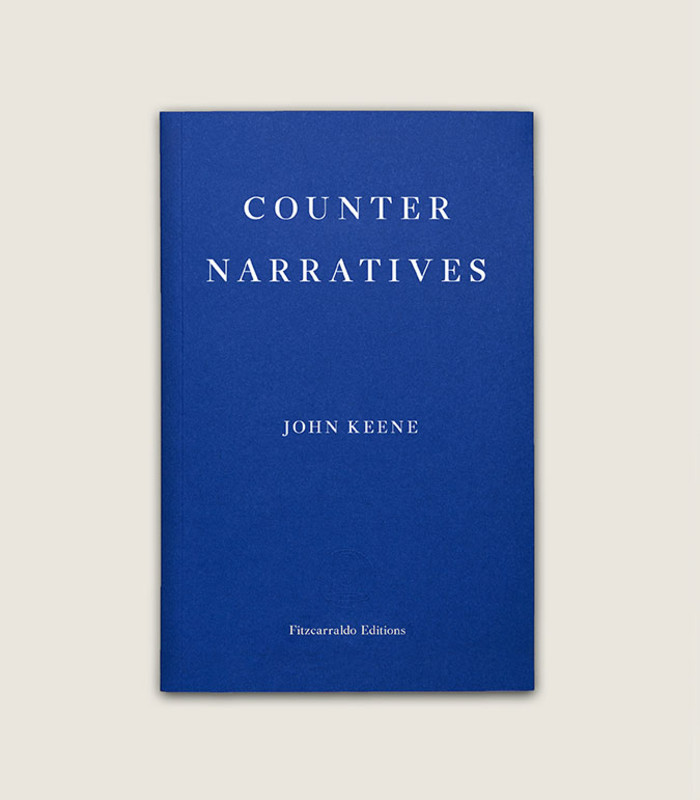
I want to offer my deep thanks to Nate West for his probing, laudatory review of Counternarratives, which is now up at the arts and letters site Music & Literature. His reading, which opens with a discussion of the contemporary cleavage among writers between those who adhere to a conception that the bourgeois imagination is sufficient (Jonathan Franzen, for example), and others who believe in the necessity of confronting, through a variety of formal and stylistic means, the effects of history and politics (the late Edouard Levé, W. G. Sebald, and I'd add, Roberto Bolaño), as a way of talking about how he believes Counternarratives addresses questions arising from this divide. I'll let J's Theaters dive into the review to find out where the critic takes this thread, but I want to note that West's thorough reading of the book, though not long, brims with insight, ultimately identifying something I have not really been asked about in any of the excellent reviews so far, which is to say, the political thread woven throughout all the stories.

Two quotes:

Keene’s Counternarratives offers a corrective to boilerplate that would forbid art from entering into the political. Its very title suggests that not only that the story has been told wrong, not only that it is not enough to tell other stories to be placed in their appropriate box (African-American, Post-Colonial) and thereby neutralized before being passed on to readers as ersatz probity while the real economic and political conditions that perpetuate injustice grind on unaffected; but rather that, for literature to continue to fulfill its vocation, the record has to be set straight. The political is not imposed on these tales from above; instead, a full account of the character’ life histories cannot be given without recourse to the political. Even their names are imbued with relations of power

and

Throughout the book, Keene plays with the possibilities of his title: Counternarratives serves as the heading for the first group of stories, Encounternarratives the second. The final section, Counternarrative, implies a more conceptual approach—the opposition to narrative, or the narrative that exists solely by opposition. It consists of a single story, Lions. In a conversation between a dictator and his muffled victim, the easy continuity between ideology and demagoguery and the inexhaustible lure of corruption come to life in a cell that could equally lie in Zimbabwe, in Uganda, or in Equatorial Guinea. The two figures speak of their youthful idealism, their yen for Fanon and Amilcar Cabral; of the depraved luxury of power and rapine; of boyhood love incompatible with the struggle for dominance; of what might have been, had Africa been untouched by Western hands.

Do check it out, and many thanks to Music & Literature!

Monday, February 03, 2014

New Books: Poetry & Translation

A number of new books now grace my desk, so here is a little information on several that I have had a hand in. I'll begin with Rodney Gomez's Mouth Filled with Night, the second winner of the Drinking Gourd Poetry Chapbook Prize, a national honor given to an emerging poet of color, resulting in a beautiful chapbook published by Northwestern University Press. During my final year and a half at Northwestern, I served on the planning committee and as a judge for the inaugural prize, when a committee of poets and literary scholars awarded to Kristiana Rae Colón, for her striking, powerful book of poems, Promised Instruments.

Before I left, I again participated on jury that selected Rodney Gomez's vivid, moving poems for this year's prize. As the images below show, these are not just impressive first literary sallies, but beautiful books in themselves, and I highly recommend both, as well as eminent poet and Northwestern professor Ed Roberson's Closest Pronunciation, which was also published, as a volume by a senior poet, in conjunction with the contest. Since I left Northwestern I am no longer involved in the Drinking Gourd Poetry Chapbook contest, but I wish the winners my heartiest congratulations, and the prize itself, which introduces the work of writers who might otherwise see publication by such a distinguished press to a wide audience, the very best.

Rodney Gomez's Mouth Filled with Night (2014)
Kristiana Rae Colón's Promised Instruments (2012)
Ed Roberson's Closest Pronunciation (2012)
***
During the period that I was moving back to New Jersey, I began to become involved in helping to launch another wonderful, invaluable book publishing project, The African Poetry Book Series, one component of the African Poetry Book Fund, which the multitalented, prodigious and visionary poet and critic Kwame Dawes helms, at the University of Nebraska. Its mission, to quote the APBF website is as follows:

The African Poetry Book Fund promotes and advances the development and publication of the poetic arts through its book series, contests, workshops, and seminars and through its collaborations with publishers, festivals, booking agents, colleges, universities, conferences and all other entities that share an interest in the poetic arts of Africa. The Fund is committed to seeking the resources to support this mission and to ensure that all its efforts are carried out with excellence.

The Fund will, through the Series and other projects, promote the writing and publication of African poetry through an international complex of additional collaborations and partnerships. The Fund and its partners will offer support for seminars, workshops and other publishing opportunities for African poets.

The other APBF editorial board members include Chris Abani, Matthew Shenoda, Gabeba Baderoon, and Bernadine Evaristo. Distinguished figures from the worlds of literature, business and publishing fill the Advisory Board.

Among the first books the APBF will publish, two are now in print: the winner of the first Sillerman First Book Prize for African Poets, which is Kenyan poet Clifton Gachagua's wry, ever-fresh and compelling Madman at Kilifi, and the great, late Ghanaian poet, novelist, teacher and mentor Kofi Awoonor's The Promise of Hope: New and Selected Poems, 1964-2013, which was in process before his tragic death last fall at the Westgate Towers in Kenya, and which serves as a fine tribute to his extensive poetic gifts and legacy. Both books, published by the University of Nebraska Press, will officially reach bookstores on March 4, 2014, but you can put your orders in now and receive them as soon as they appear. More APBF books are on the horizon, so check the APBF site to see when they will appear.

Clifton Gachagua's Madman at Kilifi and
Kofi Awoonor's The Promise of Hope: New
and Selected Poems, 1964-2013

***

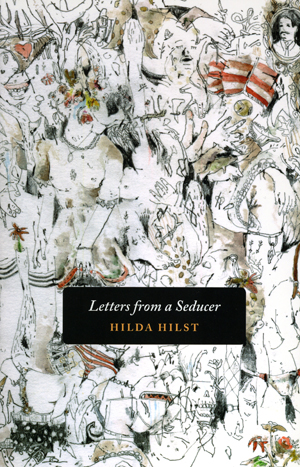
Finally, but not least, a year's work has now achieved fruition with the official release, as of today, of Brazilian writer Hilda Hilst's 1991 masterpiece Letters from a Seducer, which I translated into English last year, working closely with Brazilian publisher A Bolha Editora and its editors, Rachel Gontijo Araújo and Stephanie Sauer (now no longer with the house), and US publisher Nightboat Books and its head, Stephen Motika, who have jointly released the volume pictured below. You can purchase a copy directly from University Presses of New England, who distribute Nightboat's books, or from one of the many online bookstores. Or you can check your local bookstore and if they don't have a copy in-store, urge them to order one or some. I will say only that this text of Hilst's isn't for the faint of heart, just as it wasn't in the original Portuguese, but if you looking for a book that truly charts a distinctive path in late 20th century literature, with a heady dose of trangressive sex, literary intertextuality, meta-critique of writing, and textual depth and music, as well as humor, that could give William S. Burroughs or Kathy Acker runs for their money, Hilst's Letters from a Seducer should be in your hands, pronto.

Hilda Hilst's Letters from a Seducer

Tuesday, January 29, 2013

Drinking Gourd Chapbook Prize Launch + Clifton Gachagua Wins Sillerman First Book Prize

For those in Chicago, a wonderful event I've been involved with that you don't want to miss:

The Drinking Gourd Chapbook Poetry Prize Launch is this Thursday, January 31st at 7:00 p.m.. We will host an evening of poetry, song, and dance at The Poetry Foundation's auditorium (61 W. Superior St., Chicago) to celebrate our first annual Drinking Gourd Chapbook Poetry Prize for emerging poets of color. Kristiana Rae Colón (our prizewinner) and renowned poet Ed Roberson will read from their new chapbooks, entitled promised instruments and Closest Pronunciation. Their readings will be punctuated by a vocal performance of songs from the tradition of African American spirituals by Timothy McNair, bass at the Bienen School of Music, and original dance choreographed by Devin Buchanan from Giordano Dance Chicago.  The event (like all our events) is free and open to the public.

______________________
Ed Roberson, Distinguished Artist in Residence, taught from 1990-2003 at Rutgers University, and from 2004-2006 at Columbia College in Chicago. He was the recipient of the Shelley Memorial Award from the Poetry Society of America in 2008, and was one of three writers honored at the recent Literature, Culture, & Critique conference, organized by Callaloo magazine.Roberson is the author of To See the Earth Before the End of the World (2010); The New Wing of the Labyrinth (2009); City Eclogue (2006); Atmosphere Conditions, winner of the 2000 National Poetry Award series; Just In: Word of Navigational Change (1998); Voices Cast Out to Talk Us In, winner of the 1994 Iowa Poetry Prize; as well as earlier books, including Lucid Interval as Integral Music (1984); Etai-Eken (1975); and When Thy King Is a Boy (1970).

Kristiana Rae Colón is a poet, playwright, actor, and educator living in Chicago. She has been featured on the HBO television series Def Poetry Jam and on WBEZ’s Chicago Public Media. Her work has been nominated for a Pushcart Prize honoring the best writing published in small presses, and it has been anthologized in Not a Muse (2009), Best of the Web 2010, and the upcoming collection Chorus: A Literary (Re) Mixtape, an anthology of poetry by young people edited by Saul Williams and Dufflyn Lammers.

Devin Buchanan is a dancer with Giordano Dance Chicago. Trained at The Ailey School in New York City in a variety of dance techniques, including Horton, Devin also created "Winter’s Bleu" and "Do You Trust Your Friends," works that were performed by his colleagues in The Ailey School’s "Global Harmony" and "Fall Fest." In May 2010, he was accepted into "The Fraulein Maria Project," which gave him the chance to continue his work in modern dance and tour the USA. This is Devin’s second season with GDC.

Timothy McNair is a vocalist and Eckstein scholar at Northwestern's Bienen School of Music. He began his acquaintance with music through his studies of saxophone and double reed instrument, but began singing in the choir at the age of 17. He has studied with Mezzo-soprano, Victoria Livengood as a vocal major at East Carolina University and received further training at the University of North Carolina School for the Arts with Dr. Marilyn Taylor, where he was the 2008 University of North Carolina Fletcher Scholar.

***

Clifton Gachagua
Also, another wonderful project I'm delighted to have been involved with has resulted in a wonderful book of poetry that will soon be available for readers:

Kenyan poet Clifton Gachagua’s manuscript Madman at Kilifi has been selected by the African Poetry Book Fund & Series for the Sillerman First Book Prize for African Poets. As the winner of the First Book Prize, Gachagua’s Madman at Kilifi will be among one of the four books to be published by the African Poetry Book Series in 2014.

The Sillerman First Book Prize for African Poets is awarded to African poets who have not previously published a book-length collection. The prize includes a $1000 cash award and publication with the University of Nebraska Press and Amalion Publishing in Senegal.

Kwame Dawes, Series Editor of the African Poetry Book Fund & Series, notes that Madman at Kilifi was selected because, “Above all, there is a distinctive voice here. This is a difficult trait to define, but when it emerges as it does here, it is striking for its originality. There is a fresh and adventurous intelligence and delight in Gachagua’s poems. The judges are all thrilled with this manuscript and we are expecting great things from Clifton Gachagua."

Clifton Gachagua is a writer, screenwriter, and filmmaker based in his native city of Nairobi, Kenya. Gachagua’s poetry has appeared in Kwani? 06, Saraba, and on his blog “The Drums of Shostakovich.” His prose has appeared in the online journal Storymoja, the anthology AfroSF, and a collection of science fiction writing from Africa. He has recently completed a novel and is currently developing a French-Nigerian feature-length film. He holds a bachelor’s degree in biomedical sciences.

The Sillerman First Book Prize is named after philanthropists Laura and Robert F. X. Sillerman whose contributions have endowed the establishment of the African Poetry Book Fund & Series. The African Poetry Book Fund & Series promotes the writing and publication of African poetry through an international complex of collaborations and partnerships. The Fund and its partners offer support for seminars, workshops, and other publishing opportunities for African poets.

The University of Nebraska-Lincoln’s literary journal Prairie Schooner manages the annual Sillerman First Book Prize for African Poets as a partner in the African Poetry Book Fund & Series.

In addition to Dawes, the Series Editor, who is of Ghanaian birth, the editorial board for the African First Book Fund is comprised of the South African poet Gabeba Baderoon, the American novelist John Keene, the Nigerian poet and novelist Chris Abani, the Egyptian-American poet Matthew Shenoda, and Bernardine Evaristo, award-winning novelist and poet from the UK.

Wednesday, July 25, 2012

Updates + Congratulations & News

These summer days are zooming by. Although I haven't even been back in New Jersey for a full month, it feels almost or even double that long.  As I mentioned in a post a few weeks back I'd begun to set up my new office, and now it's much further along. I still need to figure out how to get into half of my desk, which appears to be locked from the inside (?), get a few office supplies, and hang more artwork (including a vèvè of La Sirène, who kept watch over my office in Evanston), but things are proceeding pretty well.

The office, coming into order
The office, now mostly in order


The books, in order on the shelves I have several DUPLICATES of books, so I am again putting out a call to find out if any J's Theater readers would like a copy of one of them. If not, I will donate them.

The books are:

Ray Bradbury, Fahrenheit 451
Raymond Carver, Where I'm Calling From
Luis Cernuda, Selected Poems (translated by Reginald Gibbons)
Therese Hak Kyung Cha, Dictée
Jason Epstein, The Book Business
William Faulkner, The Sound and the Fury
Allen Ginsberg, Howl
Thomas Glave, Whose Song? and Other Stories
Nalo Hopkinson, Midnight Robber
Tyehimba Jess, leadbelly
Adrian C. Louis, Bone & Juice
Michael David Lucas, The Oracle of Stamboul (my former undergraduate student!)
Claudia Rankine, Don't Let Me Be Lonely
Adrienne Rich, Diving Into the Wreck
Nathanaël West, Miss Lonelyhearts & The Day of the Locust (2 copies)

A certain very dear person to me was quite skeptical that Newark has a subway system--it does, called the Newark Light Rail, and comprising the old Newark City Subway and an extended light rail component--so here are a few images of it and the Rutgers University-Newark campus. From Newark's Penn Station to the campus, it's 2 stops, or 70 cents. I was a bit incredulous at first at this price, but yes, it's cheaper to go back and forth to campus on Newark's subway than either one way on the PATH, the Hudson-Bergen Light Rail or New York's MTA. The trains are almost identical to the light rail trains that run along the eastern spine of Hudson and Bergen counties, from Bayonne, through Jersey City, to Weehawken. But they do slip underground at first, before ascending to road grade. One line stays in Newark, I believe, and the other runs all the way to Bloomfield. Another line takes you to the now quite famous New Jersey Performing Arts Center, and also to the Bears and Eagles Riverfront Stadium.

The entrance to the Newark subway/lightrail station, in Newark's Penn Station
The entrance, at Newark's Penn Station

photo
A mural in the Newark Penn Station stop

Newark subway/light rail train rolling in
One of the trains, barreling the station

Washington St. subway station, Newark
The Washington St. station entrance, in University Heights

Looking up the hill, Rutgers Newark
On campus, looking up the hill, toward New Jersey Institute of Technology

University Heights, Newark
One of the directional signs, along the campus


***

Now, for a few announcements and congratulations. First, to Dr. Laura E. Passin, newly minted Ph.D., who successfully defended her dissertation "The Lyric in the Age of Theory: The Politics and Poetics of Confession in Contemporary Poetry." Smart, brimming with insight, covering a range of noteworthy poets in unexpected combinations, theoretical without ever turning to theory as a crutch, it is a work much like its author, an incredibly sharp and talented poet and budding scholar I've had the good fortune to get to know from the time she passed her oral exams with panache, on through all of her dedicated efforts on behalf of the Poetry and Poetics Colloquium and the poetry workshops the undergraduate students conducted with the students at Evanston Township High School, and it has been a particularly joy to serve on her thesis committee. Congratulations to Laura, now Dr. Passin, who has a great book on poetry with her dissertation, and a great future ahead of her!
Congratulations also to Nathanaël, someone whose work and works in the world never fail to astonish me, who received a PEN American Center Translation Fund Grant, to support her translation of French writer Hervé Guibert's Mausoleum for Lovers. According to the site, this work is "a posthumous collection of the private journals that the well-known novelist and AIDS activist kept from 1976-1991—a series of literary snapshots of the author’s various objects of desire and mourning and already a classic of French autobiography," and will be published by Nightboat Books.  The PEN blog even features a snippet of Nathanaël's translation.  Congratulations again to Nathanaël, and it goes without saying that I am looking forward to her translation of this work and--I'll say more later--another work she has translated, which will appear this fall.

I've been waiting for the starter's gun to sound and permit me to announce the winner of the first Drinking Gourd Chapbook Poetry Prize, sponsored by the Northwestern University Poetry and Poetics Colloquium in conjunction with the Northwestern University Press, and she is Kristiana Rae Colón! As a member of the inaugural committee of judges, I can attest to how her book of poems, promised instruments, crackled with spirit and soul, and demonstrated how craft can transform one's life and imagination into powerful, memorable poetry. The press will also publish a companion chapbook, Closest Pronunciation, by poet Ed Roberson, who will be writing the introduction to Kristiana's début, and it too is full of poems which show a poet at the height of his girts rendering everyday experiences into artfully cadenced, pitched lyric. The 2013 chapbook guidelines are open, so if you qualify, please submit your work!

And finally, in the July 20, 2012 New York Daily News, the ever-amazing Kwame Dawes discusses the newly established African Poetry Book Series, an exciting, multi-dimensional program under the auspices of the University of Nebraska-Lincoln’s African Poetry Book Fund, that will include books to be published beginning in January 2014, and more, and which I have been fortunate to have been involved with since its conception. Some very exciting titles are in the works, and as things develop I'll announce them here, but many thanks to Kwame and to all the other poets, writers, sponsors, as well as Nebraska-Lincoln, for making this happen!

Monday, March 17, 2008

Sunday Poetries (Congratulations to Ed Roberson, Marilyn Nelson in Evanston)

Let me extend my heartiest and most heartfelt congratulations to poet and colleague Ed Roberson, who has just been named the winner of the prestigious Shelley Memorial Award by the Poetry Society of America. The awardee is selected, according to the PSA's website, "with reference to genius and need." Previous recipients include many of the major figures in 2oth century American literature, including Marianne Moore, e. e. cummings, Robert Penn Warren, Elizabeth Bishop, Kenneth Rexroth, Robinson Jeffers, Anne Sexton, Adrienne Rich, John Ashbery, Galway Kinnell, Gwendolyn Brooks, Gary Snyder, Robert Duncan, Hayden Carruth, Mona Van Duyn, Ann Waldman, Jean Valentine, Thom Gunn, Michael Palmer, and Lyn Hejinian. Since Brooks received the award in 1975-76, a handful of African-American writers, including Etheridge Knight, Lucille Clifton, Angela Jackson, and Yusef Komunyakaa, have been so honored.

I've previously written about Ed and posted excerpts from his poetry on here, but I think it's always necessary to point out how singular and sustained in excellence his work of the last 40 years has been. When I think of his poems, what comes to mind is playful but continual questioning of the lyric, a deft weaving of the observed material world, often grounded in the scientific, with a distinctive, fractured, sometimes recursive metrics, a fragmentation arising out of poetics and politics, that often reaches me not only as poetry but as song. It is challenging, vital, necessary poetry, and it's great to know the PSA is honoring it, and Ed. He will receive his award later this spring, with this year's winner of the Frost Medal, Big Daddy Michael S. Harper.

›››

Yesterday afternoon I headed over to the Evanston Public Library to hear poet Marilyn Nelson read from her work. In conjunction with her reading, a group of children performed some of her poems from her award-winning volume Carver: A Life in Poems, which schoolchildren had performed earlier in the afternoon. I'd heard Marilyn read once or twice before, the last time at Cave Canem's 1oth Anniversary Celebration, in the fall of 2006 (was it that long ago?), but this was the first time I had the opportunity to immerse myself in her words, in her stories, in the work she's been doing, which is, I realized, directly in conversation with my own. Marilyn has been excavating and animating history, and in particular, African-American history, through her poetry for some time, but her recent books have focused specifically on figures both well known (Carver) and less well-known, like Venture Smith, an important African-American historical figure in East Haddam, Connecticut, where she makes her home; the eager young black girls of the Quaker Miss Crandall's school, in Canterbury, Connecticut (she wrote the eponymously titled, illustrated book, with fellow poet Elizabeth Alexander); and the International Sweethearts of Rhythm, a multiracial all-female swing band from Piney Woods, Mississippi, that traveled all over the country during the pre and early post-World War II period (1937-1950).

In much of her recent work, Marilyn has turned to established and fixed forms and traditional meter, but the surprising images and turns of phrase that characterized the highly praised poems in free verse of her early career remain, and her rhymes, which she handles so skillfully, do many things at once, arresting the ear with music and figuration, advancing the poems' narratives and ideas, and grounding the verse in your mind so that you can hear the echoes even as she's begun to move to the next poem. I haven't taught the introductory poetry class, but if I ever do, I will use the sestina she read as a model of how form can work directly in the service of, by embodying, theme and idea.

It was a wonderful way to spend an afternoon, and I am looking forward to Marilyn's forthcoming books, The Freedom Business, and The International Sweethearts of Rhythm, which I believe may be out later this year. Afterwards, at the reception, I was able to meet her son, Jacob Wilkenfeld, and her daughter-in-law, Rita, who's from Brazil and now studying at the university, and then a host of Chicagoland writers (Toni Asante Lightfoot, Eliza Hamilton Abegunde Bispo de Jesus and her husband Andre Bispo de Jesus, Krista Franklin, Kelly Norman Ellis, Parneshia Jones), and visitors (Amanda Johnston) went out to break bread in Evanston.

I brought my camera for a change, and her are some photos:

Marilyn's son Jacob Wilkenfeld introduced her

Marilyn reading

Chicagoland folks breaking bread in Evanston (L-R: Eliza Hamilton Abegunde Bispo de Jesus, Toni Asante Lightfoot, Amanda Johnston, Kelly Norman Ellis, Naomi Ellis, Parneisha Jones, Jacob Wilkenfeld, Rita Wilkenfeld, two friends, Marilyn Nelson, Krista Franklin, and I)

Wednesday, October 31, 2007

Happy Halloween (Random Stuff)

Not much to report, just wooooooorrrrrrkkkkkkkk! But the quarter is halfway to its end, or at least I think it is. It feels like classes have been going for four months, not one and a few weeks. Things are sort of a blur. Nevertheless, yesterday I dropped by the Dittmar Gallery at the university's Norris Center to hear Fall visiting writer in residence Ed Roberson read his work. There was supposed to be an accompanist, but s/he wasn't able to make it, so Ed created his own music, starting out with new poems before reading a series of pieces of his collection City Eclogue, which I'd read before but which felt like revelations as he read them. (He'd read before at the university, several years ago, with Cecil Giscombe, but those were earlier poems.)

Among the stalagmites of books here in Chicago I cannot locate my copy (and none were for sale), but when I do, I'll post one of the poems that most struck me this reading, about a guy in a chemistry class Ed taught years ago. He had on mismatched shoes, which signified the loss of a friend to gun violence--and what Ed does with that premise is remarkable. The thing I realized hearing him read these poems was how much life they took on through his voice; not that he performed them, per se, but his inflections and emphases made me want to return to the collection and read it more slowly, something I rarely have had time to do over the last half-decade. A colleague suggested a few years ago that everyone ought to read slowly, and I thought to myself, but how on earth then is one to keep up with the flood--literal, not figurative--of required reading, let alone everything necessary to be even passably current with contemporary literature, art, scholarship, and everything else? But back to Ed's reading, here are a few photos I took with my new phone. (I had to junk the old one, since it got to the point where my conversations with everyone were sounding--to them--like I was 20 leagues under the sea.) Aren't they much better? Maybe several years of carrying the other phone around in my pocket, with keys, coins and everything else, just scratched up its lens too badly, though I don't think it ever had a particularly great camera.

Ed reading his poems

Ed answering questions--he announced at the reading that he'd been elected to the Gwendolyn Brooks Writers Conference Hall of Fame.

***

At lunch yesterday one colleague asked another about my blog, and it was described as a spot where I posted translations of work that hasn't been translated elsewhere. In part that's true, though I haven't posted any translations in a while. But I recently mentioned to Reggie that some of my translations of stories from Brazilian writer Jean Wyllys's collection Aflitos are going to be published next year (spring?), and as I told him a while back, based in part on some of the translations of Alain Mabanckou's poems that appeared on here a while ago, I was invited to provide translations that were used, I believe, at the PEN International Writing Festival earlier this year. This got me thinking about how this great it is to have this resource to post the translations, even in their rawest form, and perhaps, when I have some free time, I can post some more. I may be wrong, but I don't think lots of people are translating a lot of the great non-English language work out there from across the Black diasporic literary world, whether creative or critical, so I feel that in addition to be an enduring interest of mine, it's also an important, necessary and vital form of intellectual engagement.

***

On Flux, a microblurb about Seismosis!

Saturday, October 20, 2007

Black Arts Movement in Chicago + Jordan & Jess at Poetry Center

This fall, the university has been especially lucky to have Ed Roberson as the Visiting Writer in Residence at the Center for Writing Arts, an autonomous division headed up by my distinguished colleague, author Reg Gibbons. Ed's residency is a huge deal, as the Center infrequently invites poets, and in the past (before Reg's tenure) seldom (never?) had a writer of color for a full quarter. (Mary Ann Mohanraj will be in residence in the spring.)

Ed, whom I think of as a sage, is teaching two classes, and as part of his visit and the courses, he planned a one-day conference on the Black Arts Movement in the Broader Legacy of the Civil Rights Movement, with special emphasis on its history in Chicago. The event brought three of the central figures from the Chicago branch of that movement, writers Angela Jackson, Carolyn Rogers, and Sterling Plumpp, to campus to talk about their experiences as poets and activists. (This was pretty significant in that Chicago, where the Organization of Black American Culture (OBAC), was established in 1966, was an important center for Black Arts poetry and the Black Power movement--one of the key Black Panthers branches was in the city; Fred Hampton and Mark Clark were assassinated in a joint FBI Cointelpro-Chicago Police Department assault in 1969--and yet it is often passed over in scholarly and artistic discussions on this topic.) In addition, Ed invited his friend Sala Udin, who took many of the ideas he'd gained in the movement back to his hometown of Pittsburgh, where he's been an actor in the plays of his friend and fellow poet, and later one of the greatest American playwrights, August Wilson, while also serving as a city councilor and arts and community activist. One of his successes is Pittsburgh's August Wilson Center for African American Culture.

Hearing the speakers talk about the history of the movement in Chicago filled in so many gaps in my knowledge. All spoke of the crucial roles that Gwendolyn Brooks and Hoyt Fuller played in encouraging artists, artmaking and activism. Sterling Plumpp's comments about his friendship and work with Dennis Brutus, then teaching at the university, and the relationship between African-American and South African poets, who were battling for freedom and an end to the oppressive apartheid system, was revelatory. He spoke at length about the intricacies of Left-politics and how these played a role in the positions people took, both in terms of the Black Arts movement members and the African National Congress. (I sometimes have to remind myself that at one point, Brutus, Jan Carew, and Leon Forrest all taught at the university--but simultaneously? I think of this constellation of Black creative writer-intellectuals with considerable awe.) Plumpp also noted that he wished he and others had taken on the issues of gender and sexism, and, as he put, "gender and sexual choice" (I think I transcribed that right) more forcefully. This led one of Ed's students, who prepared an excellent overview of the movement, to ask the panelists about their feelings on Fuller, who was gay, and despite the extremely problematic nature of the term "sexual choice," they all argued there was no hostility towards Fuller (who, Jackson noted, most did not know was gay), nor homophobia among any of them.

Concluding the event, my colleague Alex Weheliye gave a brief yet thorough response to the talks and panel discussion.

Ed Roberson introducing the speakers (Sam Greenlee and Sterling Plumpp are the two poets in the foreground)

Angela Jackson, offering a history lesson on the Black Arts Movement in Chicago

Carolyn Rogers, who Ed characterized as a "metaphysical" poet, talking about her experiences with the local poets

Ed, and the panelists (Rogers, Salah Udin of Pittsburgh, Jackson, Plumpp)

My colleague Alex Weheliye, who gave a fitting response

***

In addition to slipping in briefly to today's late afternoon conversation between Haki Madhubuti and Sonia Sanchez, whom I could listen to for hours (and who was one of the best workshop leaders I ever had) at Chicago State University's annual Gwendolyn Brooks Conference, I went to hear two poets I admire tremendously, A. Van Jordan and Tyehimba Jess, present their work this past Wednesday at the Poetry Center of Chicago's reading down at the School of the Art Institute of Chicago. It was a rainy night, I'd had a long day, and it took forever to get downtown from Evanston, and parking is scarce downtown, but I did get to hear Van and spend some time with both poets, as well as Tasha Tarpley and Toni, who brightens any room she enters. Cue the photos:

Van on stage, Jess in the foreground

Van answering a question from Francesco of the Poetry Center

Jess and Toni

Van signing books