Showing posts with label Harlem Renaissance. Show all posts

Thursday, February 22, 2018

New Alain Locke Biography + Richard T. Greener Honored at University of South Carolina

When most people think of the Harlem Renaissance, they probably summon the names of its major literary and visual atists--Langston Hughes, Zora Neale Hurston, Claude McKay, Aaron Douglas, etc.--and even may note figures who were linked to but critical of some of its aspects, like W. E. B. DuBois. They also may recall the cultural shift under which it unfolded, "The New Negro Movement." But they may not know the name of the man who popularized the term "The New Negro," in a famous essay and in, perhaps most lastingly, in the title of his 1925 famous anthology, and who provided the intellectual foundation, and cultivated the networks out of which the Harlem Renaissance developed.

That man was Alain Leroy Locke (1885-1954), a Philadelphia native who attended Harvard College (AB 1907), became the first African American Rhodes Scholar, studied at the University of Berlin, and subsequently returned to Harvard to receive his Ph.D. in philosophy in 1918. Black, gay, physically unimposing, an adherent of the Bahá'í faith, and a gifted and productive thinker and writer, Locke not only provided the intellectual framework for the New Negro Movement and the Harlem Renaissance, through his championing of Black art and culture, and the idea of the Diaspora and its links to Africa, but he taught at Howard University from 1918 to 1925, when he was temporarily dismissed for teaching a course on race relations, and then, after reinstatement in 1928, until 1953, training generations of students, including Toni Morrison.

Jeffrey C. Stewart, a professor in the Department of Black Studies at University of California-Santa Barbara has just published a new, thorough biography of Locke, a scholar, critic, and cultural worker, situating him with the intellectual, social, political, and cultural contexts in which he lived. Titled The New Negro: The Life of Alain Locke (Oxford University Press, 2018), Stewart's study draws upon previously unavailable primary source material and interviews with Locke's colleagues, friends and associates. Divided into three sections, the first focusing on Locke's youth and eduction, the second on Locke's involvement with the Harlem Renaissance and his advancement of ideas of Black beauty and aesthetics, and the third exploring the latter portion of Locke's rich and fascinating life, Stewart's exploration of Locke's life and mind looks like it also will provide a richer illumination of the intellectual foundations of and complex relationships among members of the Harlem Renaissance and its many cultural legacies.

I have ordered a copy of Stewart's biography, which has received starred reviews from Kirkus and Booklist and a laudatory review in The New York Times, and am looking forward to reading it. (If I can, I may post a review on here.) I especially enjoyed listening to Professor Stewart discuss it on Midday in New York; you can hear that podcast here. You can also read Eugene Holley's excellent overview of Stewart's book on Publishers Weekly's website. Stewart's previous work includes several edited volumes about Locke, as well as the biography Paul Robeson: Artist and Citizen and 1001 Things Everyone Should Know About African American History, a text that, like the Locke biography, strikes me as particularly appropriate for our current moment.

***

The unveiling of the Richard T. Greener
statue, University of South Carolina
(TheState.com © Tracy Glantz tglantz@thestate.com)

Nearly half a century before Alain Locke graduated from Harvard, the first African American to enroll and successful receive a Harvard College degree left his name on the university's rolls, and proceeded to a remarkable life that, like Locke's, is now almost completely forgotten. Richard T. Greener, whom I'd previously blogged about when a contractor discovered a trunk of his belongings in a run-down Chicago home, was that first graduate (A.B. 1870), and, as part of his extraordinary journey, received a law degree from the University of South Carolina in 1876, during that brief period of post-Civil War Reconstruction, which meant a brief interlude of integration. From 1873 to 1877, Greener served as a professor at South Carolina, becoming the first African American professor there, and, once Reconstruction ended and white retrenchment and segregation resumed their hold, he moved to Howard University, where he would serve as the dean of the law school, before eventually entering government service as an agent in Vladivostok, Russia.

Democratic Congressman James Clyburn, at the unveiling
(TheState.com © Tracy Glantz tglantz@thestate.com)
Yesterday, the University of South Carolina unveiled a 9-foot tall statue honoring Greener as one its pioneering figures. Speakers, including Democratic Congressman and Minority Whip James Clyburn, praised his numerous contributions during his brief stay at the university, which included serving as professor of philosophy, while also teaching the classics, mathematics, and constitutional history and serving as USC's first librarian. The statue, by Jon Hair, stands next to the Thomas Cooper Library, which he led. While teaching Greener simultaneously enrolled in South Carolina's law school, graduating with honors, and was admitted to South Carolina's bar in 1876 and the DC bar in 1877. An advocate for racial equality, journalist, and secondary school educator as well, Greener later moved to DC, beginning his career at Howard in 1879, where he taught until 1881.

Evelyn Bausman, a grand-daughter
of Richard T. Greener, poses with
a statue of Greener that was
unveiled at The University of South Carolina.
(TheState.com © Tracy Glantz tglantz@thestate.com)

He would go on to open his own law practice, and later, after serving as US Consul to Bombay, India, became the first black US diplomat to a predominantly white country and the first American to hold his Russian post. Throughout, Greener kept writing and advocating on behalf of African Americans; ironically, his daughter, Belle da Costa Greene, would pass as a white woman in New York, and gained the confidence of and great influence with banker J. P. Morgan, becoming his chief manuscript advisor and eventually the first director of the Morgan Library. At a time when US municipalities, public and private institutions, and corporations are rethinking monuments to problematic historical figures and eras, like the Confederacy, the USC unveiling offers and enshrines a powerful and necessary counternarrative.

Richard T. Greener
(photo courtesy of Harvard
University Library)

In 2001, while celebrating its centenary, USC commissioned and staged a play, The White Problem, by Jon Tuttle, about Greener's time on campus. Then in 2013, the centenary of Greener's arrival at South Carolina, the university honored him by reintroducing him to the campus, complete with a ceremony (see below) on his behalf. Among the events to celebrate him, there was an official presentation of his law diploma and law license, which USC purchased from the Chicago trove. As for his first alma mater, Harvard installed a portrait of Greener in   its Annenberg Hall, located in its famous Memorial Hall (opened the year of Greener's graduation). In addition, the Cambridge Historical Commission mounted a plaque commemorating him on College House, in Harvard Square, at 1430 Massachusetts Avenue. You can learn more about Greener's life in Katherine Reynolds Chaddock's biography Uncompromising Activist: Richard Greener, First Black Graduate of Harvard College (Johns Hopkins, 2017).

Sunday, September 21, 2014

Alain Locke's Proper Burial + Poem

Alain Locke,
by Winold Reiss, c. 1921
In 1954, Alain Leroy Locke (b. 1885), one of the chief intellectual forebears and anchors of the Harlem Renaissance, an important theoretician of philosophical pragmatism, and the author who coined the term "New Negro," which was the title of his landmark, eponymous anthology and essay, announcing the arrival of a new artistic, social and cultural movement, died in New York City. For many decades Locke had been Professor and Chair of Philosophy at Howard University, from which he was temporarily dismissed for three years in the 1920s, before being reinstated, for teaching a course on race relations. It was at Howard that he taught Toni Morrison and many other major African American artists and other cultural and political figures.

A native of Philadelphia, Locke had graduated from Harvard College with highest honors and been elected to Phi Beta Kappa, and in 1907 became the first African American recipient of a Rhodes Scholarship, allowing him to study at University of Oxford's Hertford College, after which he studied at the University of Berlin, before returning to Harvard to receive his Ph.D. in philosophy in 1918. All of the important figures in the Harlem Renaissance knew and interacted with Locke; for some, like Langston Hughes, who would study at Howard in part through Locke's urging, he played a key role in cultivating their intellectual development. Like a number of his fellow Harlem Renaissance peers, Locke was also gay, though this was not widely known beyond his close associates and other Harlem Renaissance figures until after his death.

The container that held Locke's ashes
(Astrid Riecken/Washington Post)
Despite his stature, upon his death and after his cremation, his ashes were not interred anywhere, but passed into the custody of his estate executor, dear friend and fellow educator, Arthur Huff Fauset, half-brother of Harlem Renaissance author Jesse Redmon Fauset. After Fauset's death in 1983, his 91-year-old niece, Conchita Porter Morison, received the cremated remains and she contacted her friend, Sadie Mitchell, who also knew Locke and Arthur Fauset. Mitchell would serve as an "intermediary" with Locke's longtime employer to secure a place for the late philosopher's remains. When Howard coordinator of music history J. Weldon Norris traveled to Philadelphia in the mid-1990s, Mitchell passed on the ashes to him. From Norris the remains went to Howard's renowned archives, the Moorland Spingarn Research Center, where Locke's papers are stored, and then on to the W. Montague Cobb Research Laboratory, where they were repackaged in a simple urn and placed in a locked safe by then director Mark Mack.

Finally, as Frances Stead Sellers reported in a Washington Post article on September 12, Locke's ashes were buried in Capitol Hill Congressional Cemetery, in a September 13 ceremony funded by African-American Rhodes Scholars, of whom there are over six dozen now. This tribute and proper memorial, with an engraved granite headstone, arose during planning by the Association of American Rhodes Scholars, in conjunction with Howard, for a symposium to honor the centenary of Locke's Rhodes Scholarship. In the process of conceiving the symposium, the Association learned of the status and location of Locke's remains, and through the financial support of Black Rhodes Scholars, he is now properly laid to rest.

According to Stead Seller's article, his headstone appears as follows:
Alain Leroy Locke, it reads, 1885-1954: “Herald of the Harlem Renaissance, Exponent of Cultural Pluralism.” On the reverse side are four symbols: a nine-pointed Baha’i star representing the religion that emphasizes the spiritual unity of humankind; a Zimbabwe bird, the emblem of the African country formerly called Rhodesia, which the American Rhodes community adopted; a lambda, symbolizing gay and lesbian rights; and Phi Beta Sigma, the fraternity Locke joined at Howard.

Alain Locke, by Betsy
Graves Reyneau
Some years ago, I wrote a short poem for Locke that I've never published, but in his honor, I'm posting it here. He was, as the Washington Post article notes, and as Toni Morrison described in her public conversation with Ishmael Reed at Margaret and Quincy Troupe's Harlem Arts Salon last year, utterly "fastidious,"  so I hope the poem possesses some of the spirit of his rigor too. He was an extraordinary figure, one of so many of his time and era, who have made so much that followed him possible, in this country and beyond. I thus share with you "Alain Locke at Stoughton Hall" (Stoughton is one of the freshman dorms at Harvard, Sever is the home of Harvard's philosophy department, William Henry Lewis was one the college's first and black football stars, William Monroe Trotter one of its famous black activist alumni. Du Bois needs no introduction).

ALAIN LOCKE IN STOUGHTON HALL
 
Between their theses he writes his own.
 
Between "the general theory of value"
 
and "beauty consisting in ideal forms"
 
he pens fresh hypotheses. Back, past
 
Pliny and Mary Locke to the first ones,
 
speechless and staggering sick with sea
 
and living memories of sour-sour, gold-
 
weights, delta deities ghosting

into mastlines. Dread of these forlorn

shores. Dread of salty tongues' renaming
 
them, their own names buried under winter-

ed paving stones. In the spirits' graveless

inquietude, the cries of two centuries'

mute nights, he has grasped his nation's
 
true history: resistance and the cold-
 
hearted ability to make oneself
 
anew remain his true inheritance.
 
***
           
His journey from colored Philadelphia
 
to the Square: the hero's solitary
 
trajectory.  Within the dreamsongs
 
guiding him out of yesterday's

sorrows furl maps of righteousness
 
and Quaker industry. Here he treads
 
as he did through the schoolyards
 
and alleyways of fists, brick valleys
 
of indifference. Tiny warrior,
 
he holds little fear of being the queer
 
exception defying local customs,
 
minister of his own natural law.
 
As for fools and impolitic white
 
people, he suffers them coolly as any
 
politico, performing the acrobatics
 
by which he balances his days
 
with "master minds" in Sever, nights
 
at the library, the Boylston laboratories.
 
Someday some will claim they knew
 
him. Some days he thinks they'll recall him
 
more swiftly than the footballer Lewis,
 
the agile scholar and gem-eyed DuBois,
 
the Boston-born rebel Trotter.
 
***


You are the emblem of Negro genius.
 
You are the affirmation of the plural cause.
 
You are the angel gliding between histories
 
you must use and ones that silence you,
 
man, African, American, Harvardian, human.

Amid this desert of touch, threadbare

society of friends who can never

truly comprehend or love you,

amid the arid propositions of Kant,
 
Plato and Aristotle, Hegel and Santayana,
 
which once might have been your sextants,
 
you chart your passage into the bay
 
of your people’s stories, voyage

of a mind and vision honed.

Sunday now, and distant bells summon

hungry souls. Freedom is sailing
 
by the compass of possibility, fearless,
 
even if with no ship or sea at all.
 
You will stay and write until
 
your heart runs out.  You will take this
 
dark knowledge and spread it.


Copyright © John Keene, 2014. All rights reserved.

Tuesday, September 18, 2012

Hilda Hilst Book Launch This Saturday + Scholars Find, Authenticate Claude McKay Novel

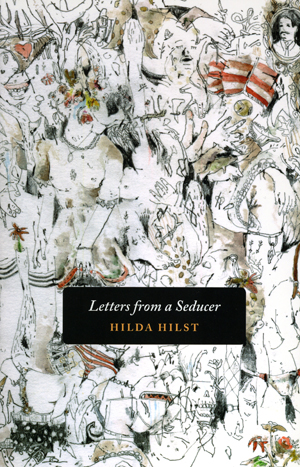
A few weeks back, I mentioned the imminent publication of The Obscene Madame D, the first published English translation of fiction by the late, extraordinary Brazilian novelist Hilda Hilst (1930-2004).

Two presses, Nightboat Books in the US, and A Bolha Editora in Brazil, are jointly issuing poet Nathanaël's superb translation, in collaboration with Brazilian poet and publisher Rachel Gontijo Araújo, of Hilst's novel,  which is now available. I'm delighted to have had a small part in the project through my introduction to the book, and thereby to Hilst's work.

For all who are in or around New York this weekend, there'll be a book launch on Saturday evening, with a reading and panel discussion, by Nathanaël, Rachel, Bruno Carvalho, and me, at Poets House, one of the most beautiful venues for poetry and literature in the city. If you're free, please come by!

BOOK LAUNCH AND READING


The Obsence Madame D by Hilda Hilst
Translated by Nathanaël in collaboration with Rachel Gontijo Araújo
Introduction by John Keene

The first English-language translation by the Brazilian writer Hilda Hilst (1930-2004).

Reading and panel discussion with
with Rachel Gontijo Araújo, Bruno Carvalho, John Keene, and Nathanaël

To be followed by reception and book sale
Saturday, September 22, 6:00pm
Poets House, 10 River Terrace, New York City

This is made possible through Poets House's Literary Partner Program.

***

Claude McKay
One of the most exciting pieces of news to cross the academic wires recently was the announcement that Columbia University doctoral student in English and Comparative Literature Jean-Christophe Cloutier, had found in the university's archives an unpublished novel by the late Harlem Renaissance writer Claude McKay (1889-1948), and then, with his advisor, professor Brent Hayes Edwards, authenticated that it was in fact an original work by McKay, a major figure in early 20th century African-American, Caribbean and African-Diasporic writing.

The 1941 satirical novel, Amiable with Big Teeth: A Novel of the Love Affair Between the Communists and the Poor Black Sheep of Harlem, is set in 1936, marking it as a work from the latter years of the Harlem Renaissance, and according to Felicia Lee's report this past weekend in The New York Times, Cloutier and Edwards have received permission to publish the novel, for which they will write an introduction. As Lee tells the story, Cloutier's discovery came about during the summer of 2009 when he was working as an intern in Columbia's Rare Book and Manuscript Library, and spotted the nearly 300-page bound manuscript in boxes of material donated by Samuel Roth, a Columbia alumnus and former literary publisher, of once-scandalous texts, in his own right.

Cloutier & Edwards (Robert Caplin
for the New York Times)
Cloutier, saw the McKay's name and the title, and found two letters between McKay and Roth, which suggested to him that this might be an important find. He took the materials to his advisor, Professor Edwards, one of the most distinguished figures in contemporary African Diasporic literary and cultural criticism, and they studied the manuscript, noting the concurrences, in theme and style, down to particular word choices, between it and McKay's other works of fiction, which include Banjo (my favorite of his books) and Home to Harlem, one of his best known works. 

They also found a wealth of other archival material that underpinned their supposition about the work's authenticity, including letters between McKay and the writer and critic Max Eastman in which Eastman quotes from the novel, and further correspondence indicating that the publisher E. P. Dutton had contracted with McKay to write Amiable with Big Teeth.  The novel, Lee says, portrays important aspects of the 1930s Harlem experience, among them the experiences of black participants in the Communist Party, as well as other portraits of the rich and vibrant lifeworld of that moment. Lee quotes Edwards saying of Amiable that it will perhaps eventually be viewed "as the key political novel of the black intellectual life in New York in the late 1930s." Thanks to him, and to the budding scholar (who has all but written his ticket to a job and a career), the still dissertating but soon to be Dr.--and Prof.--Cloutier. And eventually, we all will be able to read what sounds like a late masterpiece by McKay.

Sunday, March 09, 2008

The Wire: Finis + Travels & Brain Camp

The Wire: is it really over? What a finale! I know folks who haven't yet seen all the prior four seasons, so I'll keep my thoughts to a minimum, but what a series of climaxes and denouements, with narrative braiding and unexpected twists superior to many a novel out there. Another of the strongest and most appealing aspects of the show for me was the way that David Simon, his writers and producers, and his cast, maintained a consistency and depth of characterization over multiple seasons; the only character whose motivation was least clear to me this season was Kima, which I attribute to the writers' inability to find the right character to take the potentially devastating steps she did. Who else could have done it? The characterizations of the newsroom people, save Gus Johnson, were also shallower than what Simon and company served up in previous seasons, and I attributed this to the lack of narrative space and time to fill them out. 10 shows simply were not enough. I cannot figure out what drove the yuppy reporter to his unethical actions, because even his early statement and demonstration of his ambition rang more than a little hollow--and I can't attribute it solely to bad acting--and yet his behavior, reflecting the many journalistic scandals over the last ten years, was all too plausible.

My favorite final notes tonight included the utterly cynical and predictable take on the newspaper industry, with the racial and gender critiques woven in without being uttered; the ridiculously random yet perfect resolution to the "homeless killer" plotline, with its manifold ramifications for all involved; Marlo Stanfield's return, replete with a bit of streetfighting, to the only thing he truly knows; Daniels' final demonstration of an inner ethical compass, despite the consequences, as a counterstatement to the cynicism filling the air of nearly every other space in the show; and little Michael's figurative and literal reprise of the series' anti-hero, Omar, with a hooded accomplice in tow. (Bernie, Reggie and I had broached a possible reading of this after a domestic scene early this scene.) The show's culmination also represented one of the best multi-season explorations of local and state politics that I can recall. I told C that given how close the show sometimes hewed to reality down there I imagine Maryland's governor, the former Baltimore mayor Martin O'Malley, is probably more relieved than almost anyone else that it's finally ended. Then again, I think the most relieved party may be the Baltimore Sun.

◊◊◊

This past week was like brain camp! I want to go back! (Photos coming soon....)

After getting an opportunity to spend some time at home, on Tuesday evening I participated in a Poets House-sponsored panel, The Harlem Renaissance Revisited, which included the marvelous scholar-poet Evie Shockley, who inimitably brought to light the work of poet Anne Spencer, and the amazing multitalented duo Mendi + Keith Obadike, who spoke about the influence of several Harlem Renaissance-era musicians and poets on their own work. I offered some remarks on a longtime hero, Richard Bruce Nugent, whose life and works, such as "Smoke, Lilies and Jade," like other pathbreaking texts from this period and group I see as being integral, in key ways not only to the subsequent development of Black queer literary and cultural production, but also to Black avant-garde and American avant-garde traditions. Amiri Baraka drawing from the notebooks of Nugent and Hughes, Hurston and Spencer: can you picture it? Before the panel, I met with several Borough of Manhattan Community College classes, and answered their questions on the Harlem Renaissance, which ranged from the paucity of high profile female poets, to why Langston Hughes got so many props, to when exactly the Harlem/New Negro Renaissance ended and why. Great questions, and many thanks to the professors and students, one of whom was analyzing a Langston Hughes poem as we walked to the auditorium--you gotta love it!

I was so glad that friends like Tisa, Patricia Spears Jones, and Kaemanje were present, and it was also a pleasure to see Tom Wirth, who edited the Nugent omnibus volume, Gay Rebel of the Harlem Renaissance (Duke) several years ago, and passed on a copy of Nugent's posthumous roman à clef, Gentleman Jigger, which he edited and I am reading now and cannot put down! Langston Hughes, Zora Neale Hurston, Countee Cullen, Carl Van Vechten, Aaron Douglas, Alain Locke, W.E.B. DuBois, A'Lelia Bundles, and many other high-profile Harlem Renaissancers make their appearances herein, sometimes to shocking effect. Had he published this back when he wrote it, he not only might have provoked Wallace Thurman--a central figure ("Rusty") in the text and the foil of Nugent's alter ego, "James 'Stuartt' Brennan"--whose Infants of the Spring is like a mirror of this text (Nugent calls the Thurman character a "plagiarist" in the book, though Wirth's introduction argues that the matter remains unresolved), to an even earlier death, but he might have found himself exiled from New York permanently. I recommend it, and if I hadn't already crammed my spring course with reading material (how on earth is that going to work?), I'd be adding it to the list. Thanks to Stephen Motika of Poets House, and Alison Meyers of Cave Canem, among many others, for making this event possible.

On Wednesday I flew out to Indiana University to participate in a reading with Evie Shockley; our host was the gentle, brilliant, beautiful poet-scholar Ross Gay, along with poet Cathy Bowman, who heads the Creative Writing Program, and Margo Crawford, one of the smartest people I have met. (Margo's mind moves like subatomic particles, and I'm not kidding.) The reading was lots of fun: I read a new story, and Evie TORE IT UP with her poems! I had never heard her read more than a poet or two from her collection, A Half Red Sea--in fact, I don't think I'd ever heard Evie read outside of a CC reading, incredibly enough--so this opportunity was platinum. She also read newer poems whose concision, subtlety and punch could serve as models for any poet, and three final pieces which closed out the evening perfectly. Along the way she invoked Ella Fitzgerald, Henry Bibb, Gwendolyn Brooks, mathematics, Nappyphilia, and countless other things in utter congruence in that way that only Evie can. If only I could figure out a way to bring her and Ross to the university, at least for a day! I will only add that Ross's introductions set the bar high, and you know you gotta bring it when he sets the standard. Later we all hung out, and I got to chat with Cathy and Margo, and Ross and Evie, and another colleague of theirs, who wrote an award-winning bio of Nella Larsen, and had the sort of conversation I often dream would or could occur regularly in these parts. The next day we met with some of the graduate writing students, and Ross, Margo and they all posed excellent questions, with Evie supplying her customary super brain power, and some of which I didn't think of the answers to until I was on the plane back to O'Hare, but what can you do? I still ran my mouth. Oh--and the "non-objective" was part of the philosophical underpinnings of the Black Arts Movement, referring back to the central African principle of muntu. If only I'd have thought of that definition a few days ago. As I said, what can I do? Nevertheless, I felt like my head had expanded from all I learned and I was in one of the best moods I could imagine in Chicago in a long time, even after I got on the road and nearly destroyed my axle on a pothole the size of Lake Michigan.

Then it was back to grind, but Friday provided a LOT more brain-nourishment when, after meeting with highly accomplished prospective graduate students to the English department, and a very talented young person who's been admitted to the African American Studies program, I went to hear Gayatri Spivak give a talk on "Rethinking Comparativisms." One of the most eminent of my colleagues and her former graduate school classmate at Cornell, Samuel Weber, introduced her, and then he let her do her thing. I have seen Spivak talk before, and I place her in the avatar category, so it was a thrilling ride she took me and everyone else on, not only in the lecture, which was supposed to include clips from Sissoko's film Bamako (Keguro, I thought of you!)--only no one could figure out how to work them in that "smart" lecture hall, which meant that Spivak had to act them out! Just imagine that!--but also in the question and answer period. Afterwards, I was able to attend a dinner with Spivak, whom I didn't get to speak to until the very end, as she was departing, but I did meet some new colleagues in the German and Comparative Literature departments, with whom I gabbed about several figures we were mutually interested in (Yannis Ritsos, Alexander Kluge, Immanuel Kant, Walter Benjamin, etc.), I learned a strange new fact about how many Enlightenment philosophers and mathematicians made their keep, and I got to chat at length with a colleague I rarely see on campus, Jillana Enteen, who had some perceptive and enlightening takes on the talk.

One aspect of the talk that most interested me was Spivak's reading of Pascale Casanova's The World Republic of Letters, a book of the month pic on here years ago and also the subject of a short post; I even taught a little of the book a few years ago, to the bafflement of my students, in part because Casanova's theorization was only tangentially germane, though useful I thought, to the subject matter at hand. But Spivak's breakdown of the terms of Casanova's premise, concerning minor literatures' relations to the hegemonic languages and their literatures, as well as the larger global field of literary production and publishing, caught my attention, I only wished she'd have said more about this, though it was clear that her argument's aims were different: "policy," as she put it. And not policy regarding the question of global literary production, reputation-making and historicization, which are Casanova's, as I read them. For that's for another day, of course; perhaps when Casanova returns to the university to speak, since I unaccountably missed her talk here a month ago.

Then on Saturday evening, I went to see Toni Asante Lightfoot participate in a dance performance at Link's Hall in Boystown: Choreographing Coalitions: Dancing the Other in the Self's first show, which included dances by Darrell Jones, Gesel Mason and David Roussève. I'm nobody's dance critic, so I'll keep it brief: Gesel performed two works, the first a brief, smooth piece "No Less Black" (2000), with a text she'd originally written in 1998 or so, which Toni read in accompaniment. After a video interlude, the second startled me beyond speech: called "Jumping the Broom" (2005), it was one of David Roussève's pieces, and linked the horrors encountered by two enslaved people who dared marry to the battles facing many LGBTQ people who want to marry nowadays. As it was a Roussève piece and given Gesel's performance, which was visceral in the pain and struggles it portrayed (she was bound wrist and ankle, crawled and dragged herself across the floor, and wrenched the text out of her core), the equivalence (the subject of Spivak's critique) came off as fitting. After a short break, during which I wasn't sure where my emotions were, a group of five very fabulous young people, four gorgeous young people (Darrell Jones, Damon Demarcus Greene, JSun Howard, and Awilda Rodriguez Lora, accompanied I'm told by a member of the House of Avant-Garde who was wearing a gas mask and white jumpsuit!) began practicing for their piece, excerpts from third Swan from the end (2007), which was perhaps the blackest, gayest dance performance I've seen that wasn't in a club or at a spot like the old, pre-Giuliani West Side Piers. Evoking all manner of black gay public and private (dance) performance and gesture, from keekeeing to vogueing to strutting to runway walking to bodily reads, all to a House soundtrack, these four dancers turned it out (serve!), and even managed to include a hilarious bit that C and I had witnessed live years ago at the Octagon, a performance of one of Oprah's bits from The Color Purple! (Darrell Jones told me afterwards that he indeed gotten it from there!) Had they included Harmonica Sunbeam/Sheila Noxzema's Spiderman hustle, which C and I also saw live years ago (and which I hope appears in a film somewhere someday), I swear I would have jumped through the roof in astonishment or joined them myself. As it was, it was hard not to stay in my seat. Part of what made it all so much fun was that Krista, Abegunde, Toni (after her performance), and Toni's husband Setondji were there, and did our own keekeeing. Thank you Gesel, thank you Darrell and your crew, and thank you Toni, for always coming up with ways to make Chicago feel like one of the most exciting cities in the world!

Tonight I finished an introduction that has been needling me for weeks, to another author's book, and my brain is tired, which means back to the grindstone!