Showing posts with label French. Show all posts

Sunday, June 26, 2016

Recent Counternarratives Notes

天恩's Tweet of their live sketch of my reading and conversation
with Naomi Williams, author of the marvelous novel
Landfalls, at Asian American Writers Workshop, May 4, 2016.

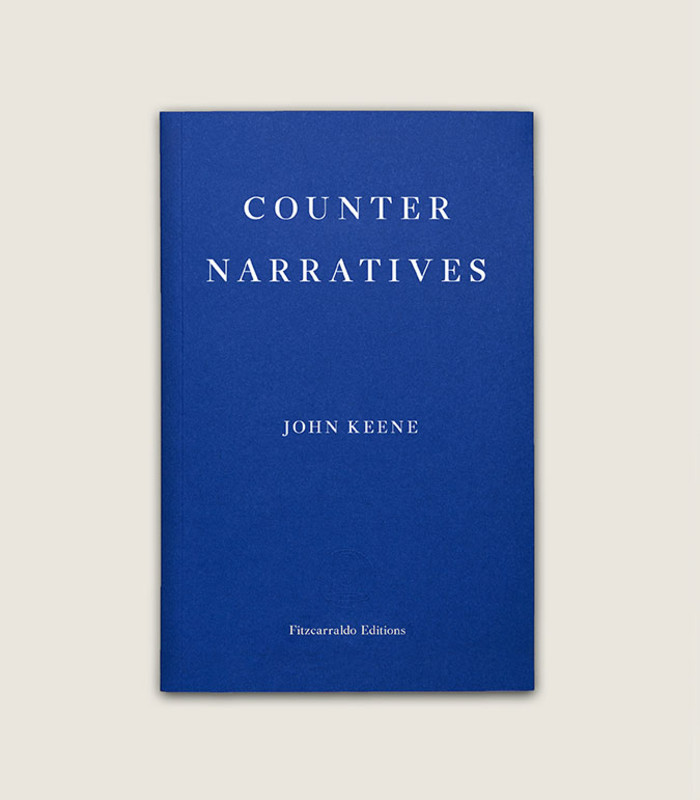
It has been over a full year now since Counternarratives was originally published in hardcover in the US by New Directions, followed by a May 2016 paperback edition, and two months since it appeared with Fitzcarraldo Editions in the UK, so it's very good news to me and my publishers that it continues to generate positive reviews and responses.

Among the recent US notices was Lucy Ives' brief and praiseworthy mention in her online New Yorker discussion of Danielle Dutton's new novel Margaret the First: A Novel (Catapult, 2016), "How Archival Fiction Upends Our View of History," in which she also praises Marlon James's multi-award winning novel A Brief History of Seven Killings (Riverhead, 2014). This is excellent company by any measure.

To quote Ives:
Keene’s polyvocal narratives masquerade as “primary-source documents” and present convincing first-person testimony, while at the same time establishing undercurrents that undermine the victors’ tales—and any hope that we will ever fully settle on the truth.

***

While in Los Angeles for the Associated Writing Programs Annual Conference, I had the opportunity to chat about Counternarratives with Michael Silverblatt for his renowned KCRW FM program Bookworm. Though our conversation flowed like spring water and exceeded the allotted time, I wasn't sure how it would turn out. The result satisfied me tremendously, and I hope it's the same for Bookworm's and KCRW 's listeners. Many thanks to Michael Silverblatt, Alan Howard, Connie Alvarez, and everyone at KCRW, as well as Mieke Chew at New Directions, and Alan Felsenthal at Sound Cave.

You can find the conversation here.

***

Last December, Daniel Green posted on his blog
The best book I read in 2015 was John Keene's Counternarratives. Since I will have a review of the book upcoming in Kenyon Review Online, I will not delineate its virtues here, except to say it's the kind of challenging, formally innovative work that is also simply enjoyable to read. In the meantime, an interview with Keene from On the Media: https://www.wnyc.org/radio/#/ondemand/533522
This is the highest praise, so I was curious to see what his review said about the book. It has now appeared at Kenyon Review Online, and is quite laudatory. Thank you, Mr. Green. Here is his conclusion:
In its engaging, often exhilarating use of alternative or unorthodox forms, Counternarratives abundantly demonstrates what “innovative” fiction at its best can accomplish: sometimes narrative content that challenges longstanding presumptions can be adequately expressed only through equally challenging extensions of form.
***

On the UK side of the Atlantic, the Times Literary Supplement "Summer books" section, which went live June 22, 2016, included a shoutout by editor Ben Eastham, who included it in his reading picks, noting that it sits at the "summit" of one of his stacks of books. Since his review is brief I'll quote the heart of it, which says that
Keene is among the contemporary American writers pushing at the boundaries of fiction, his angry, exhilarating stories about race and American history another counter-example (if it were needed) to the lazy assumption that literary innovation should be confined to the ivory tower.
Thank you, Ben Eastham and TLS!

***

In addition to the TLS's mention, another British publication, The New Internationalist's May 2016 issue included a concise but praiseworthy review of Counternarratives, which became Counter Narratives, in keeping with the book's title on Fitzcarraldo's cover. (The review, unfortunately, is only accessible to subscribers.)

***

Lastly, the French version of Counternarratives is slated to appear from Éditions Cambourakis as Contrenarrations on August 17! I had the pleasure of reading Bernard Hoepffner's precise and exacting translation, which manages, I think, to capture the spirit of the book and most of its style, but in ways that are profoundly French, so if you are in France in a few months then, please grab a copy! It does not yet have a cover (several good options are under debate), but the Advanced Readers' Copies are circulating, so below is a photo.


Saturday, August 30, 2014

"Pensées" in Recours au Poème

UPDATE: Daily Telegraph art critic Alistair Sooke writes on the August 28, 2014 BBC.com site about Yves Klein's successful development of the ultramarine pigment that cemented his fame: "Yves Klein: The Man Who Invented a Color."

One of the chief reasons I translate writing by non-Anglophone writers is to make their work available to readers who would otherwise have no access to it. However imperfect and faulty my translations I always do hope they offer a glimpse into the work of the translated writers and the worlds from which they come. As a writer myself I always appreciate the opportunity to be translated; it has happened several times, and the most recent instance is one of the best, because the translator is one of the best, a poet in all senses of that word, with a philosophically inclined mind such that she is able to convey multiple layers in every text she carries across languages, including her own. I am speaking with tremendous gratitude about Nathanaël, whom I was incredibly fortunate to have translate one of my very recent poems, "Pensées (After Yves Klein)," a tribute in part to the great, problematic French conceptual artist whose work has haunted me since I first saw it years ago.

Years ago through my job at NYU's Faculty Resource Network I met an artist-scientist, Dr. Adrienne Klein, also a fan of Yves Klein's, and our shared moments of Kleinophilia led in part to the poem "Klein Bottle," which references yet another Klein, the German mathematician Christian Felix Klein (1849-1925), whose non-orientable surface, a staple of topology, the poem invokes. That was an oblique reference to Klein (Yves)--and of course Adrienne and Felix Klein, and mathematics and science--but "Pensées (After Yves Klein)" is more direct. Klein also was one of the intellectual spurs behind one of the most enjoyable classes I ever taught, "Topics in Creative Writing: Conceptual Writing/Art," in 2010. (I fantasize about teaching an updated version of that course at Rutgers-Newark!) I want to say that until that same year, as a result of a mini-exhibit of Klein's work at the Art Institute of Chicago I had never seen any of his paintings or sculptures in person, but this is not correct; a little retrospection reminds me that I certainly did see Klein's work in other museums, including the Guggenheim Museum, which owns several of his works, and MoMA. Encountering Klein's "Blue Sponge Relief" (pictured above) and other images at the Art Institute back in 2010 laid a deep anchor, though, and recently, as I was writing poems about artists and artworks, the "Pensées" emerged.

Since they were about a French artist I sent them to Recours au poème's founding editor, poet and critic Matthieu Baumier, with whom I'd exchanged some emails around the time the online site first began publishing, and did not hear anything back, so it was a surprise and pleasure to learn that Nathanaël would be the translator (she had previously translated some of the poems from Seismosis and succeeded in bringing into French the English rhythms yet also creating a similar, novel music in French), and that she also was preparing a short introductory essay, "Arraisonner le vide" (roughly "Investigating the Void") which manages to encapsulate in a paragraph much of the conceptual richness I was seeking to convey. She also discusses some challenges in translating between the two languages that English in particular produces. I had not thought about it when writing these "Pensées," which are haiku-like in their brevity, but Nathanaël astutely identifies in so many words English's parallel vocabularies, which I drew on. "White" (from English's Germanic roots) and "blank" (from its Norman-Latin ones) are the same word in French, blanc; the same is true with "emptiness" (from Old English) and "void" (from Norman and Latin), which translates as vide. In addition, Nathanaël finds not just an equivalent, but a convincing French music for the English, even as she stays very close to the English syntax. That is quite an accomplishment.

You can find the essay and the entire poem in translation at the Recours au poème site, which if you read French is a bonanza of contemporary Francophone poetry, and I highly recommend it. My former colleague Reginald Gibbons has a series of poems, also beautifully translated by Nathanaël, on the site. Below is a snippet of my poem. Now I just need to find a place to publish the English original!

***

From "Pensées (After Yves Klein)"

Monochrome:
une couleur,
infinité.

*

Monotone:
un accord, puis silence:
une symphonie.

*


Je signe le ciel
J’assigne au ciel
un sens nouveau.

Copyright © John Keene, translation by Nathanaël, 2014. All rights reserved.