Showing posts with label African Diasporic writing. Show all posts

Thursday, June 30, 2016

Translation: Poem: Mustafa Stitou

© Pieter van der Meer /
Tineke de Lange
I'd originally planned to post this poem 5--yes, five--years ago, but like the 75+ other draft posts in my queue, some from almost 10 years ago, time to do so eluded me. As a result, it's been waiting to be completed, so here goes. It's by Mustafa Stitou (1974-), a Dutch poet of Moroccan birth. I first came across his work when I picked up a copy of his second book Mijn gedichten (My Poems, 1998) at a little Amsterdam poetry store during a trip to the Netherlands in the late 1990s.

I'd taught myself basic Dutch--enough, in fact, to fool a postal worker there, but with such a heavy German accent that she thought I might be from that country--and was convinced that I might be able to read, if not translate Stitou, Astrid Roemer (1947-), and other Dutch-language writers of color, especially immigrants from the global South, but of course, learning the basics of a language to be able to read street signs and order food and be fluent enough to read, let alone translate, are two different things. And this is true even for languages like Dutch and English, which are linguistically quite close. When I think of the current immigration and refugee crises in Europe, the failures of integration and the ongoing social and political marginalization of black and brown Europeans, it strikes me that hearing their voices is even more important now than ever.

All of which is to say that I nevertheless decided to try to translate at least a few of Stitou's poems, whose linguistic inventiveness and play intrigued me. He has won a number of major Dutch poetry prizes, and continued to publish, with his most recent book, Tempel (Temple), appearing in 2013. Below is a poem about teenage love from Mijn gedichten; such is my Dutch that any infelicities are mine, but I think you get a sense, however imperfect, of his artistry. (When I return to JC I will look for the original Dutch, which isn't online, to recheck it.) You can find more of his work in the original and translation if you click on his name above.

PALPITATIONS


You

 bright


  transparent and immaculate
     little sight

glim
 glimpsed
  in puberty

through the present moment

laughed at me
one time
 or five

by all the swarming voices
 that besieged me
  --my pooljourneydaydreaminess

even with
 the lightning feeling
  while my humor grew
   immature!

Going bald from the world to drift
without party kilos
 my life's evening complete?

In the Almere Music District you stepped off

But I definitely didn't see you
that spring
 among the talk show
    audience

Train nymph
 are you writing my life?
I can really cook


Copyright © 1998, 2016, from Mustafa Stitou, Mijn gedichten. 
Translation © copyright John Keene, 2011, 2016.

Monday, January 04, 2016

Translations: Paulo Leminski

Paulo Leminski (photo Julio Covello)
It has been eons since I've posted translations; the last, I think, were several poems by Sunjata, from French. Over the last few days, as the new year rolls in, I've been reviewing old translations I'd completed but never published, and I found a trove of translated short poems by Paulo Leminski (1944-1989), whom I've featured several times on this blog. He remains a favorite of mine. My first led to a lively conversation in the comments section with Kai hingeing on the sonorities of vowel sounds in Spanish and Portuguese and the word "dezenas" (close but distinct from "dozenas"), which led me to think even more carefully not just about Leminski's work but about translating poetry in general. I find translating poetry considerably harder but more rewarding than translating most prose (though writers deeply rooted in their native languages, like Guimarães Rosa, are more difficult or even impossible to render into another language, though people still do so).

As I wrote about Leminski before--and here I'm going to be lazy and collage parts of my previous postings--he is mostly unknown in the United States, though he is acclaimed as one of the important 20th century poets in his native Brazil. (You can scan a thorough bibliographic timeline here.) A native of Curitiba, Paraná State, he was incredibly prodigious in his brief 45 years, producing "poetry, fiction, biographies, criticism, journalistic pieces, translations, children's literature, performance scores, song lyrics, and photographs" before suffering the effects of cirrhosis of the liver. As I also wrote, "He also found time to become a martial arts master!" He apparently did not sleep.

I also wrote:

A good deal of Leminski's best known poetry is brief and linguistically playful, almost defying translation; a poem like "Ali," which turns on the Portuguese word for "there" and homonyms formed through verb juxtaposition while also referring to and riffing off the name of his second wife, "Alice," loses most of its zip in English. He also like forms such as the hakai and Leminski's work also shows affinities with the Concrete work of his good friends Haroldo (1929-2003) andAugusto de Campos (1931-). One of the best sites for translations is Edson Froes's Kamiquase: p. leminski, which features translations by Michael Palmer, Chris Daniels, and others.

Here are several of those short, linguistically playful poems, all taken from Leminskianas: antologia variada, by Paulo Leminski, with the collaboration of Maria Esther Maciel; Célia Pedrosa y André Dick and with a prologue by Mario Cámara (Buenos Aires: Ediciones Corregidor, 2005).

soprando esse bambu
só tiro
o que lhe deu o vento


breathing in this bamboo
I get only
what the wind lets through

***

mês s/ fim
vem de fora
ou de dentro
esse cheiro de jasmin?


month w/out end
it is coming from outside
or from within
this scent of jasmine?

***

a hora do tigre


um tigre
que se entigre
não é flor
que se cheire
não é tigre
que se queira
ser tigre
dura a vida
inteira


The Hour of the Tiger

a tiger
which entigers
is not a flower
it has no odor
is not a tiger
that can be desired
being tiger
lasts an entire
lifetime

***

And a slightly longer poem, about Leon and Natalia Trotsky:

El viejo León y Natalia en Coyoacán

desta vez não vai ter neve como en Petrogrado aquele dia
o céu vai estar limpo e o sol brilhando
você dormindo e eu sonhando

nem casacos nem cossacos como en Petrogrado aquele dia
apenas você nu e eu como nasci
eu dormido e você sonhando

não vai mais ter multidões gritando como en Petrogrado aquele dia
silêncio nós dois murmúrios azuis
eu e você dormindo e sonhando

nunca mais vais ter un dia como en Petrogrado aquele dia
nada como un dia indo atrás de outro vindo
você e eu sonhando e dormindo


Old Leon and Natalia in Coyoacán

this time there was going to be no snow as in Petrograd that day
the sky would be clear and the sun shining
you sleeping and I dreaming

Neither overcoats nor Cossacks like in Petrograd that day
only you and I just as I was born
Me sleeping and you dreaming

there would not be screaming multitudes as in Petrograd that day
silence we two blue murmurs
I and you asleep and dreaming

there would never be a day like those in Petrograd that day
nothing like a day departing behind another arriving
you and I in dreams and sleeping

All poems copyright © the estate of Paulo Leminski Filho, from Leminskianas: antologia variada, by Paulo Leminski, with the collaboration of Maria Esther Maciel; Célia Pedrosa y André Dick and with a prologue by Mario Cámara (Buenos Aires: Ediciones Corregidor, 2005). All translations copyright © John Keene, 2015.

Thursday, March 19, 2015

Translation: Poems: Sunjata


Last summer, one of the books I picked up while in France at the James Baldwin: International Traveler conference in Montpellier was Sunjata's Sabir: Slam Poésie, published by Vents d'ailleurs in La Roque-D'Anthéron in 2014. The publisher's name means Winds from elsewhere, and the town, which I had to look up, is a "commune in the Bouches-du-Rhône department in southern France," according to its Wikipedia page, not far to the east of Montpellier. I knew nothing about the writer, but his name, invoking the great king and founder of the Empire of Mali, and the book's title, with the first word translated as "mumbo jumbo," followed by the appellation "slam poetry," caught my attention, so I picked it up. Searching online, I found another book by Sunjata, Kalachnikov Blues, a 2009 detective novel issued by the same publisher.

Sunjata, it turns out, is the pen name of Soumaïla Koly, a writer, musician, filmmaker, producer, and actor of Ivorian descent born in 1971 in Paris. His education in theater began in the troupe Kotéba d'Abidjan, with whom he began acting while still a child, and he later studied at the Université Paul-Valéry de Montpellier and Louis Lumière in Paris. Sunjata has released three hip hop CDs, two solo with the music company Blaxploitation, and one with the group Liste noir (Black List) from Artikal/Night and Day, and has directed several documentary films. The novel received the 2010 Prix Littéraire Continental in the New Talent category. Since 2013 he has been the spokesperson for the city of Lodève, and director of L'Espace Nelson-Mandela there. 

A glance through Sabir: Slam poésie indicates that all of the poems are meant to be performed live. Reading a few aloud, I can hear their close relationship to American slam poems. They utilize similar internal rhythms and rhymes, with often razor-sharp wordplay, and most aim to make strong political statements. In sum they differ from the various conventions of French poetry that I usually have encountered, especially in translation. They are clearly spoken-word poems, with the speed and force of that genre, and some are quite powerful. I have chosen one that does not rely so much on verbal play but which is far more straightforward and represents an overt diasporic gesture. 

One of the points that I made during my comments on race and translation at the Thinking Its Presence panel organized by Jen Hofer was that in the Anglophone world--and this includes the Anglophone African Diaspora, including Black Americans--is we have a limited view of the lives of other Black people across the globe in part because so few of their works get translated. Music travels, certainly, as does film, but how much--and how little--do we know about the world in which someone like Sunjata lives? We can infer a great deal from the parallels between French and American society, but what do we lose when we cannot read his words directly, even with the slippages that translation by its nature entails? When one considers the ongoing tensions in Western societies around race, nationality, religion, class, and other identity formations, shouldn't we want to pay a bit more attention? 

At the same time, as the poem below, "Up to Obama" indicates, he is quite aware of Black/American history, the eccentric French spellings notwithstanding (I have left all of the original orthography as it appeared in French, with corrections only in English), and the inspiration and power that he and other Black Diasporic people draw from it. This is not to deproblematize the Obama presidency or its continuation of some of the worst aspects of American imperialism and recolonization, but rather to note that even among his black and brown critics, Obama remains a powerful symbol, in part because of the tradition that made him possible and which he in many ways represents. I'll now end my long introduction and just present Sunjata's poem: "Jusqu'à Obama" (Up to Obama)."

JUSQU'À OBAMA / UP TO OBAMA


La barbe de Lincoln
Le treizième amendement ratifié par le Congrès
Le bicorne de Marcus Garvey
La blackstar line contre vents et marées
Le reniement de la nationalité américaine de Web Du Bois
Le manteau de Rosa Parks
La moustache de Martin Luther King
La bague de Malcom x
Le visage tuméfié de Rodney King
Les lunettes de Malik el Shabazz
L'afro de Stokely Carmichael
Le poing levé des athlètes de Mexico
L'assissinat de JFK
Les freedom riders de Montgomery
L'assissinat de Martin Luther King
L'assissinat de Malcom x
Le cuir noir du Black Panthers Party
Le dashiki de Ron Karenga
L'impudence de Cassius Clay
L'impudence de Mohamed Ali
Rumble in the jungle
Ali/Foreman à Kinshasa
Ali boma yé!
Ali tue-le.
Foreman KO en lingala!
Le Vietnam
L'humiliation vietcong
La bannière étoilée se pare de oripeaux du drame,
Les poèmes de Maya Angelou
La NAACP
Huey Newton qui crame
Soul on ice d'Eldridge Cleaver
L'assissinat de Fred Hampton
Mumia Abu-Jamal
La gouaille de Rap Brown
Le cointelpro et l'implacable J. Edgar Hoover
La répression des droits civiques à Jackson
Le sacerdoce du révérend Jesse Jackson
Le black business d'Andrew Young
Les soul fictions de Chester Himes
Say loud i am black proud
La blackpoitation de John Shaft
Le groove rageur d'Isaac Hayes
Gil Scott Heron
Devines qui vient dîner ce soir?
Un noir!
Sidney Poitiers estampillé blackstar
Le noeud pap' d'Elijah Mohamed
Le délire de Louis Farrakhan
Oprah Winfrey Show
Cosby Show
La geste de la liberté de l'Alabama à l'Obama.
The beard of Lincoln
The Thirteenth Amendment ratified by Congress
The cocked hat of Marcus Garvey
The Blackstar Line against winds and tides
The renunciation of American nationality by W. E. B. Du Bois
The coat of Rosa Parks
The mustache of Martin Luther King
The ring of Malcolm X
The swollen face of Rodney King
The glasses of Malik el Shabazz
The afro of Stokely Carmichael
The raised fists of the athletes in Mexico
The assassination of JFK
The Freedom Riders of Montgomery
The assassination of Martin Luther King
The assassination of Malcolm X
The black leather of the Black Panther Party
The dashiki of Ron Karenga
The impudence of Cassius Clay
The impudence of Muhammad Ali
Rumble in the Jungle
Ali/Foreman in Kinshasa
Ali boma yé!
Ali kills him.
Foreman KO'ed in lingala!
Vietnam
The Vietcong humiliation
The Star-Spangled Banner adornes itself with dramatic rags
The poems of Maya Angelou
The NAACP
Huey Newton who's burning up
Soul on Ice by Eldridge Cleaver
The assassination of Fred Hampton
Mumia Abu-Jamal
The joaning of Rap Brown
Cointelpro and the implacable J. Edgar Hoover
The repression of Jackson's civil rights
The vocation of Reverend Jesse Jackson
The black business of Andrew Young
The soul fictions of Chester Himes
Say it out loud, I'm black and I'm proud
The blacksploitation of John Shaft
The angry groove of Isaac Hayes
Gil Scott-Heron
Can you guess who's coming to dinner?
A black man!
Sidney Poitier stamped as a black star
The sacred knot of Elijah Muhammad
The madness of Louis Farrakhan
Oprah Winfrey Show
Cosby Show
The gesture of liberty from Alabama to Obama.

Here is a different sort of poem from the same volume. It has such swift and playful rhymes and homophony (début/eut/haut/beaux/débats/débit, etc.), along the lines both of hip hop and (in)famous French writers like Paul Verlaine ("Chanson d'automne") and Raymond Roussel it would be almost impossible to render perfectly into English. Here's a rough version, with some English-language music to parallel, however poorly, the French.

PALABRES / PALAVER


Au début il y eut
Des hauts des bas
Des beaux débats
À haut débit
C'était de bons débuts
Des baux des buts
Des bruits d'ébats
De gros débris
Des bris des bras
Des gros dégâts
Des aaah!!! des oooh!!!
Face au tourment des maux
Le détournement des mots
Contournement des maux
Desmotscratie des parlementeurs
Qui parlent et m'enterrent
Palabreurs, palabrant pas à l'abri
À l'abri des malappris
Palabres n'est pas bon.
At the start there were
Some highs some lows
Some great debate
At the peak flow
It was a good debut
Some lease some goals
Some lovemaking sounds
A lot of debris
Some shards some arms
Tremendous harm
Some aaahs!!! Some ooohs!!!
Facing pain's agony
The diversion of words
Suffering's contortions
Wordocracy of parliamentarians
Who speak and bury me
Palaverers, palavering not in a refuge
hidden from the misunderstood
palaver isn't good.


Copyright © Sunjata, from Sabir: Slam poésie, La Roque-d'Anthéron, France: Vents d'ailleurs, 2014, 2015. Translation copyright © John Keene, 2015.

Wednesday, May 14, 2014

Semester's End

Congratulations and best wishes, Class of 2014!

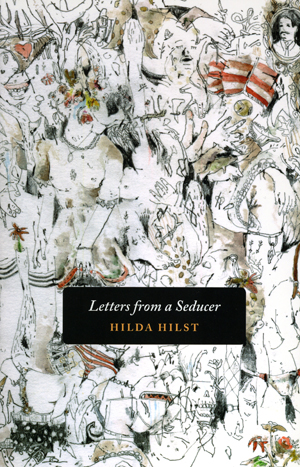
It is mid-May, which means the end of the semester at Rutgers. Courses concluded last week, and exams today, with graduation to follow in Newark next Wednesday. Spring semesters (or quarters, as was the case at Northwestern) have always been my busiest terms, and this year's stretch, from January to now, has been no less so. Between my two courses, my supervision of my great MFA thesis students, all three of whom will be graduating and should very proud of their manuscripts, my work on other university-related projects which appear to be bearing fruition under our new Chancellor, the publication of the Hilda Hilst translation and promotional activities for it (which are ongoing--do pick it up), a number of conferences and similar events and gatherings, and my completion of a new fiction manuscript which has been accepted and will be published next year, I believe, things have not slowed down yet. I am set to present a paper on James Baldwin at the very beginning of next month, in Montpellier, France, so as I am marking up final papers and projects and entering grades, I also am rereading (at the fastest pace I can recall) Baldwin's mammoth final novel Just Above My Head (1979), the copy in my hands the very Dell paperback copy my mother bought right after it came out, as well as some recent queer theory. (It pays to teach undergraduate and graduate classes that push you intellectually; my LGBTQ literature since Stonewall class, one of my last two at Northwestern, provided an excellent opportunity to resurvey the basic theoretical literature from the late 1960s through today). I will be looking forward to the trip, of course but even more so to the garden of time from mid-June through September when I can mentally relax, catch up on reading, and continue work on another fictional project which is much closer than ever before to completion. Then, I hope, even more....

In terms of the two courses, both entailed a lot of new reading, which was both edifying and exhausting, but I am glad I taught both, not least because of the excellent students. In the undergraduate class, "History and Myth in Contemporary African Diasporic Fiction," which fell under the rubric of Topics in African and Caribbean literature, I tried both to frame the course in terms of the parallel themes of history and myth, within the larger conceptual firmament of the African diaspora, and to decenter the United States as a way of thinking about the topic, though it nevertheless kept creeping into the picture. In part because of the disruptions caused by the snow storms, the class felt a bit stitched together, and I learned that it probably is a good idea in the future to mix short and longer fictional works, and to limit the number of long novels, since they proved hard for all the students to finish in a timely manner. The novel several of them cited as their favorite and the most intellectually engaging was, unsurprisingly, Chimamanda Ngozi Adichie's Half of a Yellow Sun (2004), which explores the early post-independence era through the Biafran War in Nigeria. It struck me as quite salient and topical given the recent attention Nigeria has received because of Boko Haram's abduction of over 270 schoolgirls and other attacks on the government and society, and the students and I were able to see in Adichie's novel how colonialism, tribalisms, ethnocentrism, religious chauvinism, nationalism, poor federal leadership, unequal distribution of resources, and corruption from Nigeria's earliest days have set the stage for the terrorist group'srecent horrific actions that have shocked the globe. 

I unfortunately had to snip one book, Zakes Mda's powerful novel Cion, from the syllabus, because of the lack of time, and I will think in the future about balancing texts even better to provide the best experience possible. The inner architectural thread of linked African spiritual practices managed to surprise me; that could easily have been the course's focus, so I may think about that for a future iteration. When we shifted from Ishmael Reed's invocation of the Loop Garoo Kid as a heroic figure to Edwidge Danticat's account, in "Nineteen Thirty-Seven," of a woman being denounced as a "Loup garou" for her heroism as a form of witchcraft, I wondered if I had assembled the readings not simply based on my knowledge of them and how they would work together but on some hidden, unrecognized frequency. Whatever it was, I think it worked. Another thing I have learned is that if you help to prepare students as best you can to do their best work, most will strive to do it. I usually now ask my undergraduate students to write their final papers but given the time constraints, they instead cleared their final topics and theses, and in some cases initial paragraphs, with me. This, coupled with their attentiveness to my marked up versions of their earlier papers--and their midterm exam--has meant much stronger final papers that are enjoyable to read. (And while it is difficult to do for many classes, making them combine unusual, less-commonly explored texts also cuts down on possible plagiarism.)

The graduate course, also a new preparation for me, was Writers at Newark II, the reading and discussion course that accompanies the semester-long reading series. Although I had not say in selecting the texts, one thing I did feel by the midpoint of the course was how well they worked together, and in some cases, as when we read Natasha Trethewey's Thrall and Edward P. Jones's The Known World together, or Matthea Harvey's Modern Life and George Saunders' The Tenth of December side by side, the conversations arising from pairings felt organic, as if the writers themselves had been in conversation with their peers. The students wrote reviews and short writeups of the books, posting the latter online, and in light of their status as creative writing students, I also invited them to produce new short works inspired by the visiting authors. Reading these at the midterm and now at the course's end has been a lot of fun, and I hope all of the students left with an even deeper appreciation not only for the texts we read and their authors, but also for their own deep capacity for insight, inventiveness, and collegiality. Like the undergraduates, these MFA students, some of whom I'd taught before and others I hadn't, were a joy to have in class, and I will miss the imminent graduates tremendously.

I'll end by thanking all of this year's students for another great experience, rounding out my second full year at Rutgers-Newark, and wishing all of them who are graduating, including the ones I taught earlier this year and last, the BA, BS, MA, and MFA recipients, the heartiest congratulations and every best wish for success and happiness in all they do in the future. Please also do stay in touch!


Thursday, March 20, 2014

Between the Lines: Chimamanda Ngozi Adichie & Zadie Smith

Just days after winning the National Book Critics Circle Award for Fiction for her extraordinary novel Americanah (Knopf, 2013), Chimamanda Ngozi Adichie participated in a public conversation yesterday evening with fellow writer Zadie Smith. The event took place at the Schomburg Center for Research in Black Culture of the New York Public Library, and was sold out in no time. Thankfully the Schomburg and NYPL were ready, and the event streamed live, and is archived below in case you, like me, were unable to get in, or are nowhere near the New York area. Enjoy!

Friday, September 13, 2013

Pattern Recognition: Reading/Panel @ MoCADA in BKYN Tonight!

If you are in or around Brooklyn this evening, drop by MoCADA to catch PATTERN RECOGNITION, an amazing exhibit of contemporary abstract art, and then stay for the reading and conversation I'll be participating in!


POETRY READING & DISCUSSION:
EXPERIMENTATION AND THE BLACK AESTHETIC

Friday, September 13
6:30-8:30PM | MoCADA

Evie Shockley, author of the new black and Renegade Poetics: Black Aesthetics and Formal Innovation in African American Poetry, will join celebrated innovative poets LaTasha N. Diggs, John Keene, and Dawn Lundy Martin for a reading and discussion on craft, language, politics and the search for a “black aesthetic” in contemporary art. 

Seating is limited, please arrive early. Wine will be served and author books will be available in the MoCADA Shop. $3 contribution.

Thursday, August 22, 2013

Poem: Mabel Segun

WRONG DESTINATION

I hired an aeroplane
And put my thoughts on it.
"Take us," I told the pilot
"To that place where I believe
Thoughts can develop,
Watered by imagination,
Nourished in freedom."
But the plane was hijacked
And taken to a place
Where nothing grew but weeds.
My thoughts strove ever so bravely
To grow among the weeds,
But they were choked to death,
The weeds choked them, My God!

Now I'm without my thoughts;
They've given me new ones,
But we do not get along --
They're someone else's thoughts,
Not mine.
-- Copyright © Mabel Segun (1930-), from Conflict and Other Poems, Ibadan: New Horn Press, 1986.

Wednesday, April 17, 2013

Poems: Willie Perdomo

Willie Pedomo,
by Gabrielle Ramírez
The following two poems, though nominally night-focused, are really occasions for me to post work by Willie Perdomo, one of today's vital poets. I met him years ago when I was teaching on the Lower East Side, and introduced his work to my students, who like me not only fell in love with it, but grasped in it a way of seeing and understanding the world they were living in, while also learning how to write and read that world, how to put it into language and in so doing reshape it.

A native of New York City and son of East Harlem, his work extends and enriches a range of traditions, especially Nuyorican, Puerto Rican and African Diasporic writing, and he has received a raft of awards for it. I can recall the excitement that greeted his book When a Nickel Costs a Dime, which featured a CD (then a relatively rare addition) from which the two poems below come, and he has continued to publish, perform, teach, and reach, including creating a publishing house, Cypher Books, to issue the poetry of today.  Here are "Song for Langston," a poet whose influence runs through the arteries of Willie's work, and "Revolution," which is as relevant today, in this world of endless, oppressive "Stop and Frisk" policing, as it was almost 20 years, when Willie wrote it.

SONG FOR LANGSTON

I sang all night
And cried all day

Been wait' for a
Storm to come my way

Drown the tears
Make soft the pain

I hope my prayers
Are not in vain


REVOLUTION

One night
Brother Lo told
Officer Rooney:

     Muthafucka
     take off your
     badge and gun
     and see if I don't
     bust your ass all
     the way back to
     the precinct.    

Copyright © Willie Perdomo, from When a Nickel Costs a Dime, New York: W. W. Norton, Inc., 1996. All rights reserved.