|
| Congratulations and best wishes, Class of 2014! |
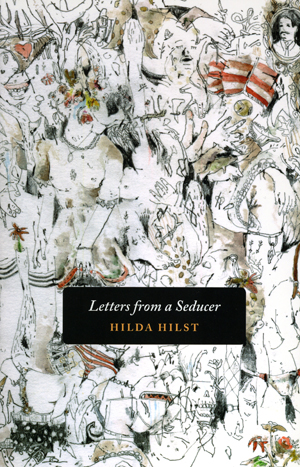
It is mid-May, which means the end of the semester at Rutgers. Courses concluded last week, and exams today, with graduation to follow in Newark next Wednesday. Spring semesters (or quarters, as was the case at Northwestern) have always been my busiest terms, and this year's stretch, from January to now, has been no less so. Between my two courses, my supervision of my great MFA thesis students, all three of whom will be graduating and should very proud of their manuscripts, my work on other university-related projects which appear to be bearing fruition under our new Chancellor, the publication of the Hilda Hilst translation and promotional activities for it (which are ongoing--do pick it up), a number of conferences and similar events and gatherings, and my completion of a new fiction manuscript which has been accepted and will be published next year, I believe, things have not slowed down yet. I am set to present a paper on James Baldwin at the very beginning of next month, in Montpellier, France, so as I am marking up final papers and projects and entering grades, I also am rereading (at the fastest pace I can recall) Baldwin's mammoth final novel Just Above My Head (1979), the copy in my hands the very Dell paperback copy my mother bought right after it came out, as well as some recent queer theory. (It pays to teach undergraduate and graduate classes that push you intellectually; my LGBTQ literature since Stonewall class, one of my last two at Northwestern, provided an excellent opportunity to resurvey the basic theoretical literature from the late 1960s through today). I will be looking forward to the trip, of course but even more so to the garden of time from mid-June through September when I can mentally relax, catch up on reading, and continue work on another fictional project which is much closer than ever before to completion. Then, I hope, even more....
In terms of the two courses, both entailed a lot of new reading, which was both edifying and exhausting, but I am glad I taught both, not least because of the excellent students. In the undergraduate class, "History and Myth in Contemporary African Diasporic Fiction," which fell under the rubric of Topics in African and Caribbean literature, I tried both to frame the course in terms of the parallel themes of history and myth, within the larger conceptual firmament of the African diaspora, and to decenter the United States as a way of thinking about the topic, though it nevertheless kept creeping into the picture. In part because of the disruptions caused by the snow storms, the class felt a bit stitched together, and I learned that it probably is a good idea in the future to mix short and longer fictional works, and to limit the number of long novels, since they proved hard for all the students to finish in a timely manner. The novel several of them cited as their favorite and the most intellectually engaging was, unsurprisingly, Chimamanda Ngozi Adichie's Half of a Yellow Sun (2004), which explores the early post-independence era through the Biafran War in Nigeria. It struck me as quite salient and topical given the recent attention Nigeria has received because of Boko Haram's abduction of over 270 schoolgirls and other attacks on the government and society, and the students and I were able to see in Adichie's novel how colonialism, tribalisms, ethnocentrism, religious chauvinism, nationalism, poor federal leadership, unequal distribution of resources, and corruption from Nigeria's earliest days have set the stage for the terrorist group'srecent horrific actions that have shocked the globe.
I unfortunately had to snip one book, Zakes Mda's powerful novel Cion, from the syllabus, because of the lack of time, and I will think in the future about balancing texts even better to provide the best experience possible. The inner architectural thread of linked African spiritual practices managed to surprise me; that could easily have been the course's focus, so I may think about that for a future iteration. When we shifted from Ishmael Reed's invocation of the Loop Garoo Kid as a heroic figure to Edwidge Danticat's account, in "Nineteen Thirty-Seven," of a woman being denounced as a "Loup garou" for her heroism as a form of witchcraft, I wondered if I had assembled the readings not simply based on my knowledge of them and how they would work together but on some hidden, unrecognized frequency. Whatever it was, I think it worked. Another thing I have learned is that if you help to prepare students as best you can to do their best work, most will strive to do it. I usually now ask my undergraduate students to write their final papers but given the time constraints, they instead cleared their final topics and theses, and in some cases initial paragraphs, with me. This, coupled with their attentiveness to my marked up versions of their earlier papers--and their midterm exam--has meant much stronger final papers that are enjoyable to read. (And while it is difficult to do for many classes, making them combine unusual, less-commonly explored texts also cuts down on possible plagiarism.)
The graduate course, also a new preparation for me, was Writers at Newark II, the reading and discussion course that accompanies the semester-long reading series. Although I had not say in selecting the texts, one thing I did feel by the midpoint of the course was how well they worked together, and in some cases, as when we read Natasha Trethewey's Thrall and Edward P. Jones's The Known World together, or Matthea Harvey's Modern Life and George Saunders' The Tenth of December side by side, the conversations arising from pairings felt organic, as if the writers themselves had been in conversation with their peers. The students wrote reviews and short writeups of the books, posting the latter online, and in light of their status as creative writing students, I also invited them to produce new short works inspired by the visiting authors. Reading these at the midterm and now at the course's end has been a lot of fun, and I hope all of the students left with an even deeper appreciation not only for the texts we read and their authors, but also for their own deep capacity for insight, inventiveness, and collegiality. Like the undergraduates, these MFA students, some of whom I'd taught before and others I hadn't, were a joy to have in class, and I will miss the imminent graduates tremendously.
I'll end by thanking all of this year's students for another great experience, rounding out my second full year at Rutgers-Newark, and wishing all of them who are graduating, including the ones I taught earlier this year and last, the BA, BS, MA, and MFA recipients, the heartiest congratulations and every best wish for success and happiness in all they do in the future. Please also do stay in touch!