Showing posts with label pedagogy. Show all posts

Friday, November 10, 2017

Master Class on the Novella in Translation

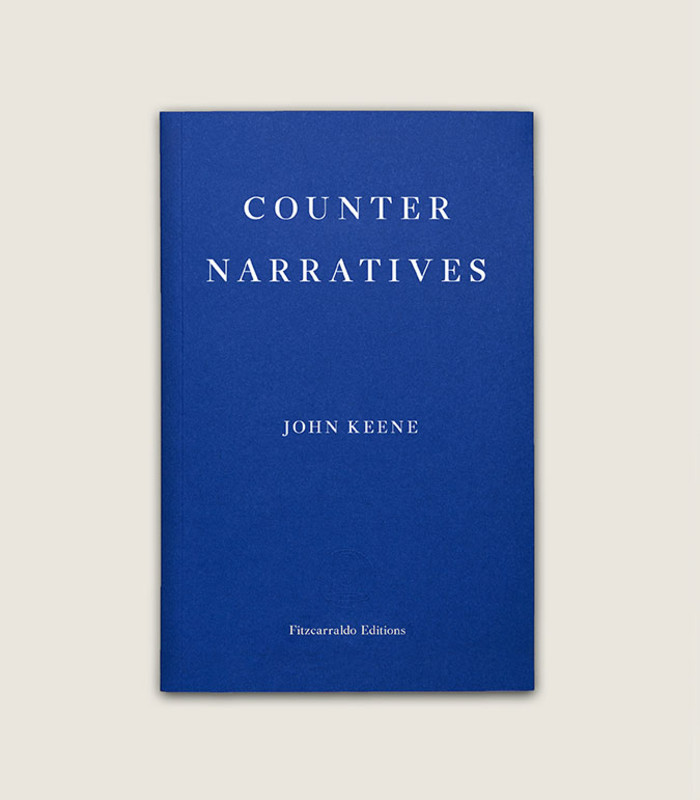
Bolaño's Una novelita lumpen
At the beginning of September, the fall semester always looks endless to me, like a river whose mouth or delta lies beyond the horizon of the looming holidays. Once class begin, however, the weeks and months always race by more swiftly than I envision. By December, I find myself remarking how the term has slimmed down to final papers and exams, with the restorative winter break--that terminus--only weeks away. Even still, I always worry about overloading and wearing myself out, which I have come to realize is unavoidable. Beyond classes these days, there is everything else, which was always there, but even more so with each passing year.

I nevertheless had the idea that a mere month's worth of--four--classes on a free Wednesday alongside my usual teaching and advising load would not be unreasonable and a pleasant change of pace, and it turns out that it was. For four weeks from mid-October through the beginning of November, I taught a masterclass on the novella in translation to a small cadre of MFA students at Columbia University's School of the Arts, and once I properly figured out the commute, which required heading in the opposite direction from Newark, things ran quite smoothly.

Having not headed into Manhattan regularly during morning rush hour in 17 years, I was reminded that the PATH trains are usually reliable, if stuffed like a coffee vacuum pack, at that hour, and that the trip into the city is especially quick because it only requires a few stops to Christopher Street station, which once was my destination when I was a student at NYU (except when I taught in the East Village and in the winter, when I would take it further, to 9th Street) and again when I worked in SoHo in the late 1990s. From the Christopher St. PATH stop, I walked down the famous street, still mostly shuttered at 9 am, to the 1 Train at 7th Avenue, and then changed to the 2 to speed uptown, then back to the 1 to end up right outside Columbia's main gate on Broadway. Trips back to New Jersey (and usually the Rutgers campus for afternoon meetings) ran more leisurely in reverse.

Since we had only four weeks, so I assigned four novellas in translation:
  • Roberto Bolaño's 2005 mini-masterpiece A Little Lumpen Novelita, the last work of fiction he published in his lifetime, which was translated by Natasha Wimmer and published by New Directions in 2016;
  • Amélie Nothomb's 1993 novella Loving Sabotage, translated by Andrew Wilson and published by New Directions in 2003;
  • Yoko Ogawa's The Diving Pool: Three Novellas, originally published as three separate works, in 1990 and 1991, and translated by Stephen Snyder and published by Picador in 2008;
  • and Abdourahman A. Waberi's 2009 Passage of Tears, translated by David and Nicole Ball, and published by Seagull Books, 2011.
I had read all of these books before, the Waberi and Bolaño texts most recently, and the Nothomb not long after it appeared a little over a decade ago. I chose these texts with the aim of linguistic, aesthetic, and thematic diversity, among other goals, yet still ended up with two Francophone authors, writing from rather different perspectives, and three works in European languages. (Since I can read French and Spanish, though, I had a clearer sense of the translators' skills.) Of the four works, Bolaño's and Ogawa's were clearly labeled novelas (or "novelita"), while Nothomb's and Waberi's were issued as novels. All four are authors I admire, Bolaño especially so, and though I had taught his work before, I had never included fiction by any of the other authors, nor these four works, on my syllabi.

I'd chosen Waberi's text, I realized after the course had begun, in part as a provocation, because its length suggests that it might not fit the criteria. And what are they? I won't reprise the essay, based on a talk I gave last spring at Northwestern's annual spring Festival of Writing, that I revised and shared with my students to start the class, but some of the key characteristics I asked the students to think about were the novella's usually limited scope (more than a story, perhaps, but less than most novels) and concentrated effects, its unity of voice and plot, and its concision in narration. One of my students metaphorized, specifically apropos of Ogawa's work, the novella's narrative focus to a "tunnel." I thought this a brilliant insight, and thought it applied, in varying ways, to all four works. The students' assignments included in-class discussion and writing, response papers, and, as their final submission, a set of novella starters. Each student produced several that I hope they pursue, if not as novellas then, plumped out as novels.

They were to a person smart, engaged, and original in their thinking. I did not see any of their creative work, but nearly all were fiction writers, and I got a sense of what each of them was working on. It was a pleasure to experience thinking through the texts with them. Each novella offers different challenges in terms of how it works, and the class as a whole was more than up to the case, puzzling out as well other aspects of the texts. One of the students who read French was able to point out how much more ironic Nothomb's original was compared to the English (and how it riffed off a variety of works that Francophone readers would know, though Anglophones might not), while Waberi's French was a bit more formal in places, and less so in others.

Will they write a novella or novellas? I hope my proselytization was effective, though I did discuss, in the essay and the class, the US publishing industry's reluctance about the shorter long form. I also hope I might have sparked an interest in translation among some of them. I did leave the very brief course--like an "eyeblink," as one student put it--as encouraged as I always am when I finish a semester with my MFA (and other graduate, and undergraduate) students at Rutgers-Newark, about the future of American literature and writing. The hurdle, of course, is to get inventive, talented writers (of all ages and backgrounds) like these students and my Rutgers students and mentees, into print, and their work to readers. The sharp, gifted novella class cohort, I sincerely hope and trust, will be doing so before long.

Sunday, April 12, 2015

My AWP 2015


Posing with the Mary Tyler
Moore statue (downtown
Minneapolis)
(Photo by John Domini)
I've just returned from the year's biggest annual American--and perhaps global?--creative writing gathering, the Associated Writing Programs (AWP) conference, which concluded yesterday after four days in Minneapolis. Over 10,000 (or was it 11,000?) writers, readers and publishers packed the rooms and auditoriums of the Minneapolis Convention Center, nearby hotels, restaurants, bars, clubs, libraries, and a variety of offsite venues, to deliver papers, talks and presentations, and to read their work, buy books, talk about writing, and just hang out with other literary folks.

Inside the Convention Center
As an officially academic conference AWP primarily convenes people in academe or who want to be in it, focuses a sizable portion of its panels on educational issues, and represents one of the major networking opportunities for those seeking jobs within educational institutions. Yet despite this it is above all a writers' and writing conference. To me AWP's real emphasis, unlike that the Modern Language Association's annual conference or the Book Expo America, remains on conversations on and around writing and literary practices and production, and the presentation of literary works; the opportunities to participate in and attend the onsite and offsite readings and book-signings, and the immense book fair are chief among the reasons many writers scare up the funding to attend. Another key benefit is running into new and old friends and acquaintances, and meeting new ones, with the added possibility of hearing them read and talk about their work.

One of the skyways leading
to the Convention Center
A post-snowy morning
outside my hotel

Giving and attending readings and seeing people I otherwise would not get a chance to were mu reasons for attending this year, and my visit didn't disappoint. I should note that during the worst days of my knee troubles earlier this year, I was not sure at first that I would be able to attend, but hope springs eternal and physical therapy works, and since the trip to Missoula, I have grown increasingly more mobile, so I was able to make my daily way from my hotel, the Marriott City Center, to the convention center mostly on foot, and most outdoors, even during one of the sleet/snowfalls that occurred during the conference's run, and I even spent a good several hours every day I was there in the immense hall hosting the book fair, walking as much as 6 miles on Friday alone. I did feel all the walking while there and once I go back, but I was resolute in not wearing any knee braces and in not carrying around a backpack or bookbags full of books, so I avoided straining my knees and utilized UPS's services several times, and now my campus office has heavy, stuff troves waiting for me.

Inside the AWP Book Fair
At the Book Fair
The perambulations around the book fair afforded many serendipities, including running into countless writers I seldom get the opportunity to see and hang out with, as well as happening upon books I had been intending to buy, with the writers nearby to sign them, as well as ones I had no idea about but am incredibly I happened upon. I saw and chatted two of the publishers I have worked with (New Directions and Nightboat Books), and learned that at the former a steady stream people were asking for my book, which will be out on May 21, 2015 (a few weeks later than originally). I took that as a very positive sign. Other highlights were the lunches and dinners with friends and colleagues, including former students, and one amazing book party I attended where I had the opportunity to meet yet more writers. While I prefer the scale of smaller conferences like Thinking Its Presence, AWP definitely has its charms, and rather than feeling overwhelmed as I sometimes have at  the sheer size of the crowds, the surfeit of texts on display, and the undertow of competitiveness, this year felt more manageable and enjoyable. (Was it the 10,000 or 12,000 fewer people than a year or two ago?)

At New Directions table; Tynan Kogane
is seated at table; to the right is Archipelago
Books, where I learned a former student,
Eric Wilson, is now working
Lorenzo Herrera, poet and publisher
of Kórima Press, which shared a table
with Lisa Moore's RedBone Press
For the first time ever I was a featured reader, on a panel sponsored by the Cave Canem Writers Foundation that featured four poets who received the Mrs. Giles Whiting Foundation's annual writing awards: Thylias Moss, Tyehimba Jess, Atsuro Riley, and I. Before the conference I learned from a colleague that there was tremendous concern over the paucity of openly gay featured readers and LGBTQ-focused panels, and another friend told me that I was the only out featured reader, though I learned that another fellow member of my reading slate, the poet Atsuro, is openly gay, so that doubled the total, and also meant that two men of color were intersectionally representing for LGBTQ communities at AWP. Instead of poetry I read the lyrical opening to my story "Blues," in which Langston Hughes and Xavier Villaurrutia meet up in Depression-era New York. The story is a tribute to both poets, but especially Hughes, as well as Richard-Bruce Nugent, author of "Smoke, Lilies and Jade," whose style and themes provided the template for mine. Supposedly we were visible on a Jumbotron monitor, which I thankfully could not see or I'd never have been able to take the podium! Many thanks to CC, the Whiting Foundation, and to AWP for the event!

Lisa Moore and I
A panel on creative writing as a second career,
headed by Tayari Jones (at right), with Evie
Shockley seated at the table at center
The following evening I read at an offsite event to promote the new Volta Book of Poets, edited by Joshua Marie Wilkinson and published by Sidebrow Books, between whose covers I have a few poems. The 3-hour reading was at Harriet Brewery in St. Paul, and many of the poets in the anthology were present, including Eric Baus, Susan Briante, Julie Carr, Don Mee Choi, Arda Collins, C. S. Giscombe, Fred Moten, Yona Harvey, Dawn Lundy Martin, J. Michael Martinez, Andrea Rexilius, Evie Shockley (my cab and Uber mate), Matthias Svalina, TC Tolbert, and Lynn Xu. (I probably have left someone off, so my apologies.) The beer hall was loud and packed, and some patrons seemed more eager to hear poetry than others, but the readers in general were on their game and I aimed to have fun and read an Internet-app based poem that elicited a good deal of laughter, in keeping with the venue's tone. I had to head out to another event, so I missed the evening's final readers.
At the Harriet Brewery reading,
Fred Moten seated at center
The Obsidian panel, with (1-r) Kwame Dawes,
Duriel Harris (editor), and Sheila Smith McKoy
I also got to attend several panels, including one devoted to the literary journal Obsidian, which I have read for years and now serve as one of its fiction and hybrid forms editors, and the invigorating words and atmosphere of fellowship in that room underpinned for me, as so many other experiences did, of why I attend AWP.  Next year's conference will take place in Los Angeles, and I'm already looking forward to it. Below, a few more photos!

The Convention Center
Lynn Xu at the Volta reading
Fred Moten at the Volta reading
Don Mee Choi, translating, and Valerie
Mejer, reading in Spanish,
at the Volta reading
Susan Briante at the Volta reading
Yona Harvey at the Volta reading
Cecil Giscombe at the Volta reading
and:

An arrest Tyehimba Jess and I witnessed
one night walking back from dinner

Friday, April 11, 2014

Montana Scenes

I'm currently out in Missoula, Montana for the inaugural Thinking Its Presence: Race and Creative Writing conference organized by poets and critics Prageeta Sharma and Joanna Klink, and featuring a wide array of amazing writers and scholars, including keynote speaker, scholar and critic Dorothy Wang, after whose study the conference took its name, and Sherwin Bitsui, Jess Row, Meena Alexander, Kimiko Hahn, and Farid Matuk, among many others. I'll post more about the conference over the next few days, but here are some photos of Missoula and its necklace of hills and mountains. Big sky, yes, but also, gigantic, very nearby mountains. And I've also included the photos of the herd of white-tailed deer we came across as we were leaving an event on campus. They were so close, so gentle, and did not flee but slowly moseyed away, grazing and periodically glancing back at us, as we headed for the bridge and trail to downtown.

A view across the Columbia River,
famous for Norman McLean's collection
 A River Runs Through It
A view of the nearby
mountains to the South
The Holiday Inn, where
part of the conference took place
Looking north along Higgins Road
in downtown Missoula
The hills looming just in walking
distance of downtown
Looking west along Broadway,
downtown Missoula
Public artwork, Missoula
Those mountains!
More hills and mountains,
downtown Missoula
The campus of the
University of Montana
On the footbridge across
the Columbia River
Looking along the Columbia
The Milwaukee Trail, Missoula
Young white-tailed deer, grazing
at night--they were only steps
away from us and didn't scatter,
but kept munching away until finally
they proceeded down into
the parking-lot area
On the Higgins Street bridge
River and mountains
Some of the rapids near downtown