Showing posts with label Roberto Bolaño. Show all posts

Friday, November 10, 2017

Master Class on the Novella in Translation

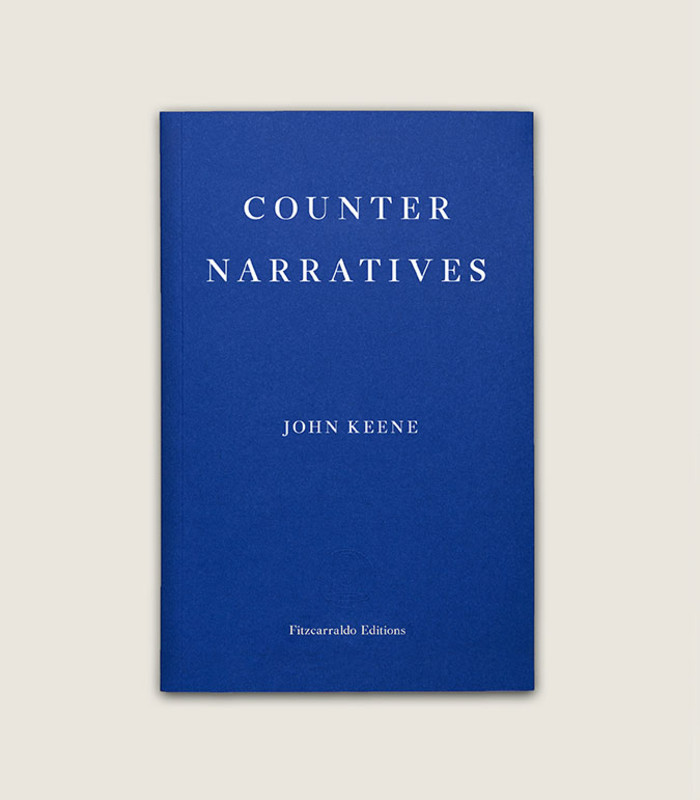
Bolaño's Una novelita lumpen
At the beginning of September, the fall semester always looks endless to me, like a river whose mouth or delta lies beyond the horizon of the looming holidays. Once class begin, however, the weeks and months always race by more swiftly than I envision. By December, I find myself remarking how the term has slimmed down to final papers and exams, with the restorative winter break--that terminus--only weeks away. Even still, I always worry about overloading and wearing myself out, which I have come to realize is unavoidable. Beyond classes these days, there is everything else, which was always there, but even more so with each passing year.

I nevertheless had the idea that a mere month's worth of--four--classes on a free Wednesday alongside my usual teaching and advising load would not be unreasonable and a pleasant change of pace, and it turns out that it was. For four weeks from mid-October through the beginning of November, I taught a masterclass on the novella in translation to a small cadre of MFA students at Columbia University's School of the Arts, and once I properly figured out the commute, which required heading in the opposite direction from Newark, things ran quite smoothly.

Having not headed into Manhattan regularly during morning rush hour in 17 years, I was reminded that the PATH trains are usually reliable, if stuffed like a coffee vacuum pack, at that hour, and that the trip into the city is especially quick because it only requires a few stops to Christopher Street station, which once was my destination when I was a student at NYU (except when I taught in the East Village and in the winter, when I would take it further, to 9th Street) and again when I worked in SoHo in the late 1990s. From the Christopher St. PATH stop, I walked down the famous street, still mostly shuttered at 9 am, to the 1 Train at 7th Avenue, and then changed to the 2 to speed uptown, then back to the 1 to end up right outside Columbia's main gate on Broadway. Trips back to New Jersey (and usually the Rutgers campus for afternoon meetings) ran more leisurely in reverse.

Since we had only four weeks, so I assigned four novellas in translation:
  • Roberto Bolaño's 2005 mini-masterpiece A Little Lumpen Novelita, the last work of fiction he published in his lifetime, which was translated by Natasha Wimmer and published by New Directions in 2016;
  • Amélie Nothomb's 1993 novella Loving Sabotage, translated by Andrew Wilson and published by New Directions in 2003;
  • Yoko Ogawa's The Diving Pool: Three Novellas, originally published as three separate works, in 1990 and 1991, and translated by Stephen Snyder and published by Picador in 2008;
  • and Abdourahman A. Waberi's 2009 Passage of Tears, translated by David and Nicole Ball, and published by Seagull Books, 2011.
I had read all of these books before, the Waberi and Bolaño texts most recently, and the Nothomb not long after it appeared a little over a decade ago. I chose these texts with the aim of linguistic, aesthetic, and thematic diversity, among other goals, yet still ended up with two Francophone authors, writing from rather different perspectives, and three works in European languages. (Since I can read French and Spanish, though, I had a clearer sense of the translators' skills.) Of the four works, Bolaño's and Ogawa's were clearly labeled novelas (or "novelita"), while Nothomb's and Waberi's were issued as novels. All four are authors I admire, Bolaño especially so, and though I had taught his work before, I had never included fiction by any of the other authors, nor these four works, on my syllabi.

I'd chosen Waberi's text, I realized after the course had begun, in part as a provocation, because its length suggests that it might not fit the criteria. And what are they? I won't reprise the essay, based on a talk I gave last spring at Northwestern's annual spring Festival of Writing, that I revised and shared with my students to start the class, but some of the key characteristics I asked the students to think about were the novella's usually limited scope (more than a story, perhaps, but less than most novels) and concentrated effects, its unity of voice and plot, and its concision in narration. One of my students metaphorized, specifically apropos of Ogawa's work, the novella's narrative focus to a "tunnel." I thought this a brilliant insight, and thought it applied, in varying ways, to all four works. The students' assignments included in-class discussion and writing, response papers, and, as their final submission, a set of novella starters. Each student produced several that I hope they pursue, if not as novellas then, plumped out as novels.

They were to a person smart, engaged, and original in their thinking. I did not see any of their creative work, but nearly all were fiction writers, and I got a sense of what each of them was working on. It was a pleasure to experience thinking through the texts with them. Each novella offers different challenges in terms of how it works, and the class as a whole was more than up to the case, puzzling out as well other aspects of the texts. One of the students who read French was able to point out how much more ironic Nothomb's original was compared to the English (and how it riffed off a variety of works that Francophone readers would know, though Anglophones might not), while Waberi's French was a bit more formal in places, and less so in others.

Will they write a novella or novellas? I hope my proselytization was effective, though I did discuss, in the essay and the class, the US publishing industry's reluctance about the shorter long form. I also hope I might have sparked an interest in translation among some of them. I did leave the very brief course--like an "eyeblink," as one student put it--as encouraged as I always am when I finish a semester with my MFA (and other graduate, and undergraduate) students at Rutgers-Newark, about the future of American literature and writing. The hurdle, of course, is to get inventive, talented writers (of all ages and backgrounds) like these students and my Rutgers students and mentees, into print, and their work to readers. The sharp, gifted novella class cohort, I sincerely hope and trust, will be doing so before long.

Monday, June 17, 2013

Poem: Roberto Bolaño

Recently I was reading the New York Review of Books' online blog and saw that they had posted the following poem, lineated prose really, by Roberto Bolaño (1953-2003). It will appear in The Unknown University, a volume of his complete poetry--which he wrote before he turned to the prose on which his reputation rests--translated by Laura Healy, who also translated his other two collections, The Romantic Dogs (2000, published in English in 2008) and Tres (2000, published in English in 2011) to be published in a few weeks by New Directions.

As unlyrical as the following poem is, the gravity of its content does merit note; in the last decade of his life Bolaño managed to write a dozen books, some of which, including his masterpieces The Savage Detectives (1998, published in English translation in 2007), By Night in Chile (2000, published in English translation in 2003), and 2666 (2004, published in English translation in 2008), one of the greatest and most original novels in Spanish or any other language. In the poem below, he prefigures the decade to come: serious illness, unearthly fortitude, furious composition. Among the works he produced to the very end were poems, despite his fame as a fiction writer, as he never stopped seeing himself as a poet.

Toward the end of 1992 he was very sick
and had separated from his wife.
That was the goddamn truth:
he was alone and fucked
and he tended to think there was little time left.
But dreams, oblivious to sickness,
showed up every night
with a loyalty that came to surprise him.
Dreams took him to that magical country
he and no one else called Mexico City
and Lisa and the voice of Mario Santiago
reading a poem
and so many other good things worthy
of the most ardent praise.
Sick and alone, he would dream
and confront the days that passed inexorably
toward the end of another year.
And from it he gathered a bit of strength and courage.
Mexico, the phosphorescent steps in the night,
the music playing on corners
where in the past whores would freeze
(in the icy heart of Colonia Guerrero)
and would dole him out the sustenance needed
to clench his teeth
and not cry in fear.

This poem is drawn from The Unknown University, an edition of Roberto Bolaño’s complete poetry, translated by Laura Healy, to be published on July 11 by New Directions.

Tuesday, December 18, 2012

Quote: Roberto Bolaño


"There are books that inspire fear. Real fear. More than books they seem like time bombs or like taxidermied animals that'll go for our throat when you're not looking. This is a feat I've known only twice. The first time was long ago, in 1977 or 1978; I was reading a novella in which, on a certain page, the reader is warned that he could die any moment. That is, he could die literally, fall to the floor and not get up. The novel was La asesina ilustrada [The Enlightened Assassin] by Enrique Vila-Matas, and as far as I know none of its readers died on the spot although many of us emerged transformed from our reading of it, conscious that something had changed forever in our relationship with literature. Along with Los dominios del lobo [The Wolf's Haunts], Javier Marias's first novel, La asesina ilustrada, marks the departure point for our generation.
The second novel that's truly frightened me (and this time the fear is much stronger, because it involves pain and humiliation instead of death) is Tadeys, the posthumous novel by Osvaldo Lamborghini. There is no crueller book. I started to read it with enthusiasm--and enthusiasm heightened by Lamborghini's original prose (with its sentences like something out of Flemish painting and a kind of improbable Argentine or Central European pop art) and guided as well by my admiration for César Aira, Lamborghini's disciple and literary executor as well as the author of the prologue to this unclassifiable novel--and my enthusiasm or innocence as a reader was throttled by the picture of terror that awaited me. There's no question that it's the most brutal book (that's the best adjective I can come up with) that I've read in Spanish in this waning century. It's incredible, a writer's dream, but it's impossible to read more than twenty pages at a time, unless one wants to contract an incurable illness. Naturally I haven't finished Tadeys, and I'll probably die without finishing it. But I'm not giving up. Every once in a while I feel brave a read a page. On exceptional nights I can read two."
-- Copyright © Roberto Bolaño, from between parentheses: Essays, Articles, and Speeches, 1998-2003, edited by Ignacio Echevarría and translated by Natasha Wimmer, New York: New Directions Publishing Corporation, 2004. All rights reserved.


Monday, May 14, 2012

Russian Writers Lead Protest Walk + Daniel Sada's Almost Never

Boris Akunin (© RIA Novosti. Ilia Pitalev)
"[Writers are] engineers of the human soul."

I'd never read this quote before, and having done so today, hesitated to reprint it, despite its truth, mainly because of who uttered it and how he acted on its ramifications. I'm talking about Joseph Stalin, the Soviet dictator whose ruthlessness has no peers in the modern history of that country. The tally of Stalin's victims is vast beyond accounting, perhaps, but the names of writers he persecuted and murdered is less hazy to many, and any student of literary history could find parallels throughout the annals of literature. But I'm not posting about authoritarians' and totalitarians' persecution of writers so much as clumsily searching for a way to highlight an important event that took place the other day in in Moscow: a peaceful march  of opposition and resistance to the May 7, 2012 reelection of Russian president Vladimir Putin, led by a dozen of Russia's most famous writers, which drew over 10,000 participants. Among the march's organizers were poet and conceptual art pioneer Lev Rubinstein (1946-), journalist Sergei Parkhomenko, and disability rights activist, economist and journalist Irina Yasina (1964-), and other leaders included internationally renowned detective fictionist and translator Boris Akunin (1956-) and poet, journalist, and essayist Dmitrii Bykov (1967-).

The route proceeded from a statue of Russia's poetic icon, Alexander Pushkin (1799-1837), exiled, as New York Times reporter Ellen Barry notes, by Czar Alexander I, to one of Alexander S. Griboyedov (1795-1829), whose ludic send-ups of the Czarist-era bluebloods were proscribed until after his death. At the park housing Griboyedov's bust, in the Chistye Prudy neighborhood, anti-Putin activists have set up an Occupy-style encampment, which has so far not been attacked, though Putin has vowed to do so. Only a week before, a demonstration against Putin's reelection and inauguration near the Kremlin culminated in a brutal assault by the police forces, with 700 people arrested, some for allegedly doing nothing more than wearing white protest ribbons, and the state forces have remained on the prowl for any signs of antigovernment protest.  Moreover, opposition figureheads Alexei Navalny (1976-) and Sergei Udaltsov (1977-) were jailed for 15 days on May 10, 2012, for "disobeying police orders" as they met with supporters in Moscow, and, according to the Times, "Russia’s Parliament is considering a draft law that would increase fines for causing unrest at demonstrations to 1.5 million rubles, or about $50,000, and introduce a penalty of up to 240 hours of compulsory labor."

As a result, opposition activists decided to rethink their tactics, engaging in more artful "dilemma protests," such as flash gatherings, nonviolent resistance, ludic small-group activities, and site occupations, not unlike those of the Occupy Movements across the US and the rest of the globe.  The organizers of this march decided four days ago to see if the very act of walking together, on a "test stroll," without a permit, through Moscow's streets would provoke a police response involving "being blocked, beaten, poisoned with gas, detained, arrested or at least subjected to stupid molestation with questions." It did not, thankfully, and one point the phalanx of protesters, many clutching the books of the march's leaders, spanned over a mile. Afterwards, marchers got autograph and an opportunity to chat with the writers and each other, then dispersed.  As of today, the Chistye Prudy encampment remains , but for how long it's hard to say. A much larger March of Millions is planned for June 12, 2012 in Moscow. Perhaps writers across the globe should consider June 12 solidarity marches, on behalf not only of the Russian people, democracy, freedom of speech and protest, but against authoritarian and totalitarian forces, including corporate ones, worldwide.

+++

Today Reggie H. sent along Marie Arana's May 10, 2012  Washington Post review of an exciting new publication by Graywolf Press, the first novel by late Mexican genius Daniel Sada (1953-2011) to be translated into English, Almost Never (2012, originally published as Casi nunca by Anagrama in 2008). The translator is Katherine Silver, co-director of the highly regarded Banff International Literary Translation Centre (BILTC), which several translators I deeply admire have attended. Rachel Nolan gave Almost Never rhapsodized over the novel in the April 20, 2012 New York Times. Sada passed away late last year after many years of battle with kidney disease, but in his brief writing life he was not only prolific, but made his name as one of the more important and inventive prose writers not just in Mexico but in the Spanish language, winning numerous national literary prizes and the adulation of peers across the Hispanophone world. The late Robert Bolaño (1953-2003) in particular sang Sada's praises many times, while Nolan, in her laudatory article, wrote this: "If you read only three novelists on Mexico — and you should read many more, but that’s your affair — choose Juan Rulfo, Roberto Bolaño and Daniel Sada." That is very high praise, especially considering how many exceptional contemporary let alone past Mexican fiction writers there are.

As I replied to Reggie, I'd been told of Sada but it wasn't until I saw his email that I recalled two prior encounters with his name: one, a 2006 Bomb interview, conducted by Mexican novelist José Manuel Prieto and translated by one of the best contemporary translators of Mexican poetry, poet and book artist Jen Hofer, and this 2011 epicedium, in The Paris Review, by author, journalist and critic Francisco Goldman. In the Prieto interview, Sada ranges widely in discussing his work, describing his reasoning behind his use of Spanish prosody in writing verse-novels (about which I'll say more below), and what he learned from Juan Rulfo (1917-1986) one of Mexico's canonical literary figures and the author of Pedro Páramo (1955), with whom he took a writing class. Of his lessons from Rulfo, he says:

He once recommended that I shouldn’t persist in intellectualizing everything I was experiencing, because that would end up getting in the way of my perception. Reading is perpetual nourishment, never a vehicle for vanity. Intellectuals, in general, are braggarts, perhaps because they do not possess a true interior landscape. Artists are more silent; they are observers and have, naturally, a great capacity for astonishment. Artists are continual absorbers, and it is perhaps only much later that they pick and choose. These are all Rulfian concepts, and were spoken, I will confess, very close to my ear, as if they were secrets that can only be told in low tones.

 Goldman talks about Sada's influence on and aid to Bolaño, who set many of his novels in Mexico, where he spent his adolescence, but which he never returned to after his move to Spain in his early 20s, while also describing Sada's work and its significance, and their confabulations over the years.  One of my favorite passages in Goldman's memoriam comes when he translates a reminiscence by Sada's friend and editor at Tusquets Mexico:

He wasn’t interested in luxury or power, though his prose is a true luxury. Nobody could write the way he could. In life, he only ever boasted about one thing: his way of writing. To the students who took his writing workshops, he gave one of the simplest but most valuable pieces of advice: in literature there are no excuses. You have to organize your life to be able to write at least a half a page every day. After a week, you’ll have enough words to finish a story, after a month enough for a novella, after a year enough for a novel or a collection of stories … Some of his first novels were written under great economic duress, but they are among his best: Una de dos, Albedrío. t took him six years to write his most ambitious novel, amid personal upheaval and much moving around, but he never lost his energy or concentration …  

Daniel Sada (Pascual Borzelli Iglesias © New York Times)
About Sada's innovation: I cannot pretend to have read his work, but from what I can tell, he distinguished himself not just by overall narrative adroitness, tending towards the baroque (as with Cuba's unsurpassable José Lezama Lima (1910-1976)), but through his use of traditional Spanish prosody as the foundation for his novels.  As he told Prieto:

It is in no way a desire to be flashy or overly elaborate that leads me to use octosyllables, hendecasyllables, alexandrines, decasyllables or heptasyllables. I have a deep knowledge, from childhood, of the most elemental constructions of these metric forms, so characteristic of Spanish. In my primary school in Sacramento, Coahuila, Panchita Cabrera, a rural schoolteacher who was an ardent fan of the Spanish Golden Age (a type that no longer exists) taught us these phonetic techniques with one goal in mind: that we might fine-tune our ears in order to appreciate the expressive delicacy and virulence of our language. In fact, to be honest, it’s more difficult for me to write free prose, because I don’t have any technical (phonetic) resources on hand that might provide some support.
"Octosyllables, hedecasyllables, alexandrines..." I couldn't make that up. As a result it makes his work quite difficult to translate into English, which uses a very different stressed prosodic system. (Among American writers of the last 50 or so years, I immediately thought of Vikram Seth (1959-), who wrote his astonishing novel Golden Gate in "Onegin stanzas," as well as of Anne Carson (1950-), Peter Taylor (1917-1994), and Thanhha Lai (1965-), each of whom wrote works of fiction in verse, but none in conventional meter or even blank verse.) On top of this, he apparently also was a master of puns and other forms of wordplay, as well as rhetorical devices and figures, and a good deal of this is lost--as it must be--in English.  Rereading the Prieto interview, I thought of Spanish-language wordsmiths like Guillermo Cabrera Infante (1929-2005) and Julián Ríos (1941-) both of whom, however, also knew (and in Ríos's case, still does) English, and wrote Spanish prose, playful and elaborate, that could still be rendered into English. Cabrera Infante even possessed the remarkably rare capacity not just to write in English but to pun in it as well, and to write puns that could signify in many cases in both languages. But Sada's languages were all drawn from the registers of Mexico, and so Silver's labor, and that of subsequent translators, will require a golden-drummed ear. I'm eager to peek at Sada in the original, though I imagine my Spanish will be too rudimentary to grasp his richness, but I also want to read Silver's translation and compare it, to learn what she was able to successfully bring over, or, invent as needed.

Tuesday, April 19, 2011

Pulitzer Prizes + Poem: Roberto Bolaño

Congratulations to this year's winners of the Pulitzer Prizes for Letters, Drama and Music! I was especially gladdened by three of the winners in these areas. Kay Ryan, for long an unacknowledged stylist of the first rank, received the Pulitzer Prize for Poetry for her collection The Best of It: New and Selected Poems (Grove Press).  Jennifer Egan, a consistently outstanding writer, received the Pulitzer Prize for Fiction for her novel, Welcome to the Goon Squad (Alfred A. Knopf), which includes the inventive use of MS  PowerPoint slides. And Eric Foner, whom I met personally many years ago when a good friend was a post-doctoral student at the university, received the Pulitzer Prize for History for his nuanced portrait of Abraham Lincoln's affective and political evolution on the issue of race and racism, The Fiery Trial: Abraham Lincoln and American Slavery (W. W. Norton & Co.). Other winners include the provocative Chicago-area playwright Bruce Norris, who received the drama prize for his playful take on Lorraine Hansberry's (1930-1965) landmark 1959 work A Raisin in the Sun; the New York Times's Dave Leonhardt, easily one of their best writers, who has provided some of the soundest commentary on the unfolding financial crisis; and Jesse Eisinger and Jake Bernstein of ProPublica, a New York-based non-profit research and investigative journalism organization that has, since its founding several years ago, demonstrated the best of what journalism can do. It also becomes the first online journalistic organ to win 2 Pulitzer prizes, having won the first by any online publication last year.

***

Roberto Bolaño (1953-2003). A name anyone even modestly knowledgeable about contemporary global literature would be passingly familiar with.  Chilean native Bolaño's fame was already waxing, his esteem as a writer in the Hispanophone literary world among the highest of his peers, when he passed away just 8 years ago. During 10-year period from 1993 to 2003, when he published some 14 or so books in just 10 years (8 novels, 3 collections of stories, 2 collections of poetry, and 1 collaboration), recognition of his genius built and approached its apogee. The year he died, US publisher New Directions published one of his masterpieces, the strange and remarkable novel By Night in Chile (Nocturno de Chile, 2000), translated by Chris Andrews, and his American acclaim began; since then, it has continued to ascend.

Between New Directions and Farrar Straus & Giroux, nearly all of his work in prose, large and small, has or will be translated; a number of the stories, collected in Last Evenings on Earth (selected from Putas Asesinas [Killer Whores], 2001 and Llamadas Telefónicas [Telephone Calls] 1997), and two novels in addition to By Night in Chile, The Savage Detectives (Los Detectives Salvajes, 1998) and 2666 (2004), have anchored his reputation as one of the most extraordinary and inventive fiction writers in any language, and the latter novel is astonishing in its vision and aesthetic daring, offering writers of today new possibilities for what a novel might do, and how it might do so.  In all of these works, a constant is the character of the poet; in each of the novels I've mentioned, poets are central to the plot; often they're protagonists, sometimes villains. Even when not overtly depicted or only casually so, poets are frequently the source, in part, of the fiction's thematic core, its aesthetic self-regard, its narrative drive. This was not a random element of Bolaño's work, but derives from the writer's own history and story, as a poet early in his career. Such has been the case for many a great fiction writer: immediately William Faulkner, James Joyce, Samuel Beckett, and José Saramago come to mind. All wrote poetry early on, but came to great fame as fiction writers (in Beckett's case it was also his dramaturgy).

Recently I was listening to a podcast with one of his translators, Natasha Wimmer, who beautifully brought 2666 into English, and I believe she stated that he was not a very good poet. Or perhaps that was Hector Hoyos in conversation with Robert Pogue Harrison, on the latter's intellectual chatfest, Entitled Opinions. Maybe they both expressed this opinion, that Bolaño was not a very good poet, perhaps even a bad poet. I beg to differ. His poems often seem like seeds for later works, but they have tremendous energy, more metaphorical richness and inventiveness than a good deal of contemporary American poetry, and are often quite funny and provocative, in multiple ways. I sometimes wonder if critics say such things just to say them--especially if they are not creative writers themselves--or if they truly believe them. I have read a lot of poetry, and Bolaño's is "bad." I think his fiction is better, and both are better than his essays, one of which, "Exiles," containing incorrect statements and problematic assumptions, is now available for reading on the New York Review of Books' website. Few can do it all, but Bolaño was and died a poet, even if his greatest and most sustained achievements are in prose fiction. The heart and ear and eye of the poet, this particular poet named Roberto Bolaño, is evident in all of his finest work.  Here is a poem from the collection The Romantic Dogs (Los Perros Románticos: Poemas 1980-1998, 2000), translated by Laura Healy and published in the US in 2008.

First the Spanish, with its particular rhyme scheme, then the English, which, though quite different approximates something nevertheless lyrical.

BÓLIDO

El automóvil negro desaperece
en la curva del ser. Yo
aparezco en la explanada:
todos van a fallecer, dice el viejo
que se apoyo en la fachada.
No me cuentes más historias:
mi camino es el camino
de la nieve, no del parecer
más alto, más guapo, mejor.
Murió Beltrán Morales,
o eso dicen, murió
Juan Luís Martínez.
Rodrigo Lira se suicidó.
Murió Philip K. Dick
y ya sólo necesitamos
lo estrictamente necesario.
Ven, métete en mi cama.
Acariciémos toda la noche
del ser y de su negro coche.

ROADSTER

The black automobile vanishes
around the curve of being. I
appear on the esplanade:
everyone will die, says the old guy
leaning against the façade.
Stop telling me stories:
my path is the path
of snow, not of seeming
taller, handsomer, better.
Beltrán Morales died,
or so they say,
Juan Luís Martínez died,
Rodrigo Lira killed himself.
Philip K. Dick died
and now we only need
what is strictly necessary.
Come, slip into my bed.
Let's caress all through the night
of being and its black car.

From The Romantic Dogs, New Directions, Roberto Bolano © 2008. Translated by Laura Healy. All rights reserved.

Monday, February 11, 2008

End of Semester + Writer's Strike Over + Bolaño's "The Fabulous Schiaffino Boys"

Last Friday I taught my final Theory and Practice of Fiction class of the semester (or quarter-and-a-half; this and its poetry and creative nonfiction analogues are the only such course in the university's undergraduate college). TPF is the advanced, intensive, first half of a yearlong sequence that all the majors and minors take, and among the requirements, the students must read stories by a number of authors over the summer, and then be ready to discuss and analyze them once school starts in September. This time we read stories by the following 7 authors: Anton Chekhov, Flannery O'Connor, Raymond Carver, Junot Díaz, Z. Z. Packer, Haruki Murakami, and Aimee Bender, with a final glance at James Joyce's "The Dead"). The students also wrote three short stories, two of which they had to revise, before switching over this week to a new professor for another semester (quarter-and-a-half), during which they'll complete a novella. The course is exhausting in terms of the workload, but one of the most fulfilling I get an opportunity to teach, because I get to see all 15 of these amazing young writers develop their distinctive voice (or voices) and styles, and see demonstrable growth not only in their skills as writers, but as critics of each others' work, the pieces by the established writers, and their own stories. This particular group was very lively, had a great collective sense of humor, possessed a penchant for speculative fiction and fantasy texts, and included some hardcore TV and movie fans who got all of Junot Díaz's references during his visit (I kid not), and most of mine. (The film repertoire of the 1970s remains an unexplored trove.) We had a farewell dinner this weekend, and I managed not to get verklempt. But I already miss them. I know they'll be in excellent hands, though, and busier than they ever imagined writing their novellas. I can't wait till our end-of-year senior readings to hear what some of them have come up with, though they'll also have stories they'd be proud to submit anywhere.

***

The 3 1/2 month Screen Writers Guild's strike over internet residuals and fair compensation is over. Here's a primer on the deal the writers and producers struck. I gather the deal is perfect but it does address some of the chief concerns the writers had, and it can be considered a significant union victory in this new century. On a practical level it'll mean the return of popular series and fewer "reality" shows, though I don't think cable or non-cable channels had yet reached the true abyss of mediated reality awfulness just yet. But they have been on their way.

***

Nazi Literatures in AmericaSpeaking of writers and fiction, here's "The Fabulous Schiaffino Boys," a Bookforum excerpt from Chris Andrews's new translation of Roberto Bolaño's early (1996) literary encyclopedia-as-novel, Nazi Literature in the Americas. A section of the novel became the important early novella Distant Star (1996), which I have been recommending, along with one of Bolaño's masterpieces, By Night In Chile (2000), and his award-winning novel, The Savage Detectives (1998) since I picked them up. The highly autobiographical, exquisitely pitched stories in Last Evenings on Earth (a 2006 English combo of selections from two of his earlier volumes) are also worth reading, though perhaps more of an acquired taste.

I plan on picking up the new New Directions volume soon, but I'm eagerly waiting on the translation, supposedly forthcoming from Farrar Straus and Giroux (is that right?), of his last and magnum opus, the (nearly finished) mammoth (1,100 pages) novel 2666 (2004) which has been widely acclaimed as one of the major Spanish language works of the last 20 years.

From the online story, a salty sliver:

He began the year 1974 by publishing the collection Iron Youth (fifty mimeographed copies): dense, militaristic poems with march-like rhythms, which, if nothing else, obliged Schiaffino to venture beyond the bounds of his natural thematic domains: soccer and humor. He followed up with a play, The Presidential Summit, or What Can We Do to Turn This Around? In this five-act farce, heads of state and diplomats from various Latin American nations meet in a hotel room somewhere in Germany to discuss options for restoring the natural and traditional supremacy of Latin American soccer, which is under threat from the European total-football approach. The play, which is extremely long, recalls a certain strain of avant-garde theatre, from Adamov, Genet, and Grotowski to Copi and Savary, although it is unlikely (though not impossible) that Fatso ever set foot in the sort of establishment given to the production of such plays. The following are only a few of the scenes: (1) A monologue about the etymologies of the words peace and art delivered by the Venezuelan cultural attaché. (2) The rape of the Nicaraguan ambassador in one of the hotel bathrooms by the presidents of Nicaragua, Colombia, and Haiti. (3) A tango danced by the presidents of Argentina and Chile. (4) The Uruguayan ambassador’s peculiar interpretation of the prophecies of Nostradamus. (5) A masturbation contest organized by the presidents, with three categories: thickness (won by the Ecuadoran ambassador); length (won by the Brazilian ambassador); and, most important, distance covered by semen (won by the Argentine ambassador). (6) The president of Costa Rica’s subsequent irritation and condemnation of such contests as “scatology in the poorest taste.” (7) The arrival of the German whores. (8) All-out brawling, chaos, and exhaustion. (9) The arrival of the dawn, a “pink dawn that intensifies the fatigue of the bigwigs who finally come to understand their defeat.” (10) The president of Argentina’s solitary breakfast (having let off a series of resounding farts, he climbs into bed and falls asleep).