Showing posts with label novella. Show all posts

Friday, November 10, 2017

Master Class on the Novella in Translation

Bolaño's Una novelita lumpen
At the beginning of September, the fall semester always looks endless to me, like a river whose mouth or delta lies beyond the horizon of the looming holidays. Once class begin, however, the weeks and months always race by more swiftly than I envision. By December, I find myself remarking how the term has slimmed down to final papers and exams, with the restorative winter break--that terminus--only weeks away. Even still, I always worry about overloading and wearing myself out, which I have come to realize is unavoidable. Beyond classes these days, there is everything else, which was always there, but even more so with each passing year.

I nevertheless had the idea that a mere month's worth of--four--classes on a free Wednesday alongside my usual teaching and advising load would not be unreasonable and a pleasant change of pace, and it turns out that it was. For four weeks from mid-October through the beginning of November, I taught a masterclass on the novella in translation to a small cadre of MFA students at Columbia University's School of the Arts, and once I properly figured out the commute, which required heading in the opposite direction from Newark, things ran quite smoothly.

Having not headed into Manhattan regularly during morning rush hour in 17 years, I was reminded that the PATH trains are usually reliable, if stuffed like a coffee vacuum pack, at that hour, and that the trip into the city is especially quick because it only requires a few stops to Christopher Street station, which once was my destination when I was a student at NYU (except when I taught in the East Village and in the winter, when I would take it further, to 9th Street) and again when I worked in SoHo in the late 1990s. From the Christopher St. PATH stop, I walked down the famous street, still mostly shuttered at 9 am, to the 1 Train at 7th Avenue, and then changed to the 2 to speed uptown, then back to the 1 to end up right outside Columbia's main gate on Broadway. Trips back to New Jersey (and usually the Rutgers campus for afternoon meetings) ran more leisurely in reverse.

Since we had only four weeks, so I assigned four novellas in translation:
  • Roberto Bolaño's 2005 mini-masterpiece A Little Lumpen Novelita, the last work of fiction he published in his lifetime, which was translated by Natasha Wimmer and published by New Directions in 2016;
  • Amélie Nothomb's 1993 novella Loving Sabotage, translated by Andrew Wilson and published by New Directions in 2003;
  • Yoko Ogawa's The Diving Pool: Three Novellas, originally published as three separate works, in 1990 and 1991, and translated by Stephen Snyder and published by Picador in 2008;
  • and Abdourahman A. Waberi's 2009 Passage of Tears, translated by David and Nicole Ball, and published by Seagull Books, 2011.
I had read all of these books before, the Waberi and Bolaño texts most recently, and the Nothomb not long after it appeared a little over a decade ago. I chose these texts with the aim of linguistic, aesthetic, and thematic diversity, among other goals, yet still ended up with two Francophone authors, writing from rather different perspectives, and three works in European languages. (Since I can read French and Spanish, though, I had a clearer sense of the translators' skills.) Of the four works, Bolaño's and Ogawa's were clearly labeled novelas (or "novelita"), while Nothomb's and Waberi's were issued as novels. All four are authors I admire, Bolaño especially so, and though I had taught his work before, I had never included fiction by any of the other authors, nor these four works, on my syllabi.

I'd chosen Waberi's text, I realized after the course had begun, in part as a provocation, because its length suggests that it might not fit the criteria. And what are they? I won't reprise the essay, based on a talk I gave last spring at Northwestern's annual spring Festival of Writing, that I revised and shared with my students to start the class, but some of the key characteristics I asked the students to think about were the novella's usually limited scope (more than a story, perhaps, but less than most novels) and concentrated effects, its unity of voice and plot, and its concision in narration. One of my students metaphorized, specifically apropos of Ogawa's work, the novella's narrative focus to a "tunnel." I thought this a brilliant insight, and thought it applied, in varying ways, to all four works. The students' assignments included in-class discussion and writing, response papers, and, as their final submission, a set of novella starters. Each student produced several that I hope they pursue, if not as novellas then, plumped out as novels.

They were to a person smart, engaged, and original in their thinking. I did not see any of their creative work, but nearly all were fiction writers, and I got a sense of what each of them was working on. It was a pleasure to experience thinking through the texts with them. Each novella offers different challenges in terms of how it works, and the class as a whole was more than up to the case, puzzling out as well other aspects of the texts. One of the students who read French was able to point out how much more ironic Nothomb's original was compared to the English (and how it riffed off a variety of works that Francophone readers would know, though Anglophones might not), while Waberi's French was a bit more formal in places, and less so in others.

Will they write a novella or novellas? I hope my proselytization was effective, though I did discuss, in the essay and the class, the US publishing industry's reluctance about the shorter long form. I also hope I might have sparked an interest in translation among some of them. I did leave the very brief course--like an "eyeblink," as one student put it--as encouraged as I always am when I finish a semester with my MFA (and other graduate, and undergraduate) students at Rutgers-Newark, about the future of American literature and writing. The hurdle, of course, is to get inventive, talented writers (of all ages and backgrounds) like these students and my Rutgers students and mentees, into print, and their work to readers. The sharp, gifted novella class cohort, I sincerely hope and trust, will be doing so before long.

Thursday, September 05, 2013

Goodbye to the Summer / Back in Class

Rutgers undergraduate Paul Robeson
with fellow football players
On Tuesday, I resumed my old new fall rhythm. "Old," because I have been teaching for more than a decade now (though last year started at Rutgers University in Newark's campus); "new" because instead of my usual gearing up for hopping on a plane to return to a different home and readjust to a different city, I returned to my routine from last fall, and via public and bipedal transportation alone, was standing in front of my class, opening the semester.

As I was riding to campus I realized this past July marked the first time in 13 years--since 2000--that I had spent a continuous year at home (work-related trips excepted) in New Jersey. My prior dozen years weren't itinerant as Erasmus's career, of course, nor comparable to the experiences of numerous friends and colleagues, who have hopscotched all over the country for short-term and longer-term gigs, but it did sear into my consciousness that September equalled leaving home, whether for part of a week (as when I commuted to Providence) or a sizable chunk of each season.

Acclimation to the new rhythms perhaps accounts for why, for the first time in my career, I did not feel the blizzard of nerves that usually overwhelms me before my first course meeting. I still sweated through my clothing, got through only half my notes, and did not copy enough syllabi given the number of students who (since I have tended to assume that they will download it in advance, and my classes have tended to grow at Rutgers after the first week, rather than shrinking), but the flow of teaching went more smoothly, and felt less wracking too.

This was the case even though I am teaching a new preparation, "Foundations of Literary Studies", a required course for English majors, but I am excited about the opportunity to guide students through the material. As part of our first class we read and talked about two of my favorite poems Rainer Maria Rilke's "The Archaic Torso of Apollo" and Gwendolyn Brooks's "we real cool," and this weekend they will read an essay by Terry Eagleton before launching into the first nonfiction prose work (they are reading that genre, as well as poetry, fiction, drama, and graphic literature), The Travels of Dean Mahomet (which is free online at the University of California Press's website, if you want to check it out).

Another aspect of the fall is greater departmental responsibilities with one of my university homes. With two of my colleagues, including my chair, in African American and African Studies on sabbatical, I have been named as acting chair till January. I undertook a great deal of work related to this temporary post this summer, but there are still some major tasks to complete before December rolls around. One unexpected result of my spring AAAS teaching was an email I received this summer from a drama student at the Université de Lomé (in Togo) who has studied some African American literature, and had downloaded my course syllabus and inquired about some of the texts. I responded, sending him an essay by Richard Wright, but we have continued corresponding, and he passed on the names of some of Togo's leading poets, fiction writers and playwrights, only one of whom I'd heard of, so I look forward to delving more deeply in Togolese literature.

It's still difficult to believe the summer is over, even if not officially. This was one of my most productive writing summers in a long time. I completed a number of larger prose projects, one of which I continue to call a story but really is a novella, several of the others more clearly long short stories. Earlier in the year, as I was riding on the subway back from the Countee Cullen tribute event at Woodlawn Cemetary with Patricia Spears Jones and Rowan Ricardo Phillips and talking about having written a draft of what was essentially a novella after 10 years of intermittently leading the novella half of the year-long creative writing sequence to my Northwestern undergraduates, Rowan diagnosed my approach as "empathic composition." I think this is right in part; there is also the small window of the summer (this one without any travel) to complete anything, so I believe I successfully pressed rather quickly out of the scant grapes available.

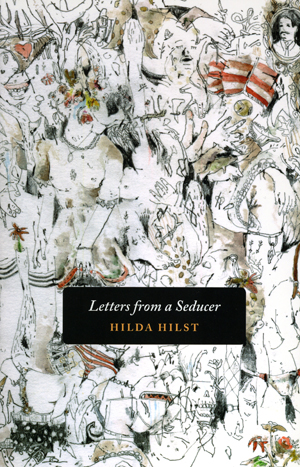
I also finished revising and refining, with A Bolha Editora editors Rachel Gontijo Araújo and Stephanie Sauer the translation of Hilda Hilst's Letters from a Seducer, and cannot wait to see it in print later this month or early next. I wrote and delivered a short paper on the process of translating it, and perhaps I'll publish this at some point. The book will open, however, with a beautiful introduction by Princeton professor and Brazilian literary and cultural scholar Bruno Carvalho. I'm especially proud that I was able to accomplish this while teaching, though it would be wonderful to receive a fellowship to aid in future larger scale translations.

With the intense focus on my own writing and preparations for this fall I was unable to blog as frequently as I like. I hope to resume posting a bit more frequently. I still have unfinished posts in the queue, including a short tribute to Seamus Heaney, whom I have the honor of having kept from a good night of sleep--I'll say more about that soon--and perhaps some reviews, though my efforts in that area have tended to appear elsewhere (Drunken Boat among other places). Here's an exciting, productive fall for all J's Theater readers--and by "exciting," I do not mean another hurricane or tropical storm. Sandy was enough for a lifetime, or two!

Friday, August 06, 2010

Espresso Book Machining with DR's Prez + The Novella Is Back

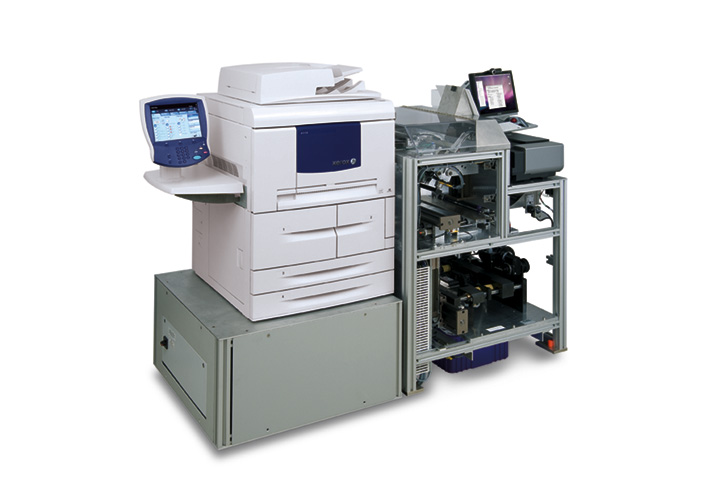
On the web, it's a truism that one thing leads to another...and so, somehow or other, I ended up at the Harvard Crimson website, and came across this brief video interview, on the Crimson's FlyBy blog, with Leonel Fernández Reyna, the President of the Dominican Republic, who was visiting the US a month ago, and happened to stop at the Harvard Book Store to, as he said, load up on books, particularly nonfiction ones. While there, he got to see an Espresso Book Machine (EBM), this one named Paige Gutenborg after its Fall 2009 rollout, in action.


I've been waiting to see and try out one of these print-on-demand machines, another option in the transforming book world, since I first read about it Joseph Epstein's book The Book Business a few years ago. According to Adrian Versteegh's article in the March/April 2010 Poets & Writers, Epstein and Dane Neller co-founded of the New York-based company that debuted the EBM four years ago, and the company

has entered partnerships with the Open Content Alliance, Lightning Source, and Google Books, giving users access to over three million titles, both proprietary and public domain. The "ATM for books," as Neller describes their device, has so far been installed at about twenty-eight locations throughout North America, Australia, the United Kingdom, and Africa, including the University of Michigan, McGill University, and the University of Melbourne. On Demand expects the EBM—which sells for slightly over a hundred thousand dollars, depending on the choice of printer—to have found its way into at least forty independent bookstores by the second quarter of 2010. 

Versteegh notes that so far, universities and their presses, and self-publishing authors have been the major users of such machines, but sales have been low, and for the vanity system, a stigma remains. (As the large, traditional publishing conglomerates vanish, how much longer will this be case?) He adds that most of the books produced by these machines aren't in bookstores, and most readers are encountering POD-ready books online, via Amazon and online publishing organs like Lulu and iUniverse, though given that this is increasingly the way most readers, especially in the US, are coming into contact with books. If more of these machines and databases featuring out-of-print, hard-to-find and rare but desired books become available, it would be a boon for writers and publishers, especially those that focus on the "long tail" approach. Another way of looking at such machines is that a book never need go out of print now, and, should one not have access to an e-reader and want a print book, one can hold one in no time.

Speaking of bookstores, Barnes & Noble, the largest bricks-and-mortar book retailer, is planning to hock itself. With the rise of online bookselling and the popularity of e-readers like the Kindle and the iPad's iBook app, I figured this was coming sooner or later. (Is anyone buying Barnes & Noble's Nook?)  Will one response be the return of small, independent booksellers in some cities, as the Wall Street Journal article above suggests? Is this the twilight of the bookselling conglomerates?

===

Speaking of books, Taylor Antrim writes in a recent The Daily Beast piece that that beguiling but unloved creature of the American prose fictional world, the novella, is making a comeback. (English 394 students, all of whom have written at least one by the time you graduated, take note!) Sort of. This makes sense to me especially now that people's attention spans and leisure habits (and time) are changing (if not shrinking) to a sizable degree because of digital technologies. Or so some researchers suggest. My own experience, I should say, bears them out.

In addition to Melville House, the novella-focused, Brooklyn-based publisher of old (Leo Tolstoy, Nikolai Gogol) and new (Tao Lin, Imre Kertesz) short novelistic works, and New Directions, which has been publishing novellas for years, including under its Bibelot line and now in its $10 Pearls line, bigger publishers and a number of contemporary authors are getting into the act. Takeaway quote:

But it's not just a pair of small presses championing an underdog form. Even the major houses have proved themselves surprisingly novella-friendly (though they seem to prefer the more approachable term “short novel”). Scribner gave us Don DeLillo's wispy thin Point Omega in February and Ann Beattie's Walks With Men (July) is the most sneakily intelligent read of the summer. No, novellas don't score blockbuster sales—even Stephenie Meyer's new Eclipse novella The Short Second Life of Bree Tanner from Little, Brown put up disappointing numbers in its first week—but they're around, people are writing them (see also Ian McEwan, Rick Moody, Nicholson Baker, newcomer Josh Weil, and others), and they're a reminder in a digital age that a printed book need not be a cumbersome relic. I can slip Walks With Men into my back pocket on the way to the park. A Kindle? Not so much.

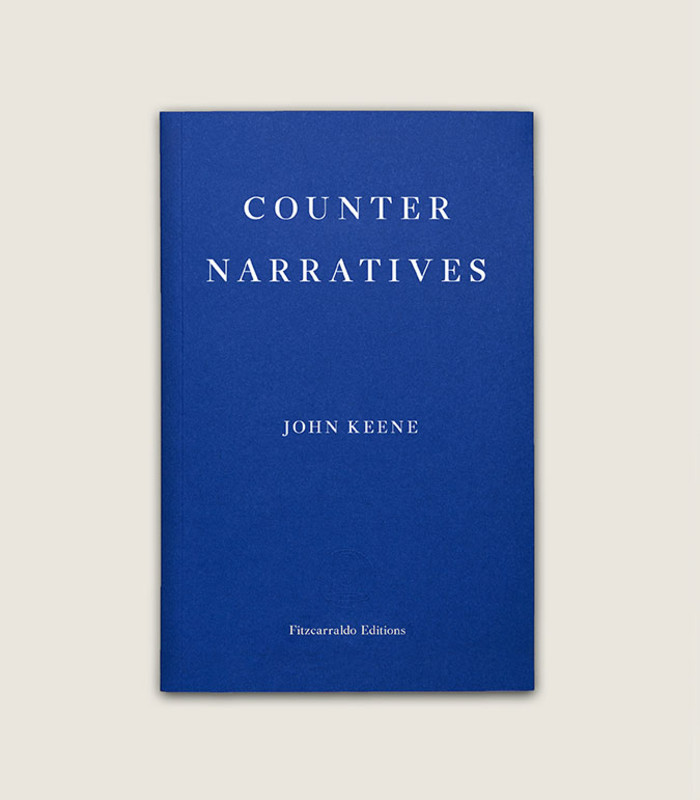
Antrim goes on to ask what a novella is. His answer: a pretty short novel that need not be heavily plotted, though neither does a long or very long novel need to be.  He also cites Tao Lin's Shoplifting from American Apparel, a delightfully sad little enigma of a book,  to say that any two of its pages might not stand out, but the cumulative effect is significant, which one should extrapolate to novellas in general. In a short story, of course, any two pages had better stand out, since they might constitute the entire story; in a novel, any twenty pages might not. Antrim ends by discussing Jean-Christophe Valtat's 03, the new French sensation I cannot claim to have read, but which I've read a great deal about. It's a lyrical novella about a suburban teen who empathizes and falls in love with a developmentally disabled girl, which sounds all wrong....

Sunday, March 28, 2010

Back from Break + Prototype iPhone Blog App + Tea Party Teabaggers 101

Spring break came, I left the grid for a bit (including, amazingly for me, Twitter), but now the new quarter is set to begin. I am teaching two classes: one is a continuation of the advanced fiction writing-novella class (Theory and Practice of Fiction), and the other is a brand new experiment, an advanced creative writing class, Concepts of Conceptual Art. I'm charged up about both; the novella class's first half-quarter went pretty well, I thought, and all of the students produced what approximated the beginning of a long work (long short story/novella) by the end of the quarter, so now they'll be refining these and extending this work to create something that is or approaches a novella. Our final reading is Don DeLillo's curious, powerful novella, Pafko at the Wall, which he originally published as a folio in Harpers in 1992, but which he later incorporated as the prologue to his greatest novel (in my opinion), Underworld (1997). After DeLillo, it's on to their work exclusively.

With the Conceptual Art class, there isn't enough time to explore all the theorists, artists, and movements I'd hoped to, so we'll start with a bit of background, moving from Idealism (Plato) to Formalism (Aristotle, Kant), then look at Walter Pater and Oscar Wilde, Marcel Duchamp (+ Dada and Surrealism), and Clement Greenberg, one of the chief formalists against whom many of the American conceptualists were reacting, and then explore conceptual music (Cage, Finer, Reynols), conceptual art and performance (Situationists, George Brecht, Alan Kaprow, Adrian Piper, Yoko Ono, Sol LeWitt, etc.), and finally conclude with conceptual writing (Warhol, Stephens/Nathanaël, Philip, Goldsmith, Mesmer, and Lewis Obadike + Obadike). Things aren't as schematic as this appears, and I will be including some theorists like Lucy Lippard, Rob Fitterman, perhaps Benjamin Buchloh, etc. I also am going to have them create a number of projects, ranging from event scores to a durational project. I hope it'll be as fun for them as it's been for me to conceive the class. Tomorrow, too, I hope to perform Cage's 4'33" for them as part of our opening discussion.

===

Just a glimpse of something really cool: C, who's doing development projects with his new company, created a prototype iPhone app of this blog, pictured below. It's not available for downloading yet, but I've been playing with and testing it since he created it, and it works really well.  Doesn't it look cool?  I'm looking forward to him creating many more.

My blog as an iPhone App
Prototype app of my blog on my iPhone
My iPhone Screen Shot
Screenshot, from my iPhone (JTs is the prototype app)