Showing posts with label news. Show all posts

Thursday, January 02, 2020

My 2019 (Semi-)Hiatus

A photo from our contract rally at
Rutgers-Newark, April 2019
As J's Theater readers--if there still are any!--may have noted, last year (2019) was a very lean one in terms of my presence here. I believe I managed six entries (with perhaps double that still in draft mode), and that was pushing it. One, which I only recently published, featured a review I undertook for Art in America on last year's Whitney Biennial, which I found fascinating on multiple levels, in contrast to many mainstream critics, including one who summed it for me at lunch late in the year, as "predictable." As it turns out, it was anything but--and, as I argued in that piece, really multiple Biennials, including one transformed by the protests that not only the Biennial's artists, but outside activists, supporters and artists, and the Museum's staff, launched. To be able to watch it unfold and write about it was a pleasure, but alas, I had almost no time to focus on it here.  I also had no real time--or rather no time to focus--to complete memorials to figures who have been incredible important to me, whom we lost in 2019, and I am thinking in particular of Toni Morrison, Paule Marshall (who was one of my favorite teachers in grad school), and Ernest J. Gaines, among many others. They are but a few of the people who left this human plane last year, and perhaps at some point I can either finish my mini-tributes and turn those live or write new ones this year. We will see.

My day jobs are, as readers know, a writer, and a professor of English and African American and African Studies (AAAS). Over the last six years (roughly since 2013), however, I've also served first as Acting Chair and then full-time Chair of AAAS, a post I have enjoyed deeply, but which also has entailed a very different level and kind of time commitment, since chair duties, I had to learn quickly, run every day of the week and all year long, and involve all kinds of matters, from curricula to student needs and concerns to staff and faculty personnel issues to other kinds of university service to general administration to tasks defying categorization. 

What I also learned was that there often is little training, except on the job, for the challenges that present themselves. Soliciting the advice of one's peers, especially other chairs or former chairs, and colleagues, listening to them carefully, addressing pressing and longer-term issues, and encouraging and engaging not only in an ethos but a practice of collaboration are all key, but administrative duties can be very stressful, and run along timelines parallel to but different from those of the academic year. Add this to my regular (teaching, mentoring, advising, my own life and writing) and irregular duties (letters of recommendation, tenure, judging panels, etc.), and it's fair to say that my blogging has been one major area to suffer some of the the greatest blows as a result.

This past fall was also a particular challenge because, on top of everything else, I was serving on four search committees. Serving on one search committee is a high hurdle; four is almost impossible to describe, though I grasped why I was asked to serve, and was cognizant throughout of what my presence could help to effect and why I committed to each. I can say, breaking no confidences, that each went quite well, and 2020 should bring good news to my institution and some excellent people who, I hope, will be wonderful leaders in their various ways and invaluable colleagues. That, as all such work tends to be, is the hope and goal, making people, programs and departments, the institution itself, better and stronger than they were before, with added benefits not yet foreseen but which will redound and resonate long after the moment of the work has ended. That is the core of so much of what we do in life, though, isn't it, or at least hope to?

2020 brings a competitive leave sabbatical--courtesy of several fellowships I received in 2018--so I hope to be able to post here more often. I have been thinking quite a bit about how blogging has changed in the 14 (soon to be 15!) years since I began this blog, and though I am ever more convinced that we live in an increasingly post-literate, let alone post-post-modern world, where the power of the regime of images grows ever stronger, the role of the oral has become more central and dominant, public prose is transforming into a shadow of itself, and social media's forces and forms are reshaping not only language as an exterior medium but our interiorities in ways we have not fully recognized or reckoned with,  I do believe there is a place for this blog and others, even if it ends up looking somewhat different than it did in the past, so I will strive to post semi-regularly here, even if, as I have at times, primarily with quotes and notices from others, including citations of and links to blogs I still follow, like Keguro Macharia's, to name one of my favorites and one of the very best. (And speaking of which, his remarkable study Frottage: Frictions of Intimacy Across the Black Diaspora is now out from NYU Press!)

So, here's to 2020, more blogging (I hope), and the excitement to come!

Wednesday, February 27, 2019

14th Blogiversary

Photo by Rachel Eliza Griffiths

Fourteen years ago, on February 27, 2005, I began blogging at J's Theater. I was regularly reading the blogs of friends and writers, artists, political commentators, and others I'd never met but felt a desire to be in conversation with, and so I started this blog. I viewed it as a creative and cultural space, with far less emphasis on politics and responsive to the news cycle--which has sped up incalculably more these days now that Facebook and Twitter have taken off--than it has assumed at various points. More than anything, however I wanted it to be a site where I could try thoughts and ideas out, imperfect as they might be, without the usual concern of perfection or even the struggle, customary as well, to get them into print. (My entire writing career has entailed a struggle to get my work into print.)

From writing about poetry and poets, like Jay Wright, as I did in my first post, to my life and experiences at the university (which has become a new university over the years I've blogged), to reviews of books and films, to snippets about Black history, art and culture, and history, art and culture over all, to translations from Portuguese, Spanish, French, and, I sometimes am amazed to admit, Dutch and German, to posts about rugby, track and field and other less popular (in the US imagination, at least) sports, my iPhone and iPad sketches, and on and on, J's Theater has provided an ideal space for me to explore, (mostly--haha!) pressure-free, as I see fit. It also has served as a site of documentation at times for cultural activities, and especially was so during my decade in Chicago, which wasn't even a decade ago but feels like a lifetime has passed between then and now.

I've repeatedly debated whether to keep blogging or to quit. One great frustration after the earliest years (2005-2008 or so) was the sharp drop off in comments, which were for a while replaced by spam, which disappeared (thanks, Blogger?), only to reappear in recent years with a vengeance. It thankfully is very easy to delete these days, but that requires its own dedicated attention. Far more pressing were my academic responsibilities, which have grown to include 12-month administrative duties that devour more mental space and energy than I ever imagined. I don't think it's any surprise that before this year, 2014, the first year I became a department chair (acting during that year) and 2017, just before my last sabbatical, saw the fewest posts. It was not for lack of interest, but time and vigor.

Not so long ago, we were told that blogging was dead. No one blogged, everyone had moved to YouTube, Facebook and Twitter. And Tumblr, which was and is a blogging platform that in essence mostly deprioritized words. (It also has banned not just pornography, but nudity in general, that's another matter.) And Instagram, which is all pictures (for the most part). And Snapchat, of course. Now there's Tiktok, and other walled gardens. One thing I loved and still do about blogging (though to its credit, Twitter also is almost fully public) via Blogger, WordPress and similar sites is that whatever you published was and remains visible to all; a private company does own this platform, but the blog remains more a public square-style venue than many other options out there. For good and ill, of course. The dazzlingly brilliant Kegur'o M, who continues to blog at Gukira: Without Predicates, is a stellar example of the good that can come from a blogger at the top of their game.

But that public aspect is one that I cherish, and one reason I hope to continue blogging. I also wish some of my old blogging friends, many listed on the blogroll to the right, and other bloggers I never interacted with but who've given up blogging, would start up again. No shade against Medium, but before ideas are fully polished, why not bounce them off readers on a blog? You can always--well, so far--revise as you go.

Monday, July 18, 2011

News Bits + Word Quiz (Angela Carter)

Nelson Mandela, 93! & family
(Peter Morey/EPA)
Some news links that struck me today:

NY Times: "Obama taps former Ohio official for Consumer Agency"
(No Elizabeth Warren, but Obama does pick one of her close associates and a foe of the banks' excessive power and sway)

McClatchy: "Justice Dept. lawyers contradict FBI findings in anthrax case"
(i.e., the case against Bruce Ivins was weak, and the real culprits remain out there, as Glenn Greenwald and others argued long ago)

Guardian UK: "News Int'l hacking whistleblower Paul Hoare found dead in his apartment"
(Talk about strange "coincidences"....)

LA Times: "Borders finds no buyer, moves towards liquidation"
(One of the major chains is on its last leg, or half of one, and could be gone by the end of this week)

Raw Story: "US Senate confirms first openly gay district judge, Paul Oetken"
(Another major advance for LGBTQ equality, a month after NY State's approval of same sex marriages)

Mail & Guardian: "South Africans mark Nelson Mandela's birthday"
(Madiba turns 93)

The Mainichi Daily News: "Over 500 cows found shipped after having eaten radiactive straw near Fukushima reactor disaster"
(The ongoing worst nuclear reactor disaster ever, in northeastern Japan and exceeding that of Chernobyl, has not gotten anywhere near the coverage it deserves, and the Japanese government's response remains inadequate)

LA Times: "NFL owners may approve new labor deal on Friday"
(More revenue money for players, a lower salary cap, lower bonuses for rookies, $1 billion for pensions and benefits, and greater emphasis on safety, especially brain injuries)

***

WORD QUIZ: ANGELA CARTER
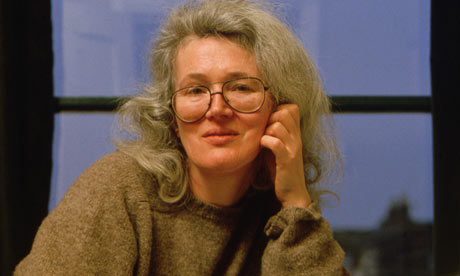
Most J's Theater readers in the US are probably well past their PSAT, SAT and ACT experiences--though I keep it fairly clean, so the youngsters can drop in here too if they like--and are probably not thinking about vocabulary tests. (I can't recall if there are vocabulary tests on the GMATs, MCATs, etc.--if so, keep reading). Recently, however, in the course of returning to stories in Burning Your Boats: The Collected Short Stories (London: Chatto & Windus, 1995), by the late, prolific and ever beguiling British writer Angela Carter (1940-1992) who, as her biographical dates suggest, died far too young, I found myself noting down a number of words from her stories that I had to look up or that I knew but felt compelled, because of their beauty and rarity, to record, in my notebook.

Carter usually incorporates these words, most of which are Latinate in origin, in such a way that they feel integral to the narrative voice and the narrative itself; in Bloody Chamber's stories, for example, the narration is often elevated in such a way as to take the reader outside of any chronological time, yet Carter will then juxtapose the exalted and sometimes baroque diction and syntax with a very contemporary word or phrase, a very up-to-date intonation, so as to jar the reader out of any easy or simplistic identification or understanding of what's going on. It also makes for thrilling prose; with language so arrestingly vertiginous, the plot and characters need not do all or even most of the work.

One quote, from "Master" (p. 76):

He travelled by jeep through an invariable terrain of architectonic vegetation where no wind lifted the fronds of palms as ponderous as if they had been sculpted out of viridian gravity at the beginning of time and then abandoned, whose trunks were so heavy they did not seem to rise into the air but, instead, drew the oppressive sky down upon the forest like a coverlid of burnished metal."

So: here's the challenge. Without looking up the words, see how many of the follow 10 you can define off the top of your head. The answers appear after the break (if you're reading this on the iPhone/iPad app, I'm not sure how it'll appear, so perhaps cover the answers with your fingers). I should add that I used one of these words in my second book and in my current one, and it remains as strange to me now as it did then, which is why I have employed it.

1.  palliasse
2.  lancinating
3.  stertorous
4.  osier
5.  linnet
6.  castellated
7.  reticule
8.  cloisonné
9.  lustratory
10.  prothalamion

Sunday, July 25, 2010

Sunday TV News FAIL + New Animation(s)

Why on earth do I waste any time watching the Sunday morning and afternoon TV political shows?  If the definition of madness is doing something you know to be wrong again and again--

To give just one example, I stomached about two segments of Candy Crowley's CNN show State of the Union, by which I mean I was able to stomach two consecutive doses of hard-right-wing propaganda before I started commenting loudly back at the screen, and C suggested I turn it off. In the first, billionaire Mortimer Zuckerman and multimillionaire Steve Forbes represented the ideological range and diversity of opinions on the current economic crisis. As you might imagine, their responses to Crowley's non-sequiturs-as-questions had little to do with the reality of the world most of us live in. Zuckerman, on a "deficit" hysteria high, ranted about business leaders being very unhappy with (business-friendly) President Obama and the failure of the stimulus, and suggested that we needed fewer regulations so that businesses would be happy, and lower taxes for the "middle class" to turn things around, while Forbes suggested that we needed a three-year "moratorium" on the new health insurance reform bill and financial regulations, and of course, a continuation of the massive deficit-increasing W. Bush tax cuts, and like magic, the economy would be booming again. Oh, and both slammed Obama for the 9.5% unemployment rate, which resulted in part from businesses' "uncertainty," and not the fact that they were sitting on cash, that bailed out banks weren't lending, or that the vicious cycle of unemployment, tightened credit and financial distress meant no return to the consumerism of the last decade and a half.

Crowley noted that from her (wrong) understanding of economics, "raising taxes" (i.e., allowing the Bush tax cuts to expire) on the wealthiest Americans during a tough economic period like this would be the worst thing we could do, in line with and to the approval of Forbes, but Zuckerman, to his credit, disagreed with her and noted that in fact, the slightly increased tax burden on the rich wouldn't be that much of a burden, really, before quickly returning to his mantra of cutting the deficit and having fewer regulations. After several rounds of this, with Crowley offering no serious challenges to anything they were saying, including Zuckerman's non-response on rising foreclosures--he went on about the "bubble" and the failure of people to buy houses--she effusively thanked them for their expertise (!?), and then proceeded to her next guest, former Bush CIA director Michael Hayden, who, when questioned tepidly by Crowley about the host of deeply troubling allegations in the recent multipart Washington Post series by Dana Priest and William M. Arkin, "Top Secret America," on the dangerously secretive, inefficient and possibly unconstitutional National Security-Military Industrial complex, graciously responded by emphasizing that an attack on Iran was "inexorable"....

I'm aware that quite a few people no longer watch these shows, and that they exist primarily to reinforce the echo chamber in Washington, but I guess that's what disturbs me most, that echo chamber effect and its ramifications on the policies that emanate from the White House and Congress. It's not enough that corporations, their lobbyists, and the megarich have the ears (and pockets and throats) of those in power, but they also have this self-reinforcing medium to propound and pound, day in, day out, their propaganda. One might argue that it does offer a window directly into what their aims and preoccupations are--more wars; more secrecy; more corporate socialism and wealth transfers to the rich; more shredding of the already threadbare social safety net; etc.--but the cynical and frustrating aspects of this include the inability to directly challenge them or force them to change course. And speaking of courses they're on, high among their priorities is slashing Social Security, with this President's and Congress's direct help.

And speaking about the successes of disaster capitalism, in Detroit, they're getting skilled labor for a song. Now, I ask you, did any of the GM or Chrysler executives pay back any of those bonuses or the compensation they received during the years they were running these companies into the ground?  Were they forced to, by the government, the courts or anyone else?

+ + +

Shifting gears, here're two newer animations, the first on soccer (I created it the night Spain won the 2010 FIFA World Cup), the second on the theme of art. And speaking of soccer, welcome Thierry Henry!

Golazo!


Art